Your ShelfYour Projects

Signs of the Times, Vol. 31, No. 40.

GOD THE JUDGE

Signs of the Times

Oct 4, 1905

Pacific Press Publishing Company · Mountain View, California · Oct 4, 1905

GOD THE JUDGE

"Our God cometh, and doth not keep silence; a fire devoureth before Him, and it is very tempestuous 'round about Him. He calleth to the heavens above, and to the earth, that He may judge His people: Gather My saints together unto Me, those that have made a covenant with Me by sacrifice. And the heavens shall declare His righteousness; for God is Judge Himself. [Selah.] Hear, O My people, and I will speak; O Israel, and I will testify unto thee; I am God, even thy God. I will not reprove thee for thy sacrifices; and thy burnt-offerings are continually before Me. I will take no bullock out of thy house, nor he-goats out of thy folds. For every beast of the forest is Mine, and the cattle upon a thousand hills. I know all the birds of the mountains; and the wild beasts of the field are Mine. If I were hungry, I would not tell thee; for the world is Mine, and the fulness thereof. Will I eat the flesh of bulls, or drink the blood of goats? Offer unto God the sacrifice of thanksgiving; and pay thy vows unto the Most High; and call upon Me in the day of trouble; I will deliver thee, and thou shalt glorify Me." "Now consider this, ye that forget God." Psalm 50 : 3–15, 22.

Army Supplies

We are expecting that there will be some lively skirmishes at the battle front during the Fall Campaign, and so have been busy through the summer manufacturing a plentiful supply of small shot, which will prove very effective at close range firing.
Here is a sample page of our No. 4 shot. There are fifteen other numbers, all different, the titles of which appear below.

SIGNS OF THE TIMES LEAFLET—No. 4.

When Jesus spoke of His coming again and of the end of the world, His disciples asked for the signs which should precede those events. Jesus said: "There shall be signs in the sun, and in the moon, and in the stars; and upon the earth distress of nations, with perplexity; the sea and the waves roaring; men's hearts failing them for fear, and for looking after those things which are coming on the earth; for the powers of heaven shall be shaken. And then shall they see the Son of Man coming in a cloud with power and great glory." Luke 21:25-27.
In the briefest possible way consistent with clearness, we present these signs under four heads, and refer the reader to larger works.

I. SIGNS IN THE PHYSICAL WORLD.

  1. Increasing frequency of earthquakes, volcanic disturbances, cyclones, and electric storms.
  2. Growing barrenness of land, destructive insects, famines, and increase of disease.
  3. Signs in the sun, moon, and stars.
The first two classes show clearly that the earth has waxed old like a garment and her change is impending. Heb. 1:10-12. See also Joel 2:3-11; Isa. 13:6-9; Matt. 24:7, 8; et al.
The darkening of the sun and moon occurred May 19, 1780, and the falling of the stars, Nov. 13, 1833, just when the prophecy declared they would occur. Matt. 24: 29, 30; Joel 2:30, 31; Mark 13:24-27; Rev. 6:12-17. In the light of the prophecy we see these as signs of His coming.

II. SIGNS IN THE SOCIAL WORLD.

"Evil men and seducers shall wax worse and worse." 2 Tim. 3:13.
1. Rapid and unprecedented increase and concentration of wealth, with corresponding increase of luxury, extravagance, and wealth-worship in the face of dire poverty and need.
The mutterings of discontent will soon swell into the thunders of a storm, the precursors of which we see in the strife between capitalists and labor unions, and in the increase of socialism. Read James 5:1-7; Isa. 5:8-12; 2:7-11; Hab. 1:12 to 2:14.
2. The increase of intemperance, gluttony, and every form of licentiousness and violence, as in the days of Noah and Lot. Luke 17:26-30; Gen. 6:5, 11; Eze. 16:49, 50.

III. SIGNS IN THE POLITICAL WORLD.

1. Increase of crime in general, and in high circles among

Shot Numbers, and Prices

  1. The Sure Word of Prophecy
  2. Prophetic History of the World
  3. Second Coming of Christ
  4. Signs of Our Times
  5. The Sanctuary
  6. The 2300 Days
  7. The Law of God
  8. The Sabbath of the Bible
  9. The First Day in the Bible
  10. Who Changed the Sabbath?
  11. The Great Threefold Message
  12. The Seal of God and Mark of the Beast
  13. Church and State
  14. Life and Immortality
  15. The Great Judgment Day
  16. The Home of the Saved
The prices are so low, and the material so good, that no one can excuse himself from using them liberally. Hundreds of thousands have already been sent out, and we confidently expect that millions will be circulated in a very short time. Let us, indeed, scatter them "like the autumn leaves."
Not Post-paid Post-paid
100 (All one kind) $0.15 . . . . $0.15
1000 (100 each of 10 kinds) 1.00 . . . . 1.30
1600 (100 each of 16 kinds) $1.50 . . . . $1.95
1 lb. (about 20 of each kind) .42 . . . . .50
No small assortment sold, except in pound lots.
Order of any Tract Society, or of ### Pacific Press Publishing Company Mountain View, Cal. 1109 E 12th St., Kansas City, Mo. 285 Salmon St., Portland, Ore.

PUBLISHED WEEKLY

The Home of "The Signs of the Times."

PUBLISHED WEEKLY

(Entered September 15, 1904, as second-class matter at the Mountain View, Cal., post-office, under act of Congress of March 3, 1879.)
H. H. HALL, - - - - BUSINESS MANAGER.

Terms of Subscription.

Per Year, post-paid . . . . . . . . . . . . . . . . . . . . . . . . . . . . . . . . . . . . . . . . . . . . . . . . . . . . . . . . . . . . . . . . . . . . . . . . . . . . . . . . . . $1.50 Six Months, 75 cts. Three Months, 40 cts. To Foreign Countries, per year, $1.75.

SPECIAL TERMS.

1. One new yearly subscription and one renewal, or two new yearly subscriptions, sent at one time, $2.50.
2. Two new yearly subscriptions and one renewal, or three new yearly subscriptions, sent at one time, $3.25.
3. Three new yearly subscriptions and one renewal, or four new yearly subscriptions, sent at one time, $4.00.
Sample copies sent on application.

OF INTEREST TO THE CHILDREN.

For some months we have been offering to send ten copies of the SIGNS OF THE TIMES to any child who would sell them and try to work up a regular paper route. Some of these children have done very well indeed. Among the letters received from them was one from Samie Waddell who has been using the Signs of the Times Leaflets in connection with his work with the SIGNS itself. One letter from him was published and has an effect as is indicated by the following letter received this morning:
SIGNS OF THE TIMES, Mountain View, Cal. Dear Editor,—
I have read Samie Waddell's letter. I am also eight years old, and would like to sell 10 SIGNS each week. I will thank you to send me 10 SIGNS free to start with. Enclosed please find 75c. Please send me 10 copies for three weeks more. Also please send me some leaflets No. 16, title, "Sabbath of the Bible," to give away. What will they cost me? Your friend, Russell Wood Starr, 243 S. Boulevard, Atlanta, Ga.
Are there not many little people who will take advantage of our offer to help them work up a paper business? Remember, you do not pay anything for the first ten papers. After that the rates are as follows:
10 papers 1 month $0.70 15 " 1 " 1.04 20 " 1 " 1.38 30 " 1 " 2.08
Terms on other quantities will be given on request. Address, SIGNS OF THE TIMES, Mountain View, Cal.
"Please find enclosed a Post-office order for $1.50 to renew my subscription for another year for the SIGNS. I have been a subscriber for the paper for several years, and do not feel like I can do without it. I always look for it anxiously."
"Enclosed you will please find $3.00 to pay for a year in advance, for I can not do without the paper. I read it and read it, and then send it away to someone else to read, and I do pray that God will bless the reading of the paper to His honor and glory."

COMFORT OF GOD.

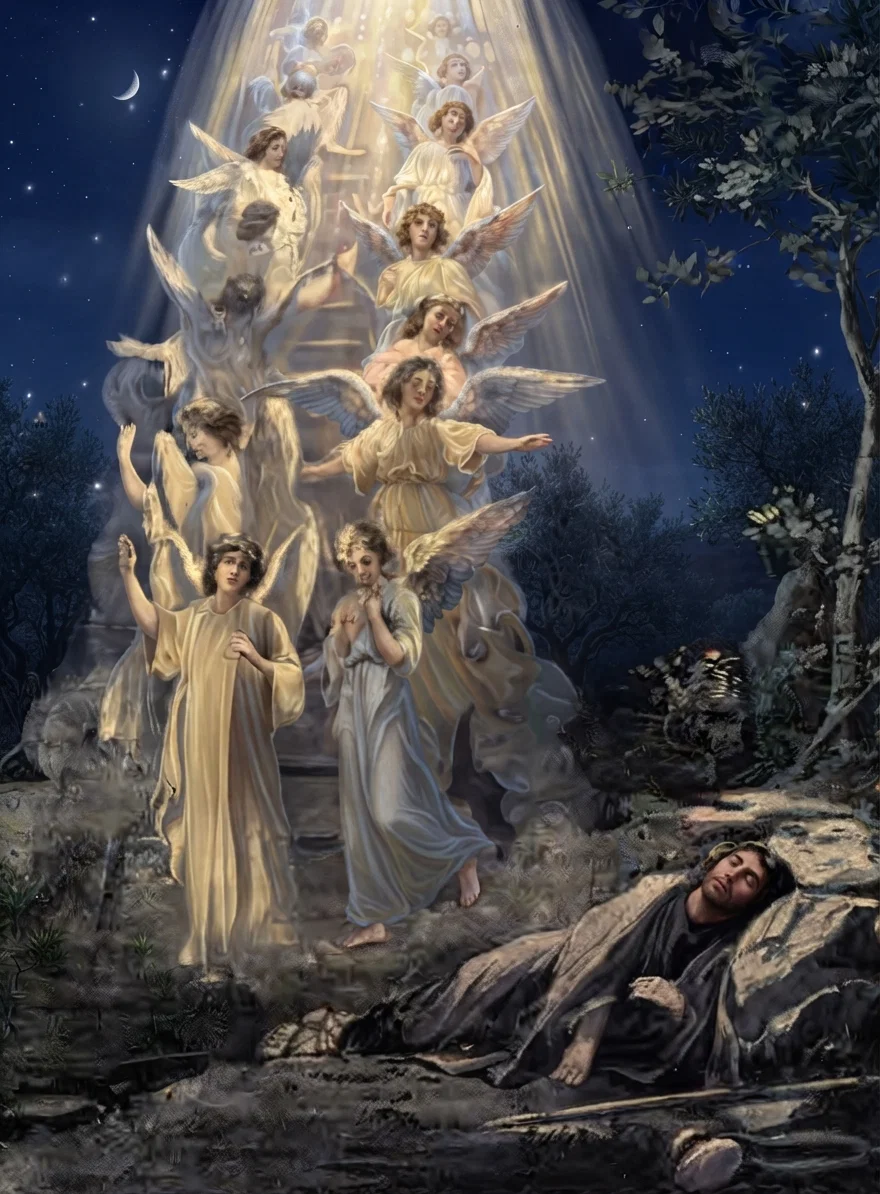
NEARLY sixty miles Jacob traveled that day in the burning Syrian sun, as he fled in eager haste from the hot wrath of his brother Esau. He had gotten the appetite-loving, lust-loving Esau to sell him his birth-right by taking advantage of him while he was faint and hungry from the chase; and then by deceit he had obtained his father's blessing. And the two wrongs were too much for the not over-scrupulous wild hunter. He had spilled the blood of many an innocent animal, and his loose code of morals easily made his lust for Jacob's blood justifiable; and therefore he swore vengeance upon the more pious Jacob.
FEARING that the son, concerning whom God had spoken, might die at the hands of his vengeful brother, the parents sent Jacob away to Fadan-aram, where lived his mother's people. They gave him instruction to obtain from thence a wife. Jacob started, an exile from home through his lack of faith, never to see his mother again in this world. God had predicted His kinship and blessing; why did not he and his mother let God work it out in His own way? There is no device of man that can counterwork God's plans. Like many others, Jacob felt, and Jacob's mother felt, that they must do something, even tho it involved duplicity, in obtaining the promise of God. Out of this carnal policy grew years of sorrow, care, and anxiety.
FROM Beersheba, in the south of the Holy Land, to Haran, Jacob's objective point, was a long stretch of over four hundred miles, and Esau, the fierce hunter, might be trailing close behind, as he had often trailed the hunted hart. So Jacob hurries forward. He reaches a quiet, secluded place as the sun goes down. His heart is lonely and sad, and his conscience smites him sorely for the evil he has done. He has been a home boy all his life; now his overweening desire for the family birthright and blessing, which he coveted, evidently not for spiritual ends, but temporal, had driven him an exile from home, a wanderer in a strange land. Forced from his parent's home, hated by his only brother, truly he was alone; and the wild animals of the desert, seeking their prey as night settled down, must by their cries have deepened the utter loneliness of the night.
JACOB, utterly weary, takes a stone for his pillow, and lies down to rest. He does not even pray, for he feels that God has forsaken him. But it is such hearts as his that God delights to comfort. Here was beginning the repentance of Jacob, the humiliation of heart, which extended over years of his life. "Blessed are the poor in spirit; for theirs is the kingdom of heaven." Jacob was feeling his poverty of soul. "Blessed are they that mourn; for they shall be comforted." Jacob was mourning his sin and folly.
GOD had not forgotten. Despicable as Jacob's action may have seemed from a generous social standpoint, his heart was better than his sport-loving brother's heart. Jacob believed God. He remembered the Abrahamic promise. He had heard of the predictions of God upon the seed of Abraham and of Isaac. He regarded God's promise and blessing more than all else, while Esau was ready to sell his birthright to promise and blessing for a mere mess of pottage that he loved. Thousands are standing today where Esau did, ready to barter all the promises of God for lust, for pleasure, for power, for wealth, for fame. God knew Jacob's desire, and while He could not approve Jacob's method, He did his desire, and regarded his repentance.
THEREFORE, to the stone-pillowed sleeper heaven was opened, and God's love and care were revealed. The gulf of sin between earth and heaven was bridged by God's love, and heavenly messengers were passing to and fro between the throne of God and earth's needy ones. From that throne came this Voice to the heart-broken man: "I am Jehovah, the God of Abraham thy father, and the God of Isaac; the land whereon thou liest, to thee will I give it, and to thy seed. . . . Behold, I am with thee, and will keep thee whithersoever thou goest, and will bring thee again into this land; for I will not leave thee, until I have done that which I have spoken to thee of."
WHAT mighty words of comfort were these! They awaken the sleeping man, no longer weary. "Surely," he declares, "Jehovah is in this place; and I knew it not. And he was afraid, and said, How dreadful is this place! this is none other than the house of God, and this is the gate of heaven." And that experience cheered the wandering exile and patriarch all his days.
He rises early, takes his stone pillow, sets it up a monument of Jehovah's love, and names the place Beth-el, House of God. There he consecrates himself anew to God's service, that he may be a worthy son of Abraham.
NOT for Jacob's sake was this written, but "for our learning, that through patience and through comfort of the Scriptures we might have hope." Rom. 15:4. The gulf between heaven and earth has been spanned by the love of God in Christ Jesus. He is the connecting link between God and man—His name, "Immanuel"—God-with-us. And His mighty, white army of angels stand ever ready with willing wing to visit every troubled soul and minister to it the comfort of God. He is no respecter of persons. He is willing to help you to-night. He is just as near as He was to Jacob in that far yester-night, which broke with the dawn of new hope, and transformed a bed of earth to a house of God. He is as near California or America or Canada as He was and is Syria, and He would have us believe and sing with the poet:
"Henceforth my heart shall sigh no more For olden time or holier shore, God's love and blessing then and there Are now, and here, and everywhere."

THE NEED OF THE COLORED RACE.

THE great need of the colored, or negro, race is Christian education. By this we do not mean much of what is called such at the present time, Christian only in name. That is not Christian education which arouses in one a tremendous ambition to excel his fellows. That is not Christian education which leads a person to seek an exalted position, to rule over others, to enter politics, to use political methods, to become political agitators, to grasp earthly power. Such did not Christ. This kind of education He gave not to His disciples.
Christian education will not arouse within those who possess it the empty ambition of striving to excel or surpass some other race. It will not seek to avenge wrongs, either real or fancied.
The very root of all Christian education is found in such Scriptures as these:
"Have this mind in you, which was also in Christ Jesus; who, existing in the form of God, counted not the being on an equality with God a thing to be grasped, but emptied Himself, taking the form of a servant." Phil. 2:5-7.
"If any man will come after Me, let him deny himself, and take up his cross, and follow Me." Matt. 16:24.
"For even Christ pleased not Himself." Rom. 15:3.
That education which fails to inculcate these principles as fundamental fails in everything Christian. Thus much for the negative side.
The positive side of Christian education is service, loving, unselfish service for God and humanity. "Thou shalt love the Lord thy God with all thy heart, and with all thy soul, and with all thy strength;" and "thy neighbor as thyself," is the norm, the rule, of Christian service. He who does not set that forth as his standard, his goal, his constant endeavor, through the graces of self-denial and faithful endeavor, by the power of the Spirit in unselfish service, fails. "If ye love Me," says Jesus, "keep My commandments." "Ye are My friends," again He says, "if ye do whatsoever I command you."
Only so can strong, noble characters be builded. Only so can the colored race be rightly trained. They should be taught, as many of them are, that the worst slavery in all this world is sin; and he only is free from that slavery who is the servant of Christ,—the loving servant of Christ, and the servant of all men, because the servant of Christ.
We do not believe that such an education will lead to race troubles, nor to rape or incest or murder, or to crime of any kind. We do not believe that it will cause trouble politically or socially. Let the negro who longs for the uplifting of his race accept the political and social situation as it is and ever will be in this world, and then serve in that situation for Christ's sake. He will find that Christ will exalt him. "Humble yourselves in the sight of the Lord, and He shall lift you up." "He that humbleth himself shall be exalted," but "he that exalteth himself shall be abased."
These are not our words, but the words of God. If they are taught by the teachers of the colored people, if they are received and heeded by the people themselves, the negro will find himself a useful factor in the world, a minister of good, one needed and wanted.
This kind of education the people represented by this paper are trying to give. For this they will solicit donations October 7.
We need not say that the above principles apply to the one race as well as the other. But we do not wish to lessen the force of this truth, that whatever all the world may do, the colored race will only be truly lifted as it is lifted in Christ Jesus; and Christ must be true to the principles He has given, briefly outlined above. He has no other way.

RECONCILED IN CHRIST.

THE purpose of the Gospel and of the life and death of Christ upon this earth was, not that God might be reconciled to us, but that we might through that learn of God's undying love for us, and so be reconciled to Him. He who knows the Father by living, personal knowledge knows that it is not God who needs the reconciliation.
When man sinned in Eden, and fled to hide from God's presence, he was simply fleeing from life to the silence of an eternal death. If God had needed to be reconciled, He would simply have allowed man to continue to flee from His presence, and go down into a grave that would hold him forever. The race would have stopped right there, and the history of Adam would have ended with his sin. His career would have been closed; the experiment would have been finished; and everlasting silence would have settled down upon the purposed habitation of men.
Satan, in the beginning, taught the innocent pair that God was unjust in withholding from them even one tree of that glorious garden. His deception succeeded, man sinned, fled from God's presence, and, as a race, has been fleeing ever since. Now he comes with the second accusation against God, teaching that He must needs be reconciled, appeased, like the gods of the heathen; and that by the sacrifice of His own Son. But our blessed Lord was not sacrificed for that purpose. If Satan can succeed in making men believe that He was, he has accomplished a master-stroke in his war of the ages against the best interests of man. If he can induce religious teachers to teach that, then is his success the more complete, his charge against God so much the more convincing. Accusing God of injustice in the beginning, and then making it appear that God must be reconciled, Satan attempts to shut the door of salvation in the face of man. He succeeds in the case of those who believe his sophistries. Let us see what Inspiration teaches in reference to this matter of reconciliation.
God has never been the enemy of man. His own declaration is, "I have loved thee with an everlasting love; therefore with loving-kindness have I drawn thee." Jer. 31:3. He says of Himself, "I have no pleasure in the death of him that dieth; . . . wherefore turn yourselves, and live ye." Eze. 18:32. "The mercy of the Lord is from everlasting to everlasting." Ps. 103:17. "The Lord is good; for His mercy endureth forever." Jer. 33:11. "God so loved the world, that He gave His only-begotten Son, that whosoever believeth in Him should not perish, but have everlasting life." John 3:16.
It has always been man's sin that has put a cloud between him and his Maker. It is not that God has withdrawn Himself from the sinner; but, as in Eden of old, when man has sinned, he has hid himself from his Maker. "Your iniquities have separated between you and your God, and your sins have hid His face from you." Isa. 59:2.
In view, then, of God's everlasting love toward men, of His ever-enduring mercy, and the fact that man has hid from God and not God from man, with whom is the reconciliation necessary? What was the purpose of Christ's ministry? what the purpose of His life and sacrifice upon the earth? Let us answer in the language of the Bible: "But all things are of God, who reconciled us to Himself through Christ, and gave unto us the ministry of reconciliation; to-wit, that God was in Christ reconciling the world unto Himself, not reckoning unto them their trespasses, and having committed unto us the word of reconciliation." 2 Cor. 5:18, 19. Thus has the Word made plain that it is man who must be reconciled to God, not God who must be reconciled to us. God never has been unreconciled. His arms have ever been stretched out toward the erring race, and are stretched out still. Christ's work in the earth was "to reconcile all things unto Himself." "And you . . . hath He reconciled in the Body of His flesh through death." Col. 1:20-22. We are told in Rom. 5:10 that "we are reconciled to God by the death of His Son."
So the plea of God's representative in the land of the unreconciled is, "We pray you in Christ's stead, be ye reconciled to God." 2 Cor. 5:20. The ministry of Christ, the ministry of those who are Christ's, is the "ministry of reconciliation," the reconciliation of an unreconciled world to the great God whose love is everlasting, whose mission is ever-drawing, whose kindness never faileth, and whose arms will continue to be stretchedout to the human race as long as there is hope of saving a single soul. Christ died that He might ransom out of the enemy's land those who had forfeited their heritage, bartered their souls, and fled from the face of God—that He might turn them, win them, and bring them back with Him, the fruits of His ministry of reconciliation.

Question Corner

From time to time under this head, we will answer pertinent questions, the answers to which we believe will be generally helpful to our readers. Some questions we can not answer here. They are of special interest only to the person who asks them. We will not answer what seem to be mere quibbles or cavils. We do not propose, for instance, to explain, more than once a year, where Cain got his wife. In all cases we must have the name of the questioner. We may wish to write them. To the questions we sign only the initials, or another term, if preferred by the questioner. But we have neither time nor space to bother with unsigned letters or questions. One more thought: "Foolish and unlearned questions avoid."

1724.—Will Solomon Be Saved?

D. M. G.
We hope so. It is always sad to think of one's utterly failing for whom God has done so much. We believe he will be saved, because Ecclesiastes, written after his idolatry and worldliness, shows that he clearly saw them to be folly, and repented of his sins. Eccl. 12:9-14.

1725.—Will the Rich Man Be Lost? Matt. 19:22.

A preacher stated that the rich young man, who said he had kept all the commandments, was lost. Is this so?
We do not know. God has given us no revelation of his eternal future. But he was not keeping all the commandments, whatever he thought, and the test that Jesus gave him showed this. He loved his riches more than he loved God. Of course, after this he may have repented.

1726.—Turning from Light.

If a Seventh-day Adventist who, for fifteen years, had lived up to the doctrine, turned from it, joined another church, and gave up the Sabbath, could he be saved?
This is not for us to say, what can or can not be done for such an one. We can say this, that no man goes into greater light by giving up one ray of light. God has many souls in other churches to whom the truth of the Sabbath has not yet come. These He is blessing, and has blessed because they are living up to the light they see; but He can not bless one who has seen the light of the Sabbath, or any other truth, and turns from that truth to nothing or to a substitute. "The path of the just is as a shining light, that shineth more and more unto the perfect day." Prov. 4:18. He that turns from a single ray of light walks in darkness; for all light shines from the one central Sun of Righteousness.

1727.—The Eagles and the Carcasses. Matt. 24:28.

What is the meaning of Matt. 24:28?
The connection in Matt. 24:28 might seem to invite the application you make of the carcasses to false doctrine; but the use of the same expression in Luke 17:37 would exclude this meaning, and the meaning of the terms would, also, it seems to us. The eagles or vultures would better apply to the false doctrines. Is not this the better meaning: Probation is past. Humanity is being divided into classes. Luke 17:27-36. The last plagues stand like vultures, waiting for their prey. The decree of God goes forth. Rev. 22:11. The plagues fall upon those who have rejected all truth and all mercy. The wicked are spiritually dead, carcasses fit for the plague birds of prey.

THE HOPE OF THE GOSPEL.

WHEN the apostle Paul was taken to Rome as a prisoner he sought an interview with the leading Jews, that he might explain to them why he, a once prominent Jew, was in chains. He wanted them to understand that, while he was a prisoner because of charges preferred against him by Jews, yet he had committed nothing against the people or customs of the fathers. Altho he was a prisoner at the instigation of leading men in Jerusalem, yet, he declared, it was "for the hope of Israel" that he was bound. Acts 28 : 17-20.
At the time of Paul's arrest in Jerusalem the captain of the Roman guard took him before the Jewish council in order to find out what they had against him. Paul—seeing that in the audience were both Pharisees, who believed in a resurrection, and Sadducees, who did not so believe—cried out, "I am a Pharisee, the son of a Pharisee; of the hope and resurrection of the dead I am called in question." Acts 23 : 6. This caused such a commotion that Paul was hastened off to prison again in order to quiet the rival factions.
But Paul's real offense was that he had been preaching the Gospel of Christ, and it was this that he called the "hope of Israel," that hope being "the resurrection of the dead." This is in harmony with Paul's hope as expressed in his epistle to the Philippians. Here he declares that he "suffered the loss of all things" in order to gain the righteousness of Christ. All this, he says, "That I may know Him, and the power of His resurrection, and the fellowship of His sufferings, being made conformable unto His death; if by any means I might attain unto the resurrection of the dead." Phil. 3 : 8-11.
This shows that the resurrection of the dead has been the hope of the Gospel from the beginning. Man came under the condemnation of death because of sin (Gen. 3 : 19), and redemption could mean nothing else than salvation from death. The first man was driven away from the tree of life lest he should eat and live forever. Gen. 3 : 22-24. This made his death sure, and entailed death upon his posterity.
"So in Christ shall all be made alive." 1 Cor. 15 : 22. But even then all will not be saved. "For the hour is coming, in the which all that are in the graves shall hear His voice, and shall come forth; they that have done good, unto the resurrection of life; and they that have done evil, unto the resurrection of damnation." John 5 : 28, 29.
In 1 Cor. 15 : 12-18 we are shown the absolute necessity of a resurrection in order that the dead may have life at all. In 1 Thess. 4 : 13-17 we have portrayed the manner of the resurrection of the righteous dead, together with the translation of their righteous brethren who may be living at that time. And in Revelation 20 it is explained that there will be a period of time between the resurrection of the righteous and that of the wicked. The first is called "the first resurrection," and a blessing is pronounced upon those who have part in it. Verses 5, 6. Those who come up in the second resurrection will suffer a "second death."
So "the hope of Israel," the hope that the apostle Paul entertained, the hope of the Gospel, the hope of eternal life, is dependent upon having a part in the first resurrection, or a translation to immortality of those who are living when Christ comes in glory. All who have not this hope will be "destroyed by the brightness of His coming." The same power that will give life to the righteous will inflict death upon the unrighteous. It is simply a matter of choice and of faith upon which side we shall stand, and in which resurrection we shall appear.
G.

THAT "PERPETUAL COVENANT."

IT is next to impossible for a man who ignores the law of God to criticize either fairly or logically. He is not to blame for prejudicial criticism from a wrong view-point, for that is simply a natural result. Where he is to blame is in not accepting the plain commandment of God, which would enable him to apply the Word of truth correctly. In a recent criticism we are censured for quoting a part of Ex. 31:16, and not the whole. The quotation was for the purpose of showing that the Sabbath is a "perpetual covenant" between God and His people. The words "throughout their generations" were omitted, and our critic assumes that these words limit the Sabbath to the Jewish dispensation. Any one who was not trying to make void the law of God would see that the words "throughout their generations" is a decided emphasis of the expression "a perpetual covenant," and of itself carries the covenant as far as the existence of Israel—which includes all the redeemed, and therefore eternity.
Ex. 31:16 refers to the seventh-day Sabbath, as the context shows, which was made in the beginning (Gen. 2:2, 3) and was made for man, the whole human race. Mark 2:27. Throughout the generations of Israel is simply an expression meaning throughout the generations of the saved. Abraham is the father of all them that believe (Rom. 4:11), and all that was done for the fleshly, typical Israel was in furtherance of God's promise to Abraham. Deut. 29:10-15; Ps. 105:42, 43. And the same consideration was continued to believers in Christ. Acts 2:38, 39. The promise to Abraham was that he should be "heir of the world" (Rom. 4:13), and believers in Christ are heirs with him. Gal. 3:29.
If our critic had only studied the Word enough to know what constitutes an Israelite standing in covenant relation with God, he might have saved the labor of a long, inconsistent article, and the onus of an illogical criticism. The name Israel belongs to all God's covenant-keeping people; for Christ promised His apostles very explicitly that in His kingdom they shall "sit on twelve thrones, judging the twelve tribes of Israel." Matt. 19:28. The natural, outward Jew, as such, has no part nor lot in the kingdom of God. Rom. 2:28, 29; see also Phil. 3:3.
The new Jerusalem, the seat of government of the new earth, will have the names of the twelve tribes of Israel on its twelve gates, and the names of the twelve apostles on its twelve foundations. Rev. 21:10-14. The duration of the generations of Israel, with whom is the "perpetual" Sabbath covenant, is plainly indicated in Isa. 66:22, 23: "As the new heavens and the new earth, which I will make, shall remain before Me, saith the Lord, so shall your seed and your name remain. And it shall come to pass, that from one new moon to another, and from one Sabbath to another, shall all flesh come to worship before Me, saith the Lord." G.
Continue reading: A MONUMENT OF EXPIATION