Your ShelfYour Projects

Signs of the Times, Vol. 31, No. 50.

A GOOD TIME

Signs of the Times

Dec 13, 1905

Pacific Press Publishing Company · Mountain View, California · Dec 13, 1905

A GOOD TIME

to purchase a new Bible is just now. That old one may be badly worn, and the leaves falling out. You will enjoy reading by the fireside much better these long evenings if you procure a new one.
Perhaps you intend making a gift to some friend about Christmas time, too. If so, there is nothing more appropriate than one of our fine Oxfords in levant binding.
Notice this selection from our list, in all styles of print, for old people, young people, and children.

CHILDREN'S BIBLES

Style A. Grained Cloth Binding, red edges . . . . . . . . . . . . . . . . . . . . . . . . . . . . . . . . . . . . . . . . . . . . . . . . . . . . . . . . . . . . . . . . . . . . . . . . . . . . . . . . . . . . . . . $0.35 " A 2. Leather Binding, red under gold edges . . . . . . . . . . . . . . . . . . . . . . . . . . . . . . . . . . . . . . . . . . . . . . . . . . . . . . . . . . . . . . . . . . . . . . . . . . . . . . . . . . . . . . . .70 No. 1205. Imitation Red Leather Binding, red under gold edges. Illustrated with colored pictures. A very attractive book for children . . . . . . . . . . . . . . . . . . . . . . . . . . . . . . . . . . . . . . . . . . . . . . . . . . . . . . . . . . . . . . . . . . . . . . . . . . . . . . . . . . . . . . . .50 No, 1405. Red Cloth Binding, red under gold edges, fine colored illustrations, and nice clear print. Just the kind of a book to buy to interest your children in the Bible . . . . . . . . . . . . . . . . . . . . . . . . . . . . . . . . . . . . . . . . . . . . . . . . . . . . . . . . . . . . . . . . . . . . . . . . . . . . . . . . . . . . . . . 1.00

POCKET BIBLES

Style E. 6. Leather Binding, red under gold edges, no references . . . . . . . . . . . . . . . . . . . . . . . . . . . . . . . . . . . . . . . . . . . . . . . . . . . . . . . . . . . . . . . . . . . . . . . . . . . . . . . . . . . . . . . $1.00 " E. 7. Same as above, only slightly larger and contains references and maps . . . . . . . . . . . . . . . . . . . . . . . . . . . . . . . . . . . . . . . . . . . . . . . . . . . . . . . . . . . . . . . . . . . . . . . . . . . . . . . . . . . . . . . 1.00 " E. 8. Leather Binding, red under gold edges, India Paper, references. Smallest reference Bible in the world . . . . . . . . . . . . . . . . . . . . . . . . . . . . . . . . . . . . . . . . . . . . . . . . . . . . . . . . . . . . . . . . . . . . . . . . . . . . . . . . . . . . . . . 1.75 " E. 9. Persian Morocco Binding, silk sewed, India Paper. A very neat Bible without references . . 2.00 " 10. Persian Levant Binding, leather lined, red under gold edges, India Paper. A fine pocket Bible with references and maps . . . . . . . . . . . . . . . . . . . . . . . . . . . . . . . . . . . . . . . . . . . . . . . . . . . . . . . . . . . . . . . . . . . . . . . . . . . . . . . . . . . . . . . 2.75

FINE OXFORDS WITH CONCORDANCES

Style H. Ruby Print, leather binding, red under gold edges . . . . . . . . . . . . . . . . . . . . . . . . . . . . . . . . . . . . . . . . . . . . . . . . . . . . . . . . . . . . . . . . . . . . . . . . . . . . . . . . . . . . . . . $1.10 " H 1. Same as above, leather lined . . . . . . . . . . . . . . . . . . . . . . . . . . . . . . . . . . . . . . . . . . . . . . . . . . . . . . . . . . . . . . . . . . . . . . . . . . . . . . . . . . . . . . . 1.40 " H 2. Minion Print, good leather binding, India Paper . . . . . . . . . . . . . . . . . . . . . . . . . . . . . . . . . . . . . . . . . . . . . . . . . . . . . . . . . . . . . . . . . . . . . . . . . . . . . . . . . . . . . . . 2.40 " H 3. " " Alaska Seal Binding, leather lined, India Paper, silk sewed, red under gold . . 4.50 " H 4. " " Sealskin Binding, calf lined, silk sewed, India Paper. A very fine book . . . 5.50 " D 3. " " Good Leather Binding, India Paper, concordance and helps . . . . . . . . . . . . . . . . . . . . . . . . . . . . . . . . . . . . . . . . . . . . . . . . . . . . . . . . . . . . . . . . . . . . . . . . . . . . . . . . . . . . . . . 5.00 " F 2. " " Fine Leather Binding, India Paper. A fine teachers' Bible . . . . . . . . . . . . . . . . . . . . . . . . . . . . . . . . . . . . . . . . . . . . . . . . . . . . . . . . . . . . . . . . . . . . . . . . . . . . . . . . . . . . . . . 6.50 " D 7. " " French Morocco Binding, leather lined, is self-pronouncing and has teachers' helps . . . . . . . . . . . . . . . . . . . . . . . . . . . . . . . . . . . . . . . . . . . . . . . . . . . . . . . . . . . . . . . . . . . . . . . . . . . . . . . . . . . . . . . 4.25 " D 8. Minion Print, French Morocco Binding, linen lined, red under gold edges . . . . . . . . . . . . . . . . . . . . . . . . . . . . . . . . . . . . . . . . . . . . . . . . . . . . . . . . . . . . . . . . . . . . . . . . . . . . . . . . . . . . . . . 3.50

VERY LARGE TYPE BIBLES

Style A. Limp Leather Binding, gilt edges, maps, but no references . . . . . . . . . . . . . . . . . . . . . . . . . . . . . . . . . . . . . . . . . . . . . . . . . . . . . . . . . . . . . . . . . . . . . . . . . . . . . . . . . . . . . . . $2.00 " B. Cloth Bound, Stiff Covers. Has no maps or references. A good book for the money . . . 1.35 " C. Leather Binding, overlapping edges, contains references, concordance and teachers' helps . . . 2.75 " C 3. Leather Binding, overlapping edges, red under gold edges. Self-pronouncing, and contains concordance and teachers' helps . . . . . . . . . . . . . . . . . . . . . . . . . . . . . . . . . . . . . . . . . . . . . . . . . . . . . . . . . . . . . . . . . . . . . . . . . . . . . . . . . . . . . . . 1.75

AMERICAN REVISED BIBLES

Even if you have a good regular version Bible you will want the American revision in your reading and study, to note the difference in rendering. This version is considered the very best. Here are a few numbers:
Style 1. Minion Print, cloth bound, red edges . . . . . . . . . . . . . . . . . . . . . . . . . . . . . . . . . . . . . . . . . . . . . . . . . . . . . . . . . . . . . . . . . . . . . . . . . . . . . . . . . . . . . . . $0.50 " R. Bourgeois Print, cloth bound, red edges . . . . . . . . . . . . . . . . . . . . . . . . . . . . . . . . . . . . . . . . . . . . . . . . . . . . . . . . . . . . . . . . . . . . . . . . . . . . . . . . . . . . . . . 1.00 " R 2. " " Leather Binding, red under gold edges . . . . . . . . . . . . . . . . . . . . . . . . . . . . . . . . . . . . . . . . . . . . . . . . . . . . . . . . . . . . . . . . . . . . . . . . . . . . . . . . . . . . . . . 2.75 " R 3. " " Good Leather Binding, India Paper, silk sewed, red under gold edges . . . 4.00 " R 4. " " Levant Morocco Binding, India Paper, red under gold edges, silk sewed . . 7.00
We will be glad to send you our complete list on application.
PACIFIC PRESS PUBLISHING COMPANY MOUNTAIN VIEW, CAL.

Terms of Subscription.

Per Year, post-paid . . . . . . . . . . . . . . . . . . . . . . . . . . . . . . . . . . . . . . . . . . . . . . . . . . . . . . . . . . . . . . . . . . . . . . . . . . . . . . . . . . . . . . . $1.50 Six Months, 75 cts. Three Months, 40 cts. To Foreign Countries, per year, $1.75.

SPECIAL TERMS.

1. One new yearly subscription and one renewal, or two new yearly subscriptions, sent at one time, $2.50.
2. Two new yearly subscriptions and one renewal, or three new yearly subscriptions, sent at one time, $3.25.
3. Three new yearly subscriptions and one renewal, or four new yearly subscriptions, sent at one time, $4.00.
Sample copies sent on application.

SPECIAL NUMBERS BOUND TOGETHER.

As the most of our readers are aware, we have just published a series of four Special numbers of the SIGNS OF THE TIMES. These numbers are very closely connected, and are sold as a series only. For the convenience of those who desire to deliver them all at once, we have bound together Nos. 1, 2, 3, and 4, the prices of which will be as follows:
One to four sets to one or more addresses, per set, $.25
Five or more sets to single addresses, per set, .16
Twenty-five to five hundred sets to one address, per set, .11
We will continue to sell these Special numbers separately as we have heretofore, at the regular rates, which are:
One to four sets to one or more addresses, per set, $.20
Five or more sets to single addresses, per set, .15
Twenty-five to five hundred sets to one address, per set, .10
Five hundred and upward, .09
Address, SIGNS OF THE TIMES, Mountain View, Cal.

A Successful Sale of Signs

Pacific Press Pub. Co., Mountain View, Cal. Please send me $2.50 worth more of SIGNS No. 1, "Prophecy and Christ's Coming." I think that is a most excellent number; the best to my knowledge I had yet. Last week I took 52 copies and went out to sell them. In about two hours I had them all sold. I sold to every one I met,—to lawyers, preachers, doctors, and merchants. None refused me. It seems the Lord just went before me, therefore I think it is a message that must go to the world. I believe that there can be 1,000 sold where there are 100 ordered. This work can be done by all. The message must go to all the world. I remain yours in the love of Christ, MARY WAGNER.

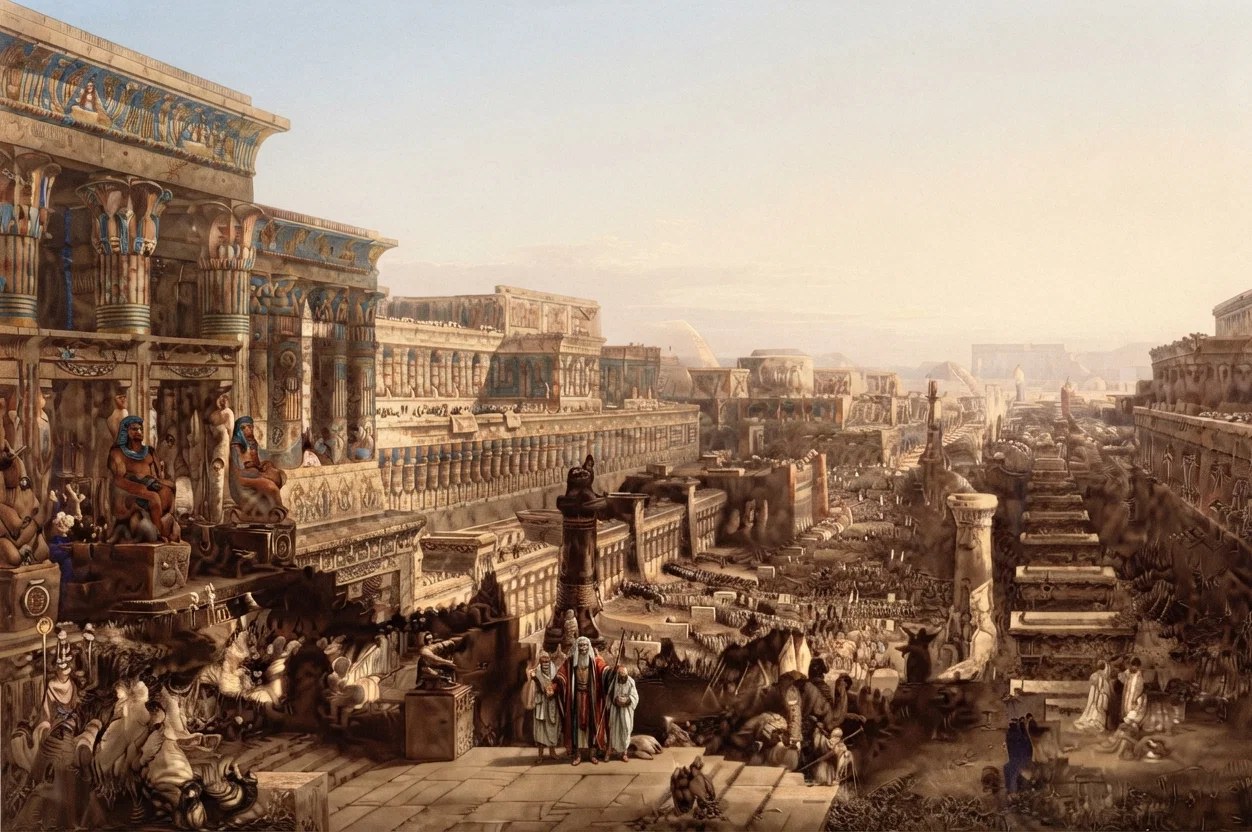
OUT OF EGYPT.

TWENTY-FIVE centuries in the past! How long it seems as we count the hundreds! Yet how near the Sacred History brings that time! Egypt, rich, populous, learned, powerful, earth's richest land! In her midst a nation of slaves, sprung from a prince, who could so easily trace his lineage back to Noah, through Noah's greatest son.
A nation whose ancestors had talked with God, who had seen so much of the coming glory that they despised the dominion of earth, confessing themselves strangers and pilgrims in earth's sunniest clime; a nation in whom centered all the promises of God.
How that nation groaned under the curse, the hard, cruel bondage in brick and mortar, in piling up some of Egypt's greatest monuments perhaps, in making the daily stint of bricks without straw with no cessation or rest; little wonder that Egypt's land was likened to a house of bondage knowing no freedom, to an iron furnace burning out the life and vigor from heart and hope. Children of the promise begat children for slavery. Mothers brought forth little ones for bondage or death. Toiling and moiling, moaning and groaning, Israel suffered and stumbled and prayed and wept, and in their blindness worshiped the very gods whose devotees oppressed them.
DEPARTURE FROM EGYPT.
BUT God did not forget them. One of their own number must be their deliverer. He was born, a "proper child." From the doom of death he came to the heirship of the throne, mighty in deed, and learned in all the lore of Egypt. Guilty of crime in avenging wrong, he flees, and for forty years takes a post graduate course in the school of God. He is now an old man—is Moses; fourscore years has passed over his head. Yet here his life really begins; for God calls him. Down into dark Egypt he goes to deliver by the power of God the people of bondage.
To THAT people he carries the glad tidings that Jehovah, the covenant-keeping God, remembers His people. He bears to the king the message, "Thus saith Jehovah, Let My people go that they may serve Me." Freedom is necessary to acceptable service. Wo be to him who seeks to fetter the moral man. Great will be the judgment upon many masters in God's day of doom. The proud Pharaoh rejected the message, which might have been the glad tidings of God to him, freeing his own soul, and bringing light and joy to the thousands of Israel and Egypt. Then would God's power have been shown through him to his own everlasting good and the glory of Jehovah's name. But he would not, till Egypt was laid waste and the flower of its young men were lying at the bottom of the Red Sea.
"OUT of Egypt have I called My Son," says the Lord through His prophet. Egypt stands for the darkness of this world, and its bondage for the bondage of sin. Many left Egypt physically in that long ago year who never got out of Egypt spiritually. Their hearts were still there. Nay, more, Egypt dwelt in them. They longed for its fleshpots, its leeks, its onions, its garlic, its sun-gods. At the first opportunity, when their strongleader was absent, in the sight of the burning glory of God, they set up a golden image of Apis, the Egyptian sun-god, and substituted it for Jehovah. Alas! how many others have been called from spiritual Egypt to the Canaan of God who are carrying Egypt with them all the way. When the journey goes smooth, after some great deliverance, when quaffing refreshing draughts from Elim's wells, they sing; but when the service is hard, when darkness comes, when trials thicken, when difficulties arise, God is forgotten or murmured against, and Egypt becomes dominant in the heart and life. Like their prototypes of old, they sooner or later fall by the way in the wilderness wandering.
OUT of Egypt! there is cheer in the call. Out of its darkness of superstition, and foul idolatry! Out of its bondage of sin and lust! Out of its ripened fruit of sin, the plagues of just wrath upon its devotees! But it is never out of Egypt into something worse.
INTO Canaan's land God called His people. It looked as tho they were going into the Red Sea; but He who is "the way" made a path through its dark waters. It looked as tho they would die in the thirsty desert, but God led them to Elim's wells and groves, and opened beside them a perennial spring of life. It looked as tho God led them out of the plenty of Egypt into a wilderness of starvation; but the skies rained manna—"man did eat angels' food." It looked as tho the wilderness would wear them out, shut them in forever; but their very garments waxed not old, and they came as soon as they were willing to the land of promise.
OUT of Egypt God calls every soul of this world—out of its sin, its darkness, its lusts, its doom; and dear soul, if you have not heeded the call, do it now. You may have heard and started on the way; then follow the pillar of cloud by day and the pillar of fire by night. Drink of the water by the way. Feed on the heavenly manna. Lust not for the things behind, always to your leanness of soul; but follow on till the eternal glory of the land of promise is yours.

POSSIBILITIES UNDER THE GOSPEL.

THE Son of God came down from heaven to do the Father's will on earth. John 6:38. That was His sole purpose. John 4:34; 5:30.
The Father's will in this connection was the salvation of them who should believe on the Son. John 3:16; 6:40.
Certain qualifications were necessary to this end, and by the Spirit of prophecy He foretells one of these: "Then said I, Lo, I come; in the volume of the book it is written of Me, I delight to do Thy will, O My God; yea, Thy law is within My heart." Ps. 40:7, 8.
The transgression of the law being sin (1 John 3:4), it was necessary that Christ have the law in His heart in order to have the qualification of being "without sin," altho sorely tempted. Heb. 4:15.
In order to be a complete Saviour, it was necessary for Christ to take our nature and go through our experience, even going down into the tomb, the Just suffering for the unjust. Heb. 2:14-18.
Christ having "tasted death for every man" (Heb. 2:9), and God having sent Him for that very purpose, the Father is pledged to the utmost of His power to save all that comply with the conditions. His promise being "yea and amen" in Christ, and Christ having fulfilled all the requirements, God is bound to accept Him as the propitiation for sins that are past. Rom. 3:25, 26.
Christ having risen from the dead by the power of God (Eph. 1:19), He has proved His ability to overcome him who has the power of death (Heb. 2:14), and to deliver us from the power of darkness. By this deliverance believers are translated into the kingdom of God. Col. 1:12-14; Rom. 5:18-21.
Christ having come into the world in the weakness of human flesh, and having overcome the world (John 16:33), and overcome sin in the flesh (Rom. 8:3, 4), He has made it possible for all who come unto God by Him to do likewise. Heb. 7:25.
In order to do this it is essential to follow Him. And in order to attain this standard, one must have the law of God in his heart, according to the new covenant. Having this law in the heart, as Christ did, it is possible in His strength to conform the life to it. As Paul declares, "I can do all things through Christ which strengtheneth me." Phil. 4:13.
This was Paul's supreme aim in life. Phil. 3:7-14. May it be ours also. In 2 Peter 1:1-11 are the steps by which one may never fall.

GOD'S WITNESSES IN THE HEAVENS.

MEN may seek by every subterfuge of subtle reasoning to prove the non-existence of God. But God has His witnesses in the heavens, the work of His hands. The critics of the Word of God, for instance, are stumbling over a dead fish—not a whale, for the Bible does not call it so—and they are seeking to use their own stumbling-block to batter down the citadel of God's truth.
That criticism of the Word of God which seeks to take away its vitality and its inspiration, and every claim it has to being the light of the world—that criticism is filling the pulpits of the popular churches to-day with a Christless Gospel, a Spiritless Bible, and a Godless creation. The acceptance of those theories is shriveling the spirituality of the churches as sere and dead as the autumn leaf; it is drying up the fountain head of missionary contributions as the volcanoes of St. Pierre dried the streams that used to rush down its grassy slopes; it is taking the love of foreign mission work out of the hearts of the people as the wells of the valleys are dried up by subterranean fissures; and as a result of this, it is turning the desire of worship into the channel of self-worship and the worship of gold. It is stealing away the faith of the people as the stealthy thief deprives the thoughtless householder of his jewels and his wealth. When the man awakes, his possessions are gone; he had them, and now they are not.
But in every part of the universe God has His witnesses, and they are testifying to His existence, His power, His wisdom, His care, and His undying love. "The heavens declare the glory of God; and the firmament showeth His handiwork. Day unto day uttereth speech, and night unto night showeth knowledge. There is no speech nor language where their voice is not heard." Ps. 19:1-3. All the creations of God are bearing witness for Him—in their own language, it is true, but speaking in a voice that can be heard by all, and in a language that all who will may understand. The stars that twinkle to us through infinite space are telling us of the wisdom and power of Him who made them and gave to each its orbit and the glory of its radiance, and set a bound for its habitation which it might never pass. The mind may think out into space till it reaches the faintest star that glitters into our view; think out into the great depths through which the radiance of mighty suns wearies in its flight, and sinks just as its trembling finger-tips have touched the shore of our vision; think out, and out, and out, till thought itself, like a fledgling sparrow, flutters and falls in the impossible purpose; and still we are in the work-shop of the Almighty, whose works are tonguing the praises of the common Maker. The great audience-chamber of the Infinite is peopled with His witnesses.
In the presence of such a concourse presumptuous indeed is the human atom that comes to the bar of eternity to present his little brief upon the non-existence of Him by, and in, and through whom all these consist. Truly, it is wisdom's voice which says, "The fool hath said in his heart, There is no God." His works are His witnesses. Are you familiar with the testimony they are bearing for your benefit?
In the midst of the jangle of voices that are seeking to cast discredit upon the Word of God it is our privilege to know in our heart of hearts that He is, and that He is a rewarder of them that diligently seek Him. S.

GOD'S PROMISE ASSURED.

GOD promised Eve that her Seed should bruise the serpent's head; that implies that the promised Seed would destroy the serpent, or the power that actuated the serpent, making it his medium. The "serpent" to be destroyed is the devil, or Satan. Rev. 12:7-9.
The purpose of Christ in taking on human nature was to destroy the devil. Heb. 2:14. But Satan, through his rebellion against God, had set in motion principles which had filled the earth with his works. So Christ's manifestation was also for the purpose of destroying these works. 1 John 3:8. In verse 5 this is called taking away sin.
To this end Christ preached righteousness (Ps. 40:9, 10) in connection with His proclamation of deliverance of the captives (Isa. 61:1).
He was righteous Himself, and an essential feature of His deliverance of Satan's captives, His destruction of the works of Satan, is that these captives become righteous. But they have no righteousness of their own, for they have all sinned. So Christ promises that if they will believe in Him, He will wipe out all that past record, and count them righteous on the strength of His righteousness. Rom. 4:3-9; 5:1, 2.And the whole life of the Christian is a life of faith; for after being justified by faith, we are told that "the just shall live by faith." Rom. 1:16-18. The same power of faith that will secure the forgiveness of sin is sufficient to prevent its recurrence.
The righteousness of Christ kept Him from sin, and as He was tempted in all points like as we are (Heb. 4:15), the same righteousness ought to keep us from sin. "For in that He Himself hath suffered being tempted, He is able to succor them that are tempted." Heb. 2:18.
We see then that Christ, as a man, began His work of destroying the works of the devil by overcoming Satan's attempts to implant them in Him. Matt. 3:16, 17 to 4:11. Then He set about preaching, as well as practising, His righteousness before men in order that the works of Satan might be overcome in their persons.
As a further "assurance" of Christ's superiority over the works of the devil, we have the fact of his being raised from the dead. Acts 17:31. After humbling Himself as a man, and being implicitly obedient, altho it cost His life—suffering death on the cross because of His obedience—God raised Him from the dead. Phil. 2:5-11; Eph. 1:15-21.
When Christ came forth from the tomb He brought up trophies of His victory in the persons of His saints, showing His ability to destroy the result of sin as shown even in the death of its victims. Matt. 27:51-53. This is an earnest of the general resurrection. John 5:25-29. "For as in Adam all die, even so in Christ shall all be made alive." 1 Cor. 15:21-23.
These practical demonstrations of God's ability to fulfil His promises, together with His willingness to do so, as manifested in His great sacrifice to that end, ought to be sufficient assurance that He will do all that He has promised. "The Word of the Lord endureth forever." G.

SERVING FROM DUTY.

ONE of the things upon which men pride themselves is honesty. “I render to every man his own;” “I pay every cent I owe;” “I am in debt to no one,” are expressions often heard, and such ones would deem it an insult if they were charged with dishonesty. And yet how many are dishonest, dishonest toward the truest, justest One in all the universe, dishonest toward God.
Duty is that which we owe, is that which is due.
To refuse to do it is to be dishonest. To fail to heed the call of this “stern daughter of the voice of God,” is to fail to be just with Him unto whom we owe the largest obligation.
Why do we owe God?
1. God created us. We would not be, were it not for His goodness and power. He “made the heaven and the earth and the sea, and all that in them is.” Acts 14:15. “He giveth to all life and breath and all things; and He made of one every nation of men;” “for in Him we live and move and have our being.” Acts 17 : 25, 26, 28. Then all that we are, and all that we have, came from Him, given and kept by His own creative power. By virtue, then, of God’s creation we owe Him all our service. Will we honestly pay the debt?
2. But He has done more than this. In the face of all His goodness we sold ourselves “for naught,” base bondslaves to sin. “For every one that committeth sin is the bondservant of sin, and the bondservant [of sin] abideth not in the house forever; the son abideth forever.” John 8 : 34, 35. When we were bondslaves of sin, utterly unable to free ourselves from the cruel master we had chosen, He bought us with a price so amazing that the shining angels of God have not ceased and can never cease to wonder; bought by such a price that we might be sons to abide in His house forever, instead of servants which must die; bought “not with corruptible things, with silver or gold,” but with precious blood, as of a lamb without blemish and without spot, even the blood of Christ” (1 Peter 1 : 18); bought with this price that we might not become bondservants of men or devils (1 Cor. 7 : 23); “bought with a price” that we might “glorify God” (1 Cor. 6 : 20); bought by the blood of Christ that the servants of sin might become “the servants of righteousness,” “servants to God.” (Rom. 6 : 16-22). Then we owe God all that we have because He has redeemed us. Our service belongs to Him.
Are we honest enough to pay the debt?
He gave His Son to redeem the world, to save men of all nations of the same flesh and blood as we, and all the agencies of heaven are enlisted in the work. For this purpose Christ came not to be ministered unto, but to minister. He has redeemed us to Himself that we might unite with Him in this work; and so has made each of us “debtor both to Greeks and to barbarians, both to the wise and to the foolish.” Rom. 1 : 16. All this is plain, isn’t it? Now are we honest? Will we do our duty? Will we meet our obligation? Will we pay the honest debt? “He who is false to present duty breaks a thread in the loom, and will find the flaw when he may have forgotten its cause.”
O, the time to yield to do the duty is now.

Question Corner

1741.—The First Resurrection.

What is the "first resurrection" mentioned in Revelation 20? W. B. B.
The scripture clearly declares that there will be two resurrections, one of the just and one of the unjust, one unto life and one unto condemnation. Acts 24:15; John 5:29. When Christ comes only the righteous dead will be raised. 1 Cor. 15:51-54; 1 Thess. 4:13-16. According to Isa. 24:2 the wicked shall be shut up in the prison-house of the grave and will not be visited until many days. How long these "many days" are, Rev. 20:4-7 tells us. They number one thousand years. At the end of that time there comes the second resurrection. For further information see "The Great Day of the Lord," of the Bible Student’s Library, price five cents.

1742.—Soul and Body. Matt. 10:28.

Our Saviour says, "Fear not them which kill the body, but are not able to kill the soul, but rather fear Him who is able to destroy both soul and body in hell." Matt. 10:28. Why do writers in the SIGNS often use the expression "soul and body"? How can such expressions be reconciled with the belief that soul and body are one? F. G. H.
But who has said that soul and body are one? Of course it takes soul and body to make the living being, and sometimes the whole being is spoken of as soul. Man is one. Sometimes another word is used meaning the same as in the passage above quoted. Men may kill the body but they can not utterly destroy life; God will give it again in the resurrection. If we would keep in mind that the word "soul" is used to mean different things, we would have no difficulty whatever with any of these passages. It is used generally in three different meanings: first, having reference to the whole person; second, the life which is common to man and beast; and third, the affections and intellect.

1743.—The Thief on the Cross. Luke 23:43.

A friend tells me that we have no right to change the punctuation in the above scripture. "Verily, I say unto thee to-day, shalt thou be with Me in Paradise." This friend uses the thief on the cross as a strong proof of the immortality of the soul. B.
There are several conditions in the understanding of this text. 1. What did the thief request?—"Jesus, remember me when Thou comest in Thy kingdom." But when would Christ come into His kingdom?—"When the Son of Man shall come in His glory, and all the angels with Him, then shall He sit on the throne of His glory." In Luke 19:11-13 He tells us by a parable that He did not take His kingdom when He ascended up on high; but He went to do a work at the close of which He would receive the kingdom, and then come again. In Daniel 7:13, 14 we learn that the receiving of that kingdom takes place in connection with the judgment, and that at the end of earth’s history He takes the kingdom under the whole heavens, which is the earth, and reigns. See also Luke 1:32, 33; 2 Tim. 4:1. Doubtless the thief had heard our Lord teach in regard to these very things, and with utter abandonment of soul he throws himself on the mercy of Christ and pleads, "Lord, remember me when Thou comest in Thy kingdom," that is, when Christ should come again.
2. Our Lord’s answer, "Verily I say unto thee to-day, shalt thou be with Me in Paradise." Where is Paradise? According to Rev. 2:7 it is where the tree of life is. According to Rev. 22:1, 2 it is fast by the throne of God, and will eventually descend again upon this earth when the New Jerusalem comes down from above. Rev. 21:1-5. Yet Jesus told Mary three days after this, when in glad greetings she was about to clasp His feet, "Touch Me not, for I have not yet ascended unto My Father." John 20:17. Therefore Jesus did not mean that the thief would be with Him that day in Paradise. Still further, it was a very rare thing for an individual to die upon the cross the day he was crucified. When the soldiers came to break the legs of the criminals lest they should get away, they found Christ already dead, and they wondered at it. They broke the legs of the criminals, as they had doubtless often done before, and left them to die in lingering agony. Therefore it is not at all probable, in the very physical nature of the case, that the thief died on that day.
What then is meant by the text? Simply this, that the thief, knowing of the glorious kingdom of Christ to come, and that the Master would come back to earth to take that kingdom, asked that he be remembered of the King at that time; and the King, dying upon the cross as a malefactor with no power seemingly to fulfil a single promise, on a day when His own disciples had lost faith in Him, promised the dying man that His wish should be gratified: "Verily I say unto thee to-day [the day above all days when seemingly I can not keep the promise that I shall make, the day when My own professed disciples have forsaken Me and fled, the day when I am dying as thou art dying, as thou hast faith to ask I have faith and assurance to promise, that when that time shall come that I enter my kingdom], shalt thou be with Me."
There would be no trouble with this text at all if it had not been wrongly punctuated. There should be no comma after "thee;" it should be after "to-day." The adverbial phrase "to-day" modifies the verb "say" rather than the verb "shall be." There is no inspiration in commas. For centuries there was no division even between words, to say nothing about the point of sentences. Of course the men who punctuated the Bible punctuated it according to their understanding; but investigation of this subject, as our brief study clearly shows, indicates that the commas should be after "to-day" and not before.

1744.—Instrumental Music.

I would like some references in regard to instrumental music. B.
For the proper use of instrumental music see Ps. 98:5, 6; 150:3-5. The Lord wants it emphatically understood, however, that unless this music is used with the true spirit and grace and usefulness, it becomes distasteful; consequently in Amos 5:23; 6:5 He clearly shows us that the mere matter of using instruments of music like David, when heart and life are corrupt, is wrong.
Continue reading: THE INTER-CHURCH CONFERENCE ON FEDERATION