Your ShelfYour Projects

Signs of the Times, Vol. 24, No. 9.

THE DEMANDS OF AN ATONEMENT

Signs of the Times

Mar 3, 1898

Pacific Press Publishing Company · Oakland, California · Mar 3, 1898

THE DEMANDS OF AN ATONEMENT.
Having learned that an atonement for sin means a reconciliation of the sinner to God, and that it can not be accomplished so long as he cherishes sin, it follows that no one receives complete atonement unless he does renounce sin. It matters not how completely the provision for atonement has been made for all by the death of Christ, if any choose to ignore that preparation, and end their lives in sin, which is enmity to God and opposition to His plan of salvation, they surely receive no benefit from the provident measures taken for their salvation.
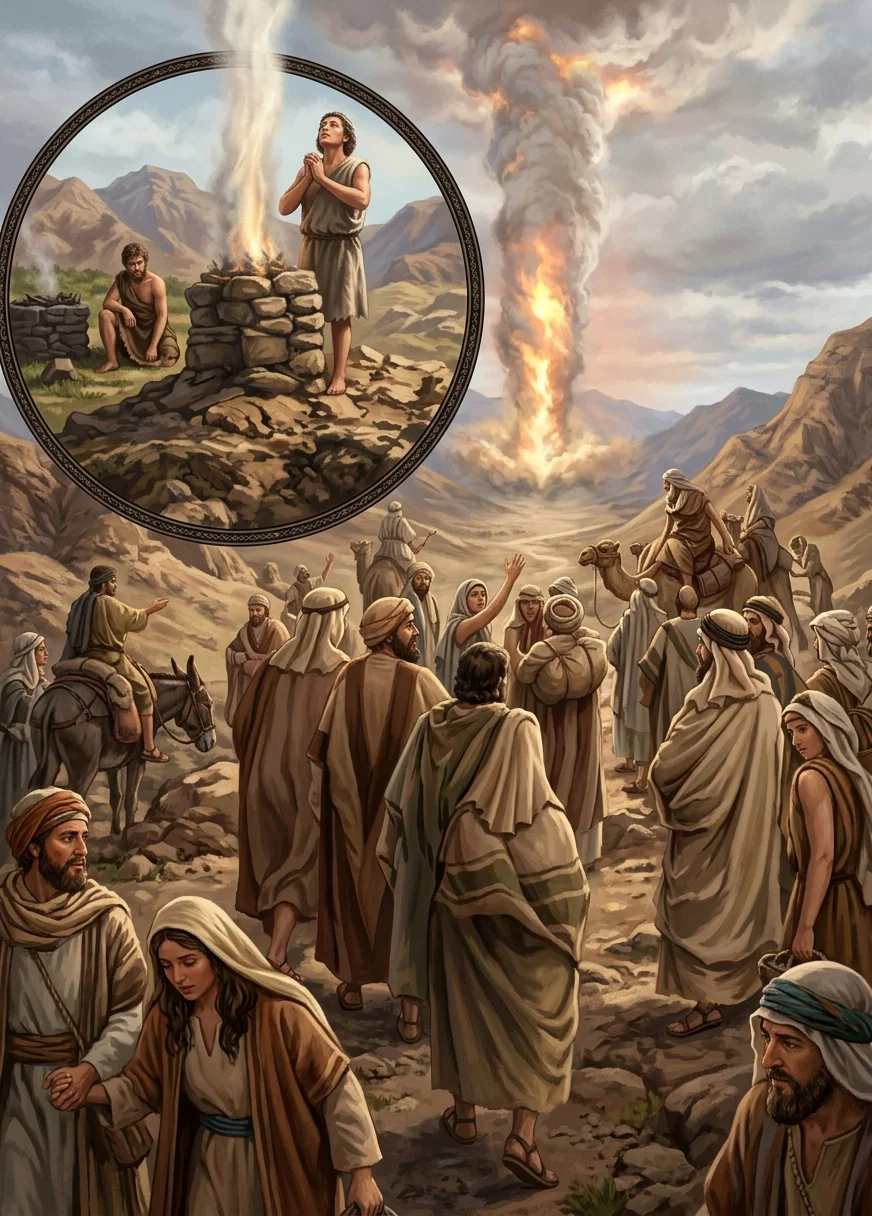
“By faith Abel offered unto God a more excellent sacrifice than Cain, by which he obtained witness that he was righteous, God testifying of his gifts.”
“The fiery cloudy pillar which led the Israelites in their journeyings through the wilderness, was the visible manifestation of Christ’s presence to them.”
“By faith Abel offered unto God a more excellent sacrifice than Cain, by which he obtained witness that he was righteous, God testifying of his gifts.” “The fiery cloudy pillar which led the Israelites in their journeyings through the wilderness, was the visible manifestation of Christ’s presence to them.”
Altho Christ tasted death for every man (Heb. 2:9), it by no means follows that all are saved irrespective of their own action. The death of Christ made provision by which every one may become reconciled to God; but if he chooses to remain an enemy in mind to his great Benefactor, no power on earth can compel him to recede from his position. Force may, through fear, restrain outward acts, but the mind can not be forced to accept what it does not desire to receive. Man’s reconciliation to God depends, therefore, on the combined action of the individual to be reconciled, and the provision by which that reconciliation may be effected.
The provision for this work is plainly set forth as follows: “If, when we were enemies, we were reconciled to God by the death of His Son, much more, being reconciled, we shall be saved by His life.” Rom. 5:10. The death of Christ, the sinless One, in place of the sinner, is the manifestation of love that draws the sinner toward God and begets the desire for reconciliation. Looking into his own heart, the sinner there beholds his enmity to the expressed will of God, and confesses before the throne of mercy that he is a sinner, and entirely undone. This is putting himself on God’s side; for inasmuch as God’s law proclaimed him a sinner, his own confession is an agreement with what God has said. Having the mind of God thus far, the sinner is received, because he is reconciled, and his sins are faithfully forgiven, and unrighteousness stands no longer registered against him. 1 John 1:9.
But there is an additional point in Rom. 5:10, which it is well to notice here. It is stated that having been reconciled to God by the death of His Son, we are then saved by His life. In other words, the sinner’s reconciliation to God places him where he desires to perform constantly the will of God. But to do this he must receive the mind of Christ, which can be had only by receiving the life of Christ, from which that mind emanates. This is the first need of the reconciled sinner, that he may continue in harmony with the reign of heaven, a thing which he can not do with his human power. The life of Christ, which is His righteousness, is therefore bestowed in response to the faith of the penitent one, not only as a sign of his new relationship, but as the power by which that relationship may be continuously sustained while in a world of sin.
It being true that we are saved by Christ’s life, it follows that without that life, none can be saved to eternal existence. This is made plain by the words of Peter: “Neither is there salvation in any other; for there is none other name under heaven given among men, whereby we must be saved.” Acts 4:12. It is certain, therefore, that whoever is eternally saved, be he patriarch, prophet, or disciple, must gain his salvation through the merits of Christ’s atonement. Since Christ has assured us that Abraham, Isaac, and Jacob, with all the prophets, will be saved in His eternal kingdom (Luke 13:28), we conclude that they, like all others of later generations, must have been reconciled to God through the atonement of Christ. How this could be so with those living hundreds of years before the death of Christ, is an interesting problem, worthy of the most patient and careful study.
Life eternal is to know God, and Jesus Christ, whom He sent into the world. John 17:3. Since such knowledge is eternal life, there can be no eternal life without that knowledge, either to Jew or Christian. But as “no man hath seen God at any time,” how is it possible for man to know Him? This has been answered in the statement of Christ: “The only-begotten Son, which is in the bosom of the Father, He hath declared Him.” John 1:18. So, then, whoever has heard of God, and learned of Him, did so by coming to Christ, the only source through whom God has ever been declared. John 6:45.
Christ having been the Word of God from the beginning, that Word has ever come to men through Christ alone. John 1:1, 14. Through Him the Word of God spoke the worlds into existence. Col. 1:16; Heb. 1:2. By Him the voice of God proclaimed the law from Sinai. Acts 7:38. Moses was acquainted with God through Him, “esteeming the reproach of Christ greater riches than the treasures in Egypt.” Heb. 11:26. Faith in this Christ made him forsake Egypt, the land of his birth, with all its wealth and honor, to follow Him who was the Word of God, because he looked forward to a future recompense of reward. This decision placed him in direct communication with Heaven, so that he ate of that spiritual meat, and drank of that spiritual drink, which come alone from Christ, the Rock, who accompanied him and the host of Israel on their way to the promised land. 1 Cor. 10:1–4.
The fiery, cloudy pillar which led the Israelites in their journeyings through the wilderness, was the visible manifestation of Christ’s presence to them. Before the assembled host, thatcloudy pillar came down before the door of the tabernacle, and the voice of Christ from its midst talked with Moses. Ex. 33:9–11. There could be no mistake about their knowledge of Him who was to lead them to the promised land. But, like many who now, when difficulties come, question whether the Lord is really with them, so these people asked when in perplexity, “Is the Lord among us, or not?” Ex. 17:7. Referring to this, the apostle said that in asking this question, they tempted Christ. 1 Cor. 10:9.
But going back to the days of Abraham, we learn that the Gospel was preached to him. Gal. 3:8. The promises contained in that Gospel were to be fulfilled to him through Christ. Verse 16. He accepted these promises through faith. Heb. 11:8–10. Through this faith he looked forward to Christ’s appearance on earth, and rejoiced in the work He came to do. John 8:56. Even Abel, the son of Adam, understood something of the work of Christ in reconciling man to his Maker. By faith he offered unto God “a more excellent sacrifice than Cain.” Heb. 11:4. His was the offering of an innocent lamb, the blood of which fittingly prefigured the blood of Christ, the “Lamb of God,” who was to be offered for the sins of the world. In this alone consisted the excellence of his offering as compared with that of Cain’s, which was but the fruit of the ground, and therefore unfitted to typify the offering of Christ.
When the descendants of Abraham went to Egypt, and there became associated with the heathen worship of that country, they forgot the significance of those early offerings, and so lost, in a large measure, the knowledge of God and of Christ. When that people were brought out again from the land of bondage, it was necessary, before establishing them in the country of promise, once more to teach them the principles of the atonement, by which they were to know God, and be reconciled to Him. But this point must be reserved for a following study. JOHN ORR.

CHRIST'S PRAYER FOR US.

THE prayer offered by Christ just prior to His crucifixion, for His disciples and for us, should be carefully studied by all who profess to be children of God. “This is life eternal,” Christ prayed, “that they might know thee the only true God, and Jesus Christ, whom thou hast sent.”
Christ declares that the science by which a heart polluted with sin may be made pure and holy, contains the sum of all wisdom. A knowledge of God and of Jesus Christ is the foundation of all true religion. Thousands are seeking for knowledge that is worthless; but there is a knowledge that is positively necessary for us to obtain. We must know God, and Jesus Christ, whom He has sent. This knowledge is the science of salvation, and is of more value than all earth’s treasures. To all who appreciate it, this knowledge gives an inheritance among the sanctified, crowns that fade not away, and a life that measures with the life of God.
Before he was expelled from heaven, Satan had an acquaintance with God. He knew his character; but ever since then, his effort has been to misrepresent that character. It is at his suggestion that religion has been made a series of penances and mortifications, or of splendid sights and pageantries. There are many forms of religion instituted by the enemy of God, that are as Christless as was the offering of Cain.
Left to his finite wisdom, man debases everything he handles. He drops the spirituality and truth of the Gospel out of his reckoning. This is the danger to-day. In the home and in the church, we are suffering for want of Christ-like simplicity. Thank God that He has not left His kingdom to be molded by human hands and minds; for then it would have been made up of forms and ceremonies. The most trivial matters would have been exalted as supreme. But Christ declared that His kingdom is truth and righteousness, peace and joy.
“I have glorified Thee on the earth; I have finished the work which Thou gavest Me to do. And now, O Father, glorify Thou Me with Thine own self with the glory which I had with Thee before the world was. I have manifested Thy name unto the men which Thou gavest Me out of the world: Thine they were, and Thou gavest them Me; and they have kept Thy Word. . . . They are not of the world, even as I am not of the world. Sanctify them through Thy truth; Thy Word is truth.”
At the time when Christ spoke these words, the world was destitute of the knowledge of God. Christ came to reveal God. The wise man Solomon had a knowledge of God. When he offered his prayer at the dedication of the temple, he felt the need of divine power. But through association with corrupting influences, he separated from God, and forsook the temple worship for idol groves. So the world has separated from God. God came to uplift men from their degradation. It was His prerogative alone to give to His disciples the precious treasures He came from heaven to bring.
“I have given them Thy Word; and the world hath hated them, because they are not of the world, even as I am not of the world. I pray not that Thou shouldest take them out of the world, but that Thou shouldest keep them from the evil.” God’s people are to shine as lights in the world, in contrast with the moral darkness. Those who belong to the kingdom of Christ have nothing in common with those who follow the maxims, customs, and practises of the world. The Lord designs His people to be a peculiar people; for the church is His fortress in a revolted world. Those who follow Christ will walk, as He did, in heaven’s light. They will not be of the earth, earthy. Altho in the world, they will not be of the world. Uplifted to heaven, the soul will breathe a pure atmosphere. These appreciate their Heaven-bought privileges. They may necessarily be associated with the world, but they are united to Christ. Wherever they go, they take Him with them, and He is ever at their right hand to help them.
Did the believers in the truth live the truth, they would to-day all be missionaries. Some would be working in the islands of the sea, while others would be serving Christ as home missionaries. All are not called upon to go abroad; they may be successful in business lines, and are thus prepared to aid missionary efforts by their means. They may show to the world that business may be conducted on religious principles, that business men may live in strict fidelity to the truth. There may be Christian lawyers, Christian physicians, Christian merchants. Christ may be represented by all lawful callings.
“As Thou hast sent Me into the world, even so have I also sent them into the world. And for their sakes I sanctify Myself, that they also might be sanctified through the truth. Neither pray I for these alone, but for them also which shall believe on Me through their Word: that they all may be one; as Thou, Father, art in Me, and I in Thee, that they also may be one in Us: that the world may believe that Thou hast sent Me. And the glory which Thou gavest Me I have given them; that they may be one, even as We are one: I in them, and Thou in Me, that they may be made perfect in one; and that the world may know that Thou hast sent Me, and hast loved them, as Thou hast loved Me.”
The world watches to see what fruit is borne by professed Christians. It has a right to look for self-denial and self-sacrifice from those who claim to believe advanced truth. God designs that those who believe in His name shall show to the world an unmistakable representation of His own character, manifesting goodness, mercy, and love. These attributes all who belong to Christ’s kingdom must possess. The truth must sanctify them, making them kind, tender, and true to each other, binding them together in the bonds of closest union, and building them up in the most holy faith. Genuine faith and love is the fruit borne by the Christian tree.
It is possible for us to be one with Christ, even as He is one with the Father. If we are grafted into the living vine, if we draw our nourishment from Christ, there will be unity in diversity. Those only who derive nourishment from the Eternal Word, the Son of God, are branches of the True Vine. If we are truly united to Christ, the fruits of His Spirit will be seen in our lives; and tho there may be many branches, each branch will bear the fruit of the True Vine.
Had those who name the name of Christ a knowledge of the Book that unfolds the character of God, they would not be at variance one with another. Those who are one with Christ are one with each other. This union is a living testimony to the power of the Gospel of Christ. Those thus united demonstrate to the world that God has sent His Son to redeem them. They are a manifestation of what the truth can do for humanity. They are living witnesses to the power of redemption. The love of God dwells in their hearts, as it dwelt in the heart of Christ, leading them to obey God’s holy law. Christ’s character is His glory, and the glory of believers is the representation they give of Christ’s character. Unbelievers are convicted and converted as they see Christ’s Spirit revealed by His children.
“O righteous Father, the world hath not known Thee; but I have known Thee, and these have known that Thou hast sent Me. And I have declared unto them Thy name, and will declare it; that the love wherewith Thou hast loved Me may be in them, and I in them.”
Satan is full of plans and devices to lead our feet in paths that are not cast up for the ransomed of the Lord, but Jesus lifts up His voice and says: Follow Me. My sheep hear My voice, and a stranger will they not follow. The most exalted privileges are offered us. We are made laborers together with God. Wherever you may be, whatever business you may be engaged in, you may have Christ by your side. He is always seeking to draw you to Himself. Prayer and praise will come from the heart of those that respond to this drawing; for Christ is to them a well of water, springing up into everlasting life, with grateful hearts God’s children will speak the praises of Him who has called them out of darkness into His marvelous light.
“Wherefore gird up the loins of your mind, be sober, and hope to the end for the grace that is to be brought unto you at the revelation of Jesus Christ; as obedient children, not fashioning yourselves according to the former lusts in your ignorance; but as He which hath called you is holy, so be ye holy in all manner of conversation; because it is written, Be ye holy; for I am holy. . . . Seeing ye have purified your souls in obeying the truth through the Spirit unto unfeigned love of the brethren, see that ye love one another with a pure heart fervently: being born again, not of corruptible seed, but of incorruptible, by the Word of God, which liveth and abideth forever.”
MRS. E. G. WHITE.

Persist Through Difficult Work

“DON’T put off or discontinue a job because it is hard or distasteful. Just hammer away, and end it.”

CONCENTRATION VERSUS DIFFUSION.

DIFFUSION is the great principle underlying all of God’s dealings with the human family. God is the dispenser of light and knowledge, and of every spiritual and physical blessing. “Every good gift and every perfect gift is from above, and cometh down from the Father of lights.” The idea of diffusion, of giving, of spreading abroad, runs all through the teachings of the Scriptures. It lies at the base of the whole scheme of redemption, and interweaves that scheme, like a golden thread, from beginning to end. “God so loved the world, that He gave His only-begotten Son.” “Freely ye have received, freely give.” “Give, and it shall be given to you again.” “Cast thy bread upon the water.” “The GIFT of God is eternal life through Jesus Christ our Lord.” Every benefit enjoyed, every work accomplished, and every hope realized, is in consequence of some grace received from the great Giver.
Concentration is the great principle underlying the work of the enemy. In a multitude of ways is it manifested. Selfish gratification and aggrandizement, self-love and esteem, centralization of power and influence, enjoyment of spiritual or temporal blessings with little thought of others, envy at the good-fortune of others, uncharitableness, narrow-mindedness—in all these and many other ways is the principle drawn out in detail.
During the history of the last six thousand years many instances of these two opposing principles are observed. God’s plan has been that of progression and enlightenment. The policy of Satan has been to circumvent that plan. When God has ordered a forward movement, Satan has stood ready to block the wheels of progress. When God has sought to scatter light and blessing, Satan has endeavored to hedge about the carrying out of the divine purpose. But God has not lacked for resources. His purpose may have been turned aside for a little time, but it triumphed in the end, and accomplished that which He designed. Let a few illustrations suffice to impress the lesson.
In the peopling of the earth six thousand years ago, we see the principle of diffusion illustrated. To Adam was given the command, “Be fruitful, and multiply, and replenish the earth, and subdue it.” The Garden of Eden was given as a model of perfect husbandry, and in the subduing of the earth, it was no doubt designed that the whole world should be brought to the same glorious state of cultivation and production. Here was a work to engage the highest ambition of man, and a work which, if properly entered upon, would have continually led the mind to the great Creator and the Source of all blessings and joy. By the suggestion of evil, the people disregarded this commission. Associating themselves in large companies, their time was occupied with sensual gratification. Self and selfish interests were the objects of supreme service. Finally the sins of the people reached unto heaven, and God remembered their iniquities. All but Noah and his family were destroyed from off the earth.
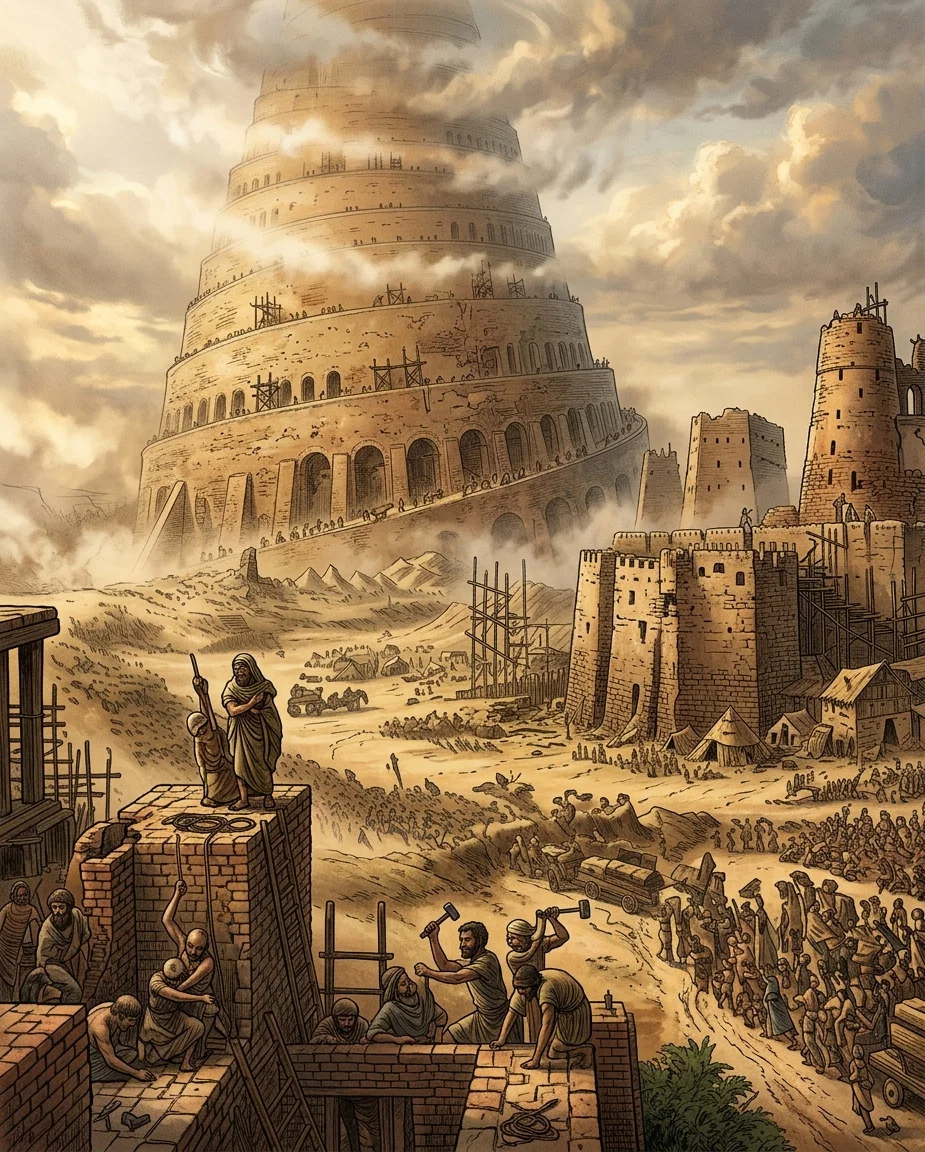
To Noah and his seed the Lord repeated the command given to our first parent, “Be fruitful, and multiply, and replenish the earth.” Again Satan sought to nullify God’s purpose. Love of ease and selfishness prompted their disregard of God’s requirements. “And they said, Go to, let us build us a city and a tower, whose top may reach unto heaven, and let us make us a name, lest we be scattered abroad upon the face of the whole earth.” Here truly was the principle of concentration exemplified. But how did God regard their devices?—“And the Lord said, Behold, the people is one, and they have all one language; and this they begin to do; and now nothing will be restrained from them, which they have imagined to do. Go to, let us go down, and there confound their language, that they may not understand one another’s speech. So the Lord scattered them abroad from thence upon the face of all the earth; and they left off to build the city.”
THE TOWER OF BABEL.
THE TOWER OF BABEL.
Thus, in spite of all opposition and of the spirit which Satan instilled into the minds of men, God carried out His purpose in peopling the earth.
Christ was the highest manifestation of God. He came not to do His own will but the will of the Father who sent Him. He came seeking not His own interests or His own happiness, but the happiness and interests of others. His life-work was to scatter abroad for others the blessings of which He was the Author. He gave His life a free and willing sacrifice. Contrary to the established prejudices of His own nation, He taught that the Jews were not alone the recipients of divine grace. “Other sheep I have which are not of this fold.” He was the Light which “lighteth every man that cometh into the world.” And to all the world did the influence of His mighty works extend. Before His ascension He gave to His disciples the commission to carry forward the work which He had so grandly inaugurated. “Go ye into all the world, and preach the Gospel to every creature.” “Ye shall be witnesses unto Me both in Jerusalem, and in all Judea, and in Samaria, and unto the uttermost part of the earth.”
Once more we see the efforts of the enemy of all righteousness. Too easily were the early disciples persuaded that their responsibility ceased with the witness they bore in Jerusalem. Some, it is true, heeded the command of the Saviour and carried the message to the surrounding countries, but the great majority found home comforts and the association of brethren too enjoyable to scatter abroad from Jerusalem among the outcasts of the heathen, where trials and difficulties must be met and conquered at every step. So Jerusalem became the center of a large Christian church, while many of the remote regions of the earth were left without a witness for the Gospel. But here the fruitful resources of God are again apparent.
The truth must go, and for the sake of those who should carry the light as well as those who desired to receive it, God will use other means to accomplish His purpose in the evangelization of the world. “And at that time there was a great persecution against the church which was at Jerusalem; and they were all scattered abroad throughout the regions of Judea and Samaria, except the apostles.” Thus early did God impress upon the Christian church that the principle of their evangelistic labors must be that of diffusion and not of concentration.
Not alone in the line indicated—that of scattering the people—is the principle upon which God works illustrated. In the matter of all temporal benefits bestowed, it is the same. God gives life to use for others’ good. “He that loveth his life shall lose it, and he that hateth his life in this world shall keep it unto life eternal.” To the possessors of means, God says, “Sell that ye have and give alms;” “Give to him that asketh thee, and to him that would borrow of thee, turn not thou away.” In the government of His church, He has not centered the authority and power in one individual. He has given to every man gifts severally as He will. The Lord Jesus is the Head, “and all we are brethren,” members of the one body, all sharing equally in the labors, joys, and trials of Christian ministry. But the opposite of all this is found in the great world. Life spent for others is counted spent in vain. Concentration of wealth is everywhere apparent. Hoarded millions are rusting from lack of that use which would lessen and alleviate human wo. In society and in the professed church, caste and social distinctions exist. There are lords many and gods many, popes and potentates, each centering in himself, as far as possible, power, and wealth, and influence. Thus these two opposing ideas are everywhere apparent.
In the work of the Gospel dispensation to-day there is no change in the purpose of God. The Gospel now, as in the past, is destined to go to all the world. The great commission given to the early disciples was not alone to them, but to their children and to their children’s children, and to every follower of the Lord Jesus Christ. Witnesses for God to-day must carry the Gospel message to every nation and tongue on the face of the earth. “And I saw another angel fly in the midst of heaven, having the everlasting Gospel to preach unto them that dwell on the earth, and to every nation, and kindred, and tongue, and people.” Every region, however remote, whether in the confines of darkest Africa, in the isolated islands of the sea, or the more favored parts of our own land, must hear the Gospel of God’s dear Son. “This Gospel of the kingdom must be preached in all the world for a witness unto all nations.” All the commands to diffuse the light, to preach the Gospel, and to make disciples among the nations of men, are doubly and trebly emphasized to the people of this generation.
What relation do we sustain to the great commission? Are we carrying out its provisions, or are we, like the builders of the tower of Babel, making for ourselves in this world a name so that we may not be scattered abroad upon the face of the earth? Has love of ease and of pleasant associations taken possession of our minds to-day as it did the minds of the early disciples, thus deterring us from giving to others the glorious light which we have received? What principle lies at the bottom of our life-work? Is it the principle of concentration or the principle of diffusion? The former will be manifested in the hoarded wealth, inthe selfish enjoyment of home comforts, and in the association of brethren, with little thought for those deprived of such privileges. The principle of diffusion will lead to an opposite course. It may require us to leave home, to separate our connection with large companies of believers, and go into the unenlightened regions of earth and labor for the salvation of others who have not the light we enjoy. Let each individual inquire, Am I assisting in the fulfilment of the great commission? Have I a part in giving the Gospel message? The profession of Christianity, or a union with the visible church, is no evidence or indication in itself alone that the individual is assisting in the proclamation. The one who gives of his means to sustain the work of God, and who by his own personal efforts engages in labor for others, is the only one to whom the great commission has come with true appreciation.
Concentration in wealth, in population, in authority, or in the blessings bestowed by the beneficent Giver, is contrary to God’s design. When thus used, stagnation will result, and inactivity and death be the final outcome. “Go ye into all the world,” is the command to-day. “Preach the Gospel to every creature;” this shows the breadth of the great commission. God exhorts us to “arise and shine.” Our thoughts should be no longer of self, but of others. Souls are perishing, and God asks us to search them out and give them the light of truth which we enjoy. “Behold, I will send for many fishers, saith the Lord, and they shall fish them; and after will I send for many hunters, and they shall hunt them from every mountain, and from every hill, and out of the holes of the rocks.” What principle actuates our labors to-day? Is it that of concentration, or that of diffusion? F. M. W.

THE UNCOMPROMISING NATURE OF TRUTH.

  • (Concluded.)*
THIS earth is the battle-field where this last great conflict between the spiritual powers of good and evil is to be fought out to the finish. (See Rev. 12:9: “He was cast out into the earth, and his angels were cast out with him.”) All Heaven looks on in sympathy with the Prince and His holy cause, as it is written, “We are made a spectacle unto the world, and to angels, and to men.”
Millions of martyrs have sealed their faith with their lives at the instance of one or another of the mighty engines of persecution, social, religious, and governmental, erected by the arch-enemy, for the subversion of virtue and the promotion of vice. Some of these are masterpieces of his art. (See 2 Cor. 11:13–15.) We have here no vulgar tactics of a novitiate, but an experienced strategist of marvelous skill and power.
So hath he wrought through the natural selfishness, cupidity, and avarice inherent in the fallen nature of man, that he hath won this temporal world, practically, into his hands, as he boasted to the Lord on the mountain of temptation when he showed Him “all the kingdoms of the world in a moment of time,” and he said: “All this power will I give Thee, and the glory of them; for that is delivered unto me; and to whomsoever I will I give it. If Thou therefore wilt worship me, all shall be Thine.”
So he bids for every man’s soul—thrones, lands, houses, wives, honors, preferments, titles, kingdoms, lusts, pleasures and delights of the senses, jewels, beautiful and elegant raiment, popularity, fame, wealth, splendor, music, arts, offices, all things that appeal to “the lust of the flesh, the pride of the eyes, the pride of life,” “for that is delivered unto me; and to whomsoever I will I give it. If thou therefore wilt worship me,” many of these shall be thine.
Satan has hedged in all these worldly advantages and emoluments, and they can only be obtained by compromise with him.
To the soul standing at the cross-roads of decision, it seems, indeed, like losing this life to choose Christ and His Word, and to such the Word of Christ comes with warning and promise:—
“He that loveth father or mother more than Me is not worthy of Me; and he that loveth son or daughter more than Me is not worthy of Me. And he that taketh not his cross, and followeth after Me, is not worthy of Me. He that findeth his life shall lose it; and he that loseth his life for My sake shall find it.” Matt. 10: 37–39.
To one who knows the history of this great controversy, the uncompromising language of the Scriptures as to the impossibility of maintaining friendly relations with both these antipodal powers, is not a surprise. It is plain to every honest heart that “whosoever therefore will be a friend of the world is the enemy of God” (James 4:4), for “the friendship of the world is enmity against God.” “No man can serve two masters; for either he will hate the one, and love the other; or else he will hold to the one, and despise the other. Ye can not serve God and mammon.” Matt. 6: 24.
Satan is the aggressor and the offender from the beginning, and his is always the aggressive and the offensive role in every campaign.
God has called His servants “as lambs among wolves,” to show forth the praises of their great Captain by whose name they are called, by walking “blameless and harmless” amidst “a crooked and perverse generation,” even as Christ, the Lamb of God, walked this earth innocent, harmless, above reproach, doing only good to those who, influenced by the fiends of hell, were bent on His destruction.
Never, by teaching or example, did the Lord ever justify His disciples in taking the aggressive or offensive in reply to any insult or conspiracy against them, but rather rebuked them when they took offense at these things, teaching “that ye resist not evil,” but “overcome evil with good,” teaching that we should love our persecutors and pray for their conversion, that our weapons of warfare are not carnal weapons, but spiritual, and “mighty through God to the pulling down of strongholds” (Rom. 13:12; 2 Cor. 6:6, 7; 10:3; Eph. 6:13–18); for this is a spiritual war of evil against good, and if we do not exemplify the character of our cause, and maintain the integrity of righteousness in the face of all evil, then we are not true to the character and mission of our Prince, and we have only added our reproach to the reproach of His enemies. If we can not persuade men to join the ranks of our Prince, it would be worse than folly to try to compel His haters to bow the knee. If we can not win them to His service by Christ’s love, we certainly can gain nothing by forcing them into an attitude of respect which is involuntary and unfelt, but to make their hatred the more bitter and implacable.
Thus the great controversy is precipitated. The battle is pitched and waging hotly. On the one side are arrayed the armies of Michael, the Prince of heaven. These soldiers of the Prince of Peace are the “called, and chosen, and faithful” (Rev. 17:14) ones of earth, who have “left all” to follow their Lord,—they have scorned all bribes and temptations of the enemy. And behind this company on earth are the armies of heaven (Rev. 19:11–16), none the less real because invisible. Every one is a mighty power for help, and above all, at the right hand of God, is the Captain of our salvation, with “all power in heaven and earth” for the “present help” of every soldier. For He says, “Lo, I am with you alway, even unto the end of the world.”
Those in His service are asked to bear meekly and patiently all trial and persecution for His sake, and to keep themselves from “fornication” (Acts 15:29; Rev. 18:3) with the traitor power in any form, unspotted, unpolluted, “faithful unto death,” and that by a pure life and pure Gospel they win as many souls from the ranks of Satan as will “hear” the blessed words of life.
On the other hand is the great apostate angel, Lucifer, now Beelzebub, prince of devils, and the powers of darkness, and all his legions of earth and hell combined. They are actuated by one fell purpose, viz., to ruin as much of the Prince’s fair domain as the time left them will allow, and to ensnare, seduce, and betray into error as many of Prince Immanuel’s army as will listen to their “cunningly devised fables;” and when guile and hypocrisy fail, all fraud, treachery, and hellish pressure is brought to bear to drive them from their Rock—Jesus, and His pure principles of Gospel truth. And when all these fail, persecution to the death! But they “fear not them that kill the body, and are not able to kill the soul.” And so all the fiery darts fall powerless from the “shield” of our “faith.” “For this is the victory that overcometh the world, even our faith.” 1 John 5:4.
And what is the service of Satan? Those who have tried it (and we were all his servants by nature) know that “the way of the transgressor is hard.” “There is no peace, saith my God, to the wicked.” His rewards, a few perishing baubles of earthly honors and pleasures, and in the end “wrath” and “fiery indignation that shall devour the adversaries.” All love, all joy, all life and honors and happiness that might have been ours for eternity, lost, and lost forever!
Ah, who can hesitate on such a choice as this? O, that all might awake to the realities of this terrific struggle! It means your life, or your eternal death, my brother, my sister. We are living in fearful yet glorious times. We are they “upon whom the ends of the world are come,” and, “behold, the Judge is at the door.”
Never before were such grand opportunities opened for proving our gratitude and loyalty to the One who has died for us. There is no neutral ground! We can not hide behind any plausible theory, or non-committal shelter, and evade these issues. God is jealous of His holy cause. He will not permit it. Satan will not allow it; all must acknowledge his sovereignty on pain of his enmity. Every skulker will be dragged from his hiding-place and made to declare his fealty to the dragon or the King, and receive the beast’s damning “mark,” or be “sealed” for God and heaven.
How wonderfully all lines of prophecy are trending to the focusing-point,—the coming of our Lord! How marvelously all the great tides of human events are setting in toward the last awful tragedy,—the day of God’s wrath!
Dear reader, where is your allegiance—to the King of heaven, or to the prince of this world? Are you enemy or friend? H. R.

Talent Beyond Fine Phrases

I DO not call talent the art of polishing brilliant and hollow phrases, which are like finely-chased dishes containing nothing.—De Tocqueville.

The Bitterness of Jealousy

“THE man who is jealous and envious of his neighbor’s success has foes in his heart who can bring more bitterness into his life than any outside enemy.”
Continue reading: WHAT LOVE WILL DO