Your ShelfYour Projects

Signs of the Times, Vol. 39, No. 48.

To the Eternal Victor
Earlier text: God’s Word Our Assurance

Our Bible Reading

Forgiveness and Consecration

1. What is it the duty and privilege of every sinner to seek?
"I said, I will confess my transgressions unto Jehovah; and Thou forgavest the iniquity of my sin. For this let every one that is godly pray unto Thee in a time when Thou mayest be found." Ps. 32: 5, 6.
2. How willing is God to forgive?
"Let the wicked forsake his way, and the unrighteous man his thoughts; and let him return unto Jehovah, and He will have mercy upon him; and to our God, for He will abundantly pardon." Isa. 55: 7.
3. What does He ask of us?
"My son, give Me thy heart; and let thine eyes delight in My ways." Prov. 23: 26.
4. In view of our relationship and dependency upon God, what is the duty of every one?
"Thou shalt love the Lord thy God with all thy heart, and with all thy soul, and with all thy mind. This is the great and first commandment. And a second like unto it is this, Thou shalt love thy neighbor as thyself." Matt. 22: 37-39.
5. What perfect standard is placed before us?
"Ye therefore shall be perfect, as your heavenly Father is perfect." Matt. 5: 48.
6. What discipline should our will and purpose ever bring us?
"Whether therefore ye eat, or drink, or whatsoever ye do, do all to the glory of God." 1 Cor. 10: 31.
7. What will He do?
"And God is able to make all grace abound unto you; that ye, having always all sufficiency in everything, may abound unto every good work." 2 Cor. 9: 8.
"Him that is able to do exceeding abundantly above all that we ask or think, according to the power that worketh in us." Eph. 3: 20.
8. What, therefore, should be our constant purpose in the consecrated life?
"Keep thy heart above all that thou guardest; for out of it are the issues of life." Prov. 4: 23, margin.
"Set your mind on the things that are above, not on the things that are upon the earth." Col. 3: 2.

Not Serving Sin

MAN is not justified that he may continue in sin, but that he may be freed from sin. He is not born into the liberty of the sons of God that he may have license to disobey God. Says Paul: "Shall we continue in sin, that grace may abound? God forbid. How shall we, that are dead to sin, live any longer therein?" "Knowing this, that our old man is crucified with Him, that the body of sin might be destroyed, that henceforth we should not serve sin." "Let not sin therefore reign in your mortal body, that ye should obey it in the lusts thereof." Rom. 6: 1, 2, 6, 12. The controlling power of sin is broken, the slave of sin is set free. The lusts existing in the mortal flesh are beneath the heart holding connection with God. Jesus Christ is a whole Saviour. He saves from sin, He saves from sinning.

Spiritistic Troubles

Spiritistic Troubles.—A Sunday magazine tells us that there are things that are worrying earnest Spiritualists a great deal now. One of these is, Where do ghosts get their clothes? and where do spectral skeletons get their bones? and where do phantoms get their breath to shriek? and how can they walk through solid walls without tearing their garments? This is leading some of them to believe that there is a low form of consciousness in inanimate matter; and Dr. T. Clay Shaw, a noted London physician, claims that a ghost is a replica of a former object which can assume a solidity or can condense itself so as to be capable of exciting vision, and can then revaporize and disappear; and if this is true, it must work on living material, however attenuated its form, inasmuch as it appears at one time in one guise and at another in a different one. So he holds there must be a spiritual form corresponding to every phase of actual life. Dr. Shaw does not believe that all the stories are impostures; they can not be. The thought is that they have power to take living matter and materialize it into various forms. But all these things are within the power of those malign spirits called in Scripture demons, familiar spirits, unclean spirits, angels of the devil, etc. Sometimes, doubtless, they deceive with actual appearances of what may be called materialized objects, but sometimes they hypnotize the soul into believing that he sees what is really not there.

In What Respect?

In What Respect? — The Christian Statesman takes Governor Wilson to task for 'the desecration of the Sabbath September 15,' by traveling on the railway, and says, 'God's laws are to be obeyed as well as those of men.' But the Christian Statesman knows or ought to know that there is not a single law of God in His holy Word which forbids Sunday travel. Probably Governor Wilson knows this. The Sabbath law pertains to the seventh day. Sunday is the first day of the week, or three fourths of it.

The Mediterranean Sea

The Mediterranean Sea means the Middle-of-the-Earth Sea; and that is about what it is just now.

London Letter

(From Our Own Correspondent)
AT the time of writing, it looks very much as if Turkey's hour had come. The "sick man" may, of course, recover a little strength, as he has so often done in the past, but there is no mistaking the gravity of the crisis through which he is at present passing.
The rapid developments of the Balkan campaign have filled Europe with amazement. As the "Star" put it in the early part of the struggle:
"The eye of Europe is blinded by the fierce lines of flame that rend the black sky hour by hour. The mind of Europe can not work quickly enough as the Ottoman Empire crushes and crumbles like a city smitten by an earthquake. The most prescient statesmen had not foreseen the gigantic cataclysm which has been wrought by the thunderbolts of the allies in ten brief, dizzy days."
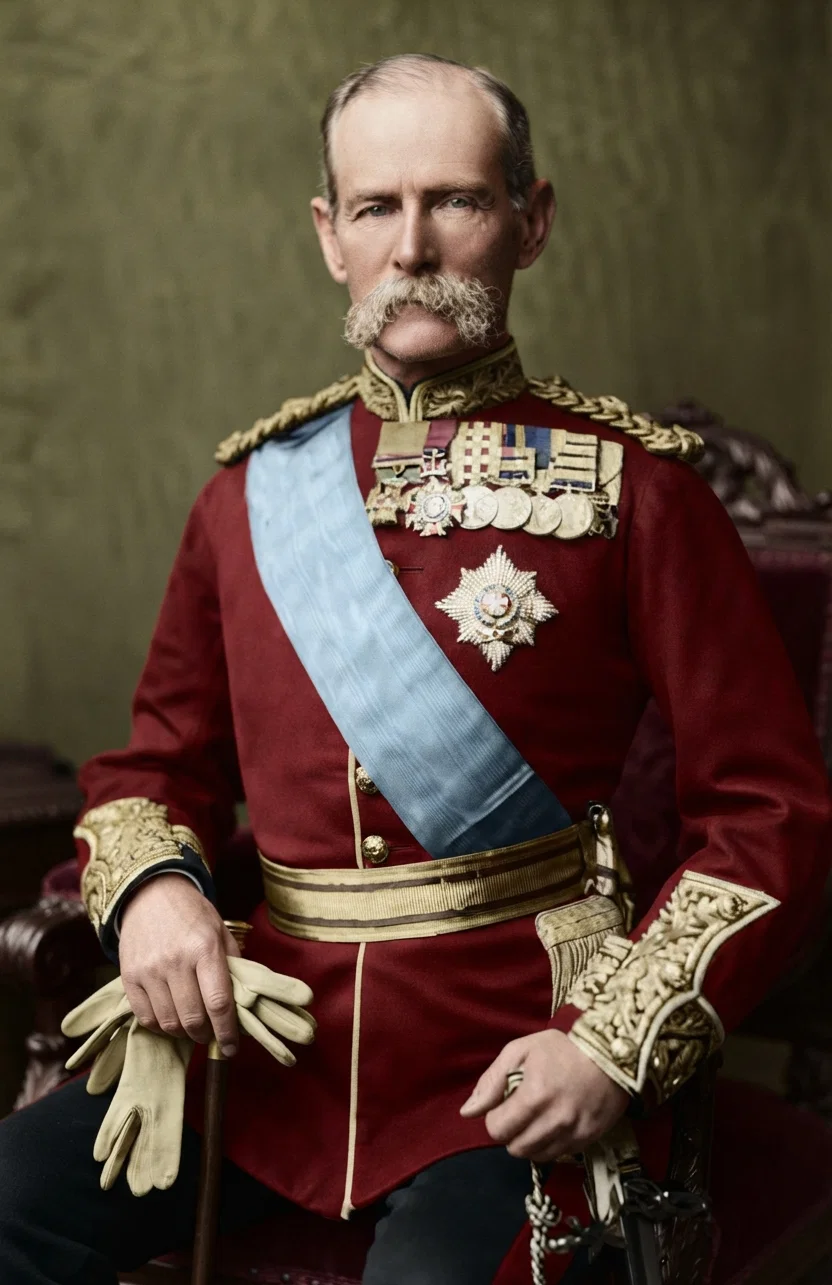
Field-marshal Earl Roberts, V.C., K.G., England's great soldier, who is advocating conscription
The powerlessness of the great powers to hold the Balkan States in check is one of the outstanding features of the situation. They haughtily announced, before the war began, that it was unnecessary to fight, that they themselves would bring pressure to bear upon Turkey to grant reforms. If, in spite of this warning, the Balkan States should be so headstrong as to declare war upon Turkey, the great powers would majestically intervene in due time, after a little blood-letting had reduced the war fever, and would permit no territorial changes whatever; so that nothing would be gained by going to war.
The success of the allies has entirely changed the tone of the great powers. They are now professing a thoro conversion in their ideas, and protesting that, so far as they are concerned, they will do nothing to prevent the victors from reaping the reward of their efforts and sacrifices. With the exception of Austria, they are even willing to declare their own territorial disinterestedness. Austria apparently can not consent to forego the prospect of satisfying her long cherished desire for more seacoast when the impending revision of the map of Europe takes place.
A strong helper for peace
The whole situation is still big with possibilities. For seventy years Europe has looked forward vaguely to the driving of the Turk out of her dominions, but has dreaded the tremendous conflict which it has always foreseen as likely to follow upon that event. The growth of the Balkan States may have settled the question of banishing the Ottoman Empire from European soil, but there still remains the great problem of dividing up the inheritance to the satisfaction of the heirs.

"The Little Nations"

The press here is applying to the Balkan States the term, "the little nations," as contrasted with "the great powers." The title is suggestive of that prophecy in which Joel foretells the enormous preparations for war that will usher in the day of the Lord. After speaking of the world-wide arming and awakening of the Gentiles, he makes use of this expression: "Let the weak say, I am strong." Joel 3:10. The English newspapers are impressed with the contrast between the numerical weakness of the Balkan populations and the astonishing size and strength of their armed forces. The "Observer" writes:
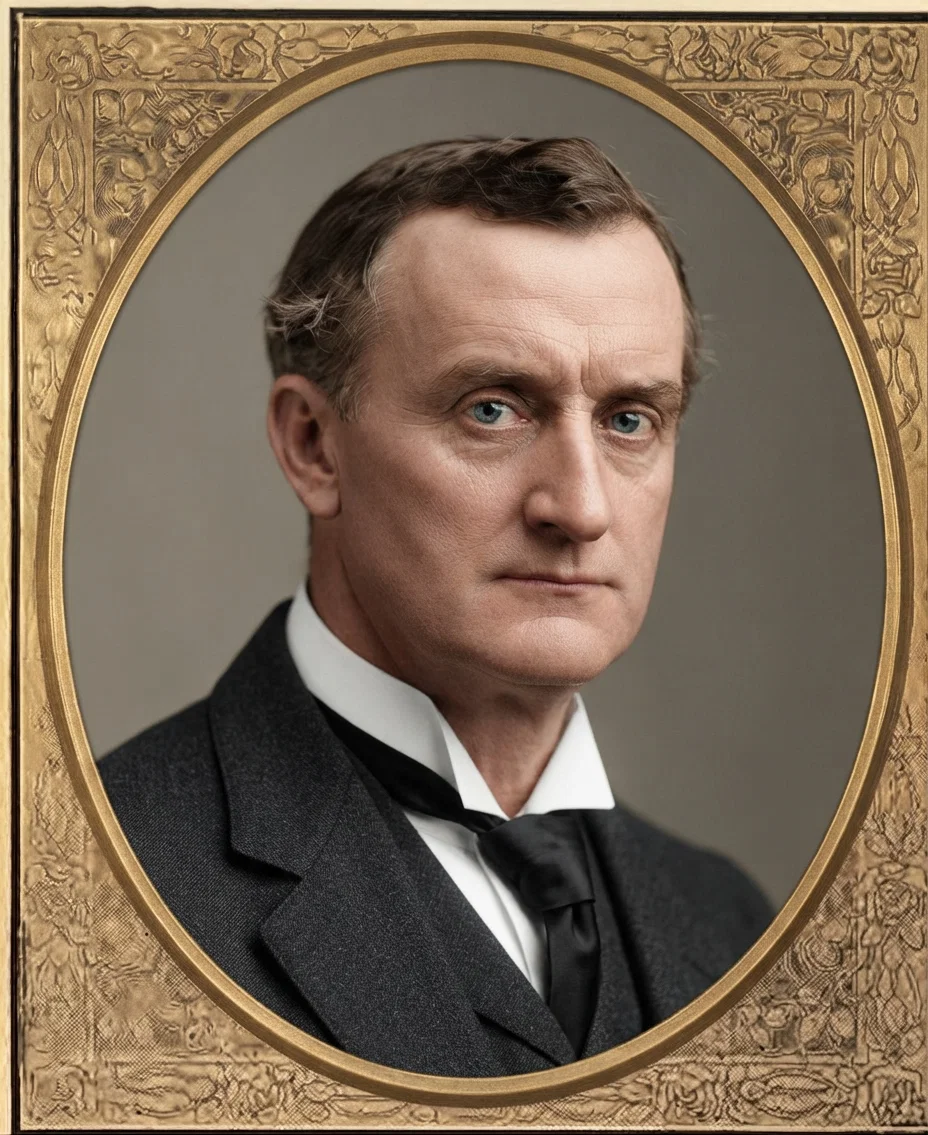
Sir Edward Grey, England's secretary of state for foreign affairs, who is earnestly working to secure and preserve the peace of Europe
"Bulgaria and Servia, with populations less than those of Lancashire and Yorkshire, have alone mobilized a host of over 600,000 men, as many as Napoleon numbered in the grand army assembled for his greatest effort at the height of his power.
Little Greece and miniature Montenegro send forward between them numbers equal to Lord Haldane's expeditionary force."
This has only been accomplished, however, by the sending to the front of every able-bodied man. Concerning Bulgaria, the "Times" correspondent says:
"All the manhood of Bulgaria has gone to the front. The cities and the villages are deserted, and the fields are lying desolate. There are few waiting behind to fill the gaps in the fighting line. It is now or never with Bulgaria, as her commanders probably know full well."
And the same thing is true of the other side. The "Telegraph" writes:
"Throughout the whole of European Turkey and Anatolia the men have been called to the front. Every village, town, and hamlet has sent its tale of men. This war is an insatiable maw which gathers to its cruel feast whole provinces at a time. The normal life of the nation must now be carried on by old men, beardless youths, whose turn is likely to come very soon, and by women."
This is the price which the "little nations" are paying for their preparedness to meet the vast armies of Turkey in the field. And theintensity with which they enter into the struggle must inevitably affect the scale on which the larger nations prepare themselves for war, unless these are willing to fall out of the front rank and cease to dominate affairs. This is the unpleasant prospect that begins to face us. Says the Westminster "Gazette":
"The fact that these little states, with an aggregate population all told not exceeding ten millions, should be able to put into the field these enormous, highly equipped armies, does bring home to us, as nothing else could, the inordinate and horrible scale on which modern warfare is waged. If — comes the involuntary thought — Bulgaria and Servia can do this, what should we see if Austria and Russia or Germany and France were set in motion against each other?"

Conscription Deemed Necessary

The advocates of conscription in this country do not fail to drive home the lesson. They are declaring that the Balkan States put us to shame by the self-denial and energy they exhibit. Lord Roberts, who has for years placed himself at the head of the conscription movement, said a few days ago:
"My ultimate counsel to the nation and message to my countrymen at this solemn hour is, 'Arm and prepare to quit yourselves like men, for the time of your ordeal is at hand.'"
"As a European power, as a continental power, we do not exist — for war. Our army as a belligerent factor in European politics is almost a negligible quantity. The empire is at all times practically defenseless beyond its first line. Such an empire invites war. Its assumed security amid the armaments of Europe, and now of Asia, is insolent and provocative.
"I have commanded your armies in peace and war. I say to you, the young men of this city and of this nation, that your enfranchisement is not complete until you have become soldiers as well as citizens, prepared to attest your manhood on the battlefield as well as at the election booths."

The Suspected German Attitude

In the same speech, Lord Roberts expressed his deep conviction that immediately the favorable moment appeared, Germany would seize the opportunity of declaring war upon England. For this speech he has been sternly rebuked in Parliament by the foreign secretary, Sir E. Grey, as an irresponsible stirrer up of mischief and in feeling between the two nations. But a large number of influential people have told Lord Roberts, in a signed address, that they regard his utterance as a national service, and think the country ought to be grateful to him for it. There is no doubt that Lord Roberts represents a feeling which is rapidly gaining in strength. According to the "Times," England is fast getting ready for conscription:
"Unconsciously and slowly, but surely nevertheless, the democracy of these islands is reaching a new standpoint in matters of defense.
"Tho we have still a long way to go before the value of military training is justly recognized, our present progress is a welcome sign that we are taking to new standards of national moral.
"The belief in universal and compulsory training has indeed grown so rapidly that politicians, in our opinion, overrate the opposition by which a definite measure of that nature would now be faced.
"In Australia and New Zealand, five years have wrought an absolute revolution in popular ideas. In both these dominions, the whole manhood of the country is passing through some weeks of military discipline on the threshold of adult life. Canada has changed more slowly than the rest; but no one doubts that when Mr. Borden's naval proposals are announced to Parliament next month, they will put a new complexion on the part which Canada means to play."

Home Rule in Ireland

The House of Commons is still hard at work on the Irish Home Rule Bill. Opponents of this measure have done their best to stir up the north of Ireland against it, and seem to have succeeded. Tens of thousands there have entered into a solemn league and covenant that they will never submit to the rule of an Irish parliament. Notwithstanding this menace of civil war, the government is going on with the bill, declaring itself willing to insert any reasonable safeguards that may be desired for the prevention of religious inequality, but determined not to be thwarted by unconstitutional agitation. Sir Edward Carson, and other leaders of the Belfast Unionists, have said that they do not expect the Irish parliament to pass any oppressive legislation; they think that religious intolerance will manifest itself in the administration of affairs rather than in the framing of laws. Probably the struggle over the Home Rule Bill would have been much more bitter but for the absorption of parliamentary interest in the tremendous drama that is being enacted in the East. Everything else seems small in comparison.
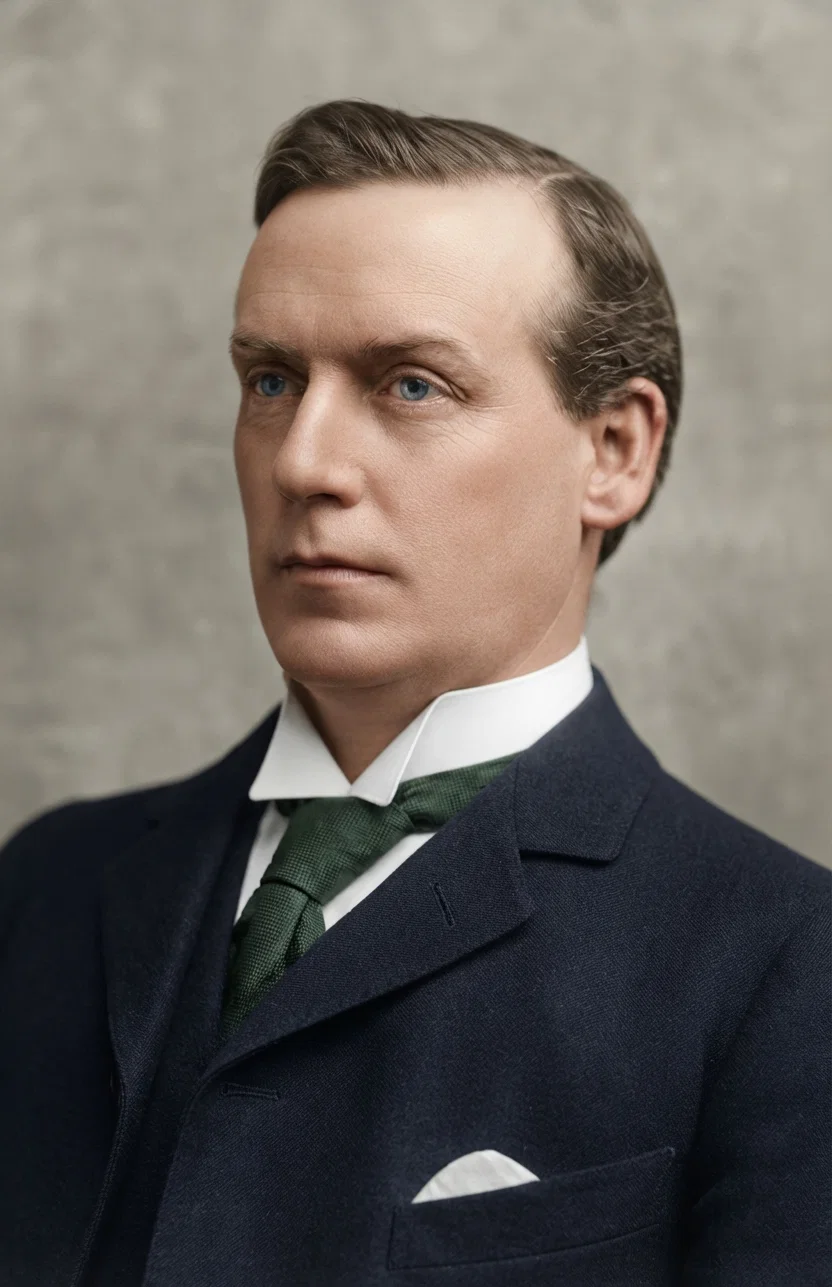
Mr. H. H. Asquith, England's prime minister, who is a strong worker for peace in Europe

Militant Suffragettes

The violent tactics of the militant suffragettes have been renewed. Yesterday a number of windows were broken in a fashionable shopping center of London. A favorite device now largely adopted is to pour corrosive chemicals into the public boxes for the reception of mail, so as to destroy the letters there awaiting collection. Almost every day, a number of letters are injured or destroyed in this way. Until recently, the militant party was led by Mrs. Pankhurst and her daughter — the latter of whom is now staying in Paris to avoid the English police — and Mr. and Mrs. Pethwick Lawrence. The first named ladies are, however, too advanced in their methods to suit Mr. Lawrence and his wife, so there has been a split in the organization. Mrs. Pankhurst declares relentless war on property until the vote is given to women. The two women who were recently sent to prison for five years for attempting to set fire to a theater in Dublin, have been released because their health was seriously undermined owing to their determined abstention from food. Quite apart from the militant suffragettes, there is a large party which is working for votes for women on constitutional lines, and it is quite likely that these would have gained over the House of Commons by now, but for the alienation of
sympathy brought about through the adoption of violent measures by the militant section. The latter are contemptuously regarded as half insane by the more moderate workers in the cause, but they themselves profess to believe that they have to act like mad women in order to compel the country to give them what they want. Their movement is but one of many which to-day are exalting violence and lawlessness as the most effective means to some desired end.

White Slavery

The white slave problem has come prominently before us in England in connection with a bill to prevent the traffic. When the bill was first brought in, it contained a number of provisions that were deemed too drastic by Parliament, and milder clauses were substituted. The churches have, however, taken the matter up, and held meetings of protest everywhere, with the result that the bill has now been strengthened by the reinsertion of the original provisions. Not content with this, the House of Commons has now made flogging one of the punishments for white slave traffickers, even for a first offense if the judge so decides. This is a notable victory for the Puritan party, and will probably encourage the churches to press for more vigorous treatment of other questions, such as Sunday closing of picture theaters, which has now become a live issue.

Toward Church Federation

The Free Church Council has appointed a commission to study the whole subject of church organization in this country, with a view to bringing about a larger measure of unity and cooperation among the Free churches. They hope to prevent the frequent overlapping and building of unnecessary churches in new districts, and to make the Free churches a stronger factor in the life of the nation.
Mr. Lloyd-George has recently made new proposals to the medical profession for their remuneration under the Insurance Act. The rate per capita is now raised from one dollar fifty cents to two dollars ten cents per annum, and there is a general feeling among the profession that altho this does not fully meet their demands, they had better accept the offer. If they do not, Mr. Lloyd-George will organize a state medical service. The doctors may congratulate themselves on a victory which will substantially increase the amount now paid to the medical profession as a whole for their services.
W. T. BARTLETT.
Copyright Lambert Weston & Son. Miss Pankhurst, a militant suffragette

Turkish Women’s Legal Rights

The Turkish woman's condition is not as bad as it is sometimes represented, a lady writer who is acquainted with conditions there tells us; that while the law does permit a man to keep a harem of four wives, the vast majority of Turks have but one. "He is afraid of putting himself at the mercy of so many women," we are told, for the law guards women. Their property rights are the same as those of men. If a married woman earns money, it is her own, and her husband can not touch it. She is not under the legal guardianship of her husband, and he is not responsible for her debts. At marriage she is endowed with a separate estate, over which she has entire control, and which remains hers under any circumstances. Sons and daughters inherit equally. She can sue her husband, and be sued by him. A sum is set aside for housekeeping expenses, and no one has a right to inquire how it is spent, and her husband is obliged to maintain her and her servants according to his means. That is certainly better for woman than some civilized countries offer.

HOME AND FIRESIDE

Reading in the Home

“Of making many books there is no end.” These words of the wise man, written so many centuries ago, were never truer than now. And not only “many books,” but to-day the dailies and weeklies and monthlies and semimonthlies and great quarterlies accumulate on our tables and shelves, until we are driven to kindle fires with some of them in self-defense, lest they overrun every room in the house.
So it is not a question of finding plenty and a variety of reading-matter for homes; but the question is, to be able to choose wisely and well, among such a heterogeneous mass, that alone which will instruct and edify and minister to the spiritual needs of the various members of the family.
Many people imagine it quite out of the question to do without the daily paper. And indeed, the daily newspaper, with its shameful records of public wickedness, and its careful and elaborate account of the latest scandal, is about the extent of the literary food of some families. Too bad!
Not so very long ago, a bright little boy called at my home, on an errand. After a while, he grew communicative, and announced: “When I get to be a man, I shall be a prize-fighter!” And the small boy looked up with pleased confidence into my face.
Now this little laddie was very anxious to gain my approval; and hence he was considerably grieved when I expressed my entire disapprobation: “O Eddie! I never would do such a thing! A prize-fighter! Why, my boy, you want to become a good and noble man, don’t you?”
“Yes, ma’am,” very meekly.
“Well, then, tell me what put such a dreadful idea as that into your head, Eddie.”
Then the poor child admitted that he had been feasting upon the pictures on the sporting page of a popular daily, and had listened to the reading of the accounts of the fistic battles of the champions of the ring, until even in his innocent young heart had sprung up a desire to become a man, so that he might do the same!
O, I tell you, it is a dangerous thing to place such literature where our boys and girls can have free access to it, and to the disgusting, nauseating, and repulsive pictures which always go with it! One can scarcely open a newspaper of any kind, daily or weekly, but his eyes are greeted by these brutalizing, soul-hardening pictures. Ah, it is “by beholding” that “we become changed”!
“Well,” protests some voice, “how are we going to become posted regarding the daily happenings of the world, without the newspaper?”
Do not misunderstand me. The daily newspaper is not without its value, of course. It is well in its place. But its place is not in the hands of our boys. Especially should they be guarded from the sporting columns, as we would shield them from the plague.
“I destroyed our paper this morning,” said one of our neighbors — a good, sensible woman, tho not a Christian. “I was afraid it would fall into the hands of my son; and, really, I wouldn’t have him read some things in to-day’s issue for any money.” And this mother’s course is to be commended.
Do not forget, either, that newspapers do not need to be studied. If the sporting page holds a sort of fascination for our boys, no less does the society column fascinate the girls. They linger over the bewildering description of the latest ball, and study the costumes of the elegant society ladies, till almost unconsciously there is born in their hearts a desire to imitate them. The latest performance of some immodest and indecent dance is fully illustrated, commented upon, and approved of.
I have been astonished and indignant to see, even in what would be called our best magazines, such pictures as one would not expect to see outside a brothel. And worse still, the editor comments very favorably upon them, because, forsooth, they are “so graceful”!
Those things which shock the moral sense of decent people, are written up in fascinating style, and the young are attracted toward them, like moths to a candle. I would rather place the cheapest kind of a yellow-covered dime novel in the hands of the boys and girls, than such soul-wrecking literature as this.
But when the heroines of our popular magazine stories are silly charlatans, and the heroes are represented as indulging in such blasphemous and sensual language as to shock any right-minded person, and all without a single protest either of the author or the editor; and when criminals are made to pose as heroes, and even murder is apologized for, under the name of “unwritten law,” it is high time to guard our young from its baleful influence. How can we expect them to develop into noble manhood and womanhood, with their brains fed on such an intellectual and spiritual diet as this? I am not saying that all magazines are entirely unprofitable, nor that any of them are wholly given to evil. But when there is plenty of the choicest literature to be had — literature that is not only deeply interesting, but instructive and edifying as well — why should we waste precious time on that which profits little and perverts much? If James and Kate were hungry, would we place before them a basket of rotten fruit, because by choosing carefully enough, they might be able to find a little which was fit for food? Would we not rather provide them with good, wholesome food? And how much more necessary it is to provide good food for the soul than for the body!
“Well, then, what shall we bring into our homes, for the young to read?” is a question which is shaping itself upon many lips. We can not in reason expect Johnnie and Bertha to enjoy the deep theological treatise which father studies so diligently. But they will sit quietly and happily studying the book that tells all about animals and their habits. One might think that a natural history would be rather a dry volume for a young boy to enjoy; but not long ago I knew two little boys, belonging to different families, who were very eager to borrow this book, and who chose it in preference to anything else.
“Well,” you say, “I suppose that the principal thing is to be sure that all which my children read is true — something that actually happened; surely then I can make no mistake!”
But, my friend, if you are governed by this rule, without exception, I should not want to answer for the morals of your boys. Why?
Some years ago there fell into my hands the true story of the ringleader of as lawless a band of robbers and ruffians as ever terrorized the West. Now this book, as well as all others of the same kind, must be looked upon, by all right-minded people, as exceedingly dangerous literature. And the more truthful they are known to be, the more insidious and terrible their effects upon the young.
Whatever will make us better, wiser, purer — let us choose such reading as this, and place it in our homes. We are apt to let our thoughts dwell upon that which we read — and if the reading be good, this is right. So if we can discover what it is best to think about, it will help us in our choice.
When the inspired orator of Mars’ Hill was in the Roman prison, he gave us an excellent program to follow:
“Finally, brethren, . . . whatsoever things are pure, whatsoever things are lovely, whatsoever things are of good report; if there be any virtue, and if there be any praise, think on these things.”

The Young Man's Worst Enemy

THE United States Tobacco Journal informs the world that the total number of cigarets made in this country last year was nearly 10,000,000,000, which takes no account of importations or of the cigarets rolled by the smokers, which would probably come to several billion more. But even without these, there were one hundred cigarets for each person in the United States — a formidable total, and enough to suggest that somebody is indulging to excess. Cigar smoking increased also, but not in proportion. The gain in cigarets over 1910 was 1,184,124,915. This is certainly appalling, considering that a young man had better be dead and buried than to be a confirmed cigaret smoker. We speak well within bounds. He can not be educated, he can not be trusted, his manhood is completely discredited. Physically, mentally, and morally, he is a carcass.

Do Good With What Thou Hast

Do good with what thou hast, or it will do thee no good.— William Penn.

STANDARD HOUSEHOLD LUBRICANT

For Everything About the House that Needs Oiling.

Standard Household Lubricant is put up in a can that is itself an oiler—cannot break, as a bottle may.
Always ready for use. Just the right oil for sewing machines, baby carriages, door hinges, locks, etc. Never gums or corrodes.
Get a tin of Household Lubricant today—have it at hand when you need it.
Put up in 4 oz. and 8 oz. lithographed tins.
Dealers Everywhere
Standard Oil Company (Incorporated) 461 Market Street San Francisco

One Visible Model 10

Remington Typewriter

IN USE IN YOUR OFFICE WILL ABSOLUTELY PROVE TO YOU THE ENDURING LEADERSHIP OF THE REMINGTON. AND EVERY ADDITIONAL ONE SIMPLY PILES UP THE PROOF.
Remember We guarantee your satisfaction.

Remington Typewriter Co.

(Incorporated) 276 Bush St. San Francisco, Cal.
Continue reading: Special Clubbing Rates