Review and Herald, Vol. 92, No. 60.

The Judgment

Review and Herald

Dec 8, 1915

Review and Herald Publishing Association · Takoma Park, Washington, D. C. · Dec 8, 1915

The Judgment

By F. M. Wilcox
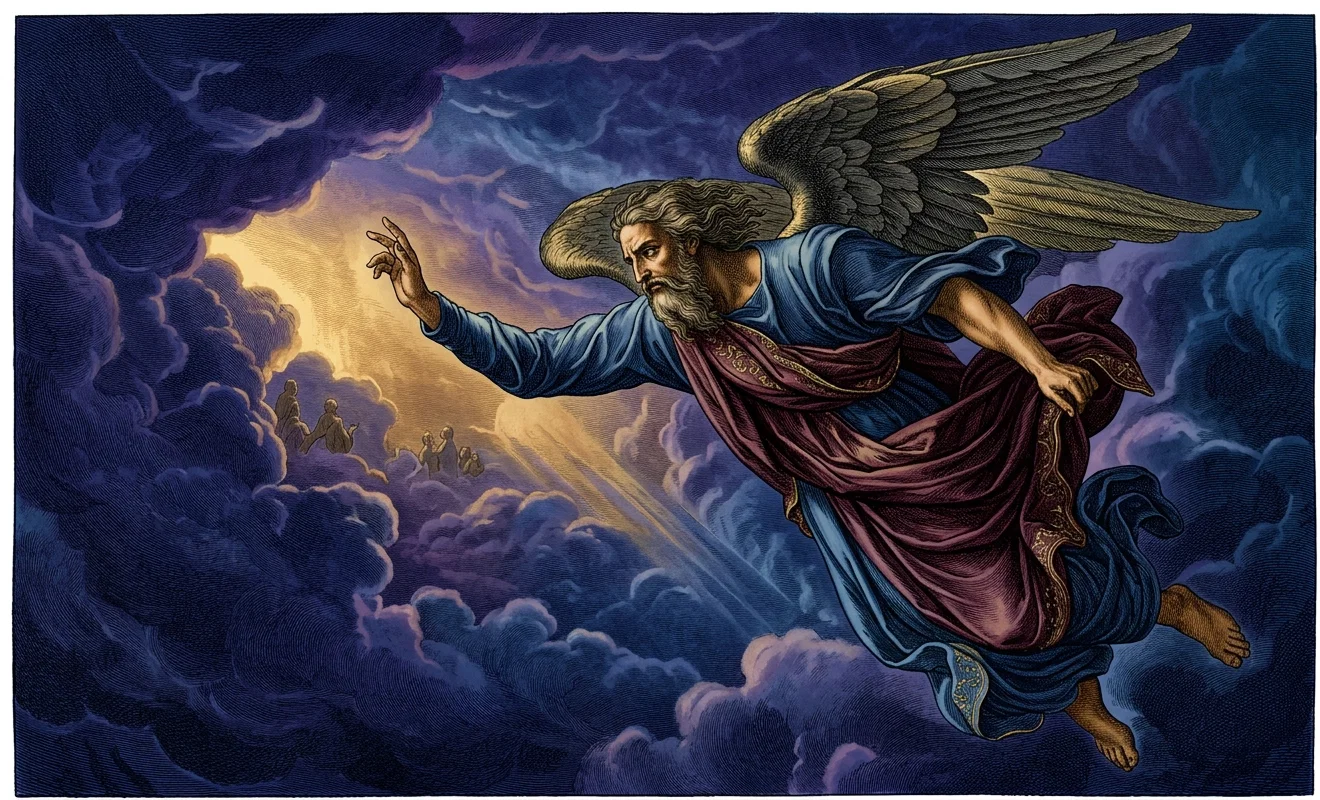
THE SEER OF PATMOS
THE SEER OF PATMOS
The doctrine of the judgment is clearly set forth in the Scriptures of Truth. In the divine plan, man was made a free moral agent. Upon him was bestowed the right of choice. He could choose the evil or the good, but he must sometime answer for his conduct before the high tribunal of heaven. This is clearly stated by Solomon in his instruction to the young:— "Rejoice, O young man, in thy youth; and let thy heart cheer thee in the days of thy youth, and walk in the ways of thine heart, and in the sight of thine eyes: but know thou, that for all these things God will bring thee into judgment." Eccl. 11:9.
In view of this account which man must render, he is admonished:— "Therefore remove sorrow from thy heart, and put away evil from thy flesh: for childhood and youth are vanity. Remember now thy Creator in the days of thy youth, while the evil days come not, nor the years draw nigh, when thou shalt say, I have no pleasure in them." Verse 10 and 12:1.
Speaking of this day, the apostle Paul declares:— "For we must all appear before the judgment seat of Christ; that every one may receive the things done in his body, according to that he hath done, whether it be good or bad." 2 Cor. 5:10.
Solomon, in pointing out the relation which man should sustain to his Maker, draws this conclusion:— "Let us hear the conclusion of the whole matter: Fear God, and keep his commandments: for this is the whole duty of man. For God shall bring every work into judgment, with every secret thing, whether it be good, or whether it be evil." Eccl. 12:13, 14.

God Hath Appointed a Day

The judgment of the world is set for a specific time. "God . . . hath appointed a day, in the which he will judge the world." Acts 17:30, 31. That day is sometimes called "the day of the Lord," "the day of judgment and perdition of ungodly men," "that day," etc. See 2 Peter 3:7, 10; 1 Thess. 5:2, 4; Zeph. 1:1-4.
The judgment is threefold in its character, or perhaps we might say it is divided into three judgment periods; namely, (1) the investigative judgment, (2) the judgment of the wicked, and (3) the executive judgment. These we will consider in their order.

1. The Investigative Judgment

The investigative judgment takes place in heaven prior to the second coming of Christ. Its purpose is to determine who is entitled to a part in the first resurrection, and who of the living inhabitants of earth are worthy to be translated without seeing death at the coming of the Lord.
That such an accounting takes place is clearly taught by Christ. Replying to the question raised by the Sadducees with reference to the manner of life after the resurrection, he declares:— "But they which shall be accounted worthy to obtain that world, and the resurrection from the dead, neither marry, nor are given in marriage: neither can they die any more: for they are equal unto the angels; and are the children of God, being the children of the resurrection." Luke 20:35, 36.
The consistency of this proposition must appeal to every mind. In the last great day earth's inhabitants are divided into two classes, the righteous and the wicked. This is pointedly represented by the parable in the twenty-fifth chapter of Matthew, showing the division between the sheep and the goats. This division is not an arbitrary one. It is based upon qualification of character. This qualification can be determined only by a review of the life of each individual. He that is accounted worthy finds his place at the right hand of the Master; the unworthy ones are reckoned in the parable as the goats, and are consigned to destruction. Matt. 25:31, 33.

The Judgment in Session

The scene of the investigative judgment is brought to view in the seventh chapter of Daniel. The prophet declares:— "I beheld till the thrones were cast down, and the Ancient of days did sit, whose garment was white as snow, and the hair of his head like the pure wool: his throne was like the fiery flame, and his wheels as burning fire. A fiery stream issued and came forth from before him: thousand thousands ministered unto him, and ten thousand times ten thousand stood before him: the judgment was set, and the books were opened. I beheld then because of the voice of the great words which the horn spake: I beheld even till the beast was slain, and his body destroyed, and given to the burning flame. As concerning the rest of the beasts, they had their dominion taken away: yet their lives were prolonged for a season and time. I saw in the night visions, and, behold, one like the Son of man came with the clouds of heaven, and came to the Ancient of days, and they brought him near before him. And there was given him dominion, and glory, and a kingdom, that all people, nations, and languages, should serve him: his dominion is an everlasting dominion, which shall not pass away, and his kingdom that which shall not be destroyed." Dan. 7:9-14.

A Solemn and Glorious Scene

Not elsewhere in the Sacred Record, nor in all the literature of the ages, is there presented a picture so solemn in its aspect, so glorious in its splendor, and so comprehensive in its far-reaching sequence, as the one so dramatically drawn by the inspired artist.
The scene is laid in heaven, the dwelling place of God. The Eternal Father, amid the glories and grandeur of the celestial realities, sits upon a throne like unto fiery flame, and the wheels as burning fire. The myriad hosts of angelic beings bow before him in lowly obeisance. The judgment is set, and the books of record are opened.

The Books of Record

In these books is kept the life record of all who have lived upon this earth, and from this record every man is judged. The apostle John bears witness to this in the twentieth chapter of Revelation, declaring:— "And I saw a great white throne, and him that sat on it, from whose face the earth and the heaven fled away; and there was found no place for them. And I saw the dead, small and great, stand before God; and the books were opened: and another book was opened, which is the book of life: and the dead were judged out of those things which were written in the books, according to their works."
The dead are in their graves. They stand before God in the record of their lives contained in the books. One of these books is called the "book of remembrance." The thoughts which men think of God, their motives and their purposes, are here revealed. Declares the prophet Malachi:— "Then they that feared the Lord spake often one to another: and the Lord hearkened, and heard it, and a book of remembrance was written before him for them that feared the Lord, and that thought upon his name." Mal. 3:16.
We cannot conceive that it is necessary for the great Judge, with whom a knowledge of the past, present, and future is always present, to require for his own enlightenment a record of men's lives. But we must remember that he performs all his acts not alone with reference to his own infinite knowledge, but with respect to all created intelligences. The ways of God and his dealings with the human family have been upon trial for six thousand years, and by the unerring account which has been chronicled in his books will he demonstrate that his judgments are just and his decisions as wise as to be beyond review. Even the impenitent at the last great day will bow before him and acknowledge the unbiased fairness of his decisions. Phil. 2:9-11; Rev. 15:3, 4.

Before the Close of Human History

Let it be noted that this judgment scene takes place at a time when earth's inhabitants are still engaged in life's activities. See Mal. 3:11, 12, and the general context. The coming of the Son of man here brought to view is not the coming of Christ in glory, but his coming before the Father to receive a kingdom preparatory to entering upon his dominion at his second coming. The investigative judgment determines who shall constitute the inhabitants of Christ's kingdom. Before this heavenly tribunal will come the case of every inhabitant of the earth, beginning doubtless with the first generation of men, calling into review the lives of the countless dead of all ages, and reaching in its climaxal stage the last generation of men, those who are alive on the earth while the judgment is in session.
THE HOUR OF GOD'S JUDGMENT IS COME

The Standard of Judgment

The courts of men recognize standards of judgment. The laws of their respective governments constitute the standard by which the cases coming within their jurisdiction are tried. The law of God is the standard or rule by which cases are determined before the heavenly tribunal. Declares the apostle James with direct reference to this: "So speak ye, and so do, as they that shall be judged by the law of liberty." James 2:12. See also Eccl. 12:13, 14. As the law of ten commandments is the rule by which we shall be judged, how careful we should be to regulate our conduct in harmony with these righteous requirements. Says the Master, "If ye love me, keep my commandments." John 14:15. And to this the apostle adds in his epistle, "By this we know that we love the children of God, when we love God, and keep his commandments. For this is the love of God, that we keep his commandments: and his commandments are not grievous." 1 John 5:1-3. God's law can be kept only through the new covenant relationship. When the law is written by the Spirit of God on the tables of the heart, then only can it find expression in the life. Heb. 8:8-12.
By no word in the Sacred Record may we determine when probation will close. The Scriptures, however, afford us specific data by which we may determine the time when the investigative judgment began its sessions in the heavenly tribunal. This is clearly indicated in the book of Daniel. Declared the heavenly messenger to the prophet, "Unto two thousand and three hundred days; then shall the sanctuary be cleansed." Dan. 8:14. The cleansing of the sanctuary is a work of judgment. This judgment work began at the close of the 2300 days.

The Sanctuary Services and Their Meaning

The limits of this article will not permit a detailed explanation of the sanctuary and its services, nor of this prophetic period. For this we must refer the reader to numbers 10 and 11 of this series. Suffice to say that the services carried on in the earthly sanctuary were typical of the service of the great High Priest in the temple of God above. In the earthly sanctuary service the sinner brought his offering to the door of the sanctuary. He placed his hand upon the head of his offering, confessing over it his sins. Figuratively this transferred the sin from the individual to the offering. The sinner then, with his own hand, took the life of his offering, in recognition that he himself was deserving of death, but that he accepted the offering as a substitute to die in his stead. This blood was then taken by the priest and carried into the sanctuary and sprinkled before the veil. Behind the veil was the ark of the covenant, containing the law of ten commandments. Above this law was the mercy seat. In the sprinkling of the blood before the veil the sinner through the priest, acknowledged that he had broken the divine law, and by the blood of the sacrificial offering sought for mercy and pardon. Lev. 4:1-12. This service was continued day by day throughout the year.

The Cleansing of the Sanctuary

Once every year, on the tenth day of the seventh month, called the day of atonement,there occurred the cleansing of the sanctuary. This service was not a cleansing from physical impurity, but a cleansing from the sin which had been transferred in figure into the sanctuary during the yearly cycle. The priest selected two goats, between which lots were cast. One became the Lord's goat, or the goat of sacrifice. The other became Azazel, the scapegoat. The Lord's goat was slain and his blood carried by the priest into the most holy place of the sanctuary, the apartment which the priest entered only once a year. The high priest was commanded to sprinkle the blood "upon the mercy seat, and before the mercy seat: and he shall make an atonement for the holy place, because of the uncleanness of the children of Israel, and because of their transgressions in all their sins." Lev. 16:15, 16.
When the priest had "made an end of reconciling the holy place, and the tabernacle of the congregation, and the altar," he took the live goat, and placing his hands upon his head, he confessed over him "all the iniquities of the children of Israel, and all their transgressions in all their sins, putting them upon the head of the goat," and sent him away by the hands of a fit man into the wilderness. And the goat bore these iniquities of the children of Israel into a land not inhabited. See Lev. 16:20-22.
This day of atonement in Israel was a day of judgment. The children of Israel were required to fast and afflict their souls. He who refused to take part in this work of humiliation was cut off from among his people. Read Lev. 16:29-34.

Typical of Things in the Heavens

This service in the earthly sanctuary was typical of the work of our great High Priest in the sanctuary above. Says the apostle Paul:— "Now of the things which we have spoken this is the sum: We have such an high priest, who is set on the right hand of the throne of the Majesty in the heavens; a minister of the sanctuary, and of the true tabernacle, which the Lord pitched, and not man." Heb. 8:1, 2.
And Paul further says of the priests that they "serve unto the example and shadow of heavenly things." Verse 5. Christ entered into the heavenly tabernacle "neither by the blood of goats and calves, but by his own blood he entered in once into the holy place, having obtained eternal redemption for us." Heb. 9:12.

Salvation Alone in Christ

Upon this priestly service Christ entered at the time of his ascension:— "Seeing then that we have a great High Priest, that is passed into the heavens, Jesus the Son of God, let us hold fast our profession. For we have not an high priest which cannot be touched with the feeling of our infirmities; but was in all points tempted like as we are, yet without sin. Let us therefore come boldly unto the throne of grace, that we may obtain mercy, and find grace to help in time of need." Heb. 4:14-16. See also Heb. 1:3.
It is by virtue of the divine Sacrifice that the sinner has obtained justification in every age. The blood of bulls and goats could not take away sin in the days of Moses any more than it can today, but the slain animal prefigured the great Sacrifice who was to give his life for lost mankind, the same as the emblems of the Lord's Supper point us back to the Saviour who suffered upon the tree. The cross of Christ stands as the great central figure in the scheme of salvation. Previous to the cross, man looked forward to a Saviour who was to come. We look back to a Saviour who has come, and by the merits of that sacrifice which in God's purpose was made from the beginning of the world, there is obtained the forgiveness of sins for man in every age.

The Antitypical Day of Atonement

The daily round of priestly service in the earthly sanctuary typified the work upon which Christ entered at his ascension. The sanctuary service of the day of atonement typified the work to be carried forward in the heavenly sanctuary at the close of Christ's ministry there. On the day of atonement, the priest cleansed the sanctuary from the sins which had been transferred into it by the blood of the offerings. The heavenly sanctuary at the close of Christ's ministry is to be cleansed in the same way. Says the apostle in Heb. 9:22-24:— "And almost all things are by the law purged with blood; and without shedding of blood is no remission. It was therefore necessary that the patterns of things in the heavens should be purified with these; but the heavenly things themselves with better sacrifices than these. For Christ is not entered into the holy places made with hands, which are the figures of the true; but into heaven itself, now to appear in the presence of God for us."

A Work of Judgment

The work of the closing day of the year's service in the earthly sanctuary was a work of judgment. All who took no part in humbling themselves before the Lord and confessing their sins and iniquities, were cut off. "Whatsoever soul it be that shall not be afflicted in that same day, he shall be cut off from among his people." See Lev. 23:27-32. The sins of the penitent were blotted out and were transferred from the sanctuary to the head of the scapegoat. And this service of the day of atonement, represented in type in the earthly sanctuary, is accomplished in fact in the heavenly sanctuary. True to its type, the cleansing of the heavenly sanctuary is a work of judgment.
The earthly priest repeated the service of cleansing the sanctuary every year. Christ performs this service once for all. Observe how the apostle associates this work of the heavenly priesthood with the work of the judgment and with the second coming of Christ:— "Nor yet that he should offer himself often, as the high priest entereth into the holy place every year with blood of others; for then must he often have suffered since the foundation of the world: but now once in the end of the world hath he appeared to put away sin by the sacrifice of himself. And as it is appointed unto men once to die, but after this the judgment: so Christ was once offered to bear the sins of many; and unto them that look for him shall he appear the second time without sin unto salvation."
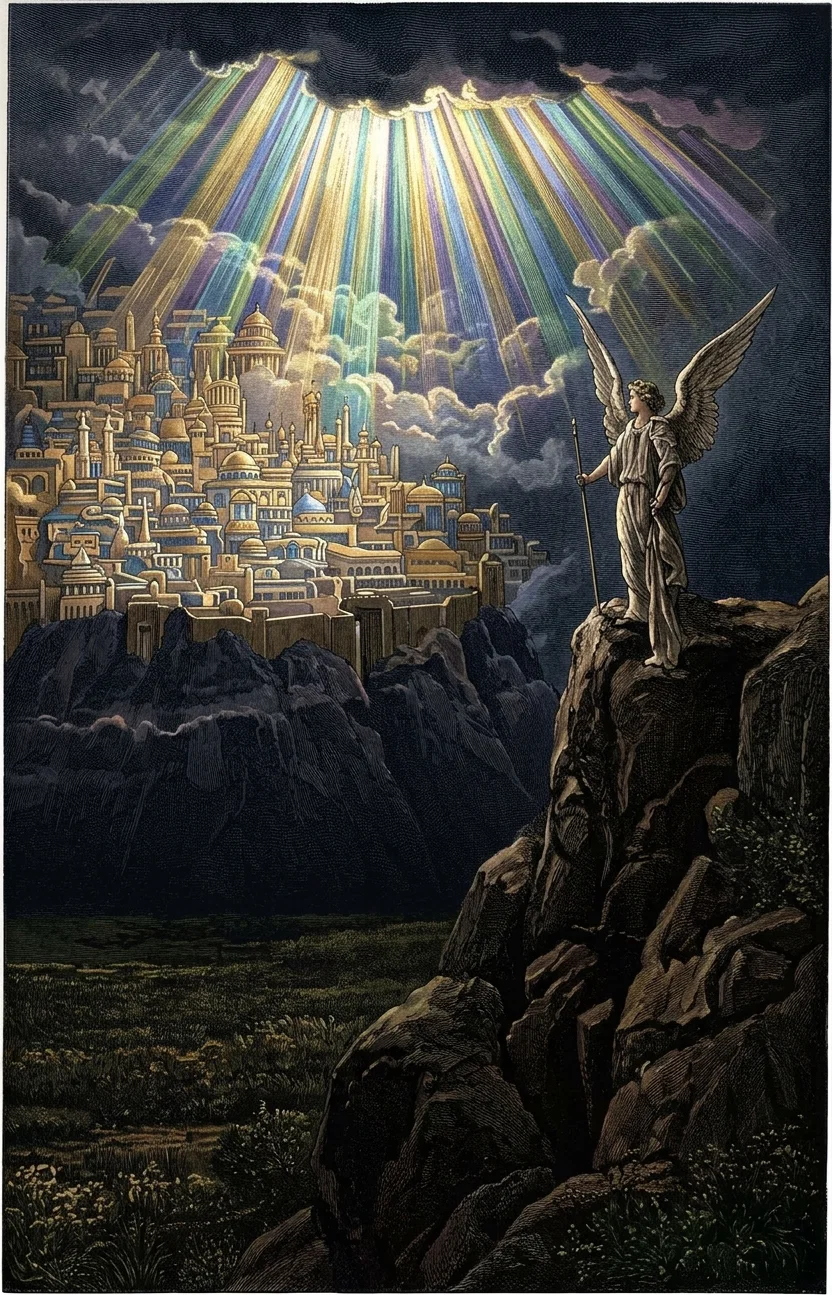
THE NEW JERUSALEM
THE NEW JERUSALEM

The Blotting Out of Sin

Sins are forgiven when confessed, but they are not blotted from the records of God till the period of the investigative judgment, just preceding the coming of the Lord. This the apostle Peter plainly states in Acts 3:19-21:— "Repent ye therefore, and be converted, that your sins may be blotted out, when the times of refreshing shall come from the presence of the Lord; and he shall send Jesus Christ, which before was preached unto you: whom the heaven must receive until the times of restitution of all things, which God hath spoken by the mouth of all his holy prophets since the world began."
Christ, as the believer's advocate, pleads the merits of his sacrifice. Of him who has prevailed over sin through his grace, he declares:— "He that overcometh, the same shall be clothed in white raiment; and I will not blot out his name out of the book of life, but I will confess his name before my Father, and before his angels." Rev. 3:5.

The Time of the Judgment

This cleansing of the heavenly sanctuary, or the work of investigative judgment, the prophet Daniel declares should take place at the end of 2300 days. These days should be understood in a figurative sense, each day standing for a year. See Eze. 4:1-16. When does this period of 2300 years begin, and when does it end? The angel Gabriel was instructed to make Daniel understand the vision of which this time period was a part. Dan. 8:16. He entered upon his work, pointing out to the prophet the meaning of the ram, the goat, and the notable horn. Verses 20-25. As he pictured the terrible persecution which the people of God would suffer under the governments of earth, Daniel fainted, and the interpretation was broken off, leaving the objective point of the vision unexplained.
The desire for more light rested as a burden upon the heart of the prophet. In the succeeding chapter of this book we find him making earnest supplication to the Lord for light and for deliverance, and he pours out the great burden of heart which he feels for the sanctuary of the Lord. Dan. 9:16-19. In answer to his prayer, Gabriel is sent to give him further enlightenment. The angel tells him to "understand the matter, and consider the vision;" that is, to call to mind those features of the vision of Daniel 8 which had not been made clear, and the parts of the vision left unexplained. Gabriel then immediately entered upon a consideration of the question of the 2300 days, of which he had given no explanation.

The Longest Prophetic Period

The angel declared that the first seventy weeks, or 490 years, of this 2300-day period were "determined upon," or cut off, for the Jewish people. He stated that this period of time should begin with the going forth of the commandment to restore and build Jerusalem. Dan. 9:25. Here we have data by which we may reckon the beginning of the seventy weeks, also the 2300 prophetic days. We must naturally conclude that this period of 490 years was cut off from the 2300 years, and that where the 490 years begin, there the 2300 years begin also. The threefold edict for the restoring and rebuilding of Jerusalem went forth in full effect at 457 B. C. See Ezra 7. The first 490 years of the 2300-year period, beginning at this time, would end in the year A. D. 34. True to the prophetic prediction, at this time the Jewish nation ceased to be longer the chosen people. The gospel entered upon its world-wide mission to the Gentile nations of the world. Deducting the 490 years from the 2300 years would leave 1810 years to extend beyond the year A. D. 34, bringing us down to the year 1844, the end of the 2300 days, or years, at which time the cleansing of the heavenly sanctuary began.
This work of cleansing, as we have already seen, is the work of judgment. We are therefore brought to the conclusion that the work of the investigative judgment, the examination of the records of men's lives as recorded in the books of God, began in the year 1844. That work has been in solemn progress ever since that time. Its completion will bring us to the close of probation, when the case of every individual will have been determined for all eternity.

A Judgment Message

Heaven does not leave men in ignorance of this judgment hour. Based upon the prophetic period of Dan. 8:14 there is going to the world even now a message declaring, "Fear God, and give glory to him; for the hour of his judgment is come." Indeed, we confidently believe that the message of this Extra forms a part of that warning foretold in the prophecy of the Word. See Rev. 14:6, 7; 10:7.

The Close of Probation

The close of the judgment session marks the close of probation, when there will go forth, just preceding the coming of Christ, that fearful verdict:— "He that is unjust, let him be unjust still: and he which is filthy, let him be filthy still: and he that is righteous, let him be righteous still: and he that is holy, let him be holy still. And, behold, I come quickly; and my reward is with me, to give every man according as his work shall be." Rev. 22:11, 12.
The limit of God's forbearance has been reached. His Spirit has pleaded with men until they have utterly rejected it, counting "the blood of the covenant . . . an unholy thing," and doing "despite unto the Spirit of grace." Heb. 10:29. They have despised the only means provided for their salvation.
The divine decision is not an arbitrary decree. In it there is naught of predestination, according to the old-time view of this doctrine. The redeemed have obtained salvation by the acceptance of the Lord Jesus Christ. The impenitent have rejected the gracious provision, and the divine fiat announces their decision, and declares that it shall stand forever.
Solemn indeed are the days in which we live. We know not how long this period of examination will continue. We know not how soon our cases will be reached before this heavenly court. The door of mercy still stands ajar. Christ still pleads as our great High Priest. While yet there is time let us flee to him and find refuge from the coming storm.

2. The Judgment of the Wicked

Following the completion of the work of the investigative judgment occurs the outpouring of the wrath of God, as brought to view in the seven last plagues of Revelation 16. Christ then comes to take his children home to the mansions which he has prepared for them. John 14:1-3. With a voice of authority and power he calls the sleeping saints from their dusty beds. They are raised incorruptible, and, with the saints who are living on the earth, are caught up to meet the Lord in the air.

The First Resurrection

"For the Lord himself shall descend from heaven with a shout, with the voice of the archangel, and with the trump of God: and the dead in Christ shall rise first: then we which are alive and remain shall be caught up together with them in the clouds, to meet the Lord in the air: and so shall we ever be with the Lord. Wherefore comfort one another with these words." 1 Thess. 4:16-18.
This resurrection of the just is known as the first resurrection. Of the character of those who have a part in it, and of their freedom from the thralldom of sin, it is said:— "Blessed and holy is he that hath part in the first resurrection: on such the second death hath no power, but they shall be priests of God and of Christ, and shall reign with him a thousand years." Rev. 20:6.

Terror of the Wicked

The glory attending the advent of the Lord becomes an agency of transforming power to the saints of God, but an agency of destruction to the wicked. They are unable to stand before the Son of man. As the sign of his coming draws near the earth, they are filled with fear and consternation. They seek to flee from his presence, and in abject terror call to the mountains and rocks, "Fall on us, and hide us from the face of him that sitteth on the throne, and from the wrath of the Lamb: for the great day of his wrath is come; and who shall be able to stand?" Rev. 6:16, 17. Rejecting the gospel of Christ, the only refuge provided, they are left without shelter in the day of God's wrath. The apostle Paul speaks of their destruction in these words:— "And to you who are troubled rest with us, when the Lord Jesus shall be revealed from heaven with his mighty angels, in flaming fire taking vengeance on them that know not God, and that obey not the gospel of ourLord Jesus Christ: who shall be punished with everlasting destruction from the presence of the Lord, and from the glory of his power; when he shall come to be glorified in his saints, and to be admired in all them that believe (because our testimony among you was believed) in that day." 2 Thess. 1:7-10.
Those who are thus destroyed by the brightness of Christ's coming, together with the wicked of all ages, remain in their graves for one thousand years. Declares the revelator, after speaking of those who come up in the first resurrection, "But the rest of the dead lived not again until the thousand years were finished." Rev. 20:5.

The Desolation of the Earth

The coming of the Lord is attended by earthquakes and convulsions in the physical world. The cities are broken down; the monuments of human pride and earthly glory are overthrown. The fruitful places are turned into barren wastes. With inspired pen Jeremiah describes the condition of the earth at this time:— "I beheld the mountains, and, lo, they trembled, and all the hills moved lightly. I beheld, and lo, there was no man, and all the birds of the heavens were fled. I beheld, and lo, the fruitful place was a wilderness, and all the cities thereof were broken down at the presence of the Lord, and by his fierce anger. For thus hath the Lord said, The whole land shall be desolate; yet will I not make a full end." Jer. 4:23-27.

The Prison House of Satan

For one thousand years the earth remains in this desolate condition. During this time it constitutes the prison house of Satan and his angels.
"And it shall come to pass in that day, that the Lord shall punish the host of the high ones that are on high, and the kings of the earth upon the earth. And they shall be gathered together, as prisoners are gathered in the pit, and shall be shut up in the prison, and after many days shall they be visited." Isa. 24:21, 22.
The revelator likens the earth during its desolate state to the bottomless pit. In this pit he declares Satan shall be confined:— "And I saw an angel come down from heaven, having the key of the bottomless pit and a great chain in his hand. And he laid hold on the dragon, that old serpent, which is the Devil, and Satan, and bound him a thousand years, and cast him into the bottomless pit, and shut him up, and set a seal upon him, that he should deceive the nations no more, till the thousand years should be fulfilled: and after that he must be loosed a little season." Rev. 20:1-3.
No longer can Satan annoy the inhabitants of other worlds. The wicked of earth are in their graves. The righteous are in heaven, delivered eternally from his power. Hence, surrounded by these conditions, he is bound as with a literal chain. No exercise is found for that master intellect, which, for six thousand years, has deceived the nations of men. For one thousand years he is left to wander over the broken, uneven surface of the earth, and view the scenes of desolation which his hands have wrought. He is left to contemplate the fate which awaits him, and the merited reward which his evil course has earned.

The Antitypical Scapegoat

In the solemn service attending the cleansing of the sanctuary on the day of atonement was foreshadowed this exile of the great deceiver. When the priest had finished his ministry in the most holy apartment, he came forth bearing in his own body the sins of Israel. He laid his hands upon the head of the scapegoat, and confessed over him "all the iniquities of the children of Israel, and all their transgressions in all their sins, putting them upon the head of the goat." The goat was then sent away into the wilderness waste.
In the same manner, when the work of the investigative judgment has been completed, the sins of God's people will be placed upon Satan, and as the scapegoat was sent into a land not inhabited, so Satan will be confined to this earth in its desolate condition.

"The Saints Shall Judge the World"

Why should the punishment of Satan and his angels and the wicked nations of men be deferred for one thousand years? Evidently that their cases may come in review and their just punishment be determined. Each one will be judged according to the light which he has received, and judgment will be meted out to each according to his deeds and according to the fruit of his doings. Matt. 16:27; Jer. 17:10. In this work of the judgment of the wicked, Christ and the redeemed saints will take part. John 5:22-27. This was predicted by the prophet Daniel. Looking down through the ages, and witnessing the temporary triumph of the powers arrayed against God and his people, the prophet writes:— "I beheld, and the same horn made war with the saints, and prevailed against them; until the Ancient of days came, and judgment was given to the saints of the Most High; and the time came that the saints possessed the kingdom." Dan. 7:21, 22.
Similar testimony is borne by the apostle Paul. Writing to the Corinthian church, and admonishing the believers to bring before their brethren the adjudication of their differences instead of carrying them to courts of the world, he inquires:— "Dare any of you, having a matter against another, go to law before the unjust, and not before the saints? Do ye not know that the saints shall judge the world? and if the world shall be judged by you, are ye unworthy to judge the smallest matters? know ye not that we shall judge angels? how much more things that pertain to this life?" 1 Cor. 6:1-3. See also 2 Peter 2:4; Jude 6.

On Thrones of Judgment

This judgment scene is presented to John in holy vision. The righteous have been raised in the first resurrection, and with the righteous living they have been taken home to the New Jerusalem. There for a period of one thousand years they sit upon thrones of judgment, reviewing with Christ the record of the lives of the evil angels and of the wicked dead, and determining the measure of punishment for each:— "And I saw thrones, and they sat upon them, and judgment was given unto them:
THE NEW-EARTH STATE
THE NEW-EARTH STATE
and I saw the souls of them that were beheaded for the witness of Jesus, and for the word of God, and which had not worshiped the beast, neither his image, neither had received his mark upon their foreheads, or in their hands; and they lived and reigned with Christ a thousand years." Rev. 20:4.
It is particularly fitting that the saints gathered from every age of earth's history should take part in this judgment work. With vision clarified by association with the Master, with eyes anointed by divine enlightenment, and with minds poised and guided to unerring accuracy by their heavenly environment, it seems proper that they should take part in the judgment to be visited upon those with whom they have been associated. They will understand the characteristics of the peculiar age in which they lived; they will know its opportunities and its privileges; they have demonstrated through God's grace that, however forbidding the circumstances surrounding them, however subtle the influence of sin, they were enabled to perfect characters which have stood the test of the judgment. And if they were able to do it, then it was possible for every man and woman living in their times to gain the overcomer's reward.
As Noah by his life of righteousness condemned the world in which he lived, so these righteous ones will condemn those in their times who failed to avail themselves of the gracious provision of the gospel of Christ. See Heb. 11:7. As the measure of punishment for Satan and all his followers is meted out, the entire universe of God looks on and gives its approval of the justice of the decisions of this heavenly tribunal. Ps. 69:28, 34, 35.

3. The Executive Judgment

The time will now come in the eternal purpose of God for his universe to be forever cleansed of the terrible blot of sin which has marred it for six thousand years. The case of every one has been decided, and the measure of punishment each is to receive has been determined. Christ now takes upon himself the execution of this divine judgment. The apostle John describes the scene as the King of kings and Lord of lords goes forth to visit upon the impenitent their final doom:— "And I saw heaven opened, and behold a white horse; and he that sat upon him was called Faithful and True, and in righteousness he doth judge and make war. His eyes were as a flame of fire, and on his head were many crowns; and he had a name written, that no man knew, but he himself. And he was clothed with a vesture dipped in blood; and his name is called The Word of God. And the armies which were in heaven followed him upon white horses, clothed in fine linen, white and clean. And out of his mouth goeth a sharp sword, that with it he should smite the nations: and he shall rule them with a rod of iron: and he treadeth the winepress of the fierceness and wrath of Almighty God. And he hath on his vesture and on his thigh a name written, KING OF KINGS, AND LORD OF LORDS. . . . And I saw the beast, and the kings of the earth, and their armies, gathered together to make war against him that sat on the horse, and against his army. And the beast was taken, and with him the false prophet, that wrought miracles before him, with which he deceived them that had received the mark of the beast, and them that worshiped his image. These both were cast alive into a lake of fire burning with brimstone. And the remnant were slain with the sword of him that sat upon the horse, which sword proceeded out of his mouth: and all the fowls were filled with their flesh." Rev. 19:11-21.

A Triumphant Conqueror

The Son of man again descends to the earth, not as when he came the first time, a helpless babe in Bethlehem's manger to suffer and die upon the cross, but as a triumphant conqueror, as King of kings and Lord of lords, to enter upon the dominion bestowed upon him by his Father. The spot upon which his feet rest is purified and made holy by his sacred presence. Says the prophet Zechariah:— "And his feet shall stand in that day upon the mount of Olives, which is before Jerusalem on the east, and the mount of Olives shall cleave in the midst thereof toward the east and toward the west, and there shall be a very great valley; and half of the mountain shall be removed toward the north, and half of it toward the south." Zech. 14:4.
Upon this great plain, which has been created to receive it, the city of God, the heavenly Jerusalem, containing the saints, rests. John, in prophetic vision, witnessed its descent:— "And I saw a new heaven and a new earth: for the first heaven and the first earth were passed away; and there was no more sea. And I John saw the holy city, new Jerusalem, coming down from God out of heaven, prepared as a bride adorned for her husband." Rev. 21:1, 2.

The Second Resurrection

With a voice of terrible majesty the Lord now calls from their graves the wicked dead. They respond to the divine summons; but how unlike those who were raised one thousand years before, in the first resurrection! The righteous come up incorruptible, shouting victory over death and the grave. 1 Cor. 15:51-55. The wicked arise as they have gone down, for death has wrought no change in their characters. Sickly and diseased, with the marks of sin upon body and upon soul, they come forth to meet the great Judge. In their breasts surge the same human passions, the same love of sin, the same hatred of God and of his holy government. Even now, if they could, they would tear him from his throne and usurp his dominion.

Satan Loosed

The second resurrection is the signal for Satan to resume his deceptive work. His long period of incarceration, the thousand years which he has spent viewing the ruin and havoc which his apostasy from God wrought, has served only to increase his bitterness against heaven and its divine Ruler. In the frenzy born of despair he determines to make one final effort to dethrone the government of God. He casts once more his hypnotic spell over the nations of men. He leads them to believe that it is by his power that they have been brought forth from their graves, and deludes them into the fatal belief that by their superiority of numbers they can overwhelm the city of God and its inhabitants. Declares the pen of inspiration:— "And when the thousand years are expired, Satan shall be loosed out of his prison, and shall go out to deceive the nations which are in the four quarters of the earth, Gog and Magog, to gather them together to battle: the number of whom is as the sand of the sea. And they went up on the breadth of the earth, and compassed the camp of the saints about, and the beloved city: and fire came down from God out of heaven, and devoured them." Rev. 20:7-9.

The End of Sin

How vain are all the designings of Satan and his host against divine Omnipotence! He who by the word of his mouth could create the worlds and the myriad hosts of heaven, can by that same word bring the machinations of evil to naught.
At the command of God fire comes down out of heaven and devours Satan and his hosts:— "And the devil that deceived them was cast into the lake of fire and brimstone, where the beast and the false prophet are, and shall be tormented day and night forever and ever." Verse 10.
The accuser of the brethren is cast down, nevermore to rise. The terror of the nations has come to be as though he had not been. Of him the Lord declares:— "All they that know thee among the people shall be astonished at thee: thou shalt be a terror, and never shalt thou be any more." Eze. 28:19. See also Isa. 14:12-20; 30:33.
And the wicked nations of men in that day "shall be stubble: and that day that cometh shall burn them up, saith the Lord of hosts, that it shall leave them neither root nor branch." Mal. 4:1. See also Obadiah 15, 16.
Though long delayed, the judgment of God has at last been executed. Patiently has he borne with the rebellion of the ages. From the beginning he knew the baleful fruit which it would bear, but as an object lesson to his universe for all eternity he permitted sin to run its course that all might see and know its true character, and recognize the infinite wisdom and justice of the great Creator.

A New Heaven and a New Earth

The fire which destroys Satan and his followers purifies the earth from the curse which sin has wrought. "But the heavens and the earth, which are now, by the same word are kept in store, reserved unto fire against the day of judgment and perdition of ungodly men. . . . But the day of the Lord will come as a thief in the night; in the which the heavens shall pass away with a great noise, and the elements shall melt with fervent heat, the earth also and the works that are therein shall be burned up. Seeing then that all these things shall be dissolved, what manner of persons ought ye to be in all holy conversation and godliness." 2 Peter 3:7, 10, 11.
From the ashes of the old earth, God bringsforth a purified planet to constitute the eternal home of his people. The apostle adds, in verse 13:— "Nevertheless we, according to his promise, look for new heavens and a new earth, wherein dwelleth righteousness."
Continue reading