THREE recent events mark a tendency in the religious world to-day. These three events are the following:
1. Not long ago the New York Presbytery admitted into the ministry three young men, each one of whom rejected some of the most cardinal points of the old orthodoxy. They understood that the story of Adam and Eve in the Garden of Eden was allegorical; that man did not fall, but began in a state of sin; they did not accept the literal interpretation of Christ’s birth from a virgin; believed in a spiritual resurrection, but not that His body rose from the tomb; that Lazarus was resurrected only spiritually.
2. The second event was the stir in the Baptist Church over Prof. George Burman Foster, of the University of Chicago, who in a recent book stirred certain Chicago Baptists to a high pitch of resentment by denying the divinity of Christ, and by making other statements inconsistent with the old Baptist faith. With the Unitarians, he does not think Christ the equal with God; considers all men divine in creation, and divine in creative power. He says: “The application of a little water to a man’s head or body will not make him a Christian; and as for the Baptist dogmas, I repudiate them absolutely.”
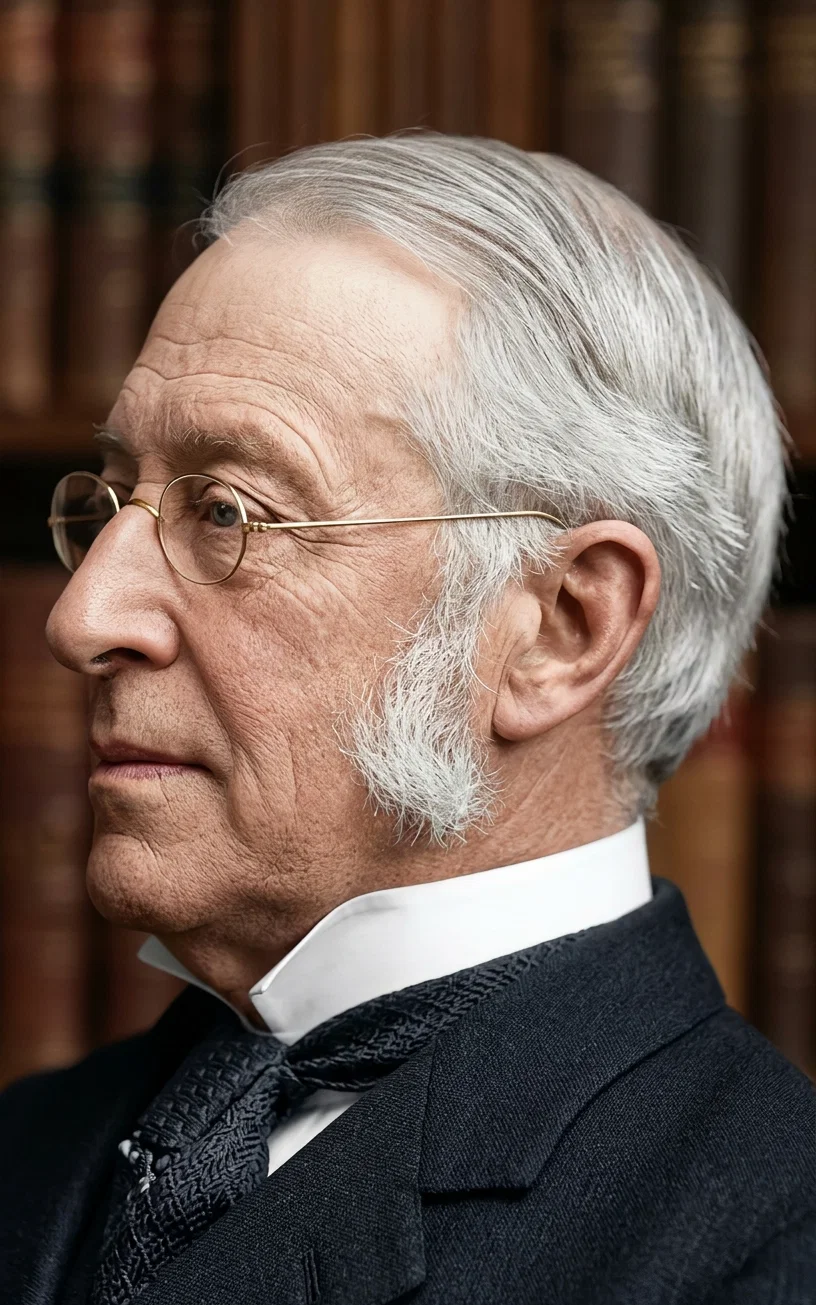
President Eliot
3. The third event is an announcement by Charles W. Eliot, President Emeritus of Harvard, in an address before the Harvard Summer School of Theology, July 22, in which he prophesied the advent of a new religion. He declared:
“It will not be dogma or creed. Its workings will be simple; but its field of action, limitless. There will be no supernatural element; it will place no reliance upon anything but the laws of nature. The new religion will not teach that character can be changed quickly,” etc. All of which is plainly a denial of the orthodoxy of the evangelical churches.
A Strong Tendency
These events as mere happenings might not mean much; but when considered in the light of the fact that these things are marking a strong tendency among religious teachers in general, they are marvelously significant. Many ministers, a number of them of prominence, receive all these statements with composure. The Presbytery which admitted the three young men, has in that act declared that there are no fixed tenets of belief on the part of its ministry; and thus practically every Presbyterian minister, within the bounds of that act, becomes a law unto himself.
Comments by the Ministry
It will be of interest to know something of how these things are taken by the press and the pulpit. We therefore give some published statements with reference to the matter. Thus a religious exchange says with reference to the three young men admitted into the Presbyterian ministry:
“Some of the conservative ministers were horrified at the daring views held by the youthful trio. Others declared that the modern trend in the Presbyterian Church was to allow much more liberality of thought than was formerly the case.
“Think of John Knox, the noble founder of this sect, weeping over the lost till the ground was kept wet in the corner of his garden where he retired for secret prayer! How would he feel over such things as the above? He made the devil tremble in his time. The wicked queen on her throne declared she feared his prayers more than she did the bullets of an enemy. But these young men will never disturb the devil’s kingdom, unless, perchance, it should be convulsed with delight at such a downfall. Like Samson shorn of his locks, they may go out and shake themselves; they will be sure to shake nothing else.”
Consider this also from “The Herald of Gospel Liberty:”
“We are now in an era of wildest theology. Of course there is an attempt to pass it for the real thing, but it is like the money of bad memory. It lacks a basis of confidence.”
Another exchange, in speaking of the announcement made by Ex-President Eliot, says:
“Coming down to the heart of the question, this is just a tendency of the times. The battle is raging round the divinity of Jesus. The last great battle is being joined. Believing as we do, it behooves us to stand like a stone wall against every innovation. The crisis is approaching, and we must be true.”
“The Word and Way” has this to say of the present tendency:
“These are perilous times doctrinally. There is a distinct and tremendous drift away from the old and true faith. Many there are who will no longer endure sound doctrine.”
This is evidently a reference to the prophecy of Paul in which he admonished the ministry to preach the Word, for the time would come when men would not endure sound doctrine, but should “heap to themselves teachers, having itching ears.” 2 Tim. 4:3.
Dr. George W. Knox, professor of the philosophy of religions in the Union Theological Seminary, characterizes Dr. Eliot’s address as “A VERY ABLE SUMMARY of what the INTELLIGENT MEN of the present day think; whether they are in or out of the churches.”
“The Christian Register,” the Boston Unitarian weekly, regards Dr. Eliot’s utterances as “a frank, concise, and thoroughgoing exposition of ethical and religious principles,” which “can not fail to produce a profound impression.”
Who Are with Him
Elbert Hubbard, in defending Dr. Eliot’s position, tells us the company that the doctor10is in, in making his pronouncement. He says:
“The truths that Dr. Eliot now expresses were first uttered by Pythagoras 600 years before Christ; by Socrates; by Jesus of Nazareth; by Seneca the aristocrat; by Epictetus the slave; by Marcus Aurelius the Roman emperor; by Hypatia the first martyr to the New Thought—torn limb from limb in a Christian church; in degree by Cassiodorus; by St. Benedict, and Francis of Assisi; by Bruno and Galileo; by David Hume; by Thomas Paine, Benjamin Franklin, Thomas Jefferson, Voltaire, and Jean Jacques Rousseau.
“Dr. Eliot, President Emeritus of Harvard, is the most conspicuous intellectual figure before the American people to-day. His position is one of singular dignity. A million intellectuals in America look to him for guidance. For them he keys the cosmic symphony. He represents the established order. He keeps step with the procession. He is in the front rank—but never ahead of it. He is a mouthpiece, not of radicals or idealists or dreamers, but of practical educated men of affairs.
“He is a teacher of teachers.
“His social and intellectual position is secure and unassailable.
“So much for the man.
“As for the audience to whom he delivered his pronouncement, it was, bear in mind, a divinity school, made up of preachers, old and young, representing various Protestant denominations.
“And now comes a man who has been at the head of Harvard College for just forty years, and explains to the students of this divinity school that its teachings of the supernatural have been founded on a fallacy, and that God is the great Unconscious, working toward the Conscious, with man as His chiefest instrument.”
Skepticism in Pew and Pulpit
If this man is at all correct in his statements of the present trend—and barring the fact that he puts Jesus Christ among the teachers of New Thought, we believe he is—then it is easy to see where we are to-day in theological beliefs. How true indeed are the words of John Fiske which he left behind him in his book “Through Nature to God.” He says (pages 145, 146):
“Skepticism of our day is rather sad than frivolous; it drags people from long cherished notions in spite of themselves; it spares but few that are active minded; it invades the church, and doesn’t stop in the pews to listen, but ascends the pulpit and preaches.”
“There is no refuge anywhere from this doubting and testing spirit of the age. In the attitude of civilized men towards the world in which we live, the change of front has been stupendous. The old cosmology has been overthrown in headlong ruin, attacks upon doctrines have multiplied, and rituals, creeds, and Scriptures are overhauled and criticized, until a young generation grows up knowing nothing of the sturdy faith of its grandfathers save by hearsay; for it sees everything in heaven and earth called upon to show its credentials.”
Ray Stannard Baker has been giving special study to this, as he calls it, “spiritual unrest.” In speaking of present conditions, under the title of “A Time of Restless Inquiry,” he says:
“Modernism among the Roman Catholics, the Reform Movement among the Jews, the ‘higher criticism’ in all the churches, have been tearing down old structures of belief and tentatively offering new. Strange experiments are everywhere being tried—experiments such as Christian Science, Emmanuelism, Theosophy, the ‘Holy Ghosters,’ the Millennialites. Various Oriental and exotic cults, transplanted upon our hardy soil, find many to water and care for them. It is a time of troubled and restless inquiry. Escaping from the churches, how the religious principle, as Carlyle once said, ‘either lies unseen in the hearts of good men, looking and longing and silently working toward some new revelation, or else wanders homeless over the world, like a disembodied soul seeking its terrestrial organization.’”
Here is another very significant comment on the present stage of religious belief:
“Since we have discovered that past ages of religious thinking have been held by slavish subserviency to a past further back, and in the supposition that God has not spoken since the first century of the Christian era, we have reacted from that slavish subserviency and supposition to the extreme opposite supposition that God has never spoken until now, and that the compelling spiritual dictates of the age in which we live are the first and only voice of the living God.”
So says Rev. Samuel H. Bishop, of New York City, as reported in “The American Journal of Theology,” July, 1909.
Two Sides of Every Moral Question
By R.
THERE are always two sides to every moral question; some look at the dark side, and grumble; some look at both the dark and the light side, and getting a true balance of things, thank God and go on with gratitude and courage. It is like the two buckets in the well that I have read of somewhere. “O dear,” sighed one bucket to the other, “it is this continual round, and every time I come up full I have to go back empty.” “Yes,” the other made reply, “but every time I go down empty I come up full to refresh some thirsty soul. Glory be to God!” R.
Jesus, the Sinner’s Friend
The Lord is no respecter of persons. He welcomes all. When here upon the earth, it was said by His enemies that He was “gone to be a guest with a man that is a sinner,” and, “This man receiveth sinners and eateth with them.” A blessed life to merit such condemnation! Jesus Christ hated sin with all the strength of His blameless manhood, but He loved the sinner. He went into their homes, He received them when they came to Him, He shared their troubles. He was the sinner’s Friend. It is all just as true to-day. Let no priestly cordon nor creed walls keep you back, brother sinner, from going to Jesus. The only court etiquet required to approach His throne is the humble heart of faith. He waits to welcome you with the kiss of pardon and the royal robe of righteousness.
The Inevitable Hour
John Temple Graves in the Hearst papers draws a wonderfully dramatic picture of the meeting of J. Pierpont Morgan with Edward Harriman shortly before his death. These two men had met in conflict before, and Harriman had been too much for Morgan; but Harriman had met one greater than himself—Death, and he knew that in a few hours he must bow to Death’s scepter. Yet the instinct of ruling was so strong within him that he could not bear to see the great system which he had built up fall to pieces, and he sent for Morgan. Morgan becomes now an important element in the great trust which controls the Harriman property. Mr. Graves wonders what must have been the thoughts of Pierpont Morgan as he walked away from Arden, of the “pale, passing king dethroned—yea, and of that other and mightier King never to be dethroned—that gray, restless monarch of the shadows, before whom Pierpont Morgan himself must bow in time, and at whose relentless beckoning he, too, must relinquish his scepter of gold yet to another, who in his turn must abdicate to Death!”
“Sing once more, O Solemn Bard, the lines that epitaph our lives:
“ ‘The boast of heraldry, the pomp of power,
And all that beauty, all that wealth e’er gave,
Alike await th’ inevitable hour;
The path of glory leads but to the grave.’”
How much better it is to be content with a few things in this life, to live for others as well as ourselves, to send the fruit of our best efforts on before us, that we may have part in that glorious kingdom where death reigns never.
Joy Over One Repenting Sinner
We read nothing in the Good Book of joy in heaven over some one discovering the North Pole, or Lake Tanganyika, but we do read that there is joy in heaven over one sinner that repenteth. He has found something which neither drifting ice nor public opinion can in any wise affect. By faithful continuance in well doing he may hold his precious possession forever.
Controlling Ground Squirrels
The Agricultural Department of the Federal Government has declared war on the ground-squirrel. Professor Piper recommends the following poison formula to the farmers as effective and economical: “Take 20 pounds of good clean whole barley, one ounce of strychnin sulphate, a teaspoonful of saccharin, and a pint of medium thick starch solution made-by boiling a quarter of a cup of gloss starch in a pint of water. Mix the strychnin sulphate and saccharin in the hot starch and beat11until thoroly mixed. Then add slowly to the barley, mixing thoroly so that each kernel becomes coated; distribute about one tablespoonful near each burrow. Scatter slightly so as to avoid danger to stock and game. Put on good hard soil rather than on dusty mounds.”
The North Pole
By Editor
The controversy over the discovery of the North Pole continues with growing bitterness. The doubt that Commander Peary has thrown upon Dr. Cook's discovery has bred a large crop of doubts in different quarters, and yet there are many acquaintances of Dr. Cook who stanchly stand by him, and believe without question that he located 90 degrees north latitude fairly accurately. The first sensational reports which were published were not at all favorable to the doctor. He was made to say many things which he did not say. Of course, he started out ostensibly on a hunting expedition; but at the same time there was the thought in his heart that he might after all find the Pole, and therefore he took with him such instruments as would enable him to locate that point on the earth if it were possible to reach it.
As he could not well carry certain apparatus, he found it impossible to study the deep sea, or to take soundings; but all necessary simple instruments for astronomical observations he did take, and he was fortunate enough to obtain observations almost every day. He states that they had three chronometers, one watch, compasses, and pedometers. All were carefully controlled by each other from time to time. The watch, however, got out of order. He had all the modern instruments, he declares, which other explorers have had, including thermometers, barometers, and sextants of the latest models. While it is possible he thinks that his observations were better than those of earlier days, he does not assert this; but he says that he is perfectly familiar with making astronomical observations, especially in the polar regions, and he thinks that all explorers will be satisfied with his data.
The only witnesses he had were two Eskimos; and it now turns out that Commander Peary had four. Of course the data which the two men have to present must be the ultimate confirmation of their stories. It certainly seems that it would be well for Commander Peary and his friends to wait until the data has been laid before men of science who are capable of judging, before they criticize Dr. Cook too harshly.
It is a great pity that petty jealousies should find place at such a time. Granted that Commander Peary started out with a well equipped company, that he was a Government officer, that he had made discoveries before, that certain societies were more or less interested in his work, that of itself does not preclude any private citizen whatsoever from attempting the same. It seems really childish to endeavor to place an embargo upon research, investigation, and invention unless it comes through scientific channels. Some of the greatest discoveries and inventions that the world knows found origin in sources from which little was expected.
One authority suggests, and perhaps as wisely as the others, that neither Dr. Cook nor Commander Peary discovered the Pole; that is, they did not locate it exactly. Dr. Cook does not profess to have done this. He feels, however, that as far as instruments would show, he was in its immediate vicinity. The authority alluded to declares that in such cold regions, with one bundled as he must be to withstand the awful temperature, it is impossible to take accurate observations. According to the present status of affairs we think that Dr. Cook was successful as far as he has stated. We will, however, wait for the fuller confirmation of his published records.
The Time Foretold
By R.
We have indeed come to the time foreseen by our Lord, who as He looked forward to the last generation that should live before His appearing, said: “Nevertheless when the Son of Man cometh, shall He find faith on the earth?” Luke 18:8.
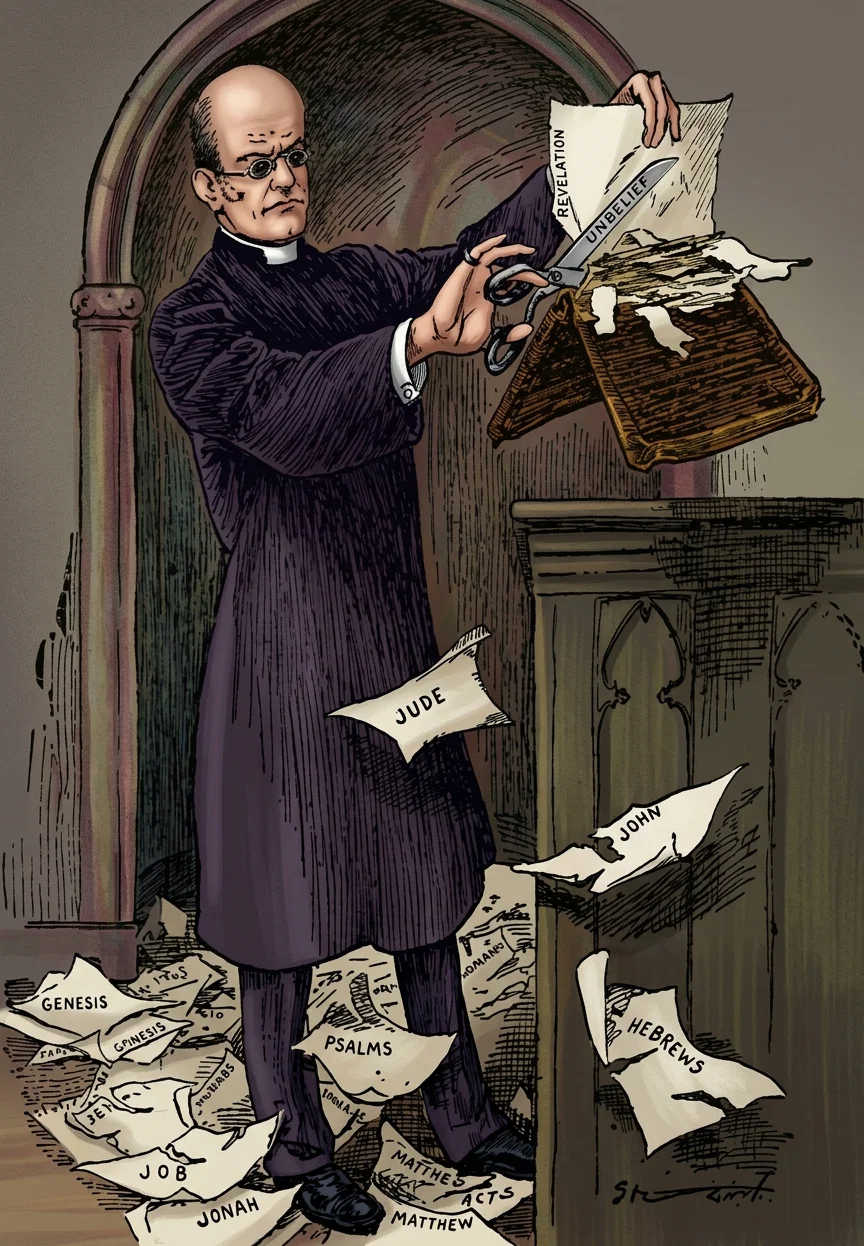
THE SPIRIT OF HIGHER CRITICISM: And what remains of the Bible, Beloved, is divinely inspired.
We have reached the day when men will not endure sound doctrine, but have heaped to themselves teachers, having itching ears. 2 Tim. 4:1-4.
We have reached the time when men are being turned away from the truth and are turning to fables. We have come to the period when in a larger sense than ever before men have made void the law of God, and the prayer of the psalmist is now due from the heart and lips of every true Christian: “It is time for Thee, Lord, to work: for they have made void Thy law.” Ps. 119:126. R.
Short of Funds.
A despatch from Rome, dated September 11, states that the Vatican is passing through a financial crisis. Pope Pius is cutting expenses by reducing his staff as far as possible and lowering the salaries of some of the clerics. There has been a falling off in Peter’s pence. The pontiff is reported as saying: “Certainly we live the simplest life. The church will never perish, but it is passing through a critical economic stage. The expenses are enormous. There is no fixed revenue to meet them.” It would seem to the outsider that with the vast, needless wealth of the Vatican a good deal of it might be turned into money to meet necessary expenses.
“The Bible Must Stand”
DR. A. C. DIXON, Baptist preacher, certainly believes in the Bible. In a recent sermon preached in Los Angeles he declared:
“The Bible must stand as it is written, from first verse to last. It needs no apology and suggests no controversy. It reconciles itself with science, or rather it is science itself.”
The above cartoon is in cheerful and striking contrast to the illustration on the opposite page. The treasures of God's Word are infinite. Sell all that you have, and buy the field.
“The construction of the world, I take just as it is told in Genesis. There is, I understand, one man in Germany who still believes in the Darwinian theory. May be there are a few others left somewhere in the world, but I can not point them out at the time. I tell you that the embryonic theory is a tissue of absurdities. There isn’t any question as to which came first—the egg or the hen. It could only have been the adult hen. The tree came before the fruit—the completed world before the chaos of geology.”
“Man in these days makes a strange animal that he calls a submarine, stocking it with provisions, fresh air, lights, and every convenience; enters into its belly and descends into the bottom of the sea to remain until disgorged at the wish of man. Yet a man will doubt the power of the Creator to fashion a whale that Jonah might ride within.”
There is a good deal of sublimated nonsense talked by scientists nowadays, especially those who get mixed up with the New Thought and Spiritistic phenomena of the present. For instance, Professor Larkin of Mount Lowe Observatory tells us that spoken language, articulate words, will in a measure vanish. “We will think, not speak words. Telepathy is a scientific fact, likewise mental control.” “Positively the 20th century marvels, the wireless telegraph and telephone, will soon be obsolete.” All of which may be taken cum grano salis.
BOOK NOTICES
“Mountain Pathways.” By Hector Waylen, Sherratt and Hughes, London.
One would hardly suspect that “Mountain Pathways” was a Gospel book. He would more naturally think it was sketches of rambles in the Himalayas or the Andes or the Alps. But it isn’t; it is “A Study in the Ethics of the Sermon on the Mount, together with a Revised Translation and Critical Notes.” There are many excellent things in the little book. The author truly discriminates between man’s soulical and his spiritual nature, holding, Scripturally, that the soul is not immortal, but that if it lives it must be merged in the higher spiritual life, received through Christ. But we think he makes an awful mistake in holding that the soul consciously lives between the death of the body and the resurrection. This view lays the broadest foundation of Modern Spiritism, while the Scripture declaration is, “The dead know not anything;” “in that very day his thoughts perish.” Apart from this teaching, which forms a small part of the work, there are helpful suggestions and beauties in every turn in “Mountain Pathways.” It may be obtained of the author at Atlantic City, N. J., Box 283. Price $1.50.
“The Boy and the Church.” By Eugene C. Foster. Price 75 cents, net. The Sunday School Times Company, Philadelphia.
The book is written from the view-point of a Sunday-school man, and he deals largely with boys who are under some kind of religious instruction. The Boy Himself, The Boy and His Home, The Boy and the Sunday-school, The Boy and His Teacher, The Boy, the Church, and the Minister, The Boy and His Friends, The Boy and His Reading, The Boy and His Book, The Boy and His Vocation, From Boy to Man, are the chapter headings of the book, and the discussion of these subjects offers valuable suggestions to all who are truly seeking to help boys to nobler manhood and Christian character.
“Socialism Versus Christianity.” By Edward R. Hartman. Cloth, 250 pages, $1.50. Cochrane Publishing Company, New York.
This little book is a frank, open discussion of the radical differences which the author thinks lie between Christianity and Socialism. The aims of each, the part which evolution plays in the latter, the question of environment, the individual versus the mass, the spiritual and the material, the fruits of Socialism, and what the prophetic Scriptures have to say upon the subject, with other phases, are lucidly discussed. We believe a stronger plea could be made for the church, and we should have been glad to find a little more sympathy with some phases of the Socialist outlook; but the book shows clear and strong as to the unreconciling differences between Christianity and Socialism. It is certainly worth the reading.
“A Ministerial Misfit; or the Biography of Rev. Timothy Tanglefoot.” By Isaiah Villars, D.D. Published at $1.00. Press of Illinois State Register, Springfield, Ill.
This little volume of 250 pithy pages is a portrayal of character in the ministry, too often found, tho few proportionally. The author says in his introduction: “A sport should never be found in a Christian pulpit, nor should he be tolerated in a church choir. That particular character was unknown among the apostles, and is therefore not of apostolic succession. The church and its ministry need to read up on ministerial fidelity as portrayed by both precept and example in the Scriptures. This is the standard for which this story contends.” In the tale of Timothy Tanglefoot, with pungent, pithy, pricking pen, the author shows the inconsistencies, the worldliness, the covetousness, the policy versus principle, the worldly ambitions, the snobbishness, the questionable methods, which are coming into the church of Christ to-day; and strong, striking appeal is made for Gospel methods and principles. The book formerly sold for one dollar; it may now be obtained of Rev. I. Villars for 57 cents, postpaid. His address is New Lenox, Ill.
“Peru—Its Story, People, and Religion.” By Geraldine Guiness. Morgan and Scott, Ltd., 12 Paternoster Building and 30 Paternoster Row, E. C., London. Illustrated, 462 pages; price, 7s. 6d., $1.80.
Miss Guiness has written a book which is receiving wide attention. There is not an uninteresting page in the volume. The story of Peru’s history, customs, legends, problems, people, and religion—all is told in a manner unusually pleasing. As a study in missions, it is splendid; the conditions of the Indians are touchingly told; their needs and the opportunities for missionary labor with them are presented. One is impressed with the crying need of this long-neglected country in the “neglected continent.”
“The Continent of Opportunity.” By Francis E. Clark, D.D., LL.D. Fleming H. Revell Company, Chicago. 350 pages; price, $1.50 net.
In this volume are included brief histories of the South American republics, their resources and outlook, together with a traveler’s impressions of present-day conditions. Mr. Clark is the author of a number of books on travel in many lands; he has carefully studied the natural, political, and religious conditions, not only of South America, but of other lands, and writes with authority. The writer recognizes in South America a country with a future, with the present outlook promising. The book is entertaining and instructive.
“How to Tell the Children the Origin of Life” is a little pamphlet which can be secured only by sending to the publishers (The Vir Publishing Co., 99 Church Building, Fifteenth and Race Streets, Philadelphia, Pa.) an addressed and stamped envelope for the return of the pamphlet. It is a chapter from “What a Young Boy Ought to Know.” Those who have not this book would do well to send for the pamphlet.
Would It Suit Them?
—The Western Watchman, Roman Catholic, says of the fathers of the Republic: “The men who laid the foundations of our institutions, laid them deep and well. They were great men; but greater than they, are the men who furnish the heroes who in the coming years will defend their work and perpetuate it.” Would that suit our Catholic friends? That means forever absolute dissociation of church and state, freedom of speech, freedom of petition, freedom of ballot, it matters not what religion may be in the majority. Every man would be left as free as ever to worship God according to the dictates of his own conscience or not to worship. It means that if a whole state or city save one man were Roman Catholic, that one man would have the right to be as rabid a Protestant as he desires, if he does not injure the property, life, reputation, or chastity of his Catholic fellow citizens. We wonder if a perpetuity of these things would suit our Catholic friends. It was for that that the fathers stood.
The Harm in Hurting Others
“We always hurt ourselves when we try to hurt others.”