Signs of the Times, Vol. 42, No. 13.

THE STANDING UP OF MICHAEL

Signs of the Times

Mar 30, 1915

Pacific Press Publishing Association · Mountain View, California · Mar 30, 1915

THE STANDING UP OF MICHAEL
The Events That Precede It—Movements in the Dardanelles Significant—But Jerusalem in Palestine the Objective—The War of Armageddon
By Hampton W. Cottrell
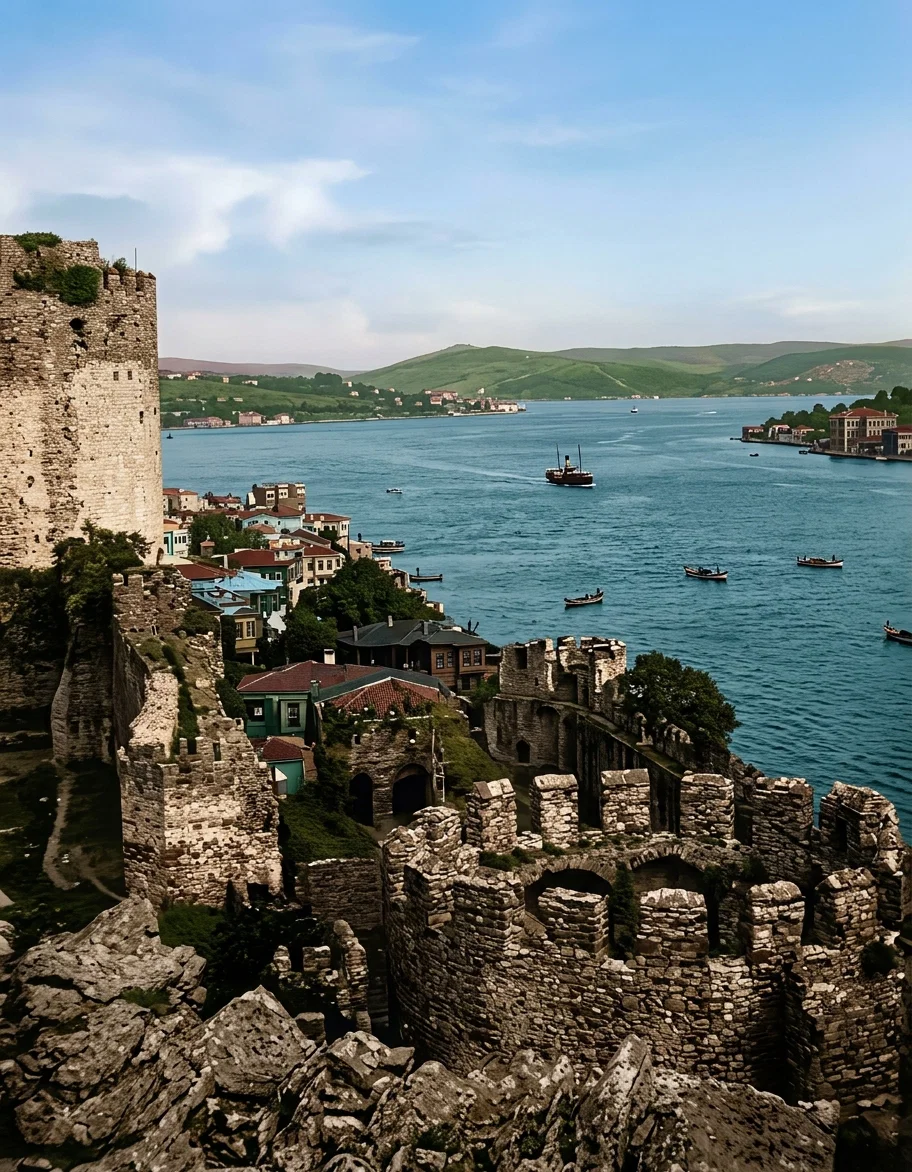
“SEVEN TOWERS”
“SEVEN TOWERS”
MEN should not misjudge God, for He did not ordain that the war now raging so furiously in Europe should come to the human family. However, He foreknew that earthly rulers would become possessed with an inhuman mania for greater governmental area, power, and honor, and that their course would bring the world crisis in which the great nations are now involved; and thus He recorded Himself in Holy Writ thousands of years before the bursting of the war cloud upon an unsuspecting world, that men might know that He is God.

WHAT SHALL BE THE SIGN?

In reply to the query of the disciples, “What shall be the sign of Thy coming, and of the end of the world?” our divine Lord said, “Nation shall rise against nation, and kingdom against kingdom: and there shall be famines, and pestilences.” Matt. 24: 3-7.
Nation has risen “against nation, and kingdom against kingdom,” to-day as never before, in accurate fulfillment of this prophecy. Famine is also threatening the people in certain sections of the war zone. And may we not expect pestilence to follow in the trail of this tragic war? The sultan—the sick man of the East—who stands for the Ottoman empire, is about to be removed from Europe, and the dissolution of his empire will be in fulfillment of the prophetic word of God, and thus it will be an additional sign of the soon coming of Christ.

TURKISH POWER BROKEN IN EUROPE

I quote from the Portland Oregonian of January 9, 1915: “The obliteration of the Ottoman empire is deemed assured. Nothing can save it, it is felt, but a clean-cut German victory. A draw will not be enough. The sultan will not be driven out of Europe merely. His Asiatic possessions will be cut up, too. Germany, even if it gets as good as a draw, will not be able to prevent it.”
The New Testament prophet symbolizes the Turkish dominion, which is now trembling in the balance, from both the human and the divine viewpoint, by the symbol of the river Euphrates, and determines its end by the language, “The water thereof was dried up, that the way of the kings of the east might be prepared.” Rev. 16: 12. The Euphrates is in Turkish territory. The water represents the nation. Rev. 17: 15. The drying up of the water means the final dissolution of the empire.
The opening up of the Dardanelles and the Bosporus from the Mediterranean Sea to the Black Sea will be one vast forward move toward the preparation of the way of the kings of the east, for them to reach the Holy Land to answer the final summons to “the battle [war] of that great day of God Almighty”—Armageddon—which is not the war now in progress.

KING OF THE NORTH

The prophet Daniel refers to the Turkish dominion by the symbol of the king of the north. He beheld it rise to great prominence. He then saw it wane in power. He saw it establish its capital in temporary quarters, as will be noted by the language, “And he shall plant the tabernacles of his palace between the seas in the glorious holy mountain; yet he shall come to his end, and none shall help him.” Dan. 11: 45.
The glorious holy mountain—Jerusalem—lies between the Mediterranean Sea and the Dead Sea. The Turk will eventually leave European soil, and in fulfillment of the word of the Lord, tabernacle for a time, evidently at Jerusalem. He will not be a permanent fixture; for says theprophet, “He shall come to his end, and none shall help him.”
He has been helped at various times by other nations, and thus has been enabled to remain in Europe until the present time.
The prophet Jeremiah refers to this power—the sultan’s dominion—under the figure of “the north country” and “the river Euphrates.” Jer. 46: 6, 10.

IT IS NOT THE CLOSE OF PROBATION

The removal of the Turk from Constantinople across the Bosporus is not an evidence of the immediate close of probation. Probation for sinners will not close at that time.
He must tabernacle for a time at Jerusalem. Daniel saw the sultan temporarily located “in the glorious holy mountain,” and then proceeds to span a period of time during which he gives no way signals until he touches the high peaks of culminating earthly events, namely, “He shall come to his end.” “And at that time shall Michael [Christ] stand ‘up’—probation ends. “And [then] there shall be a time of trouble, such as never was since there was a nation.” This will be international trouble of the personnel of the sin-bound nations; but it will not seriously affect the children of God, for “at that time thy people shall be delivered, every one that shall be found written in the book.” Dan. 12: 1. “See that ye [Christians] be not troubled.” Matt. 24: 6.

MAKING AN IMAGE TO THE BEAST

But John, the New Testament prophet, unfurls a banner with other detailed signals that may be discerned by those who will; for he beheld the making of an image to the beast—the papacy—and the cruel work to be wrought by it prior to the coming of the Lord, as indicated in the language found in Rev. 13: 1-8 and 14-18.
Paul saw the mystery of iniquity at work in the church in his day. And the Roman Church so far departed from the simplicity of the gospel of Christ that she declared herself head over all the churches. She then formed a union with the state, and coerced the state into making religious-civil laws for the furtherance of her perverted ideas of religion.
This system of coercing men to comply outwardly with her dogmas, being known of the Lord to be diametrically opposed to the spirit of the Author of Christianity, God saw fit to symbolize by a beast; for the character of a beast is to enforce its will by physical force against those who differ, rather than by the Master’s method—the influence of love.

WILL SEEK TO ENFORCE RELIGION

The Biblical new-dispensation prophet foresaw and fore-recorded that in our day, just prior to the coming of the Lord, professed Christianity would be in such a strained relation to God, and to men who might from personal choice of conscience differ with her, that the professed church would again form a union with the state, coercing civil powers to comply with her wish, and united church and state would photograph the Roman papal beast, thus forming an “image.”

THE CHURCH SEEKS TO COERCE

The image to the beast will be made by the professed church of Christ coercing the state to join with her in passing religious bills, and enforce religion—supposedly Christian religion—upon all who choose to differ from them in opinion or in understanding of duty to God. The spirit to do this is now at hand; but the work is largely yet to be accomplished, and every man tested thereby as to whether he will give all for God and receive His seal in the forehead, or choose eternal loss. Rev. 13: 14-17; 14: 6-14.
When this is accomplished, Christ will lay aside His mediatorial garments, and don His kingly attire. There will then be no further work in the temple of God. Rev. 15: 8.

WHEN GOD’S JUDGMENTS ARE DUE

The judgments of God will then be due, and will be made manifest by the outpouring of the seven vials of the wrath of God, unmixed with mercy, upon the incorrigible. Under the sixth plague, the Turkish dominion meets dissolution—comes to its end. Rev. 16: 12; Dan. 11: 45, last part. Then will come the battle or war of Armageddon, in which all nations will be involved. All earthly dominions then crumble, and are dissolved during the period of the outpouring of the seventh vial. Surely the text will thus be fulfilled, “The kingdoms of this world are become the kingdoms of our Lord, and of His Christ; and He shall reign forever and ever.” Rev. 11: 15.

“AND, BEHOLD, I COME QUICKLY”

Said He: “Behold, I come as a thief. Blessed is he that watcheth, and keepeth his garments, lest he walk naked, and they see his shame. And He gathered them together into a place called in the Hebrew tongue Armageddon. And the seventh angel poured out his vial into the air; and there came a great voice out of the temple of heaven, from the throne, saying, It is done.” Rev. 16: 15-17. “He that is unjust, let him be unjust still: and he which is filthy, let him be filthy still; and he that is righteous, let him be righteous still; and he that is holy, let him be holy still. And, behold, I come quickly: and My reward is with Me, to give every man according as his work shall be.” Rev. 22: 11, 12.
“Acquaint now thyself with Him, and be at peace.”

Foreknowledge Reveals Divinity

Events That Are Testing the Prophecy—He Tells Us Beforehand So We May Believe
By T. E. Bowen
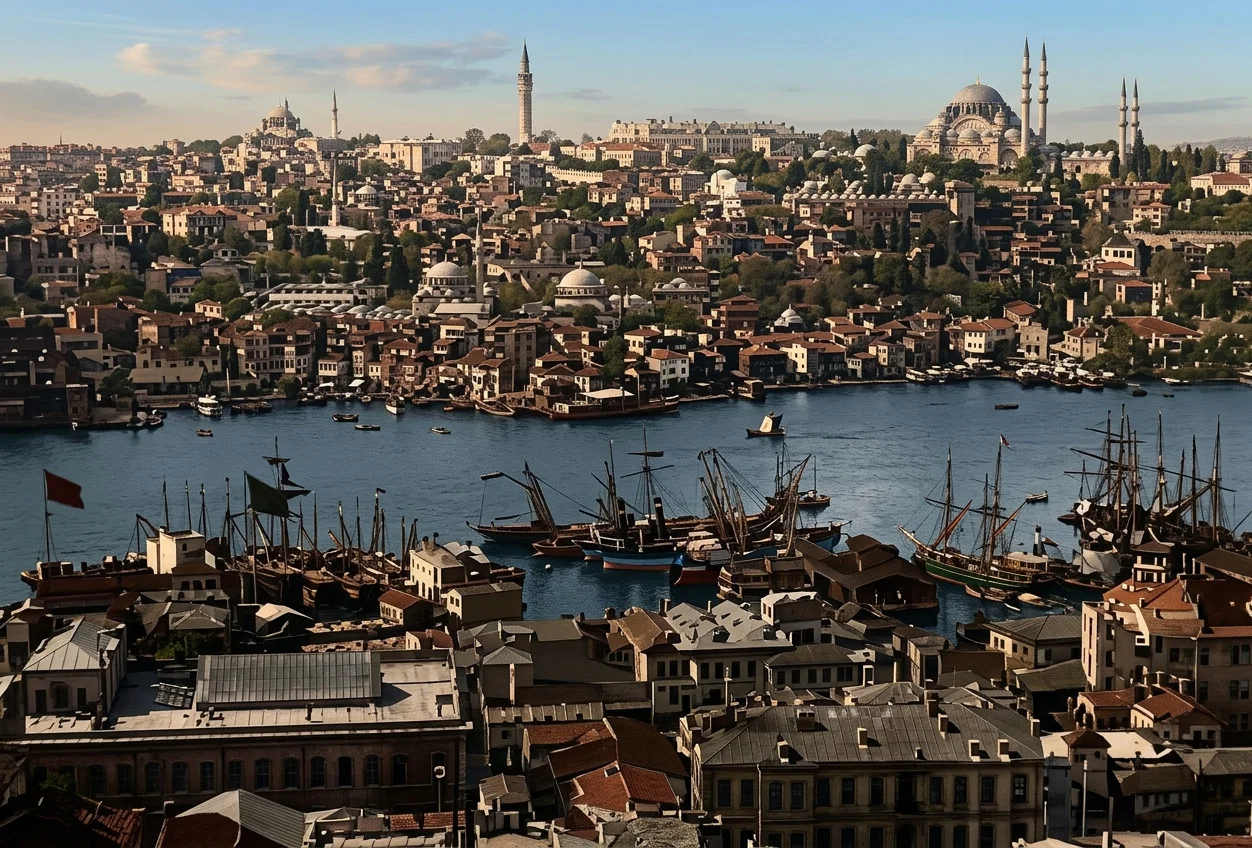
VIEW OF CONSTANTINOPLE
It is reported that consternation has seized the population as they learn of the work of the allied fleets.
VIEW OF CONSTANTINOPLE It is reported that consternation has seized the population as they learn of the work of the allied fleets.
“NOW I tell you before it come, that, when it is come to pass, ye may believe that I am He.” John 13:19.
These words of Jesus to His disciples discover to us a very important principle, revealing how Divinity deals with humanity, and, in it all, tests the children of men.
The particular circumstance that led Jesus to utter the above statement, was the perfidy of Judas, who in a few hours was to sell his Lord into the hands of those thirsting for the life of the Son of God. Jesus foretold exactly what Judas would be led to do, “that, when it is come to pass, ye may believe that I am He,” or the “I Am,” the divine Son of God—the “I Am” before Abraham’s day, the One who met Moses at the burning bush, and led Israel out of Egypt. There was no “happening” about this betrayal. It was a part of Satan’s premeditated plot to destroy the Son of God, an event of events in the struggle between good and evil, Christ and Satan.

WORLD EVENTS ALSO FORETOLD

Just as surely as Jesus foretold this plot of Satan before the time of the betrayal, just so surely has the Son of God, through His angel Gabriel, revealed beforehand other important events in the history of the world. And as it was to be an evidence to the disciples then that Jesus was the promised Redeemer, when the news should come to them, or they themselves should see Judas leading a mob in the night to arrest their beloved Master, and Christ’s having forewarned them should prove an encouragement to them in the test and trial, so likewise shall every other foretelling, by the word of God—Jesus’ words—of important events to occur, prove to the believer an encouragement, and be to him evidence that the “I Am” is guiding, and is able to keep and deliver every humble, trusting child of His.
Seventh-day Adventists for years have been following this same divine principle in the interpretation of the Scriptures.
They have held and still hold that God has revealed beforehand, in His holy Book, the Bible, the unfolding of the world’s great events. By prayerful study, it has been found that God has been pleased to foretell the outline of earth’s history, in the rise and fall of mighty nations. For sixty years and more, this people have been unrolling before the congregations that have come to hear charts upon which have been outlined the prophetic utterances of Christ’s angel, Gabriel,as he unfolded beforehand to Daniel and John the great movements of earth’s empires.
Comparing history with these wonderful lines of prophecy, all these unfoldings of the “I Am” have been found divinely accurate. They have been literally fulfilled. Here has been a science that captivates the most intelligent of minds, and reveals to every one who reverently studies the Word, a new view of the wonderful love of God, as well as affording a new conception of His infinite wisdom.
What men, of their own free will and choice, will do, God reads beforehand, as clearly and as accurately as we may read the pages of history, which tell us of that which they have done. Babylon, Medo-Persia, Greece, and Rome rise and fall before the eyes of the prophet Daniel, and in a few verses he tells us all about it hundreds of years before some parts of his words come to pass or some of these nations are born. But we find all is accurately fulfilled, “that, when it is come to pass, ye may believe that I am He.”

PRESENT-DAY MOVEMENTS FORETOLD

Coming on down to our time, we find events unfolding which for half a century Seventh-day Adventists have proclaimed, by voice and pen, would come, according to that foretold by Daniel and John, to whom the angel Gabriel communicated the words of the Son of God in holy vision centuries ago. One of the things foretold is that Turkey would be obliged to forsake her strategic position on the Bosporus, to give way to Russia on the north, which desires the outlet through these warm water ports to the sea.

RUSSIA TO REALIZE HER AMBITION

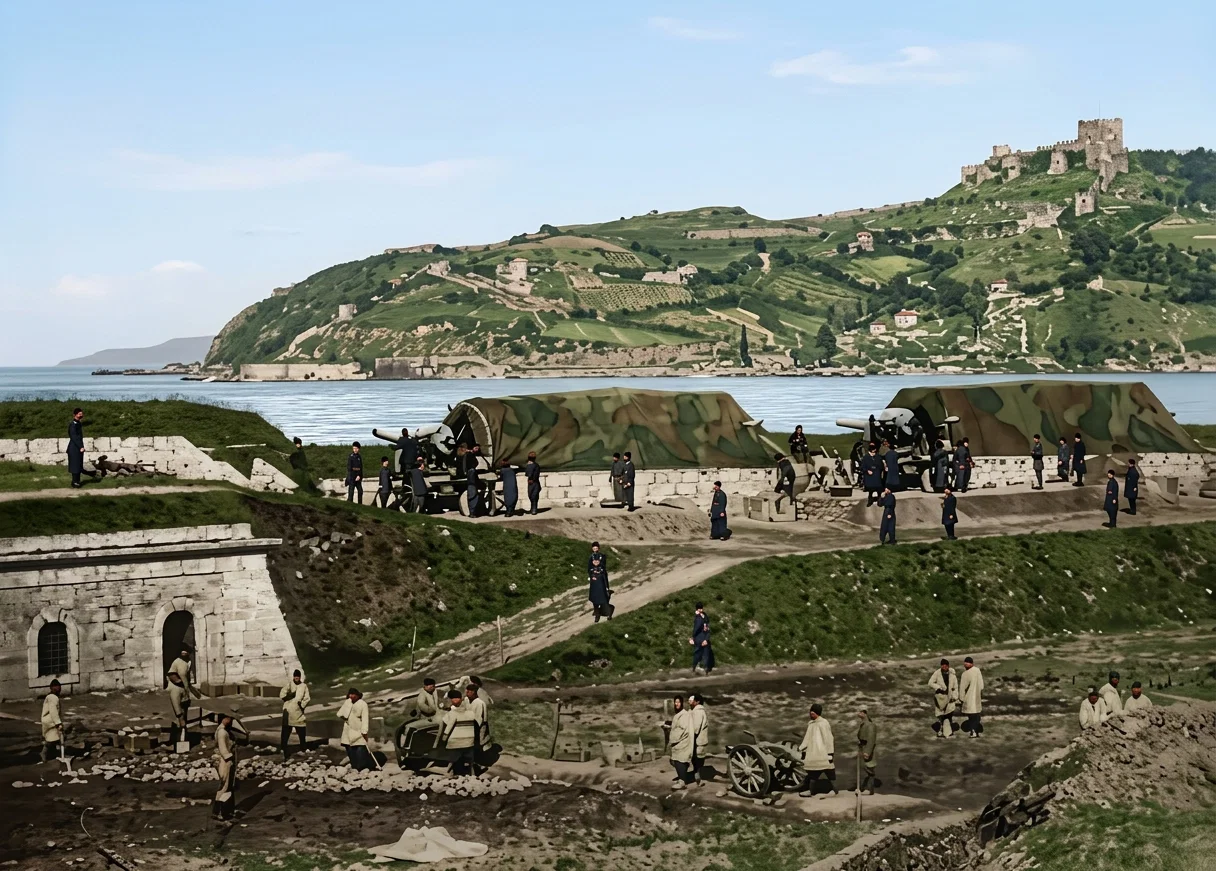
England has assisted Turkey to maintain this position until the recent war broke out. The reports now coming from the southern war zone indicate that Russia’s ambitions may soon be realized. Recent dispatches state that the outer forts protecting Constantinople have been reduced by the guns of English and French warships from the south, while Russia’s guns are slowly making possible the approach of the Russian bear from the north.
The following appeared in the Washington Star, Sunday, February 28:
“London, February 27, 10:15 P.M.—After having completed the destruction of forts at the entrance of the Dardanelles, the allied fleet of British and French warships, the greatest which has ever been in action, is now attacking the inner forts which heretofore have stood between Turkey and invasion by the sea.”
“Apparently the outer forts could not withstand a great bombardment, and when they had been leveled, and deserted by their defenders, men were landed from the ships to complete the work of demolition, while mine sweepers cleared a passage for ships in the straits.”
“More serious work is now ahead, for the all-important fortifications are at Kilid Bahr and Chanak, which guard the narrowest part of the straits, which the fleet is now approaching. There is no doubt, however, that the allied commanders have instructions to make their way to Constantinople in spite of all obstacles, and have been supplied with the best means for carrying out these orders.”

WHAT DO THESE THINGS MEAN?

Well may we ask, What does this all mean? Many other forts have been reduced during this terrible conflict in Europe. Other seats of government have been moved. But special interest centers about these particular forts on the Dardanelles, and the removal of the Ottoman seat of government, in that the angel told Daniel, some twenty-five hundred years ago, what events would follow when these things should come to pass, and this particular seat of government at Constantinople move across into Asia. “Now I tell you before it come,” said Jesus, “that, when it is come to pass, ye may believe that I am He.”

THE NEXT EVENT IN ORDER

The next recorded event in the Book is “a time of trouble, such as never was since there was a nation.” No one knows how long after the removal this special “time of trouble” begins. But “at that time” is Daniel’s record of Gabriel’s words to him.
“And in the days of these kings shall the God of heaven set up a kingdom, which shall never be destroyed: and the kingdom shall not be left to other people, but it shall break in pieces and consume all these kingdoms, and it shall stand forever.” Dan. 2:44.
A little remnant of time, reader, is granted us for getting ready to become subjects of that future kingdom. Shall we not improve it by putting away our sins and turning to God with all our hearts?

“The Church of the Revolution”

May True Christianity Work Its Revolutions by Arbitrary Force and Compulsion?
By W. H. Spicer
A RECENT issue of Life makes the following ironical comment, speaking of Bouck White’s church in New York, called the Church of the Revolution:
© Underwood & Underwood
“‘Church of the Revolution’ is a contradiction in terms unless the revolution has already taken place, for the reason that only past revolutions are orthodox and respectable. The object of a church is to spread the doctrine of the righteousness of what is, because it has been so ordained by a higher power. A church is nothing if not orthodox and staid, and if it does not preach contentment and humble conformity with one’s lot, whatsoever that lot may be. No, no! Let Mr. White go ahead and start a new church if he will, or let him get up a stirring revolution, but let him not try to do the two things at once.”
As it applies to what are known as churches, in distinction to “the church,” this has more than a grain of truth in it. But really Christianity is the most revolutionary force in the world to-day, and its holders are the greatest revolutionists. This has been so ever since there has been any Christianity. Really a Church of England is more anomalous than a Church of the Revolution; for Christianity pertains to no particular form of government or nationality, but regards all alike as tools for human service, which God has guided in making, and which are also, by His decree, to be changed continually for the better as men become wiser in their use, and able to change them.
Christianity, however, rests its confidence in the power of truth, which God has assured will ultimately triumph. It is not the place of the Christian to seek to lead the armed forces of the revolutionary. He will be more true to his character as a quiet worker for the practical principles of justice, brotherhood, and patience.
The reason why Christianity is not seen more on the surface as a mover of improvement in the world, is that whenever a principle has attained a certain degree of acceptance by peaceful methods, some misguided or designing zealot makes it a battle cry, and starts in to force conformity with it upon those who are not yet prepared to see it and accept it. He, rather than the one who first saw it, gets the credit when at last the change is complete. Yet his work and the bloodshed were unnecessary.
So long as free speech and free discussion were permitted, the change would come peaceably sooner or later; and it would be more nearly unanimous, and advantage would be more easily taken of it, when so brought about. The prevalence of such Christianity in this world would make unnecessary the coming of the Lord to deliver His people from oppression of earthly powers. But we know, from human nature as shown in history, as well as from prophecy given in the Bible, that Christianity will not thus prevail. A revolution by the arm of divine vengeance is promised in the end, for cleansing the earth of the tyranny of those who resist truth by stilling the voices that speak it, giving final proof of the ability of the darkness of sin to shut out the clearest light.

The Effects of a Single Drink

CASES are known of men who took only one drink of alcoholic liquor in a lifetime, yet as a result, had epileptic children.

Faithfulness Reveals Faith

“A MAN’S faith may be known only by his faithfulness.”

HE WILL AVENGE HIS OWN

The Unjust Judge Was Reached—Lesson for Those Just Before His Coming—Prayer Teaches Infinity—It Unlocks the Wealth and Power of the Universe
By Mrs. E. G. White
Christ had been speaking of the period just before His second coming, and of the perils through which His followers must pass. With special reference to that time He related the parable “to this end, that men ought always to pray, and not to faint.”

I Will Avenge Her

“There was in a city,” He said, “a judge, which feared not God, neither regarded man: and there was a widow in that city; and she came unto him, saying, Avenge me of mine adversary. And he would not for a while: but afterward he said within himself, Though I fear not God, nor regard man; yet because this widow troubleth me, I will avenge her, lest by her continual coming she weary me. And the Lord said, Hear what the unjust judge saith. And shall not God avenge His own elect, which cry day and night unto Him, though He bear long with them? I tell you that He will avenge them speedily.”
The judge who is here pictured had no regard for right, nor pity for suffering. The widow who pressed her case before him was persistently repulsed. Again and again she came to him, only to be treated with contempt, and to be driven from the judgment seat. The judge knew that her cause was righteous, and he could have relieved her at once, but he would not. He wanted to show his arbitrary power, and it gratified him to let her ask and plead and entreat in vain. But she would not fail nor become discouraged.

Her Persistency Won

Notwithstanding his indifference and hard-heartedness, she pressed her petition until the judge consented to attend to her case. “Though I fear not God, nor regard man,” he said, “yet because this widow troubleth me, I will avenge her, lest by her continual coming she weary me.” To save his reputation, to avoid giving publicity to his partial, one-sided judgment, he avenged the persevering woman.
“And the Lord said, Hear what the unjust judge saith. And shall not God avenge His own elect, which cry day and night unto Him, though He bear long with them? I tell you that He will avenge them speedily.” Christ here draws a sharp contrast between the unjust judge and God. The judge yielded to the widow’s request merely through selfishness, that he might be relieved of her importunity. He felt for her no pity or compassion; her misery was nothing to him. How different is the attitude of God toward those who seek Him! The appeals of the needy and distressed are considered by Him with infinite compassion.

The Dearest on Earth to God

The woman who entreated the judge for justice had lost her husband by death. Poor and friendless, she had no means of retrieving her ruined fortunes. So by sin, man lost his connection with God. Of himself he has no means of salvation. But in Christ we are brought nigh unto the Father. The elect of God are dear to His heart. They are those whom He has called out of darkness into His marvelous light, to show forth His praise, to shine as lights amid the darkness of the world. The unjust judge had no special interest in the widow who importuned him for deliverance; yet in order to rid himself of her pitiful appeals, he heard her plea, and delivered her from her adversary. But God loves His children with infinite love. To Him the dearest object on earth is His church.
“For the Lord’s portion is His people; Jacob is the lot of His inheritance. He found him in a desert land, and in the waste howling wilderness; He led him about, He instructed him, He kept him as the apple of His eye.”

Deliverance Through Prayer

The widow’s prayer, “Avenge me”—“do me justice”—“of mine adversary,” represents the prayer of God’s children. Satan is their great adversary. He is the “accuser of our brethren,” who accuses them before God day and night. Rev. 12:10. He is continually working to misrepresent and accuse, to deceive and destroy the people of God. And it is for deliverance from the power of Satan and his agents that in this parable Christ teaches His disciples to pray.
The work of Satan as an accuser began in heaven. This has been his work on earth ever since man’s fall, and it will be his work in a special sense as we approach nearer to the close of this world’s history. As he sees that his time is short, he will work with greater earnestness to deceive and destroy. He is angry when he sees a people on the earth who, even in their weakness and sinfulness, have respect to the law of Jehovah. He is determined that they shall not obey God. He delights in their unworthiness, and has devices prepared for every soul, that all may be ensnared and separated from God. He seeks to accuse and condemn God, and all who strive to carry out His purposes in this world, in mercy and love, in compassion and forgiveness.

We Plead His Merits

The Lord’s people cannot of themselves answer the charges of Satan. As they look to themselves, they are ready to despair. But they appeal to the divine Advocate. They plead the merits of the Redeemer. God can be “just, and the justifier of him which believeth in Jesus.” Rom. 3:26. With confidence the Lord’s children cry to Him to silence the accusations of Satan, and bring to naught his devices. “Do me justice of mine adversary,” they pray; and with the mighty argument of the cross, Christ silences the bold accuser. When Satan seeks to cover the people of God with blackness, and ruin them, Christ interposes. Although they have sinned, Christ has taken the guilt of their sins upon His own soul. He has snatched the race as a brand from the fire. By His human nature He is linked with man, while through His divine nature He is one with the infinite God. Help is brought within the reach of perishing souls. The adversary is rebuked.
The prayer, “Do me justice of mine adversary,” applies not only to Satan, but to the agencies whom he instigates to misrepresent, to tempt, and to destroy the people of God. Those who have decided to obey the commandments of God will understand by experience that they have adversaries who are controlled by a power from beneath. Such adversaries beset Christ at every step, how constantly and determinedly no human being can ever know. Christ’s disciples, like their Master, are followed by continual temptation.

Human Power Unsafe

The character of the judge in the parable, who feared not God nor regarded man, was presented by Christ to show the kind of judgment that was then being executed, and that would soon be witnessed at His trial. He desires His people in all time to realize how little dependence can be placed on earthly rulers or judges in the day of adversity. Often the elect people of God have to stand before men in official positions, who do not make the word of God their guide and counselor, but who follow their own unconsecrated, undisciplined impulses.
In the parable of the unjust judge, Christ has shown what we should do. “Shall not God avenge His own elect, which cry dayand night unto Him?” Christ, our example, did nothing to vindicate or deliver Himself. He committed His case to God. So His followers are not to accuse or condemn, or to resort to force in order to deliver themselves.
The Lord says, “Call upon Me in the day of trouble.” Ps. 50:15. He invites us to present to Him our perplexities and necessities, and our need of divine help. He bids us be instant in prayer. As soon as difficulties arise, we are to offer to Him our sincere, earnest petitions. By our importunate prayers we give evidence of our strong confidence in God. The sense of our need leads us to pray earnestly, and our heavenly Father is moved by our supplications.

Not Alone and Defenseless

Often those who suffer reproach or persecution for their faith are tempted to think themselves forsaken by God. In the eyes of men they are in the minority. To all appearance their enemies triumph over them. But let them not violate their conscience. He who has suffered in their behalf, and has borne their sorrows and afflictions, has not forsaken them.
The children of God are not left alone and defenseless. Prayer moves the arm of Omnipotence. Prayer has “subdued kingdoms, wrought righteousness, obtained promises, stopped the mouths of lions, quenched the violence of fire,”—we shall know what this means when we hear the reports of the martyrs who died for their faith,—“turned to flight the armies of the aliens.” Heb. 11:33, 34.
If we surrender our lives to His service, we can never be placed in a position for which God has not made provision. Whatever may be our situation, we have a Guide to direct our way; whatever our perplexities, we have a sure Counselor; whatever our sorrow, bereavement, or loneliness, we have a sympathizing Friend.

Reach the Monarch of the Universe

Let all who are afflicted or unjustly used, cry to God. Turn away from those whose hearts are as steel, and make your requests known to your Maker. Never is one repulsed who comes to Him with a contrite heart. Not one sincere prayer is lost. Amid the anthems of the celestial choir, God hears the cries of the weakest human being.
We pour out our heart’s desire in our closets, we breathe a prayer as we walk by the way, and our words reach the throne of the Monarch of the universe. They may be inaudible to any human ear, but they cannot die away into silence, nor can they be lost through the activities of business that are going on. Nothing can drown the soul’s desire. It rises above the din of the street, above the confusion of the multitude, to the heavenly courts. It is God to whom we are speaking, and our prayer is heard.

The Most Unworthy May Come

You who feel the most unworthy, fear not to commit your case to God. When He gave Himself in Christ for the sin of the world, He undertook the case of every soul. “He that spared not His own Son, but delivered Him up for us all, how shall He not with Him also freely give us all things?” Will He not fulfill the gracious word given for our encouragement and strength?
“Shall not God avenge His own elect, which cry day and night unto Him, though He bear long with them? I tell you that He will avenge them speedily.”
“Cast not away therefore your confidence, which hath great recompense of reward. For ye have need of patience, that, after ye have done the will of God, ye might receive the promise. For yet a little while, and He that shall come will come, and will not tarry.” Heb. 10:35–37. “Behold, the husbandman waiteth for the precious fruit of the earth, and hath long patience for it, until he receive the early and latter rain. Be ye also patient; stablish your hearts: for the coming of the Lord draweth nigh.” James 5:7, 8.

The River of Life

By L. D. SANTEE
FAR up on the river eternal there stands A city celestial and fair. On the shores of the river are heaven’s fair lands, And the throne of Jehovah is there; And the ransomed, unnumbered, ’neath radiant skies, Press on where the streets are of gold. Their home is eternal, where Paradise lies, And their rapture can never be told.
Transparent the pavement, and jasper the walls, Where sickness and death never come. Adown o’er the river, sweet melody falls. ’Tis the song of the blood-washed at home. ’Tis the song of the ages, surpassingly sweet, The praises to Christ that are given; And here will the loved ones in ecstasy greet, And rejoice in the fullness of heaven.
O, that sweet life eternal — to rest on the shore Where the sorrows of earth never come, Where the anguish of parting and death is no more, In the peace of that glorified home! Where the waters of crystal eternally flow, Proceeding from under the throne, We shall meet with the friends we have loved here below, And know them as now we are known.
In that home of the soul, that pure haven of rest, We shall clasp the dear hands that we love. They are waiting the welcome to Jesus’ breast, They are waiting the call from above; And far o’er life’s river rings out the refrain, And the welcome of angels is sweet. No sickness can reach them, no sorrow or pain, As they gather at Jesus’ feet.
Continue reading: The Moral and Eternal Law