Your ShelfYour Projects

Review and Herald, Vol. 87, No. 31.

His Power Sufficient

Review and Herald

Aug 4, 1910

Review and Herald Publishing Association · Takoma Park Station, Washington, D. C. · Aug 4, 1910

His Power Sufficient

How easily He turns the tides! Just now the yellow beach was dry; Just now the gaunt rocks all were bare, The sun beat hot and thirstily. Each seaweed waved its long brown hair, And beat and languished as in pain; Then in a flashing moment's space The white foam feet which spurned the sand Paused in their joyous outward race, Wheeled, wavered, turned them toward the land, And a swift, legionary band Poured on the waiting shores again.
How easily He turns the tides! The fulness of my yesterday Has vanished like a rapid dream, And pitiless and far away The cool, refreshing waters gleam; Grim rocks of dread and doubt and pain Rear their dark fronts where once was sea; But I can smile, and wait for Him Who turns the tides so easily, Fills the spent rock pool to its brim, And up from the horizon dim Leads His bright morning waves again. —Susan Coolidge.

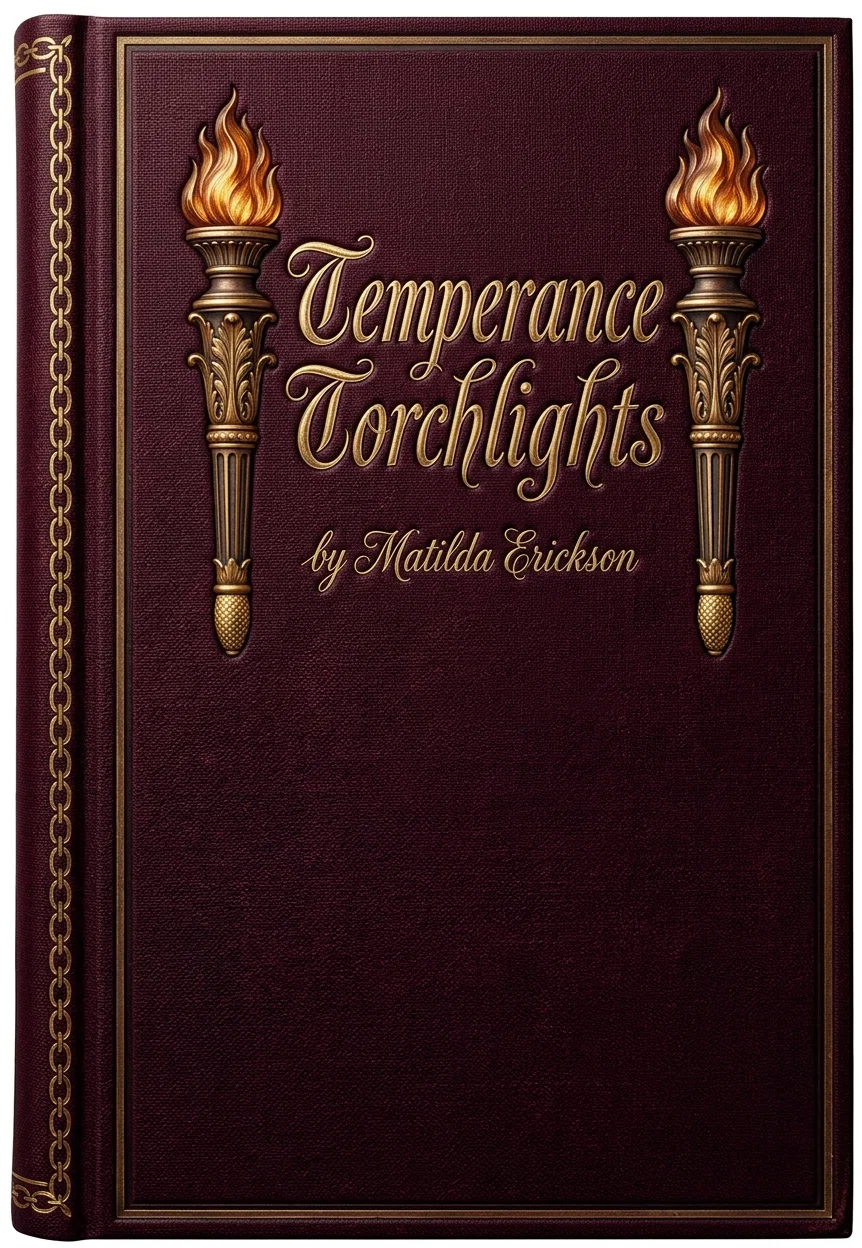
TEMPERANCE TORCHLIGHTS

Send in your order to-day for

TEMPERANCE TORCHLIGHTS

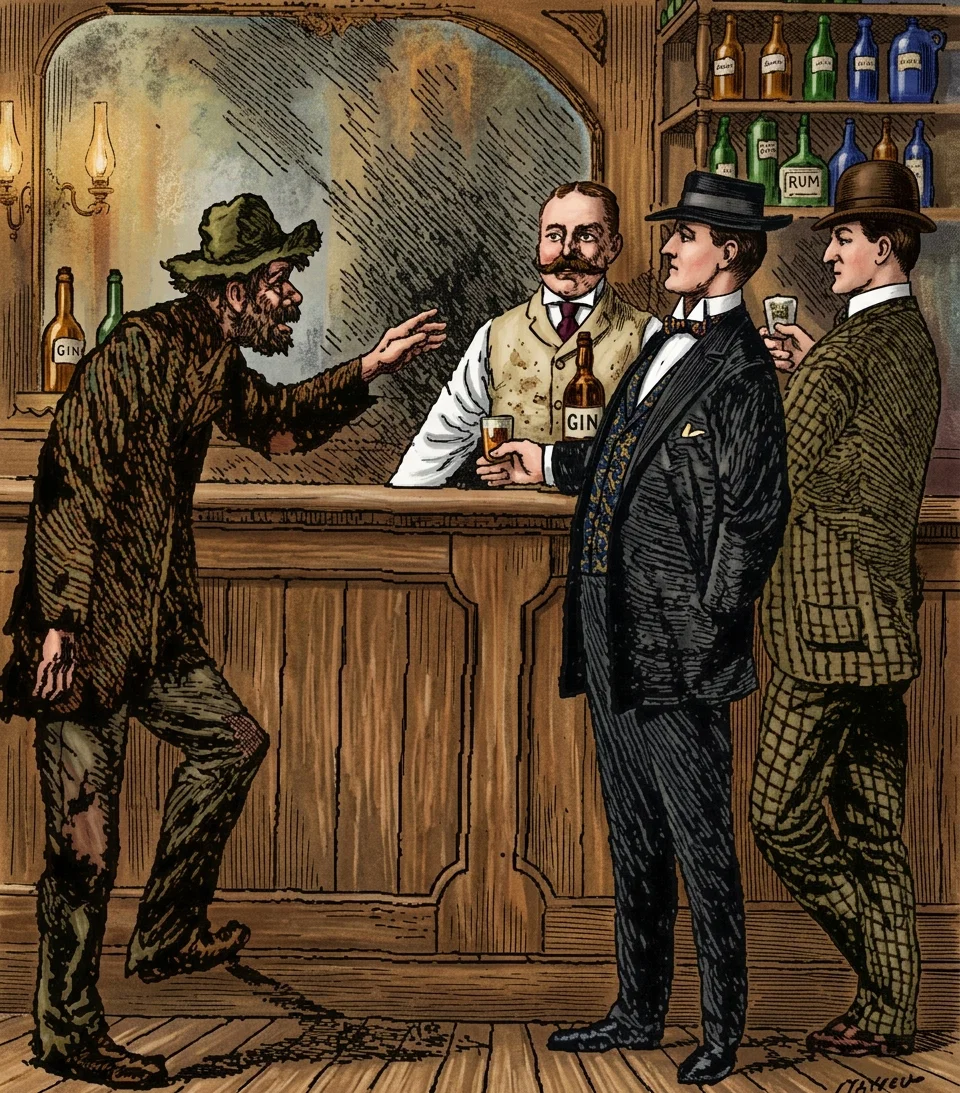
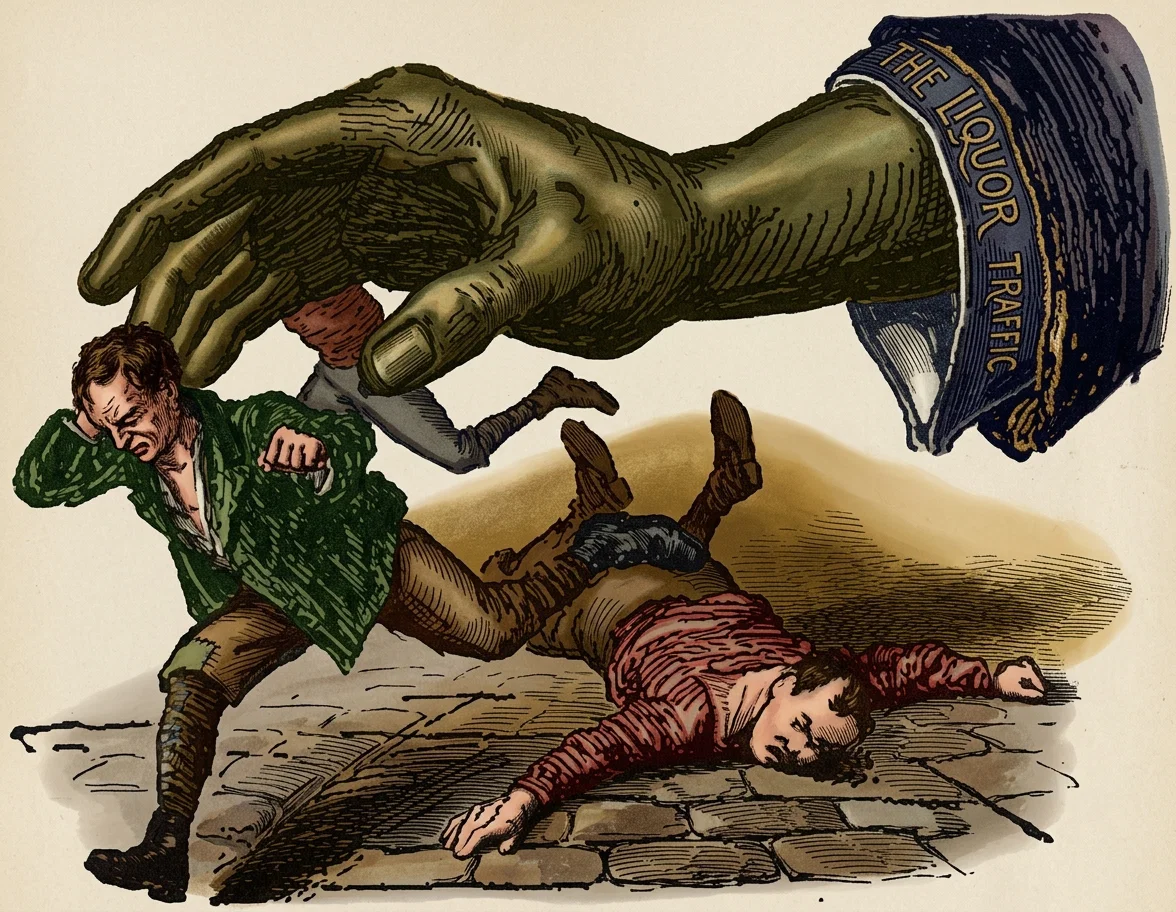
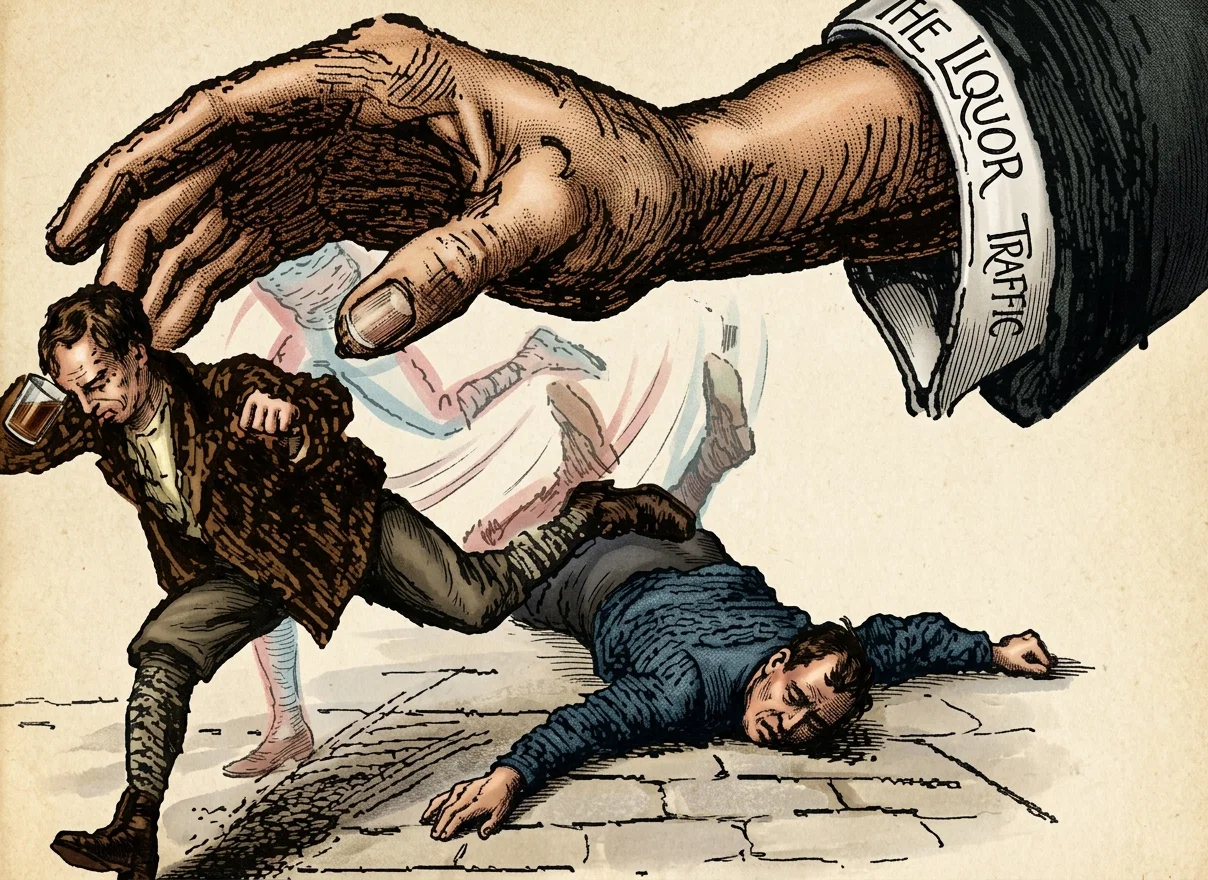
the handiest hand-book for the temperance worker ever published. Studies, stories, songs, poems, and useful information on temperance topics. Testimony from the world's greatest statesmen, physicians, and ministers. Nothing tedious, nothing tiresome, but an array of attention-holding anecdotes, and clearly presented facts and statistics. Read what others say about it:

An Inspiration

The fund of information it contains will inspire the advocates of temperance to work with greater zeal, and it will lead many who are now halting and indifferent to take a firm stand for the temperance cause.—A. G. DANIELLS, President General Conference, Introduction in “Temperance Torchlights.”

Stubborn Facts

This little book presents in forceful manner a striking array of stubborn facts, showing the evils of not only the liquor traffic but of intemperance generally speaking; and these truths are set forth in a ringing manner which compels attention. In the interests of humanity, and for the uplift of multitudes who have fallen low through intemperance, I pray that “Temperance Torchlights” may be scattered broadcast.—FREDERICK GRIGGS, Secretary Educational Department.

A Genuine Gem

What especially impresses me is the amount of valuable temperance information the little volume contains. It is a genuine little gem, and will wonderfully help in the great work of educating and arousing the people to their duty along the lines of true Christian temperance.—W. H. HECKMAN, President Eastern Pennsylvania Conference.

Practical Suggestions

The Temperance worker will find here a great array of facts and figures for use in the temperance warfare, as well as many practical suggestions on how to do effective work. The beautiful poems, stories, and songs help us to feel the power and pathos of this great question, and furnish young people and others with excellent materials for temperance programs.—M. E. KERN, Secretary Young People’s Missionary Volunteer Department.

Wins Its Way

Its general construction, convenient size, statistics, history, etc., will readily help to win its way everywhere. All should procure a copy, and inform themselves upon this important subject.—H. W. HERRELL, President Virginia Conference.
The book not only meets my fullest expectations, but all that has been written about it comes far short, to my mind, of expressing its value.—MORRIS LUKENS, President Indiana Conference.

Sparkles With Light

It is one of the breeziest little books we have seen for a long time. It just sparkles in every paragraph with light and truth upon the great problem it designs to meet. It is a mine of treasure to every speaker and teacher who desires to be fully fortified for the temperance work.—C. H. EDWARDS, President Southern New England Conference.
It ought to be in the hands of everybody in the land, whether they are Seventh-day Adventists or not. It is an excellent book to place in the hands of those who are interested in temperance work. I shall do all in my power to assist in its circulation.—C. McREYNOLDS, President Wisconsin Conference.
It ought to be in the hands of all the people. I purpose to use my influence in getting the book in the hands of all as far as possible.—J. J. IRWIN, President North Michigan Conference.

A Live Wire

Surely it is a live wire on temperance, it is filled with most striking and comprehensive statements, the statistics and sayings from prominent people are so well arranged as to make it a veritable cyclopedia of temperance information. It should be in the hands of tens of thousands.—G. W. WELLS, President North Carolina Conference.
This collection of choice nuggets from the masters should inspire temperance advocates to work with renewed zeal for the cause of health and temperance.—G. H. HEALD, Editor of Life and Health.
Order at Our Risk. If “Temperance Torchlights” is not just what you want, send it back, either to us or to your Tract Society, and your money will be refunded.
PRICE, IN CLOTH, 50 CENTS
ORDER THROUGH YOUR TRACT SOCIETY

_Unholy Knowledge_

MRS. E. G. WHITE
SATAN works in many ways where he is not discerned, even through men and women who are in positions of trust. He will suggest to their minds plausible errors of thought and action and speech, that will create doubt, and work distrust where they think there is assurance of safety. He will work upon dissatisfied elements, to put them in active operation. There will be a desire for greatness and honor. Envy will be excited in minds where it is not supposed to exist, and circumstances will not be wanting to call it into action. Doubts will be raised, and flattering promises of gain will be offered, if the cross is not made so prominent. Satan will tempt some to think that our faith stands as a barrier to great advancement, and bars the way to reaching a high worldly position, and being called remarkable men and women.
In his first display of disaffection, Satan was very cunning. All he claimed was that he wanted to bring in a better order of things, to make great improvements.
He led the holy pair away from God, away from their allegiance to his commandments, on the same point where thousands are tempted to-day, and where thousands fall; that is, by their vain imaginings. True knowledge is divine. Satan insinuated into the minds of our first parents a desire for a speculative knowledge, whereby he declared they would greatly improve their condition; but in order to gain this, they must take a course contrary to God's holy will; for God would not lead them to the greatest heights. It was not God's purpose that they should obtain knowledge that had its foundation in disobedience. This was a broad field into which Satan was seeking to lead Adam and Eve, and it is the same field that he opens for the world to-day by his temptations.
God did not create evil. He only made the good, which was like himself. But Satan would not be content to know the will of God and do it. His curiosity was on the stretch to know that which God had not designed he should know. Evil, sin, and death were not created by God; they are the result of disobedience, which originated in Satan. But the knowledge of evil now in the world was brought in through the cunning of Satan. These are very hard and expensive lessons; but men will learn them, and many will never be convinced that it is bliss to be ignorant of a certain kind of knowledge, which arises from unsatisfied desires and unholy aims. The sons and daughters of Adam are fully as inquisitive and presumptuous as was Eve in seeking forbidden knowledge. They gain an experience, a knowledge, which God never designed they should have; and the result will be, as it was to our first parents, the loss of their Eden home. When will human beings learn that which is demonstrated so thoroughly before them?
The history of the past shows an active, working devil. He can no more be idle than harmless. Satan was found in only one tree to endanger the safety of Adam and Eve. He planned to attract the holy pair to that one tree, that they might do the very thing God had said they should not do—eat of the tree of knowledge. There was no danger to them in approaching any other tree. How plausible his speech! He laid hold of the very arguments which he uses to-day,—flattery, envy, distrust, questioning, and unbelief. If Satan was so cunning at first, what must he be now, after gaining an experience of many thousands of years? Yet God and holy angels, and all those who abide in obedience to all the Lord's will, are wiser than he. The subtlety of Satan will not decrease, but the wisdom given to men through a living connection with the Source of all light and divine knowledge will be proportionate to his arts and wiles.
If men would stand the test which Adam failed to endure, and would, in the strength of Jesus, obey all the requirements of God, because they are righteousness, they would never become acquainted with the objectionable knowledge. God never designed that men should have this knowledge which comes of disobedience, and which, carried into practise, ends in eternal death. When men almost invariably choose the knowledge that Satan presents, when their taste is so perverted that it craves that knowledge as if it were a fountain of supreme wisdom, then they give evidence that they are separated from God, and are in rebellion against Christ.

W. S. CHAPMAN

Writing for the Press—No. 1

W. S. CHAPMAN

It has always been, seemingly, a perplexing question to prepare articles on religious subjects for the secular press in such a way as to insure their insertion. Possibly failures result, as a general thing, not so much from a lack, in the eyes of editors, of intrinsic value in the contributions themselves, as because of fatal defects in the composition and the arrangement.
If a few simple, fundamental principles are understood and followed in writing on a religious topic for a secular, or news, paper, it will seldom occur that the article will be declined. It is a fact that although hundreds of such manuscripts are yearly submitted to editors (said manuscripts often containing the very matter desired by them, which they would be glad to publish), only a few are ever accepted, or can be, because written in a manner which would make their use unprofitable or impracticable.
The writer must be brief—must study to be terse and laconic in the formation of every sentence—for two reasons:—
First, because a newspaper depends upon its advertising for its support; and an editor will not admit, to the columns of his paper, articles which, because of their length, may force him to trench upon his advertising space.
Second, because the advertising patronage depends upon the popularity of the publication with the reading public. To retain and increase the popularity of his paper is ever the uppermost thought in the mind of the editor. To this end, therefore, he seeks to present in each issue as great a variety as possible of what he believes will prove acceptable matter. To accomplish this he is compelled to select short articles, that there may be many of them, that every reader may find something satisfactory to himself, personally. Therefore, as a rule, beyond a single leading article, all else is condensed to the smallest possible extent, unless of extraordinary value as news matter.
Because of these two facts, the most prominent and fundamental principle to bear in mind, when writing for newspapers,is this—to let each and every paragraph in the article be so complete in itself (or with those which precede it) that, if necessary, the editor can cut out all that follows any special paragraph, and still have as readable and interesting an article to publish as if the entire communication had been used.
But to enable one to prepare an article in such a manner, other fundamental principles governing the composition of newspaper stories must be understood and applied.
Any article appearing in a newspaper, other than editorial matter, is called, in newspaper parlance, a “story.” The construction of a newspaper story, however, differs radically from a story prepared for a literary publication; and it is mainly because writers on religious subjects almost invariably fail to comprehend this difference, that their manuscripts are so persistently and generally declined.
Everything printed in a literary publication is to be considered from the story standpoint, invariably; but everything printed in a newspaper, including its editorials, is to be considered as, and is, news—pure and simple. Therefore a story written for a magazine must be written from a magazine-story standpoint, but a story written for a newspaper must be ever written, without any exception, as a news item—pure and simple.
More than this: it must be so written that the editor can condense down to a stickful or two, if necessary, yet retain its value as a news item; or expand it, with flaming headlines, if he so desire, and the needs of the hour demand, without any rewriting or editing on his part.
Short stories in both magazines and newspapers deal with a single incident, or happening, giving the details which will enable the reader fully to understand the occurrence. The effort of the magazine writer is so to tell the story as to keep his reader ever in suspense, with his curiosity unsatisfied, until a climax is reached, and the real point at issue (concealed all along) is suddenly and surprisingly presented.
Not so the story writer for the press. He studiously avoids leaving his reader a moment in suspense. He aims to state the facts—present the climax—in the opening paragraph; then he follows with details. In the second paragraph the main items may be given, in a general way; in the next succeeding, more fully, and with added minor details; following these will come explanations, possibly criticisms and suggestions, if the subject warrant these, leaving the editor free to cut out whatever he wishes, and yet retain the “story” as a news item. Such an article, so prepared, one that can be cut to suit “space,” is not very likely to be declined.
Camp-meeting sermons, reported verbatim, and covering several sheets, closely written, are terrible apparitions to a busy and perplexed editor. A camp-meeting reporter ought to be able to restate the points of discourses so tersely as to give, briefly, in a single opening paragraph, as an item of news, the salient points of the arguments used. This will leave room not only for amplification in succeeding paragraphs, for the benefit of interested readers, yet giving the busy man the facts in a nutshell at the beginning, but will enable the writer to present the “news” of the camp in closing remarks—all so arranged that the editor can cut as he desires, yet leave the article intact as a valuable news item.
As the eye of a weary editor would catch the “newsy” opening and closing paragraphs, his O. K. would follow as he murmured, “Good stuff,” and framed his display head from the facts given in the opening and closing sentences of the contribution.

The Law, the Gospel, and Faith

T. GODFREY

Introduction

“For I am not ashamed of the gospel of Christ: for it is the power of God unto salvation to every one that believeth; to the Jew first, and also to the Greek. For therein is the righteousness of God revealed from faith to faith: as it is written, The just shall live by faith.” Rom. 1:16, 17.
A careful and prayerful consideration of the foregoing text will make it apparent to every thoughtful person that the law, the gospel, and faith are inseparable elements in the great plan of salvation. But in order more fully to elucidate this cardinal truth, we will briefly consider the law, the gospel, and faith, each in its respective office as revealed in the Scriptures of truth, and also their relation the one to the other, and to the plan of salvation.
Says the psalmist: “The entrance of thy words giveth light; it giveth understanding unto the simple.” Ps. 119:130. Let us therefore turn on the search-light of Inspiration, that the truth may be revealed. Said the Saviour, praying for his followers, “Sanctify them through the truth: thy word is truth.” John 17:17.

The Law

“Before the mountains were brought forth, or ever thou hadst formed the earth and the world, even from everlasting to everlasting, thou art God.” Ps. 90:2. “Thy righteousness is an everlasting righteousness, and thy law is the truth.” Ps. 119:142. “My tongue shall speak of thy word: for all thy commandments are righteousness.” Verse 172. “The law of the Lord is perfect, converting the soul: the testimony of the Lord is sure, making wise the simple.” Ps. 19:7.
The law of God, as revealed in the decalogue, includes the organic principles in the throne of universal empire. Therefore they are the eternal and unchangeable rule of his moral government. These eternal principles are inherent in God from eternity past, and are a revelation of the righteous and unchangeable character of God. The transgression of these principles is sin (1 John 3:4); and it is said, “The soul that sinneth, it shall die.” Eze. 18:4, 20. “For the wages of sin is death.” Rom. 6:23. These principles are a condition of life. Matt. 19:16, 17. And as they are a condition and rule of life, it is evident they will be the rule of the Judgment. Eccl. 12:13, 14. It was the transgression of these principles that brought sin and death into the world. Rom. 5:12, 19. Disobedience is sin: sin is the transgression of the law; and the transgression of the law is lawlessness.

The Gospel

“Now after that John was put in prison, Jesus came into Galilee, preaching the gospel of the kingdom of God, and saying, The time is fulfilled, and the kingdom of God is at hand: repent ye, and believe the gospel.” Mark 1:14, 15. “And he said unto them, Go ye into all the world, and preach the gospel to every creature. He that believeth and is baptized shall be saved, but he that believeth not shall be damned.” Mark 16:15, 16. It was because of the transgression of the law that the gospel plan of salvation was laid, and introduced into the world. The gospel is God’s means of grace to save a fallen world from sin and death. “Sin is the transgression of the law,” and “the wages of sin is death.” Therefore “the gospel of Christ” is “the power of God unto salvation to every one that believeth” that gospel, and obeys it. Rom. 1:16. The gospel is a message of salvation to a lost world; and it is a message of peace to the child of God. Rom. 10:15. The gospel of Christ is a message to the waiting saints. “This gospel of the kingdom shall be preached in all the world for a witness unto all nations; and then shall the end come.” Matt. 24:14. So the gospel is a message of good news of the restoration of the kingdom of Christ. Micah 4:8; Isa. 52:7.

Faith

“And Jesus answering saith unto them, Have faith in God.” Mark 11:22. Faith—what is it? where do we get it? how may it be obtained? The Word says: “Now faith is the substance of things hoped for, the evidence of things not seen. For by it the elders obtained a good report. Through faith we understand that the worlds were framed by the word of God, so that things which are seen were not made of things which do appear.” Heb. 11:1-3. Faith is a gift from God (Eph. 2:8), and it is imputed to man through the hearing of God’s Word. So, then, the Word of God becomes the basis of faith; and “whatsoever is not of faith is sin.” Rom. 14:23. In other words, Whatsoever is not based upon the Word of God is presumption; and presumption is sin. Ps. 19:13. “Abraham believed God, and it was imputed unto him for righteousness.” James 2:23. He not only believed God, but he obeyed him. Heb. 11:8; Gen. 26:5. Faith is acceptingwhat God says, and doing it. “Know ye therefore that they which are of faith, the same are the children of Abraham.” Gal. 3:7. “But without faith it is impossible to please him.” Heb. 11:6. The law and the gospel say: “Honor thy father and thy mother.” Ex. 20:12; Eph. 6:1, 2. We believe, accept, and do it. That is faith.

The Conclusion

“Let us hear the conclusion of the whole matter: Fear God, and keep his commandments: for this is the whole duty of man. For God shall bring every work into judgment, with every secret thing, whether it be good, or whether it be evil.” Eccl. 12:13, 14. The law of God reveals the whole duty of man, both to God and to his fellow man. Matt. 22:35-40. It will be the rule, or standard, of the Judgment. Eccl. 12:14. “Sin is the transgression of the law,” and, “The wages of sin is death.” Therefore, the gospel “is the power of God unto salvation to every one that believeth; to the Jew first, and also to the Greek. For therein [in the gospel] is the righteousness of God [the law of God] revealed from faith to faith: as it is written, The just shall live by faith.” Rom. 1:16, 17. The law of God is revealed in the gospel by faith, or from faith to faith. The gospel is the great remedy for sin; the law of God reveals the nature and character of sin. The law says, “Thou shalt not covet.” Rom. 7:7. The gospel says, “Repent ye, and believe the gospel.” Mark 1:15. Now that we receive the gospel by faith, we receive all that is revealed in the gospel; so we see that the law, the gospel, and faith can not be separated the one from the other in the great plan of salvation. “Where no law is, there is no transgression.” Rom. 4:15. “Sin is not imputed when there is no law.” Rom. 5:13. Were there no law, there could be no sin; therefore there would be no need of the gospel.
Huntington, W. Va.

Why We Believe the Bible

Proof of the Bible From Archeology

What is the value of the proof of the Bible from archeology?
THE discovery of records on stone, clay, or paper, that have lain buried for ages, carries us back to the very times of which the Bible speaks. So far as these records go, their testimony can not be doubted. It is as if Rameses, or Nebuchadnezzar, or Cyrus should rise from the dead, and confirm the accuracy of Scripture. Let us study a few specimens of archeological discoveries, that we may see in what way they prove the Bible:—
What is the Code of Hammurabi?
It is the most remarkable discovery ever made bearing on the Bible. It was found in December, 1901, and January, 1902, by the French archeologist, M. de Morgan, who was making excavations in Susa, in Persia (the Shushan of Esther). He discovered a mass of black diorite eight feet high, six feet in circumference at the base, and five feet at the top. It is now in the Louvre, in Paris. Upon this monument are more than 3,600 lines of inscriptions, setting forth 248 laws formulated by Hammurabi, king of Babylon, about 2250 B. C. He was the Amraphel of Gen. 14:1, who joined with five other kings in the capture of Sodom, and from whom Abraham afterward wrested the booty, including Lot and the other captives. These laws are arranged in a very systematic way, and cover a large number of subjects relating to both person and property. Though written in the time of Abraham, they show that courts and a high state of civilization existed in Babylonia for centuries before his day.
How does this discovery tend to prove the Bible?
It had been held that the laws of the Pentateuch could not have been written by Moses, because they belonged to a state of civilization centuries after his time. Indeed, for a long time it was believed by skeptics that Moses and the men of his day did not even know how to write, and had no books. The Code of Hammurabi shows us a civilization as far developed as that of the Pentateuch existing a thousand years before Moses. The resemblances between the two sets of laws are in many parts so close as to show common customs of the two nations, or else some indirect or direct knowledge of Hammurabi’s code on the part of Moses. The immense superiority of the Bible, however, is shown by the fact that, as Professor Price says, “The Hammurabi laws look rather at the external act, while the Pentateuch regards the inner thoughts, feelings, and desires.” This is the element of inspiration.
What are the Tel-el-Amarna tablets?
They are more than three hundred tablets made of baked clay, found in 1887 by a peasant woman at the village of Tel-el-Amarna on the Nile, about one hundred seventy miles south of Cairo. They proved to be cuneiform inscriptions in the Babylonian language, and are a series of letters written to two Egyptian kings about 1400 B. C., by the governors of Syria, Palestine, Phenicia, and Philistia, and the kings of Assyria and Babylonia.
How do the Tel-el-Amarna tablets help to prove the Bible?
They show that Palestine was then tributary to Egypt, but that it had been for a long time previously a province of Babylonia. They show that Palestine was at that time (when the Hebrews were captives in Egypt) in a greatly disturbed state, and among the enemies of the Canaanites is named a people called Khabiri,—probably the Babylonian equivalent of “Hebrew,”—some part of the Hebrew race. In such a state the country would be far more easily taken by the Hebrews under Joshua. The letters contain the name Jerusalem, which was not known to have been in use at that early date.
What is the Black Obelisk?
It is a famous monument of black marble, now in the British Museum. It was cut in the reign of Shalmaneser II, king of Assyria, B. C. 860-825. A series of sculptured pictures shows men of different nations bringing tribute to Shalmaneser, and among them are a file of Jews. The inscription says that these came from Jehu, whose career as king of Israel is fully set forth in the Bible.
How does this discovery help to prove the Bible?
This monument, with other Assyrian records of the time that have been deciphered, describes the wars that were waged by Assyria with Syria, and shows how Syria was a buffer state for Israel, and how the Assyrian defeat of Syria left Israel free to expand and become strong. This furnishes a perfect explanation of much in the history of the northern kingdom that the Bible does not stop to unfold, and it all fits in perfectly with the record in Kings and Chronicles.
What is the Moabite Stone?
It is a large slab of black basalt, now in the Louvre. It was found in ancient Moab, east of the Dead Sea, and was cut in the reign of Mesha, king of Moab, about 850 B. C. The stone is a tribute to Chemosh, the Moabite deity, and the inscription relates how he became angry with his people, and allowed Omri, king of Israel, to conquer them, and exact from them a large annual tribute. After the death of Ahab, the Moabites revolted, and won back their independence.
How does the Moabite Stone help to prove the Bible?
In language and literary style it comes very close to the Bible, and reads like a chapter from Kings or Chronicles. It refers to Jehovah, illustrates a number of details of the Bible, and perfectly harmonizes with what the Bible tells us about the relations between Moab and her Hebrew neighbors.
What are the Egyptian discoveries of the times of the Hebrew bondage?
The mummy of Rameses II, the Pharaoh of the bondage, has been found. The city of Pithom has been discovered, and the actual storehouses built by the Hebrew slaves, the lower portion built of bricks containing straw, but most of them being made of bricks without straw. We also have the mummy of Menephtah II, the Pharaoh of the Exodus. We possess a hymn of victory addressed to him and mentioning Israel. It is probable also that the inscriptions show the death of his son, while yet young, in the last of the plagues.
How do these Egyptian discoveries confirm the Bible record?
They all fit in perfectly with the Bible account. Other researches show the location of Goshen, where the Hebrews lived, and the line of boundary forts that turned the escaping host of slaves downto the Red Sea. The Bible harmonizes with all that is known of Egyptian civilization.
How do discoveries regarding the Hittites confirm the Bible?
There are in the Bible many references to the Hittites, and they are pictured as a considerable nation. Until recently nothing was known of this nation except what the Bible tells us, and therefore some scholars denied that there ever was such a people. But now the records of Egypt and Assyria show us the Hittites as a people that for nearly seven centuries was one of the greatest in the world, occupying northern Syria and southern Asia Minor. In that region there have been discovered many of the ruins of Hittite buildings, and many of their crude rock carvings, together with inscriptions in strange hieroglyphics that have not yet been deciphered.
What are the Oxyrhynchus papyri?
They are very ancient manuscripts, on the brittle papyrus, found recently in a low mound near the Nile in the Libyan desert of Egypt. Among these is a fragment of a book of sayings of Jesus. The scholars conclude that it was written at some time between A. D. 100 and A. D. 150, very close to the time when the Gospels were written. Some of these sayings are also in the Gospels, and some, like the saying quoted by Paul in Acts 20:35, are not recorded by the evangelists.
What other archeological discoveries are important as confirming the Bible?
They are so many that they can only be indicated roughly. The ruins of Abraham’s birthplace, Ur of the Chaldees, have been found. We have portraits of some of the Canaanites whom Joshua fought. We have Shishak’s sculptured account of his campaign against Rehoboam, the images of captives bearing the names of Gaza, Adullam, Ajalon, Gibeon, Shunem, and perhaps Jerusalem. We have Tiglath-pileser’s records mentioning Uzziah, Ahaz, Menahem, Pekah, and Hoshea, five kings of Judah and Israel. We have Sargon’s account of his capture of Samaria, and Sennacherib’s history of his invasion of Palestine, mentioning King Hezekiah. Manasseh is mentioned in an Assyrian list of tributaries. Belshazzar, whose existence was so long denied by the skeptics, because he was not named outside the Bible, is recorded in the Babylonian inscriptions as being the son of King Nabonidus and coregent with him. The unearthing of Nineveh has proved its vast extent, and the extrication of the palace of Susa from the dust of ages has confirmed the book of Esther. These and many other discoveries have not only proved the Bible correct at definite points, but they have authenticated the whole trend of Bible narrative, and every year they are explaining what had not been understood in the Bible, and removing difficulties which have been the infidel’s stock in trade.—Amos R. Wells, in Christian Endeavor World.
Continue reading: The Heart of the Woods