5 “So He cometh to a city of Samaria, called Sychar, near to the parcel of ground that Jacob gave to his son Joseph; 6 and Jacob's well was there. Jesus therefore, being wearied with His journey, sat thus by the well. It was about the sixth hour. There cometh a woman of Samaria to draw water; 7 Jesus saith unto her, Give Me to drink. For His disciples 8 were gone away into the city to buy food. The Samaritan 9 woman therefore saith unto Him, How is it that Thou, being a Jew, askest drink of me, which am a Samaritan woman? 10 (For the Jews have no dealings with Samaritans.) Jesus answered and said unto her, If thou knewest the gift of God, and who it is that saith to thee, Give Me to drink; thou wouldest have asked of Him, and He would have given thee living 11 water. The woman saith unto Him, Sir, Thou hast nothing 12 to draw with, and the well is deep; from whence then hast Thou that living water? Art Thou greater than our father 13 Jacob, which gave us the well, and drank thereof himself, and 14 his sons, and his cattle? Jesus answered and said unto her, Every one that drinketh of this water shall thirst again; but 15 whosoever drinketh of the water that I shall give him shall never thirst; but the water that I shall give him shall become in him a well of water springing up into eternal life. The woman saith unto Him, Sir, give me this water, that I thirst not, neither come all the way hither to draw.”
Golden Text.—“Whosoever drinketh of the water that I shall give him shall never thirst.” Verse 14.
SUGGESTIVE QUESTIONS.
(1) On His way from Judea to Galilee, to what city did Jesus come? To what noted place was it near? V. 5. Note 1. (2) What was another noted feature of the place? What did Jesus do as He came to the well? What time of day was it? V. 6. (3) Who came to the well to draw water? What did Jesus say to her? V. 7. (4) Where had the disciples gone? V. 8. (5) What reply did the woman make to Jesus? V. 9. Note 2. (6) How did Jesus answer her query? V. 10. (7) Then what did the woman say? Vs. 11, 12. (8) What did Jesus say of that water? V. 13. (9) What about water that He should give? V. 14. Note 3. (10) What earnest request did the woman make? V. 15. (11) Do you desire to partake of that water? or do you already drink of it? See Isa. 55:1, 2.
NOTES.
1. Sychar is said by some commentators to be the ancient Shechem, but Gen. 33:18-20 would indicate that Shechem was a small region of country rather than a city, for Shalim was “a city of Shechem,” called Sychem in Acts 7:16. The record of Jacob's giving a parcel of land to Joseph is found in Gen. 48:21, 22. The location of Sychar is between the twin mountains Ebal and Gerizim.
2. Jesus asks for a drink.—The surprise of the woman was not that Jesus should ask a woman for a drink of water, but that He, a Jew, should ask a favor of a Samaritan. We are told that in the East the giving and receiving of a drink of water is a covenant of hospitality—a truce, at least for the time being, between the most confirmed enemies. That a Samaritan could be touched by the necessities of even a Jew is shown by the parable of the good Samaritan.
3. “Shall never thirst.”—Having partaken of the Spirit of Christ by faith in His Word, the never-failing supply of living water is always at hand. “It shall be in him a well of water.” Christ gives us the assurance, “Blessed are they which do hunger and thirst after righteousness; for they shall be filled.” Matt. 5:6. Again He has promised the Comforter, “even the Spirit of truth; whom the world can not receive, because it seeth Him not, neither knoweth Him; but ye know Him; for He dwelleth with you, and shall be in you.” John 14:16, 17
1 "NOW THERE was a man of the Pharisees, named Nicodemus, 2 a ruler of the Jews; the same came unto Him by night, and said to Him, Rabbi, we know that Thou art a teacher come from God; for no man can do these signs that Thou doest, except God be with him. Jesus answered and said unto him, Verily, verily, I say unto thee, Except a man be born anew, he 4 can not see the kingdom of God. Nicodemus saith unto Him, How can a man be born when he is old? can he enter a 5 second time into his mother's womb, and be born? Jesus answered, Verily, verily, I say unto thee, Except a man be born of water and the Spirit, he can not enter into the kingdom of God. 6 That which is born of the flesh is flesh; and 7 that which is born of the Spirit is spirit. Marvel not that I said 8 unto thee, Ye must be born anew. The wind bloweth where it listeth, and thou hearest the voice thereof, but knowest not 9 whence it cometh, and whither it goeth; so is every one that is born of the Spirit. Nicodemus answered and said unto Him, 10 How can these things be? Jesus answered and said unto him, Art thou the teacher of Israel, and understandest not these 11 things? Verily, verily, I say unto thee, We speak that we do know, and bear witness of that we have seen; and ye receive not 12 witness. If I told you earthly things, and ye believe not, how 13 shall ye believe, if I tell you heavenly things? And no man hath ascended into heaven, but he that descended out of 14 heaven, even the Son of man, which is in heaven. And as Moses lifted up the serpent in the wilderness, even so must 15 the Son of man be lifted up; that whosoever believeth may in 16 Him have eternal life. "For God so loved the world, that He gave His only-begotten Son, that whosoever believeth on Him should not perish, but have eternal life."
Golden Text.—"For God so loved the world, that He gave His only-begotten Son, that whosoever believeth in Him should not perish, but have everlasting life." Verse 16.
SUGGESTIVE QUESTIONS.
(1) What noted man is brought to light in this lesson? V. 1. (2) At what time did Nicodemus come to Jesus? What did he say to Jesus? V. 2. (3) What was Jesus' answer? V. 3. (4) With what questions did Nicodemus reply? V. 4. (5) What explanation did Jesus give? V. 5. Note 1. (6) What did He say of that which is born of the flesh? And of the Spirit? V. 6. Note 2. (7) At what need Nicodemus not wonder? V. 7. (8) Why? V. 8. Note 3. (9) How did Nicodemus show his perplexity? V. 9. (10) With what question did Jesus manifest surprise? V. 10. (11) What positive assurance did He then give to the ruler? How did He show His knowledge of the human mind? V. 11. (12) How did Jesus show Nicodemus his misconception of spiritual things? V. 12. (13) Who only would be capable of telling him spiritual things? V. 13. (14) What well-known circumstance was brought to the ruler's mind? What did that act prefigure? V. 14. (15) For what purpose was the Son of man "lifted up"? V. 15. (16) When was He "lifted up"? Ans.—At the cross. (17) What was the actuating motive in this scripture? V. 16. Note 4.
NOTES.
1. "Born of water and the Spirit."—Being born of water is a ceremony, an ordinance, an outward act showing an inward purpose. It is a public confession of belief that Jesus Christ, the Son of God, died, was buried, and rose again; it is a profession of having put off the old man, or died to the world, been buried with Christ, and having risen again with Him to walk with Him in newness of life. Being born of the Spirit is the reality of what is professed in baptism, or the water birth. One is the profession, the other is the life.
2. "Born of the flesh"—is the natural birth, with all the fleshly instincts or natural tendencies. Being so born, one must so remain until a change is wrought through the Gospel by the Spirit. Then the life is no longer actuated by the desires of the flesh, but it is spiritual, or is led by the Spirit.
3. "The wind bloweth where it listeth."—The margin reads, "The Spirit breatheth," etc. The conclusion of the verse shows that "spirit," and not "wind," is the idea. In other words, as is the Spirit, so is every one that is born of the Spirit.
4. "God so loved the world."—John 3:16 contains not only the whole Gospel, but the actuating motive of its Author, and the sad necessity of the race for whose benefit it was proclaimed. (1) The world was lost. (2) God loved it. (3) He gave His Son as a ransom. (4) Whosoever believed in Him should not perish, which implies that without Him all would perish, as expressed in verse 36. (5) All who believe shall have everlasting life.
AIR.
By John Harvey Kellogg
THE first inquiry suggested to the thinking mind would be, What is it? and what is its office?
It is the elastic fluid that we breathe. It surrounds the earth to a distance of about fifty miles above the surface, and forms what is called the atmosphere. It can not be seen, but can be felt. This is demonstrated by moving the hand back and forth rapidly through the air. The Creator stated that it “bloweth where it listeth, thou hearest the sound thereof, but canst not tell whence it cometh, and whither it goeth.”
It is a gas, odorless and colorless, consisting of twenty-one parts of oxygen and seventy-nine parts of nitrogen, of which oxygen is the most important, for if deprived of this we can live but a few minutes. It is the first essential to all life, the highest and richest blessing to man. Without it a fire will not burn, and all life will cease to exist. Steel and iron can be burned in pure oxygen, also the waste material in our bodies, which are poison factories. The nitrogen in the air dilutes the oxygen to the proper consistency, so that it can be used by the body to the best advantage.
The air tends to stop motion. This we call resistance, and can be illustrated by dropping a penny and a feather and noticing which reaches the ground first.
Air exists in every substance, and is impenetrable, as is shown by inverting a cup or other small vessel in water and forcing it down. The upper part of the cup will be found without water in it; the air has kept the water out. The compressibility and elasticity of air are also illustrated by this same experiment; as the water compresses the air in the cup and enters part way into the cup, and as the cup is brought nearer the surface, the air again expands and fills the cup. One hundred cubic inches of air weigh thirty-one grains, which makes it eight hundred and fifteen times lighter than water. Its density at the sea level is fifteen pounds to the square inch. This can be more fully appreciated when we remember that the area of our body is about two thousand square inches, which would make us stand under the enormous load of thirty thousand pounds. The reason that we are not crushed under this pressure is because it is counter-balanced by an equal pressure from within.
As we ascend from the earth the air becomes more rare. This is the reason that in climbing a steep mountain it is more difficult to breathe, at great heights even causing the blood to ooze from the nose and ears, the veins to swell, extremities to become cold, and the head to ache. Heat also brings about the same condition.
Air is also a non-conductor of heat. When air is oppressively warm, and no breeze is stirring, we are overcome by the heat, because the air does not carry off the heat generated in our bodies. Set the air in motion by use of a fan and we are soon relieved.
CALIFORNIA SCENERY, No. 1.—A view in Yosemite Valley. Washington Tower on the right and Half Dome on the left, reflected in Merced River. A fuller description of this wonderfully beautiful valley will be given later.
How do we obtain this vital fluid? It is a gift of our Creator. He gives it to us in its pure state, but we bar it out by the use of walls and tents, and therefore perish—by a fire of our own kindling. How often we stop by the little hut or hovel, and see an opening called a door; possibly in the door we discover a small window! If the air is cool, these will be closed, at the same time shutting out the pure air, that which sustains life. To appreciate this, take a candle into such a house and see how soon it grows dim and then goes out. This shows the condition of the air; and what it did for the candle it will, slowly but surely, do to our lives. Impure air in a room may also be detected by the sense of smell. If one enters a room, coming in out of the pure air, and detects a disagreeable odor, it is in all probability due to the fact that the room has not been properly ventilated. When we have ascertained that the air in a room is in an unhealthy condition, it is our duty to see that it is supplied with fresh, pure air which God has so bountifully supplied to us without money and without price.
How may we obtain pure air in our dwellings?—There are two points to be remembered, First, hot air always rises. Second, cold air always falls. This accounts for the current of air in a room when we open a door or window—the cold air rushes in and the warm rushes out. The opening should, if possible, be on the opposite sides of the house or room; thus our efforts are supplemented by the pressure of the air without. As each person in a room requires three thousand cubic feet of air per hour, we should be very careful to have our rooms so ventilated as to supply this amount of fresh air to each individual. The air in a room being the same temperature, the foul air, being heavier, would naturally fall to the floor; if we admit cold, fresh air, it would naturally fall to the floor, displacing the foul air, and as it became heated, it would gradually rise, crowding the foul air before it. If the fresh air is heated, it rises at once and rolls along the ceiling; as it cools, it settles, and, as the foul air is ahead of it, the outlet should be near the floor.
The amount of fresh air is determined as follows: Air heated to 40° Fahr. above the outside air travels at the rate of 5 feet per second. The outlet should be large enough so the foul air can escape faster than the pure air comes in. It is estimated that we can figure the velocity at 10 feet per second. Then, as it requires 3,000 cubic feet of air per hour for each individual in a room, divide the amount required by the velocity and the result will be the area of the opening required. For example, if two persons require 6,000 cubic feet of air for one hour, they will require 1 2/3 feet per second; this divided by the velocity, 10, would leave 1 2/3 feet, the area of the opening required or 2 persons; 40 per cent. in air ducts is usually added to the above for obstruction of register plate. H. F. RAND, M.D.
“BE CAREFUL ABOUT PORK.”
By Editor
SUCH is the heading of a note in a recent number of the Sacramento Record-Union. It is a report of a meeting of the Board of Health. The principal reason of the warning is that “hog cholera” was in evidence. The note says:—
“There is considerable hog cholera adjacent to Sacramento,” runs Dr. Nicholas’ report, “and people can not be too cautious about pork.” It is supposed that the cholera was brought here by hogs that have been driven through the county.
The quarantine has been removed from the Perkins ranch, where a number of cattle died of anthrax some weeks ago.
It were better for mortals did they never taste the filthy and unwholesome and diseased swine. “Hog cholera” is incidental, but scrofula and corruption of all sorts are permanencies and constituent elements in the porcine make-up. Total abstinence is the truest temperance and brings the best results, as we can personally testify after years of experience.
The second quoted paragraph is also significant. It is one of hundreds showing how diseased the brute creation is becoming. Thousands of sheep and cattle die of anthrax, murrain, tuberculosis, and other diseases every13year. How many deaths are forestalled by the butcher’s knife, no one knows, least of all perhaps those who eat the poison and suffer from its effects. Better eschew it. Man is not naturally carnivorous. He does not need flesh food. We know of many who have not used it for years who are in exceptionally good health. Nature furnishes all the elements to build up and maintain the human in health as she does the horse. Try it intelligently.
THE HOME
THREE GATES.
If you are tempted to reveal
A tale some one to you has told
About another, make it pass,
Before you speak, three gates of gold.
These narrow gates—first, “Is it true?”
Then, “Is it needful?” In your mind
Give truthful answer. And the next
Is last and narrowest—“Is it kind?”
And if to reach your lips at last
It passes through these gateways three,
Then you may tell the tale, nor fear
What the result of speech may be.
—From Mizpah.
USE YOUR EYES.
MOST boys know the name of Charles Kingsley, the poet and scientist, and lover of all that is beautiful and true.
In the preface to one of his books for children he tells us how he learned to use his eyes, and all the senses that God had given him, to learn the wonderful lessons that God was trying to teach him continually by them. When he was a boy he had a book called "Evenings at Home," in which was a story called "Eyes and No Eyes." It began thus:—
"Well, Robert, where have you been walking this afternoon?" said Mr. Andrews to one of his pupils at the close of a holiday.
O—Robert had been to Broom Heath, and round by Camp Mount, and home through the meadows. But it was very dull. He had much rather have gone by the turnpike road.
Presently in comes Master William, the other pupil, and terribly wet and dirty he is. But he never had such a pleasant walk in his life; and he had brought home his handkerchief full of curiosities.
He has got a piece of mistletoe, and wants to know what it is; and he has seen a woodpecker, and a wheat-ear, and gathered strange flowers on the heath, and hunted a peewit, because he thought its wing was broken, till of course it led him into a bog, and very wet he got. But he did not mind it, because he fell in with an old man cutting turf, who told him all about turf-cutting, and gave him a dead adder.
And then he went up a hill, and saw a grand prospect; and because the hill was called Camp Mount, he looked for a Roman camp and found one; and then he went down to the river, and saw twenty things more; and so on, and so on, till he had brought home curiosities enough, and thoughts enough, to last him a week.
Whereon Mr. Andrews, who seems to have been a very sensible old gentleman, tells him all about his curiosities. And then it comes out—if you will believe it—that Master William has been over the very same ground as Master Robert, who saw nothing at all.
Whereon, Mr. Andrews says wisely: "So it is. One man walks through the world with his eyes open, another with his eyes shut; and upon this difference depends all the superiority of knowledge which one man acquires over another. While many a vacant, thoughtless youth is whirled through Europe without gaining a single idea worth crossing the street for, the observing eye and inquiring mind find matter of improvement and delight in every ramble. You, then, William, continue to use your eyes. And you, Robert, learn that eyes were given to you to use."
Mr. Kingsley continues:—
"So said Mr. Andrews; and so say I, dear boys, to you. I beg all good boys among you to think over this story, and settle in their own minds whether they will be eyes or no eyes."
I say "good boys," not merely clever boys or prudent boys; because using your eyes or not using them is a question of doing right or doing wrong. God has given you eyes; it is your duty to God to use them. If your parents tried to teach you your lessons in the most agreeable way, by beautiful picture-books, would it not be ungracious, ungrateful, and altogether naughty and wrong, to shut your eyes to those pictures and refuse to learn?
And is it not altogether naughty and wrong to refuse to learn from your Father in heaven, the great God who made all things, when He offers to teach you all day long by the most beautiful and most wonderful of all picture-books, which is simply all things which you can see, hear, and touch, from the sun and stars above your head to the mosses and insects at your feet?
God's book, which is the universe, and the reading of God's book, which is science, can do you nothing but good, and teach you nothing but truth and wisdom. So use your eyes and your intellect, your senses and your brains, and learn what God is trying to teach you continually by them.
I do not mean that you must stop there, and learn nothing more. Anything but that. There are things which neither your senses nor your brains can tell you; and they are not only more glorious, but actually more true and real, than any things which you can see or touch. But you must begin at the beginning in order to end at the end, and sow the seed if you wish to gather the fruit.
God has ordained that you, and every child which comes into the world, should begin by learning something of the world about him by his senses and his brain; and the better you learn what they can teach you, the more fit you will be to learn what they can not teach you.—Present Truth.
NUTS
EASILY and cheaply made in any household by the use of our complete equipment for grinding and emulsifying nuts. The production of our mills is unsurpassed. Full directions and a booklet containing many valuable nut food recipes, free with each mill.
NUTS
Shelled and unshelled, of all kinds at reasonable prices
For further information, catalog, price-list, etc., write to
JOSEPH LAMBERT
Battle Creek Michigan
Healthful Delicious Nut Foods
When you write, please mention the SIGNS OF THE TIMES.
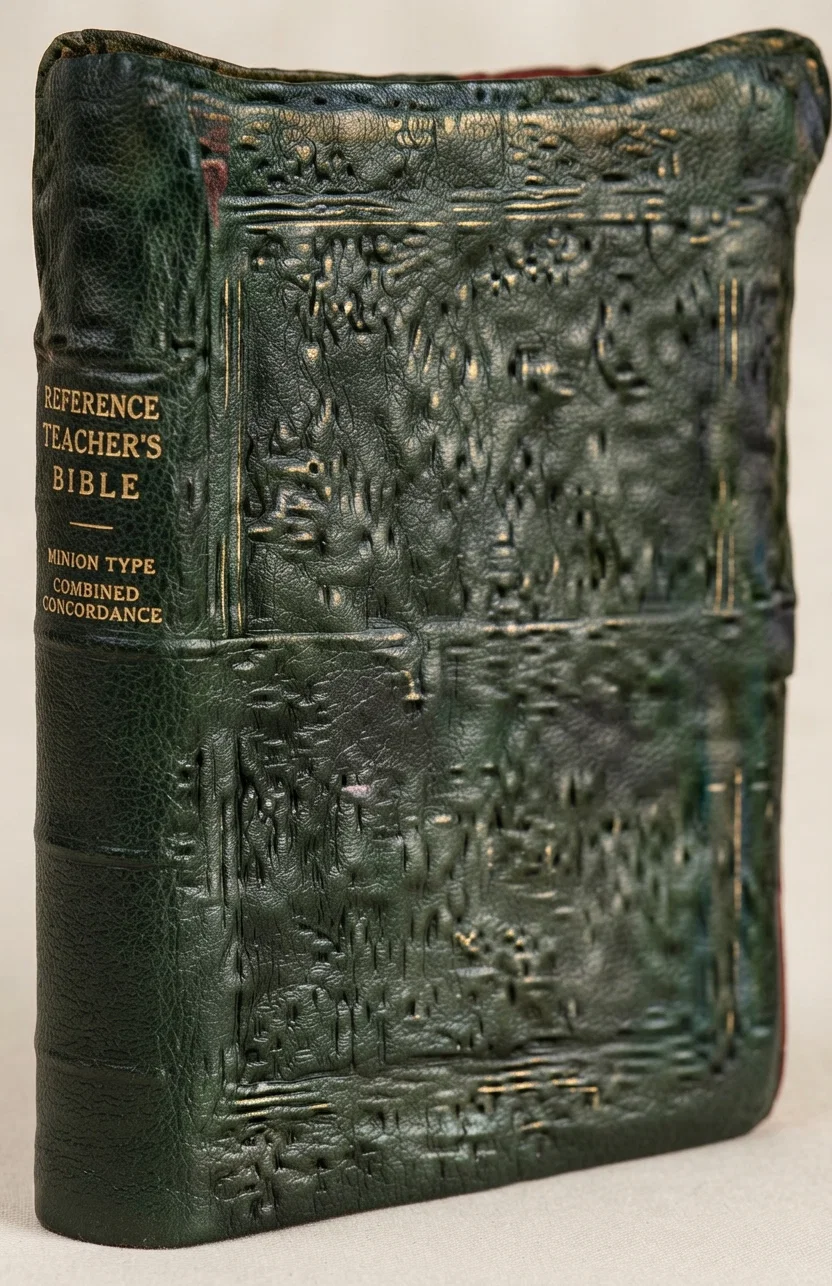
The Bible is substantially bound in morocco, divinity circuit, leather lined to edge, round corners, red under gold edges, minion type, and contains over 650 pages of finely illustrated Helps to the study of the Bible.
One feature of special value in the Helps contained in this Bible is the Combined Concordance, which unites, in a very convenient form for ready reference, a Concordance, Subject Index, and Pronouncing Dictionary of Scripture Proper Names.
Sent post-paid with the SIGNS one year - - $2.75
Bible sent free on receipt of 7 new names and $7.00
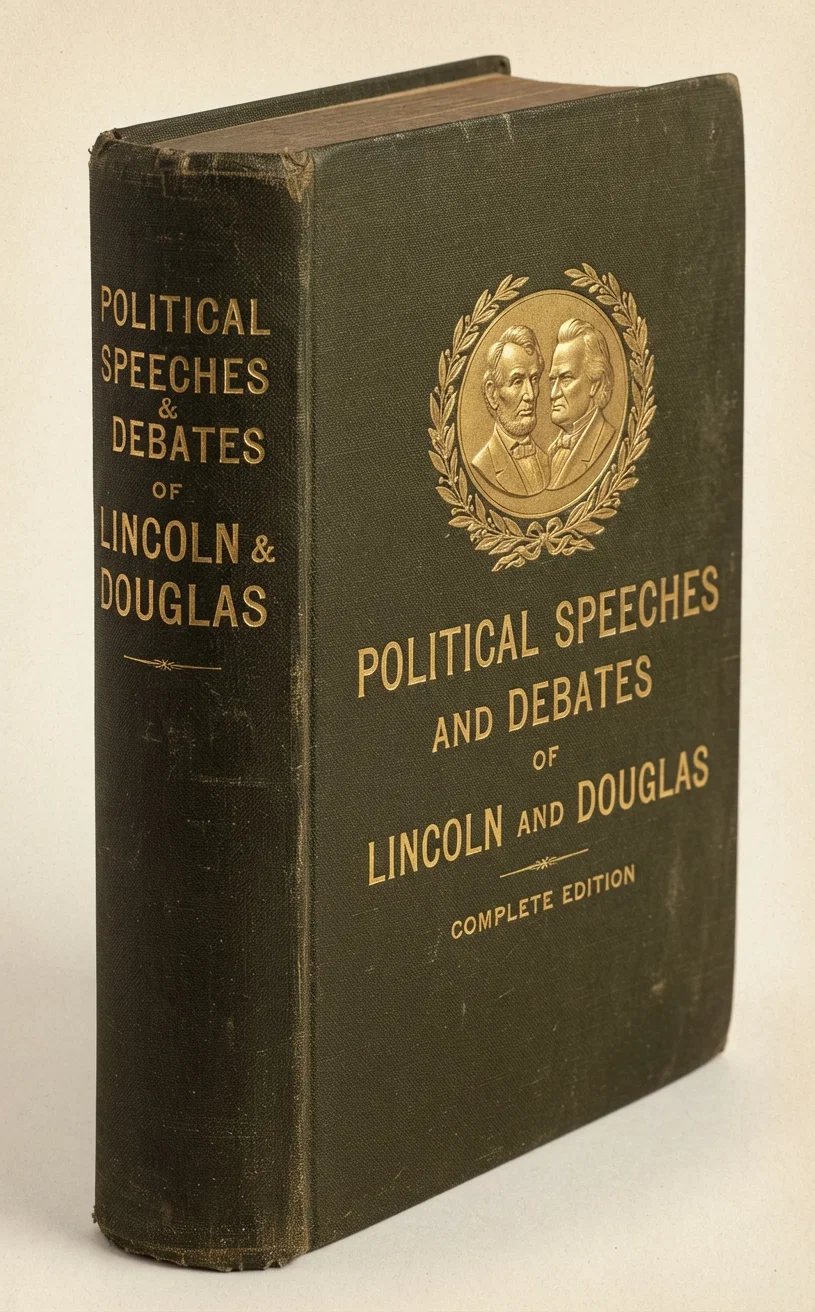
Political Speeches and Debates of Lincoln and Douglas
Shows how to meet the questions threatening the liberties and rights of the people to-day. This book, containing the speeches and debates of these able statesmen, is full of thrilling interest and forms a veritable armory of Lincoln argument.
Buckram cloth, 555 pages, illustrated - - $1.75
Sent post-paid with the SIGNS one year - - $1.75
Book sent free for 3 new yearly subscribers and 1 renewal at $1.00 each
Battle Hymn of the Kingdom
A beautiful poem by Frances Eugenia Bolton. It is illustrated by fifteen elegant halftone engravings, which were produced expressly for this booklet by one of New York's best artists.
Presentation
Edition
Printed in the finest style of the art, on heavy enameled book paper, bound in fine art vellum cloth, gilt top, 50 cts.
Sent post-paid with the SIGNS one year, $1.25Book sent free for 1 new yearly subscriber and 1 renewal at $1.00 each
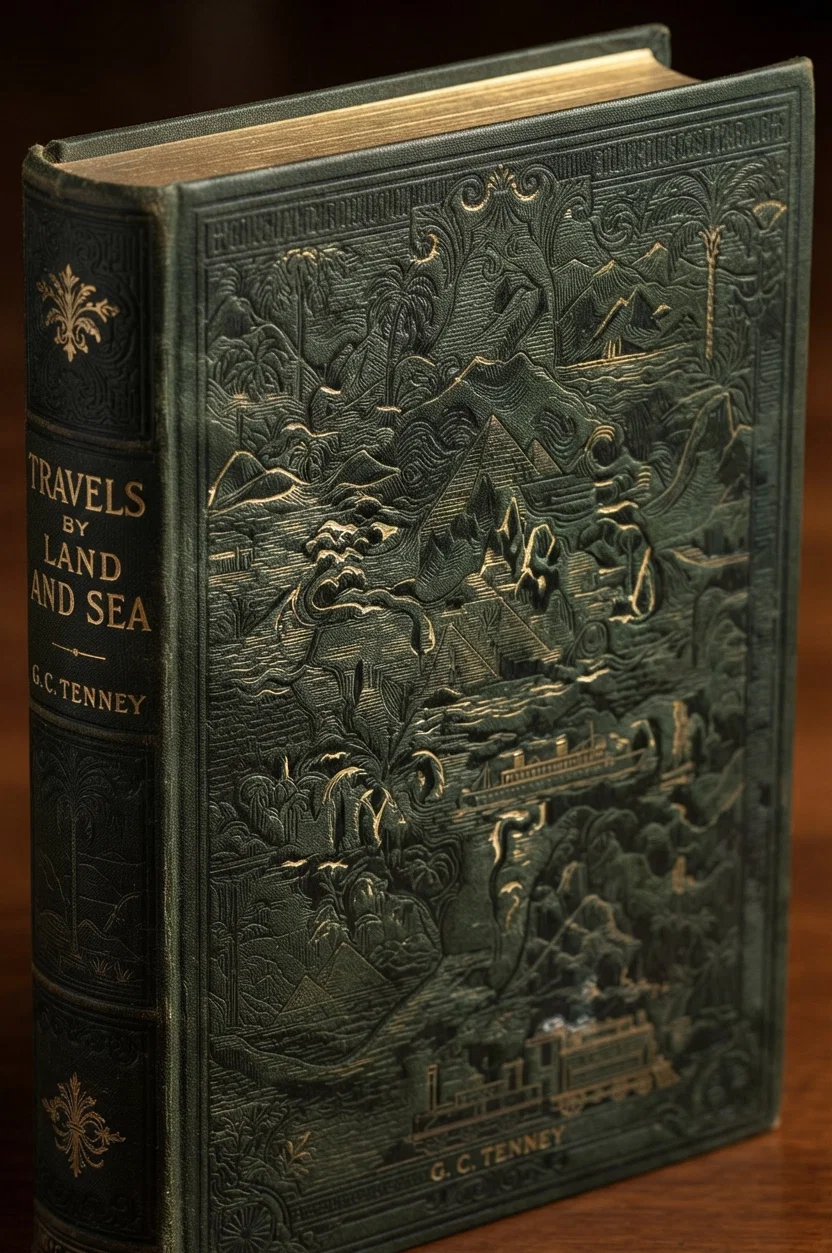
Travels by Land and Sea
By G. C. Tenney
By G. C. Tenney. A large, beautiful volume profusely illustrated. Rivers, seas, oceans, islands, states, continents, pyramids, and mountains, storms, and blizzards, villas, towns, cities, and things interesting the writer saw in visiting five continents. This is a grand book for everybody.
Fine cloth binding, gilt edge, $2.75
Sent post-paid with the SIGNS one year - - $2.10
Book sent free for 4 new yearly subscribers and 1 renewal at $1.00 each
THE DIPLOMA OF DISEASE.
By David Paulson, M.D.
[From Good Health.]
THE child does not enter the public school until he is five, six, or seven years old, and he leaves it at the age of maturity. But there is another school that he enters at infancy and from which he is not graduated until death, and that is the school of bad habits; he learns bad habits early and sticks to them late—until he gets his diploma. The diploma in this school is ill health; it is disease; it is invalidism. Sometimes the student in the secular school is guilty of some misdemeanor, in consequence of which he does not get his diploma; but from the school of bad habits he is sure to be graduated.—David Paulson, M.D.
Lessons by Mail on Medical Electricity or How to Use the Battery
By Prof. G. L. Abell
By Prof. G. L. Abell
Member of the Board of Directors of the Electro-Medical Society of San Francisco.
Learn how to use the battery and treat yourself. Many diseases are quickly cured by the proper application of electricity. The course embraces the treatment of every organ and part of the body. The lessons are written in plain language and are illustrated. Course, five dollars. Send for circular. Address,
PROF. G. L. ABELL, School of Chemistry and Electro-Therapeutics. 22½ Geary St., San Francisco, Cal.
Our Fountain Pen
By Editor
Is a Lincoln. It gives satisfaction to all classes, as we furnish our customers with either fine, medium, or coarse points. The holder is made of hard rubber, and is chased to add to its beauty. The pen is 14 carat gold, and with ordinary care will last many years.