Pacific Press Publishing Association · Mountain View, California · Apr 16, 1912
"IF YE WILL INQUIRE, INQUIRE YE."
By Editor
This Inquirers' Department is conducted for the purpose of helping those who are studying the Bible. The answers are oftentimes only suggestive. They are never to be considered infallible, only as they agree with the infallible Word. The writer who may answer them does not consider that his opinion is infallible. He will simply give the best that he has, and plead with the inquirer to search the Word. Such questions only will be answered as, to the editors, seem to minister to the good of the readers and to the mission of the paper. We can not answer repeatedly in the same volume questions upon the same scripture. The name and address must accompany question, not for publication, but as an evidence of good faith, and that answer may be made by letter if deemed advisable. No letters are answered which do not contain the name of the writer. It is well always to enclose stamp for reply.
3722 — Is It Wrong?
By Editor
Is it wrong to play games such as flinch, authors, checkers, dominoes, and the like?
A Subscriber.
We do not think the question is put right. Really the question which the Christian ought to ask is not generally a question that pertains to the negative side. The divine admonition is, "Whether . . . ye eat, or drink, or whatsoever ye do, do all to the glory of God." And the question which the Christian asks ought to pertain to the positive side of the thing he does: Is it to the glory of God that I do this or do that? "Lord, what wilt Thou have me to do?" Some of these games would be quite harmless if properly played, and with the right spirit; such as authors, for there is something to be learned — that is, as to who said this, or who said that, or who is the author of this or that book. Of course the knowledge is merely superficial, but the time is not wholly lost. But in such games as flinch, what earthly good is there in playing it? Exciting? — O, yes, so much so that it ministers to late hours frequently, and uses much precious time which could be employed in other things. It is the pleasure which is "but for a season;" it is not that which endures; whereas the Christian ought to seek not that which is temporal, but that which is eternal. Is it worth while to spend precious time — the little that is given us by our weak, human nature at the most in playing games that profit absolutely nothing, sometimes which bring envy, strife, and unpleasant quarrels and hard feelings? It needs wisdom, however, in dealing with these things. Children or young people can not be driven away from them without great danger. They should be taught to feel that there is something better, something higher, something more profitable, and the higher and more profitable things should be supplied. If not, the time may be spent in foolish things which are worse than the games. These are questions that should be carefully considered by godly fathers and mothers, as well as church officers.
3719 — Numbering of Chapters and Verses
Have other letters besides the Roman been used in numbering the chapters and verses of the Bible? If so, please give some account of them. J. N. M.
The Bible was not divided into chapters and verses until later than Roman times. In the days when the Bible was written, there was no numbering of chapters or verses. As stated in our little Bible Band Booklet, on page 9, the Bible was divided into chapters by Hugo de Sancto Caro, about 1236. The Old Testament was divided into verses by Rabbi Mordecai Nathan; and the New Testament, in 1544, by R. Stephens, a French printer. This was adopted by the Latin Vulgate to facilitate reference to the text; and in the sixteenth century the Massoretic division into verses made by the Jews was combined with this division of chapters, and it passed from the Latin Vulgate to the English translation at Geneva in 1560. Of course if the Bible were translated into Hebrew for Hebrews, Hebrew letters would be used in numbering the chapters, and doubtless the verses. But none of the original Scriptures were divided into chapters and verses.
The traditions which that church had received of the apostle is what is meant, such as are referred to in the 15th verse of the previous chapter: "Stand fast, and hold the traditions which ye have been taught, whether by word, or our epistle;" that is, the things which God had Himself given, and had handed down through the past, giving them from time to time through inspired prophets and apostles, stamping them with the authority of God. It does not mean simply traditions handed down from mouth to mouth, from men who had no authority to give them, but those traditions which came down by men who spoke as moved by the Holy Spirit.
3721 — Climate of Bethlehem
By Editor
What is the climate of Bethlehem? and could they be out in the fields at the Christmas season? R. R. T.
The climate of Bethlehem, we are told by those who have been there, is somewhat similar to the climate in California — a little colder, perhaps, than in some sections of California, because a little higher, but similar to the same elevations in California. In the winter, we are told, it is quite cool on the hills and mountains surrounding Bethlehem, and quite frequently snow falls, tho it does not remain a long time. There might be times when the shepherds could watch their flocks in the field, but probably not at the last of December. It would seem, then, that the sheep would be folded at night. There are two seasons, as in California, also — the wet and the dry; and this would be at the very middle of the wet season.
3723 — Apostles
What class of workers in our ranks may be called apostles, and what class evangelists?
An apostle means one who is sent, an evangelist one who proclaims the Gospel. The gift of apostleship includes that of evangelism, for he is sent in order that he may proclaim the glad tidings. The evangelist may be only a preacher; the apostle is one who has large-heartedness, and can take charge of a mission, lead out in it, and inspire others with the same spirit. This, of course, is in a measure true of the evangelist, but the apostle is more of a builder than the evangelist. His work is broader and more stable. He is more than a recruiting officer for the King's ranks.
3724 — Tithe and Wages
By Editor
Is a person who does not own any property, who works for wages only, under obligation to pay tithe? C.
Surely he is. God's cause would suffer greatly if the wage-earners refused their tithe. They are usually the most faithful tithe-payers there are. They consider that their strength and vitality and powers of being are that upon which they receive an income, just as truly as a man does from a farm. And the devoted, earnest Christian wage-earner deducts his tithe the first thing he does, from his entire wage, and lives from the nine tenths; thanks God that he can do that; believes that the Lord will make the nine tenths, with His blessing, go farther than the ten tenths without it.
3725 — Will We Know?
By R. H. G.
Will we know when the message of God reaches all people? And if you believe the righteous will have to suffer the plagues the same as the wicked, how are we to know we are His people? R. H. G.
We do not know whether God's children will know when His message is given, or not. However, when the time of probation closes, God's message will have been given. There will be no burden on the part of His people to give the message longer. His Spirit has stopped striving with men, and has therefore stopped striving for men. Men will have rejected every overture of mercy. They will have no response to the appeals of the Spirit of God on their own hearts, or through humanity. Of course that time of probation will close for some before it does for others; but it will meet its very climax at one time, when the great world chooses the laws of men instead of the laws of God, and chooses the ways of men which are set in opposition to the ways of God. Men, according to God's prophecy, will frame iniquity by a law; and when men decide for that law against God's law, they will have passed judgment upon themselves, and the fiat of Rev. 22:11, 12 will go forth. What we believe regarding the righteous suffering will not affect anything. It is what the Bible teaches; and the Bible teaches that while the righteous may suffer incidentally from heat or cold, privation and hunger, the plagues of the last days will not fall upon them. This is abundantly taught in the 91st Psalm, as well as in other scriptures. This we learn from Revelation 7,—that when Christ comes and His children are gathered home, it is said that the sun shall not light on them any more, nor any heat. All sufferings are past. But these sufferings will be merely physical sufferings, just the same as His people suffer from sun heat at the present time. The plagues which come upon the earth on account of wickedness, God's children will not suffer. After that condition is upon us, surely His people will know it and see it.
3726 — Cain's Wife
Who was Cain's wife? and was the land of Nod inhabited at the time when Cain went there? or was there any other woman on earth at that time excepting Eve? C. S. and Others.
There is compressed in the book of Genesis 2,500 years of human history, and therefore a little story covers a great period of time. Men lived at a great age at that time. We read in Gen. 5:4 that Adam lived eight hundred years, and begot sons and daughters. We would see by this that Seth was probably about eight hundred years older than Adam's youngest children. These children, of course (and at this time there must have been children also of Seth and Enos and Cainan, descendants of Adam), were scattered all around the early settlement near Eden, and the earth around its center was becoming populated. This we gather must be so, from the record itself; and while this is told after the story is told of Cain, some of the events must have taken place long before. Having begun the story of Cain, the record carries it clear through to the end. So we read, in Gen. 4:16, after Cain's crime he went out from the presence of the Lord and dwelt in the land of Nod, on the east of Eden. The word "Nod" means "wandering." Cain said, "And I shall be a fugitive and a vagabond [or a wanderer] in the earth." He went out into the land of wandering. How long he wandered there alone we do not know; but as Adam's posterity increased, of course others came in connection with him, and in this land of wandering he found some of Adam's children — Cain's own sister, or his more remote relatives — and there he married. If we will but keep this in mind,—that hundreds of years passed, perhaps, before Cain had even taken to himself a wife,—there will be no difficulty in understanding the record. Cain married either his sister, or one of his brothers' or sisters' children.
3727 — Is It Spurious?
By Editor
My attention has been called to a note regarding 1 John 5:7, 8. The Danish copy of the Scriptures omits from the word "record," verse 7, to the word "earth," verse 8; so it would read: "For there are three that bear record, the Spirit, and the water, and the blood: and these three agree in one." This was used as an argument against the personality of the Holy Spirit. Can you give me any light on the question? H.
We believe that all scholars agree that these words are an interpolation. They are in none of the early Greek copies of the Scriptures, and some writers tell us that they did not appear until after the Arian controversy. Then they were inserted, perhaps, in the margin by some strong Trinitarian, and afterward by mistake copied into the text. The fact that that text is spurious would not necessarily bear against the personality of the Spirit, as the Bible reveals it, because it does not reveal the personality of the Spirit in the way that it does the personality of our Lord.
Schedule for Week Ending April 27, 1912
The Books of Samuel, Kings, and Chronicles
By Editor
We omit from our readings the last book of Samuel entire; and the first and second books of Kings; also the first nine chapters of 1 Chronicles, filled as they are almost wholly with genealogies. The books of Chronicles and Kings are parallel books. Chronicles, however, gives more of the details of Judah, while Kings deals with the ten-tribe division of the kingdom. It would be impossible, in the brief space at our disposal, to dwell with detail upon the readings of the week. These readings begin with the death of Saul and his noble son Jonathan, at the battle of Mount Gilboa, and close in the middle of the reign of David.
The last day of the week has for its reading Psalms 30, 31, and 32, all of them devotional and helpful.
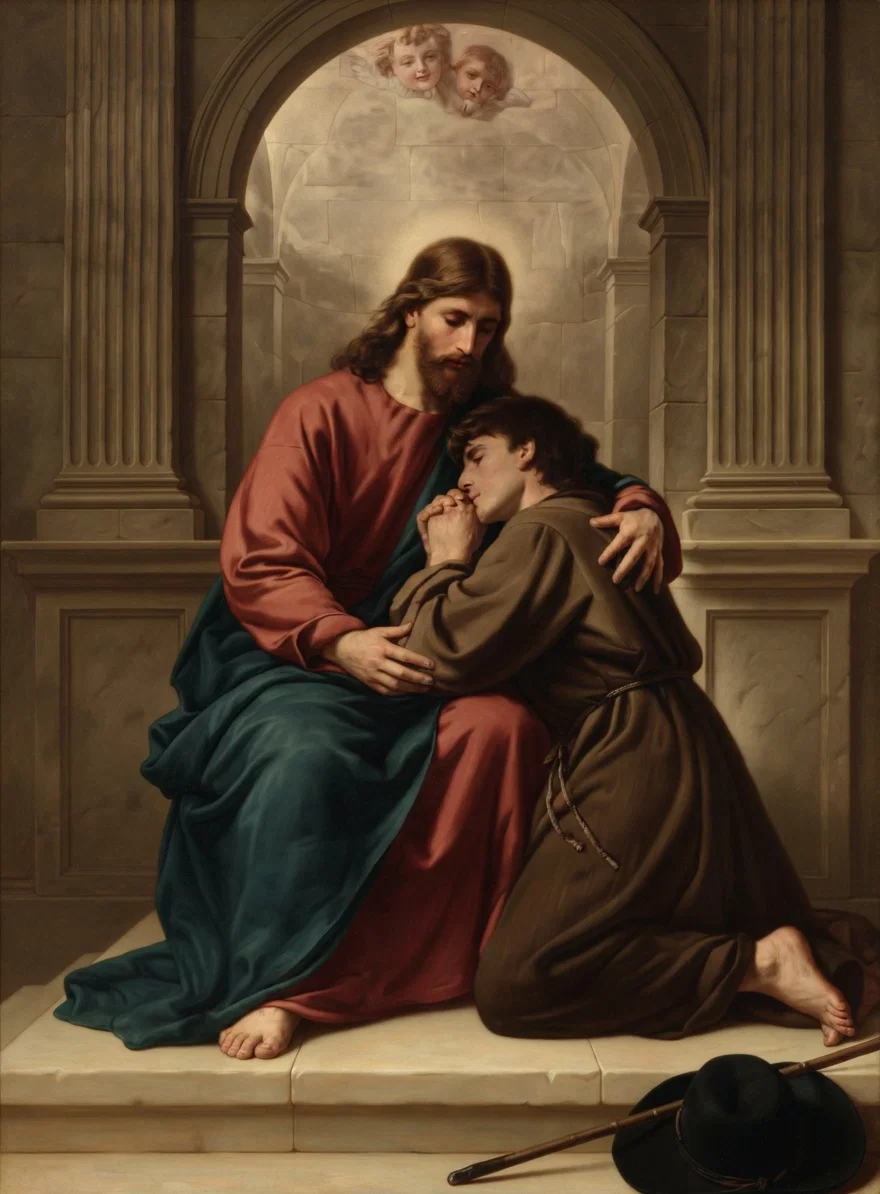
Come unto Me, all ye that labor and are heavy-laden, and I will give you rest
Come unto Me, all ye that labor and are heavy-laden, and I will give you rest. Take My yoke upon you, and learn of Me; for I am meek and lowly in heart: and ye shall find rest unto your souls. For My yoke is easy, and My burden is light.
THERE is a condition to the rest and peace here offered us by Christ. It is that of yoking up with Him. All who will accept the condition will find that the yoke of Christ will help them to bear every burden needful for them to carry. Without Christ at our side to bear the heaviest part of the load, we must indeed say that it is heavy. But yoked with Him to the car of duty, the burdens of life may all be lightly carried. And just as a man acts in willing obedience to the requirements of God, will come his peace of mind. He will give evidence of clear judgment and a steadfastness of character in coöperating with God to redeem himself through faith in Christ.
Submission of Faith in Christ
Meekness and humility will characterize all who are obedient to the law of God, all who will wear the yoke of Christ with submission. And these graces will bring the desirable result of peace in the service of Christ. In learning Christ's meekness and lowliness, we shall submit the entire being to His control. Then the transforming grace of Christ will work upon heart and character, making human beings, fallen in sin, complete in Him.
Christ would teach this lesson to all who will follow Him. As our Substitute and Surety, standing at the head of humanity, He is our example.
He was obedient to all the requirements of God. He, the Majesty of Heaven, the King of Glory, laid aside His royalty, His position as Commander in the heavenly courts, came to our world as a man, and became subject to the law. And all this that man might become like his Master, obedient, not to the enemy of God, but obedient to his Father in heaven, that he might engage in the service that God requires of each of His obedient children.
This constitutes the condition of salvation. And God enjoins this condition upon every human being just as verily as He enjoined it upon Adam and Eve in the Garden of Eden. Our first parents fell because, when tempted by Satan, they disobeyed God. With few exceptions the human family has since been in service to Satan, doing his work, wearing his yoke, and bearing his burdens. But they have found his yoke uncomfortable and galling, his burdens heavy and grievous to be borne.
But Christ pledged His own life in order that the transgressor might be spared, that man might have another trial. He would Himself stand in man's place; He would clothe Himself in the garb of humanity, and live the life of man from the very beginning. He would pass through the stages of infancy, childhood, youth, and manhood, that He might show man how to live, how to employ his hours of probation.
Obedience of Faith in Christ
Christ acknowledged Himself subject to the law. If this were not so, He could not be our Saviour. And God designs that man shall live up to every specification of the law, that he may reveal a character after the pattern given him by Christ. He desires that while in the world, His followers shall not be of the world. Their experience may find expression in the words, "I am crucified with Christ: nevertheless I live; yet not I, but Christ liveth in me: and the life which I now live in the flesh I live by the faith of the Son of God, who loved me, and gave Himself for me."
In His Son, God has placed before man the life he is to live. It is not for him to be constantly branching out in lines of his own choosing, and placing his will in opposition to the will of God. Yet many are expending their powers in hopeless pursuit of things they can never attain. How different are the lives of such when compared with that of their Example, the4Son of God, who for their sake pledged Himself to a life of self-denial, of poverty, and of suffering, unappreciated, unacknowledged, despised, and rejected! He was "a Man of sorrows, and acquainted with grief: and we hid as it were our faces from Him; He was despised, and we esteemed Him not. . . . He was wounded for our transgressions, He was bruised for our iniquities: the chastisement of our peace was upon Him; and with His stripes we are healed. . . . He was oppressed, and He was afflicted, yet He opened not His mouth: He is brought as a lamb to the slaughter, and as a sheep before her shearers is dumb, so He opened not His mouth." Christ was often weary and hungry and filled with sorrow in the consciousness of unrequited love. The nation whom He came to save and bless did not realize His mission. They had departed from God, and were constantly misunderstanding and misinterpreting Him. "He came unto His own, and His own received Him not."
Willing Obedience in Christ
In view of the abundant evidence God has given of His love, His sympathy, and His benevolence, He requires our willing obedience. His love will prove a safeguard to every soul. It will bar the path to sin and selfish indulgence. In looking unto Jesus, the Author and Finisher of our faith, in studying His life of self-denial and self-sacrifice, we are armed with the same mind to do the same service. "Whosoever will come after Me," says Christ, "let him deny himself, and take up his cross, and follow Me." To the true follower of Christ there is a pleasure in doing the things that Christ has done in his behalf. He does not regard the Lord’s requirement as an arbitrary exaction, but a clear specification of his only safety from the advances of the wily foe, who is ever seeking to entangle his feet and make his path difficult.
God knows that if we were left to follow our own inclinations, to go just where our will would lead us, we should fall into Satan’s ranks and become possessors of his attributes. Therefore the law of God confines us to His will, which is high and noble and elevating. He desires that we shall patiently and wisely take up the duties of service. It is for our present and eternal good to work the works of God. If His will is cheerfully and gratefully accepted, the results will be seen in the service rendered and in the character developed.
Result of Sullen Submission
A sullen submission to the will of the Father will develop the character of a rebel. By such a one service is looked upon as drudgery. It is not rendered cheerfully, and in the love of God. It is a mere mechanical performance. If he dared, such a one would disobey. His rebellion is smothered, ready to break out at any time in bitter murmurings and complaints. Such service brings no peace or quietude to the soul.
Christ assumed humanity, with all its humiliation and service, that He might set men free from the bondage of Satan. He knew that the service of Satan can bring only wretchedness and misery in its train. The sinner is a stranger to repose. He says, "I want my freedom." He hopes to get rid of all restraint by casting aside the law of God. But it is this desire that has made the world what it is to-day, corrupt as in the days of Noah, and polluted as the cities of Sodom and Gomorrah.
Law and service are a part of every true life. Idleness is sin. Money is supposed to carry its possessor above service. Because a man has money, he is allowed to spend his time in idleness. But Satan engages all such in the meanest kind of work. It is the Lord who has a right to our service. The more an individual lives to himself, and the less for the good of others, the less noble and pure will be his life. His moral power degenerates while he is living for himself. Compare the idle life with that of one who looks his responsibilities in the face, and takes up his life service for God and for his fellow men.
The Work of Faith with Christ
All who have a sense of their duty to their fellow men will accept the invitation to work in copartnership with Jesus Christ, by a life of obedience and service. In this way alone can they give the divine credentials to the world. These will entertain a high conception of life. It is not to them a round of worldly pleasure and amusement. This can never satisfy the hungry soul. The truth is noble, elevating, and sacred, and the wisdom and knowledge given us in it are as a tree of life to all who will accept them.
In the fifty-eighth chapter of Isaiah God has placed before us the work He would have us do for Him and for our fellow men. He says: "Is not this the fast that I have chosen? to loose the bands of wickedness, to undo the heavy burdens, and to let the oppressed go free, and that ye break every yoke? Is it not to deal thy bread to the hungry, and that thou bring the poor that are cast out to thy house? when thou seest the naked, that thou cover him; and that thou hide not thyself from thine own flesh? Then shall thy light break forth as the morning, and thine health shall spring forth speedily; and thy righteousness shall go before thee; the glory of the Lord shall be thy rereward. Then shalt thou call, and the Lord shall answer; thou shalt cry, and He shall say, Here I am. If thou take away from the midst of thee the yoke, the putting forth of the finger, and speaking vanity; and if thou draw out thy soul to the hungry, and satisfy the afflicted soul; then shall thy light rise in obscurity, and thy darkness be as the noonday: and the Lord shall guide thee continually, and satisfy thy soul in drought, and make fat thy bones: and thou shalt be like a watered garden, and like a spring of water, whose waters fail not."
Then why not try this kind of service? The Lord calls His yoke easy, and His burden light. Yet that yoke will not give us a life of ease and freedom and selfish indulgence. The life of Christ was one of self-sacrifice and self-denial at every step; and with consistent, Christlike tenderness and love, His true follower will walk in the footsteps of the Master; and as he advances in this life, he will become more and more inspired with the Spirit and life of Christ.
We are all deeply and sadly conscious that death reigns. In every land, in every clime, among every people, and in every home, it does its ruthless work of destruction, proving itself the master of all conditions, and finding none who can for long stay its progress.
By the human race as a whole it has ever been regarded as an enemy. Its visits have been and are to-day unwelcome, even as they are often unexpected. It robs man of his dearest and best. The old and the young, the rich and the poor, the wise and the ignorant, the stoic and the epicurean, all alike are made to feel its iron hand.
To the most of mankind, death has been a tremendous mystery. The grave has given back no word of reply to the tearful inquiries of earth’s multitudes of mourners. The realm of death has proved, indeed, a land of "silence" (Ps. 115: 17), a place of "forgetfulness." Ps. 88: 12. Its inhabitants have never returned to declare its secrets to those who shall come after.
Not a Mystery
To him, however, who has learned of God’s beautiful system and plan of life as revealed in the Book of books, the grave has no mystery, and King Death has no terrors. God’s Word makes all plain.
Let the reader once more step back and consider God’s plan of life as that plan was revealed in creation; for an understanding of life is the only and true understanding of death, which is the absence of life.
Man was made from the dust (Gen. 2: 7), made "upright" (Eccl. 7: 29), made "in the image of God" (Gen. 1: 27), made a "son of God," to have dominion over all God’s earthly works. His life was simply "the breath of life" from God (Gen. 2: 7), not inherent, but only borrowed, and held in trust during his time of character-building, and subject to loss in case of disobedience. Gen. 2: 16, 17. He could continue to live only through an unbroken connection with God, who alone is the Possessor of everlasting life and immortality.
The story shows, also, and shows conclusively, that the Tree of Life was absolutely essential to man’s existence; for when he had sinned, and was shut away from the tree, then death came. Gen. 3: 22, 24. The everlasting life which he was permitted to enjoy was perpetuated through the blessed life of the tree.
What Is Death?
Such was life. Now what is death? No argument is needed, dear reader, to enable one to see that death is simply a withdrawing from man, by the Creator, of the life-giving power which comes from Him. Like Adam, all men are of the dust. Eccl. 3: 20. By the gift of "the breath [or power] of life" from God they became "living souls." The power of God keeps them alive. Ps. 66: 9. Their life is only a leased life, subject to God’s recall. It is God’s life current flowing through them, but never as an inherent, absolute quantity, nor as a conscious, independent entity.
Man is a great mechanism, the masterpiece of God’s creation, "fearfully and wonderfully made." In a sense, he is like the mighty engine of man’s invention, which is made "alive" and operated by the power of5steam, but which is utterly helpless and "dead" so soon as the fire is extinguished and the water cooled. The throbbing, the pulsating, the action of various parts, are all the result of power applied, but they cease when the power is withdrawn. So with the man. God’s great life force, spoken into his being, causes him to live and to move, to love and to serve, to operate all the various organs of his person. The heart throbs, the brain thinks, the tongue speaks, the hands act, so long as God’s quickening power is applied. But when that power is withdrawn, then all activity ceases, and man is dead.
The Source of Life
Note that this is exactly the thought which the inspired Word brings to us. "The Spirit of God hath made me, and the breath of the Almighty hath given me life." Job 33: 4. But "if He [the Almighty] set His heart upon man, if He gather unto Himself his spirit and his breath; all flesh shall perish together, and man shall turn again unto dust." Job 34: 14, 15. The bestowal of the power of God, in the breath of life, causes man to live; the withdrawal of the power, the breath of life, causes him to die.
This is stated, in a brief word, by the wise man. He says, "Then shall the dust return to the earth as it was: and the spirit shall return unto God who gave it." Eccl. 12: 7. The man, the whole man, goes back to dust, when the life power, the spirit, the breath, goes back to God.
Death, then, is simply inaction. The life force having been withdrawn by the Creator, taken back to Himself, man’s faculties all are gone. The great Player has left the organ forever, and its music has been stilled. The brain no longer responds to the dictation of the will. Thought has ceased. Likewise love and hate, joy and sorrow, interest and indifference, have perished.
When the Breath Is Gone
Ah, this is so plain that even a child can comprehend. And turning again to the blessed Word, we find the same truth iterated and reiterated. Says the psalmist, speaking of man, "His breath goeth forth, he returneth to his earth; in that very day his thoughts perish." Ps. 146: 4. And the wise man adds, "The living know that they shall die: but the dead know not anything. . . . Their love, and their hatred, and their envy, is now perished." Eccl. 9: 5, 6. Yes; and this, too, he would have us know,—that "there is no work, nor device, nor knowledge, nor wisdom, in the grave, whither thou goest." Verse 10.
The grave is the resting-place of our dead. Said Job, "If I wait, the grave is mine house." Job 17: 13. It was not dreaded by that child of God, because he understood the work of the Christ. He regarded it as a place where for a little while — not for long — he would be hidden away from the troubles and distresses of time. "There the wicked cease from troubling," said he; "and there the weary be at rest. There the prisoners rest together; they hear not the voice of the oppressor." Job 3: 17, 18. In the grave he expected to wait till the final day of Jesus’ coming, the day of the trumpet-call to immortality. Job 14: 14, 15; 19: 25-27.
The grave is, indeed, all that could be inferred. It is a place of darkness (Job 10: 21, 22); a land of forgetfulness (Ps. 88: 12); a place where there is no remembrance (Ps. 6: 5), no praise (Ps. 115: 17), no hope (Isa. 38: 18).
An Open Door from the Grave
We should not forget, however, that the grave has an open door. Jesus has passed through its portals. And while it opens not to us — while the door of its tent "never outward swings" — it does open into the great beyond. The day will surely come when upon the sea of glass, before God’s throne, the redeemed host of all ages will celebrate a final and complete triumph over its power. "O grave, where is thy victory?" will be the great finale to the blessed Gospel song of victory which, under the tutorship of angel beings, they have learned in part and begun to sing here on earth.
No Gloom Attached
No gloom attaches to truth. The thought that our dead must go to the grave may appear gloomy, but only to him who has not by faith followed the Master closely, and who has not yet discovered the light of Him whose presence shines through it from portal to portal, and whose hand has fully unlocked and opened the door on the other side.
Thank God that we may know the truth that death’s mystery is solved and the grave’s power broken.
The One Lost Sheep
By Augusta W. Heald
By Augusta W. Heald
SOME have said: “Does it not seem hard that our small planet should be the one lost sheep? Do we not suffer injustice in that Satan, when cast out from heaven, is permitted to reign here on earth, as prince of evil?”
Such thoughts may indeed arise, but we need not harbor them. Is it not rather in mercy that the all-wise Father has limited the operations of the great deceiver to the area of one small world? And is not our earth highly honored in being chosen as the arena where sin is permitted to develop for a time, until its true nature is manifested, and where the glorious plan of redemption is wrought out in the presence of the universe?
Into our humble sphere the divine Son of God came in the likeness of sinful flesh. He has borne our griefs, and carried our sorrows. He “was in all points tempted like as we are, yet without sin” (Heb. 4:15), and has tasted death for every man. To all who receive Him, and believe in His name, He has given power to become the “sons of God.” He has called us friend and brother, sister and mother, and has offered for us the matchless prayer, “Father, I will that they also, whom Thou hast given Me, be with Me where I am; that they may behold My glory, which Thou hast given Me.” John 17:24.
Great is the mystery of salvation. The angels desire to look into these things. It is God’s purpose that the ransomed of earth, once “dead in trespasses and sins,” shall tell the story of redeeming love to other worlds on high, “that in the ages to come He might show the exceeding riches of His grace in His kindness toward us through Christ Jesus.” Eph. 2:7.
None but the children of earth, saved by grace, can ever know the utter depths of wo which the Saviour has shared with us. Nor can the inhabitants of unfallen worlds sense the joys of pardoned sin. The company redeemed from among men sing a new song before the throne, which no others can learn,—the song of redeeming love. “These are they which follow the Lamb whithersoever He goeth.” Rev. 14:4.
While our once fair earth is yet ravaged by sin, we may not indulge a thought of bitterness; for in the blessed light of revelation, we know that this earth, with its sin and curse, will pass away, and our God will create “new heavens and a new earth, wherein dwelleth righteousness.” 2 Peter 3:13.
The new earth will be the home of the “saved,” where shall be no sorrow, pain, nor death. Here will be the holy city, the New Jerusalem, lighted with the glory of God; and—
This unfaithful star, so scarred by sin,
The object of the awful withering curse,
In the grand purpose of Divinity,
When evil be as tho it had not been,
The capital of all the universe,
And center of God’s rainbow throne will be.
The Materia Medica
I FIRMLY believe that if the whole materia medica could be sunk to the bottom of the sea, it would be all the better for mankind and all the worse for the fishes.—Lecture before the Harvard Medical School.
Dependence Upon Christ
“The highest independence comes from dependence upon Christ.”
Progress of the Gospel
By Henrietta Burdick
By Henrietta Burdick
Yes, the Gospel work is onward,
It is spreading far and wide.
We can see it on the mainland,
We can feel it on the tide.
It has traveled through the tropics,
It has reached the frigid zone,
It has scattered through the islands,
And claimed many for its own.
It has climbed the lofty mountains,
It has found the lowest vale,
And wherever it has traveled,
Converts follow in its trail.
It has crossed the burning desert,
Made its way through forests wild.
It has conquered cruel monarchs,
It has won the shy and mild.
There is none too poor and lowly
By the Gospel to be sought.
Likewise, there are none too learned
By the Gospel to be taught.
In the wild it finds the savage,
On the throne it finds the kings.
It is not abashed at learning,
Nor too high for humble things.
In the home land of our dark man
It has shed its welcome light,
And has found there hearts as loyal
As are those whose skins are white.
In the ancient Chinese Empire,
With its prejudice and pride,
It has found abundant entrance,
Now the gates are open wide.
Now we see the work is onward,
So we scarce can keep apace,
But more rapid would it travel
If each man were in his place.
For it calls for human effort,
For our good God made it so;
Thus our interest is awakened,
And we care to see it go.
Let us listen while God speaketh,
That His message we may know;
Answer quickly, when He calleth,
“God is calling, and I go.”