Pacific Press Publishing Company · Oakland, California · May 28, 1896
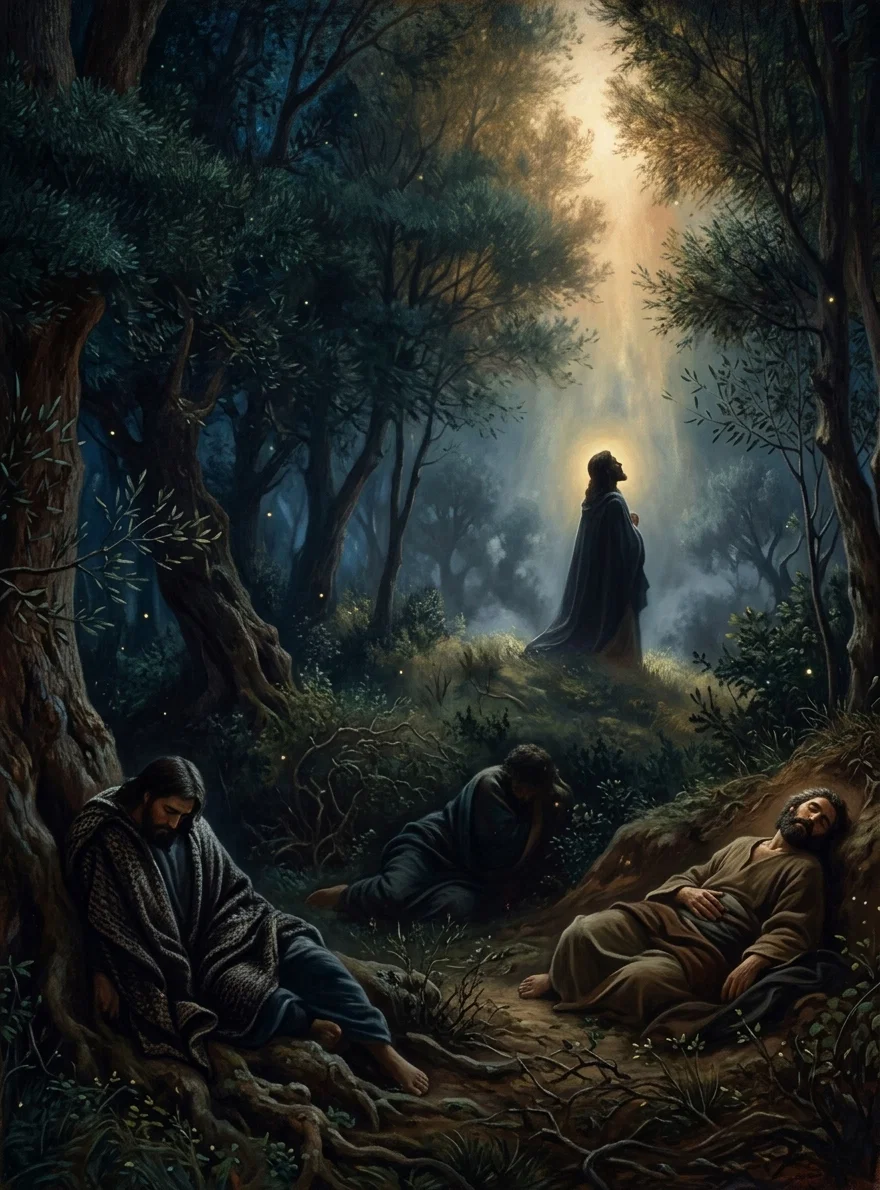
“Not My Will, but Thine.”
This was the choice, the prayer, of Christ in the Garden of Gethsemane . It was his choice and prayer in the whole great work of his sacrifice for man. Before he came to this earth, his language was, “Lo, I come; in the volume of the book it is written of me, I delight to do thy will, O my God; yea, thy law is within my heart.” And when upon the earth his language and life were, “My meat is to do the will of Him that sent me, and to finish His work.” This was Christ’s purpose and spirit.
God’s Will.
God’s will is his holy law. This we learn from the scripture quoted above. That law is the reflect of God’s character, the fulness of all moral qualities. It is a law of love. Its “weightier matters” are “judgment, mercy, and faith.” God in his love and mercy “gave his only-begotten Son,” that the sinner might be saved. Christ came to demonstrate in his life the love and mercy of the law toward the sinner. All glories seen in Christ—the excellency of character, the holiness of life, the sweetness of his love, the purity of his conduct, the wisdom and power of his words—were but the living personal embodiments of God’s holy law.
What It Means.
God’s will wrought into character means self-denial, self-abnegation, humiliation, sacrifice, self-effacement. Therefore Christ “emptied himself,” and God came in and filled him; in other words, God’s law or will was wrought in him in its fullest perfections. Christ’s goodness was not alone negative badness, but a positive life of loving service. He put away the one that he might do the other. But this is what doing God’s will—following Christ—means to us. “If any man will come after me,” says the Master, “let him deny himself, and take up his cross, and follow me.” But this often means suffering, crucifixion, anguish of heart and soul. The flesh, the natural man, suffers and revolts against it. Every fiber of the natural man calls out for deliverance from the cross of self-sacrifice; for it often means severance from friends, and home, and tenderest ties of earthly relationship, the giving up of the dearest pursuits and the loftiest worldly ambition. And there is no wonder that tried humanity oftentimes cries out in anguish of soul for deliverance, even as did Jesus in Gethsemane, “O my Father, let this cup pass from me!” The weight of the world’s sin and wretchedness and wo were upon him; the cross, the grave, the separation from the Father because of sin—the sin which he voluntarily assumed, which he became for man (2 Cor. 5:21)—were too much for frail humanity; and what wonder that they wrung from his human heart the prayer for deliverance, and a little later, the despairing cry, “My God, my God, why hast thou forsaken me?”
The Triumph of Faith.
But in all the trial, faith triumphed. Every prayer of faith will be heard in heaven and answered; for faith respects God’s will, and God “worketh all things after the counsel of his own will.” But was this prayer of Christ’s agony answered?—Yes, verily. The prayer contained two petitions, of which the first was lost in the last. As expressed by Mark, “Abba, Father, all things are possible unto thee; take away this cup from me.” This is the human cry of agony, but it was absolutely subordinate to the petition of faith, “Nevertheless ,”—not the less, notwithstanding all that I may desire or long for,—“not what I will, but what thou wilt.” This is the one petition above all others. Jesus came to do the Father’s will; and the burden of his prayer was that God’s will might be wrought in him, costing whatever suffering it might, because he knew that the will of the all-loving, all-merciful, all-wise, all-powerful Father was the very best thing that could be done. It is this great truth which God has revealed over and over again, that his will is best; and faith grasps it as a great foundation rock, unmoved by storm and tempest.
Our Faith.
The faith of Jesus is the faith which God desires his people to have; it is the faith that is in his word; it is the faith that respects God’s will; all else is feeling or presumption. Such faith may seem to the superficial to be defeat, but it is ever eternal triumph. Here is a poor, sick soul, wretched with pain, yet loving life and dear ones. He longs to be healed. He prays that the disease may not end in death; that he may be spared the cruel cup. It seems to him that it ought not so to be. He asks his friends, godly men, to pray for and with him, and they do so earnestly, pleading God’s healing goodness and power. God has healed others many times, why not now? And yet oftentimes the sufferer is not healed, but goes down to the grave; and then some doubt. There is the promise, that one, for instance, in James 5:15; why was it not verified? Did God hear? Did he answer the prayer?—Yes, the prayer of faith; and the2 (338)prayer of faith respects God’s will. “And this is the confidence that we have in him, that, if we ask anything according to his will, he heareth us.”
Submissive Faith.
Faith is always submissive. There are some things which we know to be God’s will always. It is always his will to forgive sins and cleanse the sinner; for “this is the will of God, even your sanctification.” “If we confess our sins, he is faithful and just to forgive us our sins, and to cleanse us from all unrighteousness.” We may plead this with all assurance. But it has not always been God’s will to save men from sickness and death in this world. The good of all ages have died. The apostles all died, many of them cruel deaths of martyrdom. Paul, who healed all manner of diseases, wrote, “Trophimus have I left at Miletum sick,” and prescribed a remedy to Timothy for his stomach and other ills, and labored himself constantly under infirmities. These, each and all, doubtless, needed the infirmity, the trial, the cross, the suffering, that a more precious faith might be developed, that they might know the all-sufficiency of God’s grace in the sorest, deepest trial, even unto death. Not all the notable examples of faith of Hebrews 11 “stopped the mouths of lions” or “quenched the violence of fire,” but some were sawn asunder, were slain with the sword, and in later times were torn asunder by lions, and burned at the stake. And yet they had faith—the faith of Jesus. They had the faith that respected God’s will; and “the prayer of faith,” as with Christ, said, “Nevertheless, not what I will, but what thou wilt.”
God Loves Us.
He is no respecter of persons. He does not blame the human heart for crying out for deliverance from the dread crosses with their dreadful agonies. He sympathizes with the sufferer. He is linked with him by the bond Christ Jesus. But he sees the better way, the latter end; and he is working in infinite wisdom for our eternal good. If the dreaded death, the sad separation, the long, unbroken rest of the grave, is better, God knows. It may be salvation to the sleeper, salvation to loved ones left behind; he knows; let faith rest in the assurance that “God hath not appointed us to wrath, but to obtain salvation by our Lord Jesus Christ, who died for us, that, whether we wake [are alive at his coming] or sleep [in death], we should live together with him.” Let us rest in his word. Let our prayer—the one prayer above all others, permeating all prayers, in all the Gethsemanes of trial—be, “Nevertheless, not what I will, but what Thou wilt.” The valley of Gethsemane lies before every soul; for in every path
“The garden lies; strive as you may,
You can not miss it in your way;
All paths that have been or shall be
Pass somewhere through Gethsemane.
All those who journey, soon or late
Must pass within the garden’s gate,
Must kneel alone in darkness there,
And battle with some fierce despair;
God pity those who can not say,
‘Not mine, but thine,’ who only pray,
‘Let this cup pass,’ and can not see
The purpose in Gethsemane.”
SOMETHING WORTH KNOWING.
By Ellet Joseph Waggoner
The preceding lessons have shown us that the possession of the Holy Spirit marks our relation to God as sons. It is the pledge of the life and inheritance to come.
“Likewise the Spirit also helpeth our infirmities; for we know not what we should pray for as we ought; but the Spirit itself maketh intercession for us with groanings which can not be uttered. And He that searcheth the hearts knoweth what is the mind of the Spirit, because He maketh intercession for the saints according to the will of God. And we know that all things work together for good to them that love God, to them who are the called according to his purpose.” Rom. 8: 26–28.
Questions on the Text.
What does the Spirit do for us?
“The Spirit also helpeth our infirmities.”
Why is this necessary?
“We know not what we should pray for as we ought.”
How therefore does the Spirit help us?
“The Spirit itself maketh intercession for us.”
In what way?
“With groanings which can not be uttered.”
What does He who searches the hearts know?
“He that searcheth the hearts knoweth what is the mind of the Spirit.”
“Because he maketh intercession for the saints according to the will of God.”
What then do we know?
“We know that all things work together for good.”
To whom?
“To them that love God.”
How are such ones called?
“Called according to his purpose.”
“Praying in the Spirit.”
“And in like manner the Spirit also helpeth our infirmity; for we know not how to pray as we ought; but the Spirit himself maketh intercession for us with groanings which can not be uttered; and He that searcheth the hearts knoweth what is the mind of the Spirit, because He maketh intercession for the saints according to the will of God.” R. V.
The heart is deceitful above all things, and none can know it except God. Jer. 17: 9, 10. That in itself is sufficient reason why we do not know what we should pray for. Moreover, we do not know the things that God has to give us; and even if we did, our lips could not describe them. For “eye hath not seen, nor ear heard, neither have entered into the heart of man, the things which God hath prepared for them that love him. But God hath revealed them unto us by his Spirit; for the Spirit searcheth all things, yea, the deep things of God. For what man knoweth the things of a man, save the spirit of man which is in him? even so the things of God knoweth no man, but the Spirit of God. Now we have received, not the spirit of the world, but the Spirit which is of God; that we might know the things that are freely given to us of God.” 1 Cor. 2: 9–12.
God desires to give to us “exceeding abundantly above all that we ask or think.” Eph. 3: 20. Of course a petition for such things can not be put into words. The next clause, however, says that it is “according to the power that worketh in us;” and the sixteenth verse tells us that the power that works in us is the Spirit. Thus we find the same thing that we read in the eighth of Romans and the second of 1 Corinthians.
“The Spirit searcheth all things, yea, the deep things of God.” Therefore the Spirit knows just what the Lord has for us. The deepest thoughts are too great for language, and so the Spirit makes intercession for us with groanings that can not be uttered. But, altho there is no articulate speech, “He that searcheth the hearts knoweth what is the mind of the Spirit, because he maketh intercession for the saints according to the will of God.”
The Lord knows that the Spirit asks for just the things that he has to bestow. He makes intercession for the saints according to the will of God. And we know that whatever is asked according to God’s will is granted. 1 John 5: 14, 15.
Now note how this statement in regard to prayer fits in with what goes before, in the eighth of Romans. God has given us his Spirit, to be in us, to lead us, and to direct our lives. The possession of the Spirit of God proves that we are the sons of God. Being sons, we can come to him to ask for things to supply our need, with all the confidence of a child to a parent. But while we have all confidence, our thoughts are as much below God’s thoughts as the earth is below the heaven. Isa. 55: 8, 9. Not only are our thoughts feeble, but our language is still more so. We can not give proper expression even to the little that we do realize. But if we are the sons of God, we have in us his own representative, who helps our infirmity, and who is able to take of the things of God, to give to us. What wonderful confidence this should give us in praying to God; and especially should it give confidence to those who are particularly infirm in regard to language! It makes no difference if one has a very limited vocabulary, if he stammers, or even if he is dumb; if he prays in the Spirit, he is sure to receive all that he needs, and more than he can ask or think.
With these facts before us, how much more forcible becomes the exhortation of the apostle, “Praying always with all prayer and supplication in the Spirit, and watching thereunto with all perseverance and supplication for all saints.” Eph. 6: 18.
All Things for Good.
“And we know that all things work together for good to them that love God.” Without this knowledge we could not have3that confidence in prayer that we ought to have, and that is indicated in the preceding verses. Whoever knows the Lord must love him, for he is love. And the Spirit reveals him to men. Whoever knows that “God so loved the world, that he gave his only-begotten Son, that whosoever believeth in him should not perish, but have everlasting life,” can not fail to love him. And then all things work together for good to him.
Take notice that the text does not say that all things shall work together for good to them that love God, but that they do so work now in this present time. Everything as it comes is good to those who love and trust the Lord. Many people lose the blessing of this assurance by reading it as tho it were for the future. They try to be resigned to troubles that come, by thinking that by and by some good will come from them; but in that case they do not get the good that God gives them.
Note further that the text does not say that we know how all things work together for good to them that love God. People in trouble often sigh piously and say, “Well, I suppose that it is all for good, but I can’t see how.” Of course not; and they have no business to see how. It is God that makes them work good, because he alone has the power. Therefore it is not necessary for us to know anything about how it is done. The fact is knowledge enough for us. God can overrule all the plans of the devil, and can make the wrath of man to praise him. Our part is to believe. There is no trust in the Lord if we must see how he does everything. Those who must be able to see how the Lord works, show that they can not trust him out of sight, and thus they give him a bad name to the world.
Called of God.
God has called everybody to come to him. “The Spirit and the bride say, Come. And let him that heareth say, Come. And let him that is athirst come. And whosoever will, let him take the water of life freely.” Rev. 22: 17. God is no respecter of persons; he desires that all men shall be saved, and so he calls them all.
Not only does he call men, but he draws them. No man can come to him without being drawn, and so Christ is lifted up to draw men to God. He tasted death for every man (Heb. 2: 9), and through him all men have access to God. He has destroyed in his own body the enmity,—the wall that separates men from God,—so that nothing can keep any man from God unless that man builds up again the barrier.
The Lord draws men, but does not employ force. He calls, but does not drive. It remains therefore for men to make their “calling and election sure,” by yielding to the influence that God throws round them. He says, “Follow me,” and they must make the calling effectual by following him.
Purpose of the Calling.
God calls us “in the grace of Christ.” Gal. 1: 6. “He hath chosen us in him before the foundation of the world, that we should be holy and without blame before him in love.” Eph. 1: 4. Still further, we read that he hath “called us with an holy calling, not according to our works, but according to his own purpose and grace, which was given us in Christ Jesus before the world began.” 2 Tim. 1: 9. In our text in Romans we learned that those who love God are the “called according to his purpose.” His purpose is that we should be holy and without blame before him in love. If we yield to his purpose, he will see that it is carried out.
God designed man for a companion for himself. But there is no true companionship where there is restraint. Therefore, in order that man might associate with him on terms of intimacy, he made the will of man as free as his own. God can not work against his own purpose; and therefore he not only will not, but he can not, force the will of man. All men are as absolutely free to choose as is God himself; and when they choose to yield to the call of God, his purpose of grace is wrought out in them by the power by which he is able to make all things work together for good.
E. J. W.
Question Corner
“Enquire, and make search, and ask diligently.”
No. 347. Question on Immortality.
PLEASE explain 1 Tim. 6:16, first part. Do the holy angels have immortality? Did Adam have it before he fell?
E. T. C.
(1) “Who only hath immortality,” the first part of the text referred to, has evident reference to inherent immortality. God has immortality of himself and in himself, apart from all others. Others can have it only as they obtain it from him in his way. (2) Immortality is incorruptibility, that which can not be corrupted. It is God’s stamp of an incorruptible character under test. This test the holy angels have doubtless borne, and can not die. See Luke 20:36. (3) Adam was neither mortal nor immortal, but a candidate for immortality. He had eternal life—the life of God—which he held by faith. If by faith he had endured every test, he would have developed an incorruptible character, and God would have placed upon his physical being the stamp of incorruptibility—immortality. If Adam had been created immortal,—incorruptible,—he could never have sinned. If he had been created mortal, he would have had a sinful nature, for mortality comes of sin. He was created holy and without blame before God in both body and mind. He could choose sin, corruption, and death, or righteousness, incorruption, immortality. He chose the former; but, praise God, the latter is still obtainable through Him who gives power to overcome all sin.
No. 348. What Is the Soul?
WHAT is the soul? What becomes of it at death?
J. W. S.
The word “soul” has reference to different things in the Scriptures. Sometimes and primarily it refers to the whole person. “Man became a living soul” (Gen. 2:7); “And all the souls that were therein he utterly destroyed,” that is, all the persons (see Joshua 10:35, 28, 30, 32, 37, 39); “eight souls were saved by water” (1 Peter 3:20); “every living soul died in the sea” (Rev. 16:3). It refers to the animal life in man, the life common to all, to the thoughts, the emotions, etc. See Gen. 27:4; 35:18; Deut. 4:9, 29; 1 Sam. 26:21; Mark 8:36, 37. What its meaning is must be determined by the context. But it is never once called in the Bible “immortal soul,” or “never-dying soul,” or “deathless soul.” It is never said to be an independent entity or being which can exist apart from the body, even when used as life. As life it came from God. As life it returns to the great Fountain of life.
(1) SINCE there is “one Lord, one faith, one baptism,” is not the baptism of the Gospel commission the baptism of the Holy Ghost? (2) In Col. 2:10–12, in what respect are we circumcised in him? and should not the baptism of verse 12 be considered in the same sense as having been done for us in Christ, and therefore spiritual burial in baptism? (3) Christ sent Paul not to baptize, but to preach the Gospel, and Paul thanked God that he had baptized none of the Corinthians but Crispus, Gaius, and the household of Stephanus. (4) Paul directed the Corinthians to “lay by them in store,” that there be no gatherings when he came. Why should temporal matters of money for the work be discussed on Sabbath, and collections taken in Sabbath schools? (5) How is it that David was a man after God’s own heart, except in the matter of Uriah, when many other sins are recorded?
E. G. W.
1. We should understand Eph. 4:4, 5 to refer to one baptism of a kind. Whether it refers to water baptism or not, it does not exclude water baptism. The commission which Christ gave to his apostles and church for all time, even to the end of the world, contained the injunction to baptize the disciples in the name of the Father, Son, and Holy Spirit. This certainly must have reference to water baptism, the only baptism which man could perform, and by which Christ, our Example, was baptized. Matt. 28:19, 20; 3:15. God alone baptizes in Holy Spirit. The baptism administered by man is the outward marriage ceremony of the union formed by the Spirit of God. See Rom. 6:3–5; 7:4; Gal. 3:27. We could as truly ignore the Lord’s supper, because, after all, the only true feeding is spiritual. It would also make the baptisms of the church, when enjoying the fullness of the Spirit, works of supererogation, which we know was not the case. See Acts 2:41; 8:12, 36–38.
2. We are circumcised in Christ by “putting off the body of the sins of the flesh,” by the crucifixion of the “old man” “with him, that the body of sin might be destroyed.” See Rom. 6:6; Deut. 10:16; 30:6. It is a change of heart; and of this change baptism is the outward symbol. The “putting off” is getting out of, and away from, as one would defiled garments. The Revised Version has “the body of the flesh,” the carnal man. See Gal. 5:24; 1 John 2:16. The spiritual circumcision in Christ is the death of sin and the giving of a new heart, as before explained. Deut. 30:6. On “burial in baptism,” Vincent, a Methodist, after giving the Greek, en to baptismati, or baptismo, says, “The article the baptism points to the familiar rite, or may have the force of your.” Buried, dead to sin, and risen to a new life, the life of faith in the power or working of God manifest in the resurrection of Christ, of which water baptism is a symbol, is the thought carried still farther in Col. 3:1.
3. Paul was sent not merely to baptize, not to carry out the mere letter, but to preach the Gospel, to which baptism was an adjunct. That is, Paul’s mission was not to go around to baptize people into the church, so as to form factions, but to preach the Gospel as Christ directed. Why he thanked God that he had not baptized more in the Corinthian church is stated in 1 Cor. 1:15.
4. Temporal matters should not be discussed on the Sabbath. But this need not preclude an exhortation to liberality, one of the Christian graces (2 Cor. 8:4–7), and it should not compel any one to come before the Lord empty-handed. His word says, “Give unto the Lord the glory due unto his name; bring an offering, and come into his courts.” Ps. 96:8. Double sacrifices were offered on the Sabbath anciently, and the people of the Lord brought offerings to his house on that day.
5. A man after God’s own heart is to be understood as regards David’s humility, integrity, and steadfast purpose to do God’s will. His sin in numbering the people was not pursued to the end. His multiplying wives evidently did not come home to him as transgressions. Whatever he saw as God’s command he did, save in the exception noted.
JESUS CHRIST.
By S. N. H.
BY S. N. H.
God’s only connection with the human family is by his Son Jesus Christ. Of himself he says, “I am Alpha and Omega, the first and the last,” “the beginning of the creation of God,” or, as elsewhere expressed, the “I AM.” The prophet thus speaks of his birth: “Thou, Bethlehem Ephratah, tho thou be little among the thousands of Judah, yet out of thee shall He come forth unto me that is to be ruler in Israel; whose goings forth have been from of old, from the days of eternity.” Micah 5:2, margin. This and similar expressions are used, revealing to mankind that Christ existed with the Father back into eternity, of which the human mind can form no conception. When eternity is mentioned, there is no measurement of time, no comprehending its duration. “God alone inhabiteth eternity.” All the mind can comprehend is the fact the words express, eternity, duration without end. We may speak of millions upon millions of years, but all of that does not lessen one second of eternity. As the poet has it:—
“When we’ve been there ten thousand years,
Bright shining as the sun,
We’ve no less days to sing God’s praise
Than when we first begun.”
Sometime in eternity there was a council between the Father and the Son concerning God’s purposes; for God had a purpose, and it is called his “eternal purpose.” In this council with the Father and the Son the liabilities and possibilities of any contingency to thwart that purpose were considered. God did not plan that man should sin, nor purpose that he should, but he did purpose the creation of this world, and the peopling of it with a race that would live forever, whose life would measure with the life of God, ever bearing his own image and likeness. As the condition of a lost race was taken into account, providing man should sin, it would become necessary to redeem the race for one to die who was equal to the Father, or blot from existence both sin and the sinner. Only one such being existed in the universe, and that was Christ. Infinite love said, “Spare the sinner.” He then offered his life. “Therefore doth my Father love me, because I lay down my life, that I might take it again. No man taketh it from me, but I lay it down myself. I have power to lay it down, and I have power to take it again. This commandment have I received of my Father.” John 10:17, 18. It is thus the Father gave the Son, and the Son gave himself; and the Father loved the Son more because he gave himself to die for the lost race.
Concerning the purposes of God being placed in Christ we read, “Who hath saved us, and called us with a holy calling, not according to our works, but according to his own purpose and grace, which was given us in Christ Jesus before the world began.” God therefore deposited in Christ his own purpose, grace and power to accomplish all of his purposes from eternity.
After man had become separated from God by sin, when Christ came in the flesh, three times did God the Father speak for the benefit of the lost race, but in each instance was the voice heard speaking to the Son: (1) When he was baptized of John in Jordan, as he came from the water, “lo, the heavens were opened unto him [John], and he saw the Spirit of God descending like a dove, and lighting upon him; and lo a voice from heaven, saying, This is my beloved Son, in whom I am well pleased.” This voice was not only an assurance to Christ of the acceptance of the Father, but it also becomes the same assurance to any who will follow in his steps. (2) Again at the transfiguration, where the kingdom of God was illustrated, “behold, a bright cloud overshadowed them; and behold a voice out of the cloud, which said, This is my beloved Son, in whom I am well pleased; hear ye him,” giving the assurance to all who would listen to his words of an entrance into the kingdom of glory. (3) Once more, as he entered the temple at the close of his ministry on earth, when the Greeks expressed a desire to see him, but were separated by the middle wall of partition in the temple. Christ’s great heart of love took in the Gospel’s going to the gentiles by his being lifted upon the cross, and he prayed, “Now is my soul troubled; and what shall I say? Father, save me from this hour?” but then adds: “But for this cause came I unto this hour. Father, glorify thy name. Then came there a voice from heaven, saying, I have both glorified it, and will glorify it again.” This voice was also for the people, giving the assurance not only of the Father’s approval of his Son, but that in all who follow his steps in self-denial the Father is glorified and will be glorified.
Thus Christ from eternity was made the connecting link between the heaven and the fallen race. In him, and in him alone, in his life lived in us, as we follow in his steps, will there be an eternal connection with the Father. Nothing short of this will insure any of the kingdom of God.