Gigantic and World-Wide Preparations for War; Present Conditions Subjects of Prophecy
To speak of this age as a momentous one is to use an almost commonplace expression. The problems with which we have to deal are so colossal that the greatest questions of a few months ago sink into insignificance. We estimate national armies by millions in place of hundred thousands; our estimates of national expenditures are by billions in place of millions. The world is becoming so inured to suffering on a large scale, to direful disasters, to frightful holocausts, that ordinary accidents and casualties pass almost unnoticed. The unusual is becoming the commonplace; the startling appears as a matter of course. We forget the horror of yesterday in the greater horror of today.
It is well, of course, that human nature can thus adjust itself to changing world conditions. If it could not, the whole human family would be driven to desperation and insanity. But in this readjustment to the changing conditions lies a greater danger, the danger that we shall fail to sense the significance of the events taking place, and their relation to fulfilling prophecy and to the greater and more momentous events which they foretell.
The Desolation of the Earth
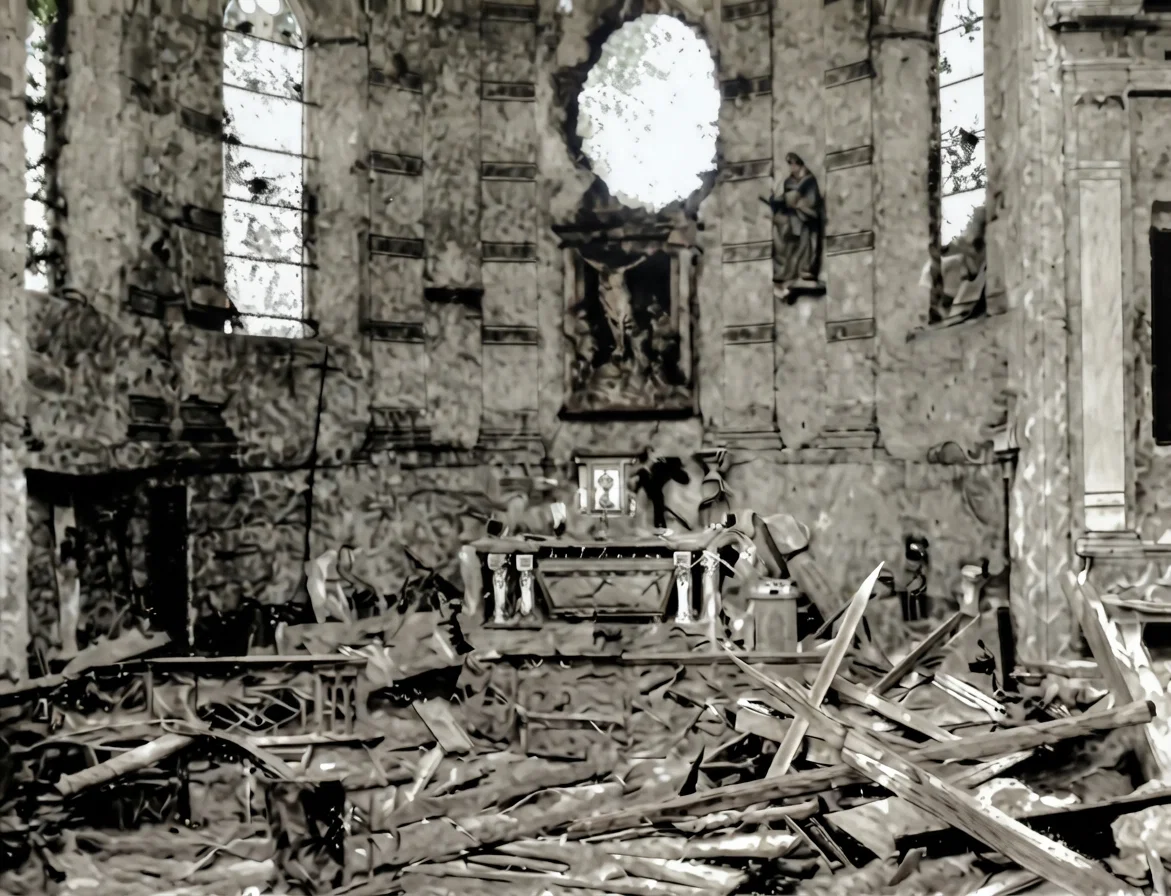
It is evident to the student of prophecy that these times to which we have come are clearly pointed out. The prophet Isaiah describes the general conditions which would result from war's fearful havoc and from other last-day agencies of destruction:—
“Behold, the Lord maketh the earth empty, and maketh it waste, and turneth it upside down, and scattereth abroad the inhabitants thereof. . . . The land shall be utterly emptied, and utterly spoiled: for the Lord hath spoken this word. The earth mourneth and fadeth away, the world languisheth and fadeth away, the haughty people of the earth do languish. The earth also is defiled under the inhabitants thereof; because they have transgressed the laws, changed the ordinance, broken the everlasting covenant. Therefore hath the curse devoured the earth, and they that dwell therein are desolate: therefore the inhabitants of the earth are burned, and few men left.” Isa. 24: 1-6.
Copyrighted by International Film Service, N. Y.
Incomprehensible Figures
To understand how strikingly these prophetic delineations are being fulfilled we have only to lift up our eyes and note the things which are taking place on the earth. For the last twenty-five months the nations of Europe have been engaged in such a warfare as the world has never before witnessed. In its vast proportions and far-reaching ramifications it affects practically the entire world. The estimate of the loss in life and treasure can only be approximately made. But the figures relating particularly to the expenditure of money are incomprehensible. Says the Washington Post for July 30: “No definite figures can be given of the cost of the great war in blood and gold, but the most reliable estimates present figures so vast that they become practically meaningless.”
According to this journal, the total losses in men to all the belligerents since the war began, up to March, 1916, amounted to 13,053,000. This included dead, wounded, and prisoners. “As to the money question, figures are more reliable, but still vague. They present sums which are so beyond anything previously known to international finance, so impossible of any human comparison, that they become little more than a jumble of figures.”
According to the editor of the Wall Street Journal, the belligerents have borrowed approximately $40,000,000,000 in the two years of the war. In addition to this, they have expended $10,000,000,000 more from their own exchequers, making a grand total of $50,000,000,000 for two years of warfare, an amount equal to ten times the amount spent in the American Civil War. But these figures fall far below other estimates. The American Peace Society estimates that the nations of Europe have spent for war purposes, directly and indirectly, $140,000,000,000.
War’s Ravages
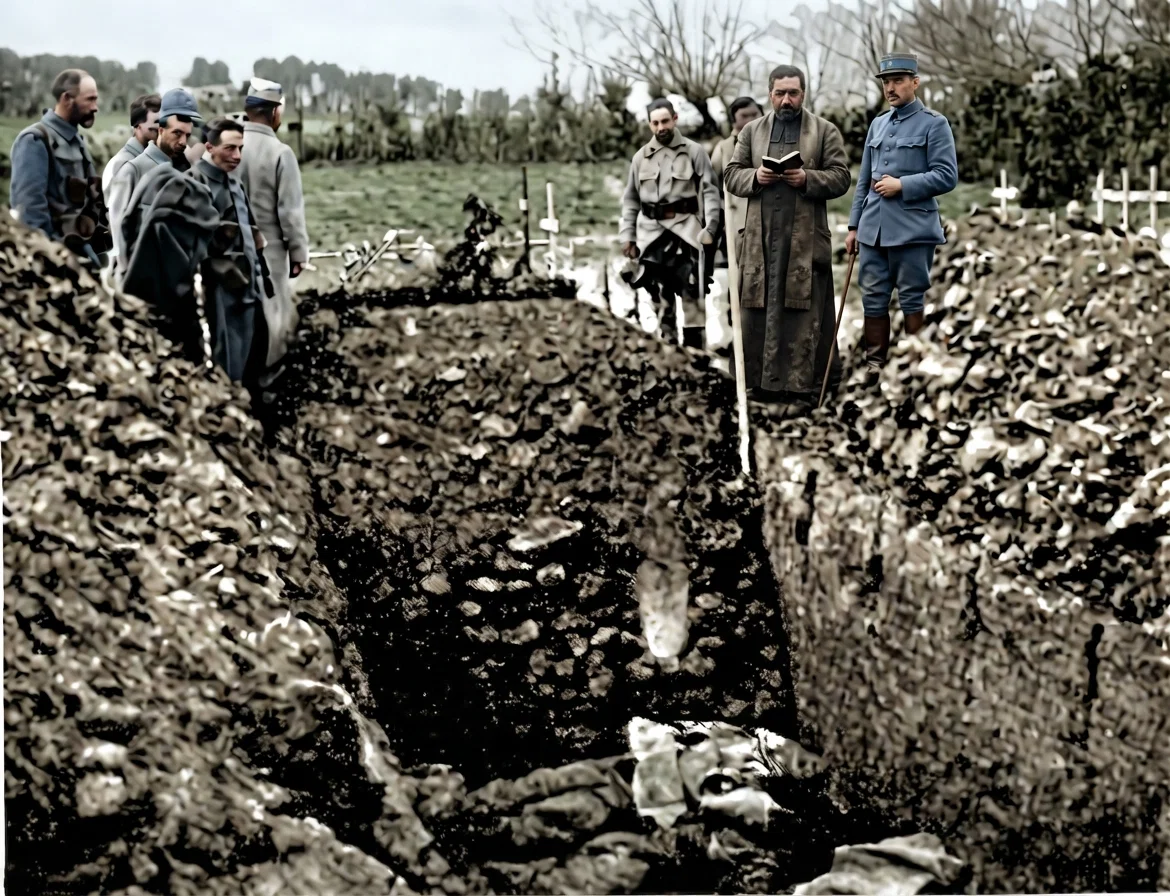
Nor do the loss in men and the direct expenditure of war funds indicate the sum total of national losses. There must be considered as well the great loss to industry, science, and art occasioned by the withdrawal of tens of thousands of men from these pursuits to engage in the work of destruction. Thousands of mills which before were engaged in the manufacture of products of commerce have been turned into munition factories. Tens of thousands of homes have been desolated and family ties severed forever. Thousands of families have been driven out or banished; millions of men have been buried in unmarked graves; thousands of others have been sent home helpless invalids for life, gruesome relics so long as they shall live of the barbarous havoc which war wages. Some of the fairest and most fruitful sections of Europe have been turned into desolate wastes or into great cemeteries of the dead.
And the end is not yet. A deadly hate still possesses the hearts of the antagonists. It is a war to the death; a war gauged by human endurance, in which all the resources of genius, science, education, and wealth are contributing their fullest measure. No man living knows7what the end will be. We only know this, that the unparalleled situation constitutes a terrible sign of the times in which we live, a sign that we are in the closing days of earth’s history.
And this war spirit is by no means confined to the nations of the Eastern Hemisphere. Every nation under heaven feels that in these times of stress and storm, when any turn of political fortune may bring into the field new adversaries or new alignments of opposing forces, there is great need for national preparedness; that no country is safe unless it is prepared to repel any probable invasion; that there must be an available army and naval equipment equal to any force which is likely to be brought against it. Hence we find among neutral nations the work of war preparation going steadily forward.
American Preparedness
This has been particularly marked in the spirit of preparedness which has swept over the United States of America. Aside from a few pacifists, this has become the rallying cry of every political party in the field. And Congress itself, prompted by administration influences and irrespective of party lines, has taken effective steps in meeting this nationwide demand. The program agreed to in both branches of Congress provides for “the building of one hundred and fifty-seven war vessels within the next three years, with four battle cruisers and four battleships included among the ships for 1917.”
The Washington Post for August 16 reports Secretary Daniels as saying that the adoption of this program “will give the United States the second largest navy in the world, and that the appropriations are the largest ever made at one time by any nation.”
The New York Times of August 16 reviews the whole program of preparedness which has been before Congress during the present session. Of the number of men authorized for the regular army and the funds required for their maintenance, this journal says:—
Boston Photo News Company
“The defense program, which approval of the navy bill by the House virtually completes, has been the most important achievement of the session, and has involved appropriations totaling $661,418,000. In addition to the navy bill, it included reorganization of the regular army and National Guard, bringing the enlisted peace strength of the army to 187,000 men, capable of expansion to 220,000 men in time of stress, and providing a federalized National Guard which at full strength will number 450,000 men.
“For the maintenance of the reorganized army and militia and for supplies and equipment, Congress appropriated $267,597,000. More than $13,000,000 of this is for development of aeronautics, and $11,000,000 is for government plants for the manufacture of armor plate. The army bill also carried an appropriation of $20,000,000 for a government plant to produce nitrate for use in manufacturing munitions.
Coast Defense Improvement
“Provision was made for the extension and improvement of the coast defenses, with appropriations aggregating $25,748,050. To furnish needed officers in the army and the navy the personnel of the naval and military academies were enlarged, the former to 1,760, and the latter to 1,152. For the Military Academy a special appropriation of $1,225,000 was made, the fund for Annapolis being carried in the Naval Appropriation bill.
“Congress also provided for the creation of a Council for National Defense, composed of Cabinet officials and citizen experts to coordinate the military, industrial, and natural resources of the country in time of war.
“In the navy bill the President is authorized, in the event of emergency, to increase the strength of the navy to 87,000 enlisted men. A Senate amendment providing for 6,000 apprentice seamen, in lieu of 3,500 proposed in the House bill, was approved.”
According to the New York Times of the same date, the following provision has been made for the financing of the naval program:—
“For this unprecedented program of construction the bill makes available at once approximately $110,000,000. In addition to this amount, the construction will cost eventually about $488,000,000, making the total obligation of the government for new naval construction more than $600,000,000.”
“The Most Militaristic Naval Nation on Earth”
The words of Representative Kitchen, the Democratic floor leader, in opposition to this program of preparedness, are significant. According to the Times, he declared: “Approval of this building program means that the United States today becomes the most militaristic naval nation on earth. The ultimate expenditures under this bill within a three-year period exceed the naval authorizations of all nations of the earth for ten years prior to the outbreak of the European war.”
Of this aggressive policy the editor of the Washington Post says in the issue of that paper for August 16:—
“The United States now enters upon a naval policy that cannot fail to command the immediate attention and profound respect of the world’s greatest nations. The meaning of this legislation is unmistakable. Despite the imminence of a Presidential election, when the majority in Congress usually tries to hold down appropriations, the two parties have swept politics aside, and with patriotic zeal have made provision for the early protection of the New World. Within three years vessels will come into being which will be more than a match for anything that floats. The superdreadnaughts and battle cruisers to be constructed, together with the capital ships existing, and the submarines, aeroplanes, supply ships, and other auxiliaries provided for, will make the coasts of America safe. Whatever turn the war in Europe may take, however tempting the Western Hemisphere may appear, no foreign nation or combination of nations will seek war with the United States.”
Our Responsibility
Shall we recognize the significance of these preparations, or shall we forget their fearful portent? The prophet tells us that these conditions that we see in the world, that these gigantic preparations for war which are going forward, will take place just preceding the coming of the Lord. Joel 3: 9-16. They should speak to us in clarion tones that the coming of the Lord draweth near. And realizing the significance of these fulfilling signs, shall we be guiltless if we fail to pass on to our fellows the light which the Lord has permitted to shine on our pathway?8Millions in the world are going down in darkness and destruction. God has made us the almoners of his grace, his sentinels, his gospel messengers. Woe to us if we give not the message, if we sound not the warning. By the preaching of the word, by Bible study, by the circulation of literature bearing upon these conditions, let us herald abroad the meaning of the events which are now taking place upon this earth. Only as we seek to deliver others shall we be able to deliver our own souls.
F. M. W.
Bible Religion
By C. P. WHITFORD
C. P. WHITFORD
“PURE religion and undefiled . . . is this, To visit the fatherless and widows in their affliction, and to keep himself unspotted from the world.” James 1:27. From this scripture we learn that the person who has Bible religion will “keep himself unspotted from the world.” Those who have Bible religion do not love the world, neither the things that are in the world. Do you ask me how I know that such is the case? I answer in the language of Inspiration, “If any man love the world, the love of the Father is not in him.” 1 John 2:15.
What is there in this world that is displeasing to God? “All that is in the world, the lust of the flesh, and the lust of the eyes, and the pride of life, is not of the Father, but is of the world. And the world passeth away, and the lust thereof: but he that doeth the will of God abideth forever.” 1 John 2:16, 17.
One who possesses Bible religion will not be controlled by the lust of the flesh, the lust of the eyes, nor the pride of life. In short, he will have no love for the pleasures that are so much enjoyed by worldly-minded people. His heart and affections will have been so changed that he will love the weekly prayer meeting, and he will love to talk of Jesus and his love.
It is quite possible for persons to be baptized and unite with the church who are not dead to the allurements of sin. They may attend church, but they also play cards, attend moving-picture shows, go to the circus and theater, and to many other questionable places of amusement. Have such persons got religion? If so, what kind of religion is it? They love the same pleasures they did before they professed conversion. Such persons are described in 2 Tim. 3:4 as being “lovers of pleasures more than lovers of God.” It is true, they have a form of godliness when they attend church, and it is also true that they have a form of ungodliness when they attend the moving-picture show, and other places where worldly-minded people go for pleasure.
The person who has Bible religion will heed the admonition given in 2 Peter 1:5-7. He will add to his faith virtue, knowledge, temperance, patience, godliness, brotherly kindness, and charity. We are told if these Christian graces abound in us, we shall not be unfruitful in the knowledge of our Lord and Saviour Jesus Christ. Are the majority of those who profess to have religion fruitful in a knowledge of the Bible? Are they familiar with the teachings of the Word of God? Is the Bible the Book of books with them?
Reader, it means more to have religion, Bible religion, than many have thought. It means to come out from the world and be separate. Jesus says: “If ye were of the world, the world would love his own: but because ye are not of the world, but I have chosen you out of the world, therefore the world hateth you.” John 15:19.
If you and I live the same life that Jesus lived, worldly-minded people will not seek our company nor shall we love theirs.
Sharks
N. Z. TOWN
A few weeks ago people were horrified as they read in the daily papers the accounts of bathers along the Atlantic coast being mutilated and devoured by man-eating sharks. Great excitement prevailed, and widespread shark hunts were planned to protect the bathers. Hundreds of people have since stayed away from these ocean bathing resorts, for fear of being devoured by these man-eaters.
One can easily avoid being eaten by sharks by keeping out of the waters where they are; but there is another class of man-eaters from which it is more difficult to escape. They are found in every community, in every neighborhood, and, sad to say, in many churches.
Jeremiah describes the manner in which they carry on their work: “Report, say they; and we will report it,” or, as the American Revised Version puts it, “Denounce, and we will denounce him.” Jer. 20:10. “Then said they, Come, and let us devise devices against Jeremiah; . . . and let us smite him with the tongue.”
The psalmist prayed to be hidden “from the secret counsel of the wicked; . . . who whet their tongue like a sword, and bend their bows to shoot their arrows, even bitter words: that they may shoot in secret at the perfect.” Ps. 64:2-4.
“I have heard the slander of many: . . . while they took counsel together against me, they devised to take away my life.” Ps. 31:13.
The Literary Digest recently gave an account of a case which shows the result of the work of these human sharks:
“A young girl recently killed herself in an English village. The coroner’s jury, however, brought in the verdict: ‘Killed by idle gossip.’ The girl had been guilty of nothing actually wrong, but ‘the gossip disseminated by the women of the village blackened her name until she could bear the suspicious looks and spoken taunts no longer, and so ended her life.’”
This sad event led to the organization of an anti-gossip crusade:—
“A society has been formed and rules drawn up. The entrance fee has been9fixed at a nominal sum, because the society desired to embrace all classes, both rich and poor. Our richer women are just as adept at robbing others of their character as are the women of the working classes who chat with one another from their respective doorsteps.
“The organizers are quite hopeful of minimizing the number of gossips, because they are convinced that the worst offenders talk scandal more from a matter of habit than through any really malicious desire to injure another.
“Members must take a vow to avoid either starting or spreading any unkind remarks about any one else, nor will they listen to a person who tries to tell them. To repeat what they have heard, even if known to be true, is equally as bad as to set the ball rolling. For the first ten breaches of this law a fine is imposed, graduating from a shilling up to the maximum fine of ten shillings. After ten slips, the women are to be blackballed as incurables. . . .
“If we pick up mud and throw it at a fashionably dressed lady and spoil her clothes, she can get redress through the law; no well-brought-up woman, however, ever dreams of throwing mud at her friends.
“If, on the other hand, we imagine that she is too flighty in her behavior, and, in order to strengthen our belief, we repeat all her trivial little indiscreet actions, we are flinging mud at her character, and she can get no redress unless it should happen to interfere with the earning of her livelihood, or can be proved a malicious act.
“Idle gossip does more harm than anything else in the world; and if the organizers of the anti-gossip crusade have only the perseverance and courage to make it universal, they will do inestimable good for the general happiness of the community.
“Charity, like all else, should begin at home, and those who cannot join the crusade should begin in their own family circle, and resolve not even to think ill of their friends, acquaintances, or those of whom they have little knowledge. When ugly tales are told them, these should be immediately forgotten.
“Before making a statement about any one, do not forget to let it pass the three golden gates: ‘Is it true?’ ‘Is it needful?’ ‘Is it kind?’ These form the motto of the anti-gossip crusade.”
What a blessing it would be if such a crusade were started in every neighborhood! Let us pray that the good work may prosper and spread.
Takoma Park, D. C.
Sioux Indians Demand Prohibition
A conference of 700 Indians, mostly Sioux, at Mitchell, S. Dak., passed resolutions that whisky is as bad for the red man as for the white man, and demanded absolute prohibition of the traffic. A committee of three officers was named by the conference to act as “field agents” in behalf of the State-wide prohibitory amendment now pending. Three hundred tepees were pitched, some of the braves coming five days’ journey overland, from all over both Dakotas and Nebraska, to attend. The little Indian Presbyterian church was not large enough to hold the “delegates,” so they erected a large pavilion of brush and poles, moved the organ outside the church, and joined an Indian choir in singing many hymns in Sioux. The meeting was “secret,” not being advertised in advance, as is the custom of the paleface, and not a half dozen whites in Mitchell knew of the meeting beforehand. Celebrated Sioux orators addressed the gathering.
“Encourage Such”
[UNDER this heading the editor of the Hanford (Cal.) Sentinel, in its issue of June 6, 1916, pays the following tribute to Seventh-day Adventists:—
“The Adventist camp meeting recently held in Hanford proved an unqualified success, according to those officials directly in charge of the session. Hanford people, regardless of religious predilections, should be pleased to note that this large gathering of ardent religionists has proved so successful and well worth while. It is a fine advertisement of the community in a quiet but effective way, and will doubtless cause the holding of similar camp meetings here in future. Hanford can well afford to offer every inducement to the Adventists or any other religious body to hold meetings in this city. Big men from all over the United States attended the recent Adventist session. It is very likely that these men will carry home with them excellent impressions of Hanford and the San Joaquin Valley. The indirect advertising thus secured cannot be computed, but it is, after all, usually productive of most lasting results. The Adventists here have set a splendid standard for successful and effective camp meetings.”
The Weighing of Character
By J. O. CORLISS
The Atonement — No. 11
The Weighing of Character
J. O. CORLISS
It will be generally conceded without controversy that the second coming of Christ ends the conflict with sin. The work of atonement must, therefore, be a preparation for that event. When “the voice of the archangel,” and “the trump of God” are heard, as Christ descends to earth, the dead in Christ rise from their graves, and are then joined by the living righteous, ever to be with the Lord. 1 Thess. 4:16, 17.
In this description of events there is no waiting for adjustment of cases. No time is then given for such a scene; for the text says that the change here mentioned takes place while the heralding shout of the descending Christ is heard in midheaven. Indeed, Christ does not actually reach the earth, but the transmuted ones are “caught up” to meet their Lord in the clouds. We are further told that this glorious change from mortality to immortality takes place “in a moment, in the twinkling of an eye, at the last trump.” 1 Cor. 15:52, 53.
Please look at the text for another point there mentioned. It tells us that the sudden change from death to life takes place in the very act of the resurrection; the righteous therefore are incorruptible when they come from the grave. This is positive evidence that the decision fixing the cases of the dead was made prior to the descent of the Lord to call his own from their tombs. That the cases of the righteous living have also been decided is shown by the fact that they are selected from among others to be caught up to meet the Lord in midheaven. But such decisions are not made without a judgment session, at which each case is carefully examined in detail, and so settled beyond dispute. This is clearly stated, as follows: “We must all appear before the judgment seat of Christ; that every one may receive the things done in his body, according to that he hath done, whether it be good or bad.” 2 Cor. 5:10.
Nothing can possibly be hidden from the scrutiny of the Judge on that occasion; for we are positively told that God will bring every work into judgment, with every secret thing, whether it be good or evil. Eccl. 12:14.
But how will such a minute account be made to appear in this final summing up? The revelator says that he saw the judgment in session, and that, besides certain books which were opened, another book was there, which was the “book of life.” The dead, he says, were judged out of those things which were written in the books, according to their works. Rev. 20:12. One of the duties of ministering angels (Heb. 1:14) is to record the sayings and actions of people (Eccl. 5:5, 6), together with the motives which actuated them. These records are to be used in the closing work of the atonement, which fully decides the destiny of all.
When this time arrives, the angels, ten thousand times ten thousand in number, are called to minister in the presence of the Judge. Dan. 7:9, 10. As the case of an individual whose name has been registered in the book of life (Phil. 4:3) comes up for examination, the attendant angel of that one produces the record of his life. If this record shows the errors and mistakes all heartily repented of, the Saviour himself then pleads the efficacy of his blood in acknowledgment of the person under consideration . The consequence is, the name is retained in the book of life, and his sins are forever blotted from the “book of remembrance.” Mal. 3:16; Acts 3:19.
But if it should appear that the life has been a careless one, carrying a record of neglected prayer, of not having overcome evil habits, of having had no more than a formal profession of religion, the Lord cannot confess the name before his Father. Nothing can then be done but to order the name stricken from the book of life, and the sins of life must be borne by the individual.
This is no fancy sketch; it is plainly taught by the Saviour’s own setting forth of the subject. His statement is this: “He that overcometh, the same shall be clothed in white raiment; and I will not blot out his name out of the book of life, but I will confess his name before my Father, and before his angels.” Rev. 3:5.
This, indeed, must be the order of events to take place before Christ returns to earth; for then every one is rewarded “according as his work shall be.” Rev. 22:12. In order to do this, the decision of each case must have been rendered preparatory to Christ’s coming, because at his coming his reward is with him to bestow on each one to whom it has been awarded. Indeed, the very object of Christ’s second coming is to take to himself those who have benefited by his sufferings and death when here on earth. When he comes as “King of kings, and Lord of lords,” it must have been previously decided who are his and who are not, that he may bring his reward with him to bestow on every one according as his work has appeared, in the examination preparatory to that greatest of all events.
Thus it is clear that the very design of Christ’s second coming is to reap the benefit of his first advent, and take to himself those whom a prior examination has decided to be his. So when he comes to earth the second time, those who have passed the necessary test will be caught up to meet their Lord in the air, and so ever be with him whom they love. 1 Thess. 4:15-17. The nearness of this time, therefore, warrants the issuance of a world warning, that the living may prepare for their final examination in the court of high heaven. Accordingly, when the crucial time comes, the prophet’s message is heralded forth: “Fear God, and give glory to him; for the hour of his judgment is come.” Rev. 14:7.
It must be quite apparent to all that such a gospel call to all the world for a thorough reformation in life and character, even after the judgment has set, is really an announcement that the last opportunity for human restoration to oneness with God has arrived. It also means that judgment has begun with those who, from the first, have been registered as God’s children (1 Peter 4:17), and that shortly the examination will pass to the cases of the living.
The final work for man, as typified in the earthly sanctuary atonement service, began at the close of the twenty-three hundred symbolic days of Dan. 8:14.10which ended in the autumn of 1844 A. D., and the world at that date was brought face to face with the most solemn time in the history of the world. The judgment work begins with the dead, but at the close it must deal with the living—with men and women in all the activities of life. The final test demands a consecration which shuts the world out of every plan. This must be so, since these living ones, to be changed from mortality to immortality at Christ’s appearing, will be taken from among their fellow men at a time when there is such trouble as never has been witnessed since the world began. Dan. 12:1, 2.
This time is now at hand, as world events so forcibly testify. It must be that the last case of living candidates for eternal joys will soon come up in judgment. And how solemn will the end of it all be to every one concerned! No one will have escaped the scrutiny of the judgment; for the books of record will have faithfully revealed every secret motive. The insincerity of dealing one with another, though now hidden perchance from human gaze, will then appear in all its deformity; for nothing will then be concealed from the Judge of all the earth.
In view of this, and also in view of the fact that the great work of atonement is now going on in the court of heaven, it is a solemn thought that ere-long the fiat will be issued: “He that is unjust, let him be unjust still: and he which is filthy, let him be filthy still: and he that is righteous, let him be righteous still: and he that is holy, let him be holy still. And, behold, I come quickly.” Rev. 22:11, 12.
All will be in one or the other of these classes when the atonement work for the world has ended. In which class will the reader be found?