Signs of the Times, Vol. 41, No. 31.

The Earth in Eternal Edenic Beauty

Signs of the Times

Aug 11, 1914

Pacific Press Publishing Association · Mountain View, California · Aug 11, 1914

The Earth in Eternal Edenic Beauty

The Millennial Desolations — The Eternal City Comes Down — The Wicked Resurrected and Satan Loosed — Fire Destroys Sinners and Melts the Curse from the Earth — The New Heaven and the New Earth and Eternity of Bliss

THIS is the third and concluding article of Elder Daniells on the subject of the eternal future of this earth as the final home of the redeemed through Christ. In his former articles, he has presented the Bible promises that this earth, as well as all repentant sinners, will be reclaimed from the curse produced by evil. The Scriptures are as definite about the redemption of this earth for the future home of the saved as they are about the salvation of man himself. At the second coming of Christ, all sinners alive then will die because of the brightness of His great glory, and the earth will remain desolate, with no one here save Satan and his angels, for a thousand years. During that thousand-year period, the saints are with Christ on thrones of judgment, investigating the records of the lives of the wicked. The article this week continues the story, showing the redeemed in their eternal home amid the indescribable splendors of their rich reward.
FROM the scriptures examined in our last article, we found that when the Son of God shall come to this earth the second time, He will call the righteous from their graves (1 Thess. 4: 16), change the righteous who are living (1 Cor. 15: 51, 52), and take them all to the mansions above (John 14: 1-3). Moreover He will destroy all the wicked from off the earth. 2 Thess. 1: 7-9.
This will depopulate the earth, in fulfilment of the prophecy of Jer. 4: 23-25: "I beheld the earth, and, lo, it was without form, and void; and the heavens, and they had no light. I beheld the mountains, and, lo, they trembled, and all the hills moved lightly. I beheld, and, lo, there was no man, and all the birds of the heavens were fled." This leaves none but Satan and his evil angels on the earth; and this is the binding of Satan, as brought to view in Rev. 20: 1-3.
We wish now to show that this marks the beginning of the millennium — the beginning of Christ's millennial reign. We are aware that this is not in harmony with the popular doctrine of the millennium; but we think it is according to the Scriptures, and that is sufficient.

WORLD NOT ALL TO BE CONVERTED

THE WILDERNESS AND THE SOLITARY PLACE SHALL BE GLAD FOR THEM; AND THE DESERT SHALL REJOICE, AND BLOSSOM AS THE ROSE.
We do not see how it is possible to harmonize with the Scriptures the general idea of the millennium — that is, that the whole world will accept the gospel, and live in a sinless state for one thousand years, at the end of which Christ will come to the earth.
Paul declares: "Yea, and all that will live godly in Christ Jesus shall suffer persecution. But evil men and seducers shall wax worse and worse, deceiving, and being deceived." 2 Tim. 3: 12, 13.
In the parable of the wheat and the tares, it is plainly said that men will continue in their wickedness until the end of the world. Matt. 13: 37-42.
Of the moral condition of the world in the last days, the apostle Paul says further, "This know also, that in the last days perilous times shall come." Perilous times? What makes the times perilous in the last days? The world's conversion? — No, but just the opposite, the absence of Bible religion; for Paul speaks of the people as "having a form of godliness, but denying the power thereof: from such turn away."
It is not because we desire such to be the condition of the world, that we take this position. We could wish it might be otherwise. It is a sad picture. It too nearly resembles the past history of the race to be pleasant; but it is a fact declared by all inspired writers. We can not ignore these plain Scriptural statements, and teach the opposite. That would be holding "the truth in unrighteousness." The Bible plainly teaches that in the last days sin and iniquity will flourish; that the world will be as it was in the days of Noah. Therefore the popular idea of the world's conversion is but a dream by which many are deceived.

FACTS CONNECTED WITH THE MILLENNIUM

So far as a millennium — that is, a period of one thousand years — is concerned, the Bible says very little about it. There is but one chapter in which anything definite is stated, and that is Revelation 20. In a short article, we can not do more than to notice briefly the different facts stated in this chapter: 1. A heavenly being comes down from heaven and binds Satan for one thousand years. Verses 1-3. 2. At the same time, the beginning of the thousand years, the resurrection of the "blessed and holy" takes place. "This is the first resurrection," and occurs at the second coming of Christ in judgment. Verse 4. This must be the time of which Paul speaks in one of his letters to the Corinthians: "Do ye not know that the saints shall judge the world? and if the world shall be judged by you, are ye unworthy to judge the smallest matters? Know ye not that we shall judge angels? how much more things that pertain to this life?" 1 Cor. 6: 2, 3.

TO JUDGE ANGELS

The saints are to judge the world and angels. We presume none will claim that the holy angels will be judged by men. It must be fallen, evil angels. And that portion of the world to be judged by the saints must be those who are rejected by Christ. Thus, during the thousand years, or millennium, the saints are in heaven, reviewing the life records of the lost, in order that it may be understood just why God can not save them. It is thus the redeemed will be able to say, "Thou art righteous, O Lord, which art, and wast, and shalt be, because Thou hast judged thus."
During this millennium, Satan is wandering from place to place over this dark, broken earth. At the presence of the Lord, the wicked were slain, the mountains and the islands moved from their places, and awful darkness covered everything. In this dark, confused abyss, called the bottomless pit, Satan is confined. Here he has nothing to do but meditate upon his past career of sin, and await with terrible dread the future.

THE WICKED RAISED — SATAN LOOSED

When the thousand years are ended, the wicked are raised to life. Rev. 20: 5. This again populates the earth. Because of this John says, "And when the thousand years are expired, Satan shall be loosed out of his prison." Verse 7. This is the loosing "a little season," spoken of in verse 3. The wicked are brought to life by the voice of the Son of God.

HOLY CITY DESCENDS

It is at this time, doubtless, that He descends from heaven with the "holy city, New Jerusalem," and the saints of God. Rev. 21: 2. "And His feet shall stand in that day upon the Mount of Olives, which is before Jerusalem on the east, and the Mount of Olives shall cleave in the midst thereof toward the east and toward the west, and there shall be a very great valley; and half of the mountain shall remove toward the north, and half of it toward the south." Zech. 14: 4.
Now will be fulfilled the words of Christ in Luke 13: 28: "There shall be weeping and gnashing of teeth, when ye shall see Abraham, and Isaac, and Jacob, and all the prophets, in the kingdom of God, and you yourselves thrust out."
At this sight, Satan and his host prepare for the last great conflict. They vainly hope they can wrench off the pearly gates and batter down the jasper walls of the holy city. Everything is in readiness, when a terrible scene is presented before them. Jesus appears, and solemnly pronounces their eternal doom. "And fire came down from God out of heaven, and devoured them."
This dreadful scene is the last act in Satan's sinful career. This is the time when God's people "dwell with the devouring fire" and "with everlasting burnings." This is the day of the Lord, "that shall burn as an oven; and all the proud, yea, and all that do wickedly, shall be stubble: and the day that cometh shall burn them up, saith the Lord of hosts, that it shall leave them neither root nor branch." Mal. 4: 1. This is the end of the millennium. It is then that "the elements shall melt with fervent heat, the earth also and the works that are therein shall be burned up." 2 Peter 3: 10.
But will this be the end of our earth? When thus melted, will it be annihilated, and cease to be? We can answer this with an emphatic No. The apostle Peter immediately states, "Nevertheless we, according to His promise, look for new heavens and a new earth, wherein dwelleth righteousness." Verse 13.
"According to His promise." This promise is found all through the Old Testament. It was made to Abraham, and confirmed to his posterity. It was repeated to David; and Jesus said, "Blessed are the meek: for they shall inherit the earth." But the earth must first be changed and "renewed," as stated by the psalmist.
The same fire that comes down from God out of heaven and devours the wicked and melts the earth, destroys "the works of the devil." It renovates the entire earth by burning out the dross; and when the blight and mildew of sin are thus removed, our earth will again appear as it did before sin entered.
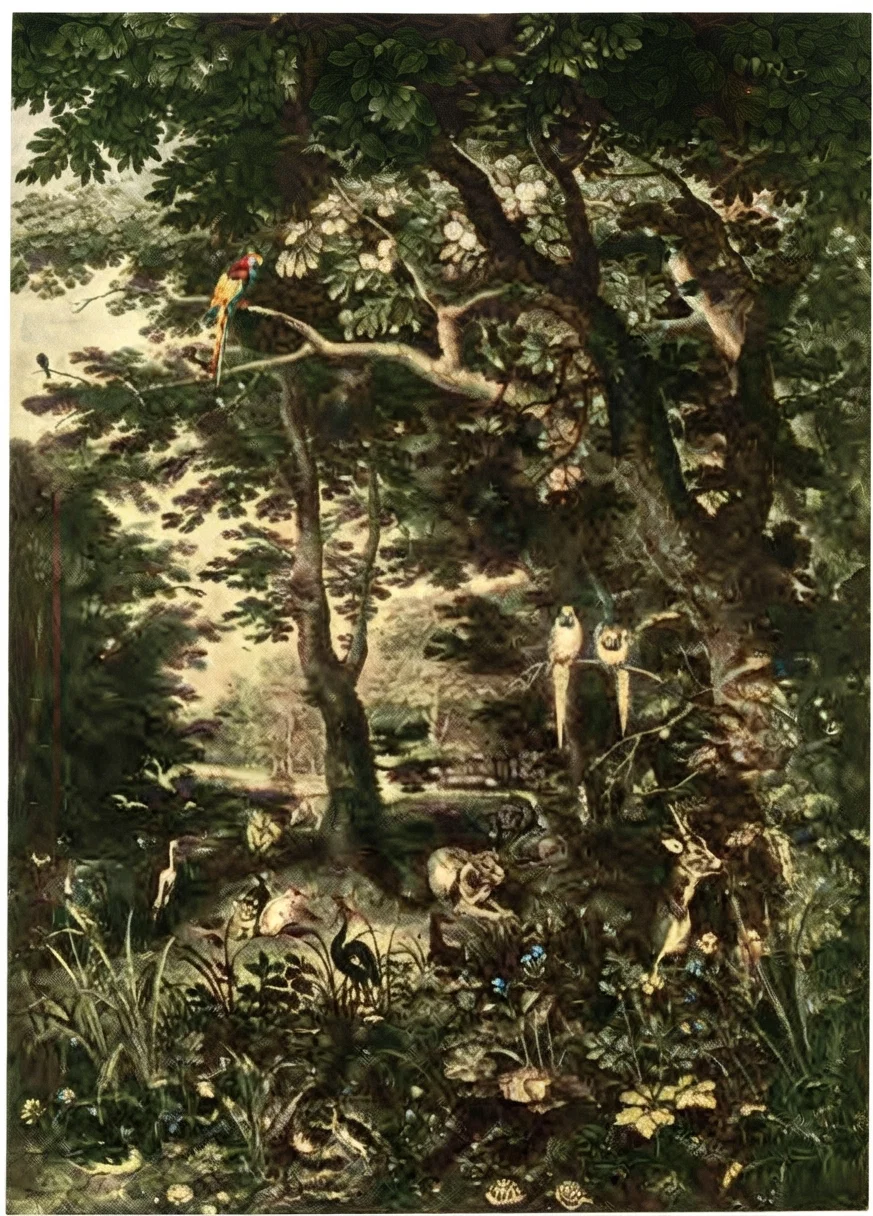
Isaiah assures us that the Lord "will make her wilderness like Eden, and her desert like the garden of the Lord." Isa. 51: 3. Even our barren, sandy deserts will then be as beautiful and inviting as the Garden of Eden was when our first parents were placed in it.

GLORIES AND JOYS INDESCRIBABLE

It is not possible for man fully to set forth the glories of the new earth, and the joys that will eternally fill the hearts of the redeemed. Our efforts would but darken the picture. We can do no better than to transcribe the description of God's ancient seers to whom the future was especially revealed:
"The wilderness and the solitary place shall be glad for them; and the desert shall rejoice, and blossom as the rose." Isa. 35: 1. In view of this, the Lord says, "Strengthen ye the weak hands, and confirm the feeble knees." Verse 3. "Then the eyes of the blind shall be opened, and the ears of the deaf shall be unstopped. Then shall the lame man leap as an hart, and the tongue of the dumb sing: for in the wilderness shall waters break out, and streams in the desert." Verses 5, 6.

GOD HIMSELF SHALL BE WITH THEM

"And I heard a great voice out of heaven saying, Behold, the tabernacle of God is with men, and He will dwell with them, and they shall be His people, and God Himself shall be with them, and be their God. And God shall wipe away all tears from their eyes; and there shall be no more death, neither sorrow, nor crying, neither shall there be any more pain: for the former things are passed away." Rev. 21: 3, 4.
"And they shall build houses, and inhabit them; and they shall plant vineyards, and eat the fruit of them. They shall not build, and another inhabit; they shall not plant, and another eat: for as the days of a tree are the days of My people, and Mine elect shall long enjoy the work of their hands." Isa. 65: 21, 22.
Dear reader, are you living so that you can hope for an inheritance in our earth when it shall be thus renewed? "Blessed are they that do His commandments, that they may have right to the tree of life, and may enter in through the gates into the city."

Loving Words

By L. D. SANTEE
"Having compassion one of another, love as brethren, be pitiful, be courteous." 1 Peter 3:8.
THERE are hearts that in anguish are breaking With their pitiful weight of despair. There are bosoms in loneliness aching, For life's burdens are heavy to bear. Let love fill the heart with its sunshine, And comfort the bosoms that yearn; And the joy that we feel in our giving, Our Father to us will return.
When we yield to the flashing of temper, And our cruel words cut like a knife, We darken the wearisome hours Of this troubled, unsatisfied life; And heads that are gray with life's ashes, And feet that are palsied and slow, Are carrying heavier burdens, That we in our anger bestow.
Too late, when the tired hands are folded, And the life-giving spirit has fled. No use to bring violets and roses To garland the forms of the dead. The chance to retrace will come never, Though our faces with tear-drops are wet. The old life has vanished forever, And leaves unavailing regret.
Let us bathe, with the balm of contrition, The wounds that our anger has made. Let smiles fill the heart with their sunshine, While yet the keen sickle is stayed. Let our flowers fill the hands of the living, And their fragrance a home in the heart; And the joy that we feel in the giving, Our Father to us will impart.
There's a joy, if our lips will but learn it, In speaking the language of love. There's a peace, if we will but discern it, That comes from the Saviour above. And when the last step has been taken, And the gate of the city appears, Then the welcoming song of the angels Will fall on our listening ears.

When Downhearted, Pray

"WHEN you are downhearted, get down often on your knees."

The Sabbath Previous to Sinai

Evidence of Its Observance All Through the Patriarchal Age — Thousands of Individual Miracles Designated It in the Wilderness — Specifically Defined at Least Thirty Days Before Sinai

By GEORGE I. BUTLER
HAVING considered, in a previous article, the origin of the Sabbath, let us now notice its existence during the times of the patriarchs.
For convenience, man has divided human history into three great divisions, the patriarchal, the Mosaic, and the Christian dispensation. These terms are not directly used in the Scriptures. Yet, in God's dealing with the human family, there were special characteristics which distinguish one period from another. The patriarchal embraces the time from the creation to the giving of the law in the days of Moses; the Mosaic reaches to the crucifixion of Christ; and the Christian, from that time till Jesus comes again.
We are left largely in ignorance as to the existence of books previous to the time of Moses. There is a general agreement that Moses was inspired to write the book of Genesis. The value of that book, to the human family, is almost infinite, as it contains all we know of the beginning of this world, and of God's dealings with the human family up to the time of the Exodus. Every person who truly believes the Bible, will accept the Mosaic account of creation and the patriarchal history.

STEPS IN MAKING THE SABBATH

We saw last week that in the making of the Sabbath there were three steps or events:
1. God rested, on the seventh day of creation week, from all His labors of creation. That day became Jehovah's rest day, or Sabbath day.
2. At the close of that rest, He blessed the seventh day of the week for all future time, on its return in each weekly cycle. It became God's blessed rest or Sabbath day. It was a better day than the six "working-days" (Eze. 46: 1), because devoted to higher and holier uses.
3. He sanctified this day of His rest. To sanctify is to set apart for holy or religious use. The exact meaning of the term, the very essence of it, made known, to those who were to use this seventh day of the week, the fact that it was set apart, by God and Christ, to a sacred use, and their duty so to regard it.
When the Sabbath was thus made, Adam and Eve were the only persons living. They were the representatives of all who afterward derived existence from them.

IT WAS BEFORE MAN FELL

It is a fact never to be overlooked, that this act of setting apart the Sabbath in the Garden of Eden was before the fall of man — yea, before sin entered. The two institutions, the Sabbath and marriage, were both originated previous to the fall of man and the entrance of sin. Adam and Eve were therefore fully acquainted with the sacredness of the seventh-day Sabbath, as it was made immediately after their creation, and was made for them, as the representatives of our race in its innocence, before sin existed in our world.
To this holy pair God's instructions were given for the benefit of their descendants. We know not how soon sin entered Eden. We can not reasonably suppose it entered immediately after their creation and the prohibition of eating the fruit of the tree of knowledge. We could more easily believe that some time elapsed before they ventured to disobey their Creator. The sacredness of the Sabbath, made known to them by their [[FIGURE]] heavenly Father, must have been a prominent fact of their life in Eden before sin entered.
The principles of God's holy law of Ten Commandments existed in reality from creation, as the relation of Adam and Eve to God as their Creator existed, and their relation to each other would necessarily exist. Their first duty was to love with all their hearts the God who had given them existence, and also to love each other.

GREW OUT OF DEFINITE RELATIONS

These two great principles grew out of their relation to God and to each other. The ten precepts are embraced in those two principles of love to God and love to man. The Sabbath must have been made the most prominent of all the ten, as God must have told them of its existence and sacredness. Its sanctification really consisted in making known the facts of God's resting upon the seventh day, His blessing the day, and their duty in its observance. This institution stands out more prominently in their experience than the observance of any other precept of the ten.
In process of time, after sin entered, Cain and Abel were born, and grew up to manhood. One followed the occupation of raising fruits and other things that grew from the earth. The other was a shepherd and herdsman. How long a time elapsed previous to the events connected with Cain's murder of Abel, we have no means of knowing, but it must have been scores of years. After his murder of his brother, he became a wanderer in the earth. Then Seth was born, through whom came a race of patriarchs who loved and feared God. Seth's descendants called themselves sons of God, while Cain's descendants were called sons and daughters of men. Gen. 4: 26, margin; also Gen. 6: 1, 2, 4. The families of Cain and Seth seem to have lived apart until just before the Flood. In that period of extreme wickedness, they commingled more or less.

SETH AND HIS POSTERITY

Seth's posterity were servants of God for generations. Some of these patriarchs were remarkable for piety. Enoch, the seventh from Adam, was so devoted a servant of Jehovah that it is said of him he walked with God three hundred years, and was not, for God took him. Gen. 5: 22-24. He was the first man translated without seeing death. Heb. 11: 5. He was a believer in the second coming of Christ. Jude 14.
"Walking with God" must signify a complete harmony of being and practise between the great God and His loving, faithful servant. Every command of God must have been faithfully obeyed. Therefore Enoch kept that Sabbath which was "made for man."
Noah was another honored patriarch. It is said of him, "Noah was a just man and perfect in his generations, and Noah walked with God." Gen. 6: 9. This statement could not be true of Noah if he had not obeyed God in every particular. Noah therefore must have kept the Sabbath which God made for man.
Abraham, the father of the faithful, who was true to the God of heaven after his ancestors had gone into idolatry (Joshua 24: 2), must have been an observer of the seventh-day Sabbath; for it is said of him, "Abraham obeyed My voice, and kept My charge, My commandments, My statutes, and My laws." It follows, from this statement, that God had "commandments," "statutes," and "laws" in Abraham's time, and one of these was certainly that enjoining the observance of the seventh-day Sabbath. He had made this institution more prominent than any other, at the very creation of the world; and Abraham therefore had the Sabbath, and kept it. His descendants, Isaac, Jacob, and the twelve patriarchs, had the Sabbath, and kept it also, at least those who sought to serve God.

TIME RECKONED BY WEEKS

The custom of reckoning time by weeks was in existence in that age. Laban, Jacob's uncle, in giving his daughters to Jacob for wives, said, "Fulfil her week, and we will give thee this also." Gen. 29: 27, 28. The existence of the weekly reckoning of time necessarily demonstrates the existence of the Sabbath, the institution which gave the origin to the weekly reckoning of time. Though Laban was no saint, he knew of the Sabbath which God made for man, and no doubt he paid some degree of respect to it.

PHARAOH COMPLAINED OF THEIR RESTING

All are familiar with the fact of the children of Israel's going down into Egypt, and finally becoming bondsmen to the Egyptians, and that Moses was called of God to act as their leader in this deliverance.
The first complaint Pharaoh made to Moses and Aaron was that they hindered the people from their work.
We can not see that Moses and Aaron interfered with the work of the Israelites on ordinary days; but in counseling them to return to the Lord and serve Him better, no doubt they did advise them to refrain from work on the Sabbath. In their long, grievous bondage, probably they were required to work on the Sabbath. Their lot was perplexing and hard. Moses and Aaron doubtless pointed out their failures, and counseled them to cease their work on the Sabbath. So the king complained loudly.
They were finally permitted to take their departure for the promised land. Some## The Sabbath Previous to Sinai
(Continued from page 3)
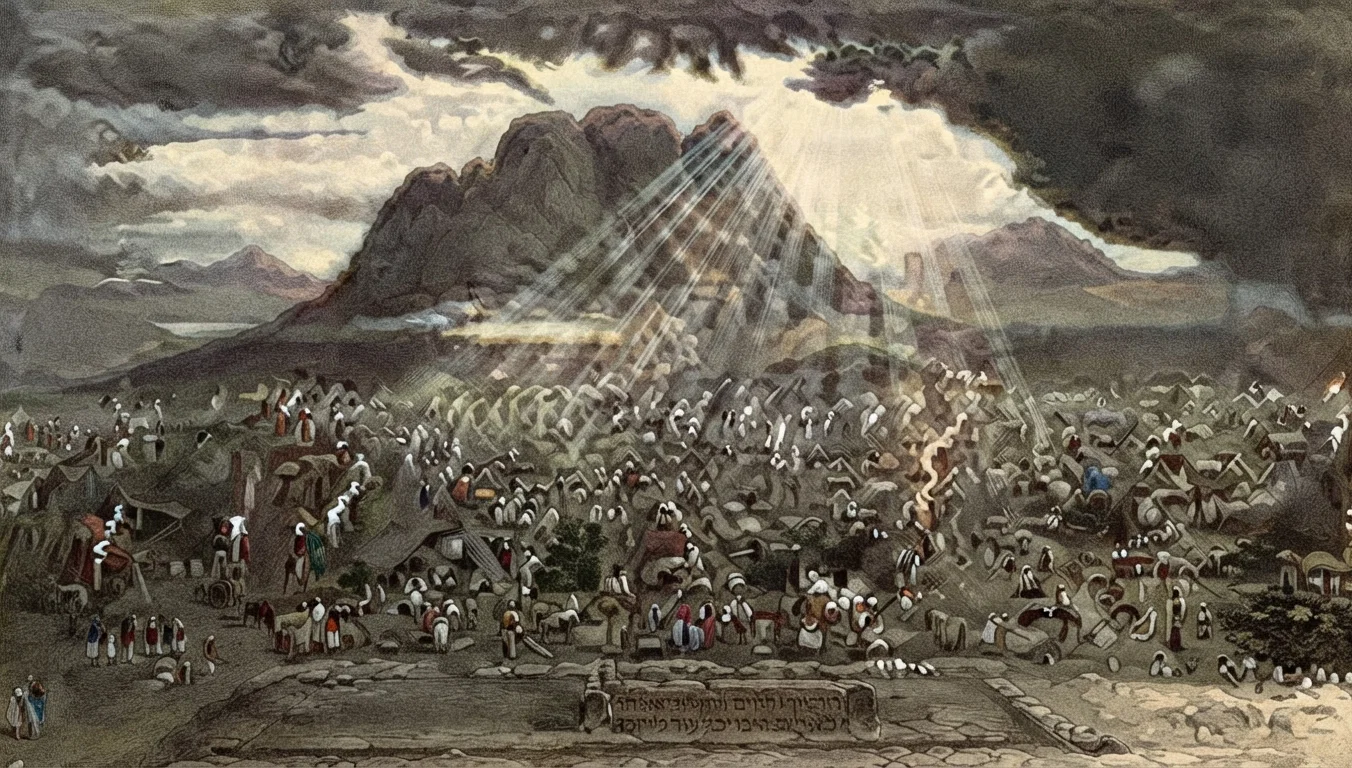
thirty days before they reached Mount Sinai, God gave them manna for their sustenance. In the giving of this food to them, God took occasion to impress upon them forcibly the importance of observing the Sabbath. On the six days of each week, the manna fell, and they were to gather it for their eating. On the sixth day, a double portion of it was given. None whatever fell on the Sabbath.
"Then said the Lord unto Moses, Behold, I will rain bread from heaven for you; and the people shall go out and gather a certain rate every day, that I may prove them, whether they will walk in My law, or no. And it shall come to pass, that on the sixth day they shall prepare that which they bring in; and it shall be twice as much as they gather daily. . . . And it came to pass, that on the sixth day they gathered twice as much bread, two omers for one man: and all the rulers of the congregation came and told Moses.
"And he said unto them, This is that which the Lord hath said, . . . Six days ye shall gather it; but on the seventh day, which is the Sabbath, in it there shall be none. And it came to pass, that there went out some of the people on the seventh day for to gather, and they found none. And the Lord said unto Moses, How long refuse ye to keep My commandments and My laws? See, for that the Lord hath given you the Sabbath, therefore He giveth you on the sixth day the bread of two days; abide ye every man in his place, let no man go out of his place on the seventh day. So the people rested on the seventh day." Ex. 16: 4, 5, 22, 23, 26-30.

BEFORE THE SABBATH LAW OF SINAI

Here we have the most emphatic evidence of the existence of the seventh-day Sabbath previous to the giving of the law on Mount Sinai. It was evidently well known to the whole Israelitish people; but because of their long bondage in Egypt, some had not kept it. The following facts demonstrate this:
1. God had a law previous to Sinai, and the Sabbath commandment was an important part of that law. "How long refuse ye to keep My commandments and My laws?"
2. The giving of the manna was to be a test to demonstrate whether they would keep the Sabbath or not.
3. The giving of the manna for their sustenance was one miracle. Giving twice as much on the sixth day was another. The preservation of it on the seventh day, whileit became corrupt on other days, was a third miracle. This continued for forty years, till they reached the promised land. Joshua 5: 12. Could God possibly give stronger evidence of His regard for the Sabbath, than these thousands of miracles spread over a period of forty years?
4. The giving of the manna was not the institution of the Sabbath. The language plainly states that God had laws before this. Abraham recognized the fact that God had laws. The Sabbath was a part of those laws. That Sabbath law was instituted in Paradise, just as soon as man was made. "The Sabbath was made for man."
The seventh-day Sabbath was well known to the Gentile nations, and was recognized by them as sacred time.
Thus we see that the Sabbath was well known and kept during the patriarchal dispensation.

Asked to Witness for Him

Remember His Gracious Benefits—Notes of Praise and Thanksgiving—Made a Blessing to Others—Receiving to Impart

By MRS. E. G. WHITE
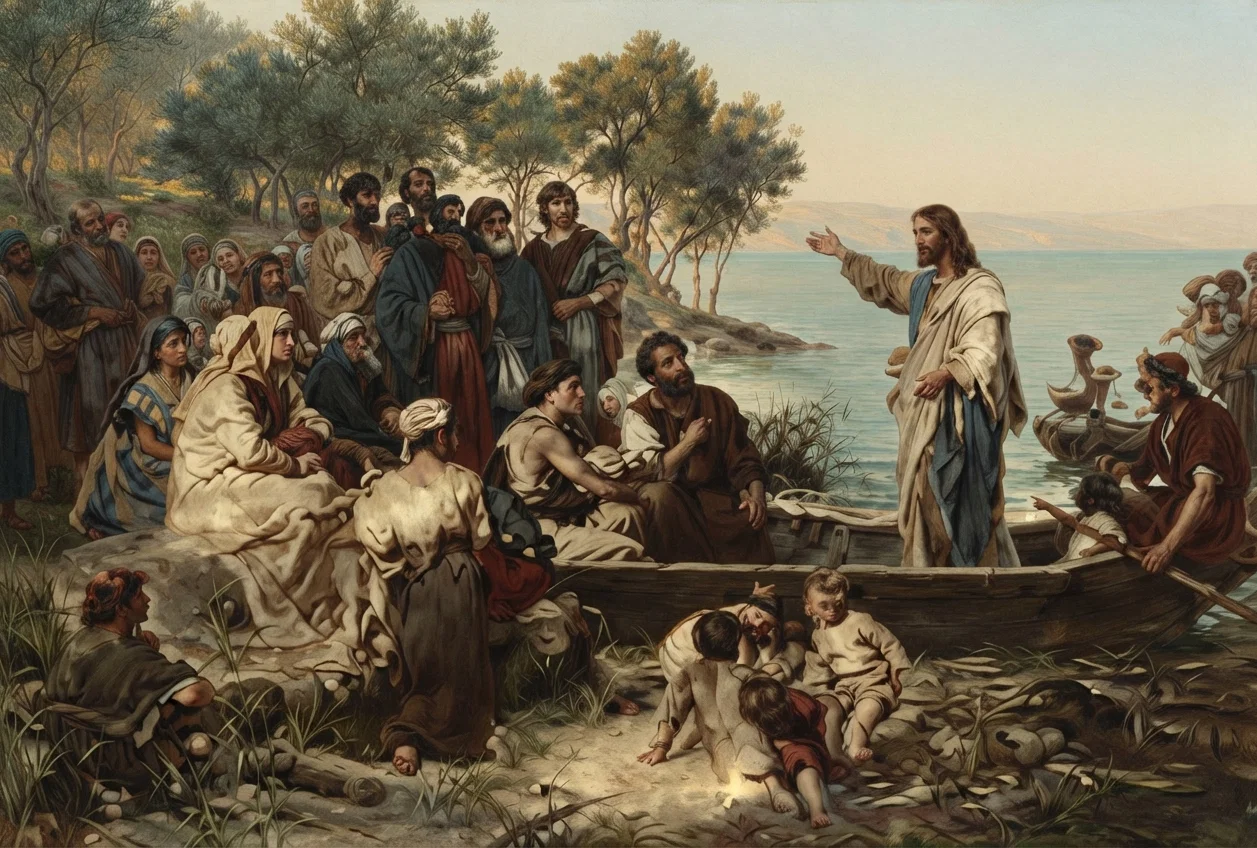
AFTER the woman of Capernaum had been healed by the touch of faith, Jesus desired her to acknowledge the blessing she had received. The gifts which the gospel offers, are not to be secured by stealth or enjoyed in secret. "Ye are My witnesses, saith the Lord, That I am God." Isa. 43: 12.
Our confession of His faithfulness is Heaven's chosen agency for revealing Christ to the world. We are to acknowledge His grace as made known through the holy men of old; but that which will be most effectual is the testimony of our own experience. We are witnesses for God as we reveal in ourselves the working of a power that is divine.
Every individual has a life distinct from all others, and an experience differing essentially from theirs. God desires that our praise shall ascend to Him, marked with our own individuality. These precious acknowledgments to the praise of the glory of His grace, when supported by a Christ-like life, have an irresistible power, that works for the salvation of souls.

KEEP GOD'S GIFTS FRESH IN MIND

It is for our own benefit to keep every gift of God fresh in our memory. By this means faith is strengthened to claim and to receive more and more. There is greater encouragement for us in the least blessing we ourselves receive from God than in all the accounts we can read of the faith and experience of others. The soul that responds to the grace of God shall be like a watered garden. His health shall spring forth speedily; his light shall rise in obscurity, and the glory of the Lord shall be seen upon him.

TO BE GIVEN TO ALL

The gospel invitation is not to be narrowed down, and presented only to a select few, who, we suppose, will do us honor if they accept it. The message is to be given to all. When God blesses His children, it is not alone for their own sake, but for the world's sake. As He bestows His gifts on us, it is that we may multiply them by imparting.
The Samaritan woman who talked with Jesus at Jacob's well had no sooner found the Saviour than she brought others to Him. She proved herself a more effective missionary than His own disciples. The disciples saw nothing in Samaria to indicate that it was an encouraging field. Their thoughts were fixed upon a great work to be done in the future. They did not see that right around them was a harvest to be gathered. But through the woman whom they despised a whole cityful were brought to hear Jesus. She carried the light at once to her countrymen.

A PRACTICAL FAITH IN CHRIST

This woman represents the working of a practical faith in Christ. Every true disciple is born into the kingdom of God as a missionary. No sooner does he come to know the Saviour than he desires to make others acquainted with Him. The saving and sanctifying truth can not be shut up in his heart. He who drinks of the living water becomes a fountain of life. The receiver becomes a giver. The grace of Christ in the soul is like a spring in the desert, welling up to refresh all, and making those who are ready to perish eager to drink of the water of life. In doing this work a greater blessing is received than if we work merely to benefit ourselves. It is in working to spread the good news of salvation that we are brought near to the Saviour.

WILL MAKE THEM A BLESSING

Of those who receive His grace the Lord says: "I will make them and the places round about My hill a blessing; and I will cause the shower to come down in its season; there shall be showers of blessing." Eze. 34: 26, R. V.
"On the last day, the great day of the feast, Jesus stood and cried, saying, If any man thirst, let him come unto Me and drink. He that believeth on Me, as the scripture hath said, from within him shall flow rivers of living water." John 7: 37, 38, A. R. V.

RECEIVING TO IMPART

Those who receive are to impart to others. From every direction are coming calls for help. God calls upon men to minister gladly to their fellow men. Immortal crowns are to be won; the kingdom of heaven is to be gained; the world, perishing in ignorance, is to be enlightened.
"Say not ye, There are yet four months, and then cometh harvest? behold, I say unto you, Lift up your eyes, and look on the fields; for they are white already to harvest. And he that reapeth receiveth wages, and gathereth fruit unto life eternal." John 4: 35, 36.

Notes of Praise and Thanksgiving

"What shall I render unto the Lord For all His benefits toward me? I will take the cup of salvation, And call upon the name of the Lord. I will pay my vows unto the Lord, Yea, in the presence of all His people." Ps. 116: 12-14, R. V.
"I will sing unto the Lord as long as I live: I will sing praise to my God while I have my being. My meditation of Him shall be sweet: I will be glad in the Lord." Ps. 104: 33, 34.
"Who can utter the mighty acts of the Lord? Who can show forth all His praise?" Ps. 106: 2.
"Call upon His name; Make known among the peoples His doings. Sing unto Him, sing praises unto Him." Ps. 105: 1, 2, A. R. V.
"Talk ye of all His wondrous works. Glory ye in His holy name: Let the heart of them rejoice that seek the Lord." Ps. 105: 2, 3.
"Because Thy loving-kindness is better than life, My lips shall praise Thee. . . . My soul shall be satisfied as with marrow and fatness; And my mouth shall praise Thee with joyful lips; When I remember Thee upon my bed, And meditate on Thee in the night-watches. For Thou hast been my help, And in the shadow of Thy wings will I rejoice." Ps. 63: 3, 5-7, A. R. V.
"In God have I put my trust, I will not be afraid; What can man do unto me? Thy vows are upon me, O God: I will render thank-offerings unto Thee. For Thou hast delivered my soul from death: Hast Thou not delivered my feet from falling, That I may walk before God in the light of the living?" Ps. 56: 11-13, A. R. V.
"O Thou Holy One of Israel, My lips shall greatly rejoice when I sing unto Thee; And my soul, which Thou hast redeemed. My tongue also shall talk of Thy righteousness all the day long." "Thou art my trust from my youth. . . . My praise shall be continually of Thee." Ps. 71: 22-24, 5, 6.
"I will make Thy name to be remembered; . . . Therefore shall the people praise Thee." Ps. 45: 17.

Ye Are My Witnesses

"Ye are My witnesses, saith the Lord, That I am God." Isa. 43:12.
Continue reading: Doings at the Nation's Capital