Signs of the Times, Vol. 41, No. 24.

Fulfilling Before Our Eyes

Signs of the Times

Jun 23, 1914

Pacific Press Publishing Association · Mountain View, California · Jun 23, 1914

Fulfilling Before Our Eyes

Definite Prophecies of Specific Things—This Generation the Favored One—Such Things Never Witnessed Before The Climax of All This Missionary Activity
By WILLIAM A. SPICER
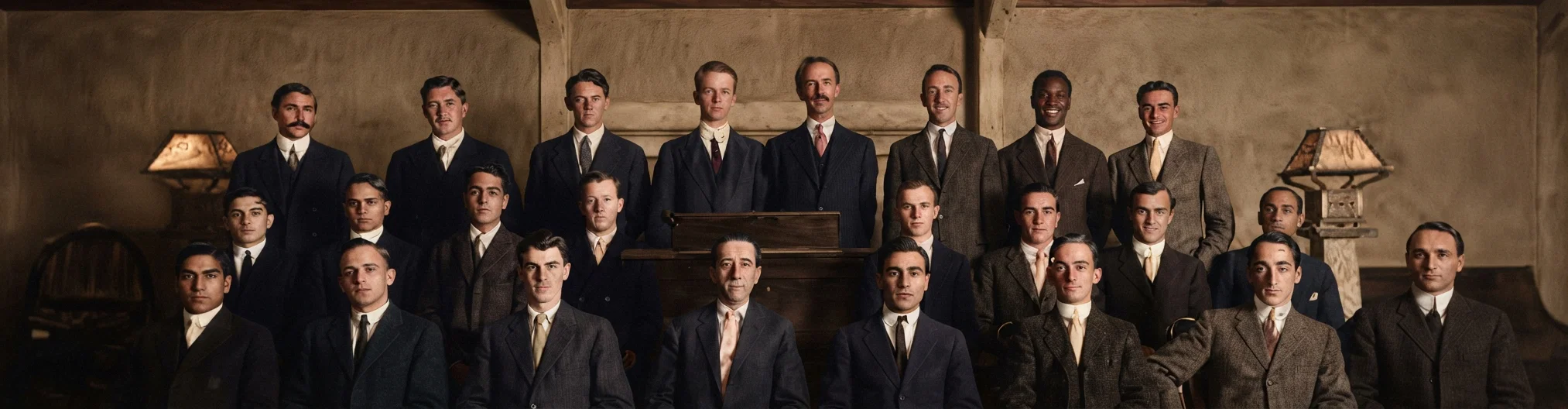
A COMPANY OF YOUNG MEN RECEIVING TRAINING IN PACIFIC UNION COLLEGE, PREPARATORY TO SERVICE AS MISSIONARIES IN ANY PART OF THE WORLD. HUNDREDS OF SUCH GROUPS MAY BE FOUND TO ILLUSTRATE THE GREAT MISSIONARY ACTIVITIES OF THIS TIME.
QUOTING an Old Testament prophet, the apostle Paul warned the people of his day to beware lest that come upon them which was spoken in the prophets, and the Lord's work be done before their eyes while yet the observers would in no wise believe even though a man declared it to them. Acts 13:40, 41.

THE THING PREDICTED

We to-day are seeing fulfilled before our eyes the things spoken of as signs of the coming of the end. In many of the prophecies, the last days were spoken of as a time when there would be a world-wide missionary movement.
The angel said to Daniel: "But thou, O Daniel, shut up the words, and seal the book, even to the time of the end: many shall run to and fro, and knowledge shall be increased." Dan. 12:4.
As the time of the end came, the light and knowledge of the truth of God were to be spread abroad through all the earth. Christ foretold this in His discourse concerning the events of the very last days: "And this gospel of the kingdom shall be preached in all the world for a witness unto all nations; and then shall the end come." Matt. 24:14.

THE MOVEMENT FORETOLD BY THE PROPHETS

In prophetic view, the seers of ancient times looked down through the ages; and just before the coming of the Lord, they beheld missionary enterprises embracing the whole earth. Century after century passed, and still the century of the prophecy was not reached. But when we come to this last century, what do we find?—We find exactly the movement described in the sure word of prophecy, just as given. Look for a moment at the achievements of the last hundred years of missionary enterprise.

MISSION MIRACLES OF A HUNDRED YEARS

We take the following facts put out by the publicity department of the North American Conference of Foreign Missions:
"A hundred years ago there were less than 100 missionaries in the field; to-day there are about 22,000.
"A century ago the Bible was translated into only 65 languages; within the century it has been translated into over 500 languages, and made accessible to more than 800,000,000 of the human race, with its mighty moral and educational uplift.
"A hundred years ago there were no medical missionaries, and more than two thirds of the world was without adequate medical knowledge; to-day there are several hundred medical missionaries treating annually over 3,000,000 patients.
"A century ago there was a little handful of mission schools; to-day there are more than 29,000 mission schools and colleges, educating a million and a half students and pupils in the great strategic centers of the Orient.
"A hundred years ago a few thousand dollars were given annually to foreign missions; to-day missionary contributions amount to about $25,000,000 annually, while about $5,000,000 is given by foreign converts.
"It took nearly a century to win the first million Protestant Christians; the second million were won within twelve years; it is taking less than six years to win the third million.
"There are to-day in the world nearly 4,000,000 Protestant Christian adherents on mission fields.
"Sixty years ago there was not a professing Protestant Christian in Japan, not one in Korea, less than fifty in the Chinese Empire, and a few thousands in India; to-day there is a Protestant community of 70,000 adherents in Japan, 200,000 in Korea, nearly half a million in China, and a million souls in India."

NOTHING LIKE IT BEFORE IN THE WORLD

And stronger and ever stronger this movement of missions is making its way through the whole earth. Truly it is the hand of God. It is the fulfilment of prophecy. The Lord is preparing the world to hear the message of Christ's soon coming. Nothing like

Fulfilled Before Our Eyes

(Continued from page 1)
this has ever been seen on earth before. The prophetic word has given assurance that while iniquity abounds and evil men wax worse and worse, yet in the last days God in His mercy will flood the earth with light and knowledge. "Many shall run to and fro," was the word of the angel to the prophet Daniel, "and knowledge shall be increased." That which God's prophets talked about so long ago, and which the saints of all the ages looked forward to, we see fulfilling before our eyes to-day. The end is at hand, and the Lord is verifying His word.

CALLED TO A DEFINITE STANDARD

And we must never forget that in connection with the predictions of this world-wide missionary movement, the prophecy of Revelation 14 shows that the movement is to close with the definite message of preparation to meet the coming Saviour. That definite message calls men to the standard of the commandments of God and the faith of Jesus, and it warns all against following the traditions of the papacy which have made void the law of God. Now that the Judgment hour is coming, and the final records are being made up in the courts of heaven, it is time for all men to turn to the living and the true God, and to make sure work for the kingdom.

The Federation of the Churches of America

A Brief Survey of the Movement — Advancing Inter-Denominationalism — Are there Any Dangers Threatened by Such a Federation? — Domination versus Disorganization By B. G. WILKINSON
“IT was during the epoch when there were sects and heresies that Christianity made the conquest of the world.”— The Hon. Camille Pelletan, French statesman.
The churches of North America have aroused to action. To arouse to action may be all right. All depends upon what the action is to be. A confederacy of churches is no new thing. There was a confederacy of churches in the early Christian era, patterning after the circles of organization adopted by the state.

TO BE LIKE BIG BUSINESS

The present confederacy of churches, as expressed by many of its advocates, is an attempt to do with religious organizations what big business has done in the trusts and in other combines. Many writers see in this new movement the great consummation of things, the bringing in of the “one far-off divine event toward which the whole creation moves.” As the Independent says, “It marks an epoch; it opens a new era.”
In December, 1908, in Philadelphia, the first council of the Federated Churches of Christ of the United States was held, to unite, as one speaker expressed it, “their faiths in a larger faith, and their loyalties in a larger loyalty.” There were present delegates from thirty-three Protestant denominations, representing a church-membership of about eighteen millions. They were there for united action; for as one speaker said, “Two united means ten times one; because the Bible says that one shall put a thousand to flight, and two, ten thousand.”

THE PRELIMINARY NEGOTIATIONS

This meeting in Philadelphia was the outcome of three years’ preliminary negotiations. In 1905 a conference was held in New York City, of the representatives of the churches in the United States, to devise a plan for inter-denominational federation, and to report the same to the several denominations. Time was required for the different denominations to act. Some could not respond except through an action of the general body in council assembled; and in some cases, as that of the Methodists, this general assembly took place only once in four years.

CATHOLIC AND GREEK CHURCHES INVITED

Both the Catholic and the Greek Church were invited to participate, but did not act. The attitude of the Catholic Church may be gathered from the reference to Cardinal Gibbons by the Rev. Dr. William T. Manning, rector of Trinity Church, New York, as having “expressed friendly interest in the subject, a desire to be kept informed of the progress of the movement, and a conviction that clear statements of position would show them to be nearer together than had been supposed, and that only good could come of the effort to promote the spirit in which such a conference should be undertaken.”
It was planned for the Federal Council to meet once in four years. In the meantime, the work is to be carried on by an executive committee, meeting yearly, and composed of one member for each of the denominations in the Federal Council, and one additional member for every half million communicants.
The first annual meeting of the executive committee was held in Louisville, Kentucky. Before it there appeared a deputation from the American Federation of Labor, asking that the first Sunday in September immediately preceding Labor Day be set apart as Labor Sunday. Thus the two great federations, one of labor and one of religion, or the organization of the people in the shops and the organization of the people in the churches, agreed together touching the recognition of Sunday.

WILL ALL FIND A COMMON CENTER?

Will the commercial combine of the trust and the labor combine of the union find a meeting ground in the religious combine of the federation? Both capitalists and labor men sit in the pews.
Thus the attitude of the Protestant denominations toward one another was friendly, so much so that the federation was formed. And it being once formed, the attitude of the Catholic Church to it was friendly, and to it also the attitude of organized labor was friendly. As far as the United States is concerned, there would be very few men found outside the pale of the three organizations just mentioned. Hence the action of the federation, representing eighteen million communicants within itself, and about forty million of the population of the United States, must be, or ought to be, powerful, and influential, to say the least, upon the two other organizations. Therefore as this new federation steps into the arena, it demands that all scan it closely, as if something had been done, and as if something more were going to be done.

THE FOUNDATION HAD BEEN LAID

Just a little more as to the past before we look into the future. The Federal Council of Churches did not spring into existence as if it were the first experiment, large or small, of the principle. It was the final and highest expression of that trend of thought which had already found expression in other inter-denominational federations. In fact, throughout all the Protestant churches, the spirit of the age seems to be to look to organizing into bodies more powerful because of greater numbers, in order to solve the problems and to meet the issues that the churches consider it their duty to solve and to meet.
Already there had been an advance of inter-denominationalism. Cases are reported where they had so combined that a congregation in one locality disbanded and united with that of another church, on condition that in another locality the congregation of the other denomination disband and unite with that of the denomination whose congregation had disbanded in the first locality. Thus two congregations took the place of four.

SECTARIAN BARRIERS CRUMBLING

The fall of sectarian barriers is seen in Canada, where the Methodists, the Presbyterians, and the Congregationalists took steps toward organic unity; in Australia, where the Methodists, the Anglicans, the Congregationalists, and the Baptists engaged in friendly negotiations; in Scotland, where two or three branches of the Presbyterians united; and in the United States, where the Presbyterians of the North and the Cumberland Presbyterians merged. New York already had a state federation, so had Rhode Island, while in Maine there had existed for some time an Inter-denominational Comity Commission.

ORGANIZATION VERSUS INDIVIDUALISM

So it is again the eternal question of organization versus individualism,—of that confederation which tends to paternalismand thus weakens the individuals, or of individualism so disunited that individual strength can not be combined for greater tasks, and thus the individual is weakened. It is the old question of state rights versus federal rights. And the question has now struck the Protestant churches. It long ago came to the Catholic churches, and resulted in that great organization known as the papacy.
Let us look at the question for a moment from both standpoints. First note the argument in favor of organization. There is a long steel rail lying alongside the railroad track. The construction crew intend to put that rail in its place in the track. One man approaches it with the boast that he can put it in place alone. He seizes it with both hands, and tugs away in an effort to lift it. Impossible. All exhausted, he goes to the green grass and throws himself down. Another man springs up. “I can do it,” he says, and he in turn lays hold of the rail, pulling and straining. But in vain. He too throws himself down exhausted. Then the foreman in charge of the crew says: “Come, boys, all hands together now! When I give the word, let all lift at once.” The signal is given, all hands lift at the same time, and soon the rail is in place. Thus the union of the strength of many has executed a larger task.

IS THERE LIMITATION?

Now the question arises, How far does this principle apply? Can we accept it as an absolute truth over against which there is no other principle as an offset? Is there any limitation to the range of its action? We think there is.

IF ONE MUST LOWER HIS STANDARD

Organization becomes objectionable when the first individual, in order to become united with the second, must lower his standard, or when the first organization must lower its standard to join hands with another organization. The offspring of such a union is usually lower than results produced by the two organizations working separately; for the one, in stepping down to the other, may have to endorse in the other some evil that is greater than that the two united seek to abolish. How could Christianity, for instance, endorse certain practises, as polygamy, in Mohammedanism, in order to secure the cooperation of the Moslems to drive intoxicating liquors from the world?
When the Protestant churches of Christ in North America are fully federated, they plan a world federation of the same. Then the next step is to secure, if possible, a federation into which Catholicism can come. Then what? Why not go on and create a federation into which Mohammedanism can come? Or will the divinity of Christ be the standard to be maintained, lower than which the waters of federation will not go? There must be a line somewhere.

ORGANIZATION MAY BECOME AN EVIL

In other words, there is a point where organization becomes an evil, because everything is reduced to a dead level, and the standard of the lowest is the standard of all. Moreover, the motive power of individual action is of far greater value than the demand for organization to control that action. One man’s head is worth more than the heads of a thousand cattle. Likewise the brains of one great thinker can do more good to this world than the low level of ten thousand ordinary lives. The atmosphere of liberty is conducive to the production of such a personality; the atmosphere of coercion can prevent it.

WHEN IT SEEKS TO DOMINATE

When organization runs into domination, the very principle which that organization exists to save, is never of so great a value as the principle it overthrows; for absence of organization is better than tyranny. Listen to the words of David Kinley, president of the American Economic Association:
“Man is so constituted that when he feels the evil of an existing system, he is likely to adopt measures of reform which will produce evils as great as those he is seeking to remedy. That danger exists now. We need to look very closely at the tendency toward the extension of the authority of the government into the details of our economic life. The principle of competition, the system of economic liberalism, has been too valuable to the progress of mankind to be given up altogether; for competition has been a developing force, even if it has failed somewhat as a controlling one. The motive power to action is of more importance in the long run than the regulation of action.”— Speech at Minneapolis, December 27, 1913.
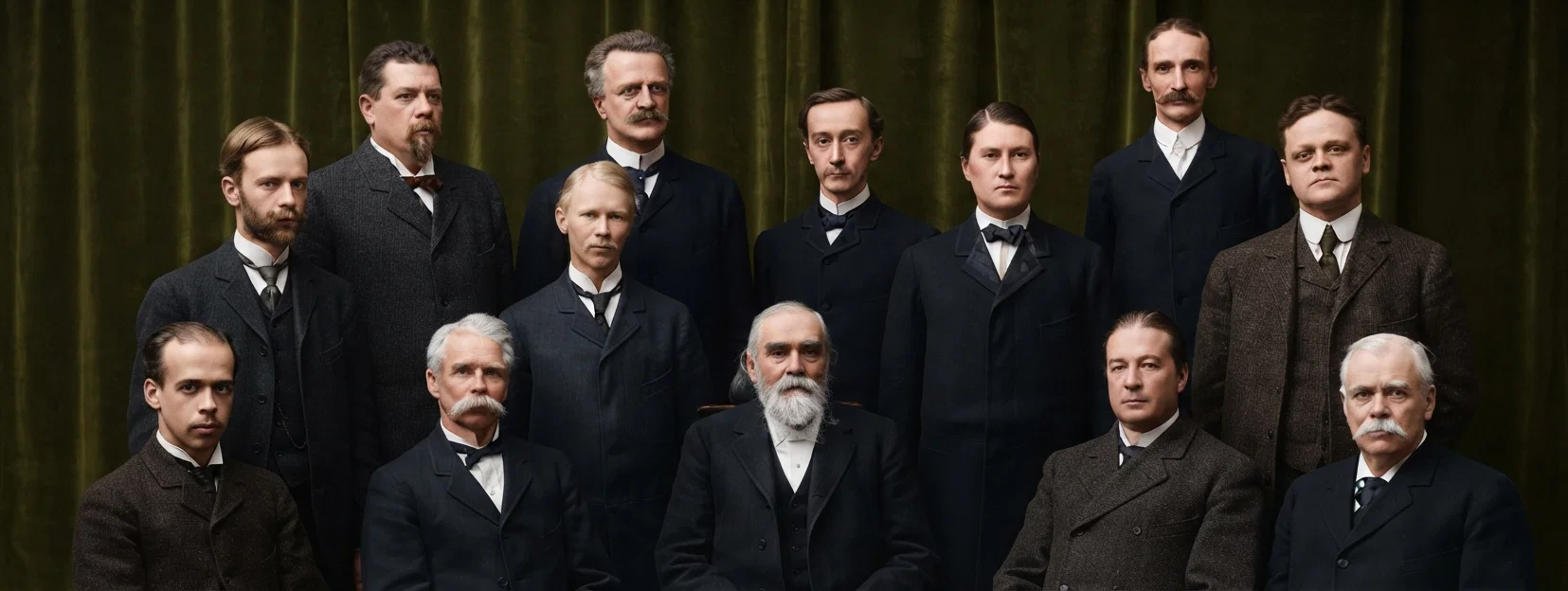
THE OFFICERS OF THE EXECUTIVE COMMITTEE OF THE FIRST CHURCH FEDERATION CONFERENCE, HELD IN CARNEGIE HALL, NEW YORK, NOVEMBER 15 TO NOVEMBER 21, 1905

The Newly Created Man

A Marvelous Transformation Is Wrought

By M. A. HOLLISTER
"CREATE in me a clean heart, O God; and renew a right spirit within me. Cast me not away from Thy presence; and take not Thy Holy Spirit from me. Restore unto me the joy of Thy salvation; and uphold me with Thy free Spirit. Then will I teach transgressors Thy ways; and sinners shall be converted unto Thee." Ps. 51: 10-13.
This prayer of David may well be the burden of every one of us; and whenever we will pray it from the heart, the Lord will hear and answer, as stated in Eze. 36: 25-27: "Then will I sprinkle clean water upon you, and ye shall be clean: from all your filthiness, and from all your idols, will I cleanse you. A new heart also will I give you, and a new spirit will I put within you: and I will take away the stony heart out of your flesh, and I will give you an heart of flesh. And I will put My Spirit within you, and cause you to walk in My statutes, and ye shall keep My judgments, and do them."
The effect of this answered prayer would be, that one would be in perfect harmony with all the will of God, because the Spirit of God would actuate the being, the carnal mind having given place to the mind of the Spirit, and God would be having His way entirely.
An illustration of this is seen in Saul when he was chosen by the Lord to be king over Israel. "The Spirit of the Lord will come upon thee, and thou . . . shall be turned into another man." 1 Sam. 10: 6. And verse 9 says, "It was so," for "God gave him another heart."
This is the change, then, that we all need,—"another heart," to be "changed into another man." Thus the Lord can cause us to walk in His statutes, to keep His judgments. When this change is brought about, the product of the heart will be the doing of God's will, and our life will show what spirit we are of.
Again we read, "Out of the abundance of the heart the mouth speaketh," and, "By their fruits ye shall know them." In Ps. 37: 30, 31 we read: "The mouth of the righteous speaketh wisdom, and his tongue talketh of judgment. The law of his God is in his heart; none of his steps shall slide."
If the fountain be pure, the stream is sure to be. Hence the stream from this kind of heart will be life-giving. Notice Ps. 51: 13, "Then will I teach transgressors Thy ways; and sinners shall be converted unto Thee." This is just the work the Lord desires every one of us to be doing.
When one attains to this exalted place, how shall he keep it? We are told in Ps. 16: 8, "I have set the Lord always before me: because He is at my right hand, I shall not be moved." And in Ps. 5: 8, "Lead me, O Lord, in Thy righteousness because of those who observe me [margin]; make Thy way straight before my face."
The enemies of the Lord do observe the righteous, and Satan is called "the accuser of the brethren." But when the new heart and spirit are ours, we shall be changed—created—into another man, doing the will of God, and giving no cause for reproach.
This is just the effect that will be produced upon every one who enters into that blessed relation with the Lord known as the "new covenant relation," when the law is written in their minds, and in their hearts.
When one surrenders completely to God, and makes the petition of David to the Lord, He will give him a new heart, a new spirit, the mind of Christ, the law written within.
Thus changed into another man, he speaks wisdom, talks judgment, teaches transgressors, converts sinners; and none of his steps slide, because the Lord is always before him, his way is made straight, and His law is in his heart.
He is "without fault before the throne of God." Rev. 14: 5.

Courage and Praise

TALK courage, and thy soul shall ope to sunshine O'erflowing all thy life with joyous light, And gloom and doubt dispel, and lurking shadows That ere enshrouded hope with dismal night.
Sing fervent praise to God. Thy heart shall lighten, Its weary burdens dropping at the cross. Thy spirit blessed some pilgrim sad shall brighten, And trials will bring gains where once was loss.
Pray in doxologies unto thy Maker, For blessings rich provided by His hand; And thy requests, ennobled by communion, Shall voice thy faith that He will understand.
Then like the bread cast forth upon the water, The hope and cheer inspired by thy soul, Returning, shall bring thee a benediction, And heaven shall their echoes blest enroll. Worthie Harris Holden.

Stepping-Stones to Higher Things

"EVERY mistake, every fault, every difficulty, conquered, becomes a stepping-stone to better and higher things."

When the Sparkle Died Out of the Dew

By L. D. SANTEE
I looked at the hills in the morning. Sweet valleys lay smiling between. Then I lifted my soul to the Blessed, Whose love in His mercies is seen. The sun brought a flush as of roses To the green earth, and heaven so blue; But a cloud hid the beautiful sunlight, And the sparkle died out of the dew.
I prayed in my heart to the Saviour, That His love might illumine my way, That the sunshine and joy of His presence Would brighten each wearisome day, That strength for each duty be given, That I to my Saviour prove true, And not like the change in the morning, When the sparkle died out of the dew.
The joy that to me has been given, In language can never be told; And my dream of the glory of heaven Is Christ in the gateway of gold; And I pray that no cloud may o'ershadow The faith that my heart holds as true, Like the darkening cloud in the morning, When the sparkle died out of the dew.

The Friend of Mothers

They Were Encouraged to Bring Their Children to Him — The Sick Among Them Were Healed — Disciples Admonished Not to Hinder the Children from Coming — He Has the Same Loving Interest in Mothers To-Day

By MRS. E. G. WHITE
As Jesus ministers in the streets of the cities, mothers with their sick and dying little ones in their arms press through the throng, seeking to come within reach of His notice.
Behold these mothers, pale, weary, almost despairing, yet determined and persevering. Bearing their burden of suffering, they seek the Saviour. As they are crowded back by the surging throng, Christ makes His way to them step by step, until He is close by their side. Hope springs up in their hearts. Their tears of gladness fall as they catch His attention, and look into the eyes expressing such pity and love.

"MASTER, THAT THOU WOULDEST HEAL MY CHILD"

Singling out one of the group, the Saviour invites her confidence, saying, "What shall I do for thee?" She sobs out her great want, "Master, that Thou wouldest heal my child." Christ takes the little one from her arms, and disease flees at His touch. The pallor of death is gone; the life-giving current flows through the veins; the muscles receive strength. Words of comfort and peace are spoken to the mother; and then another case, just as urgent, is presented. Again Christ exercises His life-giving power, and all give praise and honor to Him who doeth wonderful things.

A PROOF OF HIS GREATNESS IN THE SMALL THINGS

We dwell much on the greatness of Christ's life. We speak of the wonderful things that He accomplished, of the miracles that He wrought. But His attention to things accounted small is even higher proof of His greatness.
Among the Jews it was customary for children to be brought to some rabbi, that he might lay his hands upon them in blessing; but the disciples thought the Saviour's work too important to be interrupted in this way.
When the mothers came desiring Him to bless their little ones, the disciples looked on them with disfavor. They thought these children too young to be benefited by a visit to Jesus, and concluded that He would be displeased at their presence. But the Saviour understood the care and burden of the mothers who were seeking to train their children according to the word of God. He had heard their prayers. He Himself had drawn them into His presence.

HE HEARD THEIR REQUESTS WITH SYMPATHY

One mother with her child had left her home to find Jesus. On the way she told a neighbor her errand, and the neighbor wished to have Jesus bless her children. Thus several mothers came here together, with their little ones. Some of the children had passed beyond the years of infancy to childhood and youth.
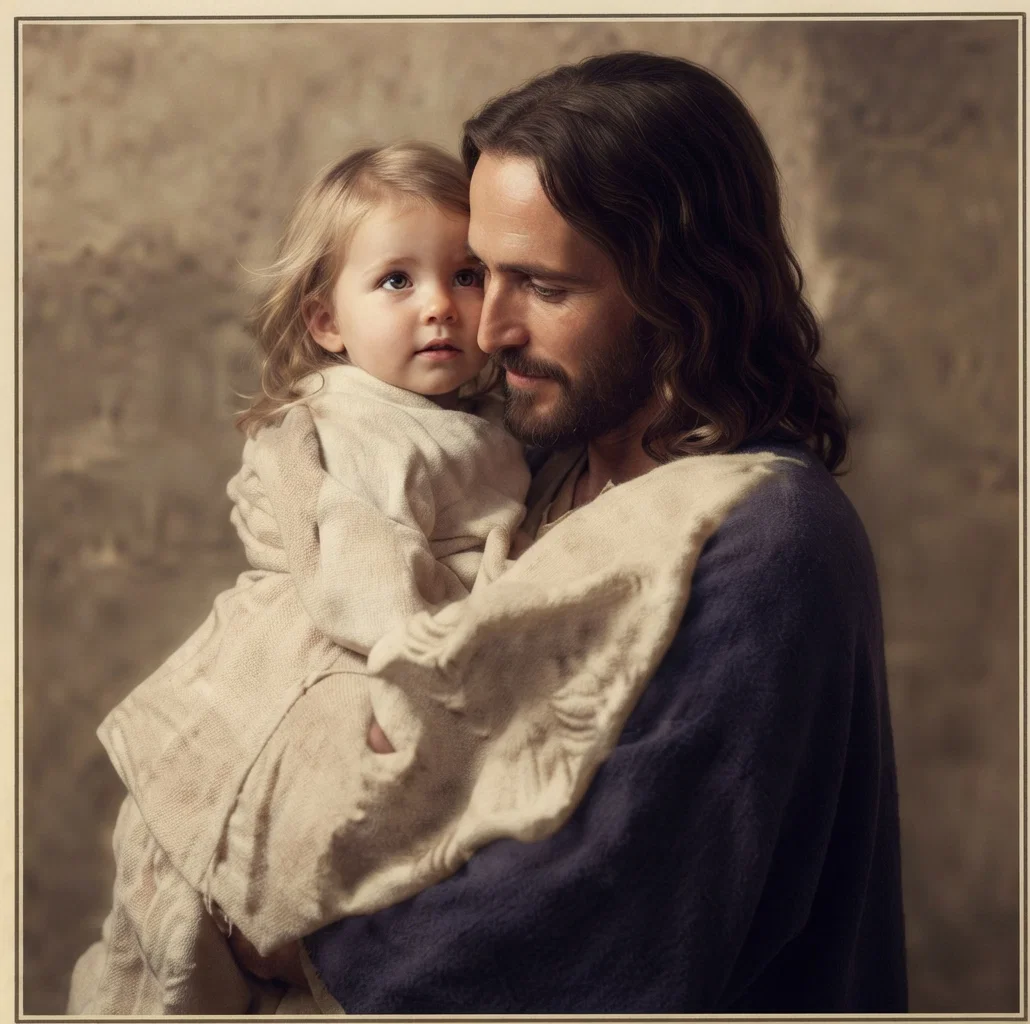
When the mothers made known their desire, Jesus heard with sympathy the timid, tearful request. But He waited to see how the disciples would treat them. When He saw the disciples reproving the mothers and sending them away, thinking to do Him a favor, He showed them their error, saying, "Suffer the little children to come unto Me, and forbid them not: for of such is the kingdom of God." Mark 10:14. He took the children in His arms, He laid His hands upon them, and gave them the blessings for which they came.
CHRIST TAKES THE LITTLE ONE FROM HER ARMS
The mothers were comforted. They returned to their homes strengthened and blessed by the words of Christ. They were encouraged to take up their burden with new cheerfulness, and to work hopefully for their children.

RESULTS IN AFTER-YEARS

Could the after-life of that little group be opened before us, we should see the mothers recalling to the minds of their children the scene of that day, and repeating to them the loving words of the Saviour. We should see, too, how often, in after-years, the memory of these words kept the children from straying from the path cast up for the ransomed of the Lord.
Christ is to-day the same compassionate Saviour as when He walked among men. He is as verily the helper of mothers now as when He gathered the little ones to His arms in Judea. The children of our hearths are as much the purchase of His blood as were the children of long ago.

WILL HELP THE MOTHERS TO-DAY

Jesus knows the burden of every mother's heart. He who had a mother that struggled with poverty and privation, sympathizes with every mother in her labors. He who made a long journey in order to relieve the anxious heart of a Canaanite woman will do as much for the mothers of to-day. He who gave back to the widow of Nain her only son, and in His agony upon the cross remembered His own mother, is touched to-day by themother's sorrow. In every grief and every need, He will comfort and help.
Let mothers come to Jesus with their perplexities. They will find grace sufficient to aid them in the care of their children. The gates are open for every mother who would lay her burdens at the Saviour's feet. He who said, "Suffer the little children to come unto Me, and forbid them not," still invites mothers to bring their little ones to be blessed by Him.

HE SIMPLIFIED HIS LESSONS

In the children who were brought in contact with Him, Jesus saw the men and women who should be heirs of His grace and subjects of His kingdom, and some of whom would become martyrs for His sake. He knew that these children would listen to Him and accept Him as their Redeemer far more readily than would grown-up people, many of whom were the worldly-wise and hard-hearted. In teaching, He came down to their level. He, the Majesty of heaven, answered their questions and simplified His important lessons to meet their childish understanding. He planted in their minds the seeds of truth, which in after-years would spring up and bear fruit unto eternal life.
When Jesus told the disciples not to forbid the children to come to Him, He was speaking to His followers in all ages,—to officers of the church, ministers, helpers, and all Christians. Jesus is drawing the children, and He bids us, "Suffer them to come"; as if He would say, They will come, if you do not hinder them.

DO NOT REPEL THE CHILDREN

Let not your unchristlike character misrepresent Jesus. Do not keep the little ones away from Him by your coldness and harshness. Never give them cause to feel that heaven would not be a pleasant place to them if you were there. Do not speak of religion as something that children can not understand, or act as if they were not expected to accept Christ in childhood. Do not give them the false impression that the religion of Christ is a religion of gloom, and that in coming to the Saviour they must give up all that makes life joyful.
As the Holy Spirit moves upon the hearts of the children, cooperate with His work. Teach them that the Saviour is calling them, that nothing can afford Him greater joy than for them to give themselves to Him in the bloom and freshness of their years.

DRAWN TO THE UNATTRACTIVE TOO

The Saviour regards with infinite tenderness the souls whom He has purchased with His blood. They are the claim of His love. He looks upon them with unutterable longing. His heart is drawn out, not only to the best-trained and most attractive children, but to those who by inheritance and through neglect have objectionable traits of character. Many parents do not understand how much they are responsible for these traits in their children. They have not the tenderness and wisdom to deal with the erring ones whom they have made what they are. But Jesus looks upon these children with pity. He traces from cause to effect.
The Christian worker may be Christ's agent in drawing these faulty and erring ones to the Saviour. By wisdom and tact he may bind them to his heart, he may give courage and hope, and through the grace of Christ may see them transformed in character, so that of them it may be said, "Of such is the kingdom of God."
Continue reading: The Relation of Church and State