Your ShelfYour Projects

Signs of the Times, Vol. 23, No. 27.

Editorial

Signs of the Times

Jul 15, 1897

Pacific Press Publishing Company · Oakland, California · Jul 15, 1897

Editorial
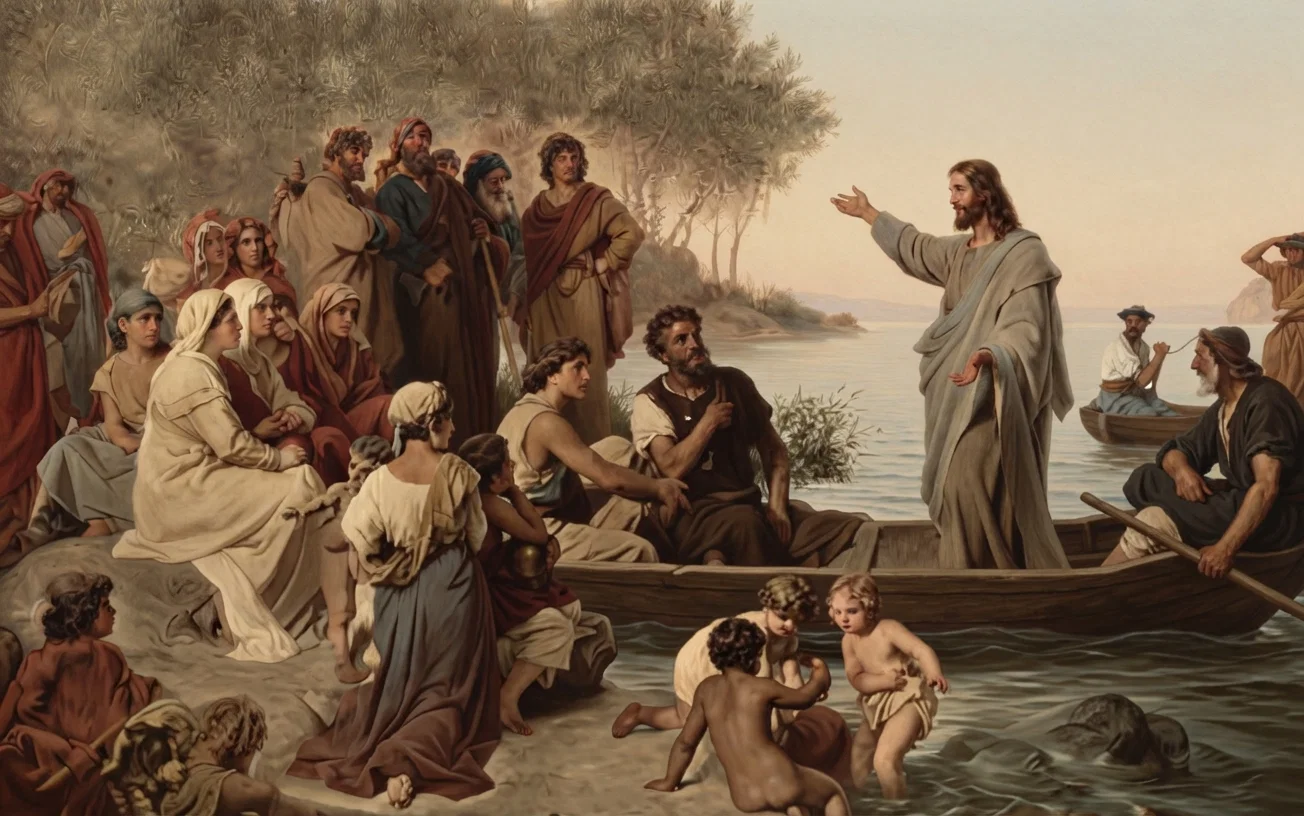
Christ as Teacher.—"And many of the people believed on him, and said, When Christ cometh, will he do more miracles than these which this man hath done? The Pharisees heard that the people murmured such things concerning him; and the Pharisees and the chief priests sent officers to take him." John 7:31, 32.
"Never man spake like this man." "He taught them as one having authority." "And they were astonished at His teaching; for His word was with power."
The trouble with the Pharisees and the chief priests was that their character and teaching suffered by comparison with that of Jesus. "Never man spake like this man," was the testimony of the officers who were sent to seize him. "He taught them as one having authority, and not as the scribes." The people listened to him more readily than to them, and this aroused their jealousy. And the people knew that the priests sought his life.
Yet the priests and rulers might have retained the confidence of the people, even in the presence of Jesus, if they had only been willing to learn of him, and accept his Spirit and the wisdom that filled him. For that, however, they were too proud, and so they took away the key of knowledge; they entered not in themselves, and those that would enter in, they hindered by every means in their power. Luke 11:52.
There was another reason why the wrath of the leaders of the Jews was aroused against Jesus. It was that the people who heard his living words of truth, not only lost relish for the old traditions that the elders retailed, but they actually came to know more than the leaders themselves. "If any man willeth to do his will, he shall know of the doctrine." The rulers were not willing to do, and therefore they did not know; while the poor people who desired to do God's will knew the truth. David said, "I understand more than the aged, because I have kept thy precepts." Ps. 119:100.
It is the earnest desire of every true teacher that the people shall learn, and the more they learn, the better he is pleased. If in time they surpass him in knowledge, then he will be but the more pleased. Even that is a testimony to the value of his teaching. This will often be the case when one leads his hearers to the Word. If he does not limit it by his own construction, but opens it, and allows the people to see for themselves, it will often be that souls will see more than he does. He who is not willing that this should happen, seeks his own glory, and not that of God; he preaches himself, and not the Word. E. J. W.

GOD'S PURPOSE OF THE AGES.

The One Thing of Worth.

As RESPECTS man there is but one thing of worth in God's sight, and that is character.
The mere image, the contour, the form, the complexion, the mere fact that there are so many pounds of flesh and blood, of oxygen, nitrogen, carbon, phosphorus, is of but little account in the estimation of the Judge of all; for what God prizes above all things is the upright and holy character; "for the righteous Lord loveth righteousness; his countenance doth behold the upright." Ps. 11:7. To Christ he said, "Thou lovest righteousness, and hatest wickedness; therefore God, thy God, hath anointed thee with the oil of gladness above thy fellows." Ps. 45:7. "The Lord loveth the righteous." Ps. 146:8.But does not God love the sinner?—Yes, but not because of his sin. He does not love him as a sinner, but for what he may become through grace despite his sin. In God's purpose

Sin Has No Being.

It is wholly a negative quantity, entirely outside of his plan. If sin only were involved, that would not for one moment hinder the accomplishment of God's purpose; but character, which is of infinite worth, is involved with the sin, and God in mercy waits to save the character.
Here is God's purpose respecting man: "Blessed be the God and Father of our Lord Jesus Christ, who hath blessed us with every spiritual blessing in the heavenly places in Christ; even as he chose us in him before the foundation of the world, that we should be holy and without blemish before him; in love having foreordained us unto adoption as sons through Jesus Christ unto himself, according to the good-pleasure of his will." Eph. 1:3-5, R. V. This is God's purpose concerning man, that he "should be holy and without blemish before him in love." This is the character he prizes, not alone in man, but in all his creatures; for it is his further pleasure, "in the dispensation of the fulness of times" to "gather together in one all things in Christ, both which are in heaven, and which are on earth; even in him." Verse 10. All, therefore, must have the same character, or division, not unity (oneness), will exist. This is accomplished by God's power. "For we [all who come into his purpose] are his workmanship, created in Christ Jesus for good works, which God afore prepared that we should walk in them." Eph. 2:10, R. V. "For whom he foreknew, he also foreordained to be conformed to the image of his Son." Rom. 8:29, R. V.

Written before Him.

These are the characters which existed in God's plan and purpose even in the beginning, holy and without blame, loving righteousness, after the image of his Son. These are worthy to exist, characters of life, each having a conscious individuality, expressing in an individual way some one or more of the glorious attributes of the Son of God; and the names of these characters were "written in the book of life from the foundation of the world." Rev. 17:8; 13:8.
Those characters God offers to every soul. Those names are written for the children of earth. To every responsible soul who lives upon earth, God offers the name, the life, the crown. It is for man to choose. God will do the rest.

"PROVE ALL THINGS."

"PROVE all things; hold fast that which is good." 1 Thess. 5:21. A very reasonable exhortation this, and one that should commend itself to everybody's good sense; yet few heed it, and many of those who profess to regard it misapply it.
How are we to prove all things? By what standard shall we test them? Here is where so many fail. Most people will use their own feelings and impulses as the standard. Their natural likes and dislikes determine what they shall hold fast and what they will reject. What they think to be good, they will follow; but since human judgment is naturally controlled or at least biased by inclination and desire, it is an unsafe guide. "There is a way that seemeth right unto a man; but the end thereof are the ways of death." Prov. 16:25.
For this reason alone, if for no other, it should be apparent to all that we are not to prove all things by sampling them. A thing may taste good, and yet contain a deadly poison. He who makes it his practise to eat everything he sees, in order to find out if it is good to eat, may have his probation cut short. It is far better to apply well-known tests for poisons, and then to eat only that which is proved to be good.
So in the mental and spiritual world. A man is not obliged to dabble in every theory in order to prove it. He who thinks that he must prove every form of teaching by trying its effects on himself will fare worse than the one who tries physical poisons on himself. The system can not stand it. His nature would soon become so corrupted that he would be unable to distinguish the good, even if he got hold of it. But he would never find the good; for the forms of error are infinite, and he who sets himself to the task of investigating all error, so as to know how to avoid it, will never finish. The only thing that he will prove will be his own folly.
Just as there are tests for physical poisons, which can be applied without subjecting ourselves to the influence of those poisons, so we have an infallible test of truth and error. "To the law and to the testimony; if they speak not according to this Word, it is because there is no light in them." Isa. 8:20. The Word of God is truth, and whatever is not in harmony with that is of course error. If we become thoroughly familiar with the Word, error will be revealed on its first approach, and we need have nothing whatever to do with it. The Word of the Lord is his voice, and all that is necessary is for us to know that; for we do not need to talk with a stranger hours or days in order to find out if the voice is that of our most intimate friend.
Least of all must it be supposed that we are to prove the Word of God itself, to see whether or not we should hold to it, or to how much we should hold fast. No; that is the standard that is already proved. "The words of the Lord are pure words; as silver tried in a furnace of earth, purified seven times." Ps. 12:6. "Every word of God is pure." Prov. 30:5. The Word itself is good; hold it fast, and prove all things by it, holding only that which the Word declares to be good. E. J. W.

THEY SEE IT IN ROME.

Why Not in Themselves?

THE Christian Statesman of May 15, organ of the National Reform régime, has an article entitled "When Does Church Authority Become the Despotism of Romanism?" In that article, in speaking of "Romanism's attempt to escape from the inherent difficulty of the free government of free moral agents," the editor says:—
It is evident that this attempt leads directly to the denial of the completeness of the revelation of God's will as given in the Scriptures, for every infallible interpretation of moral law by papal authority must become a part of the revelation of the divine will. It makes the inspiration of the Word of God to count for nothing, for every irreformable papal definition must be as truly inspired as any part of the written Word. It strips every individual member of the church of the right of an orderly appeal to the Word of God—a right all the more strenuously to be maintained in the gospel dispensation since it was recognized as belonging to all while yet the canon of infallible Scripture was incomplete: "To the law and to the testimony; if they speak not according to this word, it is because there is no light in them." Isa. 8:20. Romanism denies this right of appeal and steps in between the divine law and the rational subjects of that law, and cuts off direct relations between them and the divine Lawgiver himself. This is the point at which church authority passes the limits of its proper exercise and becomes the despotism that finds its fullest development in the formulated dogma of infallibility.
And yet the thing charged against Romanism is just what the Christian Statesman is laboring for. The efforts may be put forth in different ways, but the result is the same. The theory of Romanism is that the "church" is infallible, and therefore all outside of her pale are in error, and that those who persistently remain in error, notwithstanding her efforts to win them, should be adjudged as heretics, and be turned over to the civil power to be punished, because such wilful heretics are enemies to the State. In doing this she is acting in God's place, and of course her decision is a part of the revelation of the divine will.
National Reformers do not claim infallibility; nevertheless, they interpret the divine will; they ask the State to become a "Christian State" by enacting into organic and statute law their interpretation of the divine will; and then the State, standing in the place of God, should proceed to execute against all those who will not submit to such legalized interpretation the sentence written,—fine, imprisonment, confiscation of goods, and death,—for the last penalty is involved in the first. Such legalized interpretation "makes the inspiration of the Word of God to count for nothing." "It strips every individual member of the church of an orderly appeal to the Word of God." This legalized interpretation "steps in between the divine law and the rational subjects of that law, and cuts off direct relations between them and the divine Lawgiver."
Does the reader ask for an instance of this?—It is found in the National Reform interpretation of the Fourth Commandment. God therein declares that "the seventh day is the Sabbath of the Lord thy God," but National Reformers say, "Nay, but that means the first day, and the Christian State should enforce that day as the Sabbath." Now if this does not as truly come in between man and God as Romanism does, we do not know where a parallel to Romanism can be found outside of the Roman Catholic Church. But the Statesman condemns one; will it condemn the other? If Romanism is to be condemned because it adds to the revelation of the divine will mere human interpretations as infallible and essential, is not National Reformism—tho it be called Protestant—to be condemned for adding to the revelation of the divine will its own interpretations enforced by a fiction called the "Christian State"? We wish our National Reform friends would show us the difference in the results, and wherein either is Christian.

THE OBJECT OF CHRIST'S SACRIFICE.

CHRIST was sent to represent God in humanity. When he came to our world, his divinity was clothed with humanity, that humanity might touch humanity, and divinity lay hold of the throne of divinity. Thus moral power was brought to man. When God's Word is understood by us, we shall better understand the work and mission of Christ, and shall be able to trace out his working in behalf of humanity. For our sakes Christ became poor, that we through his poverty might be made rich. He descended in humiliation from depth to depth in our behalf until he reached the cross. He could go no farther in self-denial and self-sacrifice. It was impossible for divine condescension to reach a lower depth. This wonderful sacrifice moved all heaven, and can we look upon it without our hearts breaking at the sight?
Christ came to communicate the life of God to humanity. He declared, "I live by the Father," my life and his being one. "For as the Father hath life in himself; so hath he given to the Son to have life in himself." "Whoso eateth my flesh, and drinketh my blood, hath eternal life; and I will raise him up at the last day. For my flesh is meat indeed, and my blood is drink indeed. He that eateth my flesh, and drinketh my blood, dwelleth in me, and I in him. As the living Father hath sent me, and I live by the Father; so he that eateth me, even he shall live by me."
These words offended many of the disciples. Because of the earthliness of their minds, his words were insufferable to them, and they misinterpreted their meaning. "This," they said, "is an hard saying; who can hear it?" Who can consent to any such talk? But Christ does not soften down his symbolical representation. All who desired could trace out the truths concerning his person and office. "Doth this offend you?" he asks. "What and if ye shall see the Son of man ascend up where he was before? It is the Spirit that quickeneth; the flesh profiteth nothing; the words that I speak unto you, they are spirit, and they are life." In giving his flesh and his blood for the life of the world, Christ gives eternal life to all who will receive it in faith. No human being can be nourished by the food which another eats. Each must eat for himself. And so it is that in eating the words of Christ, each must receive for himself. Thus we eat the flesh and drink the blood of the Son of God. In obedience to his Word, we become partakers of the divine nature in the same way as our bodies are built up from the food we eat. Those who eat the flesh and drink the blood of the Son of God become one in spiritual life with Christ.
Christ will receive all who come unto him by faith. Yet thousands are perishing in their sins, heedless and reckless in their disobedience of God's law. And many in their blindness become offended, because they are meeting a false standard. It is the loving and obedient heart that will come unto Christ; and his promise is, "Him that cometh to me I will in no-wise cast out."
Altho the sacramental service is not mentioned here, yet it is embodied in the figures presented. As the believer celebrates the ordinance in spirit and in truth that keeps before the mind the crucifixion of the Lord, he is eating the flesh and drinking the blood of the Son of God. Through faith these representations of Christ can be clearly understood. The Holy Spirit will prepare the mind and quicken the perceptive faculties to grasp the grand truths conveyed in them.
"From that time many of his disciples went back, and walked no more with him." These men had joined themselves to Christ as learners. But their carnal mind interpreted literally the figure Christ presented. They were gross in their understanding. This we shall see in every age of the world. As long as time shall last, the wheat will be found among the tares, and the tares among the wheat. But "by their fruit," Christ declares, "ye shall know them."
The lesson that we are to learn is that whenever the counsel that God chooses to send is neglected, it will certainly place man in a position of distrust and suspicion. If he does not thoroughly reform the defects in his character, if he does not die to self, he will separate farther and farther from righteousness and truth.
We need not be surprised if we pass through a similar experience. Men who do not make Christ their all and in all, but have a superficial faith, will not understand the words of Christ. Many unite themselves with Christ expecting to secure some temporal advantage, but the Gospel requirements offend them. Not having united with Christ to do the will of God, they have no spiritual life. Had they received his word, they would have had understanding. Said Christ: "If any man will do his will, he shall know of the doctrine, whether it be of God, or whether I speak of myself. He that speaketh of himself seeketh his own glory; but he that seeketh his glory that sent him, the same is true, and no unrighteousness is in him."
But not all of those who had heard and believed in Christ were to turn away from him. To his disciples Jesus said, "Will ye also go away?" Simon Peter answered: "Lord, to whom shall we go? thou hast the words of eternal life. And we believe and are sure that thou art that Christ, the Son of the living God. Jesus answered them, Have not I chosen you twelve, and one of you is a devil? He spake of Judas Iscariot the son of Simon; for he it was that should betray him, being one of the twelve."
The desire of the disciples was to be with Christ. "To whom," said they, "shall we go?" Shall we go back to seek counsel of the formalist? We can not understand why so many go away. The thought arose in their minds that Christ had made a mistake in speaking words that would offend. These disaffected disciples, they thought, might have been held if Christ had not spoken so decidedly in regard to partaking of his flesh and blood. "But," said they, "shall we leave the great Teacher? The scribes and Pharisees have dealt most unfairly with Christ. Shall we teach the tradition of the elders? Shall we take sides with them in lifeless formalism, in teaching for doctrine the commandments of men?"
Christ yearned over his disciples. He longed to have them come into sacred relationship with himself, and understand him. To believe in Christ is something more than a mere sentiment. It is a living faith in a personal Saviour, who can and will ransom from sin. The Saviour foresaw that in the hour of temptation every one of his beloved disciples would be severely tested, and he told them that his words would be understood after his crucifixion, his resurrection, and his ascension. "The Holy Ghost," he said, will "bring all things to your remembrance, whatsoever I have said unto you." And he comforted them with these words: "Let not your heart be troubled; ye believe in God, believe also in me. In my Father's house are many mansions; if it were not so, I would have told you. I go to prepare a place for you. And if I go and prepare a place for you, I will come again, and receive you unto myself; that where I am, there ye may be also."
This assurance of our Saviour should be sufficient to teach us the importance of living the life of Christ in this world, that we may lay hold of the future immortal life. We should put every faculty of mind and heart to diligent effort proportionate to the value of the reward presented, even everlasting life. Our service for God is to decide our eternal destiny."He that spared not his own Son, but delivered him up for us all, how shall he not with him also freely give us all things?" And is it not wholly appropriate that the same question should come to us, when so great love has been expressed for us in the gift of Christ as our ransom,—How shall we not freely give him all things? When such love has been expressed in our behalf, shall our love and gratitude be only as a ripple on the surface?
Of every Christian the Lord requires growth in efficiency and in capability in every sense. He has freely given even his own blood and suffering to secure our obedience. Do we strive to keep a vital connection with God, so that we shall realize our obligation? Do we feel that all we have is a loan from Jesus? It is not our own. We are stewards of his grace, placed in charge of his goods. Our talents must be used, not for self-serving, but in devoted, whole-hearted service for God. And it is only those who receive his Word, his life, who can do him service from pure and loving hearts.
MRS. E. G. WHITE.

HIS WORK.

FROM out that darksome wilderness With its temptations sore, Where Satan armed his angry hosts And hurled his bolts of war— From 'neath its somber covering, Its battlements unseen, There walked with slow and fainting steps The lowly Nazarene.
He fought with fallen angels there This world's redemption strife— Fought for a boon but few would crave, The yielding of His life. Twas not the martyr's name He sought, Nor glory nor renown: He fought to die that we might live To wear the victor's crown.
The earth reeled in her drunkenness; Vain did the wretched cry; The fallen groveled where they lay; The priesthood passed them by. The withered hand was withered still; The leper was unclean; The cripple knew no healing touch From pitying Nazarene.
But now the wilderness was won. Fresh from His victory The famished Prince of Heaven sought His blessed Galilee. Along her rugged, wind-swept shores, With fisher dwellings spread, The Prince of Heaven first broke for man The true, life-giving bread.
How hallowed are thy tossing waves, Thou childish, fretful sea! How sacred are thy speaking shores, Thou hill-girt Galilee! Couldst thou His gracious words repeat, His healing power command, How would we seek thy foot-worn shore To worship on thy strand!
Thine every wave in speaking tones A story tells to me Of chains that fell from captive limbs By storm-tossed Galilee. No wonder that His fame was voiced Through all the region 'round: His words a healing lotion were For every bleeding wound.
His was the "Great Commission" from The Lord of light above, To preach the Gospel to the poor And show God's wondrous love; To heal the broken heart, and set The fearful captive free; To liberate the bruised and bound And make the sightless see.
That was the Master's mission, that The mission He bestows On all who would that fair land see Where life's pure river flows, Or who that glorious morn would greet Whose dawn e'en now appears, When Eden's flowers shall bloom again, Tho dead six thousand years. CHARLES M. SNOW.

THE EVERLASTING GOSPEL AND THE UNCHANGEABLE SABBATH.

The Sabbath and Righteousness by Faith.

THE Gospel “is the power of God unto salvation; . . . for therein is the righteousness of God revealed from faith to faith.” It is “not by works of righteousness which we have done,” but “we through the Spirit wait for the hope of righteousness by faith.” This has been the only hope of salvation in all the ages. It was by faith that Abel “obtained witness that he was righteous,” and thus all the saints of old “through faith . . . wrought righteousness.” The experience of the Christian is wholly of faith. He receives Christ by faith, through believing on his name (John 1:12), and as he has received him by faith so he walks (Col. 2:6), and Christ dwells in his heart by faith (Eph. 3:17), and the life which he now lives in the flesh, he lives by the faith of the Son of God (Gal. 2:20), and indeed without faith it is impossible to please God. But this life of faith is none the less a real life. It is a life of the most earnest activity, in which all the works are “wrought in God.” In Christ we see this experience in its perfection. He said, “I live by the Father” (John 6:57), “I do nothing of myself” (John 8:28), and, “The words that I speak unto you I speak not of myself; but the Father that dwelleth in me, he doeth the works” (John 14:10). This was righteousness by faith, a life in which self did not appear at all. Revealing ourselves in our lives, or living unto ourselves, is sin, but Christ has “died for all, that they which live should not henceforth live unto themselves, but unto him which died for them, and rose again.” 2 Cor. 5:15. Thus “he shall save his people from their sins.”

Entering into His Rest.

So it is evident that to be saved from sin is to be saved from our own works, and to cease from sin is to cease from our own works, that the works of God may be made manifest. We become wearied with our own works, and sin is a heavy burden, but the gracious invitation is spoken to us: “Come unto me, all ye that labor and are heavy laden, and I will give you rest. Take my yoke upon you, and learn of me; for I am meek and lowly in heart; and ye shall find rest unto your souls. For my yoke is easy, and my burden is light.” Matt. 11:28-30. But this is the very heart and soul of Sabbath-keeping, entering into his rest. This is made very clear by a consideration of this subject as presented in the fourth chapter of Hebrews. And first let it be noted that the chapter is dealing with the seventh day. “For he spake ina certain place of the seventh day on this wise, And God did rest the seventh day from all his works. And in this place again, If they shall enter into my rest.” Heb. 4:4, 5. Thus when the Lord speaks of his rest he is talking about the seventh day. This also appears in the fourth commandment, where it is said, “But the seventh day is the Sabbath [rest] of the Lord thy God.”

What Is His Rest?

Let us now read the scripture: “And to whom sware he that they should not enter into his rest, but to them that believed not? So we see that they could not enter in because of unbelief. Let us therefore fear, lest, a promise being left us of entering into his rest, any of you should seem to come short of it. For unto us was the Gospel preached, as well as unto them; but the word preached did not profit them, not being mixed with faith in them that heard it. For we which have believed do enter into rest, as he said, As I have sworn in my wrath, if they shall enter into my rest; altho the works were finished from the foundation of the world. For he spake in a certain place of the seventh day on this wise, And God did rest the seventh day from all his works. And in this place again, If they shall enter into my rest. Seeing therefore it remaineth that some must enter therein, and they to whom it was first preached entered not in because of unbelief; again, he limiteth a certain day, saying in David, To-day, after so long a time; as it is said, To-day if ye will hear his voice, harden not your hearts. For if Jesus [Joshua] had given them rest, then would he not afterward have spoken of another day. There remaineth therefore a rest to the people of God. For he that is entered into his [God's] rest, he also hath ceased [“rested,” R. V.] from his own works, as God did from his. Let us labor therefore to enter into that rest, lest any man fall after the same example of unbelief.” Heb. 3:18 to 4:11.
It is easy to see that God's rest here spoken of, which is found in the seventh day, is righteousness by faith. They could not enter in because of unbelief, they came short of it because of a lack of faith, and there is the same danger that for the same reason we “should seem to have come short of it” (R. V.). “All have sinned, and come short of the glory of God” (Rom. 3:23), and have come short because of sin, but “whatsoever is not of faith is sin” (Rom. 14:23), and so through this lack of faith we are not saved from our own sinful works, and therefore come short of entering into his rest. But “this is the work of God, that ye believe on him whom he hath sent” (John 6:29), and “we which have believed do enter into rest,” since we enter into a completed work which has already been wrought out for us in Jesus Christ, just as “the works were finished from the foundation of the world.” But this is righteousness by faith, “even the righteousness of God which is by faith of Jesus Christ unto all and upon all them that believe; for there is no difference.” Rom. 3:22.
In the scripture quoted above two things are said to remain: First, “That some must enter therein” (into his rest), and second, “A rest [“keeping of a Sabbath” margin] to the people of God.” A careful reading of the context will show that these two things are one and the same experience, for the entering into his rest remains because “they to whom it [margin, “the Gospel”] was first preached entered not in because of unbelief,” and therefore a keeping of a Sabbath remains. Furthermore, “The wicked are like the troubled sea, when it can not rest. . . . There is no peace, saith my God, to the wicked” (Isa. 57:20, 21), but “thou wilt ordain peace for us; for thou also hast wrought all our works in us” (Isa. 26:12); “for it is God which worketh in you both to will and to do of his good pleasure” (Phil. 2:13). All this is the experience of Sabbath-keeping, “for he that is entered into his rest, he also hath ceased [rested] from his own works, as God did from his.”

What the Keeping of the Sabbath Is.

The keeping of the seventh day Sabbath is therefore the very opposite of righteousness by works, but is rather righteousness by rest, entering into his rest by faith. Instead of being the bondage of the law it is the freedom of the Gospel, the good news of release from all our own works and their consequences through the acceptance of his work in our behalf.
It is perfectly evident that no one can enter into God's rest except where that rest is, and as the seventh day is the only day on which he has thus rested and therefore declared to be his rest (Sabbath), so we can not enter into his rest by keeping any other day than the seventh day, but the rest into which we thus enter in the real keeping of the Sabbath on the seventh day of the week enables us to rest in the Lord during all the other days of the week. The Sabbath is thus like the spring whence flows the water of life, but without the fountain the stream would be impossible. The inquiry would naturally arise in many minds whether those who have never heard of the seventh-day Sabbath have therefore been cut off from the blessing of rest in the Lord. It is sufficient to say that, while rest in the Lord would have been impossible for any one had it not been for the Lord's rest which he has inseparably connected with the seventh day of the week, yet God holds man responsible only for the light which he gives to him. But when new light shines upon us we are to walk in the light. No one who has never received the light of the Sabbath truth in days past, needs to throw away any of his past experience because this new truth is revealed to him, but should gladly accept the blessing in it for him, saying with the apostle Paul, “I obtained mercy, because I did it ignorantly.” And so by the experience of Sabbath-keeping the righteousness which was before imputed by faith is now imparted by the same faith, and so one enters more fully into the fulness of the blessing of the Gospel of Christ.
Since there is only one rest and that is God's rest, and since he rested on the seventh day of the week and on no other day, it is evident that there has been and can be only one Sabbath. There has been only one Gospel throughall the centuries, the Gospel of righteousness by faith, the acceptance of the work of God in Christ for us in the place of our own works, and this Gospel is constantly preached to us in the ever-recurring and unchangeable Sabbath.
W. W. PRESCOTT.
Continue reading: Bearing of the Recent Massacres on the Eastern Question