Signs of the Times, Vol. 38, No. 2.

Some of Our Leading Articles

Signs of the Times

Jan 10, 1911

Pacific Press Publishing Association · Mountain View, California · Jan 10, 1911
Some of Our Leading Articles
The Character of the Law of God - 3 By Mrs. E. G. White
Meaning of the Falling Stars of 1833 4 By Roderick S. Owen
The Origin of the Sabbath - - - - 5 By R. A. Underwood
The Church in Laodicea - - - - - 6 By the Editor
The Power of Choice - - - - - - 8 By W. M. Healey
The World's Christian Citizenship Conference, What It All Means - 10
(See Table of Contents on Last Page)

Christ, the Power of God

Unto them which are called, both Jews and Greeks, Christ the power of God, and the wisdom of God. Because the foolishness of God is wiser than men; and the weakness of God is stronger than men. 1 Cor. 1: 24, 25.

Grace Bringing Salvation

For the grace of God that bringeth salvation hath appeared to all men, teaching us that, denying ungodliness and worldly lusts, we should live soberly, righteously, and godly, in this present world. Titus 2: 11, 12.

"IF YE WILL INQUIRE, INQUIRE YE."

This Inquirers' Department is conducted for the purpose of helping those who are studying the Bible. The answers are oftentimes only suggestive. They are never to be considered infallible, only as they agree with the infallible Word. The writer who may answer them does not consider that his opinion is infallible. He will simply give the best that he has, and plead with the inquirer to search the Word. Such questions only will be answered as, to the editors, seem to minister to the good of the readers and to the mission of the paper. We can not answer repeatedly in the same volume questions upon the same scripture. The name and address must accompany question, not for publication, but as an evidence of good faith, and that answer may be made by letter if deemed advisable. No letters are answered which do not contain the name of the writer. It is well always to enclose stamp for reply.

3316.— Why Be Made Perfect without Us?

Please give some thoughts of Heb. 11: 39, 40, where, referring to those that are dead, it seems to indicate that they lack perfection without us. How and why?
The word "perfect" is the rendering of a Greek word which means the end, limit, or conclusion of an act or state, the ultimate. Of course it may apply to the individual character, and it may include also all that the perfection of character means in the glorious inheritance as well. The promise of verse 39 includes the eternal inheritance. Verse 10 declares, "He looked for a city which hath foundations, whose Builder and Maker is God;" verse 16, "Now they desire a better country, that is, an heavenly." But the city and country will not be obtained until God finishes His work and is ready to take His children home to Himself, to that glorious inheritance which begins in the New Jerusalem, which is above, and which will be made the capital of the whole earth. God does not gather home His people by halves. He does not come to those who have been faithful to Him in the past when they die, but all His children will be gathered home to Him together. That advent will not be until probation closes, and the work of our Lord as High Priest is over; and then all will be made perfect together. Not simply in character, as that has been developed under test before death or the coming of the Lord; but the perfect character in Christ will be given the perfect immortal body when the end will be accomplished. So God does not reward those of the past in part. He waits until the "better thing" is at hand, and then brings them all home to their reward. Taking the expression "some better thing for us," and connecting it with verse 37 of chapter 10, we can see that it applies to the second coming of our Lord: "For yet a little while, and He that shall come will come, and will not tarry." That is the better thing than death; and when that better thing shall take place, then those who sleep in faith will be called back from the dead, and God will reward all His children together.
—★—

3317.— Repentance Impossible

The explanation given in the Question Corner in No. 3281 is very good. I should like to know how you explain that familiar text in Heb. 6:4-6 where it says it is impossible to renew.
In this scripture, as in the other, we should read the context, especially that which follows. In verses 4 to 6 we are told, "For as touching those who were once enlightened and tasted of the heavenly gift, and were made partakers of the Holy Spirit, and tasted the good Word of God, and the powers of the age to come, and then fell away, it is impossible to renew them again unto repentance; seeing they crucify to themselves the Son of God afresh, and put Him to an open shame." First, let it be noted that the class spoken of here had possessed genuine Christian experience,—experience of real depth, not mere superficial profession,—they had been partakers with Christ; yet, notwithstanding all these blessings, they turned from them. Second, this turning away is a progressive process. It is not that they have crucified Christ sometime in the past, and come to repentance; but that they crucify, they continue to do it. The only means of salvation there is, is the Lord Jesus Christ and the power of the Spirit of Life. When men, however much they may have partaken of these powers, continue to set them aside, of course it is impossible for them to be renewed to repentance. Note the illustration which enforces this. Here is a piece of ground which is bringing forth good products. It produces fruit for those who till it; the rain descends upon it not in vain; it receives a blessing from God, and is a blessing. But if it bears thorns and thistles—not if it has borne sometime, but if it continues to bear thorns and thistles—while the rain continues to fall upon it and the sun to shine, it is rejected, and its end is to be burned. All forgivable sins are repentable sins; but sin which is continued under light, blessings which are used in a selfish way contrary to the appeals of the Spirit of God, only harden the heart all the more, and render it more and more unresponsive to every true appeal. This is true in the case of the wicked. How much more does it become true of one who has truly known God and yet turns away from Him and indulges in the things that are wrong! There is always hope for every soul, always repentance for every soul, who stands where the Spirit of God can convict him of his sin. There is never repentance when one identifies himself with the sin and continues on in it despite the appeals of the Spirit.
—★—

3318.— Those Raised from the Dead

What became of those who came out of their graves at Christ's resurrection? Were they made immortal?
The record is found in Matt. 27:52, 53; that is, the record of their resurrection. They came out of their graves after the resurrection of Christ. The next time they are seemingly referred to is Eph. 4:8: "When He ascended up on high, He led captivity captive, and gave gifts unto men." This refers to our Lord Jesus Christ. When He ascended up on high He took some captives made by Satan, in honor of His eternal victory over sin and death. The margin reads "a multitude of captives." This very advent had been predicted in the 24th Psalm, verses 7 to 10, where is described Christ's ascension after His victory over death, when those angels who escorted Him sang, "Lift up your heads, O ye gates; and be ye lift up, ye everlasting doors; and the King of Glory shall come in;" while the angels within the gates ask, "Who is this King of Glory?" The response is: "The Lord strong and mighty, the Lord mighty in battle. Lift up your heads, O ye gates; even lift them up, ye everlasting doors; and the King of Glory shall come in." He had shown His power and might by raising from the sleep of death those referred to in the 27th chapter of Matthew. These may also be referred to as composing the four and twenty elders noted in Rev. 4:4. In all probability they were made immortal, the pledges of immortality to all who were faithful to Christ thereafter.
—★—

3319.— What is the Loss. 1 Cor. 3: 14, 15?

Will you please explain the above scripture, and what the loss will be to the one spoken of?
The text very clearly tells us that the loss is occasioned by the burning of the man's work. There is one foundation, Christ (verse 11); there can be no other. Some Gospel workmen build unwisely, gather very much material that is worthless, sometimes through emotionalism, failure to do thorough work. These are likened to wood, hay, and stubble. Other laborers, and perhaps the same ones, gather in their work some who are solid, genuine, in whom Christ is formed. These are likened to gold, silver, and precious stones. In the last day the devouring fire of God's presence will test all characters, the light, the trifling, the frivolous, as well as the deep, the solid, the true. It is possible that the man who has gathered out the stubble has been earnest, diligent, and sincere himself. His failure has been a lack of wisdom more than sin of heart, yet his works may be destroyed. Those whom he has gathered out may not be worthy of salvation, yet he himself may be saved. This, it seems to us, in general is the teaching of the text.

OUR BIBLE BAND

OUR BIBLE BAND
OUR BIBLE BAND
Schedule for Week Ending January 21, 1911 Sunday January 15 Genesis 45-47 Monday " 16 " 48-50 Tuesday " 17 Job 1-4 Wednesday " 18 " 5-8 Thursday " 19 " 9-11 Friday " 20 " 12-15 Sabbath " 21 " 16-20
THE week's lesson begins with the closing story of Joseph and his brethren, and proceeds with Israel's (Jacob's) journey to Egypt with his descendants and all that he had, their presentation to Pharaoh, their location in the land of Goshen, Israel's last days, his blessings upon his sons, and the last days of Joseph. Note in all this history God's care for the "Seed" and His providence in its preservation. The wrath of man is made to praise Him, and the plottings of evil are made to work for the good of God's cause. "Ye meant evil against me," said Joseph; "but God meant it for good, . . . as it is this day." That all the blessings of God through Israel upon his sons center in the Shiloh of the tribe of Judah,—"unto Him shall the gathering of the people be." God's blessing upon His children makes them blessings. The preservation of Joseph saved "much people alive." That God uses men, not because of imperfections, but in spite of them. Birthright or age does not insure favor with God. In Israel's family Reuben lost the birthright, and Manasseh in Joseph's.
THE book of Job, it is believed, was written by Moses before the book of Exodus was written, a little more than 1,500 years before Christ, when Moses was in the land of Midian. The plan of the book, its patriarchal setting, indicates, it seems to us, that it was written before Israel became a nation.
HERE are some suggestions: (1) Job was the son of Issachar. Gen. 46: 13. (2) Eliphaz was the son of Esau. Gen. 36: 10, 11. His land, Teman, named after his son, was noted for its wise men. Jer. 49: 7. (3) Bildad was the son of Shuah, grandson of Abraham. Gen. 25: 2. (4) Zophar may have been a friend from Naamah, in the southwest of Palestine. (5) On the above calculation, Job, if his double blessing included years of life, lived for 210 years, dying about B.C. 1516. (6) Moses was then 55, having been fifteen years in Midian. (7) The above view would make perfect harmony. The Companion Bible remarks, "It is better to keep within the Bible itself for the settlement of its problems." That Job was a historical character, see Eze. 14:14, 20; James 5:10, 11.
ITS problem is as old as the ages, and profound are its discussions over the philosophy of life and its afflictions. The chief difference between Job and his friends is over the question, Does affliction indicate guilt, and the severity and extent of the affliction the degree of the sin? For this his friends argued; conscious of his integrity, Job argued against it. Much heat of spirit is developed in the discussion. The real answer seems to be a great truth which Job learned—that we are all sinful, all deserving, in the light of our failure to live God's perfect law, the severest suffering, so that we can not charge God with injustice; and that God permits to come upon the best of His children severe affliction to develop in them new graces, and when that is accomplished the chastisement ceases; but even while the child of God is suffering his worst trials, still he is in better, happier state with God than the prosperous wicked without Him.

Question Corner

The Character of the Law of God
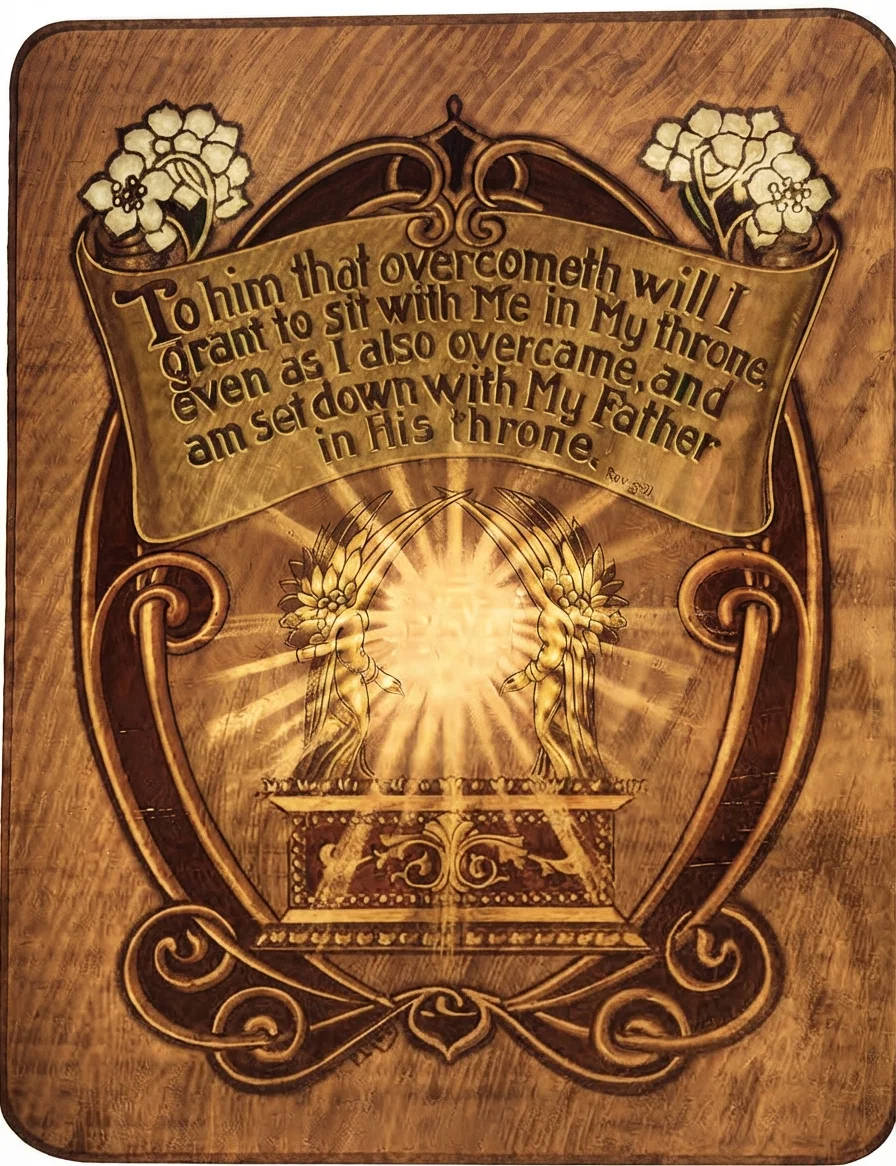
By Mrs. E. G. White
DAVID says: "The law of the Lord is perfect." "Concerning Thy testimonies, I have known of old that Thou hast founded them forever." And Paul testifies, "The law is holy, and the commandment holy, and just, and good."
As the Supreme Ruler of the universe, God has ordained laws for the government not only of all living beings, but of all the operations of nature. Everything, whether great or small, animate or inanimate, is under fixed laws which can not be disregarded. There are no exceptions to this rule; for nothing that the divine hand has made has been forgotten by the divine mind. But while everything in nature is governed by natural law, man alone, as an intelligent being, capable of understanding its requirements, is amenable to moral law. To man alone, the crowning work of His creation, God has given a conscience to realize the sacred claims of the divine law, and a heart capable of loving it as holy, just, and good; and of man prompt and perfect obedience is required. Yet God does not compel him to obey; he is left a free moral agent.
The subject of man's personal responsibility is understood by but a few; and yet it is a matter of the greatest importance. We may each obey and live, or we may transgress God's law, defy His authority, and receive the punishment that is meet. Then to every soul the question comes home with force, Shall I obey the voice from heaven, the Ten Words spoken from Sinai, or shall I go with the multitude who trample on that fiery law? To those who love God it will be the highest delight to keep His commandments, and to do those things that are pleasing in His sight. But the natural heart hates the law of God, and wars against its holy claims. Men shut their souls from the divine light, refusing to walk in it as it shines upon them. They sacrifice purity of heart, the favor of God, and their hope of heaven, for selfish gratification or worldly gain.
(FOR ARTICLE, SEE PAGE 6)
Says the psalmist, "The law of the Lord is perfect." How wonderful in its simplicity, its comprehensiveness and perfection, is the law of Jehovah! It is so brief that we can easily commit every precept to memory, and yet so far-reaching as to express the whole will of God, and to take cognizance not only of the outward actions, but of the thoughts and intents, the desires and emotions, of the heart. Human laws can not do this. They can deal with the outward actions only. A man may be a transgressor, and yet conceal his misdeeds from human eyes; he may be a criminal,—a thief, a murderer, or an adulterer,—but so long as he is not discovered, the law can not condemn him as guilty. The law of God takes note of the jealousy, envy, hatred, malignity, revenge, lust, and ambition that surge through the soul, but have not found expression in outward action, because the opportunity, not the will, has been wanting. And these sinful emotions will be brought into the account in the day when "God shall bring every work into judgment, with every secret thing, whether it be good, or whether it be evil."
The law of God is simple, and easily understood. If the children of men would, to the best of their ability, obey this law, they would gain strength of mind and power of discernment to comprehend still more of God's purposes and plans. And this advancement would be continued, not only during the present life, but during eternal ages; for however far we may advance in the knowledge of God's wisdom and power, there is always an infinity beyond.The divine law requires us to love God supremely, and our neighbor as ourselves. Without the exercise of this love, the highest profession of faith is mere hypocrisy. "Thou shalt love the Lord thy God with all thy heart, and with all thy soul, and with all thy mind. This is the first and great commandment. And the second is like unto it, Thou shalt love thy neighbor as thyself. On these two commandments," says Christ, "hang all the law and the prophets."
The law demands perfect obedience. "Whosoever shall keep the whole law, and yet offend in one point, he is guilty of all." Not one of those ten precepts can be broken without disloyalty to the God of heaven. The least deviation from its requirements, by neglect or wilful transgression, is sin; and every sin exposes the sinner to the wrath of God. Obedience was the only condition upon which ancient Israel was to receive the fulfilment of the promises that made them the highly favored people of God; and obedience to that law will bring as great blessings to individuals and nations now as it would have brought to the Hebrews.
Obedience to the law is essential not only to our salvation, but to our own happiness and the happiness of all with whom we are connected. "Great peace have they which love Thy law; and nothing shall offend them," says the inspired Word. Yet finite man will present to the people this holy, just, and good law, this law of liberty, which the Creator Himself has adapted to the wants of man, as a yoke of bondage, a yoke which no man can bear. But it is the sinner who regards the law as a grievous yoke; it is the transgressor that can see no beauty in its precepts. For the carnal mind "is not subject to the law of God, neither indeed can be."

Signs of His Coming

By Roderick S. Owen

III. The Falling Stars

Immediately after the tribulation of those days shall the sun be darkened, and the moon shall not give her light, and the STARS SHALL FALL FROM heaven, and the powers of the heavens shall be shaken. Matt. 24: 29.
IN this scripture the Saviour was giving an answer to the question, "What shall be the sign of Thy coming?" Here we find four things spoken of; to wit, the darkening of the sun, the darkening of the moon, the falling of the stars, and the shaking of the powers of the heavens. The first three mentioned are signs of His coming, while the last is an attendant circumstance; for the text states that when the powers of the heavens are shaken, then shall they see the sign of the Son of Man — not the sign of His coming, but His sign, the sign of His presence — and then shall all the tribes of the earth mourn, and they shall see the Son of Man coming in the clouds of heaven with power and great glory. Thus we see that the last great sign in the heavens, in this series, which is to precede the coming of the Master, is the falling of the stars.
Perhaps John states this fact more plainly in Rev. 6: 12-17; for he says: "I beheld when he had opened the sixth seal, and, lo, there was a great earthquake; and the sun became black as sackcloth of hair, and the moon became as blood; and the stars of heaven fell unto the earth, even as a fig-tree casteth her untimely figs, when she is shaken of a mighty wind. And the heaven departed as a scroll when it is rolled together; and every mountain and island were moved out of their places. And the kings of the earth, and the great men, and the rich men, and the chief captains, and the mighty men, and every bondman, and every freeman, hid themselves in the dens and in the rocks of the mountains; and said to the mountains and rocks, Fall on us, and hide us from the face of Him that sitteth on the throne, and from the wrath of the Lamb; for the great day of His wrath is come; and who shall be able to stand?"
Thus we see that following the falling of the stars, comes the departing of the heavens as a scroll, the breaking up of the surface of the earth, while all its inhabitants who are not prepared are mourning and calling for the rocks to hide them from the face of Christ, for He has come with power and great glory. But alas,
Where shall the sinner hide in that day? It will be in vain to call, "Ye mountains, on us fall;" For His hand shall find out all In that day.

Has the Prediction Been Fulfilled?

But let us now inquire, Has this sign also been given? We have found that the sun and moon were darkened May 19, 1780. Following this in the order called for in the prophecy, there occurred Nov. 13, 1833, one of the most wonderful exhibitions of celestial fireworks, ever witnessed by the inhabitants of our planet. At that time the heavens were filled with the falling, blazing meteors, that obscured the presence of the stars. Yea, all the host of the luminaries were lost sight of in the brilliancy, grandeur, and splendor of this display. All the meteors seemed to start from one point in the heavens; but they fell in every direction, flying swiftly, crossing each other’s pathway, but all falling toward the horizon. But let us listen to the description as given by eye-witnesses:
We pronounce the raining of fire, which we saw on Wednesday morning last, an awful type, a sure forerunner, a merciful sign, of that great and dreadful day which the inhabitants of earth will witness when the sixth seal shall be opened. The time is just at hand described not only in the New Testament but in the Old. A more correct picture of a fig-tree casting its leaves when blown by a mighty wind is not possible to behold.—Connecticut Observer, Nov. 25, 1833.
But the most sublime phenomenon of shooting stars of which the world has furnished any record, was witnessed throughout the United States on the morning of the 13th of November, 1833. The entire extent of this astonishing exhibition has not been precisely ascertained, but it covered no inconsiderable portion of the earth’s surface. . . . The first appearance was that of fireworks of the most imposing grandeur, covering the entire vault of heaven with myriads of fire balls, resembling sky-rockets. Their coruscations were bright, gleaming, and incessant, and they fell thick as the flakes in the early snows of December. To the splendors of this celestial exhibition the most brilliant sky-rockets and fireworks of art bear less relation than the twinkling of the most tiny star to the broad glare of the sun. The whole heavens seemed in motion, and suggested to some the awful grandeur of the image employed in the Apocalypse upon the opening of the sixth seal, when the stars of heaven fell unto the earth even as a fig-tree casteth her untimely figs when she is shaken of a mighty wind.—Burritt’s “Geography of the Heavens,” page 103, ed. 1854.
Those who were so fortunate as to witness the exhibition of shooting stars on the morning of Nov. 13, 1833, probably saw the greatest display of celestial fireworks that has ever been since the creation of the world, or at least within the annals covered by the pages of history. In nearly all places the meteors began to attract notice by their unusual frequency as early as eleven o’clock, and increased in number and splendor until about four o’clock, from which time they gradually declined, but were visible until lost in the light of day. The meteors did not fly at random over all parts of the sky, but appeared to emanate from a point in the constellation Leo, near the star called Gamma Leonis, in the bend of the sickle. The extent of the shower of 1833 was such as to cover no inconsiderable part of the earth’s surface. From the middle of the Atlantic on the east to the Pacific on the west, and from the northern coast of South America to undefined regions among the British possessions on the north, the exhibition was visible, and everywhere presented nearly the same appearance. This is no longer to be regarded as a terrestrial but as a celestial phenomenon, and shooting stars are now to be no more regarded as casual productions of the upper regions of the atmosphere, but as visitants from the other worlds, or from the planetary voids.—Professor Olmsted of Yale.
And surely the stars did fall, and they fell in exactly the manner described by the prophet of God more than eighteen centuries before.
Thus the last great sign in the heavens has been given, and we find ourselves between the falling of the stars and the departing of the heavens as a scroll, which when it occurs will reveal to our astonished vision the Son of Man coming in the clouds of heaven. Each should ask himself the question, Am I ready? Can I greet Him with joy? A most wonderful experience will come to all those who are ready; for they shall be changed in a moment, in the twinkling of an eye, from the mortal to immortal, from the corruptible to the incorruptible, and together with the loved ones who have fallen asleep in Jesus they will be caught up in the clouds to meet the Lord in the air and so ever to be with the Lord. 1 Cor. 15: 51, etc.; 1 Thess. 4: 16, etc.

Discouragement

The word "discouragement" is not found in the dictionary of the kingdom of heaven.—Melinda Rankin.
Continue reading: Studies on the Sabbath