Your ShelfYour Projects

Signs of the Times, Vol. 28, No. 43.

CONSIDER HIM

Signs of the Times

Oct 22, 1902

Pacific Press Publishing Company · Oakland, California · Oct 22, 1902

“CONSIDER HIM.”

The Incentive.

A symbol of “the perennially welling fountain” from “the mountains of God.”
Of all themes profitable for human consideration, that of Jesus the Christ is obviously the one par excellence. For it pleased the Father that in His Son should all fulness dwell—all fulness of power, of knowledge, of wisdom; all fulness of righteousness, of truth; aye, “all the fulness of the Godhead bodily.” Col. 1:19; 2:9.
We are living in an age when men are running to and fro to find knowledge and attain wisdom. The land is dotted with institutions of learning and groaning under its burden of books. From the press flows an unbroken stream of literature. Everybody reads; some think, and formulate systems of knowledge; a few discover and appropriate the pearl of great price, true wisdom—the wisdom of God, the wisdom that issues in life everlasting.
It is pleasing to know that men are everywhere hungering for knowledge and thirsting for wisdom; but how sad that, in their quest of knowledge and culture, so many are surrounding empty tables and attempting to draw from empty cisterns. O, that every soul knew that there is a perennially welling fountain of the waters of wisdom—of the wisdom of light, and life, and love! This fountain that issues fresh from the mountains of God yields the only waters that satisfy—that satisfy eternally. “Whosoever drinketh of the water that I [Christ] shall give him shall never thirst; but the water that I shall give him shall be in him a well of water springing up into everlasting life.” John 4:14.
Yes, that fathomless fountain of knowledge, of wisdom, of truth, is Jesus; and this same Jesus is the “unspeakable gift” that God has given to every man. “Is it possible,” methinks I hear some timid, doubting soul inquire, “that God has given to me, even me, His beloved Son, ‘in whom are hid all the treasures of wisdom and knowledge’?” Col. 2:3.
Yes, verily; for it pleased the Father that in us, likewise, should dwell all the fulness of God. See Eph. 3:19. To this Fountain, then, all may come; “whosoever will, let him take the water of life freely.” Rev. 22:17. Can we not all exclaim, “O Lord, how manifold are Thy mercies!”
Not only are all the treasures of wisdom and knowledge, of righteousness and power, hidden in Christ, but He is “the power of God, and the wisdom of God.” 1 Cor. 1:24. He not only embodies all truth and all life, but “I am the way, the truth, and the life.” John 14:6. The blessedness, however, of all this is the fact that Christ was made unto us the power and the wisdom, the truth and the life, of God. O, each one of us may say, “Jesus is mine!”—Jesus the incarnation of all excellence—Jesus the effulgence of the Father’s glory, the express image of His person—Jesus in reference to whom God commanded, saying, “Let all the angels of God worship Him” (Heb. 1:6);—aye, this Jesus is mine! May God grant that each one of us may truly add, “And I am His.”
To consider Him, then, is no task, no bare, hard duty, but an unspeakably precious privilege. Think of it. In studying Jesus we are studying the eternal Word of God (Rev. 19:13), God’s imperishable, illimitable Book—the Book in which the Author of authors has stored all there is of knowledge and wisdom, of beauty and excellence. Yes; Jesus is God’s Book—His priceless volume, the epistles of Himself. “No man hath seen God at any time; the only-begotten Son, which is in the bosom of the Father, He hath declared Him.” John 1:18. Jesus declared (i. e., manifested, revealed, portrayed) His Father by what He was and did as well as by what He said. Jesus being the exact likeness, the faithful reproduction, the precise duplicate, so to speak, of the Father, could declare, unchallenged, to Philip, “He that hath seen Me hath seen the Father.” John 14:9.
Being the Word of God, Christ is the thought of God expressed to man, the mind of God set forth or exhibited to man. A word is the medium through which a thought expresses itself. If I understand a word, I understand its contained thought, if I understand a thought, I understand the word through which the thought asserts itself. “The thought is the word invisible, the word is the thought visible.” As the word would have no meaning without the thought, so the thought would have no expression without the word. Even so the invisible, inaudible thought of God was made visible and audible through the Word—the Christ. “For God, who commanded the light to shine out of darkness, hath shined in our hearts, to give the light of the knowledge of the glory of God in the face of Jesus Christ.” 2 Cor. 4:6. Hence if we would see God, if we would know Him and enjoy Him, we must look “unto Jesus, the Author and Finisher of our faith.” Seeing Christ, we see God; knowing Christ, we know the Father.
God is wisdom, God is light, God is love, God is life. This wisdom, this light, this love, this life, are all found in Jesus; they are all written in letters of living light in God’s Book, and that Book is Christ. And this Book the Father invites you and me to read and studyenjoy, with the promise that in so doing we shall know God, whom to know is life eternal; with the promise that as we consider Him, the Word, He will cause us “to lie down in green pastures,” and lead us “beside the still waters.”
Shall we not pray that as we study and grow into the Word, the promise may be verified to each one of us, that He (the Holy Spirit) will guide us into all truth, taking the things that are God’s, and, through Christ, revealing them unto us? See John 16:13, 14.
GEO. W. RINE.

“AND YE SHALL FIND REST.”

THERE is only one place of rest in all the universe, and that place is in Jesus Christ. The wicked have no rest. Our experience in sin shows us that this is so, and because it is so the Scripture puts our experience into words thus: “The wicked are like the troubled sea, when it can not rest, whose waters cast up mire and dirt.” The eye soon tires watching the restless waves. It longs for something quiet, calm, and peaceful.
Because there is no rest in sin, and because there is a desire for rest in the soul of men, therefore God has provided rest. It is not within ourselves. Sin can not rest, and every one of us has “sinned and come short of the glory of God,” therefore it is useless to look within for the peace and rest so much desired.
Listen to the sweet voice ringing down the centuries, in clear tones of celestial entreaty and love, which may be heard above the din of strife, the clamor for place and fame, from the lowly Man of Galilee: “Come unto Me, all ye that labor and are heavy laden, and I will give you rest. Take My yoke upon you, and learn of me; for I am meek and lowly in heart; and ye shall find rest unto your souls.”
The rest is found in the meekness and lowliness we shall learn of the Lord after we get into His presence. “I am meek and lowly in heart,” He says. He is the same yesterday, to-day, and forever; therefore the Jesus of to-day is a meek and lowly-in-heart Redeemer, the same as when He uttered first this blessed invitation.
It is the love of self, the self-esteem, the pride of heart, which causes us so much trouble. While we are trying to climb into prominence, to get a name among men, the living Christ is continuing His walk among the lowly at the foot of the hill. Were Jesus to address many to-day who profess to be His followers, He would be obliged to say unto them as He did to one of old trying to find Him, “Come down, Zaccheus.” Many fail to find Jesus because they are looking too high. The human heart is vain and is easily lifted up in pride. One of the things the Lord abhors is a proud look. It certainly seems a strange thing that man, poor, helpless, and weak, that he is, should be asked to come down and walk with his God, the infinite Creator of untold and numberless worlds; but such is the case, “He hath showed thee, O man, what is good; and what doth the Lord require of thee, but to do justly, and to love mercy, and to humble thyself to walk with thy God.” Micah 6:8, margin.
Here is the rest, here is the peace, the world knows nothing about. This is where Jesus found it, in a meek and lowly spirit. There is no peace outside of it; no rest can be found in all the earth outside this lowly path.
Are you crushed with life's heavy burdens? Rest will not be found in taking your life, nor taking drugs, nor taking strong drink. No; the remedy is in coming directly to Jesus. “Come unto Me,” He says. Come just as you are, come in all your need, come even tho your poor soul is full of guilt. “I will give you rest.” It is a free gift of His love for you. Take it. There is no mistake about it. If you come, “Ye shall find rest unto your souls.” Don't doubt His word. You might just as well have the peace as not. Thousands have experienced it, and their lives were as rugged as is yours, perhaps more so. Is it not worth the seeking? In this fearful age of the world's unrest, is not genuine peace and rest of mind valuable enough to put forth earnest effort to obtain it?
Gold can not buy it, neither is it in a combine or trust. “Ho, every one that thirsteth, come ye to the waters, and he that hath no money; come ye, buy, and eat; yea, come, buy wine and milk without money and without price. Wherefore do ye spend money for that which is not bread? and your labor for that which satisfieth not? hearken diligently unto Me, and eat ye that which is good, and let your soul delight itself in fatness.”
Rome N. Y. T. E. BOWEN.

DOING GOD'S WILL.

BY MRS. E. G. WHITE.
THOSE who submit to the solemn rite of baptism pledge themselves, before the heavenly universe, to come out from the world. They have taken their position under the blood-stained banner of Prince Emmanuel, to be laborers together with God, and as such to make known His will to those who are perishing in sin. They are to search the Scriptures diligently, feeling that it is of the highest importance for them to understand what saith the Lord. Having learned His will, they are to do it heartily, remembering that the truth is the seed they must sow in order to reap a harvest for God. But many of those who claim to believe the truth are not striving as they should for perfection of character.
Christ says, “Behold, I come quickly, and my reward is with me, to give every man according as his work shall be. I am Alpha and Omega, the beginning and the end, the first and the last. Blessed are they that do His commandments, that they may have right to the tree of life, and may enter in through the gates into the city.”
In these words our work is plainly outlined. Those who represent Christ must obey God's commandments; for Christ obeyed them.
In order to keep God's commandments, we must have an intelligent knowledge of the Scriptures. We can not obey God until we know what His commands are. It was that we might understand His will that God gave us the Bible. By a study of its teachings, we learn to deny self and to conform our lives to its requirements.
Dear friends, you are without excuse if you fail of obtaining a clear understanding of God's will. “The law of the Lord is perfect, converting the soul.” God has kept back nothing that is necessary for the enlightenment of His children. No one can plead in excuse for transgression that he was left in ignorance, that the way to heaven was not clearly marked out. We have not been left to serve God in a vague, uncertain way.
How can you educate your children in the things of God unless you first know for yourselves what is right and what is wrong; unless you realize that obedience means eternal life, and disobedience eternal death? Make it your life-work to gain an understanding of the will of God. Thus only can you train your children aright. Bring your every word and action into harmony with the Word of God, irrespective of the opinions and practises of those who refuse to obey Him.
Had the inhabitants of the old world kept God's law, they would have continued to enjoy His favor. But they disobeyed, and their wickedness became unbearable to Him. The words of Jude vividly portray the condition of the world at that time: “These are spots in your feasts of charity, . . . clouds they are without water, carried about of winds; trees whose fruit withereth, twice dead, plucked up by the roots; raging waves of the sea, foaming out their own shame; wandering stars, to whom is revealed the blackness of darkness forever.”
God determined to purify the world by a flood; but in mercy and love He gave the antediluvians a probation of one hundred and twenty years. During this time, while the ark was building, the voices of Noah, Methuselah, and many others were heard in warning and entreaty. And every blow struck on the ark was a warning message.
To-day the past is repeating. God is sending men plain warnings. The recent earthquakes show how quickly the ungodly will perish when the judgments of God fall upon the earth. Already, in flood and flame, His judgments are falling upon evildoers. All who refuse to repent will perish.
Those parents who know the truth, but who do not fulfil the obligations resting upon them, must soon meet the result of their neglect. Those who do not perform the duties that God gives them, because it is not convenient to be so particular, so different from the world, are training their children to become more and more like the world, and to perish in disobedience.
Parents, be loyal to God. Represent Him in the home life. Look upon the training of your children as a sacred work, entrusted to you by the Most High.

CONFIDE IN COMING DAY.

Tho night with mantle dark and wide o'erspread Thy path, dear wand'ring comrade of my own, Think not that brilliant day fore'er has flown, Nor halting cling to frail support in dread; The very hand of Death low o'er thy head Devises gravest woes, to the unknown, Implants them in man's way, and mortals lone In careless seeking joy finds grief instead.
But He, e'er present is, and knowing all Would aid the trusting one, prevent his fall, And grant the light that never shall expire; Thus halt not though that darkness grim and wide Invest thy way, at trials own no ire, But in the truth of coming day confide.
Seiad, Cal. BENJ. PHILLIPS.

THE SUCCESSION OF CROPS.

KEEP up the succession of crops. If you want the fertility of your ground to be soon exhausted, just give it the same treatment, and plant in it the same crops, year after year. And if you want your mind to be sterile, just keep it fastened year after year to the same narrow set of ideas, jealously excluding everything that would bring you a fresh suggestion or a new thought. Read new books, welcome new thoughts, take up new studies; thus only will your mind retain its fresh vigor, thus only will it attain to a breadth and depth to which it has not yet attained.—S. S. Times.

The Prophecy of Zechariah

By Roderick S. Owen

The Flying Roll.

Chapter 5: 1-4.

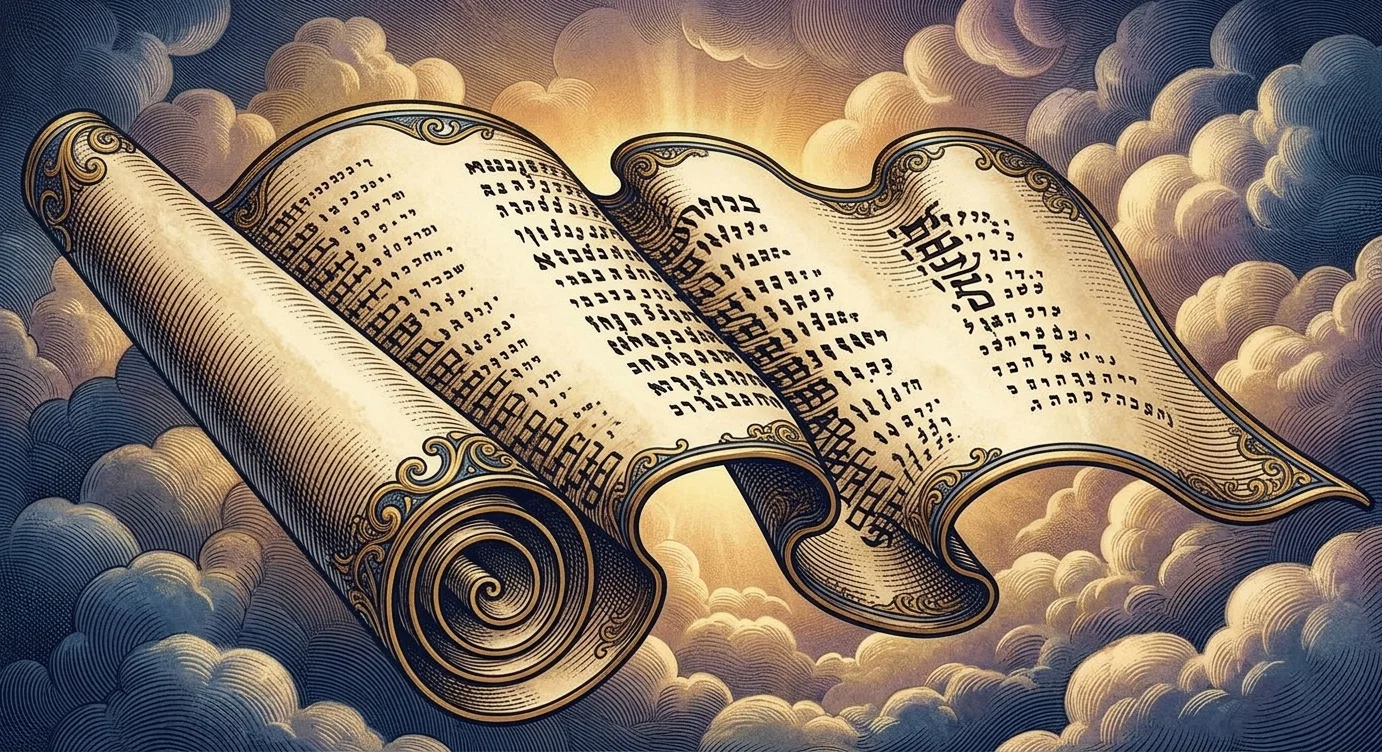
“Then I turned, and lifted up mine eyes, and looked, and behold a flying roll. And he said unto me, What seest thou? And I answered, I see a flying roll; the length thereof is twenty cubits, and the breadth thereof ten cubits. Then said he unto me, This is the curse that goeth forth over the face of the whole earth; for every one that stealeth shall be cut off as on this side according to it; and every one that sweareth shall be cut off as on that side according to it. I will bring it forth, saith the Lord of hosts, and it shall enter into the house of the thief, and into the house of him that sweareth falsely by My name; and it shall remain in the midst of his house, and shall consume it with the timber thereof and the stones thereof.”
In this vision the prophet sees a flying roll. This roll is said to be the curse which goeth forth over the face of the whole earth. As it goeth forth as a curse, like a two-edged sword it cuts off the thief on the one side and the false swearer on the other side of it. It will enter into the house of the thief, and that house will be utterly consumed, with the timbers thereof.
In seeking the explanation of this symbol, we have but to inquire what it is that cuts off the thief and false swearer.
A thief is one who without consent deprives another of that which rightly belongs to him. All will readily recognize that the person who violates the eighth commandment is guilty of theft. But let us inquire: Is not that person who bears false witness against his neighbor, thus depriving him of his good name, a thief? Is he who disregards the sixth commandment, and takes the life of his neighbor, not guilty of theft? Is not the man who covets his neighbor’s goods a thief in the eyes of God’s law, for he is a thief at heart? Is not the son or daughter who does not render to father and mother the honor which is their due, a thief? Is not that person who has some other god beside the Lord, or who would set up an image before God, thereby depriving God of the reverence and obedience which is due to His name, a thief? Is not that person a thief who steals God’s time, appropriating, to accomplish his own selfish purposes, the day which God has set apart for Himself? Thus we see that the expression, “Every one that stealeth,” includes all who willfully violate any one of the commandments of God. Then the flying roll will cut off on the one side all the open transgressors of God’s law.
Who are the false swearers? Verse four states that they swear falsely by His name. This proves that they are professors of His name, or are professed children of God. This class includes the unfaithful Christians who vow unto the Lord, and do not perform their vows. These are all guilty of sins of omission, and they will all be cut off by the flying roll, on the other side of it. Thus we see that these two classes include every sinner. But what is it that cuts off the sinner? Surely, it is the very law which he has transgressed. Then the flying roll is the law of God. But it is not the law of God as it goes forth in precepts to teach man the right way. It is that law as it goes forth in its executive aspect to deal out the consequences and penalty of transgression to the sinner.
Some may object to calling the law of God a curse, since it was ordained to give life. It must be remembered that in this vision the law was viewed in the light of its effect on the sinner, and that effect is to produce death with all its contingent calamities. For that which was ordained unto life the sinner finds to be unto death, because of sin, which is the transgression of the law. Sin would have no strength to slay the sinner, were it not for the law, “for the sting of death is sin, and the strength of sin is the law.” That the law, which when obeyed will give life, becomes a curse in its penal phase to the transgressor, is clearly shown in Gal. 3:10-13. “For as many [who are sinners and not justified by faith] as are of the works of the law are under the curse; for it is written, Cursed is every one that continueth not in all things which are written in the book of the law to do them. But that no man is justified by the law in the sight of God, it is evident; for, The just shall live by faith. And the law is not of faith; but, The man that doeth them shall live in them.” Christ hath redeemed us from the curse, or penalty, of the law, being made a curse for us, as it is written, “Cursed is every one that hangeth on a tree.” Then Christ on the cross, or tree, bore death, the penalty of the law, for us, so that by faith in Him we might escape meeting the law as a curse.
Going back to the creation and fall of man, we find that God said: “In the day thou eatest thereof [disobey] thou shalt surely die,” and when man did sin, God pronounced sentence upon him, saying, “Dust thou art, and unto dust shalt thou return.” And “Cursed be the ground for thy sake.” Thus we see that by sin Adam and his possession passed under the curse.
In Isaiah 24 we have the entire and complete desolation of the earth brought to view, and the reason therefor is given in verses 5 and 6, which read: “The earth also is defiled under the inhabitants thereof; because they have transgressed the laws, changed the ordinance, broken the everlasting covenant. Therefore hath the curse devoured the earth.”
Did not Adam transgress the law? Have not men ever since been guilty of disobedience? But the curse did not at Adam’s fall, nor has it since, wholly devoured the earth. From this fact it is evident that at the time spoken of by Isaiah, the people must in some way more fully do these things than they have ever before been done.
When sin first entered, the curse would have devoured the earth had it not been for the plan of salvation, which was then introduced and stayed the curse during the probationary period. The everlasting covenant, broken by Adam, was renewed in Jesus; and an enmity in the presence of the Spirit of God was placed in man against the wicked one.
But we learn that the world is to accept a false christ who shall deceive, if it were possible, the very elect. By this step they reject the true Christ, break the everlasting covenant beyond the possibility of renewal, and grieve away the Holy Spirit. Then will the curse sweep the earth with the besom of destruction. But there will be a class who will escape all this; for in verses 13–16 the prophet saw some who were left, even like the gleaning of grapes. And “they shall lift up their voice, they shall sing for the majesty of the Lord, they shall cry aloud from the sea. Wherefore glorify ye the Lord in the valleys, even the name of the Lord God of Israel in the isles of the sea. From the uttermost part of the earth have we heard songs, even glory to the righteous.”

A Message of Warning.

God will not permit all this to come upon the children of men without a warning. The one which immediately precedes this destruction is found in Rev. 14:6–12:—
“And I saw another angel fly in the midst of heaven, having the everlasting Gospel to preach unto them that dwell on the earth, and to every nation, and kindred, and tongue, and people, saying with a loud voice, Fear God, and give glory to Him; for the hour of His judgment is come; and worship Him that made heaven, and earth, and the sea, and the fountains of waters. And there followed another angel, saying, Babylon is fallen, is fallen, that great city, because she made all nations drink of the wine of the wrath of her fornication. And the third angel followed them, saying with a loud voice, If any man worship the beast and his image, and receive his mark in his forehead, or in his hand, the same shall drink of the wine of the wrath of God, which is poured out without mixture into the cup of His indignation; and he shall be tormented with fire and brimstone in the presence of the holy angels, and in the presence of the Lamb; and the smoke of their torment ascendeth up for ever and ever; and they have no rest day nor night, who worship the beast and his image, and whosoever receiveth the mark of his name. Here is the patience of the saints; here are they that keep the commandments of God, and the faith of Jesus.”
These messages go to the world in the hour of judgment. They proclaim the fallen condition of Babylon, or the state of religious confusion that prevails; and call upon all to worship the true God, and to avoid the worship of the beast. This call divides the inhabitants of earth into two classes; those who worship the beast and his image, and receive his mark; and those who keep the commandments of God and the faith of Jesus, and receive the seal of God.
The seven last plagues are poured out as these messages close; each one of which falls upon the men who refused to heed these messages. After these seven vials of the wrath of God are poured out upon the earth, Jesus comes, seated upon the white cloud, upon His head a golden crown, and in His hand a sharp sickle. The harvest of the earth is reaped. The saints are caught up in the clouds to meet Christ in the air; while the thief and the false swearer are cut off on this side and on that side.
Thus the flying roll is the law of God as it goes forth under the third angel’s message, accompanied by the seven last plagues, in which is filled up the wrath of God; and which enters into the house (the world) of the thief and consumes it.

Trust in the Risen Saviour

THE admission of a fact, however sublime, is not faith. We may believe that Christ is risen, and yet not be nearer heaven. Trust in the risen Saviour—that is the belief which saves the world.—F. W. Robertson.

THE CHURCH FATHERS AND THEIR OPINIONS.

“The Bible, and the Bible only,” is the religion of Protestants. But for all that, appeals are often made to the so-called “church fathers,” and it is a fact that there is not an opinion that could be advanced, so foolish, so manifestly absurd, but that one can find passages to sustain it on the page of some musty old folio from the third or fourth century. For the benefit of the reader who may be ignorant as to the worth of these opinions, we will show who these “fathers” were, and what dependence can be placed upon them and their writings:—
The Apostolic Fathers [of the first century] are Clement, bishop of Rome, and author of the Epistles to the Corinthians; Ignatius, disciple and companion of the apostles, who suffered martyrdom under Trajan, being exposed to wild beasts in the theater at Rome; Polycarp, bishop of Smyrna, who suffered martyrdom at an extreme age in the middle of the second century. Several works ascribed to these Fathers are known to be spurious; others are doubtful; and those which are generally received as genuine are not free from interpolations.—Wharey’s Church History, Cent. 1, p. 26.
Among the Fathers of this [second] century who rendered themselves famous by their writings, were Justin Martyr, so called because he suffered martyrdom. He was a converted philosopher, learned and pious. His writings are numerous and erudite, but his style harsh, and his opinions sometimes unsound. Irenæus, bishop of Lyons in France. His writings that remain are five books against heretics. Athenagoras, an able and eloquent writer. Theophilus, bishop of Antioch, has left three books in defense of Christianity. Clement of Alexandria, a man of great reading, but his love of philosophy led him into great errors. Tertullian, a native of Carthage, and bred a lawyer. He possessed great genius, but it was wild and unchastened. His piety was active and fervent, but also gloomy and austere. It is difficult to say which were greater, his excellence or defects.—Id., Cent. 2, Par. 5, p. 34.
There are but few of them whose pages are not rife with errors—errors of method, errors of facts, errors of history, of grammar, and even of doctrine. This is the language of simple truth, not of slighting disparagement.—Archdeacon Farrar, Hist. of Interpretation, pp. 162, 163.
The writings of the so-called Apostolic Fathers have unhappily, for the most part, come down to us in a condition worthy of very little confidence, partly because under the names of these men, so highly venerated in the church, writings were early forged for the purpose of giving authority to particular opinions or principles.—Neander, Hist. of the Christ. Relig. and Church, Vol. 1, p. 657.
In the early ages of the church, the writings of the Fathers were corrupted without scruple, to serve the purposes of contending sects. The truth is, that the practice of vitiating these holy writings, and even of forging whole treatises and letters, detracts materially from the value of all that has come down to us as the productions of the Fathers.—Cox’s Literature, Vol. 1, p. 123.
So much as to the works of these “fathers.” What is their worth? and how much dependence can be placed upon writings that, according to the testimony of these historians, are “spurious” and “doubtful,” full of “interpolations” and “unsound” opinions, and “rife with errors.” If all those who are so prone to betake themselves to the “fathers” as soon as they are driven to the wall on some “orthodox” doctrine that has no foundation in the Scriptures, would take the stand of the illustrious Dr. Adam Clarke, they would act like men. Here is the learned doctor’s plea regarding this matter:—
But of these [the Fathers] we may safely say that there is not a truth in the most orthodox creed that can not be proved by their authority; nor a heresy that has disgraced the Romish Church that may not challenge them as its abettors. In points of doctrine, their authority is with me nothing. The Word of God alone contains my creed.”—Comments on Proverbs 8.
How, then, shall we regard the opinions of the “fathers”?
To avoid being imposed upon, we ought to treat tradition as we do a notorious . . . liar, to whom we give no credit unless what he says is confirmed to us by some person of undoubted veracity. . . . False and lying traditions are of an early date, and the greatest men have, out of pious credulity, suffered themselves to be imposed upon by them.—Bower’s “History of the Popes,” Vol. I., p. 1, Phila. Ed., 1847.
In speaking of these same traditions, Luther strikes the right cord when he says:—
When God’s Word is by the Fathers expounded, construed, and glossed over, then, in my judgment, it is even as when one strains milk through a coal sack, which must needs spoil and make the milk black. God’s Word of itself is pure, clean, bright, and clear; but through the doctrines, books, and writings of the Fathers, it is darkened, falsified, and spoiled.—Table Talk, p. 228.
Filled with the Spirit of God, Paul had a prophetic view of the future, and in writing to Timothy, his “own son in the faith,” he says that “the time will come when they will not endure sound doctrine; but after their own lusts shall they heap to themselves teachers, having itching ears; and they shall turn away their ears from the truth, and shall be turned unto fables.” 2 Tim. 4: 3, 4.
Because a doctrine is supported by the majority does not prove that it is of divine origin; and a custom that has no sanction in Holy Writ can never become truth, be it ever so hoary with age. Paul said of the time in which he was living, “The mystery of iniquity doth already work.” 2 Thess. 2: 7. If the evil was working in the church in spite of the personal labors of the apostles, what might not be expected when the church was deprived of their presence? Paul was keenly alive to this fact. Hence his timely warning. To the Colossians he wrote, “Beware lest any man spoil you through philosophy and vain deceit, after the traditions of men, after the rudiments of the world, and not after Christ.” Col. 2: 8. And in warning the flock against the subtle and evil influence of unscrupulous and false teachers, he said, “For I know this, that after my departing shall grievous wolves enter in among you, not sparing the flock. Also of your own selves shall men arise, speaking perverse things, to draw away disciples after them.” Acts 20: 29, 30.
No sooner had the last of the apostles left the stage of action than this wicked work commenced. The churches came under the influence of heathen teachers, calling themselves philosophers, and as a consequence,—
The noble simplicity and majestic dignity of the Christian religion were lost, or at least impaired, when these philosophers presumed to associate their dogmas with it, and so bring faith and piety under the dominion of human reason.—Mosheim, Ecclesiastical History, Cent. 2, part 1, chap. 1, section 12.
Rites and ceremonies of which neither Paul nor Peter ever heard, crept silently into use, and then claimed the rank of divine institutions.—Killen, “The Ancient Church.”
Truth has no need of being sustained by the testimony of the “fathers.” Therefore those who wish to walk in the straight and narrow way, will not go for guidance to the opinions of mortal men, but to the Word of God, “which liveth and abideth forever.”
Oakland, Cal. C. CASTBERG.
Continue reading: AN INKLING OF THE JUDGMENT