IN matters of faith and doctrine particularly, there is a changing emphasis in the world today. Doctrines which were believed and counted cardinal principles of faith a few decades ago are discounted or set aside today. There has come with this a great lowering of church standards. Church discipline with many denominations has been thrown to the winds. The line of demarcation between the church and the world has been practically obliterated.
How great this change is we can discern by comparing the standard of Christian living in the great Methodist Church today with the standard held by that church in the early days of its history. And in this the Methodist Church is by no means alone. It stands as a representative of Christendom as a whole. Some there are, earnest, godly men and women, who recognize this departure and deplore it. This note of sad regret is sounded in a message recently addressed to the Lutheran churches by the presidents of the synods and the president of the General Conference of that denomination. It was published in the Lutheran of Feb. 19, 1914. Among some of the great dangers threatening the Christian church at the present day there is emphasized that of worldliness. The editor says:—
We must confess, as pastors and people, that we are exposed to the danger of worldliness. We are living in an age of material prosperity and progress such as history knows not of. Men have become intoxicated with the glare and glitter of wealth, and stand aghast before the babel of human achievement in the world of industry and science. This has bred a spirit of self-sufficiency and smothered the spirit of dependence upon God. The worship of God has given way to the worship of man. This spirit has powerfully influenced the life of the church. Both pastors and people are in danger of being conformed to the fashion of this world. Pride is taking the place of self-denial, indulgence the place of discipline, and Belial the place of Christ. There is no clear line of demarcation between many professed followers of Christ and pure worldlings.
The church is being tempted to make an alliance between God and mammon, and her members have ceased to be a "peculiar people." Social customs and standards destructive of spiritual life are adopted or patterned after, and soul-destroying pleasures are eating like a canker into the vitals of the Christian life. The church often seems more concerned to please men than to save them, and is adopting the spirit and ways of the world. It is a compromising rather than a conquering church. The Scriptures are being betrayed and the gospel surrendered in the very citadels where the bulwarks are supposed to be thrown around them. Like a weak and foolish Samson, the church is toying with Delilah, and its strength is passing from it.
It is pertinent to inquire if in any measure this spirit which is leavening the churches around us is making any appeal to the members of the Seventh-day Adventist Church. Are we departing from the simplicity of the faith? Is there coming into our teaching a changing emphasis of doctrine? We believe that the great cardinal features of this truth which were advocated by the apostles of this movement are still believed today in their fullness. It is true that some of these truths may be taught in different relationships in consequence of changing time and fulfilling prophecy, but those great cardinal truths which have brought us into being are still devoutly believed by this people, and may the day be long delayed when this shall be otherwise.
God has called Seventh-day Adventists into being to give a definite message of reform to the world. They cannot compromise that message and be guiltless. They cannot lower it to meet the standard of apostate Christianity and maintain thereby their own integrity. Fearlessly, unswervingly, but in the spirit of the Master, they must cry aloud and warn the world of its impending doom.
But while we have maintained our religious faith, have we also maintained that high standard of simplicity and devotion and consecration which marked the pioneers of this movement? In our answer to this question we cannot be so sanguine. Many, we know, have; the lives of hundreds of Seventh-day Adventists are marked with a spirit of devotion to and sacrifice and toil for this movement. But some we fear have suffered a lowering of the standard of their Christian experience. While they have slept, the enemy has stolen upon them unawares and sown tares in their experience. Men and women are connected with our churches today who are world-loving, careless, and indifferent. Connected with our institutions and organizations are some who are time-servers, and who are seeking for the loaves and fishes rather than for the heavenly manna.
God calls upon us today to exalt the standard in our own individual lives, and also in our churches. Wherein the spirit of worldliness or spiritual sloth and indifference exist there should active, earnest missionary labor be undertaken. Sin, wherever found, should be called by its right name. Achans in the camp of Israel today should be searched out, and earnest labor be put forth for their regeneration. The spirit of holy zeal should possess the members of the church of God, first to see that sin is removed from their own hearts, then from their own families, and then that the church itself shall stand where it can present a united front against the enemy of righteousness, and give an unwavering testimony in favor of God and his truth.
The Israel of God must stand without sin in the sight of their King. How long shall we delay the work of soul cleansing? How long shall we put off the day of making a full and final surrender? How long shall we dally with sin and court failure and defeat? The Lord Jesus Christ has purchased for us victory. He has procured liberty for those who are bound. He has opened the prison house and set the captives free. But we can never take advantage of this freedom which he has procured, this victory which he has purchased, if we are cherishing in our hearts and lives the spirit of worldliness. If in any measure we have departed from that high and holy standard which should be maintained by the children of God, let us hasten to return to our Father's house.
F. M. W.
The People and the Saloon
By C. M. S.
Since mankind first acquired a taste for fermented drinks, there has been a fierce warfare on the part of the human family against the most tyrannical master and the most heartless slavery this world has ever known. For centuries the Word of God has voiced the divine warning against strong drink as a mocker and a deceiver; and it has proved to be such to every soul who has dallied with it.
It has promised riches and happiness, and it has given rags and misery. It has promised sociability and esteem, and it has given the tongue of the idiot and the contempt of the sober and intelligent. It has promised position and honor, and it has given beggary and disgrace. It has promised friendship and confidence, and it has given enmity and distrust. It has promised health and strength, and it has given disease, senility, and decrepitude. It has promised prosperous homes and healthy and happy children; and how has it fulfilled that promise? It has turned homes that were happy and prosperous into hovels where naught but8wretchedness could abide, and has sold the shoes off the children's feet to satisfy the insatiable appetite which it had created; and the children such homes have brought into the world have either died in infancy or survived under a terrible handicap of disease in both body and mind, to pass on this contagion of moral and physical ruin to the generations to follow them.
Strong drink has been a devourer and a waster in every country and in every age. It has built no institutions of charity, but it has furnished nearly all the inmates of such institutions. It has built no schools, but it has befogged the minds of children and children's children, and made more difficult the work of these institutions, while at the same time it has so marred the intellect of thousands of children that the schools can accomplish nothing for them. It has made no laws for the uplift of humanity, but it has broken every law of God and man, made necessary the majority of our penal institutions, and furnished their inmates. It has paid a tax to the people for the privilege of living off them to their ruin, but its existence and activity have made it necessary for the people to tax themselves fourfold more to take care of the pitiable product of the liquor industry.
The liquor industry could not live but for a perverted appetite, and its only hope of continuing is in holding human beings under the thralldom of that perverted appetite while they dole out their earnings from day to day to satisfy a craving which grows ever more insistent and more insatiable.
As a waster it has never been equaled. Every farthing added to its bank account represents an out-and-out waste,—a waste in mental, moral, and physical fiber in those who pay their money to have it prey upon them; a waste in the food products which it turns into drink; and a waste in manhood and womanhood and childhood, in virtue, in intelligence, in happiness, in self-respect—in everything that is worth while.
The liquor business has added nothing to the world in the way of knowledge, education, science, or invention; but it has piled a weight of unutterable woe upon every household it has entered. Hearts that were as light and happy as any the world ever knew have been crushed under its iron heel, and hopes that were as bright as any have been snuffed out by it like a candle in a gale. It has gone through the world, like the monster of a hideous nightmare, with its remorseless jaws running red with the blood of its helpless victims. Whatever was good it has made bad, and whatever was bad it has made worse. It has chosen the best where it could, and the worst where it could not get the best, and has heaped them all in ruin together.
Its only inventions have been devices for more surely and speedily enslaving men. It lives by the ruin it can do. It feeds like a cancer on the vitals of humanity. It gives nothing, but it sweeps the world with its devil-fish tentacles to bring all humanity within its clutches and drain the vital fluids of the race.
And men have actually given license to that terrible monster to carry on its operations. If this world should stand for a hundred years, our children's children would look back upon the licensing of the liquor business with as much astonishment as we now look back upon the burning of men and women for their faith, or the selling of human beings into slavery. There is no consideration upon which men would think of pampering a poisonous serpent and giving it liberty to strike its fangs into their flesh, poisoning their blood and hastening their death; and yet strong drink has poisoned more persons and caused more deaths than any family of poisonous serpents during all the time from Adam's day to ours.
But the race is being aroused to the inconsistency of the matter. It is throwing off the lethargy that has bound it through the centuries. It is beginning to realize the fearful moral and physical and economic waste involved in the continuance of the liquor traffic. Municipalities and States are throwing off the yoke of the liquor thralldom, and they find not only that they can survive without the money paid by the liquor business in license fees, but that the elimination of the liquor business has increased their prosperity and decreased their outlay for paupers and criminals. The little Blue Ribbon Clubs of thirty-five years ago have grown into great organizations, of whose existence the strongest political parties have found it expedient to take cognizance. Great and populous States are enlisting in the prohibition ranks or are giving their inhabitants the privilege of settling the liquor question by local option plebiscite; and the people are rising to their opportunity, and have actually been wiping the saloons off the map at the rate of forty a day for each working day for several years.
It is not a spasmodic movement, but a continuous campaign. There is some backward-and-forward play in localities, just as there are some minor engagements lost and won during the progress of a great war; but the territory controlled by the liquor forces grows less with each new year, and that controlled by the temperance forces grows in like ratio greater. The victory of the present year in Illinois is a memorable one. The recent election in that State adds sixteen counties to the dry column, and closes more than one thousand saloons. The temperance forces will at once begin a campaign of education in the great city of Chicago, with the definite purpose of making Chicago a temperance city by 1915. One of Chicago's dailies has joined the ranks of newspapers that refuse liquor advertisements, declaring that the proper use of alcoholic liquors "should rest with the family physician rather than with the family newspaper."
The Pittsburgh Chamber of Commerce has passed drastic resolutions denouncing "the economic folly of licensing liquor dealers." The Secretary of the Navy feels that the time has come to forbid the use of liquors by any one on board the nation's warships, and he has done so.
More than forty-seven million of the inhabitants of the United States are now living in prohibition territory. Seventy-one per cent of the territory of this country is now under the jurisdiction of prohibitory law. By the provisions of the Webb-Kenyon Interstate Liquor Shipment Bill it was made illegal to ship liquor into prohibition States. The passage of this bill was a victory for temperance whose importance cannot be overestimated. The federal government cannot now override State laws and force prohibition States to open their doors for the entrance of liquors.
The resolutions now before both houses of Congress for the Constitutional prohibition of the liquor traffic mark another mighty stride in the progress of the temperance cause. As a temperance people we should throw the weight of our influence unreservedly on the side of these measures. By voice and pen and vote we are instructed to make our influence tell in the grand work of freeing human beings from the thralldom of liquor. The mind that is enslaved and benumbed by alcohol cannot respond to the principles of the everlasting gospel. The temperance work, therefore, becomes one of the important factors in opening the way for this message of the kingdom to bear its testimony to the people of this world. The struggle is reaching its climax, the forces of the liquor interests are hard pressed. Let us do what we can to make the victory sure.
C. M. S.
General Conference Committee Actions
By W. A. Spicer
We know there is nothing in which believers in the third angel's message take greater interest than the progress of the work throughout the world. We therefore give herewith a summary of recent actions of the General Conference Committee pertaining to the work and the movements of workers.
Advantage was taken of the presence of most of the union conference presidents in North America and several of9the officers of the North American Division and the General Conference at the annual constituency meeting of the Loma Linda Medical College, to hold some General Conference Committee meetings. The following items are reported from the minutes of those meetings and of meetings held by the General Conference Committee members present in Washington since.
Appointments
The time of the regular Midsummer Offering for missions was appointed for Sabbath, July 4, with the request that articles for reading in the churches on that day be prepared by Elders A. G. Daniells and W. T. Knox.
It was voted that the week of prayer for 1914 be set for December 12-19.
The keynote for the readings for the coming week of prayer, it was agreed, should be "the coming of the Lord," and writers were selected to prepare the readings.
Autumn Council
It was voted that the regular autumn council of the General Conference Committee be held in Takoma Park, Washington, D. C., from October 25 to November 3, this time coinciding with that of the North American Division Conference Committee.
Invitation was given to Elder L. R. Conradi to attend the autumn council. It was felt by the committee that with the intimate relation between the work in Europe and the work in America, and with the many questions relating to world-mission operations coming up for consideration at the time of the autumn council, when the mission field appropriations are made and the plans of work reviewed, the president of the European Division should be invited to plan as a regular thing to attend the autumn councils of the committee whenever not inconsistent with the European program of work.
Asiatic Division Matters
On report from Elder R. C. Porter regarding the best time for holding the biennial meeting of the Asiatic Division Mission field, which is to convene in Shanghai, a cable message was sent, fixing the time of the meeting November 1, in order that by shortening his visit to the Australasian field, Elder A. G. Daniells might attend the Asiatic Division conference and workers' institute at Shanghai on his way from Australia to India, arrangements for the Australasian and Indian visits having been made at the time of the last General Conference.
In view of the fact that both the Australasian and the Asiatic Division institutes and conferences will be very important meetings, invitation has been given to Elder O. A. Olsen, of the North American Division Foreign Department, to proceed a little later to Australia, in time to join in the Australasian institute and conference, Elder Olsen having been president of the Australasian Union for a series of years. It is then planned for him to accompany Elder Daniells to the Shanghai meeting, returning thence to this country. Seeing the benefit that has been derived from the institute work in the union conferences in America, it is felt that these meetings in other fields should give a new impetus to the work, and bring blessings to the workers who gather once in two years for study of the field and plans, and for the seeking of the Lord for added power in soul-winning service.
South African Union Matters
It was agreed that efforts should be made to secure an experienced tract society secretary and treasurer for South Africa, and that the transportation expense be added to the estimates.
A request from South Africa for an additional appropriation for the proper stocking of the new Glendale Mission farm, recently secured as an extension of the Selukwe Reserve Mission enterprise, was regretfully denied or deferred, owing to lack of funds for this year's operations. An additional appropriation of $1,265 was made for the support of the workers on the Glendale station, this item not having been passed upon in the appropriations voted at the last autumn council. The committee deeply regretted having to deny this request, for the work will be done at great disadvantage without the needed facilities in the way of stock and farm equipment; but at a time when calls for evangelists are being denied in many of the fields, it was felt impossible to give favorable response.
An appropriation of $1,000 was made for medical outfit and facilities and equipment for a medical mission among the Kafirs in South Africa, provided the union conference arranges with one of the physicians in South Africa to take up medical evangelistic work in connection with the native missions.
It was agreed that Elder W. A. Spicer should plan to attend the union conference meeting in South Africa in the spring of 1915.
A request from South Africa for an evangelist for city work was favorably considered, and the officers were authorized to secure an experienced volunteer for this work, the General Conference placing the worker in the field, South Africa to assume the support.
Movements of Workers
On receipt of information from the India Mission Committee that Elder Geo. F. Enoch and family were entitled to a furlough, in view of the years of service in the tropics and the physical need of a change, it was voted that a furlough for one year be granted. Elder Enoch has been superintendent of the work on the Bombay side of India for seven years, we believe.
Elder W. C. Hankins and family, on furlough from China on account of Sister Hankins's health, were advised to plan to return to their work in the Amoy district this autumn provided the medical report in Mrs. Hankins's case continues favorable.
Roy Mershon and wife, of the North Pacific Union, were invited to make the Malaysian Mission their field of labor.
Allen Thompson and wife, of the North Pacific Union, were invited to make the Malaysian Mission their field of labor.
K. Adams, of Walla Walla College, was invited to proceed to the Malaysian Mission, to engage in the work in connection with the mission training school at Singapore, on the completion of the college year at Walla Walla.
The North American Division Conference was asked to arrange for the work in this country of Elder J. J. Westrup, of Honan, China, who has been invited to return in order to rejoin his family in America. Sister Westrup and her son have been stopping in America nearly three years, hoping that Sister Westrup's health would warrant her return to the China field. Owing to the rigors of the service in the Chinese interior, it is the judgment of the committee that her health is not sufficiently robust to warrant hope of her going on soon to China, and therefore the action was taken recalling Elder Westrup.
The call from the Bahama Islands, West Indies, for a Bible worker was approved, and the officers were authorized to select the worker.
Drs. S. and Lydia Jespersson, of Union College, College View, Nebr., who had volunteered for service abroad, were released by the committee on call for their services the coming school year in the Swedish Seminary, in Illinois.
Miss Florence Wilson, of the Foreign Mission Seminary, was invited to go to Shanghai, to engage in English school work in behalf of the children of our missionaries in China and such others as may be in attendance at an English school in that field.
Miss Florence M. Kime, of the Pacific Union College, was invited to go to Singapore, for service in the Malaysian Mission.
Ernest Morrow and wife, of Southern California, were invited to join Elder J. S. and Mrs. James on their return to South India this summer, to engage in evangelistic work in South India or elsewhere as may be arranged by the India committee.
Thus, although the plan of the General10Conference Committee has been to make few additional appointments this current year, the calls from the fields continue to come, and wherever it is possible for additional workers to be cared for by the mission field appropriations every effort is made to find the volunteers and to pass the workers on. The fields themselves are studying every economy in order to increase the force and to spread the word.
North India
By S. A. Wellman
S. A. WELLMAN
ThE work in the North India Mission has made encouraging progress during the year 1913, in the efforts for both the English-speaking people and the natives. In English a special effort was held in Simla, the summer capital of the Indian Empire, commencing in May and continuing till the end of October. Elder H. H. Votaw, assisted by the writer, was in charge of the work in that city. As a result of the effort, seven were baptized at the close of the season, while a number of others were observing the Sabbath and kindred truths, and preparing to identify themselves with us later. During the winter, while a large number of the Simla residents are stationed at Delhi and other plains stations, Brother W. S. Mead and wife are caring for the interested ones. It is expected that, commencing early in April, Elder H. H. Votaw, with a force of helpers, will make another effort in the city during the summer season of 1914. Once a good strong church is established in this city, it will be a center of light not only to the north, but to the empire of India, and its influence will be strongly felt.
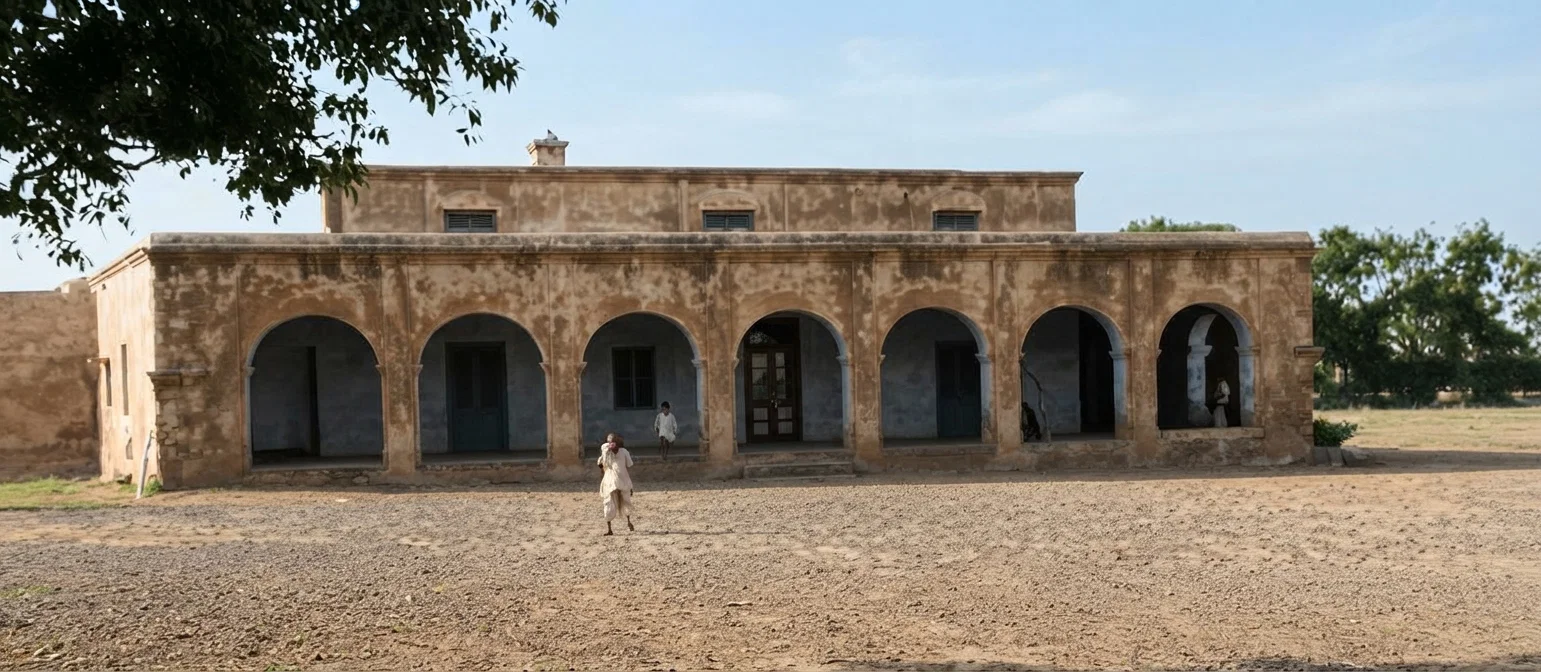
NEW MISSION BUNGALOW AT NAJIBABAD
Some of the Simla brethren who have visited on the plains during the winter, or are stationed in the plains cities in their government employment, are doing active missionary work, and have interested others in the message, and these are now calling for the living messengers. Thus one by one little lights are springing up in the North India cities.
The work in Simla reached an interesting phase when the brethren holding responsible positions in government departments were granted their Sabbaths off. Another of the brethren has applied for the same privilege, and his application has been referred to the viceroy for final decision. We trust that
God will cause favor to be shown him also.
The work in Mussoorie has likewise had a successful year. Three new members were added to the church by baptism. These were adults who had first become interested the year previous, but who were brought to a decision this season. In addition, a number of the children in the school at Annfield took their stand and were baptized.
Both the treatment rooms, of which
Brother William Lake has charge, and the school, of which Sister E. E. Bruce is the principal, have had good years. Financially the treatment rooms have more than paid expenses, and have had an excellent class of patients, including among them the bishop metropolitan of India. The Annfield school doubled its number of the previous year, and added much to its reputation by the efficient work accomplished.
The Vernacular Stations
Among the Indian peoples of the north, work is being done from three centers: Open View, Garhwal, where Brother C. C. Belgrave has charge, and where a caste school for boys is conducted; Najibabad, in the northern part of the United Provinces; and Lucknow, where Sister Chilton is working among the high-class Mohammedan zenanas. Then in various other centers of the north our colporteurs have circulated a number of our vernacular publications, thus sowing seed for the future.
The school in Garhwal, which was started three years ago by Brother and Sister Burgess, was taken by Brother Belgrave on Brother Burgess's departure. Although some difficulties have been experienced, yet, on the whole, the year has been very successful. Provision has been made whereby most of the heathen teachers of the past years will be replaced by Christians in 1914.11With the good influence that has already gone forth from the school, studies in Bible, and the provision for a stronger Christian atmosphere this year, it is hoped that some of these high-caste boys will take their stand for Christ during 1914. Early in January the head master (Indian), a young man who has been with us since the school began, took his stand for the advent message. He is to be baptized in April at the school, that the students may have the privilege of seeing and being influenced by the rite. He accepted the truth while attending a general meeting some distance from the school.
GARHWAL SCHOOL
In the school are over seventy boys of the Brahman and Rajput castes, but the provisions for their accommodation are not adequate either in the matter of assembly, recitation, or living rooms. Eight or ten boys are living in each of the 12 x 12-foot rooms, with one door and one window. More room is needed for a chapel, and for recitation rooms in connection with it, so that better conditions can be had all around. About one thousand dollars would cover the necessary additions and make the school what it should be to carry the ten standards of work which are being called for.
At Najibabad the mission bungalow has been very creditably completed during the year under the direction of Brother W. S. Mead. Dr. V. L. Mann and family, Miss Kurtz, and Sister O'Connor are now occupying the building, but Brother and Sister Morris, who are now studying in the language school at Lucknow, are to move in, taking Dr. Mann's part, the first of April. Brother Morris will take charge of the station at that time. Dr. Mann has during the past year, with the assistance of the local workers, been conducting a dispensary workers' training class, and the pupils who have studied with him have done excellent work in preparation for hearing heavier responsibilities in the future.
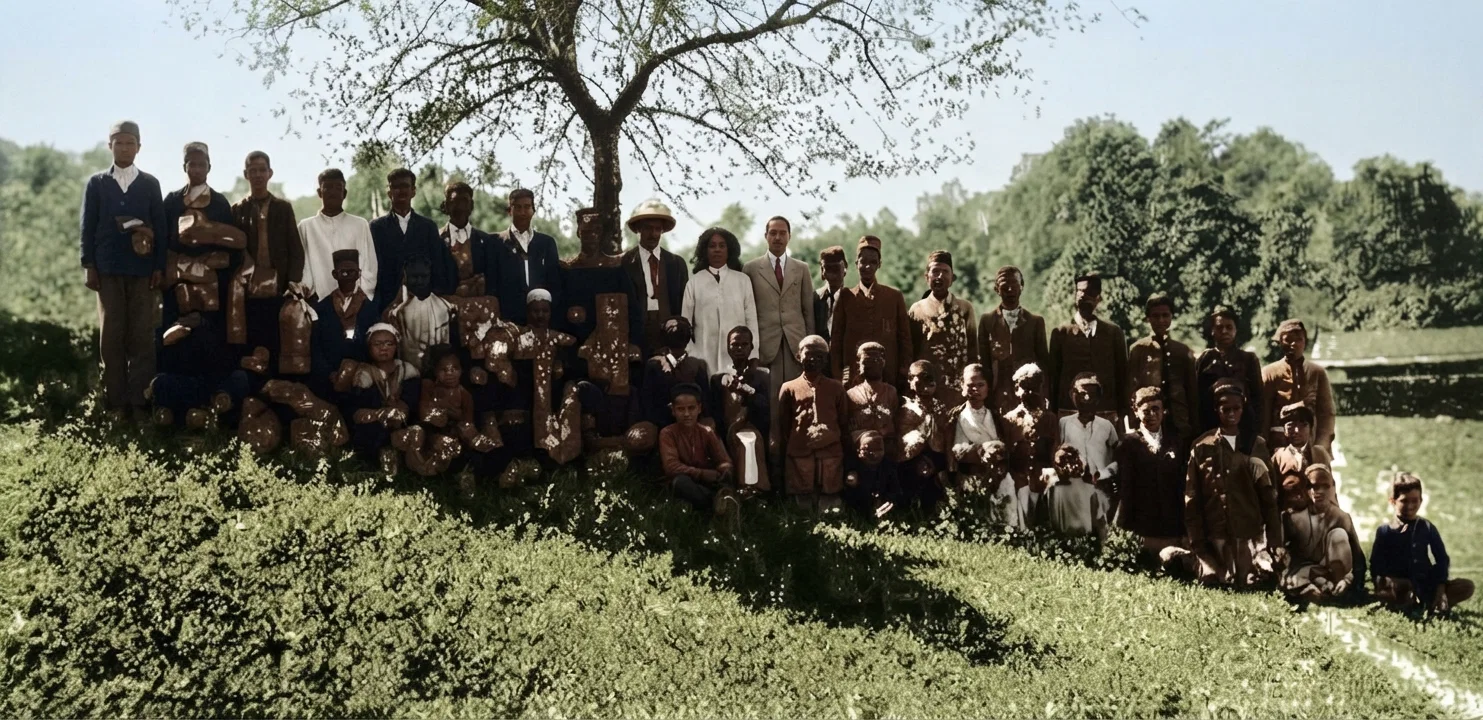
At the beginning of 1914 we held a meeting of the Hindustani workers here at Najibabad. Although small, the meeting was a help to our Hindustani brethren who were able to attend, and three, including the head master of the Garhwal school, asked for baptism at the close of the meeting. All the main
teachings of this people were covered in daily Bible studies, and Dr. Mann spoke each morning on health subjects. These, together with the prayer and devotional meetings, constituted the daily program for the ten days we were together. The evenings we spent in lantern work for the outside, either in the city or in the villages. The last day of the meeting Professor Salisbury was able to be with us, and gave an excellent talk to the workers.
At this station there is need of im-
mediate provision for the housing of our Indian workers, as they are now scattered through the bazaars of the city, both to the detriment of themselves and their children. For the zenana work being carried on by Sister O'Connor and her helpers there should also be made provision, so that they will be able to take in those who desire to accept Christ; for this means nearly always their complete separation from family and friends.
At Lucknow, Sister Chilton has put in long days in teaching in the zenanas, and, though the influence has been good and souls deeply impressed, some of them to the point of deciding for Christ, our lack of a place to which they could flee, if they break the family ties, and the fact that persecution is inevitably their portion if they remain in their homes and try to serve Christ, have acted as strong deterrents to any outward stand. In some of the Hindu homes an Indian sister has been teaching daily, thus sowing some seeds of truth, which we trust will bear fruit in due time.
Photo by S. A. Wellman WORKERS ATTENDING GENERAL MEETING IN NORTH INDIA
In the Punjab province some interesting openings are manifesting themselves, and we trust from them a definite work will develop during the year. The indications are that the hour has come to open work in that province, and that we shall see a harvest of souls as soon as we are able to put the workers there to lead out in a definite effort.
The prospects for the cause of truth in north India were never brighter. The workers are all of good courage, and all have pledged themselves to work faithfully for souls during this coming year. We believe that we shall see definite results in every station. To this end we ask a part in your petitions.
Will Puritanism Ever Return?
THIS is a question asked by the editor of the Independent in the issue of that journal for March 23, 1914. He declares:—
Lean years follow the fat. Radical and conservative policies alternate. The fashions swing from wide to narrow and from narrow to wide. Loose morals and puritanical habits are no exception to the rule.
Periods of notorious profligacy have usually been followed by revivals of emotional religion and by a general discountenancing of “worldly amusements.” These reactions, as every dispassionate student of history knows, have not been unmixed blessings. . . .
These reflections and reminiscences have been suggested, as our readers will surmise, by the present-day madness of self-indulgence. The craze for dancing, objectionable and unobjectionable, the vulgarity and lewdness of the stage, the speed mania of the automobilists who think no more of killing a human pedestrian than of running over a rabbit, the wanton extravagance in dress and in entertainment, make up a sum total of waste and vice not often matched since the Protestant Reformation. Will a puritan reaction set in?
We predict that it will, and that it will begin with a widespread emotionalistic religious movement. Probably, too, it will overreach and outdo itself, after the manner of such reactions in the past, perhaps seriously impeding a wholesome artistic development and a normal intellectual progress. These losses, if we have to meet them, will be a part of the price that the world has to pay for its follies.
The Independent is one of the popular magazines that believes the race is improving, that better times are ahead; but there is in the above a note which suggests the suspicion that the one who wrote it had somewhere read this statement of Scripture: “Evil men and seducers shall wax worse and worse, deceiving, and being deceived.” God has set religious leaders in the world to speak for him; but when they predict that the world will grow better, while the Scripture declares it will grow worse until the day of his appearing, the people are deceived to their own ruin, and Heaven must repudiate the message of such leaders.