Pacific Press Publishing Association · Mountain View, California · Jan 23, 1912
"IF YE WILL INQUIRE, INQUIRE YE."
By Editor
This Inquirers' Department is conducted for the purpose of helping those who are studying the Bible. The answers are oftentimes only suggestive. They are never to be considered infallible, only as they agree with the infallible Word. The writer who may answer them does not consider that his opinion is infallible. He will simply give the best that he has, and plead with the inquirer to search the Word. Such questions only will be answered as, to the editors, seem to minister to the good of the readers and to the mission of the paper. We can not answer repeatedly in the same volume questions upon the same scripture. The name and address must accompany question, not for publication, but as an evidence of good faith, and that answer may be made by letter if deemed advisable. No letters are answered which do not contain the name of the writer. It is well always to enclose stamp for reply.
Please explain Amos 8:11. What is meant by a famine of "hearing the words of the Lord"? O. H.
It means this: When God finishes His work in the earth, the seven last plagues of Revelation 16 are impending. His great threefold message of Revelation 14 will have been given. Warning will have come to every soul that lives upon the earth, and the multitudes in the valley of decision (Joel 3:14) will have taken their stand on the one side or the other of the great controversy. Of course great masses will have rejected God's Word. They will have laughed at the warnings, and scoffed at the coming judgments that were predicted as based upon that Word. But when the message has been given, all burden will be taken from the servants of God. They have done their work; God has done His. Then His judgments, the great consequences of sin, will come upon the earth. Men have rejected God's Spirit; God's Spirit is withdrawn, and the fulfilment of all the prophecies pertaining to that time will begin to take place. Men will then see — selfishly see — what they have lost, and they will begin to seek for the Word of the Lord, for hope, for comfort, for deliverance; but the Word then can not be found. They might have had it in their heart to fortify them against the calamities which are upon them, but they would not. And now that the calamities are upon them, according to that Word, then they seek for the Word, but can not find it. "They shall wander from sea to sea, and from the north even to the east; they shall run to and fro to seek the Word of Jehovah, and shall not find it." The text emphasizes the eternally important truth, "Behold, now is the acceptable time; behold, now is the day of salvation."
3648 — Sanctification and Politics
Is it possible for a man who testifies in social meetings almost uniformly that he is sanctified and saved, to be running for office in politics? N.
In the first place, there should be no boasting of one's sanctification, save in the Lord Jesus Christ, "through whom the world is crucified unto me, and I unto the world." Gal. 6:14. Our boasting is in Him. We can say again, with Paul, "Christ Jesus came into the world to save sinners; of whom I am chief." And in our Christian life, modesty would lead us also to say, as did the great apostle, "Not that I have already obtained, or am already made perfect: but I press on, if so be that I may lay hold on that for which also I was laid hold on by Christ Jesus. Brethren, I count not myself yet to have laid hold: but one thing I do, forgetting the things which are behind, and stretching forward to the things which are before, I press on toward the goal unto the prize of the high calling of God in Christ Jesus." We may say that the Lord Jesus Christ has forgiven our sins, and cleansed us from all unrighteousness, because we have faith in Him; but in the light of constantly increasing truth, no Christian will boast of his attainments. It is contrary to the whole tenor of Scripture.
Secondly, as to politics. Politics are based on expediency, and in many cases in this present world, on almost utter lack of principle. The first thing in the Christian life is principle. He is chosen to serve God in righteousness and holiness. He must not depart from that standard, nor can he without loss. He can not, therefore, submit his standard of right, his conscience toward God, to any political party, or scheme, or plan. "No man that warreth entangleth himself with the affairs of this life; that he may please Him who hath chosen him to be a soldier," is the injunction of the apostle. And again, "For our citizenship is in heaven." These are principles which should all-absorbingly possess Christians.
3644 — The Love-Feast
Who originated the love-feast which is practised in the Methodist Church, by partaking of bread and water? and is there any authority for it from the Scriptures? P.
The love-feast comes from "agape," the Greek word for love, "used by ecclesiastical writers most frequently in the plural," says the "Popular and Critical Biblical Cyclopædia," "to signify the social feasts of friendship, love, or kindness in use among the primitive Christians." We have no command for these feasts at all. There is no scripture which makes them binding or obligatory. As stated by the authority above named: "These festivals were kept in the assembly, or church, towards evening, after prayers and worship were over. Upon these occasions the faithful ate together with great simplicity and union what each had brought, so that rich and poor were in no way distinguished. After a supper marked by much frugality and modesty, they partook of the sacramental signs of the Lord's body and blood, and gave each other the kiss of peace." Some of these believers, doubtless, were widely scattered, and coming together in that way found the simple meal a love-feast indeed, spoken of in Jude as "feasts of charity," or love. Afterward they seemed to have fallen into discredit, and became corrupted and perverted and shameful. The Council of Laodicea, Canon 28, and the Synod of Trullo, Canon 74, and the Council of Carthage, Canon 42, abolished them. Later they have been revived, and our Methodist friends still practise them. There is nothing obligatory in them, neither is there anything against the gathering of Christians and the holding of love-feasts at any time. Every such gathering of Christians ought to be a love-feast.
3645 — James and Paul
By Editor
It is said that Paul withstood Peter, Gal. 2:11. Now after reading Romans 4 and 5, what do you think would be Paul's opinion of James 2? F.
We can not see how there could be any difference between Paul and James. Paul's withstanding Peter was quite another thing. It did not pertain to Peter's teaching in his epistles God-given, but it pertained to Peter's conduct. The simple fact is that Paul is talking of the necessity of faith in order that we may be saved, faith unto salvation; and James is telling us of just what that kind of faith is. This solves the whole problem. Paul's whole argument in Romans is that there is no possible way of getting rid of our sins of the past, of furnishing any righteousness ourselves to cover that past, but God does it through faith in the Lord Jesus Christ. And by that same faith, power is given to us so "that the righteousness of the law might be fulfilled in us, who walk not after the flesh, but after the Spirit." He expresses the life of the Christian in another place in this way: "For in Jesus Christ neither circumcision availeth anything, nor uncircumcision; but faith which worketh by love." This is the kind of faith of which James is teaching, the faith that works, and if our faith is that which will not lead us to obey God, it is an utterly spurious faith.
3647 — Infant Baptism
By Editor
Will you please tell me who was the author of infant baptism, and how did it originate? P.
It is impossible to tell the origin of infant baptism. Its origin is lost in the mists of the early centuries. In the first place, we have no warrant for it in the Scriptures, and as expressed by the quaint Henry D'Anvers: "Where the Scripture hath no tongue, we ought to have no ear. According to that known maxim, to practise anything in the worship of God as an ordinance of His, without an institution, ought to be esteemed will-worship and idolatry." In his "Treatise on Baptism," he quotes Luther as saying, "Young children hear not, nor understand the Word of God, out of which faith cometh; and therefore if the commandment be followed, children ought not to be baptized." And Calvin, from his "Fourth Book of Institutes," chapter 16, "That it is nowhere expressly mentioned by the evangelist that any one child was by the apostles' hands baptized." And very many more to the same effect. That it was not founded in Scripture is indicated by the decrees of popes and councils in the fifth century. The Milevitan Council declared, "That it is our will that all that affirm that young children receive everlasting life, albeit they be not by the sacrament of grace, or baptism, renewed; and that will not that young children, which are new born from their mothers' womb, shall be baptized to the taking away original sin, that they be anathematized."
The fifth general Council of Carthage, in the year 416, decreed, "We will that whoever denies that little children by baptism are freed from perdition and eternally saved, that they be accursed."
It existed as early as Tertullian, because he contended against it. He lived about the year 200. The very ones, however, who teach it, teach other traditions and superstitions that are certainly not Christian, and have no basis in Scripture. As men forgot God, they turned to superstition and ritualism, and endeavored erroneously to continue the rite of circumcision in baptism. The words of our Saviour ought to be sufficient for all: "He that believeth and is baptized shall be saved."
Joseph and the Exodus
Schedule for Week Ending February 3 Sunday, January 28, Genesis 42-43
Our readings continue the story of Joseph, and God's providential dealings through him for the preservation of the lives of his relatives. They thought to do him ill; God was using him for their good. Jacob felt, "All these things are against me;" God was making all those things for him. There are wonderful lessons for all generations in these closing chapters of Genesis. Jacob's prophecies concerning his seed are scriptures over which there is more or less discussion, some holding that the tribes will again be restored in the last days, and the prophecies are still, in a measure, to be fulfilled. But the 10th verse of the 49th chapter gives us a solution of all the prophecies,—"The scepter shall not depart from Judah, nor the ruler's staff from between his feet, until Shiloh come; and unto Him shall the gathering (the obedience) of the peoples be." When Christ the Lord should come all should center in Him. He, the true stock of Israel, must be the one in whom all Israel find root and nourishment, and therefore those who are Christ's are Abraham's seed, heirs according to the promise, and are of the true tribes.
We have four chapters in the book of Exodus. The term "exodus" itself means "a going out," and the book is so called from Israel's going out of Egypt. God blessed the children of Israel wonderfully while in Egypt, under kings who were favorable, and who knew the good that Joseph had done to Egypt; but later a new king came. There is no certain agreement regarding the changes which took place in the dynasty from the one that was favorable to the children of Israel to the one unfavorable. Certainly there was a clear, a decided transformation. And here again we have God's providential care over His people. The more they were oppressed the more they increased. The dynasty, however, seems to have sprung from Assyria (see Isa. 52:4). The term "Pharaoh" is an appellative, or title, and not a name,—the same as czar, emperor, king. Pithom, one of the treasure cities, comes from Pa-Tum, the abode of the god Tum, the same as the Greek Heroöpolis; and Raamses, said to be so called because built by Rameses II.
The great character which stands out above all others in these chapters is that of Moses. Self-sufficient at first, in his own earthly wisdom, skill, power, and position, all this falls away after his forty years of postgraduate work with God in the deserts of Midian. Keeping the flock under the shining heavens, and communing with the great Creator, he has come to recognize his own littleness and God's greatness. God reveals Himself to Moses as the great "I AM," the covenant God, the one who will fulfil as He has fulfilled in the past, as He will fulfil in the future,—the great, ever-present Deity. The book also is a book revealing the redemption of man. In the very names themselves, again and again we have evidences of God's redemption. It is worth while, sometimes, to look out the meaning of the names of those whom God is using in His work, or of persons connected with God's work in times of crisis,—the covenant name of God, the revelation of His name, Moses speaking to the ruler in His name, Pharaoh raised up to add glory to that name, the law given in the name, God's name in the angel; and there are still other instances in which God shows regard for His name. And through all the book, as through Genesis, the seed, and the promise of the seed, are kept uppermost.
The week closes with the 13th, 14th, and 15th Psalms. Very heart-searching, indeed, is the last one.
Testimony of Jesus
By George W. Reaser
By George W. Reaser
IV—Fulfilled Prophecy the Mightiest Evidence that Jesus Is the True Messiah
Jesus' Proof of His Own Messiahship
TRUTH of equal importance, to the children of men, with the existence of God, is the Messiahship of Christ.
If Jesus is the true Messiah, He must have some incontrovertible proof of it. What proof of His Messiahship does He offer?
Let us dwell for a few moments upon some of the miraculous events associated with the birth of Christ, for therein do we find proof positive of His Messiahship.
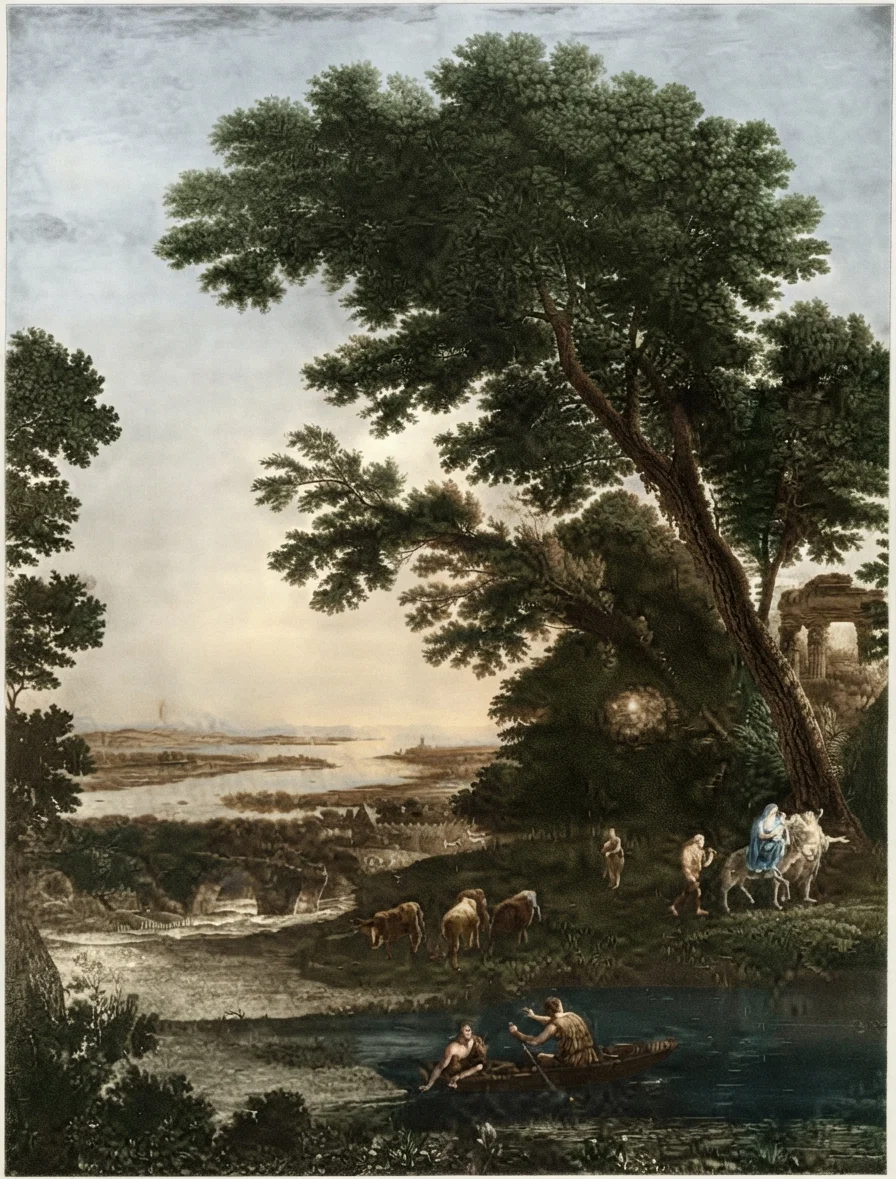
THE FLIGHT INTO EGYPT
Mary's Protection
From the foundation of the world, motherhood in wedlock has been covered with a halo of glory, and out of wedlock with a mantle of shame. What wise provision was made in the councils of heaven, to cover Mary, the mother of Jesus, with a halo of eternal glory, instead of a mantle of perpetual shame, and at the same time give us ample ground for intelligent faith in the supernatural conception of Christ, or in the fact that the Son of God literally became "the Seed of the woman," "the Son of Man"? While we may say that if Mary had been guilty she would not have dared declare herself innocent, in the presence of the angel Gabriel (Luke 1:31-34), yet this reason alone is not sufficient. God would not expect us to accept her evidence, if it stood alone.
I must confess that while I desire to believe in the miraculous conception of the Saviour, yet if Mary's testimony alone were all the evidence that we have upon which to base faith in His supernatural birth, I could not believe in her as a pure, truthful woman; nor do I believe that God would hold me guilty for disbelief in her solitary testimony to her conception, for it was wholly unique in the entire history of the world. What a tremendous temptation for Mary, if guilty, to cover her shame by telling the story of a miracle! If by her story she could convince Joseph of her innocence, he would take her to be his wife, and thus cover her shame, and avert the dreadful calamity of her being stoned to death.
With the infatuation of love to modify cool, deliberate judgment, of all other persons in the world, Joseph, to whom Mary was espoused, would have been the least inclined to doubt her statement. But evidently he did not accept her explanation (and it is beyond belief that she did not make full explanation to him); for when he discovered her condition, he decided not "to make her a public example" of impurity, and thereby cause her to be stoned to death, according to a law in Israel (Deut. 22:21), but, in charity, determined to conceal her evident guilt by putting her away privately. It required a special visitation of an angel to corroborate Mary's account and thus convince Joseph of her spotless purity. Matt. 1:18-25. If Joseph could not believe her statement until convinced by a special messenger from glory, God would not expect me to believe in the supernatural birth of Jesus into the world upon the statement of a Jewish maiden, who, if guilty of shame, would naturally have a desire to create the story of a miracle to cover her guilt. Wherein, then, do we have all-sufficient ground for faith in the fact that the Creator, the Lord of Glory, the Son of God, was united with humanity in His birth, so that He might take this essential preliminary step in becoming the Saviour of men?
Be assured, reader, that there was nothing overlooked in the divine plan. God gave me all the basis for faith that I could possibly require. He paved the way for Mary to stand shameless not only before the angel and before her espoused husband in making her candid profession of purity, but likewise before the universe; and not only shameless, but, in her humility, covered with a spotless robe of perpetual glory.
How did divine wisdom, in advance, undermine skepticism and cause Christianity to triumph gloriously? The answer is simple; namely, by the "testimony of Jesus," the "sure word of prophecy." Jesus Himself, speaking through the prophet some 740 years before the event was fulfilled, had said, "Therefore the Lord Himself shall give you a sign; Behold, a virgin shall conceive, and bear a Son, and shall call His name Immanuel." Isa. 7:14.4
His Birthplace Foretold
How marvelous the fulfilment of the prophecy which specified the birthplace of the Messiah! More than 700 years before His birth into our human family, Jesus, by the spirit of prophecy, spoke God's word through the prophet Micah, saying, "But thou, Bethlehem Ephratah, tho thou be little among the thousands of Judah, yet out of thee shall He come forth unto Me that is to be ruler in Israel; whose goings forth have been from of old, from everlasting." Micah 5:2. When the exact time came for the fulfilment of these sure words of prophecy, Joseph and Mary were called from their home in Nazareth of Galilee to Bethlehem, by the world ruler, Cæsar Augustus, and there Jesus was born. Luke 2:1-7. Who can but be overwhelmed with wonder and awe at the foreknowledge of God, and the accuracy of the prophetic foresight, which could penetrate the future for seven centuries, and know that altho Joseph and Mary would be residing at Nazareth, yet just at the opportune time for the birth of Jesus to take place at Bethlehem, they would be called there to be enrolled for taxation, by a ruler who knew not God!
The wisdom of God laid the plan of salvation so carefully, so accurately, in advance, that no truth is better established than the Messiahship of Christ.
No Design of Men
There was absolutely no concerted plan on the part of any set of men whereby they designed to fulfil a single detail of prophecy relating to Christ's birth, or any other God-given prophecy. But in open opposition to the divine purpose, King Herod arrayed his civil power against the fulfilment of prophecy, in his wicked decree consigning all the children in Bethlehem and round about, to cruel slaughter. The Lord has said that He will make the wrath of man praise Him, and the remainder of wrath He will restrain; and thus it proved that the wrath of Herod, hurled against the innocents at Bethlehem, literally fulfilled two very definite specifications of prophecy. Jer. 31:15-17; Matt. 2:12-18. A parallel of this is found in the agreement of Herod and Pilate concerning the crucifixion of Jesus. While trying to defeat God's purpose, they fulfilled prophecy, but were not conscious of it. Ps. 2:2, 3; Acts 4:23-28; 13:27-35. The testimony for Jesus, as well as the testimony of Jesus, is the spirit of prophecy.
(This article of the series concluded next week)
The Sabbath of the Bible
By Mrs. E. G. White
By Mrs. E. G. White
HAD the Jewish nation been true to their trust, and communicated to the world the light they had, they would have remained the depository of the truth of God. God had brought His people out of the cruel bondage of Egypt, and had exalted them before the nations around them. They were favored with every temporal and spiritual blessing. God’s presence went with them, enshrouded in the pillar of cloud by day, and the pillar of fire by night. They were under His guardianship, and His love and care were manifested in protection and blessing. But they were unfaithful; they rebelled against God, and transgressed His holy law, spoken from Mount Sinai by His own voice, and written on tables of stone by His own finger; and God sent His Son to make known to the world His character and the laws of His kingdom.
In the beginning was the Word, and the Word was with God, and the Word was God. The same was in the beginning with God. All things were made by Him; and without Him was not anything made that was made. In Him was life; and the life was the light of men. And the light shineth in darkness; and the darkness comprehended it not. . . . That was the true Light, which lighteth every man that cometh into the world. He was in the world, and the world was made by Him, and the world knew Him not. He came unto His own, and His own received Him not. But as many as received Him, to them gave He power to become the sons of God, even to them that believe on His name. . . . And the Word was made flesh, and dwelt among us, (and we beheld His glory, the glory as of the only-begotten of the Father,) full of grace and truth. . . . And of His fulness have all we received, and grace for grace.
He Came When Most Needed
At the time when He was most needed, Jesus, the Son of God, the world’s Redeemer, laid aside His divinity, and came to earth in the garb of humanity. He came to live out in His life God’s holy law, that had been misrepresented, and buried beneath human tradition and the commandments of men. Forms and ceremonies had been put in the place of the Word of God, until its pure and holy principles were almost extinct.
Christ came as the representative of God, the Light of the world. His mission to earth was to dispel, with His clear, bright rays, the moral darkness that was enshrouding the world. He gave no heed to the traditions and maxims of men. These human inventions were opposed to the Gospel of the kingdom He had come to establish. He sought to remove from the law the mass of rubbish with which men had covered it. Of priests and rulers He said, “In vain do they worship Me, teaching for doctrines the commandments of men.”
In His Sermon on the Mount, Christ declared: “Think not that I am come to destroy the law, or the prophets: I am not come to destroy, but to fulfil. For verily I say unto you, Till heaven and earth pass, one jot or one tittle shall in no wise pass from the law, till all be fulfilled.”
Many professing Christians of to-day are closing their hearts and minds to the Sun of Righteousness, whose bright beams would chase away the darkness and mist that exist there. They refuse the light, and make God’s requirements and will of secondary importance. In place of the rest day given them by Jehovah, they accept a counterfeit sabbath; they worship an idol, and transgress God’s holy law in trampling upon the Sabbath which He has instituted and blessed.
The Object of the Sabbath
The object of the Sabbath was that all mankind might be benefited. After God had made the world in six days, He rested, and blessed and sanctified the day upon which He rested from all His work which He had created and made. He set apart that special day for man to rest from his labor, that as he should look upon the earth beneath, and the heavens above, the tangible proofs of God’s infinite wisdom, his heart might be filled with love and reverence for his Maker. Had man always kept the day which God has blessed and sanctified, there would never have been an infidel in our world; for the Sabbath was given as a memorial of the Creator’s work; it was given that upon that day, in a special sense, man might draw his mind away from the things of earth to the contemplation of God and His mighty power.
“But the Lord is the true God, He is the living God, and an everlasting King: at His wrath the earth shall tremble, and the nations shall not be able to abide His indignation. Thus shall ye say unto them, The gods that have not made the heavens and the earth, even they shall perish from the earth, and from under these heavens. He hath made the earth by His power, He hath established the world by His wisdom, and hath stretched out the heavens by His discretion. When He uttereth His voice, there is a multitude of waters in the heavens, and He causeth the vapors to ascend from the ends of the earth; He maketh lightnings with rain, and bringeth forth the wind out of His treasures.” The heathen in their blindness bow down to idols of wood and stone. “These be our gods,” they say. But in the fourth commandment we have the proof that our God is the true and living God. In it is the seal of His authority: “Remember the Sabbath day, to keep it holy. Six days shalt thou labor, and do all thy work: but the seventh day is the Sabbath of the Lord thy God: in it thou shalt not do any work, thou, nor thy son, nor thy daughter, thy man servant, nor thy maid servant, nor thy cattle, nor thy stranger that is within thy gates: for in six days the Lord made heaven and earth, the sea, and all that in them is, and rested the seventh day: wherefore the Lord blessed the Sabbath day, and hallowed it.” In the heavens, that declare the glory of their Maker,—the sun, shining in his strength, giving life and beauty to all created things; the moon and the stars, the works of His hands,—we see the superiority of the God we worship. He is the God that “made the heavens and the earth.”
Sabbath Blessings
Great blessings are promised to those who place a high estimate upon the Sabbath, and realize the obligations resting upon them in regard to its observance: “If thou turn away thy foot from the Sabbath, from doing thy pleasure on My holy day; and call the Sabbath a delight, the holy of the Lord, honorable; and shalt honor Him, not doing thine own ways, nor finding thine own pleasure, nor speaking thine own words: then shalt thou delight thyself in the Lord; and I will cause thee to ride upon the high places of the earth, and feed thee with the heritage of Jacob thy father: for the mouth of the Lord hath spoken it.”
Christ commanded His followers, “Search the Scriptures; for in them ye think ye have eternal life: and they are they which testify of Me.” Peter exhorts us, “Sanctify the Lord God in your hearts: and be ready always to give an answer to every man that asketh you a reason of the hope that is in you with meekness and fear.” The earth itself is not more interlaced with golden veins and precious things than is the Word of God. It is the field of revelation, the storehouse of the unsearchable riches of Christ. The truths contained therein are as “treasure hid in a field; the which when a man hath found,” “for joy thereof” he “goeth and selleth all that he hath, and buyeth that field,” that he may search every part of it, and make himself master of its treasure.
That field is the Word of God; and it must be searched before its precious things can be brought to light. But by the grace5of God, and the enlightenment of His Holy Spirit, we may make ourselves the possessors of its hidden treasure. Then let us search the Scriptures daily, as did the noble Bereans of Paul's day, to find out if these things be so, and be willing to receive "with all readiness of mind" the pure Word of God.