Your ShelfYour Projects

Signs of the Times, Vol. 32, No. 46.

ORDERS FOR THE "THANKSGIVING AND COMING OF THE LORD" SPECIAL NUMBER OF THE "SIGNS OF THE TIMES" ARE COMING IN
Earlier text: ORDERS FOR THE "THANKSGIVING AND COMING OF THE LORD" SPECIAL NUMBER OF THE "SIGNS OF THE TIMES" ARE COMING IN

DISAPPOINTMENT.

GOD keeps a school for His children here on earth, and one of the best teachers is Disappointment. My friend, when you and I reach our Father’s house, we shall look back and see that the sharp-voiced, rough-visaged teacher, Disappointment, was one of the best guides to train us for it. He gave us hard lessons; he often used the rod; he often led us into thorny paths; he sometimes stripped off a load of luxuries; but that only made ustravel the freer and the faster, on our heavenward way.
He sometimes led us down into the valley of the death shadow, but never did the promises read so sweetly as when spelled out by the eye of faith in that very valley. Nowhere did he lead us so often, or teach us such sacred lessons, as at the cross of Christ. Dear old rough-handed teacher! We will build a monument to thee yet, and crown it with garlands, and inscribe on it: ‘‘Blessed be the memory of Disappointment.’’—Theodore L. Cuyler, D. D.

THE CLOSING WORK.

MRS. E. G. WHITE.
TO each human being God has assigned a work. Abraham was called to go forth from his home, a light-bearer to the heathen. And without questioning he obeyed. “He went out, not knowing whither he went.” So to-day God’s servants are to go where He calls, trusting Him to guide them and give them success in their work.
The disciples of Christ are to feel a noble, generous sympathy for every line of work carried on in the great harvest field. They are to be interested in everything that concerns the good of their fellow men. By their baptismal vows they are pledged to make persevering, self-denying efforts to promote, in the hardest parts of the field, the work of soul-saving. God has placed on every believer the responsibility of striving to rescue the helpless and the oppressed. They are to break every yoke, letting the oppressed go free from the power of vicious habits and sinful practises.
Christians are to be Christlike in their earnest desire to save souls. They should regard it as the highest honor to be enlisted in Christ’s army. They should thank God for the privilege of using the talent of speech to win souls to the Saviour. They should look upon no privilege as more precious than that of imparting to others knowledge they have received.
Time Is Passing; the End Is Near. While you are unconsecrated, golden opportunities to help souls to see Jesus as He is—full of grace and truth—are being lost. That which you have not done as a devoted Christian in the year which has now almost passed into eternity, you can not now do. But through the grace of Christ, you may redeem the time by redoubling your exertions. Let your interest in the souls for whom Christ has died deepen and broaden. Do not ask, “What shall this man do?” for then Christ would say to you as He said to Peter, “What is that to thee? follow thou Me.” Keep your own soul in the love of the truth, and work with untiring endeavor to win souls to the Saviour.
Look upon the world to-day. Is the voice of prayer heard amidst the din of confusion? Altars are erected, but it is not to God that the sacrifices are offered. Deceivers, robbers, and murderers are many. Pride of ancestry and pride of wealth minister to the work of soul-destruction. Avarice, sensuality, malice—these are the attributes that bear sway. Thousands are standing on the brink of perdition. Do you not see them, many of them lost, eternally lost, whilst professing Christians sleep the sleep of indifference?
Earnest, Self-Sacrificing Men and Women are needed, men and women who will go to God, and with strong crying and tears plead for the precious souls that are going to ruin. There can be no harvest without seed-sowing, no result without effort.
Christ gave His life to save sinners, and He says to His followers, “Go ye into all the world, and preach the Gospel to every creature.” “Lo, I am with you alway, even unto the end.” He has laid out before us the work to be done, and has declared that He will give power for the accomplishment of this work. Shall we take Him at His word, believing that He meant just what He said when He declared that the whole world is to hear the message of mercy?
The work is fast closing up, and on every side wickedness is increasing. We have but a short time in which to work. God is not willing that any should perish. He has provided abundantly for the salvation of all. If His people had gone forth as they should, giving the invitation of mercy, many souls would have been won to Christ. Let us awake, from spiritual slumber, and consecrate all that we have and are to the Lord. His Spirit will abide with true missionaries, furnishing them with power for service. God is an overflowing fountain of efficiency and strength. The Gospel is the power of God unto salvation to every one that believes. When this power is utilized, it will be found to be more than sufficient to meet the power of the enemy.
It is impossible for men who believe in Christ to see the work that needs to be done and not do anything. Daily the church is to receive from heaven the healing balm of God’s grace to impart to the needy and suffering. The church of God is weighted with the most sacred responsibilities and the most glorious privileges. All who believe the message of Christ’s soon coming will go forth to do something for the Master, relying on the assurance, “He that goeth forth and weepeth, bearing precious seed, shall doubtless come again with rejoicing, bringing his sheaves with him.” In practical obedience to the divine command, his confidence will increase and his talents will multiply.

A COLLEGE CONFLAGRATION.

A Lesson of Spiritual Deadness.
MEN may think themselves very religious by reason of their sincerity in holding beliefs, and because they say a lot of prayers regularly, but when disaster overtakes them they usually fail to learn the lesson intended because they are unteachable. There are moral or rather immoral causes of all conflagrations and calamities. We should learn to shun the infected localities when it is not possible to purify them. By immoral is not here meant lascivious, but out of harmony with the One Divine Power of Wisdom, i. e., "God."
If sickness invades a family, poverty overtakes a person, flames destroy his dwelling, robbers invade his premises, or bunco-men deceive him and take away his possessions, such immorality or inharmony with the everywhere Ruling Power has previously entered. Sickness, poverty, flames, or calamity can not possibly overtake him in whom Divine Harmony has perfected Wisdom, for Wisdom can foresee and avert them.
Silly men, forgetful of Divine Wisdom, make to themselves a mental picture or concept which they label "God;" they pray to it to violate natural law, crowd children into believing their own errors, and in some colleges, boys are forced to listen to their idolatrous prayers. Vainly do they imagine that thereby they can escape the penalties of violated law and of forgetfulness to pursue Wisdom as the sole guide of life. In these circumstances, a wave of sectarian narrowness, a deadening spirit of carelessness, a chronic flow of incaution, a lack of foresight, settles down like a San Francisco fog over all their faculties, and utilizes a score of means for producing a terrible calamity. This was the case with our doomed city where everybody could recognize the contributing causes of the disaster. But I shall exhibit them in a pious college community free from saloons, from brothels, and gross immoralities. An enormous aggregation of stupefying forces may be operative in conjunction with ceremonial observances and incorrect beliefs and mental deficiencies. Please observe how the following facts illustrate the foregoing statements:
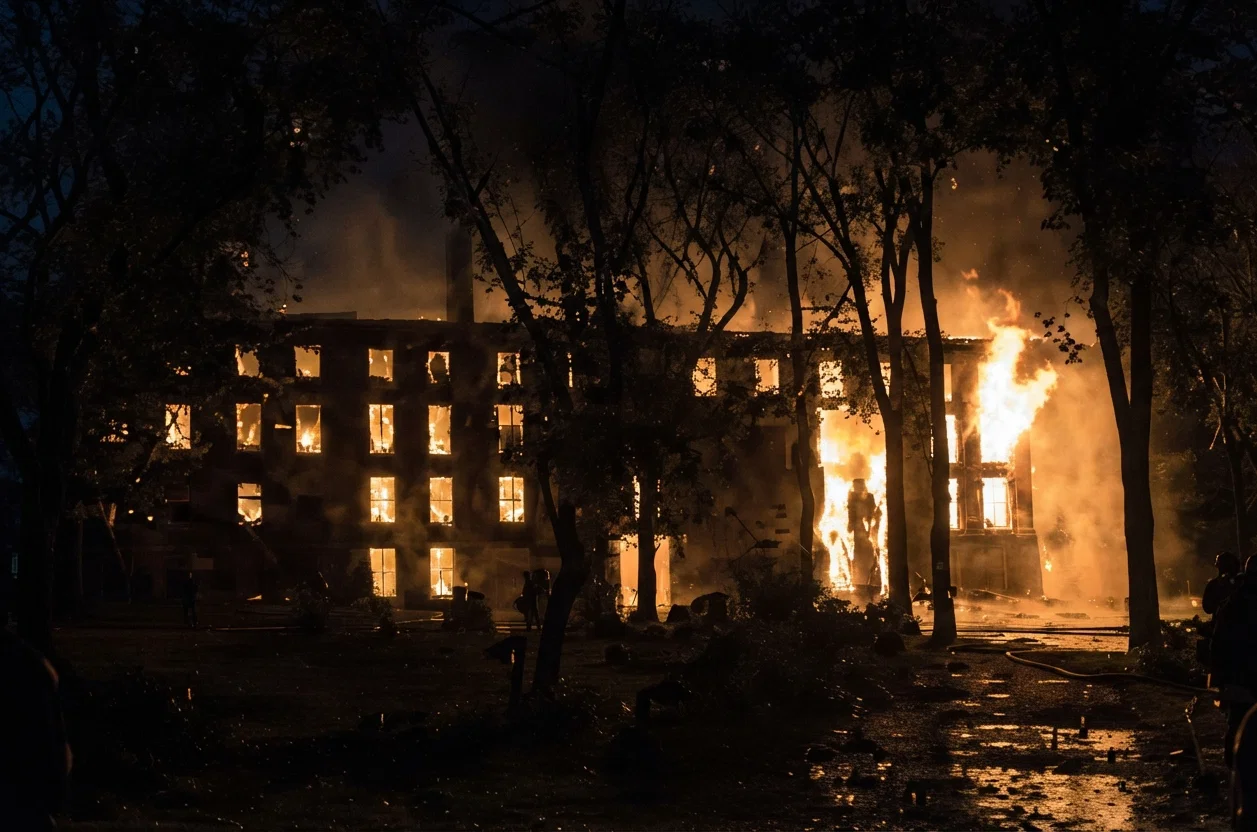
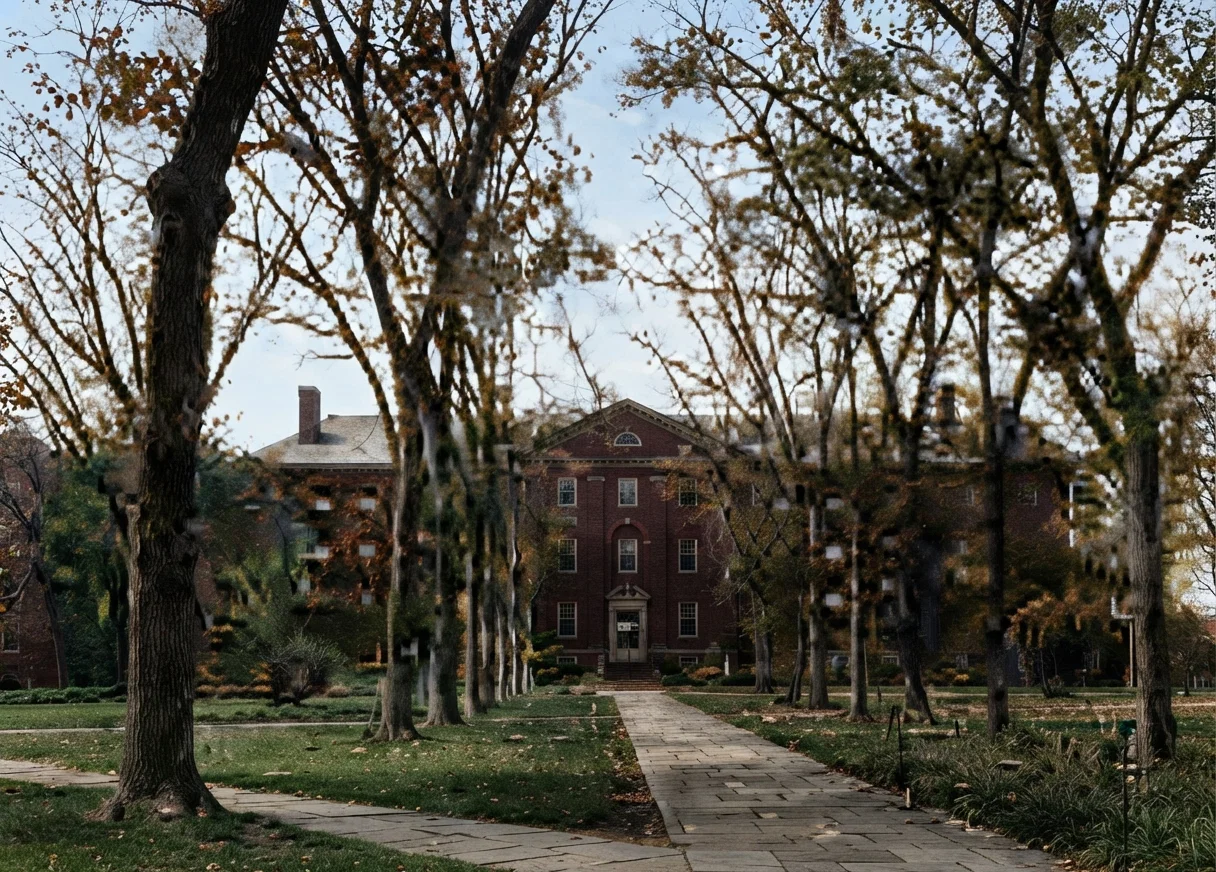
On a hill overlooking the town stood a stone building, four stories in height, with a front of about 150 feet and a depth of about 50 feet. Its value was $85,000. It contained sixty-four rooms and housed eighty-five college men. Of these, half were freshmen and the remainder were non-fraternity upper-class men. Fire-proof partitions separated the second, third, and fourth stories into three equal sections. Over the whole was one large attic of well-seasoned combustibles. The brick partitions did not, as they should have done, extend up through the roof. In that case, either section could burn separately.The attic gable over the front entrance contained a small room with its double window opening to the east. This construction increased the attic woodwork. This room had been for many years rented by the college authorities to a coterie of seniors for
a class society. They blinded the window to such an extent that fire or light in the room could not reveal itself outside. They barred its entrance with a metal door which could not be broken down even if smoke was seen issuing around its joints. They met there every Wednesday evening to smoke, discuss college politics, and to plan to secure for their members as many class-day honors as possible.
North College, East Front.
On the last night of February, 1906, when the thermometer registered far below freezing, they occupied their room with pipes, cigars, and cigarets until about 10:30. About 12:00 o'clock three students who roomed on the fourth floor right under the attic room detected the odor of smoke. One man, and later another, J and C, looked into the halls, out of the window, felt the plastering, and found nothing. They all knew, theoretically at least, that Wednesday was the evening for a smoker in the attic overhead, but neither of them thought to hunt up a senior who could examine the attic room. Matters rested an hour. The odor continuing, V made a tour of the lower floors, went outside the building, glanced at the various windows, including the blinded attic window, and found nothing.
Another hour passed, when, a little before 2 A. M., the three heard crackling of flames and saw smoke coming down from the ceiling of their room. They found then that they could not get into the attic. The occupants of the building were awakened, and the city fire department telephoned to. One company started out with a hose-cart to climb the hill. Meanwhile, smoke poured out around the metal door which was not opened until a certain senior could be found. Buckets of water were thrown on flames that had already eaten out of the room into the attic.
For many years, off and on, the students of this sectarian, "praying," college had amused themselves with creating bon-fires and false alarms to summon the firemen up that long hill. Many execrations had been uttered by the fire laddies. Tho officially called over the telephone, only one hose-reel was started out at once. I venture that in the freezing cold and blustering night they did not exhaust themselves in climbing the hill. Later, a general alarm brought other apparatus, but no steam fire-engines. The city depended on a high pressure service, which, in the city proper, was theoretically sufficient.
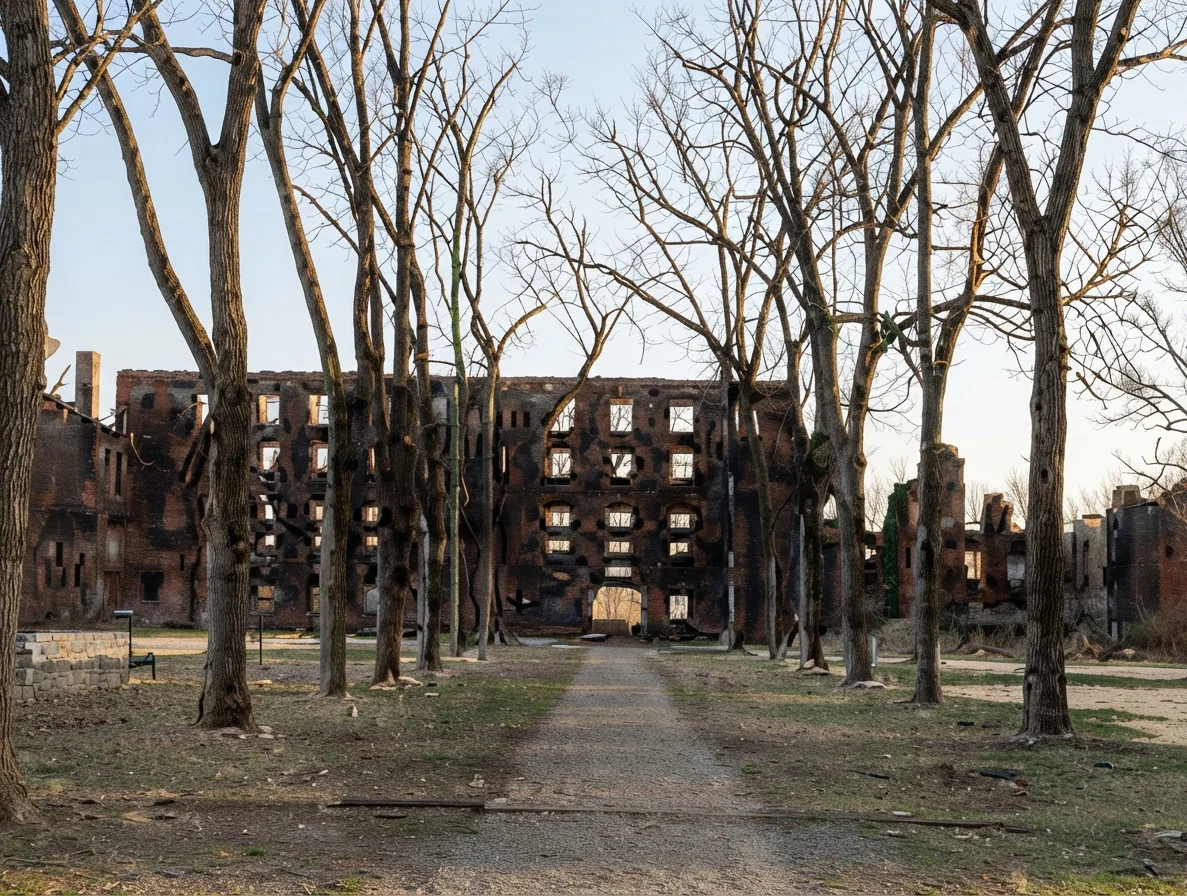
When hose had been carried to the fourth floor, there was not enough water pressure to render effective service. Some brick walls were pierced in a hope to reach the flames, but this only gave draught to increase them and to admit them to other sections of the structure. The increasing smoke soon drove everybody down from the upper floor and the whole attic blazed furiously. By degrees, the flames ate their way down to the very ground and consumed everything but the stone walls and fallen bricks. Most of the students were able to move their books and clothes out upon the campus where the blizzard atmosphere froze the very moisture of their breaths.
When insurance money was asked for, a funny surprise awaited these incredulous people. They had paid premiums on more than the value of this building, but instead of an itemized insurance on each building, they had been led to pay for a blanket insurance on all the buildings and their contents. The insurance welchers would pay only a pro rata upon the whole. This came to but $35,000 when $85,000 was expected, making a net loss of $50,000.
A janitor had occupied two rooms in this building for forty-two years, and well knew that the pressure of the city water was at times so low that water could not run at a sink on the fourth floor. Twenty feet from the building, there used to be a well from which water could be thrown by a force pump, but stupidity had filled it up to prevent sophomores from ducking the unruly freshmen.
East Front, 4 A. M., March 1, on Fire.
A professor had occupied a room in this building for thirty-nine years, but he never troubled himself about what went on in the attic any more than did the janitor.
With the building in ashes, they all stood around and commented on how one thing after another all went wrong; how some devil had arranged a hundred untoward circumstances, while men had not arranged one single circumstance for meeting such a contingency. In such a case the demon spirits had it all their own way. If we had only examined the attic when we first smelled smoke, said the three students. If I had looked after those smokers, said the janitor. If I had forbidden blinding the attic window, said the president. If there had been more water, said the firemen. If the insurance companies had not gulled us, said the local trustees. If the boys were not cigaret suckers, said the faculty wives. If God had not made the devil, said old professor R. If president C had not set the example of smoking in number 24, said an elderly graduate.
But what shall we say of the inexpressible stupidity of them all; of the president permitting cigaret-suckers to blind and bar the tinder-box; of the seniors habituated to throw cigaret stubs into waste paper baskets, sawdust spittoons, or corners full of dust and cobwebs; what of a janitor enriched with forty-two years' salary for neglect; what of three boys smelling smoke for two hours before they found it; what of local trustees, unmindful of every precaution; what of a city possessed of not one solitary steam fire-engine; what of students crazed over murderous or scandalous football, but oblivious to their own safety; what of the compulsory chapel attendance in lieu of a proper fire-drill; what of the value of constant stuffing of the memory to the destruction of intuition; what of the whole atmosphere of such an establishment?
At the very time a committee of professors was out begging more money when they did not know enough to protect what they had. They were complaining of small salaries and declaring, "We must have more money." Some of them had already drawn a hundred thousand dollars in salaries. Professing to be Christians, they were "conformed to the world." Preachers, they did not practise nor earnestly seek wisdom. Religious, their religion related only to post-mortem examinations. Full of belief in sectarian creeds, they would snub or persecute those whom they had first labeled as disloyal to their ideas.
We can only say that no religion is of value except as it produces wisdom, and that the entire crowd that witnessed that fire was devoid of wisdom. There is no wisdom apart from complete self abnegation, and this is not an easy matter. But he who has wisdom can foresee all these contributory factors to a calamity and can thus avoid the calamity. God imparts blessings, not in response to said "prayers," but through the mediumship of wisdom. He who will not comply with the laws of the acquirement of wisdom can not avert calamity. There is a kind of prayer which creates wisdom.
Ruins East Front, March 12.
If for four years a boy is kept in such a college, it matters not how many of other men's ideas he memorizes out of books, if he has the acquaintance of such a set of taskmasters called professors only for politeness' sake, if he acquires the false ideas of education there exhibited, he will be the worse and not the better for his course. He will not even find out what wisdom is in thefour years, and had better have worked on a farm. The way to wisdom is through learning, impregnated with a knowledge of God which is not taught from text-books. This knowledge is not of a theoretical deity, not a matter of speculative belief, but a very rare experience which such college professors and students will not pay the price of. Hence, these calamities are to them unavoidable accidents, or mysterious dispensations of Providence.
There is nothing in the way of calamity or even of sickness that can not be explained by wisdom that is available to every human being. A teacher of religion who is not a teacher of the practical pathway to wisdom is unworthy of a place either in church or in college. All these matters can be explained more fully but space does not here permit. CHAS. W. SMILEY, A. M. Berkeley, Cal., Oct. 31, 1906.

THANKSGIVING.

“And let these altars, wreathed with flowers And piled with fruits, awake again Thanksgivings for the golden hours, The early and the latter rain.”

The Folly of Frivolous Curiosity

Frivolous curiosity about trifles, and a laborious attention to little objects, which neither require nor deserve a moment’s thought, lower a man who thence is thought (and not unjustly) incapable of greater matters.

Sunday-Law Agitation in New York—A Question of National Interest—Religion Enforced by Law—The Rights of Free Americans at Stake

An Important and Typical Meeting---No. 1

Reported by John S. Wightman, Religious Liberty Secretary of New York
[Mr. Wightman attended and reported for other papers the Inter-Church Conference on Federation in New York; and also attended and reported for the SIGNS OF THE TIMES the late annual meeting of the American Federation of Catholic Societies in Buffalo, and was also in attendance at the meeting in Elmira for this journal. He is a student of the great principles involved, and his report is worthy of careful consideration by every American citizen. Ed.]

Sunday-Law Agitation in New York—A Question of National Interest—Religion Enforced by Law—The Rights of Free Americans at Stake.

THE Sixteenth Anniversary of the New York State Sabbath Association, representing fourteen denominations, took place at Elmira, N. Y., October 28, 29, 30, 31. It was, in fact, the state convention of the New York association, which is auxiliary to the American Sabbath Union, and while the convention was local so far as representation was concerned, it was, and must be, national in interest. It is well understood that the scope of its frankly-avowed purpose and intention is the securing of stricter compulsory legal Sunday observance. This must be so understood because of the character and tone of the public utterances of the convention, and because Dr. Stanley, secretary of the American Sabbath Union, was present, and made it quite apparent that he was the prime-moving spirit and director of the state convention, as he is likewise, and beyond question, of the American Sabbath Union. He stands for a strict religious interpretation of the Sunday statutes of the various states. He is the veritable “Stonewall Jackson” of the Sunday-law enforcement crusaders of the twentieth century.

The Character and Statements

of the convention, and a purely local phase and condition of the Sunday-law issue entered so widely into the discussions, and the fact that the strong arm of the national body practically controlled the auxiliary, makes the convention and its transactions worthy of much more than passing notice.
Long previous to the time set for the convention, cordial invitations were sent to the county auxiliary to presbyteries, synods, conferences, associations, young people’s societies, Y. M. C. A., Y. W. C. A., labor unions, and all other organizations “that favor men having a rest day and everybody having a day of rest and worship,” asking that these bodies might send two accredited delegates, and, as far as possible, all individuals and friends of

“the Lord’s Day, or Sabbath,”

attend the sessions of the convention. It must be noted, however, that at the convention, labor organizations were alone conspicuous by their absence! Not one delegate from these put in an appearance from city, county, or state!
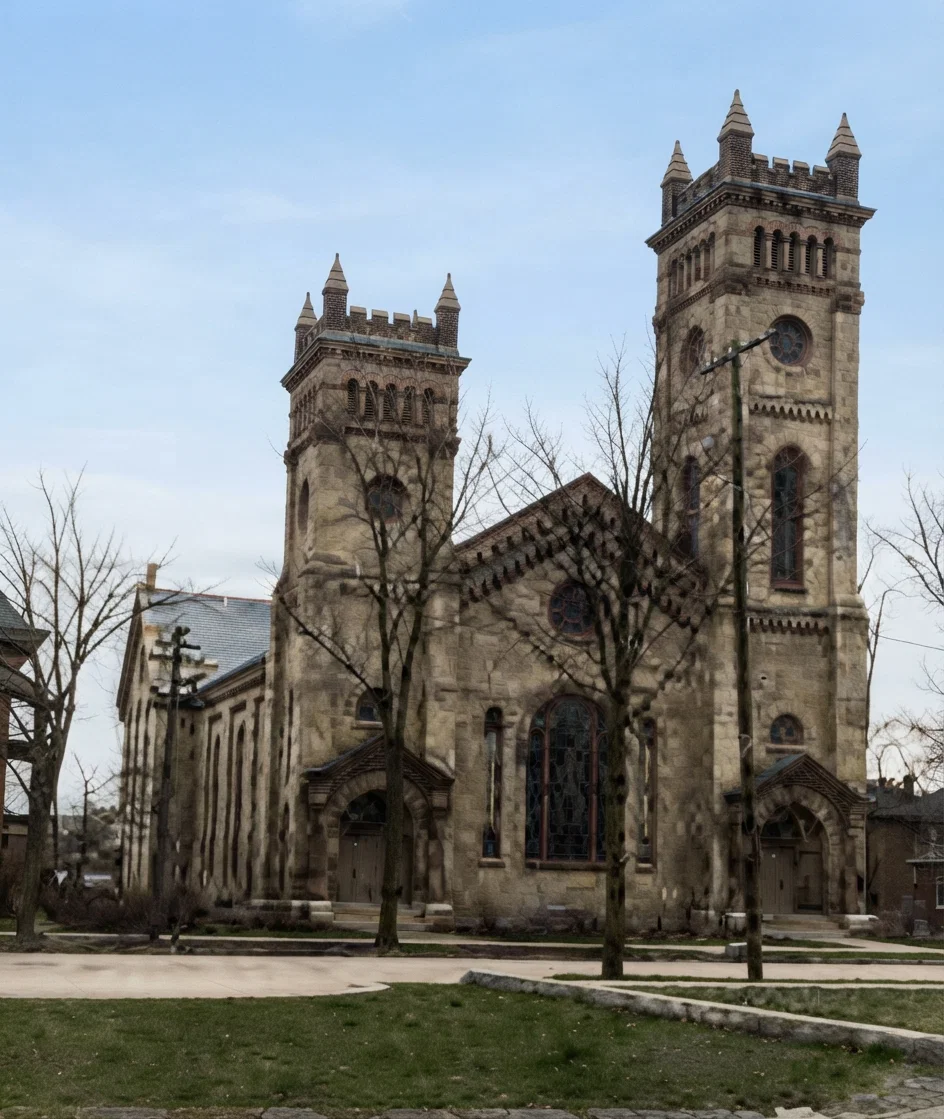
First Presbyterian Church, where convention was held.
Briefly stated, the New York State Sabbath Association is an organization having objects, as stated in a pamphlet giving constitution and by-laws, as follows:
“1. To conserve legislation and the enforcement of law, for the protection of the sabbath as a day of rest and worship. “2. To protect the rights of labor to a day of rest and religious uses. “3. To resist all encroachments upon the sacred character of the sabbath day. “4. To hold public meetings, and for the publication and distribution of literature in the interest of sabbath observance.”
Article II. of the constitution reads as follows:
“Recognizing the sabbath as a divine institution, ordained for the glory of God and the well-being of man, we seek: “1. To prevent any change in existing laws, in so far as they protect the first day of the week, ‘for rest and religious uses,’ and to secure such amendments thereof as experience shall show to be necessary for the protection of the day for such uses. “2. In all ways by which public sentiment may be legitimately influenced to encourage respect for the rights of labor and of conscience in respect to the observance of the first day of the week ‘for rest and religious uses.’”
Section 3 of Article II. of the by-laws reads:
“3. Standing Committees: “(a). On Use of the Press and Circulation of Literature.—It shall be the duty of this committee to secure the publication of articles and the diffusion of information relating to sabbath observance through the newspapers, to superintend the issue of sabbath documents, and to secure the distribution of sabbath literature among the people, subject to the approval of the Executive Board. “(b). On Legislation.—This committee, under the direction of the Executive Board, shall, in all possible ways, procure wise and prevent unwise sabbath legislation both in state and nation. It shall keep the Executive Board advised of all changes in the laws of the state and the nation relating to sabbath observance.”
From these statements it is apparent that the main object of the association is to secure legislation in both state and nation in the interest of and for compulsory observance of the “first day of the week.” This would be purely religious legislation, for it would be solely in the interest of a religious institution.
Secondarily, the purpose is to educate the people, through the newspapers and by literature and other public work, to favor compulsory legal Sunday observance.
Dr. David J. Burrell is president of the state association, and Dr. Frederick J. Stanley is secretary; while twenty noted divines and legal lights of the state, selected from as many cities having more than 30,000 inhabitants, are the vice-presidents. There is an executive committee of sixteen members, and, so far, sixty-seven county representatives. While the actual membership could not be ascertained, it is safe to say that it is represented comparatively by the constituency of the fourteen denominations of New York state, which, in the matter of sabbath observance, is in sympathy with the association. At least, this was the information given to me by one of the vice-presidents, resident in Elmira. Col. Alexander S. Bacon, of the New York bar, is the chief legal representative of the state association.
The convention proper, which opened on Tuesday evening, October 30, and continued through Wednesday, had been preceded by what the writer may very properly term a three-days “whirlwind campaign” in favor of Sunday observance and compulsory Sunday observance laws, and for the stringent enforcement of present laws. Sunday was called “field-day” in the interests of the “Christian American Sabbath,” or, “Lord’s Day,” and in all the forty-four churches and missions of Elmira, the Catholic and Congregational excepted, sermons were delivered for the “American Christian Sabbath” by noted speakers and eloquent platform orators, who literally poured into the city during Saturday and Saturday night. It was, in fact, a great effort for the “American Sabbath,” and a public demand on the part of the ministers for a strict and unyielding enforcement of civil laws for the protection of the religious institution.
In this connection it must be noted that in all these sermons in the interest of securing civil aid for the enforcement of Sunday observance, the day—the institution itself—was put upon a strictly religious basis; the civil law must see to it that the religious day be kept, and due reverence paid to the institution by the people, because

the Voice of God Demanded It.

The fourth commandment of the Decalogue was invariably appealed to as final and conclusive authority for the demand.
There were one or two notable exceptions. It was held in at least two of the pulpits of the city that the law of God had been abolished; there was no fourth commandment demanding and commanding the observance of the seventh day, therefore Sunday could supplant and rightfully take the place of the “old Jewish day,” as the “new Lord’s day”—a Christian institution designed tokeep alive the memory of our Lord’s resurrection, the grand, overshadowing event of the divine plan of salvation.

AN IMPORTANT AND TYPICAL MEETING. (Continued from page 9.)

As three o’clock in the afternoon, at a mass meeting in the Y. M. C. A. assembly hall, Rev. Dr. J. Milton Thompson, of Troy, and Dr. Stanley engaged in a joint plea for “one day in seven.” It was necessary for physical, moral, ethical, and many other reasons, that “one day in seven” should be observed with uniformity. That the stability of the nation should be conserved, and American Christian citizenship perpetuated, it was necessary. The “one day in seven” must be Sunday, the American Christian Sabbath, in order that there should be complete Christian uniformity! Enlarged advertising effort, great personal activity, specially fine music, oratorical display and effort—every device possible—were employed to make the opening of the sixteenth anniversary of the State Sabbath Association a “red-letter day” in the history of the religious experience of Elmira.

A Mass Meeting.

Monday night, October 29, a mass meeting was announced and held in the Lake Street Presbyterian Church. The “popular” lecture, “God’s Footprints in the Oriental Crisis of To-day”—the new Japan, new China, new Manchuria, and new Russia—was given by Dr. Stanley. The lecture may be briefly described in a paragraph:
There is an Oriental crisis; yet all will end well and ultimate world-wide peace ensue as the result of American influence and American arbitration. And the new conditions coming into the national life of these great heathen nations—the change, sure and gradual, from darkened heathenism to enlightened Christian civilization—is the result of the Christian influence of the Occident, and in particular to the influence of the American Christian Sabbath, “the real sign of the power of God to transform and to control the destiny of the nations.”
Tuesday night another mass meeting was announced for the Hedding M. E. Church. It was expected that Colonel Bacon, of New York, would address this meeting upon the topic, “The American Sabbath the Bulwark of Home, Church, and Nation,” but he failed to appear. Dr. Stanley explained that “Colonel Bacon, as a candidate for judge of the Supreme Court of New York on the Prohibition ticket, was so busy attending to the speech-making and incidental work of the campaign for the success of the ticket, that it was absolutely impossible for him to fill the appointment;” therefore he (Dr. Stanley) very reluctantly must fill his place. He did so with the presentation of the subject, “The White Flag with the Blue Cross.”
His remarks were based upon Isa. 58:13, 14. With this text he coupled Eze. 20:20 and Rev. 1:10. He opened his address with an exposition of the influence of the Christian religion on the Japanese nation. It was turning Japan and its heathenism, rapidly and with unerring certainty, into a Christian nation like our own. Dr. Stanley adroitly made the “American Christian Sabbath” stand for the Christian civilization of the West in Japan and the Orient in a preeminent sense. It was the flag of the government of God, representing all that was spiritual and elevating, and having an influence upon the yellow races such as nothing else was, or could. The Christian sabbath, in fact, was practically doing the work of winning the world to Christ! That little white flag with the blue cross in time of peace floated from the masthead of the admiral’s ship above everything else, even the President’s flag, and so ought the American Sabbath, as a sign of the authority of God, be put above everything else and speak with power. His was a plea for

Civil Government

to arrange itself upon the side and in the defense of this great Christian institution. This was a Christian nation—it had been so decided by the highest tribunal of the land—and in that was the right to make Christian laws and enforce them upon the populace.
The speaker displayed a large map of the United States. States where Sunday laws were comprehensive and provided severe penalties for a violation of the statutes were white; those where the laws were less stringent and penalties not so severe, were a trifle shaded, while California, Idaho, and Arizona, where there were no general Sunday laws, were painted as black as night. “We are going to keep on working,” he declared, “until that whole map is made as white as can be, and Sabbath [Sunday] laws will be enforced upon the whole people of this country. That time is bound to come. We shall surely be successful.”
It is needless for the writer to state that not a word about conversion and the power of God to transform the individual appeared in this or any other of Dr. Stanley’s public lectures. All, all, was upon civil enactments and magisterial enforcement, and fines and punishments, and sheriffs, and the power and right of the civil law to regulate the observance of the institution of Sunday, which Dr. Stanley and the American Sabbath Union had put upon a strictly religious basis. And it was for that reason, primarily—because the day was religious—that it was doubly the duty of the state to enforce it as a civil institution as well! Such are the position and the logic of the arguments of the American Sabbath Union!
[This report grows in interest to the end. We trust our readers, however they may look upon Mr. Wightman’s report and review, will read to the end. More will appear next week.]
Continue reading: THE BUDDED HEARTSEASE