29 "On the morrow he seeth Jesus coming unto him, and saith, Behold, the Lamb of God, which taketh away the sin of the 30 world! This is He of whom I said, After me cometh a man 31 which is become before me; for He was before me. And I knew Him not; but that He should be made manifest to Israel, 30 for this cause came I baptizing with water. And John bare witness, saying, I have beheld the Spirit descending as a dove 32 out of heaven; and it abode upon Him. And I knew Him not; 33 but He that sent me to baptize with water, He said unto me, Upon whomsoever thou shalt see the Spirit descending, and abiding upon Him, the same is He that baptizeth with the Holy Spirit. And I have seen, and have borne witness that this is the Son of God.
35 "Again on the morrow John was standing, and two of his 36 disciples; and he looked upon Jesus as He walked, and saith, 37 Behold, the Lamb of God! And the two disciples heard him 38 speak, and they followed Jesus. And Jesus turned, and beheld them following, and saith unto them, What seek ye? And they said unto Him, Rabbi (which is to say, being interpreted, Master,) where abidest Thou? He saith unto them, 39 Come, and ye shall see. They came therefore and saw where 40 He abode; and they abode with Him that day; it was about 41 the tenth hour. One of the two that heard John speak, and 41 followed Him, was Andrew, Simon Peter's brother. He findeth 42 first his own brother Simon, and saith unto him, We have 42 found the Messiah (which is, being interpreted, Christ). He 43 brought him unto Jesus. Jesus looked upon him, and said, Thou art Simon the son of John; thou shalt be called Cephas (which is by interpretation, Peter).
43 "On the morrow He was minded to go forth into Galilee, 44 and He findeth Philip; and Jesus saith unto him, Follow Me. 44 Now Philip was from Bethsaida, of the city of Andrew and 45 Peter. Philip findeth Nathanael, and saith unto him, We 45 have found Him, of whom Moses in the law, and the prophets, 46 did write, Jesus of Nazareth, the Son of Joseph. And Nathanael said unto him, Can any good thing come out of Nazareth? 47 Philip saith unto him, Come and see. Jesus saw Nathanael 47 coming to Him, and saith of him, Behold, an Israelite indeed, 48 in whom is no guile! Nathanael saith unto him, Whence 48 knowest Thou me? Jesus answered and said unto him, Before 49 Philip called thee, when thou wast under the fig tree, I saw 49 thee. Nathanael answered Him, Rabbi, Thou art the Son of 50 God; Thou art King of Israel. Jesus answered and said unto 50 him, Because I said unto thee, I saw thee underneath the fig 51 tree, believest thou? thou shalt see greater things than these. 51 And He saith unto him, Verily, verily, I say unto you, Ye shall see the heaven opened, and the angels of God ascending and descending upon the Son of man."
NOTE.—The texts inclosed in marks of parentheses, while not essential to the lesson study, will be found to throw much light upon the lesson, and are suggested for those who wish to study further.
SUGGESTIVE QUESTIONS.
When Christ appeared again at the place of John's baptism, what exclamation did the Baptist make concerning Him? John 1:29. [Read carefully verses 19-28.]
To what words previously uttered does he call the people's attention? Verses 30, 31. [John 8:58.]
How was the Baptist so sure of Christ's identity? Verses 32-34. [John 5:32; Luke 8:19-23.]
Who was standing with John the next day? Verse 35.
As Jesus appeared in sight, how did John announce Him to the two disciples? Verse 36. (Isa. 53:6, 7.)
What did the disciples of John immediately do? Verse 37.
How were they introduced to Jesus? Verse 38.
What question did they ask? 1
What answer was returned by Christ? Verse 39. 2
How long did the disciples continue their interview with the Lord?
14 "But when it was now the midst of the feast Jesus went up into the temple, and taught."
28 "Jesus therefore cried in the temple, teaching and saying, Ye both know Me, and know whence I am; and I am not come of Myself, but He that sent Me is true, whom ye know not.
29 I know Him; because I am from Him, and He sent Me.
30 They sought therefore to take Him; and no man laid his hand on Him, because His hour was not yet come.
31 But of the multitude many believed on Him; and they said, When the Christ shall come, will He do more signs than those which this Man hath done?
32 The Pharisees heard the multitude murmuring these things concerning Him; and the chief priests and the Pharisees sent officers to take Him.
33 Jesus therefore said, Yet a little while am I with you, and I go unto Him that sent Me.
34 Ye shall seek Me, and shall not find Me; and where I am, ye can not come.
35 The Jews therefore said among themselves, Whither will this Man go that we shall not find Him? will He go unto the Dispersion among the Greeks, and teach the Greeks?
36 What is this word that He said, Ye shall seek Me, and shall not find Me; and where I am, ye can not come?
37 "Now on the last day, the great day of the feast, Jesus stood and cried, saying, If any man thirst, let him come unto Me, and drink."
Golden Text.—"If any man thirst, let him come unto Me, and drink." Verse 37.
SUGGESTIVE QUESTIONS.
(1) During what feast did the incident recorded in this lesson occur? Note 1. (2) About the midst of the feast what did Jesus do? V. 14. (3) In what manner did He teach? What did He say of the people's knowledge of Himself, and of the One who had sent Him? V. 28. (4) How did Jesus know that One? V. 29. (5) What did the rulers then seek to do? Why did they not take Him? V. 30. Note 2. (6) What did the multitude think of Him? What did they say? V. 31. Note 3. (7) What did the Pharisees hear? What then did the chief priests and Pharisees do? V. 32. (8) What therefore did Jesus say to them? Vs. 33, 34. (9) What then did the Jews say among themselves? Vs. 35, 36. Note 4. (10) What was the last day of the feast called? What did Jesus do on that day? V. 37. Note 5.
NOTES.
1. The feast.—This was the feast of tabernacles, which occurred about the middle of autumn. It was some six months after the occurrences recorded in the last lesson, which took place at the Passover feast, about the middle of spring. The feast of tabernacles was celebrated by dwelling in booths for seven days. It was a "feast of ingathering, which is in the end of the year, when thou hast gathered in thy labors out of the field." See Ex. 23: 16; Lev. 23: 34-36; Deut. 16: 13-15.
2. "His hour."—The time for His being delivered into the hands of His enemies had not yet come. It was known unto God, and the fact had been imparted to Christ by the Holy Spirit, that He should be betrayed into the hands of men, and that He should be put to death. See Mark 9: 31. But this could not be until His work on earth was finished.
3. "When the Christ shall come, will He do more miracles," etc.? Jesus had fulfilled all the specifications that had been spoken of the Messiah; in other words, the chain of evidence of His Messiahship was complete as far as He had gone. Other details have been accurately fulfilling from that day to this. "The Word of the Lord endureth forever."
4. Could not understand.—The Jews could not understand how it was that Jesus should go away from them in a little while, and that He would go where they could not follow. The reason they could not understand this was because they did not understand the nature of His mission. They had been led away from the teaching of the Scripture by the traditions of the elders, and consequently had imbibed false ideas concerning the Messiah. They supposed He was coming to break the Roman yoke and set up the Jewish nation as the rulers of the world. Christ presented Himself as the Messiah; then how could it be that He would soon go away to some place where they could not go? Truly it was a mystery to people who had been so long under a system of false education. But the masses of professed Christians to-day are laboring under as great delusion concerning the second advent of the Messiah as were the Jews about the first advent. When the Lord ascended to heaven in a cloud from Mount Olivet, two angels appeared to the bewildered disciples, and said to them: "Ye men of Galilee, why stand ye gazing up into heaven? this same Jesus, which is taken up from you into heaven, shall so come in like manner as ye have seen Him go into heaven." Acts 1: 11. And the Lord Himself had told them that "as the lightning cometh out of the east, and shineth even unto the west; so shall also the coming of the Son of Man be" (Matt. 24: 27); also that His coming should be "in the clouds of heaven with power and great glory" (verse 30). Again, in chap. 25: 31, we are told that "the Son of man shall come in His glory, and all the holy angels with Him," and that then the righteous shall inherit the kingdom prepared for them from the foundation of the world (verse 34). When we compare these and other plain utterances of the Scriptures with the mythical traditions of the Lord's coming at death, and the soul's immortality, taught by "eminent divines" as Christian doctrine, we need not wonder at the confusion that exists in the nominal Christian world. It is just as important to know the truth about the coming of the Lord in glory as it was to know the truth about His coming in humility.
5. The Gospel invitation is being extended yet. "And the Spirit and the bride say, Come. And let him that heareth say, Come. And let him that is athirst come. And whosoever will, let him take the water of life freely." Rev. 22: 17. "Ho, every one that thirsteth, come ye to the waters, and he that hath no money, come ye, buy, and eat; yea, come, buy wine and milk without money and without price. Wherefore do ye spend money for that which is not bread? and your labor for that which satisfieth not? harken diligently unto Me, and eat ye that which is good, and let your soul delight itself in fatness. Incline your ear, and come unto Me; hear, and your soul shall live; and I will make an everlasting covenant with you, even the sure mercies of David." Isa. 55: 1-3.
HOW TO LIVE A CENTURY. No. 2.
By B. F. RICHARDS.
"WHY shouldest thou die before thy time?" Eccl. 7:17. This question is as appropriate for the early-dying people of this age to answer as it was for those who lived ten hundred years before the Christian era began. All persons will agree that in the short life of man to-day, with his average of twenty-nine years, and the long life of man before the flood, with his average of nine hundred twenty-six years, a most remarkable and alarming change has taken place. Anciently people took more time in eating and masticating their food; they seemed to understand that the teeth and salivary glands had an important part to act in keeping the body well and strong.
The Creator surely knew what He was doing when He placed within the mouth of each adult thirty-two teeth, each tooth to do its own peculiar work, either cutting or grinding the food; and as the grinding proceeds, the salivary glands perform their part by saturating the food with saliva; consequently, the longer food remains in the mouth, and the teeth keep grinding, the more thoroughly will the saliva penetrate the cooked starch food, and the more perfect will be the digestion.
Hasty eating should never be indulged in; it is a pernicious habit, which will, if allowed to get control, result in weakness, disease, and death, and "why shouldest thou die before thy time?" Look well to it, if you would postpone old age. When you allow coarse articles of food to pass to the stomach without being well masticated, you are sowing a crop that will spring up for you to reap, and your declining days will be filled with sorrow, pain, and misery.
There is a time to eat, and a time to drink, but both should not come together. Food should be made moist with saliva, and not with a mouthful of tea, coffee, chocolate, coco, or water, for when either of the above are used while we eat, the salivary glands do not secrete the proper amount of saliva, and the saliva that is secreted is so diluted that no strength remains in it to aid in the digestion of starch, or to influence the stomach in secreting gastric juice. We should drink about half an hour before and about two hours after each meal, then drink frequently between the times mentioned, till we have drunk from three to five pints of water in each twenty-four hours.
A large majority of the people do not drink water enough; when it is considered that the body is made up very largely of water, it can readily be understood how important to health is a constant supply of this pure fluid.
Many people have a notion that the drinking of water in any amount beyond that actually necessary to quench thirst is injurious, and, acting on this belief, they endeavor to drink as little as possible. The notion, however, is wide of the truth. Drinking freely of pure water is a most efficacious means not only of preserving health, but often of restoring it when failing.
All the tissues of the body need water, and water in abundance is necessary also for the proper performance of every vital function.
Cleanliness of the tissues within the body is as necessary to the health and comfort as cleanliness of the skin, and water tends to insure the one as truly as it does the other. It dissolves the waste material which would otherwise collect in the body, and removes it in the various excretions.
These waste materials are often actual poisons, and many headaches, many rheumatic pains, many sleepless nights and listless days, and many attacks of the "blues," are due solely to the circulation in the blood or deposit in the tissues of these waste materials which can not be gotten rid of because of an insufficient supply of water.
Water is accused of making fat, and people with a tendency to corpulence avoid it for that reason. But this is not strictly true. It does, undoubtedly, often increase the weight, but it does so because it improves the digestion, and therefore more of the food eaten is utilized and turned into fat and flesh. But excessive fat—that which is called corpulence—is not a sign of health but more often of faulty digestion and assimilation, and systematic water drinking is often employed as a means of reducing the surperfluous fat, which it does sometimes with astonishing rapidity.
It is impossible to recount in few words in the short space we have, all the benefits which may result from the taking of pure water in sufficient quantity.
In this day and age, when water is so contaminated with disease, and so full of calcareous substances, extra precaution should be taken in making the water pure by first boiling or distilling.
The body should be washed at least once in each twenty-four hours, then after it has received a brisk rubbing, a little pure olive oil should be applied and made to enter and entirely disappear from the surface, by rapid movements with the hands over the body.
Keep the body clean, feed it regularly on wholesome food, give it plenty of pure water to drink, and it will surely give in return perfect satisfaction, long life, and a beautiful voyage from the cradle to the grave.
B. F. RICHARDS.
TURNED OUT TO PASTURE.
By Frances E. Bolton
"THERE comes that dear, fluffy, fat little egg woman," cried Marian Ross. "I declare, I believe she is laughing. Just look at her. Isn't she? How smily she is! She has evidently come over in a hurry, for she has a checked apron over her head."
"Some good news to tell, I think. She always comes egg selling when she has a new story," said Mrs. Ross.
"Huh! huh! huh!" now came softly on the breeze.
"There, I knew she was laughing."
"Good-morning, Miss Merry Heart that doeth good like a medicine," cried Marian. "Hurry up, I am just wild to know what your good news is."
"La, now, child, what a youngun you are! How did you know I had some good news?" said Mrs. Brown, as she came half breathless to the stairs.
"Out with it," said Marian playfully, giving her an authoritative shake.
"Why, I kem over to sell you aiggs. Don't you see? I reckon you'd 'a' thought I wanted to sell em puty bad; fer I had a time on't clim'in' the loft and scarin' the hens offen the nest to rake up a dozen. I allus has to hev some aiggs to pit Phil off. If he only thinks I'm off a-sellin' aiggs, he'll le' me go; but he ain't no use fer chitchattin'."13"Did you go to town yesterday?" asked Mrs. Ross.
"Yes, I went with Phil on the load. In town I met B'lindy's child. La, I was so tickled to see her; fer I knows her sence she was born! Know'd her mother afore she was born. But you'd never know'd B'lindy's child; I wouldn't ha' known her, but, la me, she know'd me!"
"Remember B'lindy? Her husband was a sort of musical gen'us, but never could make a decent livin' fer her. Died, you know, afore B'lindy hed her child. B'lindy was nigh about wild when he died. She wa'n't well, and then she hed to borrow money fer his funeral expenses, and worked her finger nails off to pay it back, afore the baby was born. Poor soul, she died, you know, soon after! When the baby kem, it had a hard time on it. No milk, and we couldn't scarcely, keep it alive. People wondered why B'lindy's child did live, but, la, it's allus that kind that lives! If she'd been a rich woman's child, or hed any kind of a chance, she'd a died. But, la, she's chance enough now—turned out to a rich pasture, bless the Lord!"
"I nu'sed her fer the first three months, and would 'a' kep' her, only Phil couldn't bear her cryin'. He hates babies anyhow, so I hed to give her up. She was knocked hither and thither, till finally they tuk her to the poor-house. She was sent out to nu's babies, when she was only a baby herself, to wash dishes, and do chores. Poor little soul! I allus kep' kind a track of her. She hed great wild-lookin' brown eyes, that made one think of the deers. Her hair was that wild and curly like that the folks kep' it cut close, cause it was sech a job to keep it combed. She allus looked kind a thin and s'prised like, as tho' she was 'stonished at all the sorrow that met her. It used ter strike inter me allus to see B'lindy's child."
"Not as I hain't seen her happy at spells in a queer kind a way; fer she'd git out in the meadow lands sometimes, and sing like the birds, not any pertic'lar tune, but jest as if a fountain of notes that had been blocked, suddenly bu'st up. She talked to the flowers, and rolled around in the grass; but I never did see her a-playin' like other younguns. She'd stand and watch 'em gravely. I see'd her once at Mrs. Thompson's. She wus away, and B'lindy's child was a-thumpin' the organ. I don't know as she ever learned, but actually I heard her a-playin' and a-singin', and it sounded like music. I s'pose she sort a took it from her father's musical gifts."
"I looked in through the lattice and see'd her face shinin' and heard her singin'; but by and by she laid her face down and cried. I couldn't help the tears a-comin' myself. I knew she couldn't have none of them things. Leastwise, it didn't seem likely; but you know what the hymn says, 'God moves in a mysterious way, His wonders to perform.' He knew how it was a-goin' to be done. I sort a lost track of her fer a year or so. She was a-tellin' me to-day what hed happened."
"You see, one day old Mrs. Matthews sent fer her. She was a-goin' to hev some fine lady to visit her, and she wanted B'lindy's child to run errands fer her. Well, the upshot of it all was that B'lindy's child got to singin' in the grape arbor, and this lady heard her. She finally tuk her hum, and she's 'dopted her."
"La, me, Mrs. Ross, you hain't no idee how that gal has changed! She's sixteen now, and she looks like a lady, every inch of her. She's the rarest bit of beauty I've seen, sence my old rose-bush bloomed in the spring."
"Did I ever tell you about that rose-bush?"
"Well, you see it never did blow well—sorter spindling and stinted, and hed no kind a blooms. One day I said to myself, It hain't in a good soil. I'm a-goin' to git some rich loam and transplant it up inter the sunshine. It was in the shadow most all the time. Well, I tuk it up and cared fer it. You never see'd the improvement that that bush made. When it budded, it certainly seemed as if it sent up the buds as orter have bloomed fer years back. The blooms was wonderful. It pays to transplant, and it's jes' so with B'lindy's child. Huh! huh! huh! She's got into good loam, out in the sunshine."
"Mrs. Shafter, that's her new mother's name—first and only mother she ever hed—has given her the chance she needed. She's turned out to pasture, and it's rich pasture too. She's got a beautiful hum. She's the daughter there too, and she's jes' bloomed, cause she found somebody to love her."
"O, that makes me think of a little verse I know!" cried Marian:—
"O, love is power, 'tis bloom and grace,
'Tis a reviving essence!
A flower will bloom, a heart will sing
Within its sunny presence.
And God is love, and love makes kings
And priests of boors and peasants."
"Yes, that's it. Ye see, B'lindy's child allus made me think of Deacon Goodrich's colt. He bought it of old Sam Jones, the stingiest old skinflint as ever walked. He was one of them penny wise and pound foolish fellows, as never would give his colts time to grow inter strong horses. Well, he hed one that was a beauty; but Sam set him inter the traces afore he orter, and the poor little creature was purty well-nigh used up when Deacon Goodrich bought him, out of mercy. 'A merciful man is merciful to his beast.' He put him out ter pasture, and the way that colt kem up was amazin'. Deacon would go and pet him and give him tidbits, and he'd drop his purty hed on the deacon's shoulder and whinny, and tell him, in his horse fashion, how he loved him. He curried him and made him beautiful."
"Well, you know, B'lindy's child is jes' so. She's the loveliest critter I've seen fer years. She's rounded all out. There ain't a rare trace on her. Her cheeks are jes' like the first rose flush in the mornin'. Her hair is jes' waves from the top of her head to her waist. She's the very picture of health and happiness. She's gittin' her chance at edication and music; and, the best of all on it, she's give herself up to be a channel fer the Lord's blessin'."
"Well, it does a plant good to be transplanted, and colts good to go inter the pasture, and a child good to get inter a hum of love. It's good fer the health and the heart. I've been a-thinkin' that that's what God means to do with us all. I hain't hed a pertic'lar sunny spot to grow in, but I 'spect to be transplanted inter the heavenly garden some day, ter be turned out ter pasture fer a spell anyhow afore I go inter the everlastin' mission in eternity."
"The best of it all is, Mrs. Brown, the mission itself will be love's mission, and be the very best of pasture."
"Well, here be the aiggs. The're fresh. Phil will be lookin' fer me hum. I'm so tickled that B'lindy's child has been turned out to pasture fer a spell, and I knew you'd be glad to hear on it. Well, good-by. Huh! huh! huh!" FRANCES E. BOLTON.
THE HOME
MY LIFE AND JOY.
By J. A. Powers
My life flows on in joyous song,
I'm happy as can be,
Because I know where'er I go
My Lord goes there with me.
I go to many a gloomy place,
I blunder on my way,
Because my head and not my heart
Leads my poor feet astray.
I have for life no anxious care;
He gave and gives it me.
Lord, be this every hour my prayer,
To give it all to Thee.
A sparrow is of little worth,
But Thou dost note its fall;
A mother's love is best on earth,
But Thine surpasses all.
There's many a burden comes to me
Of sorrow and of care;
For these my heart goes out to Thee
In songs of praise and prayer;
Because I know, come good or ill,
As we poor mortals see,
The worst can but fulfil Thy will,
And all work good to me.
J. A. POWERS.
Boston, Mass.
Combination Offers
By Editor
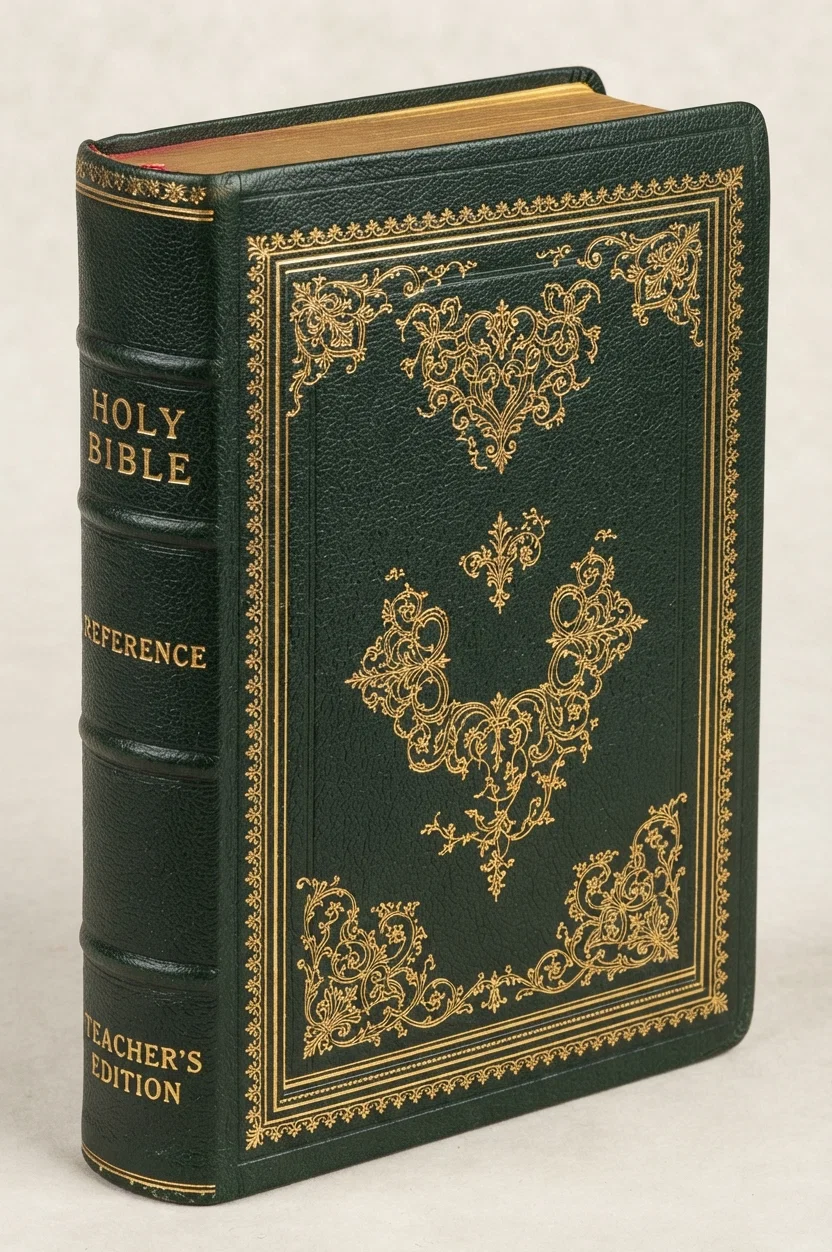
Reference Teacher's Bible
Minion type. Page 5½x8 inches.
The Bible is substantially bound in morocco, divinity circuit, leather lined to edge, round corners, red under gold edges, minion type, and contains over 650 pages of finely illustrated Helps to the study of the Bible.
One feature of special value in the Helps contained in this Bible is the Combined Concordance, which unites, in a very convenient form for ready reference, a Concordance, Subject Index, and Pronouncing Dictionary of Scripture Proper Names.
Sent post-paid with the SIGNS one year - - $2.75
Bible sent free on receipt of 7 new names and $7.00
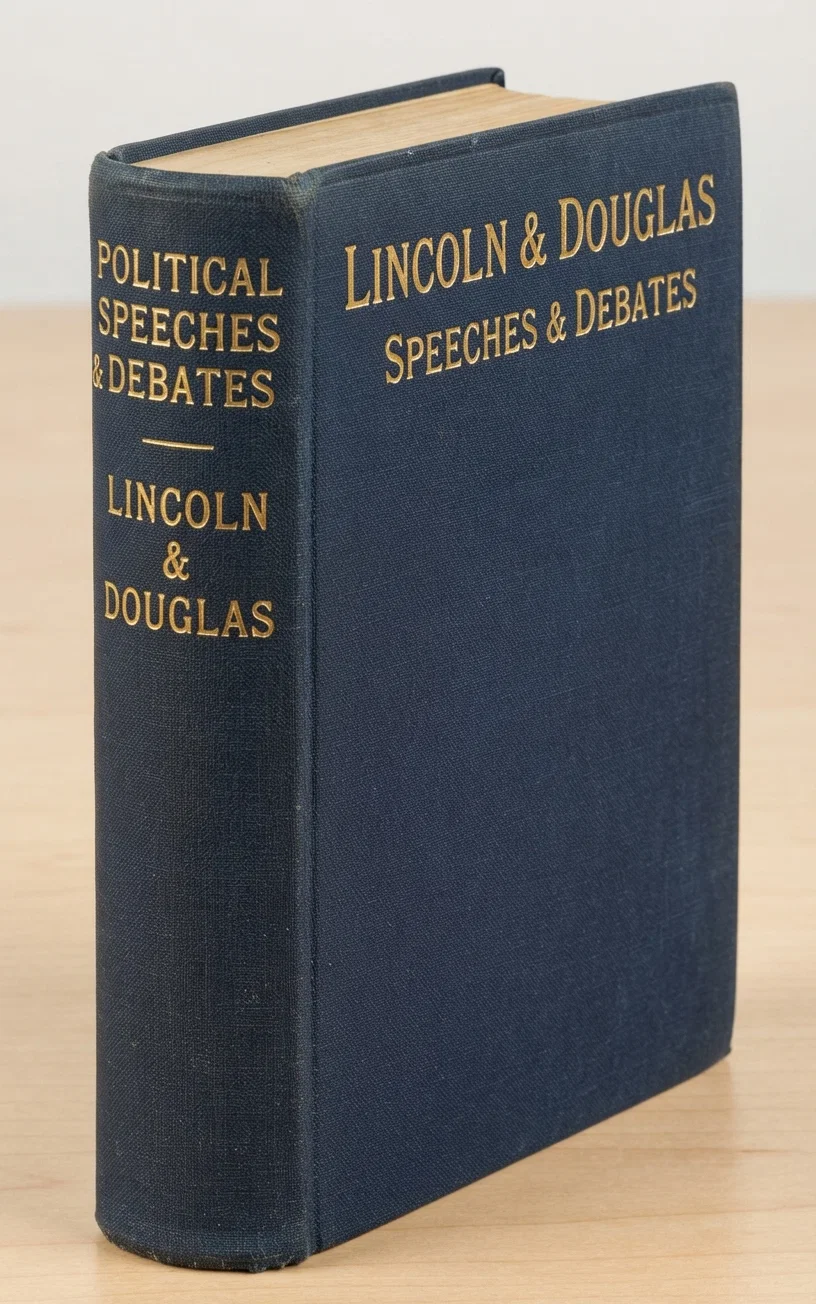
Political Speeches and Debates of Lincoln and Douglas
Shows how to meet the questions threatening the liberties and rights of the people to-day. This book, containing the speeches and debates of these able statesmen, is full of thrilling interest and forms a veritable armory of Lincoln argument.
Buckram cloth, 555 pages, illustrated - - $1.75
Sent post-paid with the SIGNS one year - - $1.75
Book sent free for 3 new yearly subscribers and 1 renewal at $1.00 each
Battle Hymn of the Kingdom
By Editor
A beautiful poem by Frances Eugenia Bolton. It is illustrated by fifteen elegant halftone engravings, which were produced expressly for this booklet by one of New York's best artists.
Sent post-paid with the SIGNS one year, $1.25
Book sent free for 1 new yearly subscriber and 1 renewal at $1.00 each