Your ShelfYour Projects

Signs of the Times, Vol. 27, No. 21.

SILOAM

Signs of the Times

May 22, 1901

Pacific Press Publishing Company · Oakland, California · May 22, 1901

SILOAM
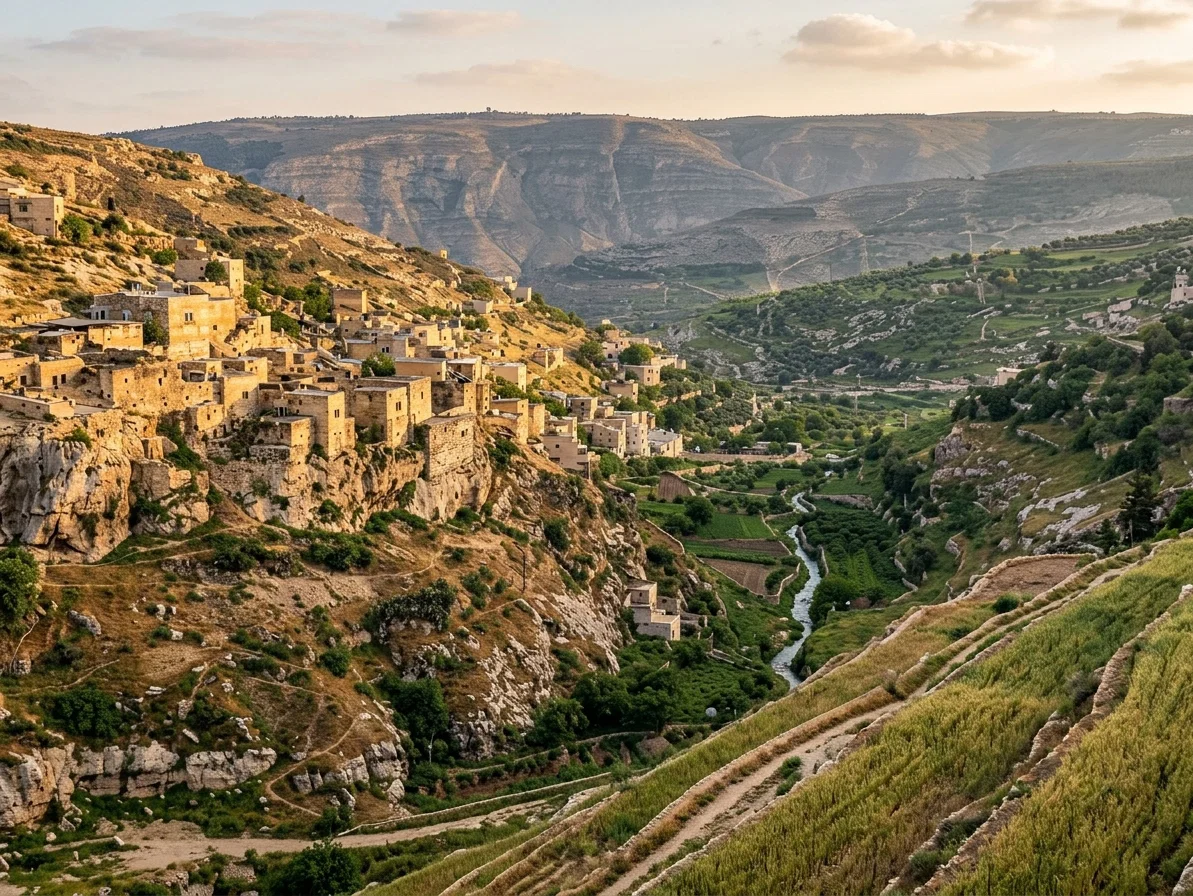
THE Pool of Siloam, or as it is sometimes rendered, Shiloah or Silwan, is southeast of Jerusalem near or within the Tyropœon Valley. A small stream issues from the fountain, and finds its way thru the king’s gardens, the ancient “royal paradise.” This is the “cool Siloam’s shady rill” of the poet, and “the waters of Shiloah that go softly” of Isa. 8:6. The waters still “go softly,” and they are blessing-laden. Vegetable gardens, olive-groves, plantations of figs and pomegranates, vineyards, and fields of waving grain, flourish in their track, making the vale a “little paradise,” “the greenest spot about the Holy City.” The farmers that cultivate this fertile land live in a near-by village that bears the same variously spelled name as the pool.
Village of Silwan.
Village of Silwan.
It was from the Pool of Siloam that a Levite brought water in a golden pitcher for the service of “the last day, that great day of the feast,” when the water that flowed from the rock in the wilderness was commemorated. And “it was to this Siloam water that the Lord pointed when He stood in the temple that day, and cried, ‘If any man thirst, let him come unto Me, and drink.’”
THE Pool of Siloam was the scene of an interesting and remarkable miracle,—the healing of a man who had been “blind from his birth.” It was not remarkable that Jesus gave this man sight. He “took our infirmities and bare our sicknesses;” for He came to destroy sin with all its effects, physical as well as moral. But it was the Sabbath when Jesus anointed the eyes of the blind man, and sent him to wash in the Pool of Siloam. And so in this miracle a double purpose of mercy was fulfilled. The blind eyes were opened, and a rebuke was administered to the Pharisees, whose superstitious exactions had made God’s holy day a burden, when He meant it to be, not only “the holy of the Lord, honorable,” but a “delight.” It could not be expected that the Pharisees would accept with patience this reproof of their traditions. The incident served to intensify their already bitter hatred of Jesus, and the persecution aroused by their malice was directed not only against Jesus, but any who should “confess that He was Christ.” This bitter persecuting spirit on the part of the Jews gave the man that had been blind an opportunity to show unusual faith and courage. He was brought before the haughty priests and rulers who composed the Sanhedrin; but this august council could not overawe him. “One thing I know,” he declared, “that, whereas I was blind, now I see.” He was equally certain that, “if this man were not of God, He could do nothing.” Firmly believing that he was on the side of God andtruth, he could defy the authority of the Sanhedrin and brave their sentence of excommunication.
CAREFUL examination has shown that the Pool of Siloam is connected with the fountain that, when the temple was standing, supplied water for its service. These waters and the country east and southeast of Jerusalem, are an object-lesson in a striking allegory given in Ezekiel 47. The waters of this mystic river “issued out from under the threshold of the house eastward.” Of this Thomson says:—
Tho the waters first appeared issuing from under the altar, yet we need not suppose that the fountain-head was there, but farther back, under the holy of holies, beneath the ark and mercy-seat, where abode the Shekinah of God’s presence, intimating that the true fountain-head of the river of life is in the heart of Infinite Love, but, on its way out and down to ruined man, it must pass under the altar of divine justice. There is therefore no other place in the universe whence these emblematic waters could flow forth so appropriately as from under the altar.—The Land and the Book.
“These waters issue out toward the east country, and go down into the desert, and go into the sea.” In other words, passing thru the Wilderness of Judea, the river empties its waters into the Dead Sea. Note the effects:—
“Being brought forth into the sea, the waters shall be healed. And it shall come to pass, that everything that liveth, which moveth, whithersoever the rivers shall come, shall live; and there shall be a very great multitude of fish; because these waters shall come thither. . . . And by the river upon the bank thereof, on this side and on that side, shall grow all trees for meat, whose leaf shall not fade, neither shall the fruit thereof be consumed; . . . because their waters they issue out of the sanctuary.” Eze. 47:8-12.
“Everything shall live whither the river cometh.” On its banks grow “all manner of trees for meat.” What a contrast to the present banks of the Kidron—a horrid wilderness, with nothing to relieve its frightful desolation. But where the river from under the sanctuary comes, the desert blossoms; the banks are shaded with trees and vocal with the music of birds. And more wonderful still,—the river “being brought forth into the sea, the waters thereof shall be healed.” Now, this Sea of Sodom is so intolerably bitter that altho the Jordan, the Arnon, and many other streams have been pouring into it their vast contributions of sweet water for thousands of years, it continues as nauseous and deadly as ever. Nothing lives in it; neither fish, nor reptile, nor even animalcule can abide its desperate malignity. But these waters from the sanctuary heal it. When they come thither, the shores are robed in green, and its bosom teems with all manner of fish.—Thomson, “The Land and the Book.”
WATER is used as a symbol of cleansing from sin. Eph. 5:26; Titus 3:5. Christ Himself makes it the symbol of the indwelling Spirit. John 7:38, 39. In Ezekiel there seems to be a direct reference to that “pure river of water of life, clear as crystal,” that proceeds “out of the throne of God and of the Lamb.” “On either side” of this “river was there the tree of life,” whose leaves were “for the healing of the nations.” Rev. 22:1, 2.
The river of Ezekiel’s vision is therefore the stream of God’s redemptive love and mercy. Sin has made the earth a desert as compared with its Eden state, and it has desolated the human heart; but both will be healed wherever “the river cometh.” “The desert shall rejoice and blossom as the rose.” “And the ransomed of the Lord shall return, and come to Zion with songs and everlasting joy upon their heads; they shall obtain joy and gladness, and sorrow and sighing shall flee away.” E. J. BURNHAM.

THE FOUNDATION OF ALL TRUE GODLINESS.

WHEN the lawyer came to Christ with the question, “What shall I do to inherit eternal life?” the Saviour laid the burden of the answer on the questioner. “What is written in the law? how readest thou?” He asked. The lawyer answered, “Thou shalt love the Lord thy God with all thy heart, and with all thy soul, and with all thy strength, and with all thy mind; and thy neighbor as thyself.” “Thou hast answered right,” Christ said; “this do, and thou shalt live.”
Supreme love for God and unselfish love for our neighbor—this is the foundation of all true godliness. The greatest in the kingdom of heaven are those who love the Saviour too well to misrepresent Him, who love their fellow-men too well to imperil their souls by setting them a wrong example.
“Wherewith shall I come before the Lord, and bow myself before the high God? Shall I come before Him with burnt-offerings, with calves of a year old? Will the Lord be pleased with thousands of rams, or with ten thousands of rivers of oil? Shall I give my first-born for my transgression, the fruit of my body for the sin of my soul? He hath showed thee, O man, what is good; and what doth the Lord require of thee, but to do justly, and to love mercy, and to walk humbly with thy God?”
God does not ask us to purchase His favor by any costly sacrifice. He asks only for the service of a humble, contrite heart, a heart that has gladly and thankfully accepted His free gift. The one who receives Christ as his personal Saviour has in his possession the salvation provided by Christ. And he is never to forget that as he has freely received, so he is freely to impart. When there is a failure to appreciate the necessities of humanity, an unwillingness to be God’s helping hand, the most costly offerings, the grandest display of liberality, are abominable in the Lord’s sight.
The words and works of the Lord harmonize. His words are gracious and His works bountiful. “He causeth grass to grow for the cattle, and herb for the service of man.” How liberally He has provided for us. How wonderfully He has displayed His munificence and power in our behalf. Should our gracious Benefactor treat us as we treat one another, where would we be?
What marvelous condescension the Saviour showed in His work. How graciously, without prejudice or partiality, He received all who came to Him, rich or poor, white or black. With Him there is no caste. “God is no respecter of persons; but in every nation he that feareth Him, and worketh righteousness, is accepted with Him.”
Varied were the circumstances and needs of those who besought Christ for aid. One came in behalf of his son, another in behalf of his daughter. A generous, compassionate master came to ask help for his servant, who was stricken with the palsy. He had done all he could for him, but he saw that there was need of a healing power which he did not possess. He came to the Great Physician, saying, “Lord, my servant lieth at home sick of the palsy, grievously tormented.” Christ did not turn the earnest petitioner away. His great heart of infinite love responded to the anxious interest and compassion shown by the master. He is always pleased to see that the superior position of the master has not led him to neglect those connected with him in service. He needed no further entreaty, but gladly responded, “I will come and heal him.”
To do good to all, to encourage and strengthen instead of discouraging and weakening,—this is true missionary work. Paul enjoined upon the Philippians, “Look not every man on his own things, but every man also on the things of others.” And as their example he points them to Christ, “who, being in the form of God, thought it not robbery to be equal with God, but made Himself of no reputation, and took upon Him the form of a servant, and wasmade in the likeness of men; and being found in fashion as a man, He humbled Himself, and became obedient unto death, even the death of the cross.”
Christ did not come to this earth merely to live as any man might live. He descended to the very depths of human woe, becoming obedient to a shameful, ignominious death, even death by crucifixion. So deeply was Paul impressed with the Saviour’s condescension that he traces His history from stage to stage, as if the sacrifice were too great to be comprehended all at once. Step by step he leads us down, until the lowest depths of humiliation are reached, and we see the Saviour hanging on the cross, while the priests and rulers say tauntingly, “He saved others; Himself He can not save. If He be the King of Israel, let Him now come down from the cross, and we will believe Him.”
I present to Christians this wonderful picture. If it is clearly discerned, will it not annihilate selfishness? As we see the royal Sufferer hanging on the cross, let us think of the height from which He descended in our behalf. From the heavenly courts He beheld the misery of the race, and coming to this earth He found a ransom for us, even thru great humiliation and suffering. To rescue us, the Lord of life and glory took up the position and duties of a servant. For us He submitted to mockery, insult, and rejection. He became a man of sorrows, and acquainted with grief. “He was wounded for our transgressions, He was bruised for our iniquities; the chastisement of our peace was upon Him, and with His stripes we are healed.”
Shall we disregard this wonderful sacrifice? Shall it make no impression on our minds? Shall those who take the name of Christian, dishonor their Redeemer by selfishly neglecting the needs of those around them? Shall they not rather follow the golden rule, “All things whatsoever ye would that men should do to you, do ye even so to them?”
Before angels and before men we are representing Christ. Shall we not try to represent Him aright? Shall we not love one another as He has loved us? Let not those who have been redeemed by the shedding of Christ’s blood, hinder by their selfishness the working out of His plan of salvation. Let them not become so bound about by selfishness that they will fail to see the necessities of their suffering fellow-beings. Let them rather become God’s helping hand, to restore, to heal, and to bless. Mrs. E. G. White.

THE TWO SIDES IN THE GREAT CONTROVERSY.

Self-Sacrifice or Self-Defense.

“SELF-PRESERVATION is the first law of nature.”
But self-sacrifice is the first law of grace.
In order to self-preservation, self-defense is essential.
In order to self-sacrifice, self-surrender is essential.
In self-defense, the only thing that can be employed is force.
In self-surrender, the only thing that can be employed is love.
In self-preservation, by self-defense, thru the employment of force, force meets force, and this means only war.
In self-sacrifice, by self-surrender, thru love, force is met by love, and this means only peace.
Self-preservation, then, means only war; while self-sacrifice means only peace.
But war means only death. Self-preservation, then, meaning only war, means only death; while self-sacrifice, meaning only peace, means only life.
Self-preservation being the first law of nature, nature then means only death; while self-sacrifice being the first law of grace, grace means only life.
But death only is the wages of sin; nature, then, meaning only death, it is so only because nature means sin; while life, being only the reward of righteousness; grace, meaning only life, it is so only because grace means righteousness.
Sin and righteousness, nature and grace, are directly opposite and antagonistic elements. They occupy realms absolutely distinct. Nature, self-preservation, self-defense, force, war, and death occupy only the realm of sin; grace, self-sacrifice, self-surrender, love, peace, and life occupy only the realm of righteousness.
The realm of sin is the realm of Satan. The realm of grace is the realm of God. All the power of the domain of grace is devoted to saving men from the dominion of sin. This in order that, “as sin hath reigned unto death, even so might grace reign, thru righteousness, unto eternal life by Jesus Christ our Lord.”
On which side do you stand in this great controversy?
A. T. JONES.

THE APOSTLES AND THE CIVIL AUTHORITIES.

THE apostles were from the first transgressors of the Roman law against introducing any new religion or any new object of worship. As we now know, Christianity was only the fruit of which “Judaism” was the flower; but in the eyes of the rulers, both Jews and Gentiles, the Gospel was a new religion; Jesus was “another God.”
Evidently the purpose of the Roman law was to prevent stirring up the minds of the people. The language of the law itself plainly implies this. It reads:—
Whoever introduces new religions, the tendency and character of which are unknown, whereby the minds of men may be disturbed, shall, if belonging to the higher rank, be banished; if to the lower, punished with death.
And again, we find the following instruction given to those whose duty it was to enforce the laws:—
Worship the gods with all respect according to the laws of your country, and compel all others to do the same; but hate and punish those who would introduce anything whatever, alien to our customs in this particular.
But this is just what the apostles did by the preaching of the Gospel; they stirred up the people. It is just what Jesus said would be: “Think not that I am come to send peace on earth: I came not tosend peace, but a sword.” For I am come to set a man at variance against his father, and the daughter against her mother, and the daughter-in-law against her mother-in-law. And a man’s foes shall be they of his own household.” The Gospel is truth, and truth and error can not dwell together in peace. There can be no compromise between them.
When the apostles preached, they did not present the Gospel as merely one of a number of systems of religion all of which were good; they presented it as the only system of any value. They did not urge men merely to believe in Christ and worship Jehovah, but they besought them to turn away from dumb idols. To the people who were about to sacrifice to them at Antioch, the apostles said: “Why do ye these things? We also are men of like passions with you, and preach unto you that ye should turn from these vanities unto the living God, which made heaven, and earth, and the sea, and all things that are therein.”
Such preaching very naturally gave offense, especially to the heathen priests; and wherever the apostles went, tumult was stirred up against them, as in the instance already mentioned, and also at Thessalonica, where it was said, “These that have turned the world upside down are come hither also.” But the fact that the disciples were “disturbers of the peace” was no fault of theirs, nor of the Gospel. They were the aggressors only in this, that they taught the truth.
But it was not alone by teaching a “new” religion that the apostles and early Christians made themselves strange to all the world beside. They preserved a separation from the world too little known in the church of to-day. Touching their civil relations it has been well said:—
The early Christians uniformly held that they as Christians belonged to a kingdom which was in, but not of, the world,—a kingdom for which no earthly potentate had right or power to legislate; and this living faith loosened the bond of allegiance and dissolved the sense of obligation to all human authority, and was the negation of the lawfulness of temporal government over the subjects of the kingdom for which they recognized no king but Christ. While yielding ready obedience to all laws and customs which did not come in conflict with the higher law of the kingdom [of heaven] or the rights of conscience, they universally regarded these laws as extraneous to their own organization, foreign statutes, imposed upon them from without; and, being solicitous to render unto God the things which are God’s, they steadily abstained from any participation in the affairs of government; and quietly assumed the right to judge for themselves whether any law, regulation, or custom, prescribed by the sovereign power, or other human authority, was or was not such as they might conscientiously obey. . . . They obeyed all laws alike, except such as conflicted with conscience, and those they refused to obey in the very face of persecution, torture, and death.
This fearless assertion of the rights of conscience necessarily involved the right to sit in judgment on all human laws and the powers that ordained them, and to determine for themselves whether the law was lawful. That helpless spirit of blind obedience to the decrees of despotic governments which characterized the pagan peoples was therefore impossible to the Christians. . . . The logical tendency of Christianity was, therefore, to originate the idea of personal liberty for all men, unknown to the world before; to repudiate the heathen doctrine of the divine character and right of kings; to sit in judgment upon their laws, and intelligently to obey, or refuse to obey, them; in a word, to cultivate and exercise, as a matter of religious faith, that spirit of personal independence, both of action and of thought, which we in later times denominate democracy.
To despotic pagan rulers this attitude was simply intolerable. The acceptance of the Gospel was a veritable declaration of independence on the part of every man who embraced it. The Christian, tho obedient to every just requirement of the civil authorities, acknowledged no allegiance except to the Lord Jesus Christ. Even the service he rendered to Cæsar was not from fear of civil wrath, but from conscience toward God. While a pagan, the individual was Cæsar’s slave; after his conversion to Christ, he was the Lord’s free man.
To the apostles and early Christians the kingdom of heaven was a reality. The King was known to the apostles personally; and from His own lips they had received the promise, “Verily I say unto you, That ye which have followed Me, in the regeneration when the Son of man shall sit in the throne of His glory, ye also shall sit upon twelve thrones, judging the twelve tribes of Israel.”
Every Christian was taught to live in view of that kingdom, and to regard himself as a citizen of that kingdom. He was exhorted to live “giving thanks unto the Father, which hath made us meet to be partakers of the inheritance of the saints in light; who hath delivered us from the power of darkness, and hath translated us into the kingdom of His dear Son.” Col. 1:12,13.
Being in possession of the Spirit of God, “the earnest of our inheritance until the redemption of the purchased possession,” they regarded themselves as already possessing the kingdom, just as the lord-proprietor of a colony comes into possession of his territory when the charter is delivered to him. “Wherefore,” the apostle says, “we receiving a kingdom which can not be moved, let us have grace, whereby we may serve God acceptably with reverence and godly fear.” Heb. 12:28.
And yet no Christian ever thought of attempting to take possession by force of the territory of this kingdom. They were willing to bide their Lord’s time. Their sole mission was to win new subjects to the King. It was His to give them the kingdom, even as He had given them the earnest of the kingdom. It was not until about the time of Constantine that there arose in the church that which Neander describes as “a false theocratical theory, originating not in the essence of the Gospel, but in the confusion of the religious-constitutions of the Old and New Testaments.”
The very essence of this false theocratical theory was then, as it still is, the idea that it is the duty of Christ’s church to take “the world for God,” using for this purpose not spiritual means merely, but seizing upon, and using to this end, political power as well. The sequel to the adoption of this theory by the church in the fourth century may be read in the history of the Papacy, the Holy Roman Empire, and the Dark Ages. Nothing could have been more foreign to the spirit of the Gospel then; nothing is more foreign to the spirit of the Gospel now. And yet, notwithstanding the warnings of all the dark history of the past, we find the church of to-day permeated by this same false theocratical theory. “The world for Christ,” is the war-cry of modern popular Christianity. The means by which it is hoped to achieve this result, were avowed some years since by a prominent leader in religious thought and work, in the words, “Christ must enter the realm of law thru the gateway of politics.” But the divine plan is still, as it has ever been, “Not by might, nor by power, but by My Spirit, saith the Lord of hosts.” C. P. BOLLMAN.

SIN AND TRESPASS-OFFERINGS.

Under the Levitical system, sin was regarded according to the position the transgressor held in the community. For instance, a priest, on account of the sacredness of his office, held a very prominent place among the people, and he had to bring, for any sin of his, an offering equal to that required in behalf of the whole nation when found guilty of sin. Compare Lev. 4:3, 13, 14. This was because the priest in his office, not only stood for the people before God, but his example was likely to influence the entire nation. Therefore, for him to be found doing wrong was as serious a thing as for the whole people to do wrong.
The guilty priest must bring a bullock before the door of the tabernacle, and, in sight of all Israel, lay his hand on the head of his offering, thus figuratively transferring his guilt to the substitute and devoting it to death. Then with his own hand he must kill the victim, thus acknowledging before all beholders that he was a sinner and deserving of death. The only difference between the priest’s act of humiliation, and that of the nation, when all alike were found guilty of a common sin, was that the elders of the congregation acted for the people, and performed in concert the act of humiliation.
When a ruler or one of the common people was known to be guilty of sin, he must bring a kid of the goats, over which to confess his sin, and upon which to visit the penalty of death as his substitute in the transgression. The only difference in the offering of these two parties was that the sacrifice of the ruler was to be a male, and that of a common person a female. Compare verses 22, 23 and 27, 28. We are not informed as to the reason for this apparently slight difference, but it teaches us that God is particular as to the obligations of those who would seek restoration to His favor. We may also learn from these cases that no sinner is permitted to decide for himself what is an adequate offering for sin on his part, but that he must implicitly follow divine directions if he would have divine forgiveness.
There is another point here worthy of notice. In reading the directions to be followed in each of these cases in Israel, it is seen that the same rule obtained with all in one respect. That is, these offerings were available only for sins committed “thru ignorance,” and repented of as soon as made known. The atonement types provided no remedy for sins willfully persisted in. In fact, all persons of this bent of mind were summarily cut off from the house of Israel and from life. Num. 15:24-31.
It was therefore, in that day, and under the typical priesthood, a terrible thing for one openly to rebel against the rule of heaven. But if that order of things was a true shadow of the heavenly, how is it under the ministry of Christ’s priesthood? We may say that it is now different, because His is a mission of love and long-suffering mercy. It is true that these attributes are now tempering the ministry of Christ for the sins of the world; but these were always elements of control in the dealing of God with His people. In their worst days He declared to the house of Israel that He had loved them with an everlasting love. Jer. 31:3. He also proclaimed to Moses from Sinai that His very name was merciful, gracious, long-suffering, etc. Ex. 34:5-7. But the rule of cutting off wilful sinners prevailed under the direction of these infinite attributes. How is it now? Of course we do not see all that is in the mind of God on this or other points; but what the apostle has written on this subject must mean something strong and decisive. He says, “If we sin willfully after that we have received the knowledge of the truth, there remaineth no more sacrifice for sins.” Heb. 10:26. How can it be otherwise? Jesus died for our sins, to redeem us from a position we would avoid; but if we sin willfully, showing that we desire to remain in sin, where is the sacrifice for such a condition? At any rate, in view of what is written it is well for all to hasten to “kiss the Son” before His anger is kindled to destroy them “from the way.” Ps. 2:12.
Besides direct sin, which was a plain transgression of the letter of the Ten Commandments, there was another offense which required a sacrifice for its atonement. It is difficult indeed to define the difference between the two, because the difference is not so clearly stated. Then sometimes the sin-offering and trespass-offering were made at the same time, and each seemed to be a part of the other, as in the ceremony for the cleansing of leprosy. Lev. 14:1, 12-14, 19, 20. But generally the trespass-offering was for such offenses as ignorant sacrilege (Lev. 5:15, 16), for fraud, or a suppression of truth, which amounted really to perjury. Lev. 6:1-6. The slight difference between the two ceremonies would imply that the sin-offering looked to the cleansing of personal guilt for direct sin against God alone, while the trespass-offering looked to the far-reaching evil consequences of a wrong done to a fellow-man.
In all these offerings, however, the fat was all to be consumed in fire. Lev. 3:14-17. It was called “food” of the offering for the fire. Verse 11. It was also called the “bread of God.” Lev. 21:6, 8, 17. Inasmuch as the altar on which this offering was consumed was the Lord’s, it is plain why the part of the sacrifice thus burned was called the food of the offering given by fire to God. But now, in our sacrifices, we are stripped of sins, and these are offered to the Lord, for Him to consume. These sins belong to Him because by the sacrifice of the Lord Jesus, He has bought them, and therefore expects the repentant sinner to give them up to Him to be disposed of. Gal. 1:4. These are really the fat of the sacrifice to be consumed, but the Lord in mercy permits us to retain all the rest of the sacrifice, to be, at the proper time, transferred bodily to the sanctuary above. J. O. CORLISS.

THE END OF SIN'S DOMINION.

Will Saved Man Fall Again?

In the minds of some, the beauties of the world to come are tarnished, its glories dimmed, its hope shaded with sadness, by the thought of the possibility of a second fall, another reign of sin and death. This feeling may be fostered by disappointment and discouragement resulting from repeated failure to overcome sin in this present life and under existing conditions. If such could have the experience of living absolutely and positively above sin now, it would give them courage and brighten their hope.
What assurance have we that, having once gained the bliss of heaven, we will not fall again? Adam fell under favorable conditions to stand. Before he yielded, he was not weakened by original sin, nor by a nature obtained from sinning ancestry, and therefore had no hereditarytendency toward sin. Everything that heart could desire was his to enjoy. His associations were pure and elevating, living, as he did, in daily communion with angels of light and glory. There was no possible excuse for disobedience on his part.
Lucifer, possessed of the nature of angels, and occupying a position in heaven next to the Son of God, fell to the lowest depths of the condition and regions of the lost; and in his fall one-third of the angelic host, who, for untold ages had enjoyed the privilege of worshiping around the throne of the eternal Father, crying, “Holy, holy, holy,” were, by their own choice of leadership, dragged down to utter ruin and despair with him.
What, then, will protect the inhabitants of the world to come from the possibility of a second fall? We have a positive statement from the Lord, upon which the true believer can rest. He says, “He will make an utter end; affliction shall not rise up the second time.” Affliction is an essential concomitant of sin. Now, is it arbitrarily decreed by the Creator that it “shall not,” or will it be a physical impossibility for the redeemed to sin, and thus cause it to “rise up the second time”? We are persuaded that neither of the positions stated gives the reason for which we seek, but rather is it found in the thought that sin, having once lost its power and dominion, being effectually crushed by facts, principles, and that great teacher, experience,—which will be patent to all who then have existence, the same appealing, not only to their reason and intelligence, but also to the deepest emotions of the heart, and to the keenest sense of right and wrong, constituting the restraining and upholding power,—will be thus prevented from ever again precipitating grief, woe, ruin, desolation, into the universe of God.

With Whom Did Sin Originate?

It “originated with him, who, next to Christ, had been most honored of God.” Like fire it could have been quenched at its inception, and the head of its author, like a serpent, could have been crushed by a sufficiently powerful heel, when the first seeds of rebellion were sown in heaven, had not an eternal principle been involved which prevented. Sin could have been forgiven its originator, and infinite love and mercy would gladly have extended pardon to Lucifer, had he accepted it, but neither sin nor Satan could be wisely conquered by force. The only power in the universe that could consistently conquer sin and Satan, was infinite love. But love must, per force of circumstances, develop, ripen, yield its legitimate fruit; and then one who never yielded to sin, yet who was placed under the most severe possible circumstances and conditions to be tested by the power of sin and Satan, still overcoming and gloriously triumphing over both, making “a show of them openly,” can crush the power of both, and, in so doing, solve the question which has been held in the balance for ages, as to the claims of Satan concerning God's love, justice, and power; and in the solution demonstrate to all the universe “who is the blessed and only potentate, the King of kings and Lord of lords:” at which time “every knee shall bow, . . . and every tongue confess that Jesus is Christ, to the glory of God the Father.”
This brings us to the first reason why sin and sinners, their power once fully crushed, will never again gain the ascendency, namely,—

The Object-Lesson of Sin and Its Results

will have been so complete, so appalling, so repulsive, that no creature in the universe will ever care to risk its direful consequences again.
“Who writes the history Of men, and writes it true, must write them bad; Who reads, must read of violence and blood. The man who could the story of one day Peruse, the wrongs, oppressions, cruelties, Deceits, and perjuries, and vanities, Rewarded worthlessness, rejected worth, Assassinations, robberies, thefts, and wars, Disastrous accidents, life thrown away, Divinity insulted, heaven despised, Religion scorned,—and not been sick at night, And sad,—had gathered greater store of mirth, Than ever wise man in the world could find.”
Thus will sin's dominion be broken, for it will be recognized that everything that has ever been done in the universe that is sinful, everything that has caused misery, woe, and death, was wrapped up in the first seed of evil sown in eternity—the rebellion of Satan in heaven—wrapped up, hence concealed from view, as is the most poisonous plant in its seed.
Many are perplexed, and question the overruling power and infinite love of the Creator, when they behold the suffering of the innocent in this present world, forgetting that, as one of the natural results of sin, “the creation was made subject to vanity, not willingly, but by reason of him [Adam] who hath subjected the same,” and ignoring the important fact that when sin once entered the universe, it must continue, run its course, give its seed opportunity to grow and ripen into suffering and death—its legitimate fruits—to the end that when in the fulness of “times” it can be wisely crushed, the object-lesson will have been so complete that its second rise will be impossible. Thus will be secured to all creatures having existence, eternal protection against sin. Certainly the inhabitants of this sin-sick world will have felt its power and tasted its terrible train of woes so keenly, that those of them who are redeemed from this “vale of tears,” will shrink with horror from the thought of entering its gloomy shades again.
Even now we live in anxious yet glad anticipation of the end of sin's dominion, and the ushering in of a sinless state, and “we know that the whole creation groaneth and travaileth in pain together until now, and not only they, but ourselves also, which have the first-fruits of the Spirit, even we ourselves groan within ourselves, waiting for the adoption, to wit, the redemption of our body.” It seems reasonable that those who attain to righteousness under adverse circumstances, and receive its God-given seal of immortality at the appearing of our Saviour, will never lose character thereafter.
But the Lord makes ample provision for escape from the power of sin, even while we dwell in sinful flesh and in a sinful world. Hear Him saying, “Sin shall not have dominion over you;” “for what the law could not do, in that it was weak thru the flesh, God sending His own Son in the likeness of sinful flesh, and for sin, condemned sin in the flesh, that the righteousness of the law might be fulfilled in us, who walk not after the flesh, but after the Spirit,” and thus “strengthened with might by His Spirit in the inner man,” we “can do all things thru Christ Jesus who strengtheneth” us. The power, then, which must be appropriated to overcome sin in sinful flesh, is the same as that by which our Saviour overcame under exactly the same conditions as our own; and to help our humanity to grasp the thought, the Holy Spirit is sent in the name of Christ, altho the Spirit of the Father and Son is one and the selfsame Spirit. Hence by His dwelling in our hearts by faith, we can do the will of the Father. He not only sent His Son in the likeness of sinful flesh, but in answer to faith and prayer He sends Him now to dwell in our sinful flesh.
The Holy Spirit was the highest of all gifts that He (Christ) could solicit from His Father for the exaltation of His people. The Spirit was to be given as a regenerating agent, and without this the sacrifice of Christ would have been of no avail. . . . It is by the Spirit that the heart is made pure. Thru the Spirit the believer becomes a partaker of the divine nature. Christ has given His Spirit as a divine power to overcome all hereditary and cultivated tendencies to evil, and to impress His own character upon His church.—Desire of Ages, Workers' Edition, pp. 802, 803.
GEO. W. REASER.
(To be continued.)
Continue reading: PROBLEMS