Signs of the Times, Vol. 42, No. 25.

An Unprecedented Awakening
Earlier text: An Unprecedented Awakening

CHRIST NOT AN ANARCHIST

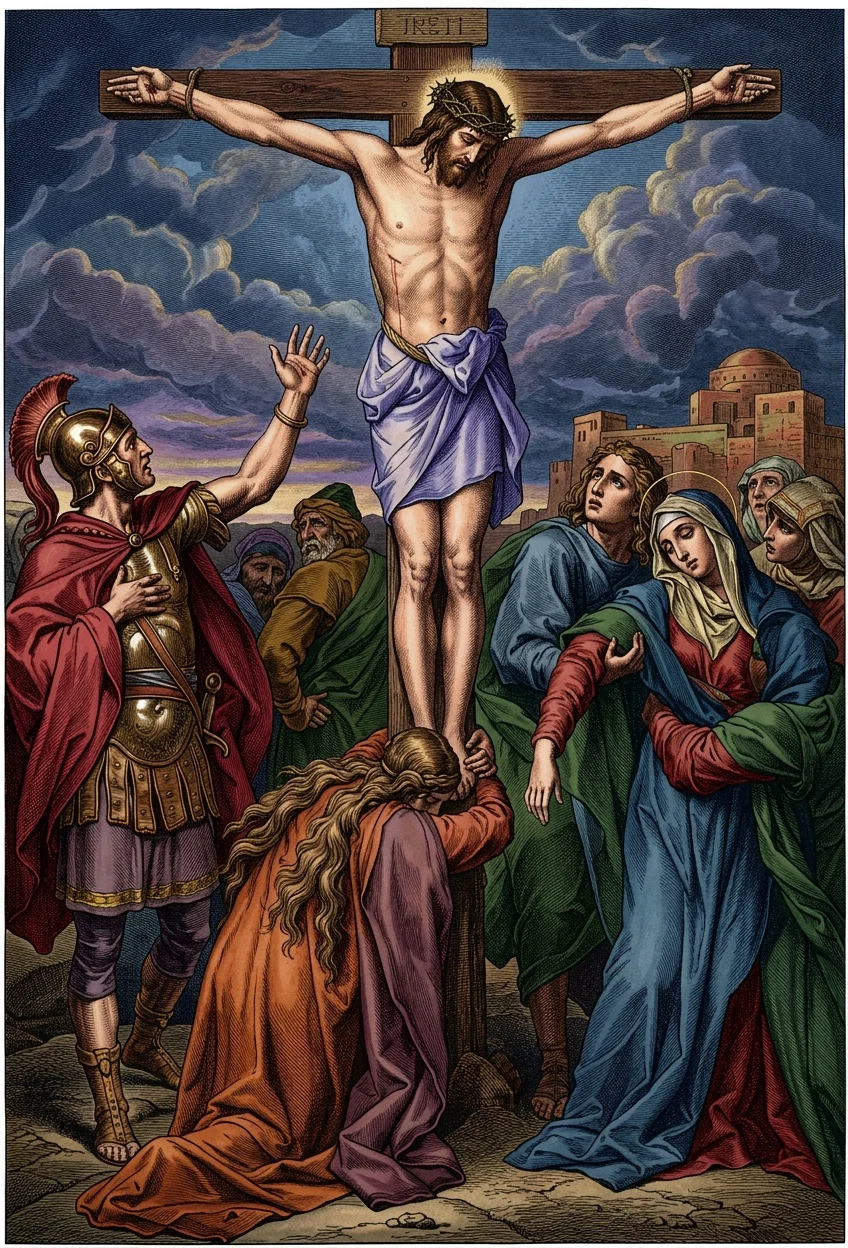
Think Not of Him as Destructive of “the Law”—Three Possible Ways to Have Deal with Sin—The Method of Upholding Law Was Chosen, Though It Involved the Suffering of Calvary
By RUFUS A. UNDERWOOD
“The cross of Calvary is the strongest evidence possible of the unchangeable and enduring character of the law and government of God.”
This is one of several articles that Mr. Underwood has furnished, setting forth the fundamentals of the gospel as presented by the Master in His Sermon on the Mount. Each article is independent of all the others, and hence may be understood whether you have read the others or not. This article comes as a sort of climax to what has gone before, and is exceptionally valuable. Editor.
“THINK not that I am come to destroy the law, or the prophets: I am not come to destroy, but to fulfill. For verily I say unto you, Till heaven and earth pass, one jot or one tittle shall in no wise pass from the law, till all be fulfilled. Whosoever therefore shall break one of these least commandments, and shall teach men so, he shall be called the least in the kingdom of heaven: but whosoever shall do and teach them, the same shall be called great in the kingdom of heaven. For I say unto you, that except your righteousness shall exceed the righteousness of the scribes and Pharisees, ye shall in no case enter into the kingdom of heaven.” Matt. 5: 17-20.

THE LAW UNDER THE SEARCHLIGHT

In these words, Christ puts His seal upon all that has gone before in His exposition of the requirements of the divine law. Christ turned the searchlight of truth upon the moral code, showing its scope, and breadth, and spiritual application, even to the thoughts of the soul. His comment upon the command, “Thou shalt not kill,” reveals that it is not necessary to commit the overt act to be guilty of murder.
Again in the twenty-eighth verse He says: “I say unto you, that whosoever looketh on a woman to lust after her hath committed adultery with her already in his heart.” This sermon, from beginning to end, is an example of Christ’s teaching, and a fulfillment of the prophecy of Isa. 42: 21: “The Lord is well pleased for His righteousness’ sake; He will magnify the law, and make it honorable.”
Christ has not only magnified the law in bringing to view its height, and depth, and breadth, which had never been seen before in their fullness; but in no way did He wish His disciples to entertain the thought that His precepts were to set aside or lessen the claims of the law.

ALL IS BINDING ON CHRISTIANS

Dr. Albert Barnes, in notes on Matt. 5: 18, 19, says: “First, we learn that all the law of God is binding on Christians; second, that all the commandments of God should be preached in their proper place by Christian ministers; third, that they who pretend that there are any laws of God so simple that they need not obey them are unworthy of His kingdom; and fourth, that true piety has respect to all the commandments of God and keeps them.”
John Wesley said: “The moral law contained in the Ten Commandments, [Christ] did not take away. It was not the design of His coming to revoke any part of this. This is a law which never can be broken. It stands fast as the faithful witness in heaven. Every part of this law must remain in force upon all mankind in all ages, as not depending either on time or place, nor on any other circumstances liable to change; but on the nature of God and the nature of man, and their unchangeable relation to each other.”—“Wesley’s Sermons,” volume 1, sermon 25.

HE NEVER REJECTED THE LAW

Luther said: “He who pulls down the law pulls down at the same time the whole framework of human policy and society. If the law be thrust out of the church, there will be no longer anything recognized as sin in the world, since the gospel defines and punishes sin only by recurring to the law. I never rejected the law.”—“Life of Luther,” page 214.
Luke, in recording Christ’s words, places even stronger emphasis upon its unchangeable character, in these words: “It is easier for heaven and earth to pass, than one title of the law to fail.” Luke 16: 17. Through His prophet, Christ had previously said of His law, “My covenant will I not break, nor alter the thing that is gone out of My lips.” Ps. 89: 34. If the law could have been changed or set aside, it would have been done when man first transgressed the divine command in Eden.

WHAT ANTINOMIANISM INVOLVES

In the light of Christ’s statement and the permanency of His throne, let us look for a moment at what is involved in the theory of the abolition or change of the moral law. The statement and command to our first parents in Eden is given thus: “But of the tree of the knowledge of good and evil, thou shalt not eat of it: for in the day that thou eatest thereof thou shalt surely die.” Gen. 2: 17.
It is unnecessary to trace the steps that followed in the path of disobedience which plunged the world into sin and its consequences. We will suppose that after Adam became a transgressor, and sin had entered the world (Rom. 5: 12), Christ approached the Father in Their councils after this manner: “Are You apprised of what has taken place upon the new world, which started out with such promise under the new kingship of Adam?” With sadness the Father replies to the Son: “Yes; Adam is under the sentence of death. What can We do?”

THREE THINGS WERE POSSIBLE

Three things might have been done: First, Adam and Eve could have been left to their fate, and paid the penalty of sin, which is eternal death. This would have been strict justice. Second, suppose Christ had suggested to the Father that They abolish the law, and thereby set Adam free. This being agreed to, the message is sent in haste to the earth, stating that the councils of heaven had decided, in order to release Adam and Eve from the penalty of death, that the law be set aside.
In such a case, trouble in the government of God would have just begun. A little later, other worlds would have fallen, and the example of God the Father and His Son toward the head of this world must be followed if they are impartial rulers, and hence the violation of law in every world in space would sooner or later have led to the abolition of God’s moral law governing His creatures. One can see at once that these measures would soon have plunged the government of God into chaos.
The One upon whom the maintenance of the government rests (Isa. 9: 6) says it is an easier task for heaven and earth to pass away than for one title of the law to fail. In other words, Christ could have blown out the sun, plucked away the moon, and blotted out of existence this whole solar system, together with all the other systems, more easily than He could have changed one iota of the divine law.
This question had been previously considered, and settled, so far as the inhabitants of heaven were concerned, when Satan rebelled and he and his followers were cast out. The decision had been, “Forever, O Lord, Thy word is settled in heaven.”—Ps. 119: 89.
There was one more step that could be taken, which not only would magnify the law and make it honorable in the sight of the whole universe, but would draw the affections of the whole creation of God to its Author, in ever increasing love and loyalty to its precepts. This was the step that was taken. Christ offers to step into man’s place, to live and die for man as his substitute, meeting the obligations and penalties of the transgressor. In this He could exalt the law and maintain His government, as being of more value than life and all else.

THE SACREDNESS OF CONSTITUTIONS

Consider how the nations of the earth look upon the sacredness of their national constitutions and laws. Take, as an example, the United States of America in 1861, and the little kingdom of Belgium in 1914. Fathers and sons, wives and mothers, sweethearts and sisters, were not only willing that the treasures of gold and silver should be poured out to maintain their law and constitution, which had been invaded, but thousands and hundreds of thousands of lives were laid upon the altar of patriotism, to maintain the honor of the nation and save its foundations.
This principle of government is recognized as more sacred than treasures of gold or life itself. So heaven counted the cost, and was willing to pour out its best gift in the Son of God to save a lost world. This was done to sustain the fullest demands of the law, and also to reveal the love and mercy of an infinite God.

THE LOVE INVOLVED

The apostle says, “Herein is love, not that we loved God, but that He loved us, and sent His Son to be the propitiation for our sins.” I John 4: 10. The meaning of the word “propitiation” I quote from Webster: “The act of propitiating for sin by atonement; enduring to the full penalty, making satisfaction, removing guilt and exposedness to punishment in meeting the requirements of the law.”
Christ in the fullest manner not only paid the penalty for transgression, but He makes the atonement, by meeting the requirements of the law, and lived for man, as well as died for him. When the offer of Christ to live and die for man was accepted by Adam, then, in the mind and purpose of God and His covenant, Christ became a “Lamb slain from the foundation of the world.” Rev. 13: 8. Then the angels could sing, “Mercy and truth are met together; righteousness and peace have kissed each other.” Ps. 85: 10.
The cross of Calvary is the strongest evidence possible to the unchangeable and enduring character of the law and government of God. The whole question involving any possible change had been settled in heaven when Satan was cast out forever; and the same question was settled on earth when Christ on the cross cried out, “It is finished,” and gave up the ghost. John 19: 30.
The perfect moral law is the constitution of the government of God. It must of necessity coexist with the throne of the Almighty.

Peace Beyond Understanding

A PRECIOUS promise too often unappreciated: “Be careful for nothing [Don't worry about to-morrow]; but in everything by prayer and supplication with thanksgiving let your requests be made known unto God. And the peace of God, which passeth all understanding, shall keep your hearts and minds through Christ Jesus.” Phil. 4:6, 7.
“Yes,” says unbelief; “but I tried that, and found myself perplexed. The thing did not come out as I expected. Does it not say, in the same chapter, ‘God shall supply all your wants’? There were blessings I wanted, and I did not get them.”
Perhaps you refer to verse 19. It does not say “wants,” but, “My God shall supply all your need according to His riches in glory by Christ Jesus.”
Perhaps the Lord saw that what you wanted was not good for you at that time, and that you needed a little test of your faith that He would do all things well if you would only let Him. Instead, you failed even to hold fast to the promise you had professed to venture on.
No wonder at a disappointment in such a case! J. N. LOUGHBOROUGH.

The Waiting Time

JOB has said: “Man dieth, and wasteth away: yea, man giveth up the ghost, and where is he?” “His sons come to honor, and he knoweth it not; and they are brought low, but he perceiveth it not of them.” Job 14:10, 21.
The son may attain great earthly glory, and become a Raphael, a Gladstone, or a Lincoln, with praises sung in every clime. Yet the sleeping father knows it not. His son may become a vagabond upon the earth, with no home but a box car. Yet the sleeping father knows it not.
“If a man die, shall he live again? all the days of my appointed time will I wait, till my change come.” Verse 14. Thus the Christian sleeps in the grave waiting for the change described in 1 Cor. 15:51-54: “We shall all be changed, in a moment, in the twinkling of an eye, at the last trump: for the trumpet shall sound, and the dead shall be raised incorruptible, and we shall be changed. For this corruptible must put on incorruption, and this mortal must put on immortality.” “Then shall be brought to pass the saying that is written, Death is swallowed up in victory.” E. W. CATLIN.

Watch and Pray

THIS is the charge that is given us by our Saviour. It is no time now to be thoughtless and unconcerned, nor to give attention to trifling matters. Time is too short.
That little word “Watch” signifies much to us at the present time. Why are we so often put in remembrance to be on guard? We need to watch because “the flesh is weak, and the foe is strong.”
“Watch and pray. The tempter might be near us. Keep the heart with jealous care, Lest, the door a moment left unguarded, Evil thoughts may enter there.”
There is need not only to watch, but to pray. If Christ felt the need of earnest prayer for strength to meet the temptations of life, and to stand firm to principle, is it not more essential for weak human nature in these perilous times to follow our great Exemplar?
The moments are golden, and we need to advance in the divine life as never before. Let us pray for grace to heed the Master’s command that we watch “while it is called to-day,” lest coming suddenly He find us sleeping. H. E. SAWYER-HOPKINS.

DREAMS OF WORLD EMPIRE

Mighty Emperors and Kings Who Have Sought to Unite the World—Four Were Permitted to Do It—The Prophet Foretells the Futility of All Other Attempts at World Dominion
By JEAN VUILLEUMIER
This is the third and concluding study of Mr. Vuilleumier on the prophecy of the second chapter of the book of Daniel. In the previous articles, he has presented what the prophet foresaw. He has shown that the four great world empires of Babylon, Medo-Persia, Greece, and Rome were seen in the prophet’s vision. The prophet furthermore saw that when Rome should arise, she would be the last of the world-wide kingdoms. She was to be broken into numerous smaller kingdoms, and these were to continue until Christ should come in person to overthrow all and establish His everlasting reign. Many mighty men have conspired and worked to unite Europe into one world-embracing empire. This article devotes itself to some of these colossal attempts. Without question, Satan has exerted all his rebellious powers to overthrow God’s prophetic utterance; but for fourteen centuries and more, the divided state of Europe has stood as a mighty monument to God’s foreknowledge.
In the next issue, Mr. Vuilleumier will have the first of his articles on the prophecy of the seventh chapter of Daniel. These will be followed by articles on the eighth chapter, as well as on other interesting portions of this prophetic book. EDITOR.
THE dream of reconstituting the Roman Empire has ever haunted the imagination and shaped the policy of the nations of the Old World, and it does so still. The frightful war now waging in Europe has brought vividly to the attention of thinkers the great fact, predicted in the prophecy, that the kingdoms of Europe should try to “cleave one to another”—that is, to dominate one another, to absorb one another into a great universal empire. Can it be said truthfully that there is nothing but rhetoric in the German phrase, Deutschland über alles, and in the English national strain, “Rule Britannia, Britannia rules the waves,” and that America herself would not be allured, if her chance should come, into a world empire?

ROBUST KINGS AND DOMINION

A recent article in La Gazette de Lausanne, Switzerland, from Prof. Ed. Rossier, brings out this fact so clearly that it sounds like a comment on the prophecy: “Modern history is marked by a few prodigious attempts on the part of robust kings and nations, to enlarge their power and enforce their superiority upon the continent.
“In the first place, it is Charles V. The imperial title is to him only a justification. He takes his power from the invincible Spanish infantry, from the industries of Flanders, and from the mines of the New World. But haunted by the idea of unity and empire, he uses all his hereditary resources for the glittering project of universal domination; and as he claims the honor, he accepts the duties. He wars against the Mussulman and the Christian, occupies Rome and makes Paris tremble, punishes the Protestants of Germany, bars the way to the Turks in Hungary, and chases the Barbarians to their distant coast. For a few years he triumphs.
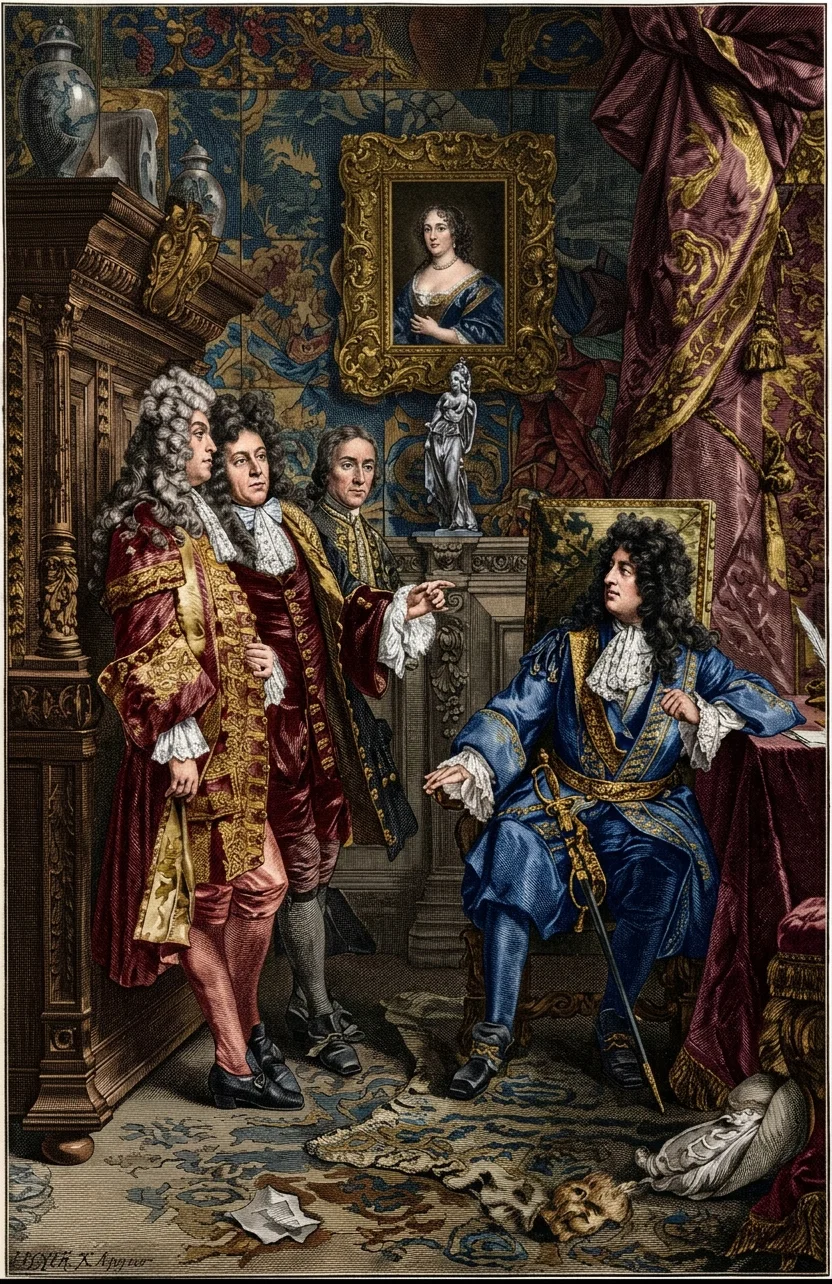
“Later on, it is Louis XIV. He applies a dynastic policy which, vitiated by flattery, deformed by pride, degenerates into a vast scheme of domination. With the admirable resources of France reorganized by ministers of talent, he fights on sea and land, imposes his will on coalitions, bullies the nations, rises above the kings.”

NAPOLEON’S MIGHTY AMBITION

“Napoleon, heir of the Revolution, is asked to secure for France new boundaries which the Convention and the Directory have traced. But while he destroys the armies of the kings, and passes through the old capitals, always accompanied by victory, he also allows himself to be carried away by the great dream. Farther and still farther he stretches the limits of his empire, creates thrones for his brothers and war comrades, imposes unequal treaties on the old nations which he still tolerates. And then—everything is quiet for a time. . . . “Will not the historians of the future also discern in our time one of these vast undertakings? . . . How is it that the mystic idea of the power and sovereignty of the romantic kaiser has combined with the laborious reasoning of venerable intellectuals, with the bellicose aspirations of haughty officers, with the greed of manufacturers, merchants, or shipbuilders, and that all this has been adopted by the nation as a sort of rule of life or sacred gospel, so that the whole of Germany has become a compact element, a powerful instrument for peace or war? . . . Far from me to look at the enemies of the German Empire as lambs without rancor or stain.”
LOUIS XIV CONSULTING HIS MINISTERS

UNIVERSAL JEALOUSIES AND RIVALS

And the writer refers to French ambitions toward a colonial empire; to English alarm at the German commercial and naval rivalry, and her desire to humiliate her rival effectually; to Russia’s well-known longings for universal domination, of which Joseph de Maistre said, “Le désir russe est infini.”
Is that all? Are those all the guilty ones? In an article on “Italy and the War,” the same writer expresses the opinion that Italy is not entirely free from this mania for space and fame. Just now the opportunity before Italy—Italia irredenta—seems unique, and the whole nation is frantic for war. [This article was written just before Italy plunged into the war. EDITOR.]
“Forgetful of her weakness, not minding the danger, the nation calls upon the government to satisfy its desire for grandeur. She is intoxicated by hopes and remembrances of the past. In the darkest periods of the Middle Ages, the Roman mob, starved and feverish, cheered its public orators, and imagined she saw the senate and the people enthroned again upon the seven hills and dictating laws to the sovereigns of Europe. And is not the past surviving to-day? Is not the great tradition of yore the surest bond of unity between the various nations of modern Italy? What a joy, what a commotion, at the first ray of glory! What an enthusiasm at the time of the campaign in Libya! Not in vain a nation lives in the midst of magnificent ruins and descends from a people which tamed the kings.”

SELFISH, DESPOTIC MAN

In other words, we are here facing one of the clearest features of human nature. Man is naturally selfish and despotic. And this character shows itself in the life of all nations whenever and wherever it finds an opportunity. The God who rules the nations permitted four of them to extend their crushing rule over the rest of mankind. He predicted that they should. But in the same prophecy, He decreed that that should be the limit. The fourth world empire, the Roman power, was to be divided, never to be reconsolidated. This inflexible, unchanging word has stood in the way of all empire builders for the last fifteen hundred years. In turn, all their schemes have tumbled to the ground. God has spoken; and to-day as ever, the Word reads with thunderous distinctness. “They shall not cleave one to another, even as iron doth not mingle with clay,” for “the kingdom [of Europe] shall be [and shall remain to the end] partly strong, and partly broken.”
Indeed, when the solemn hour strikes for the fifth kingdom—the kingdom of righteousness and peace—to be established, it finds the world still in its divided condition.
“And in the days of those kings shall the God of heaven set up a kingdom which shall never be destroyed, nor shall the sovereignty thereof be left to another people; but it shall break in pieces and consume all these kingdoms, and it shall stand forever. Forasmuch as thou sawest that a stone was cut out of the mountain without hands, and that it brake in pieces the iron, the brass, the clay, the silver, and the gold; the great God hath made known to the king what shall come to pass hereafter: and the dream is certain, and the interpretation thereof sure.”

TWO THOUSAND YEARS OF FULFILLMENTS

Over two thousand years of striking fulfillments ought to be a sufficient warrant of the truthfulness of this final prediction, which contains a definite answer—and O, how consoling!—to the question of Nebuchadnezzar of so long ago, and which the present generation is repeating with breathless anxiety: “What shall come to pass hereafter?” “What is this world coming to?”

THE STONE CUT OUT WITHOUT HANDS

The stone “cut out without hands,” which strikes the image and dashes it to pieces, is Jesus Christ, the Saviour of the world, and the King of kings. David says of Him that He shall break the nations “with a rod of iron,” and “dash them in pieces like a potter’s vessel.” Ps. 2:9. And the revelator saw in vision that when “the kingdom of the world is become the kingdom of our Lord, and of His Christ,” who is to “reign forever and ever,” then “there was a great earthquake, such as was not since there were men upon the earth,” so that “the cities of the nations fell,” “and every island fled away, and the mountains were not found.” Rev. 11:15; 16:18-20.

A NEW EARTH IS OFFERED

But to His people, to the church of all ages, is offered in possession “new heavens and a new earth, wherein dwelleth righteousness.” 2 Peter 3:13. “They shall inherit the earth,” said Jesus of the meek, in His Sermon on the Mount. Matt. 5:5. And many years before, Isaiah described the “singing,” the “gladness,” and the “everlasting joy,” of the “ransomed of Jehovah,” when they see the desert “blossom as the rose,” and “the glory of Lebanon” and “the excellency of Carmel and Sharon” adorn the earth made new. He tells us that “the wolf shall dwell with the lamb, and the leopard shall lie down with the kid”; “their young ones shall lie down together; and the lion shall eat straw like the ox.”

BLIND AND DEAF TO SEE AND HEAR

But this is not all. “Then the eyes of the blind shall be opened, and the ears of the deaf shall be unstopped. Then shall the lame man leap as a hart, and the tongue of the dumb shall sing.” “They shall not hurt nor destroy in all My holy mountain, saith Jehovah.” Isa. 11:6, 7; 35:1-9; 65:17-25.
This is what the world is coming to. History in hand, we can, with Daniel, and even better than he, exclaim that “the dream is certain, and the interpretation thereof sure.”
No longer doubt then, dear reader, seeing that God has given you such powerful reasons to believe. Accept with joy the good news herein proclaimed, thank God for such a beautiful prospect, and enlist without delay under the banner of the King of righteousness, who is also the Prince of peace and the Friend of sinners, the One who says to all, “Come unto Me, . . . and I will give you rest.”

The Resurrection and Man’s Mortality

Both the Righteous and the Wicked to Be Raised from the Dead—If the Real Man Does Not Die, Why the Resurrection?
By ALBERT M. DART
“And have hope toward God, which they themselves also allow, that there shall be a resurrection of the dead, both of the just and unjust.”
These two general resurrections, as has been frequently shown in the columns of this paper, are a thousand years apart, the just being raised at Christ’s coming, at which time they enter their reward.
“But when thou makest a feast,” said the Saviour, “call the poor, the maimed, the lame, the blind: and thou shalt be blessed; for they cannot recompense thee: for thou shalt be recompensed at the resurrection of the just.” Luke 14: 13, 14.
The idea that man is immortal and receives his reward at death is at uncompromising variance with this plain statement of the Saviour’s.

THE RESURRECTION NECESSARY TO LIFE

“For since by man came death, by man came also the resurrection of the dead. For as in Adam all die, even so in Christ shall all be made alive.” 1 Cor. 15: 21, 22.
Could this be said if man lived between death and the resurrection?

RESURRECTION OF CHRIST NECESSARY TO MAN’S RESURRECTION

When it is proved that Christ’s death and resurrection were necessary to man’s resurrection and life, no one can longer consistently claim that man is immortal; for why this tremendous expense to Heaven to save the house man lives in, when man himself has, as would be the case in many instances, been enjoying life in glory for centuries?
“But if there be no resurrection of the dead, then is Christ not risen; and if Christ be not risen, then is our preaching vain, and your faith is also vain. . . . And if Christ be not raised, . . . ye are yet in your sins. Then they also which are fallen asleep in Christ are perished.” 1 Cor. 15: 13, 14, 17, 18.
“In your sins” and “perished” without the resurrection of Christ! The language is too plain to admit uncertainty and doubt; and with that fact admitted, who can possibly believe that man is immortal and receives his reward at death?

THE RESURRECTION OF THE WICKED

“For the hour is coming, in the which all that are in the graves [Where are they?] shall hear His voice, and shall come forth; they that have done good, unto the resurrection of life; and they that have done evil, unto the resurrection of damnation.” John 5: 28, 29.
Here is seen the whole human family, apart from the living, in their graves. And here also is proof sufficient that the result of their choice before death is visited upon them at the resurrection.
Then, dear reader, really, could they in either case have received it before?
While both righteous and wicked die—go to sleep, for there is an awakening—the former are raised to life eternal, and the latter to pay the penalty of sin in the second death; for the revelator states: “Blessed and holy is he that hath part in the first resurrection: on such the second death hath no power.” “And death and hell were cast into the lake of fire. This is the second death. And whosoever was not found written in the book of life was cast into the lake of fire.” Rev. 20: 6, 14, 15.
Truly, dear reader, “the wages of sin is death; but the gift of God is eternal life through Jesus Christ our Lord.” Rom. 6: 23.
How hard and persistent are the efforts of the archdeceiver to make people believe his statement to Eve in the Garden of Eden, “Thou shalt not surely die”!
But all that Christ has done for the human family is against it, and in the final apportioning of awards at the resurrection, whosoever is not found written in the book of life, himself pays the penalty that the blessed Saviour paid for him, and longed for him to accept it paid in him, without which acceptance he would continue in the ways of sin, and reap its full result in the second death.

RESURRECTION POWER FOR THE BELIEVER

How ample the provisions made by the dear Redeemer for a life in harmony with the principles He died to establish! We are not left to human strength to win the prize; but God would have us know the power brought to our aid by a belief in the resurrection, even “what is the exceeding greatness of His power to usward who believe, according to the working of His mighty power, which He wrought in Christ, when He raised Him from the dead.” Eph. 1: 19, 20.
Yes, dear reader, it is here in this life that we may, by faith, appropriate resurrection power to overcome sin. Death and sin are on very friendly terms. We must break with one to escape the other; and resurrection power, which is creative power, is involved in either case.
“That I may know Him,” said Paul, “and the power of His resurrection, . . . if by any means I might attain unto the resurrection of the dead.” Phil. 3: 10, 11.
Did the apostle himself expect to attain to the resurrection of the dead, or was he thus solicitous for his body merely?—The latter position is unthinkable.

RESURRECTION POWER IN THIS LIFE

The gospel plan is, to know the power of the resurrection in life, and thus experience it in death, and—if I may be permitted to speak paradoxically—death during the life in which it is appropriated; for death to self is a living experience. “I die daily,” is the statement of one who appropriated resurrection power to pass through trials the thought of which is enough to cause the stoutest heart to shudder; and by grace he could call them “light afflictions,” working out “a far more exceeding and eternal weight of glory.”
Are you acquainted with the glorious truths of the resurrection, dear reader? I can hardly see how they can be fully appreciated without an acceptance of His death and resurrection, which is an acknowledgment of man’s death and resurrection; and this implies a rejection of the immortality-of-the-soul theory, for the latter is incompatible with the former.
A correct understanding of the plan of salvation is necessary to a full realization of divine blessing. To be ignorant of any phase of God’s scheme to save man, when God has made enlightenment possible, is to suffer loss. A knowledge of the facts will enable us to escape the snares of the enemy, into which we might easily fall if knowledge is rejected. “My people are destroyed for lack of knowledge.” Hosea 4: 6.
But “His divine power hath given unto us all things that pertain unto life and godliness, through the knowledge of Him that hath called us to glory and virtue.” 2 Peter 1: 3.
And when He who broke the fetters of the tomb, to release the human family from death’s thralldom, shall come a conquering King, may reader and writer be numbered with the released captives!
Continue reading: GROWTH SOUTH OF THE EQUATOR