Signs of the Times, December 5, 1916

The Wonder of the Cross

Signs of the Times

Dec 5, 1916

Pacific Press Publishing Association · Mountain View, California · Dec 5, 1916

The Wonder of the Cross
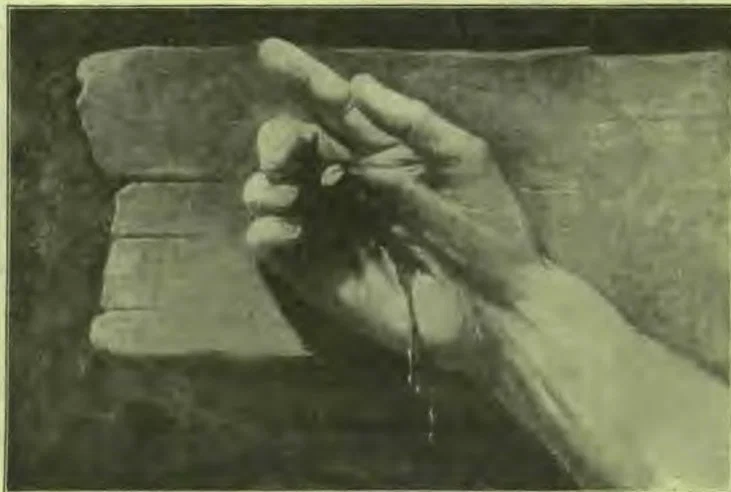
“SINCE A. D. 31, it has been a token of the highest honor. Hence we have the Red Cross, the White Cross, the Victorian Cross, et cetera; until today there is scarcely a patch of coral anywhere in the ocean, large enough for the foot of man, where the wonderful story of the cross has not been told, and its mighty, transforming power felt.”
“THIS wonderful, blood-stained cross, set deep in the unclothed bosom of mother earth, reached its bare head up towards heaven, and stretched its mighty arms outward, as if to say, ‘Look unto me, and be ye saved, all ye ends of the earth.’ In it indeed is comprehended the height, and depth, and length, and breadth of the wonderful love of the Master.”

“Descend Now from the Cross”

He Who Commanded Worlds Would Not Save Himself
Extracts from a Sermon
By C. G. BELLAH
“LET Christ . . . descend now from the cross, that we may see and believe.” Mark 15:32. The disciples never knew how much they loved Jesus, nor His enemies how much they hated Him, until the afternoon of that fateful black Friday, when the sinner’s Friend hanged bleeding on Calvary. While the disciples were fearful, and did the least, the devils were furious, and did the most.
Ever since that glorious night when the angels sang the cradle song over the manger Babe, Satan had made the Master’s life one of bitter reproach and shame among men. Now he summoned all the infernal hosts of the underworld, and, in a last, supreme effort, flung the taunting bid in the face of the world’s Redeemer, “Descend now from the cross, that we may see.”

The Crucial Effort

Lonely, forsaken, suffering, dying, the Saviour trod the wine press alone. Old mother earth veiled herself in mourning, for her Lord was dying. Even the Father mercifully flung the somber drapery of darkness over the cross, as if to shut out the awful sight. Methinks I can hear the dying Saviour say, “I could have borne the humble birth among oxen, the lonely nights with birds and foxes, the bitter persecution of My chosen people, the treacherous betrayal of Judas, the cowardly denial of Peter, and even this ignominious death on the cross; but, oh, ‘My God, My God, why hast Thou forsaken Me?’”
Will He descend from the cross?—Never! He could have come down, and struck His persecutors dead. Yea, He could have wiped the earth out of existence with one stroke of His mighty hand, and swept back in peace to the Father. But He did not. And why?—“For the joy that was set before Him,” He “endured the cross, despising the shame.” Heb. 12:2.
For the joy! It was not the spikes that held Christ to the cross, but the cries of His children for help. Those ears which had never been deaf to the cry of need, now heard the piteous woes and lamentations of a lost world arise in a mighty, irresistible appeal. He grips the rusty nails a little tighter in His pierced hands, and says, “I’ll not descend.”
If He descended, all was lost; if He remained, all might be saved. The Father had gathered together all the sins of the whole world, and laid them upon His dying Son. Now the Son, in the last, crucial effort, will perish to save a lost humanity.
Friends, come with me this morning, and let us ascend Mount Calvary, and walk softly around the three crosses. Let us come tenderly near to the middle one. And be careful where your feet tread, for there is blood at the foot—the royal blood of a King, a Brother. Like the man who allowed his brother to slay him on the threshold of his home, that if he went to destruction, it would be over the blood of his kin, so with Christ. Every sinner who is lost must trample beneath unhallowed feet the blood of an elder Brother. So, let us be careful.
How came this middle cross there?—Ah, it was carried by the Redeemer Himself. Like Isaac of old, He carried the wood of His own sacrifice, and the Father provided an offering. He was under the cross while ascending the mount; now He is on it. When the cross was upon Him, He went down; but never when He is on the cross.
This wonderful, blood-stained cross, set deep in the unclothed bosom of mother earth, reached its bare head up towards heaven, and stretched its mighty arms outward, as if to say, “Look unto me, and be ye saved, all ye ends of the earth.” In it indeed is comprehended the height, and depth, and length, and breadth of the wonderful love of the Master.

Sculptured on Throbbing Hearts

The cross had been a symbol of shame and dishonor. It had been the instrument of death to the guiltiest of the guilty, for thieves and felons. Since A. D. 31, it has been a token of the highest honor. Hence we have the Red Cross, the White Cross, the Victorian Cross, et cetera; until to-day there is scarcely a patch of coral anywhere in the ocean, large enough for the foot of man, where the wonderful story of the cross has not been told, and its mighty, transforming power felt.
But let us not forget what the cross is, and what it is not. It is not the glittering shaft on the church steeple that proudly lifts itself toward heaven. It is not the chiseled ornament crowning the monument of the dead. It is not even the gilded design stamped on the cover of Holy Writ. Ah, no! These are but costly and unprofitable imitations.
Putting the crucifix on everything, is not like putting everything on the cross. The devil knows the immense difference between a powerless crucifix and the powerful cross. Yea, it is not the crucifixon spire, tombstone, or Bible, but the blessed sacrifice of Jesus in the church, sculptured on the throbbing heart of the living, and securely woven through every page of Holy Writ.

In the Lethe of Death

Never descend from the cross! There you find the way to the loving heart of the Master, and there only are you safe. John says, “One of the soldiers with a spear pierced His side, and forthwith came there out blood and water.” The cruel sword of the Roman found its bloody path to the heart of the Master, and opened up a way to the lost children of men. There were two rendings on the fateful day of the crucifixion. Not only the purple veil of the temple was rent in twain, thus ending the old dispensation; but the scarlet veil of the Saviour’s heart was rent, ushering in the new. Both were rent, never to close again. The work of the one forever ended, the other goes on till the end.
The way to His heart is ample. After the resurrection, Christ said to Thomas, Thrust thy hand into My side. A big, gaping, ugly wound it was, that did not heal without a scar. As God opened the side of the first Adam, to prepare for him an earthly bride, so now the second, yea, the last Adam’s side was opened, that the Lamb’s wife might be presented without spot or blemish. The work for the first was performed while he was wrapped in unconscious slumber; for the second, while He was enfolded in the lethe of death.
And what became of the flaming sword that kept the way of the garden after sin came in?—Ah, the Master took it into His own throbbing bosom, and victoriously cried, “O death, where is thy sting?” Like the envenomed bee, death left its poisonous sting in the body of the injured.

“Well of the Skull”

On a barren pathway in the desert, the bleaching bones of an adventurer are seen. As we near the oasis, more are found. Reaching what had once been a sparkling well, but was evidently dry at the time of the pilgrim’s march, we find on the very brink a skeleton, with the hand outstretched over the edge, as if to dip the cooling draught. Thus he had perished, for the well was dry. Later the refreshing rains had filled the well, and the cooling liquid was now laving the brow, kissing the cheek, and playing in the matted tresses of the dead, as if in painful mockery.
The well of the skull, as it was afterwards called, was filled too late for the dying pilgrim. Not so on Calvary. The crimson stream that came from the Master’s side has welled into a mighty, unfailing fountain. Golgotha, the place of a skull, has become Calvary, the place of salvation. The well is full. All may quench the burning thirst and be saved.

Throes of Calvary

As Christ was on the cross amid thieves, so you will be on the cross among worldly people. He was crucified between two, not at the side. He is God’s great Middleman, for the saving of the lost. The motley crowd gambled for the seamless garment, while they rejected the Wearer. So we should remember that while people may sometimes criticize our habits of life, and reject the saving message we bring, yet if we do not descend from the cross, honest hearts will be won to the Master. Christianity is the only religion with a cross in it, and the only one with salvation. Be true to the cross!
Nothing could hinder the work of Christ. He preached anywhere, everywhere, any time, all the time. Three were converted on the dark day of the crucifixion,—Simon, who bore the cross, a descendant of Ham; the thief, of the posterity of Shem; and the Roman centurion, of the tribe of Japheth. Thus the very last earthly work of the Saviour of men was to present to the Father a glorious wave sheaf of three, rescued amid the throes of Calvary, from among each of the tribes of men.
To Jesus, Calvary became a church; the heavy cross a mountain pulpit, from which to preach His sacrifice; and the rabble a waiting congregation.
Remember, “He was wounded for our iniquities.” Where was He wounded? Where was He bruised? In Palestine, you say. Yes; but let us come nearer. On Calvary? Yes; but let us come nearer still. On His head, on His back, in His side, in His feet and hands.
The thorny crown pierced His brow, the cruel scourge lacerated His back, the spear found its way to His heart, and the spikes pierced His feet and hands,—the head for wisdom, the heart for love, the back for burdens, the feet for duty, and the hands for blessed service. As all of His person was wounded and bruised for us, let us consecrate all of self to Him.

Killed by Idle Gossip

By Bernard P. Foote
Such was the verdict rendered by a coroner’s jury in an English town not long ago. A young girl committed suicide. At the inquest, it was learned that the girl had not been guilty of any serious misdeed, but that “the gossip disseminated by the women of the village blackened her name until she could bear the suspicious looks and spoken taunts no longer.”
This premature death of an innocent girl, together with the verdict brought in by the coroner’s jury, set the people to thinking to such an extent that what is known as “an anti-gossip crusade” was started. The following from Pearson’s Weekly, of London, describes it:
“A society has been formed and rules drawn up. The entrance fee has been fixed at a nominal sum, because the society desired to embrace all classes, both rich and poor. Our richer women are just as adept at robbing others of their character as are the women of the working classes who chat with each other from their respective door-steps.
“The organizers are quite hopeful of minimizing the number of gossips, because they are convinced that the worst offenders talk scandal more from a matter of habit than through any really malicious desire to injure another.
“Members must take a vow to avoid either starting or spreading any unkind remarks about any one else, nor will they listen to a person who tries to tell them. To repeat what they have heard, even if known to be true, is equally as bad as to set the ball rolling. For the first ten breaches of this law, a fine is imposed, graduating from a shilling up to the maximum fine of ten shillings. After ten slips, the women are to be blackballed as incurables. . . .
“If we pick up mud and throw it at a fashionably dressed lady and spoil her clothes, she can get redress through the law. No well brought up woman, however, ever dreams of throwing mud at her friends.
“If, on the other hand, we imagine that she is too flighty in her behavior, and, in order to strengthen our belief, we repeat all her trivial little indiscreet actions, we are flinging mud at her character, and she can get no redress unless it should happen to interfere with the earning of her livelihood, or can be proved a malicious act.”

Passing the Three Golden Gates

“Idle gossip does more harm than anything else in the world; and if the organizers of the anti-gossip crusade have only the perseverance and courage to make it universal, they will do inestimable good for the general happiness of the community.
“Charity, like all else, should begin at home; and those who cannot join the crusade should begin in their own family circle, and resolve not even to think ill of their friends, acquaintances, or those of whom they have little knowledge. When ugly tales are told them, these should be immediately forgotten.
“Before making a statement about any one, do not forget to let it pass the three golden gates: ‘Is it true?’ ‘Is it needful?’ and ‘Is it kind?’”
“These form the motto of the anti-gossip crusade.”
These suggestions are certainly worthy of the careful consideration of every one of us, for there is hardly a person in the world but is tempted along these lines. A well-known writer has said, “Human beings confess readily enough that they like a harmless bit of gossip, and fail utterly to realize that that ‘harmless bit of gossip’ grows in the telling, and assumes the proportions of a harmful bit of scandal.”

A Death with Every Breath

It has been said that “with every breath, a reputation dies.” And only the Judgment itself will reveal how many human lives have been shortened by criticism and gossip. If we cannot form an anti-gossip society, we can and should each appoint ourself a committee of one to see that there is less of this evil in the future than there has been in the past. In the mouth of those who are ready and waiting for the Lord when He comes will be found no guile.
When John Bunyan saw a criminal led out to be hanged, he said, “There, but for the grace of God, goes John Bunyan.” And but for the grace of God, every one of us wouldbe—nobody knows where. We are to “judge not,” that we “be not judged.” We may be more unworthy, in the sight of God, than the one we are criticizing. “No matter how lowly the station of an individual, or how underdeveloped his mentality, he finds some one to look down upon and criticize.”
The following lines are easy to remember, and may prove helpful in this connection:
“If you your lips Would keep from slips, Five things observe with care: To whom you speak, Of whom you speak, And how, and when, and where.”

Known by Their Fruits
The Power of Dominant Lives in the Light of History
By George McCready Price
The strongest argument in favor of Christianity is the kind of men and women it makes. The words, “By their fruits ye shall know them,” were spoken by the Founder of this religion; and certainly the power that it has always manifested to transform the life, to regenerate the individual, is among the most conclusive evidences of its heavenly origin. Almost equally convincing are the lessons of history, in showing what the Bible and its religion have done for communities and nations.
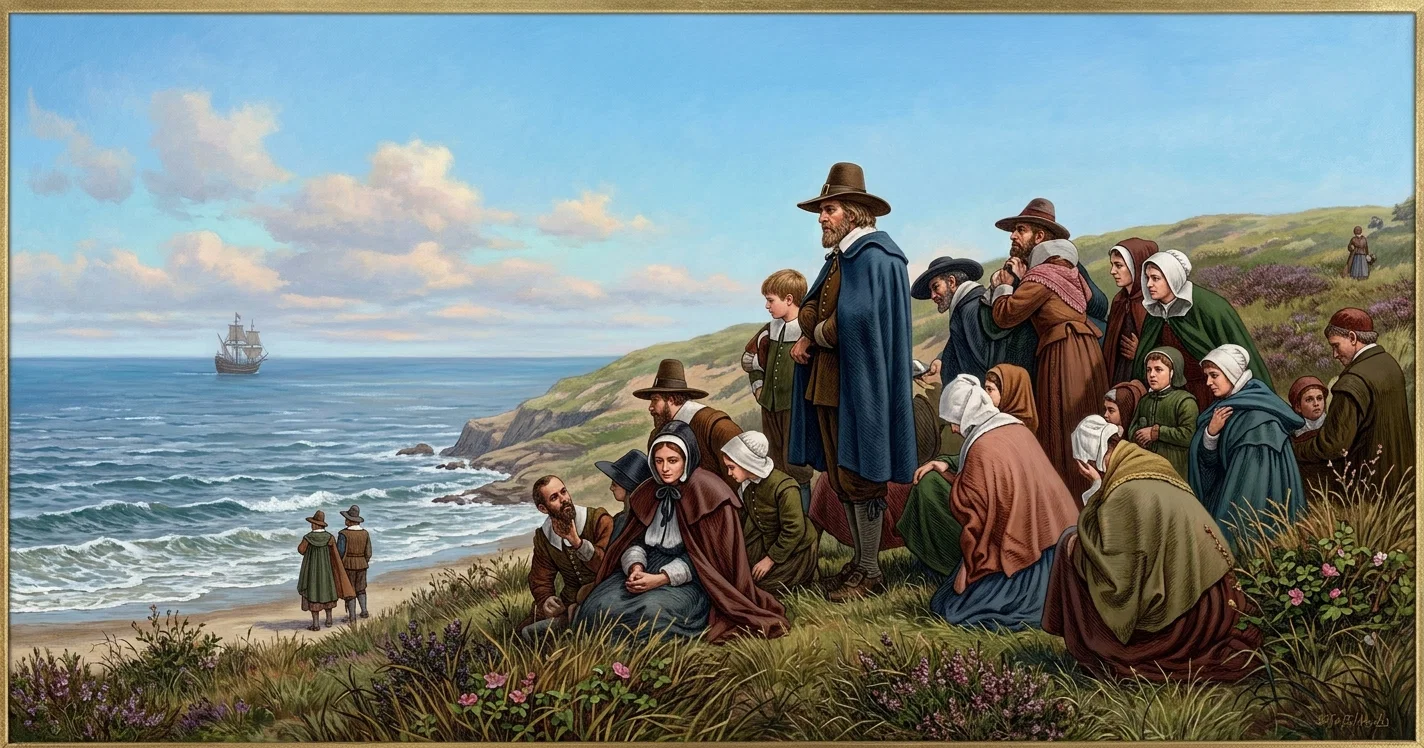
In a previous article, we spoke of the influence of the Bible on family life only a generation ago. In this, we plan to go back still further, and to study for a moment the kind of people developed under Bible teaching nearly three hundred years ago, the intellectual and spiritual fathers of all that is best in our modern American life. And we need not tarry in the granite-ribbed country where, amid desolate surroundings, the Pilgrim Fathers sought to found a state without a king, and a church without a pope. In the land whence they came, the cousins whom they left behind finally succeeded in the work which these Pilgrims had abandoned in discouragement; namely, in calling a halt to the despotism of kings and to religious intolerance.

Caricaturing the Puritans

By caricaturing their physical peculiarities, the gay courtiers of the Restoration long succeeded in making the very name of Puritan sound ridiculous. Even our modern somewhat similar age has scarcely outgrown this prejudice, fostered by profligate rascals who were not fit to be lackeys to the least of those indomitable patriots who a generation before had shaken off the tyranny of popery and the divine right of kings. These Puritans were much more than a mere fanatical sect of narrow-minded, gloomy bigots. They were Anglo-Saxon freemen whom the study of the recently emancipated Bible had awakened to value their faculties as a gift from God, and to prize individual liberty as an inalienable right of all who were made in the image of God. They had been assembled, at the call of the hour and the crisis of the nation, from the Church of England, from the extreme Separatists, from the Calvinists, from the Covenanters, yes, even from the Roman Catholics, “with a passion for liberty and righteousness such as the world has never since seen;” and it was their deep sense of personal accountability to God, born of Bible study and the inspiring culture of Christian family life, that made them what they were.

New Picture of Liberty

What care we that the Puritans prohibited Maypole dancing and horse racing? It was their high work to give to the world a new picture of liberty and justice; for when they set about to overthrow despotism, and to make a man’s life and property and conscience free from the tyranny of rulers and ecclesiastics, they avoided the mistakes that all others have made, both before and since. Others have deposed or slaughtered their tyrants. Some few, like the hysterical patriots of the French Revolution, have endeavored to break free from religious despotism. The Puritans show us the solitary example in history of a people trying their king and their ecclesiastical oppressors by due process of law, and then executing the sentence in the calm spirit of judicial equity. Blessed for all coming time are these people who thus grounded the rights and liberties of man, not in the caprice of anarchy and revolution, but in those eternal principles of morality and justice which antedate all governments and transcend all constitutions.

Cause of Their Development

Were not Pym and Hampden, Eliot and Milton, Puritans? But wherever freemen sleep securely in Canada or South Africa, in Australia or California, these names are held in highest honor. Cromwell, too, the incarnation of triumphant Puritanism, stood like a rock for religious tolerance; and it was another Puritan, Thomas Hooker, who in Connecticut gave to the world the first written constitution, a document in which free-born men laid down beforehand the strict limits of the offices to which they proposed to elect their governmental representatives.
Was it not because the Bible was made the guide of faith, the charter of liberty, the monitor of duty toward God and man, that they developed to an unprecedented degree the sturdy stuff of which heroes are made, and upon whose civil, intellectual, and industrial achievements great nations grow? They labored, and we have entered into their labors. But there is the greatest danger that our modern age will forget how we received these blessings, and assign to every cause but the right one those characteristics which we now respect and honor.
God grant that we may not soon forget those principles of the value of the individual, the eternal rights of man as preceding all organizations of society, which we have received from those “sturdy old iconoclasts,”—
“The dead but sceptered sovereigns who still rule Our spirits from their urns.”
In following still farther back through the centuries this stream of blessing, we might well pause at a point some three hundred years before the Puritans, to study the life of Wycliffe, the advance herald of the Reformation, who gave the Bible to the people of England almost two centuries before Luther, and almost a hundred years before the invention of printing. For Wycliffe was not only one of the greatest of the Reformers, but his character is of especial value as a witness to the educating, transforming power of those Scriptures which he loved.

Perpetual Miracle

But let us go back still farther, into the very midnight of the Dark Ages, and study for a moment the lives of those humble peasants in the obscure retreats of the Alps, who, though hunted for long centuries by every nation living around them, passed along undimmed from generation to generation the only treasure they had, the word of God. Let the modern socialist, the disciple of Marx and Lassalle, who can interpret the character of a people only in terms of cold economic laws, visit these peasants, shut away from the world, bound to helpless and interminable toil amid their flocks and rocky vineyards, and see how he will account for this perpetual miracle of a free, Bible-loving people turning back century after century the fierce fanatical crusades of the best troops of Italy and France. The true explanation is to be found in their own motto, “Lux lucet in tenebris” (The light shineth in darkness); for it was a power from above that shielded their lives. Their faith, too, was not one newly received. They had not of themselves originated those grand truths so different from the blind dogmas and superstitions around them. They were what their religion made them; and their religious faith was an ancient heritage from their fathers.

Went to Duty and to Death

We in modern times little dream how much we owe to these people, the first of all Europe to translate the Scriptures into the language of everyday life,—
“E’en them who kept God’s truth so pure of old, When all our fathers worshiped stocks and stones.”
But though possessing none of the comforts and conveniences of life, and though ever living under the shadow of a violent death, they did not waste their lives pitying themselves. Compelled by untiring labor to copy out by hand and in secret the precious manuscripts, verse by verse and chapter by chapter, committing large portions to memory, they were not content to hold these treasures selfishly within their own valleys.
Century after century, while the rest of Europe was bound with iron chains of superstition to the triumphal car of Rome, the Waldenses continued to send out secretly their colporteurs and their trained and educated missionaries into the surrounding countries. Barefooted, and clad in coarse, travel-stained garments like those of their Master, they made their way through the midst of their enemies, and penetrated to far distant lands. Often the messenger of truth never returned to his mountain home; he was languishing in some far-away, unknown dungeon, or his bones were whitening around some charred stake, like those ofmany whom he had left at home, lying “scattered on the Alpine mountains cold.” But churches sprang up along his path where he had scattered the vitalizing leaves from the tree of life; and in hundreds of places, influences were started that will be comprehended only when the earth “shall disclose her blood, and shall no more cover her slain.”
Truly, “by their fruits ye shall know them;” and the people of our age cannot abandon the divine lessons of the Bible without also abandoning every influence for good that has helped to make us what we are, every influence tending to hold society together, and to keep our modern world from complete disintegration through the awful process of anarchy and revolution.

In League with Death

“All who believe that the soul never dies are committed to this deception—spiritualism—and will ultimately be swept into the vortex.”
By K. C. RUSSELL
THE belief that the soul does not die, and that when people appear to die, they are only entering upon a higher sphere, is the real basis for the belief that the living can communicate with the spirits of the dead. The Bible plainly teaches that the dead are unconscious between death and the resurrection. In Ps. 146: 3, 4, the Lord commands: “Put not your trust in princes, nor in the son of man, in whom there is no help. His breath goeth forth, he returneth to his earth; in that very day his thoughts perish.” Certainly when our thoughts perish, there can be no consciousness.
Again in Eccl. 9: 5, we are told that “the living know that they shall die: but the dead know not anything, neither have they any more a reward; for the memory of them is forgotten.”
Satan was the originator of the first lie, when he said to Eve in the Garden of Eden, “Ye shall not surely die;” and those who now teach that there is no such thing as death, saying that what seems to be death is but transition, are really repeating the falsehood the devil told in the beginning.

Are Spirit Miracles Trickeries?

The question may be asked by some, Is all which purports to be phenomenal concerning the spirits of the dead, mere trickery, or is there something supernatural about it? Without doubt, much that claims to be supernatural is a humbug; but any one who has given the question careful thought knows that there is something supernatural regarding spiritism, and that therefore it cannot be accounted for from natural causes.
Many think that Satan is not able to do things that are supernatural and miraculous; but such is not the case, for the Bible plainly teaches that the devil can perform miracles. In 2 Thess. 2: 9, the Lord says that just preceding His return to this earth the second time, Satan will work “with all power and signs and lying wonders.” In Rev. 13: 14, He says that the devil will deceive “them that dwell on the earth by the means of those miracles which he had power to do.” Again in Rev. 16: 14, we are told that the devil will perform miracles.
Since the spirits of the dead do not return, how can the supernatural things be accounted for that are performed through spiritualist mediums? The Bible plainly teaches that the devil, aided by the fallen angels, is bringing his crowning deceptions to bear upon those who have lost loved ones, by claiming to bring messages from the spirit world, and frequently personifying some departed friend so perfectly in looks and in accent of the voice as to appear to be in every particular like our own dear one who was snatched from us by death.
In 2 Cor. 11: 14, we read, “Satan himself is transformed into an angel of light.” If Satan is able to transform himself into an angel of light, how much easier it would be for him to transform himself into a form that would resemble a human being!

Ancient Witchcraft Revived

The communion with the so-called spirits of the dead is ancient witchcraft revived. In former days, the Lord punished those who had any part in the deceptive things. See Lev. 19: 31; 20: 6, 27; Deut. 18: 10, 11. Perhaps the most striking example of God’s displeasure toward those who indulged in these forbidden practices was the case of King Saul. 1 Chron. 10: 13 says of him, “So Saul died for his transgression which he committed against the Lord, even against the word of the Lord, which he kept not, and also for asking counsel of one that had a familiar spirit, to inquire of it.”
There are many people who consider themselves immune from the bewitching influence of necromancy and witchcraft; but the facts are that all who believe that the soul never dies are committed to this deception, and are liable to be swept into the vortex.
The Bible teaches, in both the Old and the New Testament, that the purpose of Christ’s second coming at the end of the world, is to raise the sleeping dead to life and immortality, and to translate the living righteous.
The inspired apostle Paul says, in 1 Thess. 4: 16, 17: “For the Lord Himself shall descend from heaven with a shout, with the voice of the Archangel, and with the trump of God: and the dead in Christ shall rise first:
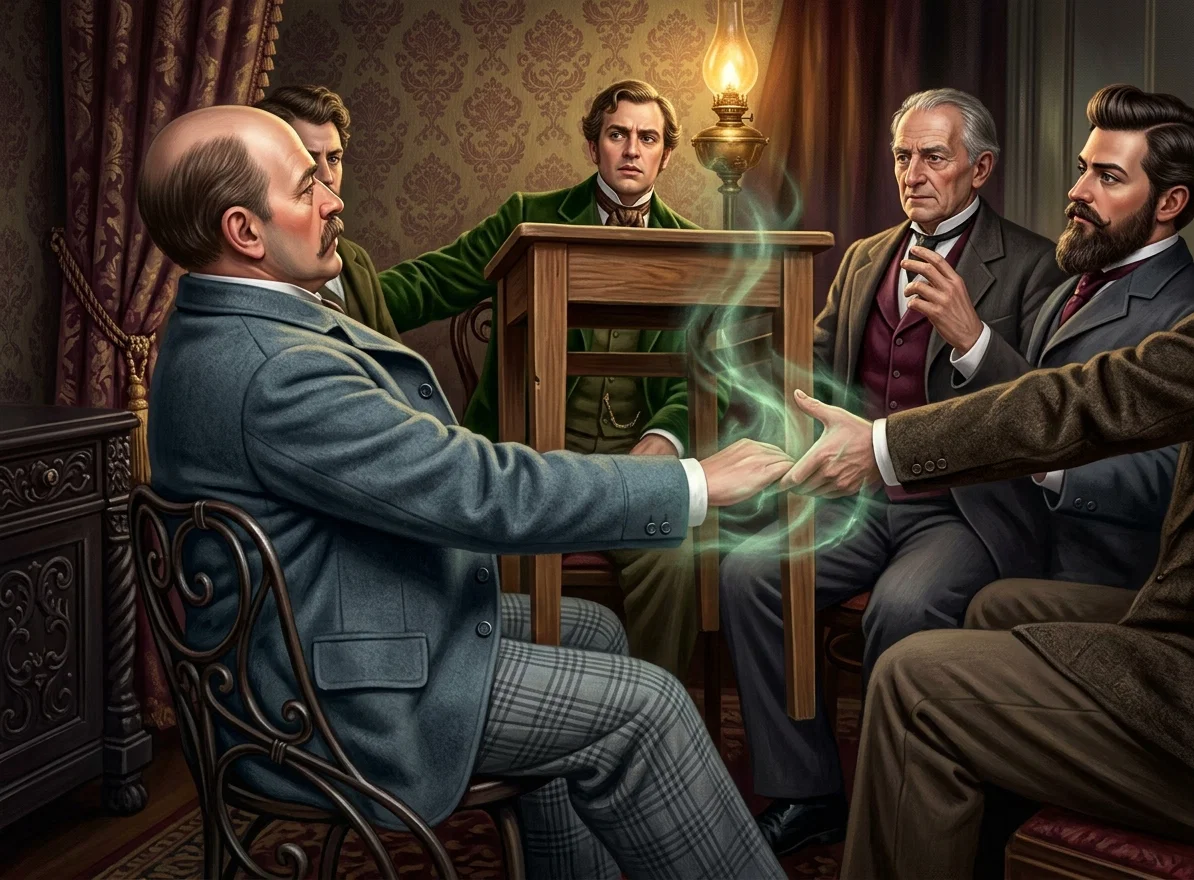
Are such exhibitions trickeries?
then we which are alive and remain shall be caught up together with them in the clouds, to meet the Lord in the air: and so shall we ever be with the Lord.”
The evidences are multiplying which tell us that the day is hastening when we shall meet the loved and loving; for our Lord will soon come to open the mossy old graves, and His angels will gather His people from one end of the earth to the other. They will then be taken to those mansions which He is now preparing for those who love Him. They have not received their reward at death.

The Law of God and the Rod of Moses

By W. R. UCHTMANN
AFTER Israel had been afflicted four hundred years, the Lord raised up Moses. From the burning bush came the voice which revealed to him his life work; namely, to deliver Israel from heathen bondage, and bring them safely to the promised land. The rod in his hand was to be used as a symbol of divine power. When he threw it to the ground, in obedience to God’s voice, it turned into a serpent; but when he lifted it again, it became a rod in his hand. Here God reveals a great principle. The serpent stands for sin and Satan. As sin is the transgressing of the law, the rod is the symbol of royalty and right. It is the dignity of law. Consequently, if the royal law is thrown down, it becomes sin in the person who thus rejects it. See Neh. 9: 26; 1 Kings 14: 9. To reject the law is to reject God.
This throws light on John 3: 14: “And as Moses lifted up the serpent in the wilderness, even so must the Son of man be lifted up.” Our Lord stood for the broken law, sin. It was lifted up in the person of Christ, who “became sin for us.” Through His death, resurrection, and present intercession above, He restores the law in the heart of every true believer. This is also the leading thought advanced in the ordinance of the Lord’s Supper, demonstrated in the cup, representing the blood of the new covenant. Compare Matt. 26: 27, 28 with Heb. 10: 15-17.
As Pharaoh refused to release Israel, Moses used the same rod to bring ten severe judgments upon all Egypt, until the king was glad to let them go where they would be free to keep the law of God. But soon after they left, the army of Egypt followed them, until they came to the Red Sea. The rod was once more used, by divine direction, to open the sea, and all Israel crossed dry-shod. The enemy presumed to follow; and Moses was told to stretch his rod over the waters, which destroyed the enemy forever. The rod that proved salvation to God’s people, became death to the Egyptians. Thus the same law that, kept by the remnant, will be a great blessing to them, will be a curse to the law-breaker, or sinner. Rom. 8: 1-8.
God’s royal law will once more be magnified, and this time before modern Egypt, the world of unbelievers. The feast of tabernacles of ancient Israel was a time when, for seven days, the law was read. Neh. 8: 18. In Zechariah 14, we learn that the city of God will descend on the Mount of Olives at the end of the thousand years. (Compare Revelation 21.) Christ, with His kingly scepter, will then be King of all the earth. Zech. 14: 9. The wicked dead will be raised; and according to Rev. 20: 7, 8, Satan will once more deceive them to renew the battle against the law of God, for which the city will then stand. There is no doubt that they will have time allowed them to prepare to take the city of God. Some students think there will be a hundred years. In this time, the unbelievers will be compelled to fulfill Phil. 2: 10, 11, when every knee shall bow, and every tongue “confess that Jesus Christ is Lord, to the glory of God the Father.” Zech. 14: 16-21. Satan with all his hosts will confess that Christ is Lord, and at that time Jerusalem will be made a cup of trembling round about. Zech. 12: 2. But Satan will finally gather his multitudes against the city; and the record says, “Fire came down from God out of heaven, and devoured them.” Rev. 20: 9. This will be an everlasting end to sin and Satan, for he will never be any more. Ezek. 28: 19. The royal reign of Jesus, so long foretold in Gen. 49: 10, will be set up in this earth forever. Therefore we can now sing in faith, believing, “We’ll crown Him Lord of all.” Truly the law of the Lord is perfect.
Continue reading: Universalism in the Crucible