Your ShelfYour Projects

Signs of the Times, Vol. 32, No. 10.

Declaration of Independence
Earlier text: THE COMING THRONE
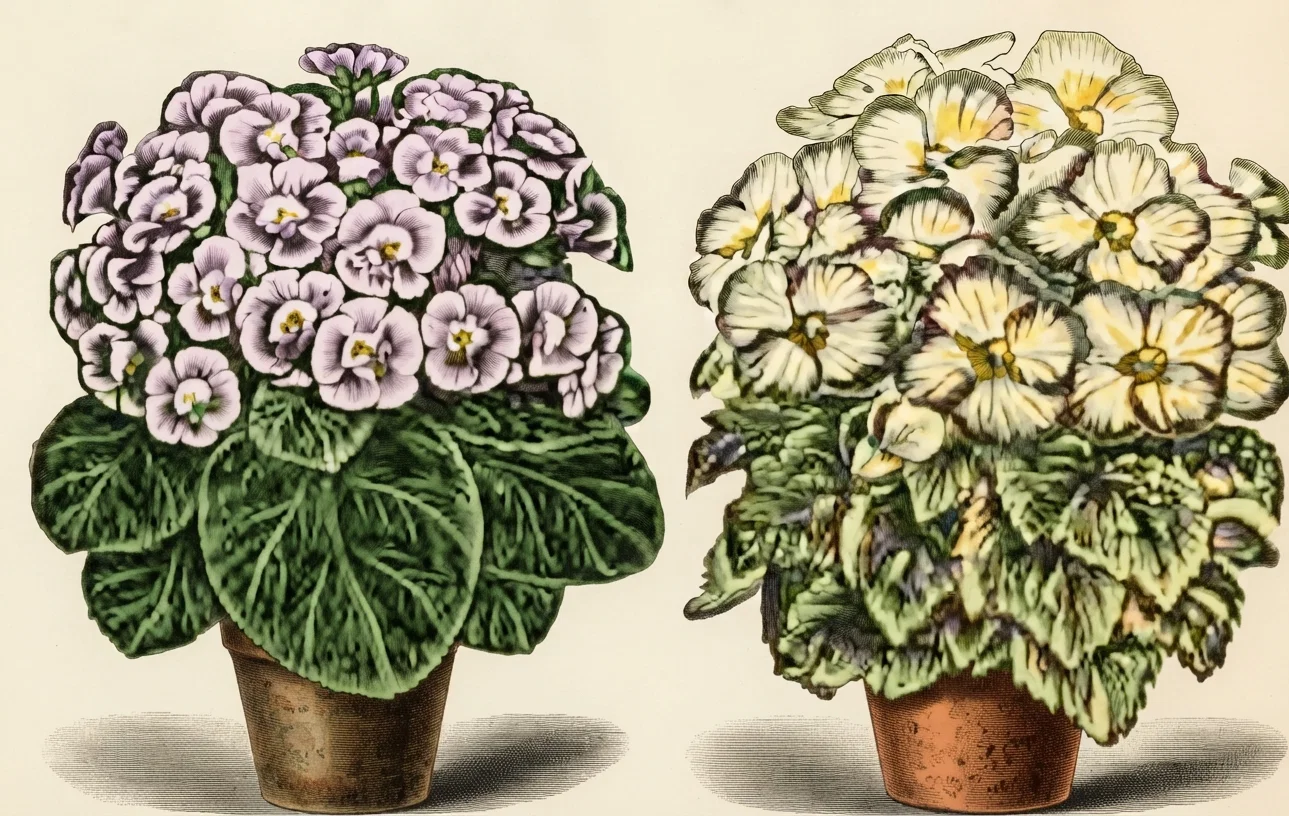
PRIMULAS.
PRIMULAS.

40 BULBS, 25 Cents.

For in or out of doors growing Gloxinia, Begonia, Iris, Scilla, Tuberoses, Jonquils, Daffodils, Oxalis, Freesia, Tulips, Hyacinths, Crocus, Japan Lily, Snowdrops, Narcissus, Allium, Chionodoxa, Paeonia. For 25c., stamps or coin, we will send this magnificent collection of bulbs, and also as a premium a fine collection of flower seeds, 250 varieties, FREE. Order to-day, and be sure to get them in time for planting. WOODLAWN NURSERY, MALDEN, MASS.

WANTED

Conscientious Sabbath-keepers to work in Colorado gold mines. The Colorado Big Bore Mining, Milling and Tunnel Company (Incorporated, capital stock, $5,000,000). Suite 550 Watson Building, 123 and 125 Lasalle St., Chicago, Ill.
Buy your health foods and groceries by the mail-order plan. Your name and address written on a postal card will bring you all the desired information, including price list and other items of interest to you. Do not procrastinate. Address, Sanitarium Food Co., 407 E. Burnside St., Portland, Oregon.
WANTED.—A Young Lady for store work (Notions & Stationary). Store closed Saturday; open Sunday. Apply between 9 and 11 A.M., or after 7 P.M. Nathan Sisters, 1422 Haight St., near Masonic Ave., San Francisco, Cal.
WANTED.—Girl for Housework in Adventist country home. No cooking or baking required. Wage's $2.00. Permanent situation. Address, with references, Box 19, Glenn, Mich.

The Danger of Politics in Religion

The Danger of Politics in Religion.—The religious unrest of India is evidenced by the new movement called the Arya Samaj. Its followers give up idolatry and return to the Vedas, the sacred writings of their ancestors. These writings are full of incantations, charms, and ritual, and set forth a crude nature worship, which their modern believers endeavor to spiritualize into the belief of one God. They allegorize the worship of the elements, borrowing largely from Christianity in the process. Rev. C. F. Andrews, of Delhi, writing to the Church Missionary Intelligencer, says: "One of the most startling facts I have heard in this country of surprises is that in Lahore, the center of the Arya Samaj in the north, 200 native ladies meet every week, under the presidency of a very able and distinguished native lady, for prayer to the one god. If only the movement took always this religious character, one might have the highest anticipations that it would lead on to Christ, the Way to the Father. The great danger ahead is that it may become almost wholly political and secular. The more politics enters into the movement, the more it becomes violently anti-Christian."
And this is just as true of the Christian religion in the "Christian" countries. Its greatest danger just now is the tendency of its devotees to seek political aid and to wield political power. It is just as true of the Christian religion as of any other, that "the more politics enters into the movement, the more it becomes violently anti-Christian." Beware of any religious movement that looks to political influence for its motive power.

THE IMPORTANCE OF OWNING BUILDINGS.

THIS subject is considered in a recent number of World-wide Missions, a Methodist journal. It is said to be the experience of Methodist missionaries everywhere that permanent success is largely due to an appearance of permanent settlement on the part of missionaries. And nothing is so much regarded as evidence of stability as the ownership of the buildings in which the work is conducted, of some kind of headquarters. The reasons for such ownership are summed up in the following points:
They give us a foothold in the enemy's country. They create confidence in the permanency of the work. They become centers of evangelistic work. They prove that we have come to stay. They advertise themselves as definite headquarters. The people always know where to come for worship or to see the pastor. They give converts confidence in the future. They encourage our people to develop local resources in self-support. They secure the respect of the local authorities and give the mission a standing in the community. An enterprise that can be driven from one rented house to another can not command popular respect. Capricious or unfriendly landlords can not drive us from our own property. In — (China), we have been working twenty years and have achieved no success, because we have been forced to change so many times. West China will come to full self-support as soon as the stations are supplied with church buildings.

Buddhism Adapts Christian Methods

Presbyterian Missionaries report that in Japan Buddhism is studying and adapting Christian methods, forming young men's associations, establishing great schools, inviting Christians and even missionaries to take place among the lecturers to the students. The Buddhists are hoping to capture the secret of the energy and the power of Christianity. When they have found that secret, they will no longer be Buddhists, but Christians.

INFLUENCE AND RESPONSIBILITY OF MOTHERS
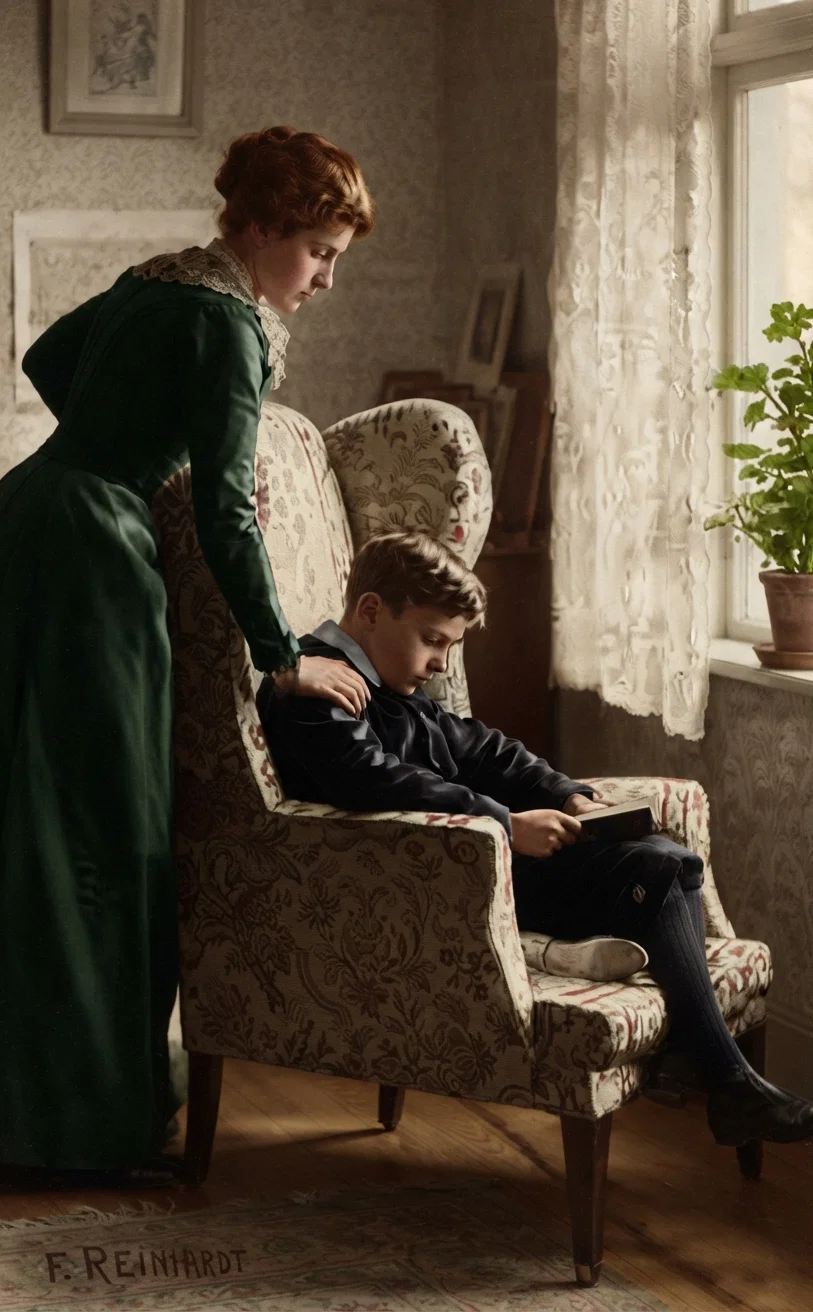
JUST across the street there is a badge of mourning upon the door. A widowed mother is bowing her gray head in anguish unspeakable; her firstborn—the beginning of her strength—has taken her own life. In shame and misery, her name a byword and a disgrace, she has sought refuge in the grave from the accusing eyes of the world.
Who can fathom the grief of that mother's heart? She can remember well enough the day when the poor outcast was pure and beautiful and innocent. What a little time it seems since those white lips first learned to lisp the sweet word "Mother." It seems like a horrible nightmare from which she must soon awaken to embrace once again her daughter, pure and fair as of yore.
How has it all happened?—Ah, sad memory goes back to the time when the little daughter first began to manifest those traits of character which at last have proved her downfall—her everlasting undoing. Gradually the little one had become more and more self-willed, and to need more and more the firm hand, mature judgment, and wisely-administered correction of the mother. But alas, and alas! the correction and reproof, if given at all, were tardy and ill-timed; and the conviction is forced upon the mother, that she has not half realized the weighty responsibility of motherhood. O, if she had only estimated rightly her own influence over the child she had loved so well!
This is no fancy sketch. All over this unhappy land—in the church as well as in the world—mothers, yes, and fathers, too, are reaping a harvest of blasted hopes, and weeping tears of unavailing regret. They have not been faithful in training and influencing the tender buds of promise entrusted to their care.
"Children are an heritage from the Lord," says the wise man. Webster defines "heritage" as an "inheritance." What does the world think of one who squanders or lightly values his inheritance? What does God think of such an one?
The case of Esau is an example; and of him it is written: "Jacob have I loved, but Esau have I hated." What was the trouble with Esau?—O, he didn't care very much about his heritage. He sold it for something to eat. He didn't stop to consider that his father would give him all the food he needed in his direful hunger, and yet he knew of his father's tender love for him—knew it well enough. It had been manifested in too many ways for Esau to doubt it. But he was hungry and impatient, and in his unreasoning folly he sold his birthright.
I wonder how many mothers, as they read these words, can see mirrored in their own lives the sad story of this foolish son of Isaac. How many, underestimating the priceless value of their heritage, have sold it for a mess of pottage! Troubled and careful about many things, like Martha of old, they forget that the Father above knows all about their needs, and has pledged His Word to be with them, even unto the end of the world.
"But I do try to do my duty by my children!" exclaims some busy mother whose hands are worn with toil, "please explain to me how I may sell my birthright, and what you mean by a mess of pottage."
Mother, when you spend more time putting the trimming on Mary's new dress than you spend in a whole month in teaching her the Bible reasons for the faith you profess to love, you are in grave danger of selling your birthright to the enemy of souls. When you give more thought and pains to the preparation of a dainty lunch with which to arouse the envy of the fashionable Mrs. A— whom you are entertaining, than to the study of the Sabbath-school lesson, or to the preparation of wholesome food for your children; when you hurry through your daily devotions, or neglect them entirely, that you may give more time to polishing the silver or finishing that new piece of embroidery,—then look out; for you are in danger; and remember, your little daughter will catch the spirit of worldliness and carelessness which her keen eyes discern in her mother.
Guarding the Coming Man.
Children are great imitators—did you ever notice it? A little girl's highest ideal is her mother. A little boy's greatest desire on earth is to be like his father. How do I know?
See Janie strut about the room in her mother's long kitchen apron; it impedes her walk greatly, and is far from sightly—never mind; is she not very much like mama?
What makes Johnny delight in wearing papa's hat and slippers, at vast inconvenience to himself?—Because papa must be imitated at whatever cost.
Mary and Annie are at play in the nursery: "See here, Annie," says Mary, "You be mama, and I'll be Susan. We'll play it's wash-day."
"O, don't let's play that," expostulated Annie; "mama just scolds and frets all day whenever Susan washes,—just scolds and scowls. I don't want to make my face all ugly puckers,—I'd rather play I'm mama when the minister comes; then she just smiles and smiles every minute." "Yes, and she has lovely cake and preserves for dinner. When I get big I'm going to have the minister come every day."
Ah, these little ones are wonderful imitators! Mothers, what would you like to see your daughters imitate? Vice, or virtue? smiles, or frowns? See to it that the pattern set for them be such as you will wish it had been, when your account must be rendered to the Master who has said, "Suffer the little children to come unto Me."

RESPONSIBILITY OF MOTHERHOOD.

In every true woman is placed the motherly instinct. It was given her by her Creator, and is as noble and pure as the source from which it came. It was designed of God, when properly developed, to be a source of great mental and spiritual blessing; and, if mothers could only realize the privilege and possibilities intrusted to them by this bestowal of His love, they would take up their responsibility with feelings of gratitude to Him who has so highly exalted woman as to make her the mother of all mankind. If mothers could only be educated to appreciate their own power and great privilege in the sphere where God has placed them, they would never be led to clamor for political power in the state. Woman, in her proper sphere, has all the power that a truly unselfish heart could ever desire. Especially is this true of a mother. No queen on her throne, clothed in her royal robes, has a more glorious or responsible reign than a mother in her home, with her little ones around her.
In the present agitation of woman's rights and woman's suffrage, one can but think that there is something painfully wrong in the education of those individuals who feel that this is the end to be reached before woman shall find her proper place. If worldly honor and fame are what is so eagerly sought, we have but to read history to learn that much that has already been achieved belongs to woman. Have not all our great men had mothers? Have not their mothers moulded them, and made them in a measure, what they are? To whom, then, is much of the honor due? Is it not largely to the mother? But it is not worldly fame and honor that the truest, noblest, and greatest women are seeking, and most emphatically should it not be the end sought for by Christian mothers. This reaches but the surface. It is not soul satisfying, nor fruitful of good. It is the question of duty that we must face. It is the fulfilment of duty to the satisfaction of an enlightened conscience, that will bring us strength and happiness. O, that we might work for that which lies beneath the surface, that we might help exalt woman, especially the mother, to the sphere where God has placed her, and help her to understand that her duty faithfully performed will bring her honor beyond anything earth can give!
Mothers, do you sometimes feel that your field of usefulness is small—that your life is narrow and unimportant? O let me beg of you to banish those feelingsat once! In a little poem from the Woman's Journal I find these lines, which may comfort some tired, burdened mother's heart:
"She had little of earthly beauty, She had less of earthly lore; She climbed by a path so narrow, Such wearisome burdens bore; And she came, with heart a-tremble, To the warder at heaven's door, "And said, 'There were hearts of heroes;' She said, 'There were hands of might; I had only my little children, That called to me day and night; I could only soothe their sorrows, Their childish hearts make light.' "And she bowed her head in silence, She hid her face in shame, When, out from a blaze of glory, A form majestic came, And, sweeter than all heaven's music, Lo, someone called her name! "'Dear heart that hath self forgotten, That never its own hath sought, Who keepeth the weak from falling, To the King hath jewels brought, Lo, what thou hast done for the children, For the Lord Himself hast wrought!'"
Some of the greatest and noblest of all the characters of earth are those of whom the world has known the least, who have lived and died unknown to few, except those most intimately connected with them. I feel sure that among these the judgment will reveal some of the patient, self-sacrificing, toiling mothers who, themselves may have been laid away, but whose influence may live on through all eternity.
KATE A. WILCOX.

WHY DO MOTHERS EVER FRET?

I WONDER so that mothers ever fret At little children clinging to their gown; Or that the footprints, when the days are wet, Are ever black enough to make them frown. If I could find a little muddy boot, Or cap, or jacket on my chamber floor; If I could kiss a rosy, restless foot, And hear it patter in my house once more;
If I could mend a broken cart-to-day, To-morrow make a kite to reach the sky, There is no woman in God's world could say She was more blissfully content than I. But ah! the dainty pillow next my own Is never rumpled by a shining head, My singing birdling from its nest is flown— The little boy I used to kiss is dead. —Selected.

WHEN MEN PRECEDE.

Generally speaking, a man always follows a woman in or out of a public place, through a door, and the like; but, as in everything else, there are exceptions. It is these which trouble a person to define, and yet the common sense that governs them will clear any mystery as to the whys and wherefores.
For example, a man always precedes a woman out of a crowded car and gets off, ready to help her. By his going first, he clears a way for her, and makes her egress less difficult. On the other hand, of course, he never precedes her from a room. It is wholly unnecessary, and would be the height of bad form.
An English custom that is gradually making its way here, is for a man to go first into a restaurant, leaving the woman to follow. The old American fashion would not have countenanced this; but it has a most excellent reason, as it allows the man to select the table. A woman does not wish to be at the beck and call of a head waiter, which is what happens if her escort is behind; whereas, if he is in front, the choice rests with him, and not with the waiter.
Another place where common sense is making an effective change is in having a man enter a door first, if it swings in. In many places such doors are opened by pages; but, when they are not, the man goes through first, and then stands holding it wide open for the woman.
This he can not do if he is behind her, for he can push it only the length of his arm, and that over the woman's shoulder, which is far less convenient for her than the new way. When a door opens out, the man, of course, always follows.
In spite of the discussion that arises from time to time over the point, a man always precedes a woman in going upstairs. In going down, he follows. He leads the way down the aisle of a public hall, the woman following; and, when he reaches the place where their seats are, he stands and waits for the woman to take hers. The same mode of procedure obtains in a church.—New York Telegram.

WHEN TO TEACH CHILDREN TO PRAY.

To WAIT, as some people illogically advise, until children are old enough to understand about God before teaching them to pray, is to behave as nobody behaves in regard to any other thing under the sun. The sensible way is to do as a mother, whose children are among the best trained and best behaved I know, tells me she always does—namely, long before the child can talk, in the very dawning of intelligence, to clasp the tiny hands in hers, and say the little prayer, while yet it can only be mother's saying. The habit may be established by the time the baby is talking and walking, the blessed thing about it being, then, that the whole conscious life of the child will be fast bound to God. There will never be the memory of the time when the heart's burden was not rolled off at His feet, when the day did not begin and the evening close with a sweet Amen.
As children grow older, they should learn to repeat reverently the Lord's Prayer, and should be encouraged in the tender bed-time talks with mama, which are mama's most precious opportunity for winning their confidence, and keeping them close to herself, to make prayers of their own. A child's day, like the day of a grown person, has its lights and shadows, its trials and anxieties. Temptation has met the little one on the playground, the street, or the school-room, and she has had her fit of naughtiness, her gusts of temper, or her disappointments, as great to her as her father's to him. So the child, as well as the adult, may learn the comfort of just resting on that precious truth, "He knows."—Christian Advocate.

A MOTHER'S GOOD-BY.

Sit down by the side of your mother, my boy; You have only a moment, I know, But you will stay till I give you my parting advice; It is all that I have to bestow.
You leave us to seek for employment, my boy; By the world you have yet to be tried; But in all the temptations and struggles you meet, May your heart in the Saviour confide.
You will find in your satchel a Bible, my boy; It is the Book of all others the best; It will teach you to live, it will help you to die, And lead to the gates of the blest.
I gave you to God in your cradle, my boy; I have taught you the best that I knew; And as long as His mercy permits me to live, I will never cease praying for you.
Your father is coming to bid you good-by. O, how sad and how lone we will be! But when far from the scenes of your childhood and youth, You will remember your father and me.
I want you to heed every word I have said, For it comes from a heart filled with love, And, my boy, if we never behold you on earth, Will you promise to meet us above?
Hold fast to the right, hold fast to the right, Wherever your footsteps may roam, O, forsake not the way of salvation, my boy, That you learned from your mother at home! —Selected.

IMPORTANT TO TRAVELERS

The SUNSET-PIEDMONT AIR LINE announce the opening of their through line via New Orleans. Personally conducted cars, San Francisco to Washington, D. C., via Coast Line and Los Angeles, tri-weekly. Tickets at lowest rates to Washington, Baltimore, Philadelphia, New York, New England, and all Eastern points. Through the Old South. Quick time. Best service. Write Phil K. Gordon, 633 Market St., San Francisco, for full information.

Giant Pansies, Sweet Peas, and Carnations

New Pansies, Sweet Peas, Carnations. 5 pkts., 5 colors, 10 cts.; 15 pkts., 25c.
Did you ever see 5 straight or circular rows of Pansies side by side, each a different color? If so, you know that the effect is charming. Did you ever see Childs' Giant Pansies, marvels in beauty and true to color? If not, you have not seen the best. Same with our new Sweet Peas and Carnations.
As a Trial Offer we will for 10 cts. mail 5 Pkts. Giant Pansies, SNOW WHITE, COAL BLACK, CARDINAL RED, PURE YELLOW, AZURE BLUE; also Five Pkts. New Giant Sweet Peas for 10 cts., WHITE, PINK, SCARLET, BLUE, YELLOW; also Five Pkts. new early flowering Carnation Pinks for 10 cts., SCARLET, WHITE, PINK, MAROON, YELLOW. A Booklet on Culture, big Catalog, and All 15 Pkts. for 25 cts.
Will make 5 lovely rows of Pansies, 5 showy clumps of Peas, and 5 beds of Sweet Pinks that will bloom all summer in the garden and all winter in pots.
Our Catalogue for 1906—Greatest Book of Novelties,—Flower and Vegetable Seeds, Bulbs, Plants and New Fruits, 156 pages, 500 cuts, many plates—will be mailed Free to all who ask for it.
JOHN LEWIS CHILDS, Floral Park, N. Y.

FOR SALE

I have a number of Buggies, Carriages, Spring Wagons, Fruit Trucks, etc., for sale at prices that will make it to your interest to investigate when you are in need of a rig of any kind.
Geo. E. Henton, Wagon and Carriage Maker, Mountain View, Cal.

EXCURSIONS

Low Rates to California

On sale every day, from February 15 to April 7, from all eastern points. Following are a few:
Chicago, $33.00 Bloomington, $32.00 Peoria, $31.00 St. Louis, $30.00 Cairo, Memphis, and New Orleans, $31.65 Kansas City and Leavenworth, $25.00 St. Joseph, Atchison, Council Bluffs, $25.00 Omaha, Dallas, Fort Worth, Houston, $25.00 Nearly all points in Kansas, $25.00 Oklahoma and Indian Territory, $25.00 Denver, Colorado Springs, Pueblo, $20.00 New York, $50.00
Santa Fe Agents will take deposits of money to cover price of tickets, which will be promptly furnished to passengers at any point.
TICKET OFFICES 653 Market St., San Francisco 1112 Broadway, Oakland Also any Santa Fe Agent.

The Increasing Interest of Bible Study

WHEN I commenced my duties as professor of theology, I feared that the frequency with which I should have to pass over the same portions of Scripture would abate the interest in my own mind in reading them. But after more than fifty years of study, it is my experience that with every class my interest increases.—Prof. Leonard Woods.

ONWARD AND UPWARD.

WE live but one life, we pass but once through this world. We should live so that every step shall be a step onward and upward. We should strive to be victorious over every evil influence. We should seek to gather good and enrichment of character from every experience, making our progress ever from more to more. Wherever we go we should try to leave a blessing, something which will sweeten another life or start a new song or an impulse of cheer or helpfulness in another heart. Then our very memory when we are gone will be an abiding blessing in the world.—J. R. Miller, D.D.

Brought Out to Bring In

Brought out to Bring in.—So Moses instructs that the children of Israel should answer one of the questions which their children should raise—"What mean the testimonies and the statutes and the ordinances, which Jehovah our God commanded us?" And they were to reply that "We were slaves in Egypt, and God brought us out of that bondage that He might bring us in to the good land of His promise." All the restrictions, the commandments, the blessings, are to fit us for the bringing in. And even so all the prohibitions, the injunctions, the commandments, the promises, the blessings are that God may bring us in to the eternal land of goodness and light, and love. Rebel not against Him. Forget not His purpose or His means of salvation.
Science in Law Courts.—A gentleman in Boston sued the elevated railway company for $150,000 damages, because the trains which passed around the corner of a large building where he lived caused so much annoyance by the noise they made and the obstruction of light. A phonograph was brought in for the evidence to reproduce the noises, a photometer to show the diminution of light, and an oscillometer showed photographs of air-wave disturbance during the passing of trains. The result was a verdict of $45,000 with interest, making $58,267.

The Whole Duty of Christians

The council of brethren at Jerusalem decided to send a letter to the Gentile converts exhorting them to "abstain from pollutions of idols, and from fornication, and from things strangled, and from blood." And some teachers of to-day are assuming that this is all that those converts from the world are required to do; that therefore the law of God was not otherwise binding upon them. But that special instruction was given because those sins were such as the Gentiles were addicted to, and were inclined to indulge in even after conversion. To illustrate: The Third Presbyterian Church in Shanghai has a book containing pledges against liquor, tobacco, and foot-binding. It is deemed essential to make a special crusade against these evils, because of their prevalence—relics of heathenism not yet fully eradicated from the hearts of the native converts. In preparing that book of pledges, it was not designed to teach that abstinence from those particular evils constituted the whole duty of Christians. "Fear God, and keep His commandments; for this is the whole duty of man" (Eccl. 12:13); and to offend in one point makes one guilty of all (James 2:10).

Miracles as Last-Day Deceptions

When one is carried away from the truth by the performance of a miracle—be it a "wonderful work" of healing or what not—he manifests great ignorance of the prophecies concerning the deceptions of the last days. While the Lord, in His providence, will work miracles when in His wisdom they will effectually witness to the truth, they are not given as a general sign of God's power, as when Christ was on earth. It is because He so used miracles that the adversary employs them to deceive the world and impose upon those who are disposed to trust in such things. Signs and wonders and miracles are noted as special mediums of deception in the last days. See Matt. 7:21-23; 24:23-25; 2 Thess. 2:7-12; Rev. 13:11-14. There is the promise of the outpouring of the Holy Spirit in the last days; but that does not specifically imply miracles as proof of the power of God. "The fruit of the Spirit is love, joy, peace, long-suffering, gentleness, goodness, faith, meekness, temperance." Gal. 5:22, 23. This will be the crowning result of the "latter rain." No one can afford to be even healed of disease through the agency of the deceiver of mankind; for he can not heal the disease of the soul which his healing of the body is sure to inflict.

Leaflets Against Sunday Bills

The Religious Liberty Bureau will supply in quantities as desired two leaflets dealing with the two Sunday bills now before Congress. These are an eight-page document relating to the District of Columbia bill, and a four-page leaflet in relation to the Post-office bill. The price of the former is fifty cents a hundred, and of the latter twenty-five cents a hundred. These should be freely circulated in connection with anti-Sunday legislation petitions to Congress. Address Religious Liberty Bureau, Takoma Park, Washington, D. C.

Prosperity More Dangerous Than Adversity

In this world of temptation, the experience of adversity is not nearly so dangerous to the Christian as material prosperity. Ten men will bear up under adversity where one will pass through the ordeal of prosperity unscathed. "How hardly shall they that have riches enter into the kingdom of God!" But despite the warning that "they that will be rich [desire to be rich] fall into temptation and a snare, and into many foolish and hurtful lusts, which drown men in destruction and perdition," there are few indeed who are not willing to risk it.

The Pace That Kills

The "New York World" tells us that in 1868, in New York City, for every ten thousand population there were 13.5 deaths from heart disease, but in 1901 the percentage had more than doubled, having risen to 29.68. These are figures from the Board of Health. It is known that these diseases are caused by high living, mental stress and strain, undue worry, over-exertion, and especially by stimulants and narcotics. It is a following of the pace that kills.

Jonah and the Sea Monster

"Jonah and the Sea Monster."—The Holy Scriptures defended against the attacks of infidels, atheists, and the higher critics. The miraculous swallowing of the prophet Jonah by a great fish explained and vindicated. Single copy, post-paid, 4 cents; 8 copies, 25 cents. Address, Elder W. H. Littlejohn, Battle Creek, Mich., R. F. D. 4.

The Portland Meeting.

The Pacific Union Conference meeting which was held in Portland, Oregon, February 15-25 was in many respects a most excellent meeting, and fruitful in results. The attendance of the delegates was quite large, representing the whole Pacific Coast and the various mission fields connected with the conference, with the exception of the Hawaiian Islands. Among the important actions taken was the division of the Conference into two, on the Oregon and California line, north of that line taking the name of The North Pacific Union Conference, consisting of the following local Conferences: Western Oregon, Western Washington, Upper Columbia and British Columbia, including the Alaskan mission field. The president of that will probably be W. B. White; the election had not taken place when the writer left. The southern part of the Conference retains the old name and history of the Pacific Union Conference, consisting of the conferences of California and Nevada, Southern California, Arizona, and Utah; the last two of which are important mission fields. The officers in this conference are as follows: President, H. W. Cottrell; secretary, J. J. Ireland; treasurer, E. A. Chapman; auditor, J. J. Ireland; executive committee, H. W. Cottrell, J. J. Ireland, the four Presidents of the Conference within the field, at present W. T. Knox, G. W. Reaser, A. Whitehead, F. I. Richardson, and the following representatives of the Religious Liberty, Sanitarium, Educational, and Publishing work respectively: J. O. Corliss, J. R. Leadsworth, M.D., W. E. Howell, and M. C. Wilcox, making the executive committee ten. The headquarters were moved to Mountain View, where the paper will be published.
The spiritual meetings of the Conference were good, and the one note which rang out in social meetings as well as preaching services was consecration to God and a larger grasp of spiritual power. As to weather, Portland lived up to its well-known reputation, it rained day and night all the time, sometimes very hard, and yet the Portlanders tell us that that is the good weather of the winter, the people are always well and healthy while it rains. Portland is a great growing city, and an important center of the northwest; in fact the northwest is rapidly settling up and there are good openings, I am told, all through there for those who wish to obtain land for homes. The city water supply of Portland is most admirable. It has been expensive to obtain it from Mt. Hood, which is, if we remember, about fifty miles away, but it is certainly worth while. It is pure, soft snow water, cool, refreshing, and abundant. We shall have more to say about the meeting in future numbers, or at least about the results.

Colporteurs Needed

Colporteurs Needed.—In one district in New York City it was found two weeks ago that the Court of Special Session which sits weekly did not possess a Bible. An Italian young man and woman called to be married. The magistrate who was present consented and called for a Bible. None was found in the courtroom. The officer was sent to obtain one, and was gone half an hour, and returned with a German Bible; but this would not do, and another half hour was spent before an English version was found, and this was obtained at the Jamaica library. Surely the American Bible Society ought to send some colporteurs nearer home.

CONTAINED IN THIS NUMBER.

Poetry. The "Spell of the Goal" .................................... 9 The True Companion .................................... 11 A Cry from Africa, ELIZA H. MORTON ........................ 12 Why Do Mothers Ever Fret? ................................. 14 A Mother's Good-by ........................................ 15
Editorial.—The Crisis of the World—Expressions of Faith —"I Don't Understand This"—The Curse of the Law ......... 3-5
Outlook.—A New Law of Attraction—What the Exemption Implies—A Silly Bill in Ohio—That District of Columbia Sunday Bill—What Protestants Say? ....................... 6, 7
General. Fundamental Principles, No. 4 .............................. 1 Temporal Power of the Papacy, C. E. MILTON ................. 8 Wells Springing Up, H. A. ST JOHN .......................... 8 The Coming Throne, L. D. SANTEE ............................ 9 The Will of God, W. A. SWEANY .............................. 10 The Name of Jesus, JOHN KASTNER ............................ 10 Trusting Christ, No. 2, MRS. E. G. WHITE ................... 11 A Little Child Shall Lead Them, T. E. BOWEN ................ 11 War and Peace (Bible-reading) .............................. 11
Missions.—Great Changes in China, EDWIN H. WILBUR— Medical Work in India—The Importance of Owning Build- ings ..................................................... 12, 13
The Home.—Influence and Responsibility of Mothers, LILLIE D. AVERY-STUTTLE—Responsibility of Motherhood, KATE A. WILCOX—When to Teach Children to Pray—When Men Precede .................................................... 14, 15
Publishers ............................................. 2

Faith Held Lightly

Faith Held Lightly.—The princess Ena of Battenberg is a Protestant and all her family are Protestants, but she wishes to become a queen and to marry King Alfonso of Spain; but to do that according to the law she will have to accept formally the Catholic faith, and this, it is said, she proposes to do, barter faith for a crown, and this in a land of Bibles.

The Outlook and Home Departments

In this paper our usual Home department is given to matter pertaining to the influence of mothers in the home. Of special interest also is the beginning of the series of articles on the "Temporal Power of the Papacy," by one who resides in Rome. And of great importance just now and henceforth is the religious liberty question, and its bearing on certain proposed Sunday legislation by Congress. This live issue receives special attention in the Outlook department. This mention, however, should not distract attention from the other matter in the paper, which may more deeply concern the reader's own soul.

You have reached the end of this edition.

Signs of the Times · Mar 7, 1906