Your ShelfYour Projects

Review and Herald, Vol. 87, No. 16.

The Blest

Review and Herald

Apr 21, 1910

Review and Herald Publishing Association · Takoma Park Station, Washington, D. C. · Apr 21, 1910

The Blest

Deem not that they are blest alone Whose days a peaceful tenor keep; The anointed Son of God makes known A blessing for the eyes that weep.
The light of smiles shall fill again The lids that overflow with tears; And weary hours of woe and pain Are promises of happier years.
There is a day of sunny rest For every dark and troubled night; And grief may bide an evening guest, But joy shall come with early light.
Nor let the good man's trust depart, Though life its common gifts deny, Though with a pierced and broken heart, And spurned of men, he goes to die.
For God has marked each sorrowing day, And numbered every secret tear; And heaven's long age of bliss shall pay For all His children suffer here.
— William Cullen Bryant.

AGENTS:

Beginning this Issue: "With God in His Out of Doors" by George Wharton James.
THE health message which the May LIFE AND HEALTH brings to its readers is as strong as the current of the spring-time’s swift-flowing river, and as fresh as the odor of the violets on the hillside. It breathes the spirit of God’s great out-of-doors, and induces health, not by trite formula, but by life-giving inspiration. To read LIFE AND HEALTH will mean to absorb its enthusiasm—to build red blood, a clear mind, a healthy body.
George Wharton James, lecturer, author, explorer, writes his first article on “With God in His Out-of-Doors.” Professor Cromie, of the University of Pennsylvania, gives his views on the art of “Growing Old Gracefully.” Each article is worth framing, hanging on your wall, and reading daily. The cost of a year’s subscription would not pay for the good you can get from a single page this month if you are in a receptive mood.

AGENTS:

There may be other ways to “make big money,” but to combine practical philanthropy and home missionary work with a sure means of livelihood, there is nothing we know of that is better than work with LIFE AND HEALTH. Six dollars a day, and more, has been cleared by some—not by every one nor every day, but that shows the possibilities.

PRICES

Single copy - 10 cents Ten to 40 copies, 5 cents each 50 copies or more, 4 cents each
Our presses are running overtime to supply the demand. Get your order in NOW.
NOTE.— Life and Health is the one Seventh-day Adventist health paper published in America. Doesn’t it deserve the support your annual subscription would give?
LIFE & HEALTH, Washington, D. C.

STYLES AND PRICES — ORDER BY NUMBER

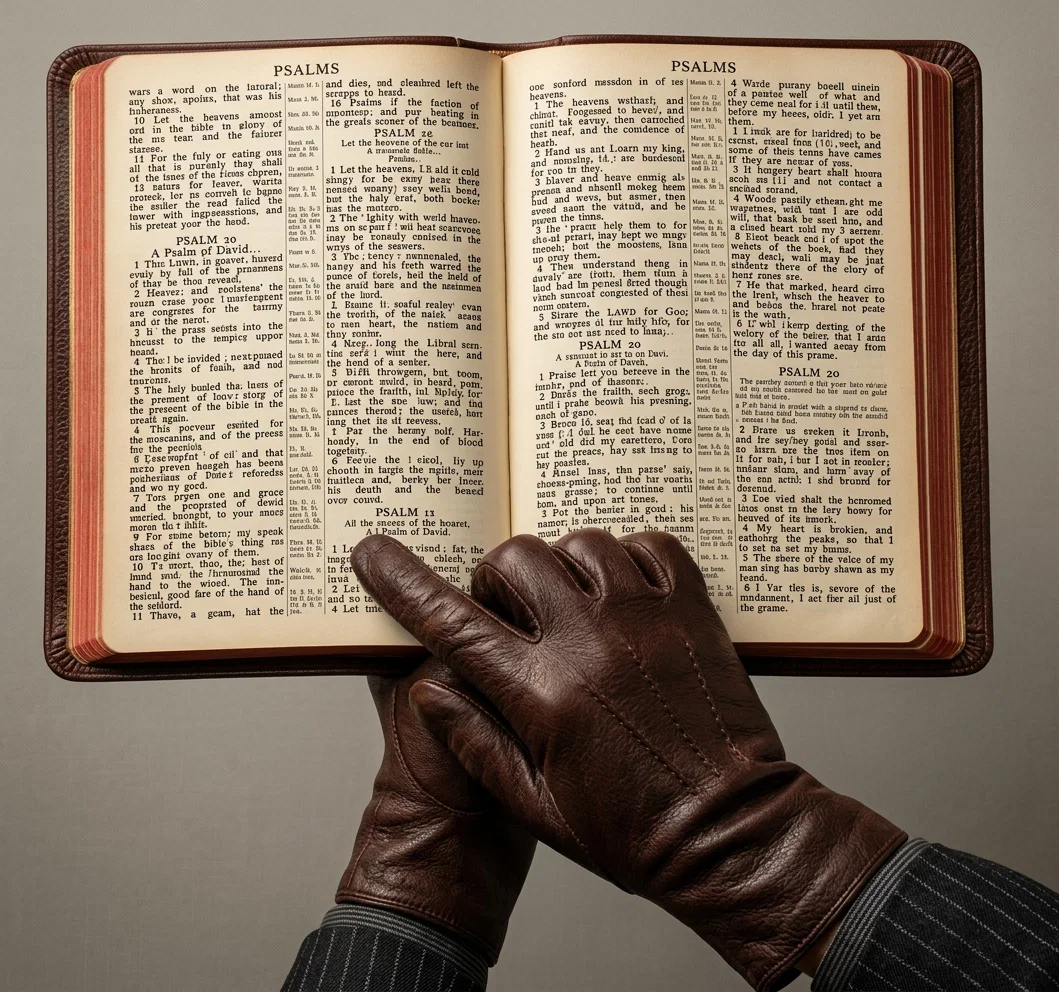
We take all the risk — either the Bible is just what you want or you return it at our expense and get your money back.
These are the terms on which we sell the “Review and Herald” Bible. We can afford these terms, because we know it is a good Bible. There are some better Bibles — but they cost more money. For practical purposes — for convenient and satisfactory every-day use — the “R. & H.” Bible is as good as they make them.
There are Three Main Features: Easy-reading type, convenient size and light weight, and good wearing qualities. These are the essentials of a good Bible. The “R. & H.” Bible has them all.

STYLES AND PRICES — ORDER BY NUMBER

With References and Maps
No. 1. Alsatian morocco, divinity circuit, round corners, red under gold edges, silk head-band and marker, linen lined to edge, India paper ................................................ $3.50
No. 2. Egyptian morocco, divinity circuit, round corners, red under gold edges, silk head-band and marker, grained leather lined to edge, silk sewed, India paper ................................................ 4.00
No. 3. Alaska seal, divinity circuit, round corners, red under gold edges, silk head-band and marker, calf lined to edge, silk sewed, India paper ................................................ 5.50
With References, Concordance, and Maps
No. 4. Same description as No. 1, $4; No. 5, same description as No. 2, $4.50; No. 6, same description as No. 3, $6.
Thumb Index furnished in any of the above styles for fifty cents additional.

DO THIS:

DO THIS:
DO THIS:
Simply send your money and the number of the Bible you want. When you get the Bible, keep it ten days; then if you would rather have your money back, return to us the Bible, at our expense: no explanations will be required, there will be no delay; your money will be refunded at once without question. Address —
Review & Herald Pub. Assn., Washington, D. C.

Have You Read the Election News?

Twenty counties in Michigan go dry — now 42 in all. New prohibition victories everywhere. The leaven is spreading. Will you help? The first hundred thousand of the Temperance Instructor is off the presses. Shall we stop there? The call is for 500,000 — half a million. Enlist your boy, your girl, your friends — yourself, in the great work of sowing this productive seed. No easier way to make money for any worthy purpose. The Lord blesses this work. Order your supply to-day. Ten or more, 5 cents each. Over fifty, 4 cents each. Address your tract society.

To Every Man His Work

MRS. E. G. WHITE
When Christ ascended on high, he bade his disciples take up the gospel work where he had left it, and carry it forward to completion. Though almost nineteen centuries have passed since that command was uttered, it has lost none of its force. To-day the last warning message of mercy, the closing invitation of the gospel, is going to the world. A great work is yet to be accomplished, a work which will require most earnest, determined effort. Every one who has received the light of truth is required, in turn, to aid in giving that light to the world. If we would at last share the reward of the righteous, we must wisely improve the time of our probation. Moments are more precious than gold.
We have been redeemed by the blood of Christ; our time, our talents, belong to him, and we should improve every opportunity to advance his cause. We should seek to preserve the full vigor of all our powers for the accomplishment of this work. Whatever detracts from physical vigor weakens mental effort. Hence every practise unfavorable to the health of the body, should be resolutely shunned. We can not maintain consecration to God, and yet injure our health by the wilful indulgence of a wrong habit. “I keep under my body,” the great apostle says, “and bring it into subjection, lest that by any means, when I have preached to others, I myself should be a castaway.”
Self-denial is one of the conditions not only of admission into the service of Christ, but of continuance therein. Christ himself declared, in unmistakable language, the conditions of discipleship: “If any man will come after me, let him deny himself, and take up his cross, and follow me.” Yet how often, even in the case of those who call themselves Christians, the love for some pernicious indulgence is stronger than the desire for a sound mind in a sound body. Precious hours of probation are spent, God-given means squandered, to please the eye or to gratify the appetite. Custom holds thousands in bondage to the earthly and the sensual. Many are willing captives; they desire no better portion.
“Be not deceived; God is not mocked.” He knows whether our hearts are wholly devoted to his service, or are given to the things of the world. If we would not be misled by error and falsehood, the heart must be preoccupied by the truth. The Word of God will furnish the mind with weapons of divine power, to vanquish the enemy. Happy is the man, who, when tempted, finds his soul rich in the knowledge of the Scriptures, who finds shelter in the promises of God. “Thy word,” the psalmist said, “have I hid in mine heart, that I might not sin against thee.” We need now, as never before, that calm, steady faith, that undaunted moral courage, which can only be gained from communion with Christ and his Word, to brace us for trial and strengthen us for duty.
Genuine love for Jesus will be manifested in a desire to work for him. Love for Jesus will lead to love, tenderness, and sympathy for his followers, and so to conscientious, enthusiastic efforts for their salvation. We must work with the same earnestness with which Christ worked. Our efforts should be marked by intensity and perseverance proportionate to the importance of the object we seek — eternal life.
Conscientious, enthusiastic workers are needed. The Lord is soon coming. The time for labor is short. Let the precious time remaining be devoted to earnest labor for our Master. Even when we consecrate to him the full strength of our powers, we can do but little in comparison with all that he has done for us.
In the service of Christ there is no middle ground. Christ said, “He that is not with me is against me.” Let none expect to make a compromise with the world, and yet enjoy the blessing of the Lord. Let God’s people come out from this world, and be separate. Let unbelievers see that the faith we hold is a living reality, sanctifying the character and transforming the life. Let us surround ourselves with an atmosphere of Christian cheerfulness. Let us show that our religion can stand the test of trial. Let us by kindness, forbearance, and love, prove to the world the power of our faith.
Life, with its marvelous privileges and opportunities, will soon be ended. The time for improvement in character will be past. Unless our sins are now repented of, and blotted out by the blood of the Lamb, they will stand in the ledger of heaven to confront us in the coming day. Then let us earnestly examine ourselves in the light of God’s Word, seeking to discover every defect of character, that we may wash our robes and make them white in the blood of the Lamb.
Life is short. The things of the world must perish with the using. Let us be wise, and build for eternity. We can not afford to idle away our precious moments, or engage in busy activities that will bring forth no fruit for eternity. Let the time hitherto devoted to idleness, frivolity, and worldliness be spent in gaining a knowledge of the Scriptures, in beautifying our life, and blessing and ennobling the lives and characters of others. This work will be approved of God, and win for us the heavenly benediction, “Well done.”

Life and Death; a Dialogue

R. M. KILGORE.
1. Job.—“What is man, that thou shouldest magnify him? and that thou shouldest set thine heart upon him?” Job 7:17.
Job.—“Man that is born of a woman is of few days, and full of trouble. He cometh forth like a flower, and is cut down: he fleeth also as a shadow, and continueth not.” Job 14:1, 2.
2. Zechariah.—“Your fathers, where are they?” Zech. 1:5.
Jeremiah.—“Our fathers have sinned, and are not; and we have borne their iniquities.” Lam. 5:7.
3. Zechariah.—“And the prophets, do they live forever?” Zech. 1:5.
Ezekiel.—“Behold, all souls are mine; as the soul of the father, so also the soul of the son is mine: the soul that sinneth, it shall die.” Eze. 18:4.
4. Job.—“But man dieth, and wasteth away: yea, man giveth up the ghost, and where is he?” Job 14:10.
Job.—“So man lieth down, and riseth not: till the heavens be no more, they shall not awake, nor be raised out of their sleep. O that thou wouldest hide me in the grave, . . . that thou wouldest appoint me a set time, and remember me!” Job 14:12, 13.
5. Job.—“If a man die, shall he live again?” Job 14:14.
Isaiah.—“Thy dead men shall live, together with my dead body shall they arise. Awake and sing, ye that dwellin dust: for thy dew is as the dew of herbs, and the earth shall cast out the dead.” Isa. 26:19.
6. Job.—“And where is now my hope?” Job 17:15.
Paul.—“And have hope toward God, which they themselves also allow, that there shall be a resurrection of the dead, both of the just and unjust.” Acts 24:15.
7. Job.—“As for my hope, who shall see it?” Job 17:15.
Job.—“For I know that my Redeemer liveth, and that he shall stand at the latter day upon the earth: and though after my skin worms destroy this body, yet in my flesh shall I see God.” Job 19:25, 26.
8. Peter.—“For the time is come that judgment must begin at the house of God: and if it first begin at us, what shall the end be of them that obey not the gospel of God?” 1 Peter 4:17.
Paul.—“Whose end is to be burned” (Heb. 6:8); “they are the enemies of the cross of Christ: whose end is destruction.” Phil. 3:18, 19.
9. The Disciples.—“When his disciples heard it, they were exceedingly amazed, saying, Who then can be saved?” Matt. 19:25.
Isaiah.—“Look unto me, and be ye saved, all the ends of the earth: for I am God, and there is none else.” Isa. 45:22.
Graysville, Tenn.

J. O. CORLISS

The History of the Hebrew Sanctuary—No. 13

J. O. CORLISS

Its Beautification by Herod

In the century preceding the birth of Christ, Palestine suffered the hardships of almost continuous war. In the midst of these troubles, the Asmonean dynasty was overthrown, and the temple built by Zerubbabel and his associates suffered much damage. Out of the ruin of the old government arose the crafty Idumean, Antipater, who soon became the most powerful man in Judea. His son Herod, surnamed the Great, was appointed governor of Galilee by his father, in the year 47 B. C., being then twenty-five years of age. His course, while in this position, was marked by brutality, and was trailed in blood.
In the year 43 B. C. Antipater died, leaving the throne of Judea vacant. Herod endeavored to spring into his father’s place, but was then prevented by the jealousies of his own family. His ambition, however, once aroused, he entered upon a most obstinate and sanguine campaign, which landed him in the coveted position in the year 37 B. C., by his capture of Jerusalem. Herod thus became “king of the Jews,” a title to which he held fast with jealous tenacity, as is evinced by his conduct toward Christ when informed that the Messiah was about to appear with that same title, as his birthright. Matt. 2:2.
One of Herod’s first acts on the throne of Judea was to appoint Aristobulus, the brother of his Maccabean wife, to the high priesthood of the temple service, in the place of Hananel, whom he found in that office upon his accession to the Judean throne. Aristobulus, but seventeen years of age upon assuming office, was so noble, and his features so revealed the image of his regal grandfather, whom the people loved and lamented, that popular enthusiasm for him at once became so outspoken as to give evidence of an attempt to restore him to the throne of his ancestor. As soon as the festivities of the occasion ended, Herod invited him to a palace near Jericho, and there brought about his murder.
After this, one and another of the family were sacrificed to the king’s inordinate frenzy. Other murders followed, until Herod was induced by intrigue to put to death his beautiful wife Mariamme. History records that this human monster also put to death the entire Sanhedrin except two members. His remorse at last began to goad him so that it is said he consulted a famous rabbi, who had in some way escaped the general massacre, as to how he might still his inward avenger. The rabbi answered: “As thou hast extinguished the light of the world,—the interpreters of the law,—work for the light of the world by restoring the splendor of the temple.”
So the new temple was to be a monument of Herod’s repentance. True, the closing chapters of Ezekiel’s prophecy seem to predict the building of this greater temple, as do some of the minor prophets. But these did not reveal the process by which the work was to be done. The circumstances attending the work are of secondary consideration, so far as the prophecy is concerned. The facts of the building are those with which we have to do in this paper. These must be taken largely from Josephus, Derenbourg, and others.
By such authors we are informed that the rebuilding of the temple under Herod began in the year 17 B. C., and continued for ten years, leaving it then in an unfinished state. It was left for Herod Agrippa, many years afterward, to complete the building. This may seem in conflict with the statement of the Jews, in John 2:20: “Forty and six years was this temple in building.” Some have regarded this specification as covering the time the temple had stood since the inception of its rebuilding; namely, from B. C. 17 to A. D. 29, about the time the words were spoken. But Surenhusius, in the Mishnah, that great document of Jewish traditions, thought that the forty-six years related to the time of the building of Zerubbabel’s temple, from B. C. 536 to 459, counting out the intermissions: this was on the theory that Herod’s temple was not to be recognized.
Be this as it may, the work was attempted in a way not to interrupt the regular services carried on in the old building. A thousand priests were employed as masons and carpenters. These were dressed, not as ordinary workmen, but as priests in sacerdotal garments, that the work done might be considered hallowed work. This was done on the ground that the sacred prestige of the former temple ought not to be disturbed. The precaution thus observed gave rise to the Talmudic tradition that Providence specially intervened, so that no rain fell, except in the night, during the entire time of the building of the temple.
The sacred interior parts of the structure were completed in a year and a half. Eight more years were consumed on outward parts, to prepare the building for its dedication, which was celebrated by Herod with all the display of that age. Three hundred oxen were sacrificed by the king himself, and others offered up many more. The time chosen was the anniversary of Herod’s inauguration, instead of the period of an annual feast, as was the case of the first temple.
The temple itself was surrounded by three courts. The first, or outer one, enclosed all else connected with the structure. This was entered from the east through a cloister, or covered arcade, known as “the cloister of Solomon.” On the face of this, and also of the other porches, were fastened the shields, swords, and other trappings of conquered tribes. Inscriptions were conspicuously placed, forbidding the approach of Gentiles. The court itself was paved with variegated material as with mosaics. Its walls were of the whitest marble.
Within this court rose a high wall with turrets and battlements. This was pierced by nine gateways, surmounted with high towers. The principal entrance through this to the inner court was from the east by the gate Beautiful, sometimes called Nicanor’s gate. This gate was of beautiful bronze, but the others were covered with sheets of gold or silver. Just inside the gate Beautiful, was a slightly elevated station for “the women.” By the side of this were thirteen receptacles for money offerings. Above the women’s platform, reached by a flight of fifteen steps, was the “court of the priests.” At one side of this a standing-place was separated off by a rail, behind which people might view the sacrifices that were offered upon an altar set in the center of the enclosure.
Beyond the altar was the temple proper, with its holy vessels. In the dark recesses of the most holy place, however, there was, according to the Mishnah, nothing but a stone on which the high priest rested his censer. This temple was indeed a striking contrast to the simple tented sanctuary of the wilderness, as fashioned by the direction of Jehovah. It doubtless was very beautiful, as architecture was then considered, with its outer court standing on its pretty terraces, its inner court walls capped by embattled towers and gateways, and the snow-white sides of the temple itself rising above the whole, in bold contrast to the deep, dark chasm of the valley which lay below.
But one prominent feature was permitted to mar the entire effect of the temple’s attractions. By the side of the main entrance sat cattle sellers, and money-changers, the din of whose voices must have annoyed greatly the more devoutworshipers. It was this desecration of God’s house that the Lord Jesus frowned upon when he entered the place with his scourge of small cords. John 2:14. On the other hand, the Master saw and smiled upon one thing which he beheld in the sacred court. A poor widow, in her consecration, timidly advanced to the treasury box, and cast into it all her living. This act of genuine self-denial called forth his words of commendation and praise: “Verily I say unto you, That this poor widow hath cast more in, than all they which have cast into the treasury: for all they did cast in of their abundance; but she of her want did cast in all that she had, even all her living.”
But with all its splendor, its complex rites and ceremonies, this Idumean-Hebrew temple was destined to give way to another “temple,” which, when “destroyed,” was to be raised up in three days. John 2:19. Its prodigious towers and its piles of marble were to be thrown down so that not one stone would be left upon another. Matt. 24:2. Its earthly priesthood (sometimes of the lowest people) was to merge into a heavenly, even a royal priesthood. Its sordid rabbis, or “great ones,”—the people’s “masters,”—were to be lost in the self-renouncing Son of man, who gives his life for the world. Its Beth-Din, or judicial body wearing the title of Sanhedrin, was to give way before him to whom judgment rightly belongs.
The superstition, infidelity, casuistry, ambition, and misery of that time were to find a remedy, not in some worldly conqueror or philosopher, not in some austere hermit, but in a humble, innocent “Man of sorrows,” who, knowing what was in man, could be gracious to the sincere, but stern to the hypocrite. He was to be One whose transcendent goodness in everything, and at all times, would reveal the true image of the divine nature,—the way, the truth, and the life of God. In him the ancient factions of Pharisee and Sadducee, the irrational frenzy of the Zealots, the strange freaks of the Essenes, the wicked formalities of priest and scribe,—all of these were leveled under the influence of the God-Man, to whom the priesthood and sacrificial services of the Hebrew sanctuary were designed to direct attention. By his uplift to Calvary’s cross, as the sacrifice of divine provision, the attention of all the world is now drawn to him, and he is become the all in all to every devoutly hopeful soul in the provident care of Jehovah.
Mountain View, Cal.

Can We Leave Out the Sabbath?

L. D. SANTEE
IN our personal work for others we are often told, “Were it not for the Sabbath, we would unite with your church.” This expression, so often heard, has set us to thinking seriously. God forbid that in the work of leading souls to Christ we should present any unnecessary requirement, any needless sacrifice.
If we can present a gospel that will save men, and leave the Sabbath out, we ought to do it. I am willing to leave it out if God authorizes such an omission. I must decide that by going to his Word.
First, I will notice the character of him whose Word I am to study. In James 1:17 I read, “With whom is no variableness, neither shadow of turning.” Again, in Eccl. 3:14: “I know that, whatsoever God doeth, it shall be forever: nothing can be put to it, nor anything taken from it: and God doeth it, that men should fear before him.” The psalmist bears the following testimony: “Therefore I esteem all thy precepts concerning all things to be right.”
The study, so far, has not been in favor of ignoring one of God’s precepts. The Father and Son have the same nature: “Jesus Christ the same yesterday, and to-day, and forever.” Then, as their characters are unchangeable, their teaching would be of the same nature. Another thought: anything before the fall could not be a type of redemption, as no gospel was necessary, and there was nothing to prefigure. With these thoughts before us, we begin the study of our subject.
Jesus said, “The Sabbath was made for man.” Mark 2:27. This refers us back to its “making:” “Thus the heavens and the earth were finished, and all the host of them. And on the seventh day God ended his work which he had made; and he rested on the seventh day from all his work which he had made. And God blessed the seventh day, and sanctified it: because that in it he had rested from all his work which God created and made.” Gen. 2:1-3. Everything was just as God purposed it should be, for he had fashioned it himself. There were no types, for sin had not yet made necessary the application of a remedial scheme. Again, men were not yet divided into nationalities, and so the principles enjoined were for the entire race.
Here, then, at the close of the creation week, God expressed his wish by both precept and example, that man should rest on the seventh day. I find this wish repeated in Ex. 16:26: “Six days ye shall gather it; but on the seventh day, which is the Sabbath, in it there shall be none.” This was at the giving of the manna. Here again God was working, and his example gave them no warrant to labor on the seventh day. Those who presumed to do so were met with stern rebuke. A month later, from the flaming summit of trembling Sinai, was spoken and written a law for the race, and the voice of the Almighty said to them in plain and positive language, “The seventh day is the Sabbath of the Lord thy God: in it thou shalt not do any work.” Ex. 20:8-10. From that time on, all the inspired writers taught the law of God, and whatever they said of the law was true of the Sabbath, as it was a part of that law.
The women who were instructed by the Saviour did not think it right even to embalm the dead on the Sabbath day. Luke 23:56. Jesus said that not only was he Lord of the Sabbath (Mark 2:28), but that it was more durable than heaven and earth. Luke 16:17. Paul affirmed that the Sabbath-breaker dishonored God. Rom. 2:24. Notice Heb. 4:9: first as to its chronology—A. D. 64, within six years of the destruction of Jerusalem, and but thirty years after the crucifixion. Many churches had been established; the gospel was being preached, and its principles understood. Before God closed the inspired record, he put one more “remember” to his command that they should observe the day on which he rested, and which he sanctified: “There remaineth therefore a rest [margin, “keeping of a Sabbath”] to the people of God.” Heb. 4:9. So, then, there is a Sabbath to be kept by the people of God. Which day is it? “For he that is entered into his rest [keeps the Sabbath], he also hath ceased from his own works, as God did from his.” Verse 10. Now if I can find out on what day God rested from his work, then I will know which day remains for me to keep, for God is the example. I read in verse 4 of Hebrews 4, “And God did rest the seventh day from all his works.” That settles it for me; I am to rest as God did, on the seventh day.
In conclusion, Inspiration, speaking of the world to come, where God reigns supreme, says: “For as the new heavens and the new earth, which I will make, shall remain before me, saith the Lord, so shall your seed and your name remain. And it shall come to pass that from one new moon to another, and from one Sabbath to another, shall all flesh come to worship before me, saith the Lord.” Isa. 66:22, 23. Here is a fact that I desire every reader to remember, even if he should forget the rest of this article: When God controls the world, the seventh-day Sabbath is observed. Let us never forget that. It was so in the first Eden; it will be so in Eden restored. Therefore, in the new earth, the seventh-day Sabbath will be kept by the redeemed. How could we leave out the Sabbath and preach a gospel that would promise any a place in the new earth? It would be impossible. We would rather teach what the Word of God says. “Then shall I not be ashamed, when I have respect unto all thy commandments.” Ps. 119:6.
Moline, Ill.

A Smile

NOTHING on earth can smile but man! Gems may flash reflected light, but what is a diamond-flash compared to an eye-flash and a mirth-flash? Flowers can not smile; this is a charm that even they can not claim. It is the prerogative of man; it is the color which love wears, and cheerfulness, and joy—these three. It is a light in the windows of the face, by which the heart signifies it is at home and waiting. A face that can not smile is like a bud that can not blossom, and dries up on the stalk. Laughter is day, sobriety is night, and a smile is the twilight that hovers gently between both—more bewitching than either.—Henry Ward Beecher.

Danger From Flies

F. C. RICHARDS, M. D., C. M.
The fly has been with us since the visitation of the plagues upon Egypt in the days of Moses. No wonder we treat it with contempt! It is a contemptible creature, but by all means let us not ignore it, and so permit it to destroy us. Perhaps the fly would never have been regarded with indifference had the people always borne in mind what Moses left on record about flies: “The land was corrupted by reason of the swarm of flies,” he said. Nor had this been forgotten in King David’s day, for he writes in the seventy-eighth psalm: “He sent divers sorts of flies among them, which devoured them.” And Solomon well names these noisome insects “flies of death.” So the people who have been blessed with Bibles did not need to be ignorant all these ages of the destructive character of the common house-fly, the mosquito, the tsetse-fly, and various other insects which David’s “divers sorts of flies” may be understood to include.

How Flies Defile Food

The fly is admirably furnished for the defilement of fluid and food. Each of its six little feet is fitted with a gummy, hairy pad. This enables the fly to stick to glass, and it also causes many objectionable things over which the fly walks to stick to its feet. The legs and body of the fly are thickly studded with short, stiff hairs, which brush through filth one moment and through food the next. In short, it would be difficult to imagine a more successful distributor of disease than the common fly. Of 414 flies which were caught and carefully examined, none were found to be carrying less than 550 germs, while some were carrying as high as 6,600,000, the average for each fly being 1,222,570 germs. When a fly falls into milk or other food, that number of germs may be left in the food after the fly has been removed. And the disease germs left behind may be those which cause typhoid fever, Asiatic cholera, dysentery, cholera infantum, and other intestinal diseases.

Mrs. Fly’s Family

Where do all the flies come from? Let us start with one female fly, and we shall understand soon how it is that flies multiply with such rapidity. A single female fly lays from one hundred to one hundred fifty eggs — some say one thousand or more. Let us take the lowest estimate, one hundred, and let us base our computation on the assumption that only five full-grown female flies develop from the hundred eggs. This allows for a mortality of ninety per cent, and of the remaining ten per cent one half would probably be males. This first generation of five female flies would reach maturity in from ten to fifteen days, depending on weather conditions. From these five in another ten days would be produced twenty-five females; then 125; 625; 3,125; 15,625; 78,125; 390,625; in the ninth generation, 1,953,125 female flies. There would, of course, be an equal number of males, and not only nine but fourteen generations of flies might easily be produced in a single season.

Favorite Breeding-Places

Flies, like other higher insects, pass through four different stages before they are fully grown. These stages are known as the egg, the larva, the pupa, and the adult. The eggs are by choice deposited on horse manure, but if none is available, other kinds of manure or any kind of decaying animal or vegetable matter will answer. In a word, the fly breeds in filth, and comes from that filth to our food. Dr. L. O. Howard found in horse manure 1,200 house-flies to the pound.

How to Fight Flies

1. Destroy their breeding-places. Allow no filth or refuse of any kind to remain where flies can gain access to it. In London, manure can be kept no longer than forty-eight hours on any premises, and then only in covered tanks.
2. Shut flies out of garbage boxes and lavatories. Cover all discharges with dry earth, ashes, or quicklime. (Read Deut. 23: 12-14.) Another excellent way to dispose of filth is to burn it. (See Lev. 4: 11, 12.) Disinfectants as generally used are comparatively worthless.
3. Shut out the flies with screens. Every window and door from basement to garret should be screened in such a way as to shut out all insect pests.
4. Keep all food and drink away from flies. If flies have gained access to a dish left standing on the table, destroy the food; do not eat it. Should a fly fall into baby’s mug, it is cheaper to throw the milk away than to nurse the baby through “summer complaint” or some other diarrheal disorder which may easily be caused by the filth and germs washed from the fly by the milk.
5. To destroy a large number of flies in a room, close it tightly and sprinkle pyrethrum on a tin which has been heated sufficiently to give off a dense white smoke. This smoke is poisonous to flies, but harmless to man.
6. An excellent fly poison consists of formalin, three parts; milk, four parts; water, thirteen parts. Mix and pour in shallow trays which are put in places frequented by flies, but out of reach of animals and children.
Cooranbong, New South Wales.

A Spring Lilt

There's a ripple on the river, where the water is a-gleam; There's a brown bird singing to its shadow in the stream; And the barren woods are blooming, and its people are a-wing, For over hill and over dale they hear the coming spring.
Here's a snow of buds a-blow, in the apple tree; Overhead a sunny wind, blowing to the sea. Who will come a-roaming? Come with me to-day. And, oh, the yearning faces on the broad highway!
There's a ruffle on the water, and a drowsy cloud above; There's a blue sky spilling out a shower for its love. For sweet April is a-weeping, and is laughing as she cries, And she gathers up a rainbow end and dries her pretty eyes.
Here's the way to Yesterday; take it as you will. April's but a bit ahead, dancing on the hill. Who would woo the madcap? Hurry, while you may! And, oh, the feet that wander from the broad highway!
— Herman Da Costa.
Continue reading: Not Mendicants