BEFORE the sweet voice of mercy, entreating sinful men to accept salvation, has ceased; before the awful moment fixing unalterably the destiny of all men, has come; before Jesus leaves the heavenly temple, and says, “It is done,”—the earth must be illuminated by individual light-bearers of divine truth. The gospel of the kingdom must be proclaimed to all men as a “witness” to the love of a gracious God. The commission is, “Go through, go through the gates; prepare ye the way of the people; cast up, cast up the highway; gather out the stones; lift up a standard for the people.” “Unto the end of the world,” is given the Lord’s command: “Say ye to the daughter of Zion, Behold, thy salvation cometh; behold, his reward is with him, and his work is before him.” Isa. 62:10, 11.
The magnitude of the work to be done is scarcely comprehended. There are more than one and one-half billions of human souls to hear the message of King Emmanuel. This number is so vast that we shall perhaps better appreciate its greatness when we remember that only less than one billion moments of time have lapsed into history since the beginning of the Christian era. Were it not for the fact that “all His biddings are enablings,” we might draw back from the task. But in his great commission, Christ has delegated to the church all the power necessary to accomplish the purpose of God. Matt. 28:18-20.
Justification, or the forgiveness of sins, consecration, and the baptism of the Holy Spirit are successive steps in Christian growth and experience. Of Christ it is written, “God anointed Jesus of Nazareth with the Holy Ghost and with power: who went about doing good.” Listen to the instruction Christ gives his disciples: “Then said Jesus to them again, Peace be unto you; as my Father hath sent me, even so send I you. And when he had said this, he breathed on them, and saith unto them, Receive ye the Holy Ghost.”
Those charged with the responsibility of giving the message of hope and warning of Revelation 14 to every nation, kindred, tongue, and people must be converted, consecrated, Spirit-controlled, volunteer soldiers of the cross, rather than persons drafted into service. “Thy people shall be willing in the day of thy power,” is the promise of the great God through the psalmist.
Consecration inspires enthusiasm to accomplish great things for the cause of Christ. While fanaticism is a frenzied zeal in behalf of trifles, consecration means the dedication of life, and service, and substance to our God for the salvation of man.
Man must be born from above before he can feel the need of giving his life and service unreservedly to a cause unappreciated by the world. Man’s lips must be touched by a live coal from the altar of divine truth, his iniquities must be purged, before he is ready to respond to the voice of the Lord, saying, “Whom shall I send, and who will go for us?” Isa. 6:6-8.
The gospel call to “repent, and bring forth fruits answerable to an amendment of life,” must be accepted, and become a part of the life of the messenger who is to carry the message, before he has a vision of the great need of a sinful world. When the Spirit of God brings before us the view of despairing, dying souls without Christ and hope, lost, forever lost, so that the scene appears more vivid to our sight than the agonies of the dying gladiator sculptured in marble; and when, in contrast, we see another picture, of poor, sinful, confused men and women, once without hope, but rescued, redeemed, and in full possession of the eternal treasures of heaven as a result of patient effort and consecrated service,—when we see these two pictures, I say, we can exclaim, “Here am I; send me.”
It was a view of man’s needs, and of the joy of seeing him redeemed, that induced our Lord Jesus Christ for our sakes to become poor, that we through his poverty might be rich. 2 Cor. 8:9.
It was a vision of eternal things that led Moses to refuse “to be called the son of Pharaoh’s daughter; choosing rather to suffer affliction with the people of God, than to enjoy the pleasures of sin for a season; esteeming the reproach of Christ greater riches than the11treasures in Egypt.” Heb. 11:24, 25. It was a view of eternal realities and a touch of the divine Spirit, that changed the proud Saul of Tarsus to the humble apostle of Christ, and sent him as a missionary to a heathen world, crying out, “I am crucified with Christ: nevertheless I live; yet not I, but Christ liveth in me: and the life which I now live in the flesh I live by the faith of the Son of God, who loved me, and gave himself for me.”
“If clearer vision Thou impart,
Grateful and glad my soul shall be;
But yet to have a purer heart,
Is more to me, is more to me.
“So wash me, Thou, without, within,
Or purge with fire, if that must be,
No matter how, if only sin
Die out in me, die out in me.
“Yea, only as this heart is clean,
May larger vision yet be mine,
For mirrored in thy life are seen
The things divine, the things divine.
“So wash me, Thou, without, within,
Or purge with fire if that must be;
No matter how, if only sin
Die out in me, die out in me.”
The love of Christ enthroned in the heart is the all-mastering power urging on the man of faith. “For the love of Christ constraineth us.” Christ of Calvary, formed within, changes our vision and our ambitions, and with Christ we say: “My meat is to do the will of him that sent me, and to finish his work.” Christ was not exclusive. He bound himself to men by ministering to them in their sorrows and joys. So the successful winner of souls will reach men where they are. The bearers of God’s message must possess an aggressive as well as a meek and quiet spirit. “Speak unto the children of Israel, that they go forward,” is our Captain’s command. Every advance we are called to make is a test of our consecration. We are to shun hell and win heaven. It is a battle and then a march, a test and a trial, all the way to the kingdom. The secret of the Lord is not imparted to a cold, formal, fossilized soul. “If any man willeth to do his will, he shall know of the teaching.”
“O Spirit, who makest all things new,
Thou leadest onward; we pursue
The heavenly march sublime.
’Neath thy renewing fire we glow,
And still from strength to strength we
go,
From height to height we climb.”
Consecration Fills Our Hands
“Who then is willing to consecrate his service [“fill his hand,” margin] this day unto the Lord?” Of Aaron and his sons we read: “Thou . . . shalt anoint them, and consecrate them [“fill their hand,” margin, Hebrew], and sanctify them, that they may minister unto me in the priest’s office.” Ex. 28:41. To be thus consecrated means to be anointed with power to use heart and hand in loving service to both God and man.
A consecrated church must be a wide-awake missionary body of believers. The call to awake out of sleep is a call to consecration:—
“And that, knowing the time, that now it is high time to awake out of sleep: for now is our salvation nearer than when we believed. The night is far spent, the day is at hand: let us therefore cast off the works of darkness, and let us put on the armor of light.” Rom. 13:11, 12.
“Awake, awake; put on thy strength, O Zion; put on thy beautiful garments, O Jerusalem. . . . Shake thyself from the dust; arise, and sit down, O Jerusalem: loose thyself from the bands of thy neck, O captive daughter of Zion.” Isa. 52:1, 2. “Arise, shine; for thy light is come, and the glory of the Lord is risen upon thee. For, behold, the darkness shall cover the earth, and gross darkness the people: but the Lord shall arise upon thee, and his glory shall be seen upon thee. And the Gentiles shall come to thy light, and kings to the brightness of thy rising.” Isa. 60:1, 2.
This is a clarion call to the people of God to accept their responsibility. Great power is to accompany the closing gospel message. “And after these things I saw another angel come down from heaven, having great power; and the earth was lightened with his glory.” Rev. 18:1. As another has written:—
“The Comforter that Christ promised to send after he ascended to heaven, is the Spirit in all the fulness of the Godhead, making manifest the power of divine grace to all who receive and believe in Christ as a personal Saviour. There are three living persons of the heavenly trio; in the name of these three great powers—the Father, the Son, and the Holy Spirit—those who receive Christ by living faith are baptized, and these powers will co-operate with the obedient subjects of heaven in their efforts to live the new life in Christ.”—“Testimonies for the Church,” Series B, No. 7, page 63.
“Christ has promised the gift of the Holy Spirit to his church, and the promise belongs to us as much as to the first disciples. . . . Only to those who wait humbly upon God, who watch for his guidance and grace, is the Spirit given. The power of God awaits their demand and reception. This promised blessing, claimed by faith, brings all other blessings in its train.”—“Desire of Ages,” Trade Edition, page 804.
With God’s storehouse of power awaiting the demand of faith, it seems little less than a tragedy for men and women to go crippling along, suffering repeated defeat, when the powers of heaven are pledged to the support of the man of faith. The apostle assures us that we may “always triumph in Christ, making manifest the savor of his knowledge by us in every place.” 2 Cor. 2:14.
It is the joy of the parent to give food to the hungry child. “If ye then, being evil, know how to give good gifts unto your children: how much more shall your Heavenly Father give the Holy Spirit to them that ask him?” Luke 11:13. Here is the challenge: “How much more!” This almost staggers our faith. Lord, help us to believe.
A deep consecration and the baptism of the Holy Spirit are the greatest needs of the minister. The Bible worker, the physician, the nurse, the teacher, the canvasser, the farmer, the mechanic, the merchant, the mother in the home, even the children,—each needs to have a consecrated mind, heart, and hand, and to be endued with power for service.
The prophet says: “I proclaimed a fast, . . . that we might afflict ourselves before our God, to seek of him a right way for us, and for our little ones, and for all our substance.” Ezra 8:21. It is fitting that we seek the Lord to find the right way to use all our talents and substance lent us from God; for all the world is open for the gospel message.
The servants of Christ are spared from the slavery of many harmful and sinful habits, which consume the means and strength of those who know not the better way. Millions upon millions are spent for tobacco, tea, alcoholic drinks, etc., and many millions more are paid to attend theaters, shows, sports, and demoralizing entertainments.
The consecrated servant of God, in his “reasonable service,” is saved from all these needless and damaging expenditures. It is appropriate that we give liberal thank-offerings to send the gospel to the uttermost parts of the earth as a fitting token of the debt of gratitude we owe for the precious gospel and its saving power to keep us from the follies of sin.
Another year has nearly passed into eternity. Let us consecrate our all to God, and unite with the agencies of heaven in proclaiming “among the heathen that the Lord reigneth: the world also shall be established. . . . Let the heaven rejoice, and let the earth be glad. . . . Let the field be joyful, and all that is therein: then shall all the trees of the wood rejoice before the Lord; for he cometh, for he cometh to judge the earth: he shall judge the world with righteousness, and the people with his truth.” “Let the floods clap their hands: let the hills be joyful together before the Lord; for he cometh to judge the earth: with righteousness shall he judge the world, and the people with equity.” Ps. 96:10-13; 98:8, 9. “Blessed is the people that know the joyful sound: they shall walk, O Lord, in the light of thy countenance.”
Trees, hills, and floods,—all rejoice in the hope of the coming of him who has promised to put an end to sorrow, pain, and death. “For we know that the whole creation groaneth and travaileth in pain together until now. And not only they, but ourselves also, which have the first-fruits of the Spirit, even we ourselves groan within ourselves, waiting for the adoption, to wit, the redemption of our body.” Rom. 8:22, 23.
A geologist recently said that the seismograph has shown that scarcely an hour has passed since the San Francisco earthquake, when the earth has not been in a quiver. As the result of sin, the old earth gives signs of the approach of her last congestive chill. Rev. 16:17-21.
“All nature seems to say,
‘O, why these years of waiting,
These ages of delay?’”
Happy, thrice happy, is that man or woman who is preparing to welcome the return of Jesus Christ! Such a one has his heart and his hands full in consecrated service.
We can not be passive, and meet our responsibility. God is calling us to meet our obligations to a dying world. We must break the awful spell of cold indifference by helping poor, paralyzed sinners to accept the cup of salvation before it is everlastingly too late. The Spirit and the bride say, Come; and let him that has tasted of the joys of saving grace say, Come. Let the enslaved soul break the bands of sin to-day, and be free. The Saviour stands ready to welcome all who will come to him. Let the aged, those in the prime of life, the youth, and even the little ones, surrender their plans, their time, their intellect, their strength, their life, to Christ our Saviour.
Those who do this will unite in consecrated service now, and will ultimately join with the heavenly choir in ascribing praise, and glory, and “dominion forever and ever” “unto him that loved us, and washed us from our sins in his own blood.” “Who then is willing to consecrate his service this day unto the Lord?”
CAMP-MEETING AT RIO GRANDE DO SUL, BRAZIL
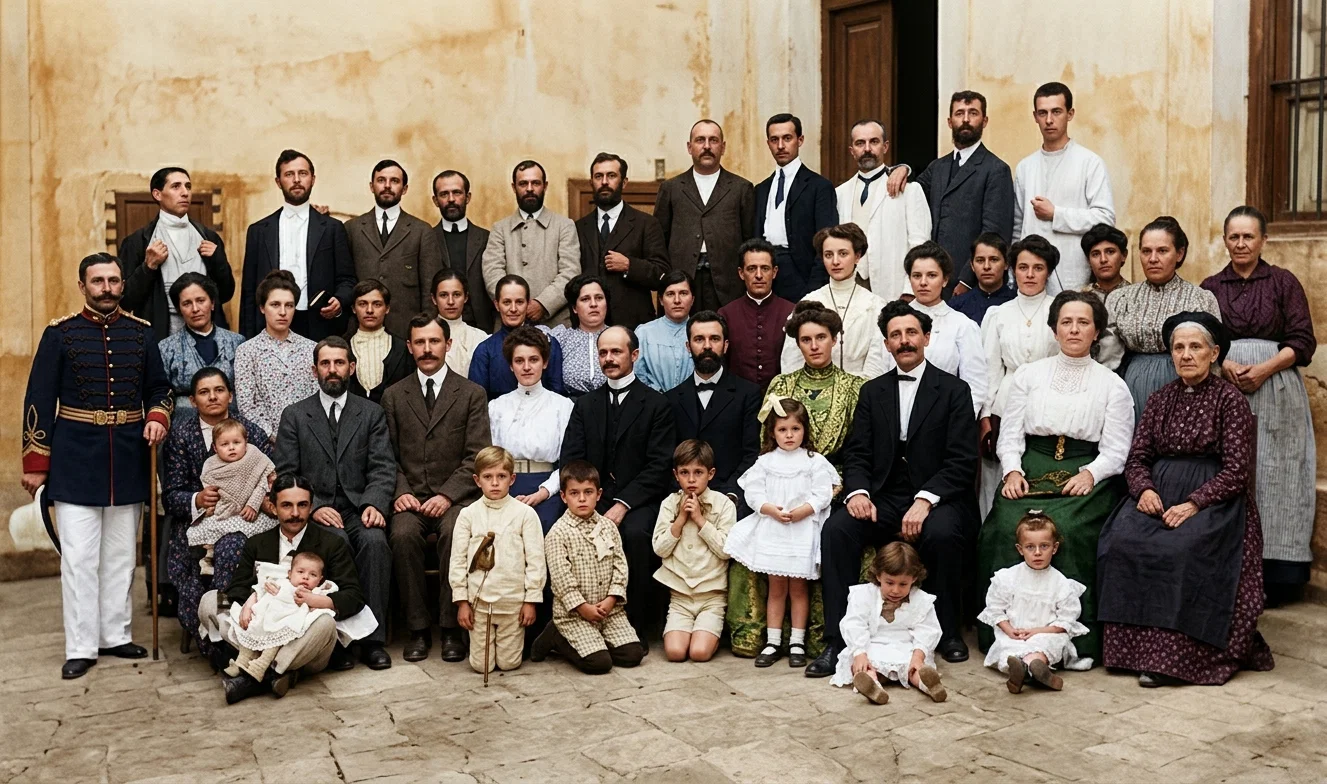
BELIEVERS IN ATTENDANCE AT THE FIRST GENERAL MEETING IN SPAIN
How do thieves come?—“Still.” When do they come?—“When not expected.” “In the night.” A brief experience may be related.
From whom do thieves steal?—From those who leave money or jewels unguarded. Tell how men guard against thieves by making safes and strong boxes of steel. Even safes and vaults are broken, but there is a safe in which we can place money and treasure where thieves can never get them. Matt. 6:20.
Show picture of safe, or have one drawn on blackboard.
“The day of the Lord will come as a thief.” Will any children be surprised? Some will be ready. Who will it be? 1 Thess. 5:1, 2, 4.
What must we do so that day will not come as a thief to us?—“Get ready.” “Pray.” “Watch.” Luke 12:37-40; 2 Peter 3:14, 17. Must hide in God. Ps. 32:7.
Reflectors for Jesus
Children’s Lesson — No. 3
Reflectors for Jesus
Show the children a small mirror. Ask how it is made, and for what purpose it is used. It does not absorb light, but reflects it. Next show a piece of common glass, and ask why it will not do for a mirror. It does not reflect the light, but lets it pass through.
We may be like the window-glass instead of the mirror. If we receive gifts from God, and do not give them back by helping others and reflecting the character of Jesus, we are like the common glass.
God has a great mirror. Exhibit chart or copy of the ten commandments. This glass does not tell how we look, but how we act. James 1:23, 25; see 2 Cor. 3:18. In this holy law we also see what God is like.
Rub over the mirror with a little piece of soap. The reflection is spoiled. Then clean.
What else do we see in God’s mirror? — The sins in ourselves. When we have dirty hands and faces or stains on our clothes, what do we do? — Take soap and water, and wash them all away. How can sin be cleansed? 1 John 1:7, last part.
When cleansed, what do we become? — Reflectors like the mirror. Tell how the mirror reflects the sun. Children enjoy seeing reflections from a mirror.
Christians reflect the character of Jesus, just as the mirror reflects light. Shall we be like the common glass or like the mirror?
God's Gift of the Holy Spirit
By Eugene W. Farnsworth
What It Means to the Church
E. W. FARNSWORTH
(Reading for Tuesday, December 13)
SIMON, the sorcerer, greatly desired the Holy Spirit. He wanted it so much that he was willing to give a large sum of money to obtain it. But though he desired the power that only the Holy Spirit can give, he could not receive it that way. Peter plainly told him: “For thy heart is not right in the sight of God.” Acts 8:21.
This reveals the one great hindering reason why we do not have the Holy Spirit in his fulness.13When the heart is not right, the Spirit can not be given. If the gift of God could be purchased with money, as Simon supposed, many would even now be endued with the Holy Spirit. No doubt there are Seventh-day Adventists who would deny themselves many things, perhaps they might even mortgage their property, if they might obtain the Holy Spirit by so doing. But the experience of Simon shows what a sin and what profanity it is to ask for the Spirit of God for selfish purposes.
“Simon himself believed also.” He professed to accept the present truth for that time. He had been baptized. “He continued with Philip.” He was greatly interested in his work. But he could not receive the gift of the Holy Ghost, which was freely given to other converts, and the words of Peter reveal the reason,—his heart was not right with God. Confession and forsaking of sin must precede the reception of this gift. Others than Simon have desired to receive the Holy Spirit. They ask and receive not, because they ask amiss, that they might consume it upon their pleasures. (Read James 4:1-3, margin.) They ask, but do not receive, because they do not ask with a proper motive.
God does not degrade nor disgrace this gift of all gifts by permitting him to be used for profane or common purposes. He will never humiliate the Vicegerent of his throne by permitting any man to use him. He is not sent to be used by any one; not to be guided, but to guide; not for men to teach him, but for him to teach them. “They shall all be taught of God.” “For the Holy Ghost shall teach you in the same hour what ye ought to say.” Luke 12:12. “But the Comforter, which is the Holy Ghost, whom the Father will send in my name, he shall teach you all things.” John 14:26. “He will guide you into all truth.”
We would emphasize once more the fact that the Holy Spirit does not permit himself to be possessed by men; he possesses them. He governs, guides, controls, teaches, commands. The attitude of the individual must be that of one who is possessed, controlled, taught, guided. In order to be guided, he must be perfectly self-surrendered, perfectly controlled by the Guide. The moment we attempt to control or lead, there will be a separation. The more complete the self-surrender, the more will the Spirit be manifested. Have we thus surrendered to be taught and controlled? or do we still wish to control and guide ourselves? Are we willing to do the work he points out? or have we business of our own, which stands in the way? We read in “Testimonies for the Church:” —
“As the head of the church, Christ is authoritatively calling upon every one who claims to believe on him to follow his example of self-denial and self-sacrifice in working for the conversion of those whom Satan and his vast army are exerting every power to destroy. . . . Every one should be willing to be or to do anything in this warfare. When church-members put forth earnest efforts to advance the message, they will live in the joy of the Lord, and will meet with success. . . . To every one who offers himself to the Lord for service, withholding nothing, is given power for the attainment of measureless results.”
“On the day of Pentecost the Infinite One revealed himself in power to the church. By his Holy Spirit he descended from the heights of heaven as a rushing, mighty wind, to the room in which the disciples were assembled. . . . And, under the influence of the Spirit, words of penitence and confession were mingled with songs of praise for sins forgiven. . . . The hearts of the disciples were surcharged with a benevolence so full, so deep, so far-reaching, that it impelled them to go to the ends of the earth, testifying, God forbid that we should glory, save in the cross of our Lord Jesus Christ.”
“The Lord will withdraw his blessing where selfish interests are indulged in any phase of the work; but he will put his people in possession of good throughout the whole world, if they will use it for the uplifting of humanity. The experience of apostolic days will come to us when we whole-heartedly accept God’s principle of benevolence,—consent in all things to obey the leadings of his Holy Spirit.”—Volume VII, pages 30, 31, 146.
Capacity to Receive Depends on Willingness to Give
When we ask for God’s Spirit, and the blessings it brings, it must be understood that these blessings are not for ourselves, to be hoarded. We are to be channels through which God can reach others,—God’s helping hand, to carry light and blessing to many. If we ask for the Holy Ghost for ourselves only, we ask in vain. Our capacity to receive depends upon our willingness and ability to give. If we give little, the capacity to receive will be correspondingly small. Again we read:—
“There must be an interchange of taking in and giving out, receiving and imparting. This links us up as laborers together with God. . . . All heaven is waiting for channels through which can be poured the holy oil, to be a joy and a blessing to others. I have no fear that any will make blundering work, if they will only become one with Christ.”—“Testimonies for the Church,” Vol. VI, pages 116, 117.
“Wherever we see work waiting to be done, we are to take it up and do it, constantly looking unto Jesus. . . . If every church-member were a living missionary, the gospel would speedily be proclaimed in all countries, to all peoples, nations, and tongues.”—Id., Vol. IX, page 32.
“In Christ’s act of supplying the temporal necessities of a hungry multitude, is wrapped up a deep spiritual lesson for all his workers. Christ received from the Father; he imparted to the disciples; they imparted to the multitude; and the people to one another. So all who are united to Christ will receive from him the bread of life, the heavenly food, and impart it to others.”—“Desire of Ages.”
Christ said: “Give, and it shall be given unto you; good measure, pressed down, and shaken together, and running over, shall men give into your bosom. For with the same measure that ye mete withal it shall be measured to you again.” Luke 6:38.
For What Purpose Given
At one time God brought this charge against his priests: “Her priests have violated my law, and have profaned mine holy things.” Eze. 22:26. They profaned the Sabbath by using it for common or profane purposes. So we may profane the Holy Spirit by using it, or endeavoring to use it, for a common purpose.
God never designed to give the baptism of the Holy Spirit as a premium upon which to grow corn, breed cattle and sheep, erect buildings, or to speculate in stocks, bonds, or real estate. The endowment of the Spirit is not needed for such work. Jesus describes the purpose for which God anointed him. Read Isa. 61:1-3. To do the work outlined in these verses, the divine anointing is absolutely necessary. In this sphere, success does not come “by an army [margin], nor by [human] power, but by my Spirit, saith the Lord of hosts.” Zech. 4:6.
By studying the type of this anointing with the Holy Ghost, we learn valuable lessons. It will be found that the anointing of the priests, of the sanctuary, and of all the furniture, was for service. See Ex. 30:23-38. With reference to the oil itself, notice these points:—
It was made by God’s direction.
It was a holy anointing oil.
It was used in setting apart, or sanctifying, these things to God’s special service.
After anointing the vessels of the sanctuary, none were permitted to touch them but those who were set apart for this service.
Ten times over the term “holy” or “most holy” is applied to the oil or that upon which it was poured.
The oil was never to be placed upon a “stranger” or upon “man’s flesh.” He who offended in this respect was cut off from the people of God.
The oil was never to be used for a common or profane purpose, nor was any to be made like it for a common purpose. Those who did this were to be cut off from the people. Neither was it to be used for worldly profit or pleasure, on penalty of the loss of the soul.
What a solemn and important lesson is taught by this scripture! What a grave and dangerous mistake to ask God for the heavenly anointing, and have no thought of doing the work that the anointing sets one apart to perform!
It is an interesting fact that Jesus himself did not receive this special anointing till he was about thirty years of age. Although he was God’s only begotten Son, yet until the time came that he changed the ordinary pursuits14of life for the special work God sent him to do, he did not receive this special endowment. The following scriptures give the experience and its results: Luke 3:21, 22; 4:1, 14, 15, 31, 32. The anointing looked forward to, and was to prepare for, a work to be done.
The apostles passed through a similar experience. After ten days’ earnest supplication, confession, and humbling of heart, the heavenly anointing came in copious showers. The multitude were “confounded,” “amazed,” “marveled,” and thousands were converted. The sick were healed, “every one.” Acts 5:16. Hypocrites were killed, blasphemers put to death by the angel of God, and those who would hinder the Lord’s work were smitten with blindness, or in some way set aside. Prison doors were opened, and God’s servants set free. Even inanimate walls, in buildings where the disciples met, trembled in response to the mighty power of God. The Holy Spirit like a mighty warrior rode everywhere, “conquering, and to conquer.”
But when the church attempted to colonize and settle down to enjoy the gifts given them of God without dispensing them to others, God taught them a lesson, and through them all future generations. (Let the leader read Acts 8:1-4.) When they went abroad, and testified of God and the special truth for that time, God also bore witness, “with signs and wonders, and with divers miracles, and gifts of the Holy Ghost, according to his own will.” Heb. 2:4.
This lesson is for us. It was recorded for our instruction. We, too, must go into all the world. We are certainly as dependent upon the Holy Spirit as were the disciples. We are as weak and helpless as were they without him.
How It Is Obtained
By getting right with God. Simon could not receive the gift, because sin controlled his heart.
By submitting to the control and guidance of the Spirit.
By imparting to others that which God gives to us.
By believing that God fulfils his promise. Gal. 3:14.
In “Steps to Christ” we read:—
“As they [the disciples] met together, after the ascension, they were eager to present their requests to the Father in the name of Jesus. In solemn awe they bowed in prayer, repeating the assurance, ‘Whatsoever ye shall ask the Father in my name, he will give it you. Hitherto have ye asked nothing in my name: ask, and ye shall receive, that your joy may be full.’ They extended the hand of faith higher and higher, with the mighty argument, ‘It is Christ that died, yea rather, that is risen again, who is even at the right hand of God, who also maketh intercession for us.’ And Pentecost brought them the presence of the Comforter, of whom Christ had said, ‘He shall be in you.’”—Pages 80, 81.
5. By confession to one another, and by earnest prayer.
The end is right upon us. Jesus is at the door. If we would be ready, and do the work committed to our keeping, we must return to the prayer of faith and the consecration of former days. If we pray and believe and work as did the disciples, there will be a similar working of God on our behalf. “Return unto me,” saith the Lord. “It shall come to pass afterward, that I will pour out my Spirit upon all flesh.” This week of prayer may see these promises fulfilled to us. Shall we do our part that it may be so? The promise is sure. The scripture can not be broken. A reproduction of apostolic prayer and consecration will reproduce apostolic times.