Your ShelfYour Projects

Signs of the Times, Vol. 23, No. 9.

The Spirit and the Law

Signs of the Times

Mar 4, 1897

Pacific Press Publishing Company · Oakland, California · Mar 4, 1897

The Spirit and the Law

Editorial

The Spirit and the Law
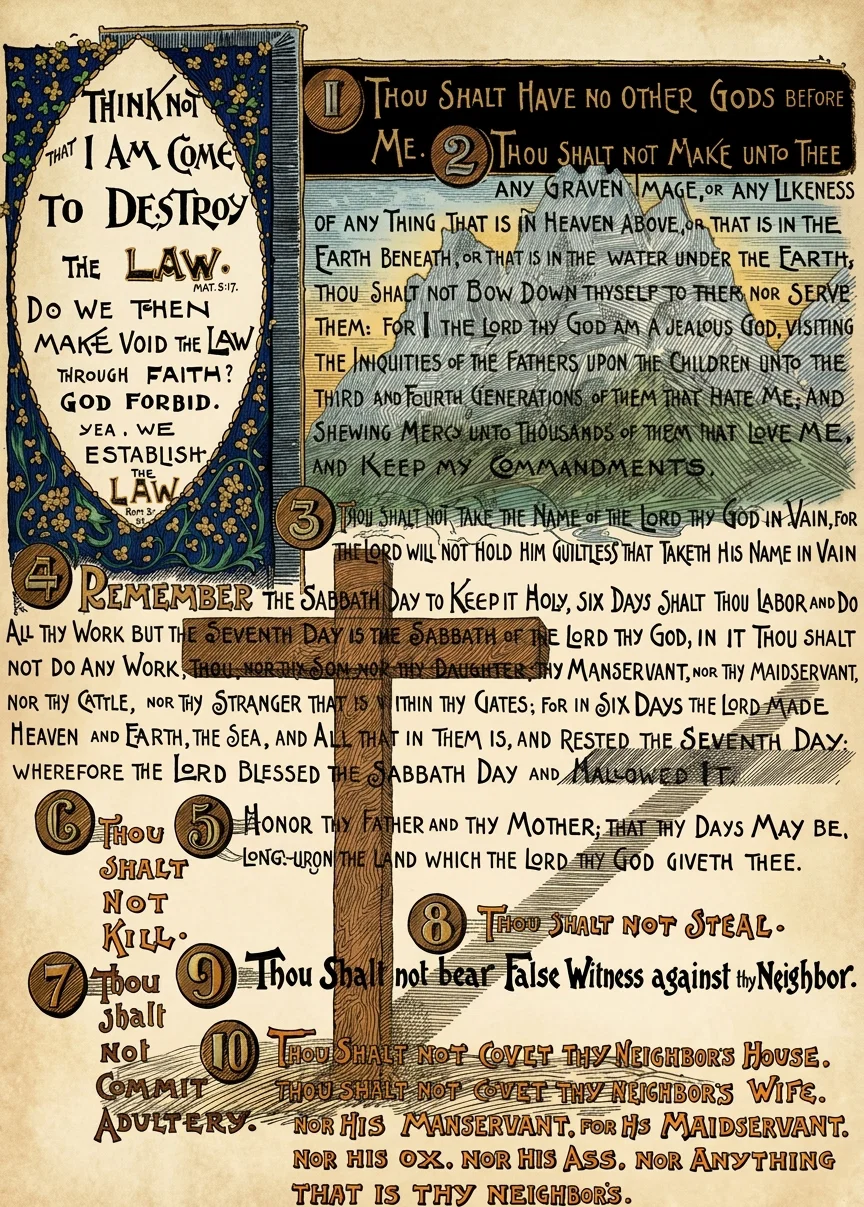
The Spirit is the Spirit of God. He is the Author of life. His Spirit is “the Spirit of life.” The law is the law of God, and God is one. His Spirit is not against his law, but in his law. His law is not against the Spirit, but it is “the law of the Spirit of life.” Why should one be set against the other?
“The fruit of the Spirit is love, joy, peace, long-suffering, gentleness, goodness, faith, meekness, temperance;” and the apostle adds, “against such there is no law.” Gal. 5:22, 23. Just previous to this he had said, “If ye be led of the Spirit, ye are not under the law.” Verse 18. Why is one led of the Spirit “not under the law”?—Because he is in harmony with the law, and his life bears the fruit against which the law brings no charge. If the law is not against the fruit of the Spirit, it is certainly in harmony with that fruit; and if it is in harmony with the fruit of the Spirit, it is therefore in harmony with the Spirit itself. Those, therefore, who are led of the Spirit are not under the law, that is, are not under its condemnation, because they bear those fruits which the law approves.

The Spirit’s Work in Convicting of Sin

So far from the Spirit of God being contrary to the law of God, the Spirit uses that law to convince the transgressor of his sins. “And when he [the Spirit] is come, he will convince the world of sin, and of righteousness, and of judgment; of sin, because they believe not on Me.” John 16:8, 9, margin. “By the law is the knowledge of sin.” Rom. 3:20. “Nay, I had not known sin, but by the law; for I had not known lust, except the law had said, Thou shalt not covet.” Rom. 7:7. The law condemns because the heart and life are contrary to the law. The law to the convicted sinner represents the terrors of quaking Sinai. It is a thing of dread holding over the head of the offender the sword of justice.

The Spirit in Justification

But the Spirit does not cease its work in the conviction of the sinner. Through the conviction of sin by the law it leads the sinner to Christ. That is the end, or object, of the Spirit’s use of the law in condemning the sinner. It convinces of sin, because the one convinced did not believe on Christ. John 16:9. Then the Spirit convinces of sin through the law—that the sinner may believe in Christ. “Wherefore the law was our schoolmaster to bring us unto Christ, that we might be justified by faith.” Gal. 3:24. And when we are justified, we are justified by the imputed righteousness of God in Christ wrought out in obedience to the law through the Spirit. Rom. 5:19. It is thus that the Spirit brings us to the righteousness of the law worked out in Jesus Christ. “For Christ is the end [or object] of the law for righteousness to every one that believeth.” Rom. 10:4. He places upon us the righteousness that is in the law, but which sinful man could not get from the law; and it is for this reason that the Spirit by the law leads us to Christ, where we may obtain righteousness and be brought into harmony with the law, our accuser, which then becomes a blessed witness of our acceptance with God. It witnesses that our righteousness, gotten through Christ’s obedience (Rom. 5:19), is in harmony with the law he obeyed (Rom. 3:24), and which it is also our duty to obey (James 2:12).

The Spirit in Sanctification

But the Spirit does not leave the sinner here. It not onlyconvicts him of sin through the law, and by that law leads him to the Justifier, that he may be made in harmony with the law, but it brings him into that relation to God that he will do acceptable service for his Master. To the convicted sinner the law is written on tables, shining with the terrible glory of Sinai. But to him whose heart Christ has opened, the law enters, yea, enters with Christ Jesus; and the Spirit of the living God writes it on the tables of every heart submitted to him. See 2 Cor. 3:3; Heb. 8:10. “For the law of the Spirit of life in Christ Jesus hath made me free from the law of sin and death,” “that the righteousness of the law might be fulfilled in us, who walk not after the flesh, but after the Spirit.” Rom. 8:2, 4. Blessed law of God, holy, just, perfect, good! Blessed Spirit of God, Comforter, Reprover, Guide, Helper, Sanctifier, by bringing us into harmony with the holy law! 1 Cor. 6:11. Blessed faith which can grasp these simple, life-giving truths. This is the “faith that worketh by love.” Gal. 5:6. This is the love that fulfils the law, that keeps God’s commandments, and counts them not grievous, because they are written on the heart. Rom. 13:10; 1 John 5:4. Reader, will you not welcome and cherish the mission and presence of the Spirit of God?

THE TRUE ISRAEL.

“For they are not all Israel, which are of Israel; neither, because they are the seed of Abraham, are they all children; but, In Isaac shall thy seed be called.” Rom. 9: 6, 7.
These words of the apostle Paul should be sufficient to clear up all mystery in the minds of Bible believers concerning who are the “Israel” of to-day. It is plain that all theories and all claims based upon literal descent from Abraham are of no value. It is of no consequence to us to know who are the natural seed of Abraham to-day, or what is to become of them in the future. No promise of God made to Israel was fulfilled through the simple process of natural descent.
The line of descent from Abraham which God recognizes is not a natural line, but a spiritual one. He has never recognized any line but the spiritual one, even from the days of Abraham himself. Of this fact there are many proofs. When Ishmael was born, and Abraham desired that he might live before God as the heir of the promise (Gen. 17: 18), the Lord said to him, “Sarah thy wife shall bear thee a son indeed; and thou shalt call his name Isaac; and I will establish my covenant with him for an everlasting covenant, and with his seed after him.” And when, after the birth of Isaac, Sarah desired the son of Abraham by the bondwoman to be cast out because of his mocking, the Lord said to Abraham, “In all that Sarah hath said unto thee, hearken unto her voice; for in Isaac shall thy seed be called.”
Ishmael was the father of a great nation; and we read that Abraham had other sons beside Ishmael and Isaac; but to these he gave gifts and sent them away, and Isaac alone was his heir. So there were several sons of Abraham, but only one heir; multitudes of natural descendants, but only a certain line of them whom God recognized as his children.
Isaac was chosen as the heir because he was the child of promise. The Scripture commentary upon this is, “They which are the children of the flesh, these are not the children of God; but the children of the promise are counted for the seed.” So then the line of descent was reckoned from God himself. Between God and the carnal nature there could be no possible union, and therefore no child of the flesh could be a son of God. Isaac was the child of promise; that is, he was born through faith in the promise of God made to Abraham, and thus he became a son. No person was ever a son of God who did not become so by faith. It has been possible for all the fallen sons of Adam to become sons of God by believing, as Abraham did, on “Him that justifieth the ungodly.” By so doing they are “born again” into the line of the true descendants of Abraham,—into the family of God. And the same privilege is open to every man to-day.
The distinguishing mark of this line of descent from Abraham is righteousness; and his descendants compose together a “righteous nation,”—the only righteous nation this earth has ever known. Of them it will be said in the final day of reckoning, “Open ye the gates, that the righteous nation which keepeth the truth may enter in.” Isa. 26: 2. This righteousness is by faith; for we read that “Abraham believed God, and it was counted unto him for righteousness;” and also, “To him that worketh not, but believeth on him that justifieth the ungodly, his faith is counted for righteousness.” Rom. 4: 3, 5. And thus, as the apostle states in another place, “They which are of faith, the same are the children of Abraham.” And the same are also the sons of God; for “as many as received him, to them gave he power to become the sons of God, even to them that believe on his name; which were born, not of blood, nor of the will of the flesh, nor of the will of man, but of God.” John 1: 12, 13.
Faith, and faith alone, stands out through all the history of Israel as the means by which the heirship of the promises of God was received. Abraham had faith in God, and God gave him the covenant of circumcision, “a seal of the righteousness of the faith which he had yet being uncircumcised; that he might be the father of all them that believe.” Rom. 4: 11. But when the Israelites signally failed in faith, at Kadesh-barnea, and were turned back from the land of promise to wander in the wilderness, circumcision ceased among them, and was not renewed until, under the command of Joshua, they again stood on the borders of Canaan. Tho they were the literal descendants of Abraham, and of Isaac, the child of promise, the Lord refused to recognize them as the children of Abraham, because of their unbelief.
John the Baptist, also, and the Saviour, plainly told the Pharisees that they were not the children of Abraham. Said John, “Think not to say within yourselves, We have Abraham to our father; for I say unto you, that God is able of these stones to raise up children unto Abraham.” Matt. 3: 9. Thus he declared that natural descent from Abraham counted for nothing. And the Saviour said of them, “If ye were Abraham’s children, ye would do the works of Abraham;” and also, “Ye are of your father the devil.” They had not been born of God and therefore were neither the children of God nor the children of Abraham.
As the natural seed of Abraham were not counted as children without faith, so, on the other hand, those who were not the natural seed could become united to Israel by faith. Any stranger could come and join himself to them and be counted as one of them. The promises of God were as specifically made to the stranger who came and united with Israel, as to the natural descendants themselves. God did not separate the Israelites from the other nations for the purpose of going off by himself with a certain people to favor them, and shutting the others out. He separated them from the wickedness of the nations around them, that they might not be contaminated thereby; but he excluded no one from joining them and sharing with them in all their blessings. He designed to magnify his name in them before all the world, that men might be drawn to them with a desire to obtain knowledge of him.
There is an Israel of God to-day, as there ever has been; and now, as then, it is open to all persons of whatever race or ancestry to unite themselves to it. There is nothing exclusive about it; it is as free as the offer of salvation. The condition of union with Israel now is the same that it ever was,—belief in God. “They which are of faith, the same are the children of Abraham.” The same promises of God to ancient Israel hold good to-day; the advantages of union with Israel are the same. But there is no promise to the merely natural descendants, and no advantage in being connected with Abraham, Isaac or Jacob through the flesh. The Israel of God is to-day the remnant of the “righteous nation,” that have gathered out in all ages from every race and kindred and tongue, by the power of God’s grace, through faith. “Israel” stands for those who by faith have power, as Jacob did, with God, and prevail. All these are children of God; and only these has God recognized in past time as Abraham’s children, or does recognize as such to-day. They are those whom Christ has redeemed. “If ye be Christ’s, then are ye Abraham’s seed, and heirs according to the promise.” E. J. W.

Question Corner

“Enquire, and make search, and ask diligently.”

No. 498. The Eagle as an Illustration.

PLEASE explain Deut. 32:11, 12. — W. E. L.
The verses read as follows: “As an eagle stirreth up her nest, fluttereth over her young, spreadeth abroad her wings, taketh them, beareth them on her wings; so the Lord alone did lead him, and there was no strange god with him.” This is simply a lesson from the eagle’s treatment of its young. The eagle builds her nest on some high crag, or other eminence as nearly as possible inaccessible to enemies. But this very security renders the place a dangerous one for the young birds should they attempt to leave the nest. When the old birds deem it time for the young ones to start out for themselves, they tear up the nest and force the brood out. Being their first effort at flight, the older birds watch them very carefully, and with outstretched wings dart under them if they are about to fall, and support them if weary or weak. So the Lord stirred up the nest of his people in Egyptian bondage, and brought them forth. But knowing their weakness and inexperience, he knew their need of parental care, and did not neglect to render them help in their dire necessity. In Ex. 19:4 the thought is thus expressed: “Ye have seen what I did unto the Egyptians, and how I bare you on eagles’ wings, andbrought you unto myself.” See also Deut. 1:31, and Isa. 63:9.

No. 499. Remission of Sin. Healing the Sick.

1. WHAT is the meaning of the three verses, John 20:21–23? 2. Also James 5:14, 15. In what church do we find these things? — E. A. T.
1. John 20:21–23 reads: “Then said Jesus to them again, Peace be unto you; as my Father hath sent me, even so send I you. And when he had said this, he breathed on them, and saith unto them, Receive ye the Holy Ghost: whose soever sins ye remit, they are remitted unto them; and whose soever sins ye retain, they are retained.” This was after the resurrection of Christ, and he was giving his parting endowments and instructions. His crowning blessing was the gift of the Holy Spirit. It was to be their guide in all truth (chap. 14:26; 16:13), through the Word (chap. 17:17). As long as they would be guided in this way, they could be entrusted with the gravest responsibilities, and their acts would be endorsed in heaven. See Jer. 1:9, 10. However, the power thus delegated to the disciples was not so delegated to any individual, but to the church in an organized capacity. As an organized body it may censure or remove censure according to Scripture rules. Through the ministration of God’s servants in proclaiming the Word of God, men would be led to believe the Gospel, and thus their sins would be remitted. This was demonstrated on the day of Pentecost.
2. James 5:14, 15 reads: “Is any sick among you? let him call for the elders of the church; and let them pray over him, anointing him with oil in the name of the Lord; and the prayer of faith shall save the sick, and the Lord shall raise him up; and if he have committed sins, they shall be forgiven him.” The prayer of faith is just as effectual to-day as it ever was. The prayer of faith is always subject to the will and the judgment of God. “Not my will, but thine, O God, be done,” is always the condition of the prayer of faith. “In what church?” it is asked. We answer, In the church of Jesus Christ, wherever there is implicit faith to comply with the directions of his Word, believing his promise. “If ye abide in me, and my words abide in you, ye shall ask what ye will, and it shall be done unto you.” John 15:7. It should always be borne in mind that obedience is the test of faith.

No. 500. Judging Others.

PLEASE explain Rom. 14:5, 6. Would it be possible to observe any day out of seven to God? — W. S. C.
Yes; the true Christian will observe every day to God. Our querist probably thinks that the apostle is referring to the Sabbath day. But the commandment settles that question. Paul has no doubt special reference to the numerous feast days that were in vogue among the Jews, and which many Christians continued to observe for a time. We know of no better explanation of this text than the chapter as a whole. The pith of it may be summed up in verses 1 (with margin), 4, 10, 19, and 22. Whether a man does right or wrong, it is not our business to judge (that is, to condemn) him. That is God’s prerogative. We, as individuals, may instruct, entreat, or admonish, from the standpoint of God’s Word; but judge, or condemn, never. See Rom. 2:1. That is the position that Christ assumed when he was a man living among men. See John 12:47. The church, as a body, may censure members for disorderly walk, and may judge of matters between brethren. See 1 Cor. 5:1 to 6:8, and answer to question 499.

No. 501. Spirits in Prison.

PLEASE explain 1 Peter 3:19, and 4:6. — H. J. M.
Verses 18 and 20 explain verse 19. Christ was “put to death in the flesh, but quickened by the Spirit. By which [Spirit] also he went and preached unto the spirits in prison [dead, in the grave]; which sometime were disobedient, when once the long-suffering of God waited in the days of Noah,” etc. Christ was quickened by the same Spirit by which he preached through Noah to the people before the flood. This also explains chapter 4:6, “For this cause was the Gospel preached to them that are dead;” it was done before they were dead, of course.

CHRIST AND THE LAW.

SUPREME love to God will be shown by every man or woman who is a true follower of Jesus Christ. “Give unto the Lord the glory due unto his name,” writes the psalmist; “for the Lord is great, and greatly to be praised; he is to be feared above all gods.” Those who surround his throne, the sinless angels, bow down and adore him, praising his name, and crying, “Holy, holy, holy, Lord God Almighty, which was, and is, and is to come.” We are his creatures, the work of his hands, and he is justly entitled to reverence, honor, and love.
Only by obedience to him can we prove our love. If he is our fear, we shall seek to honor and glorify him, and shall find our highest happiness in doing his will. Any failure to render willing obedience to him will show that our love for him is false.
In love, with a desire to elevate and ennoble us, God provided for us a standard of obedience. In awful majesty, amid thundering and lightning, he proclaimed from Mount Sinai his ten holy precepts. This law reveals the whole duty of the human family; the first four precepts define our duty to God, and the last six our duty to man. A certain lawyer came to Christ, and tempted him, saying: “Master, which is the great commandment in the law? Jesus said unto him, Thou shalt love the Lord thy God with all thy heart, and with all thy soul, and with all thy mind. This is the first and great commandment. And the second is like unto it, Thou shalt love thy neighbor as thyself. On these two commandments hang all the law and the prophets.”
God requires perfection of character from his children. He demands that his law be remembered and meditated upon, that unswerving obedience be rendered to its requirements. “And now, Israel,” he asks, “what doth the Lord thy God require of thee, but to fear the Lord thy God, to walk in all his ways, and to love him, and to serve the Lord thy God with all thy heart and with all thy soul, to keep the commandments of the Lord, and his statutes.” But sin entered this world, and by yielding to the temptations of the enemy, man became degraded and sinful. His ability to distinguish between right and wrong was lost; his power to obey was weakened. Full of sin, he was of himself unable to meet God’s standard of righteousness.
God saw man’s hopeless condition. He looked with sorrow upon the world, which was steadily growing more and more degraded and sinful. He could not change his law to meet man’s deficiencies; for he says, “My covenant will I not break, nor alter the thing that is gone out of my lips.” But in his great love for the human race, in his desire that man should not be left to meet the penalty of his transgression, but that he should be elevated and ennobled, he “gave his only-begotten Son, that whosoever believeth in him should not perish, but have everlasting life.” Christ laid aside his royal robes, and came to this earth, bringing with him a power sufficient to overcome sin. He came to live the law of God in humanity, that by partaking of his divine nature, we also might live that law.
The Jews had misinterpreted the law of God, robbing it of its spirituality, and making it burdensome by their many exactions. Christ came to correct this. The very One who ages before had spoken the law from Mount Sinai, now came to magnify it and make it honorable. In his Sermon on the Mount he explained the law, showing what each precept comprehended. Covetousness was shown by him to be idolatry, lust adultery, and anger murder. He made manifest the spirituality of the law, and pointed out that it reaches to every phase of life.
Before the universe of heaven, before the fallen angels, and before those whom he had come to save, Christ lived the law of God. By his supreme obedience to its requirements, he exalted and enforced it. By his purity, goodness, beneficence, devotion, and zeal for the glory of God, by his unsurpassed love for his fellow-men, he made known the perfection of the law. By his blameless life he illustrated its excellence.
Christ was the representative of the love of the infinite God, and all his words and actions were the outflowing of God’s love to humanity. And in word and action he was all that God required him to be. The law was a controlling power in his life. Ever the language of his heart was, “I delight to do thy will, O my God; yea, thy law is within my heart.”
This example of obedience is presented to the world. Christ is to be made our pattern in all things. He says to us, “Learn of me.” “Lo, I am with you alway, even unto the end of the world.” “He that hath my commandments, and keepeth them, he it is that loveth me; and he that loveth me shall be loved of my Father; and I will love him, and will manifest myself to him.”
The law which Christ gave from the mount, and which he exemplified in his sinless life, is far-reaching in its character. It condemns every evil action, and demands perfect obedience. Those who truly follow Christ will keep God’s commandments as he kept them. If they sincerely accept him as their personal Saviour, they will be actuated by an earnest desire to fulfil their duty to God, and to represent him in character. And if the law were perfectly obeyed, the earth would not now be corrupted under the inhabitants thereof. Oppression and injustice would not exist. Love, harmony, and joy would be seen. The power of Christianity would be revealed in the churches, and the world would have no cause to charge the followers of Christ with inconsistency. The converting power of the Holy Spirit would be felt, and thousands would be added to the church of such as should be saved.
But too often professed Christians forget their duty to their Maker. Dreading the cross, they neglect to honor him by rendering obedience to his commandments; and religion is misinterpreted and despised by unbelievers, because so many who profess to follow Christ, do not reveal his character in their lives. Christianity loses its power because Christians constantly transgress the law of God, because selfishness is seen, and idolatry and covetousness manifest themselves.
We may say that it is impossible for us to reach God’s standard; but when Christ came as our substitute and surety, it was as a human being. “He took not on him the nature of angels; but he took on him the seed of Abraham.” He “was made flesh, and dwelt among us.” With his divinity veiled by humanity, he lived a life of perfect obedience to the law of God. “He was tempted in all points, like as we are,” that he might be “able to succor them that are tempted.” He has “given unto us exceeding great and precious promises; that by these ye might be partakers of the divine nature, having escaped the corruption that is in the world through lust.” Shall we, for whom he has done and suffered so much, choose our own way in preference to that of God?
Much responsibility rests upon those who profess to know and love God. As dutiful sons, and daughters of God, he expects them to let their light shine, not by pretension and assertion, but by good works, revealing to the world by their simple, elevated piety the binding claims of God’s law and the power of Christ to keep them from transgression. But when those who claim to love God reveal by their works that they have little conception of his requirements, God is dishonored. If they could see themselves as God sees them, if they could realize how far short they fall of doing the will of God, they would be filled with terror lest their lives should be cut off in the midst of their disobedience.
“This is the love of God, that we keep his commandments; and his commandments are not grievous.” “The law of the Lord is perfect, converting the soul; the testimony of the Lord is sure, making wise the simple.” “Wherefore receive with meekness the engrafted word, which is able to save your souls.” “Be ye doers of the word, and not hearers only, deceiving your own selves. For if any be a hearer of the word, and not a doer, he is like unto a man beholding his natural face in a glass; for he beholdeth himself, and goeth his way, and straightway forgetteth what manner of man he was. But whoso looketh into the perfect law of liberty, and continueth therein, he being not a forgetful hearer, but a doer of the work, this man shall be blessed in his deed.”
Obedience must come from the heart. It was heart work with Christ. As we endeavor to honor God, discouragements will come to us; the enemy will try with all his power to make us swerve from the right; but we need not, because of this, give up the warfare against evil. Our duty is to guard carefully the weak points in our characters, seeking by divine grace to make them strong. There is no one living that has any power which he has not received from God, and the source whence it came is open to the weakest human being. If we draw near to God, the unfailing source of strength, we shall realize the fulfilment of the promise, “Ask, and ye shall receive.” If we lift the cross, leaving the results with God, who has given us the law which we are trying to keep, we shall find that “all the paths of the Lord are mercy and truth unto such as keep his covenant and his testimonies.”
As Christ lived the law in humanity, so we may do if we will take hold of the strong for strength. As we realize that we can do nothing of ourselves, we shall receive wisdom from on high to honor and glorify God. And as we behold “the glory of the Lord,” we shall be changed into the same image, “from glory to glory;” and at the last great day we shall receive the benediction, “Blessed are they that do his commandments, that they may have right to the tree of life, and may enter in through the gates into the city.”
MRS. E. G. WHITE.

JERUSALEM, MY HOME.

Jerusalem, my home, Where shines the royal throne; Each king casts down his golden crown Before the Lamb thereon, Thence flows the crystal river, And flowing on forever, With leaves and fruits on either hand, The tree of life shall stand. In blood-washed robes, all white and fair, The Lamb shall lead his chosen there, While clouds of incense fill the air— Jerusalem, my home!
Jerusalem, my home! Where saints in glory reign, Thy haven safe, O when shall I, Poor, storm-tossed pilgrim, gain? At distance dark and dreary, With sin and sorrow weary, For thee I toil, for thee I pray, For thee I long alway, And lo, mine eyes shall see thee, too; O, rend in twain, thou veil of blue, And let the Golden City through— Jerusalem, my home!
—Hopkins.

MAN'S POSSIBILITIES IN CHRIST.

“He sat before me for a golden hour And gave me counsel and encouragement, Till, like broad gates, the possibilities Of a serener and higher life Were thrown wide open to my eager feet.”
He who chooses to sit a learner at the feet of Jesus, is certain to receive wonderful revelations. As he is led along the path of truth by his great Teacher, he will find it all radiant with light. Every by-path of thought will take on interest and importance. Text after text will be illuminated by that Spirit which “searcheth all things, yea, the deep things of God,” and he will find himself in a veritable wonderland of truth. Principle after principle is exhumed. Order takes the place of chaos in his mind. Wonderful harmony and beauty is seen. There is nothing irksome about his study under such a teacher, and, spiritually, the Word becomes his meat and drink.
Truth without a personal application of it to the life, is of little value. No one knows this so well as the great Teacher, and his pupils will invariably apply the principles he reveals to their own lives. As applied they become search-lights that reveal a condition of heart from which they shrink as from a deadly foe. The thoughts and intents of the heart are clearly discerned. Heb. 4:12. As never before, the truth is forced home, that “the heart is deceitful above all things, and desperately wicked.” Jer. 17:9. They see, as if by the light of the noonday sun, that in them dwelleth no good thing (Rom. 7:18), and therefore for them to do good is as impossible as for the Ethiopian to change his skin, or the leopard his spots (Jer. 13:23). Yet, thanks to that loving Teacher, they are not overcome withdiscouragement. The still small voice speaks courage and hope as some other text reveals the forgiving love of the Father. The door of escape appears. 1 Cor. 10:13. Jesus, the way, the truth, and the life (John 14:6), says, “Come unto me, all ye that labor and are heavy laden, and I will give you rest” (Matt. 11:28). What a wonderful assurance is this!—so opportune. Such a comprehensive provision will certainly meet the case, and the case of every individual, no matter how discouraging it may be.
Rest from sin is what all need, and in Christ it is possible. Let the sinner exercise faith in him; and the condemnation will pass away, for he will then be “in Christ Jesus.” Rom. 8:1. “The law of the spirit of life in Christ Jesus hath made me free from the law of sin and death.” Rom. 8:2. Whereas he was dead in trespasses and sins (Eph. 2:1), he now lives unto God (Rom. 6:10). Every text he now reads has a new meaning. There is a height, a depth, a length and a breadth to it that is indeed life to him. John 6:63. How exactly does Gal. 2:20 describe such an experience.
What possibilities must open up before the one who has had the above experience! He sees in Him whom he has taken as his portion “hid all the treasures of wisdom and knowledge.” A feeling like that expressed by David (Ps. 42:1) springs up within him, and he longs to be filled with his fulness. But how can these things be? This is the great question. I think a few texts will answer the question, and furnish food for a great deal of thought along this line.
In Christ dwells all the fulness of the Godhead bodily. Col. 2:9. Paul, writing to the Corinthians, assures us that Christ is the power of God and the wisdom of God, and that he is made of God unto us wisdom, and righteousness, and sanctification, and redemption. 1 Cor. 1:24, 30. God has given us Christ (Rom. 8:32), and in the greater gift includes all minor ones (1 Cor. 3:21–23). To receive these blessings and rightly use them will glorify God. 2 Cor. 4:15. It is the will of God that all who accept Christ shall be conformed to his image. Rom. 8:29. This will require a transformation of the mind (Rom. 12:2), but this, God has provided for in Christ (Eze. 36:26; Col. 3:10). The Saviour sums it all up in these words, “Ye must be born again.” John 3:7.
Let all accept the wonderful possibilities there are in Christ for them, have him formed within, the hope of glory (Col. 1:27), that they may at last sit down with him in his throne (Rev. 3:21), even as he has overcome and is now set on the right hand of the throne of the Majesty in the heavens (Heb. 8:1).
H. SCOTT.

IN YOU OR IN THE EUCHARIST?

The Christian doctrine of the real presence is “Christ in you.”
The Catholic theory of the real presence is “Christ in the eucharist.”
The Christian doctrine of the real presence is Christ in the believer by the creative power and overshadowing of the Spirit of God. The Catholic theory of the real presence is Christ in the eucharist by the word of the priest.
In the Christian doctrine of the real presence there is an inward change or conversion of the soul of the believer himself by the power of the Holy Spirit, by which he is made a “new creature.” In the Catholic theory of the real presence there is what is called an “inward change or conversion” of the bread and wine, or the wafer of the communion into the very flesh and blood of Jesus Christ by the word and at the will of the priest.
Nor is any of this mere captious criticism or prejudiced statement. It is all the straight truth. And that all may see that it is so, we herewith give the authoritative proof. First, as to the real presence of Christ being in the eucharist. Here is the statement:—
Among the various dogmas of the Christian church there is none which rests on stronger scriptural authority than the doctrine of the real presence of Jesus Christ in the holy eucharist. The fathers of the church, without an exception, reecho the language of the apostle to the Gentiles, by proclaiming the real presence of our Lord in the eucharist.
I have counted the names of sixty-three fathers and eminent ecclesiastical writers flourishing between the first and the sixth century, all of whom proclaim the real presence—some by explaining the mystery, others by thanking God for this inestimable gift, and others by exhorting the faithful to its worthy reception.—Faith of Our Fathers, by Cardinal Gibbons.
And that it is in the eucharist instead of “in you” is shown by the following words:—
Every one knows that example loses much of its efficacy in passing through the medium of history, and that virtues perceived at a distance of eighteen centuries are not sufficiently eloquent to move our hearts. It was then very necessary that the divine model of the elect should dwell in the midst of us full of grace and truth, and that he should offer to each one the living picture of the same virtues which charmed the witnesses of his mortal life and attached to him so powerfully the hearts of his disciples. This need Jesus Christ satisfies in his eucharistic life. Could Jesus Christ manifest more strikingly his unspeakable tenderness for sinners, and his ardent zeal for their salvation, than he does in the adorable sacrament in which he condemns himself to remain on the earth so long as there is one soul to save?—Religion in Society, by Abbe Martinez.
And that it is at the word and will of the priest that this is all done, is shown plainly enough and strongly enough to satisfy anybody, in the following words:—
To obtain from us this abnegation of self, it was not enough that the Son of God obeyed Mary and Joseph for thirty years; made himself, during his public life, the servant of all; and delivered himself, without resistance, to his executioners. For eighteen hundred years that he has reigned at the right hand of the Father, he never has ceased to give to men the example of the most universal and humiliating obedience. Every day multitudes of priests, be they fervent, lukewarm, or vicious—it is the same—summon him where it pleases them, give him to whom they will, confine him under lock and key, and dispose of him at their will.—Religion in Society.
And that by the words or ceremony of consecration pronounced by the priest there is what is called an “inward change or conversion” of the bread and wine, or the wafer, into the very flesh and blood of Christ, is shown in these words:—
The holy eucharist is the true body and blood of Jesus Christ under the outward appearances of bread and wine. . . . This most blessed sacrament contains truly, really, and substantially, tho not perceptibly to our senses, nor with their natural accidents, . . . the body and blood of our Lord Jesus Christ, together with his soul and divinity, which can never be separated from his body and blood. . . . The Catholic Church teaches that, before consecration, that which on the altar appears to be bread and wine, is simply bread and wine; and that after the consecration of that bread and wine, what appears to be bread and wine is no longer bread and wine, but the body and blood of Jesus Christ. Something remains, namely, the outward qualities or species of bread and wine; and something is changed, namely, the inward, invisible substance of that bread and wine, into the body and blood of Christ; this inward change or conversion is what is called transubstantiation.—Catholic Belief.
The Christian truth of the real presence of Christ converts the soul of the believer; the papal dogma pretends to convert the bread and wine. The Christian truth of the real presence of Christ believed, makes man subject to God in everything; the papal dogma makes God subject to man in everything. The preaching of the Christian truth of the real presence of Christ in the believer, is the revelation of the mystery of God; the preaching of the papal dogma of the real presence is the proclamation of the mystery of iniquity. A. T. JONES.
Continue reading: PREPARING FOR WAR—WHAT IT MEANS