The Lord's Day

1%

Review and Herald Publishing Association · Takoma Park, Washington, D. C. · Feb 7, 1916

FromReview and Herald, Vol. 93, No. 7.

Read the full edition

The Lord's Day

A Bible Study

The Institution of the Sabbath

1. When and by whom was the Sabbath made?
“Thus the heavens and the earth were finished, and all the host of them. And on the seventh day God ended his work which he had made; and he rested on the seventh day from all his work which he had made.” Gen. 2: 1, 2.
2. After resting on the seventh day, what did God do?
“And God blessed the seventh day, and sanctified it: because that in it he had rested from all his work which God created and made.” Verse 3.
3. By what distinct acts, then, was the Sabbath made?
God rested on it; he blessed it; he sanctified it.
Sanctify: “To make sacred or holy; to set apart to a holy or religious use.”—Webster.
4. Did Christ have anything to do with creation and the making of the Sabbath?
“All things were made by him; and without him was not anything made that was made.” John 1: 3. See also Eph. 3: 9; Col. 1: 16; Heb. 1: 2.
Note.— Christ, being the active agent in creation, must have rested on the seventh day with the Father. It is therefore his rest day as well as the Father's.
5. For whom does Christ say the Sabbath was made?
“And he said unto them, The Sabbath was made for man, and not man for the Sabbath.” Mark 2: 27.
Note.— It was not made for the Jews alone. The Jews derive their name from Judah, one of the twelve sons of Jacob, from whom they are descended. The Sabbath was made more than two thousand years before there was a Jew. When Paul says, “Neither was the man created for the woman; but the woman for the man” (1 Cor. 11: 9), we understand him to mean that marriage was ordained of God for all men. So likewise with the Sabbath. It was made for the race.
6. What does the Sabbath commandment require?
“Remember the Sabbath day, to keep it holy. Six days shalt thou labor, and do all thy work; but the seventh day is the Sabbath of the Lord thy God: in it thou shalt not do any work, thou, nor thy son, nor thy daughter, thy manservant, nor thy maidservant, nor thy cattle, nor thy stranger that is within thy gates.” Ex. 20: 8-10.
7. What reason is given in the commandment for keeping the Sabbath day holy?
“For in six days the Lord made heaven and earth, the sea, and all that in them is, and rested the seventh day: wherefore the Lord blessed the Sabbath day, and hallowed it.” Verse 11.
Note.— The Sabbath is the memorial of creation, and the sign of God's creative power. Through the keeping of it God designed that man should forever remember him as the true and living God, the Creator of all things.

God Proves Israel on the Point of Sabbath Keeping

8. How did God prove Israel in the wilderness?
“Then said the Lord unto Moses, Behold, I will rain bread from heaven for you; and the people shall go out and gather a certain rate every day, that I may prove them, whether they will walk in my law, or no.” Ex. 16: 4.
9. On which day was a double portion of manna gathered?
“And it came to pass, that on the sixth day they gathered twice as much bread, two omers for one man: and all the rulers of the congregation came and told Moses.” Verse 22.
10. What reply did Moses make to the rulers?
“And he said unto them, This is that which the Lord hath said, To-morrow is the rest of the holy Sabbath unto the Lord.” Verse 23.
Note.— This was a full month and more before they came to Sinai.
11. When had God said that the seventh day is the Sabbath?
In the beginning, when he sanctified the Sabbath. Gen. 2: 3.
Note.— In the wilderness of Sin, before Israel came to Sinai, Moses said to Jethro, his father-in-law, “I do make them know the statutes of God, and his laws” (Ex. 18: 16), which shows that these statutes and laws existed before they were proclaimed on Sinai.
12. What did some of the people do on the seventh day?
“It came to pass, that there went out some of the people on the seventh day for to gather, and they found none.” Ex. 16: 27.
13. How did God reprove their disobedience?
“And the Lord said unto Moses, How long refuse ye to keep my commandments and my laws?” Verse 28.
14. Why was a double supply of manna given on the sixth day?
“See, for that the Lord hath given you the Sabbath, therefore he giveth you on the sixth day the bread of two days; abide ye every man in his place, let no man go out of his place on the seventh day.” Verse 29.
15. How, then, did the Lord prove the people (verse 4) whether they would keep his law or not?
Over the keeping of the Sabbath.
Note.— Thus we see that the Sabbath commandment was a part of God's law before this law was spoken from Sinai; for this incident occurred in the wilderness of Sin, before the children of Israel came to Sinai, where the law was given. Both the Sabbath and the law existed from creation.

God's Memorial

16. What is to endure throughout all generations?
“Thy name, O Lord, endureth forever; and thy memorial, O Lord, throughout all generations.” Ps. 135: 13.
Memorial: “Anything intended to preserve the memory of a person or event; something which serves to keep some person or thing in remembrance, as a monument or a practice.”—Webster.
17. Does God design that his great work of creating the heavens and the earth shall be remembered?
“The works of the Lord are great, sought out of all them that have pleasure therein. His work is honorable and glorious: and his righteousness endureth forever. He hath made his wonderful works to be remembered.” Ps. 111: 2-4.
18. What has he commanded men to observe in memory of the great work?
“Remember the Sabbath day, to keep it holy; . . . for in six days the Lord made heaven and earth, the sea, and all that in them is, and rested the seventh day: wherefore the Lord blessed the Sabbath day, and hallowed it.” Ex. 20: 8-11.
19. Of what was this memorial to be a sign?
“And hallow my Sabbaths; and they shall be a sign between me and you, that ye may know that I am the Lord your God.” Eze. 20: 20.
20. How long was the Sabbath to be a sign of the true God?
“It is a sign between me and the children of Israel forever; for in six days the Lord made heaven and earth, and on the seventh day he rested, and was refreshed.” Ex. 31: 17.
Note.— It is manifest that if the object of the Sabbath was to keep God as the creator in mind, and it had been faithfully kept from the first, there would not now be a heathen or an idolater on the face of the earth.
21. What statement of the redeemed shows that they will remember God's creative power?
“Thou art worthy, O Lord, to receive glory and honor and power; for thou hast created all things, and for thy pleasure they are and were created.” Rev. 4: 11.
22. How often will they congregate to worship the Lord?
“For as the new heavens and the new earth, which I will make, shall remain before me, saith the Lord, so shall your seed and your name remain. And it shall come to pass, that from one new moon to another, and from one Sabbath to another, shall all flesh come to worship before me, saith the Lord.” Isa. 66: 22, 23.
Note.— The Sabbath, which is the memorial of God's creative power, will never cease to exist. When this sinful state of things shall give way to the sinless new earth, the fact upon which the Sabbath institution is based will still remain; and those who shall be permitted to live in the new earth will still commemorate the creative power of God, while singing the song of Moses and the Lamb. Rev. 15: 3.

Christ and the Sabbath

23. Of what did Christ say the Son of man is Lord?
“The Son of man is Lord even of the Sabbath day.” Matt. 12: 8. See also Mark 2: 28.
24. Who made the Sabbath?
“All things were made by him (Christ, the Word); and without him was not anything made that was made.” John 1: 3.
25. Did Christ, while on earth, keep the Sabbath?
“As his custom was, he went into the synagogue on the Sabbath day, and stood up for to read.” Luke 4: 16.
26. Although Lord, Maker, and an observer of the Sabbath, how was he spied upon by the scribes and Pharisees on this day?
“And the scribes and Pharisees watched him, whether he would heal on the Sabbath day; that they might find an accusation against him.” Luke 6: 7.
27. With what question did Christ meet their false ideas and reasonings regarding Sabbath keeping?
“Then said Jesus unto them, I will ask you one thing, Is it lawful on the Sabbath days to do good, or to do evil? to save life, or to destroy it?” Verse 9.
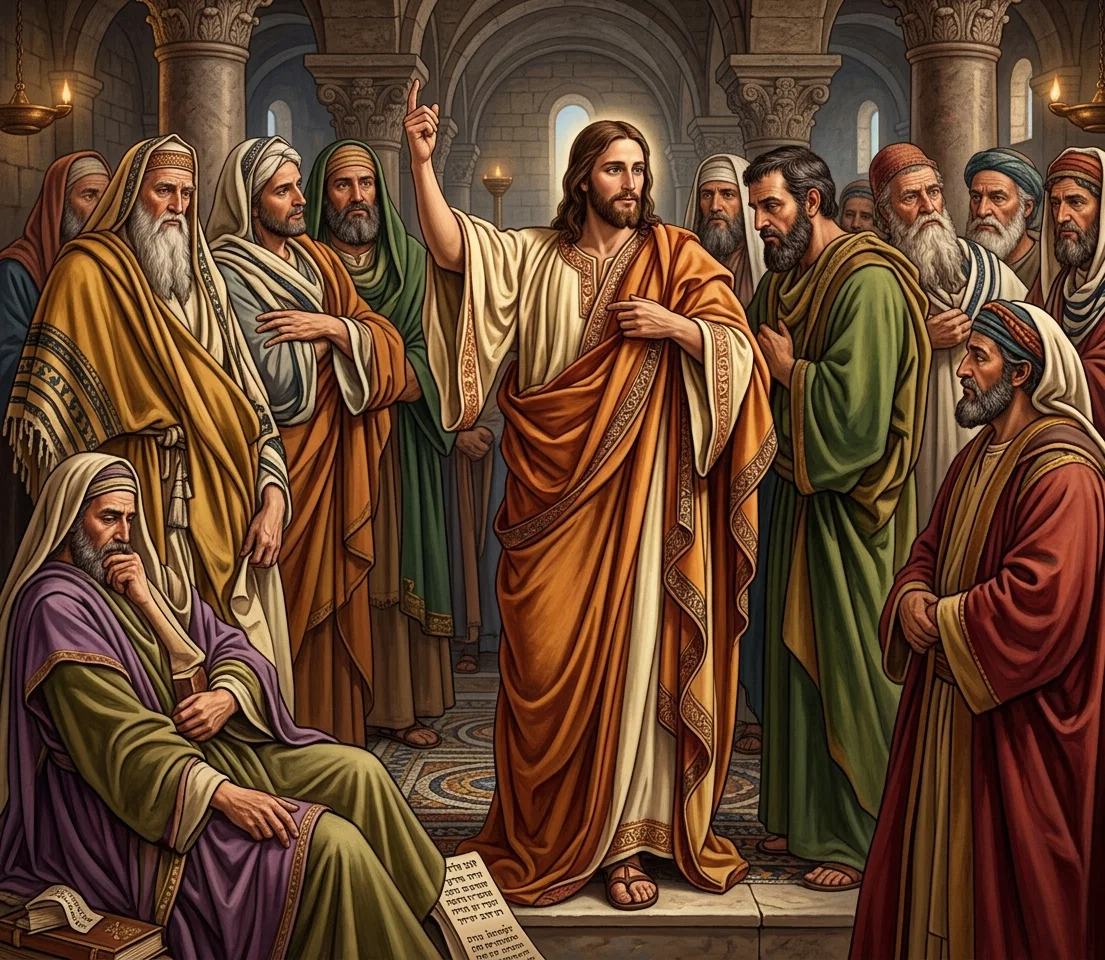
CHRIST TEACHING IN THE TEMPLE
28. According to Isaiah, what was Christ to do with the law?
“He will magnify the law, and make it honorable.” Isa. 42: 21.
Note.— In nothing, perhaps, was this more strikingly fulfilled than in the matter of Sabbath observance. By their traditions, numerous regulations, and senseless restrictions the Jews had made the Sabbath a burden, and anything but a delight. Christ removed all these, and by his life and teachings put the Sabbath back in its proper place and setting, as a day of worship and beneficence, a day for doing acts of charity and mercy, as well as engaging in contemplation of God and in acts of devotion. Thus he magnified it and made it honorable. One of the most prominent features of Christ's whole ministry was this great work of Sabbath reform. Christ did not abolish the Sabbath, nor change the Sabbath; but he did rescue it from the rubbish of tradition, the false ideas, and the superstitions with which it had been buried, and by which it had been degraded and turned aside from the channel of blessing and practical service to man designed by its Maker. The Pharisees had placed the institution above man, and against man. Christ reversed the order, and said, “The Sabbath was made for man, and not man for the Sabbath.” He showed that it was to minister to the happiness, the comfort, and the well-being of both man and beast.

The Sabbath in the New Testament

29. According to the New Testament, what day immediately precedes the first day of the week?
“In the end of the Sabbath, as it began to dawn toward the first day of the week.” Matt. 28: 1.
Note.— According to the New Testament, therefore, the Sabbath had passed when the first day of the week began.
30. After the crucifixion, what day was kept by the women who followed Jesus?
“And they returned, and prepared spices and ointments; and rested the Sabbath day according to the commandment.” Luke 23: 56.
31. What day is the Sabbath, “according to the commandment”?
“But the seventh day is the Sabbath of the Lord thy God.” Ex. 20: 10.
32. What was Christ's custom respecting the Sabbath?
“And he came to Nazareth, where he had been brought up; and, as his custom was, he went into the synagogue on the Sabbath day, and stood up for to read.” Luke 4: 16.
33. In what instruction to his disciples did Christ recognize the existence of the Sabbath long after his ascension?
“But pray ye that your flight be not in the winter, neither on the Sabbath day.” Matt. 24: 20.
Note.— The destruction of Jerusalem under Titus occurred in the spring and summer of A. D. 70. The flight of the Christians took place three and one-half years earlier, or late in October, A. D. 66, following the arrival and sudden withdrawal of Cestius Gallus and his army.
34. On what day did the Jews meet for worship?
“Moses of old time hath in every city them that preach him, being read in the synagogues every Sabbath day.” Acts 15: 21.
35. On what day did Paul and Barnabas preach at Antioch?
“They came to Antioch in Pisidia, andwent into the synagogue on the Sabbath day.” Acts 13: 14.
36. When did the Gentiles request that Paul should repeat the sermon he had preached at Antioch on the Sabbath?
“And when the Jews were gone out of the synagogue, the Gentiles besought that these words might be preached to them the next Sabbath.” Verse 42.
37. On what day did Paul and his companions preach to the devout women at Philippi?
“And on the Sabbath we went out of the city by a river side, where prayer was wont to be made; and we sat down, and spake unto the women which resorted thither.” Acts 16: 13.
38. What was Paul's manner respecting the Sabbath?
“They came to Thessalonica, where was a synagogue of the Jews; and Paul, as his manner was, went in unto them, and three Sabbath days reasoned with them out of the Scriptures.” Acts 17: 1, 2.
Note.— It was Paul's manner, as it was Christ's custom (Luke 4: 16), to attend religious services on the Sabbath.
39. How did the apostle spend the working days of the week when at Corinth?
“After these things Paul departed from Athens, and came to Corinth; and found a certain Jew named Aquila, born in Pontus, lately come from Italy, with his wife Priscilla: . . . and because he was of the same craft, he abode with them, and wrought; for by their occupation they were tentmakers.” Acts 18: 1-3.
40. What did he do on the Sabbath days?
“And he reasoned in the synagogue every Sabbath, and persuaded the Jews and the Greeks.” Acts 18: 4.
41. How long did he continue this work there?
“And he continued there a year and six months, teaching the word of God among them.” Verse 11.
42. On what day of the week was John in the Spirit?
“I was in the Spirit on the Lord's day.” Rev. 1: 10.
43. Who is Lord of the Sabbath?
“The Son of man is Lord also of the Sabbath.” Mark 2: 28.
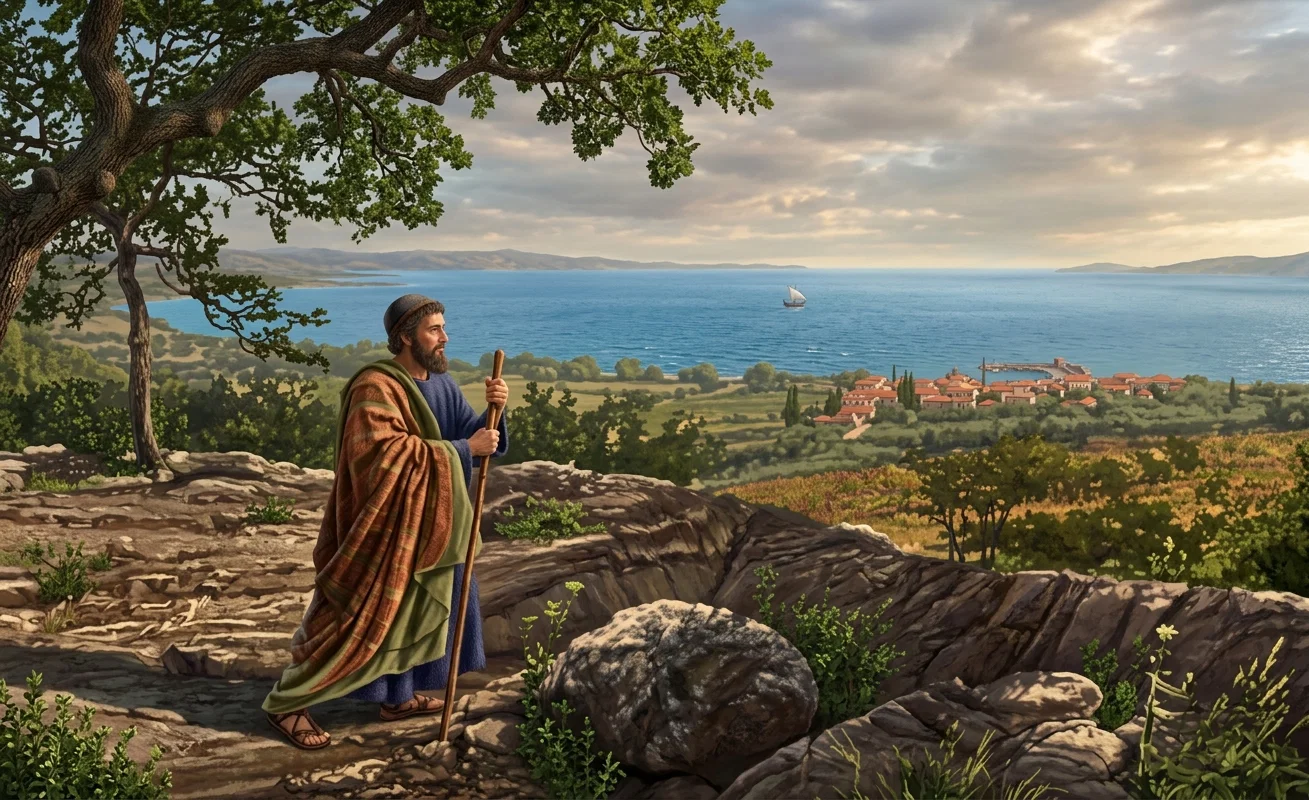
PAUL ON HIS WAY FROM TROAS TO ASSOS