“What shall we then say to these things? If God be for us, who can be against us?” Rom. 8:31.
Of all the apostles of our Lord, none did a greater work than Paul. According to his own words, he carried the gospel from Jerusalem to Illyricum, on the coast of the Adriatic; yea, he even brought the truth to the mighty city of Rome. He planted the truth in Antioch, Ephesus, Philippi, Thessalonica, Berea, Athens, and Corinth. Although he had wonderful success, yet no man ever had greater difficulties.
The secret of his success was his unbounded faith in the strong arm of God. So long as he knew God was for him, he cared not who should appear against11him. He said, in Rom. 8:35, 36: “Who shall separate us from the love of Christ? shall tribulation, or distress, or persecution, or famine, or nakedness, or peril, or sword? As it is written, For thy sake we are killed all the day long; we are accounted as sheep for the slaughter.” And notwithstanding the fact that he suffered all these things, he cried out: “Nay, in all these things we are more than conquerors through him that loved us. For I am persuaded, that neither death, nor life, nor angels, nor principalities, nor powers, nor things present, nor things to come, nor height, nor depth, nor any other creature, shall be able to separate us from the love of God, which is in Christ Jesus our Lord.” Rom. 8:37-39.
FALLS OF IMATRA, FINLAND
He not only had to battle against the powers of heathenism, but the fanatical Jews followed him and opposed him wherever he turned, even while he was working for the Gentiles. The providence of God often wonderfully pointed out the way for him, yet it was in the face of great difficulties that he frequently had to begin his work. However, the Spirit of the living God always gave him the victory.
Thus, when the vision appeared to Paul, in which he saw the man from Macedonia, crying, “Come over . . . and help us,” and he immediately went to Philippi, the chief city of that part of the country, all the hearers he could find were a few Jewish women to whom it is he could speak the word on the Sabbath day; and it was among these that he gained his first converts. But it was not long until Satan stirred up a soothsayer, to make trouble for him; for when her masters saw that the hope of their gains was gone, they stirred up the multitude against Paul and Silas, who were both quickly cast into prison. Instead of complaining and repining on account of these difficulties, the two men, with their feet fast in the stocks, and their flesh all torn and bleeding,—for they had been beaten with many stripes,—sang praises to God at midnight, in their dreary prison cell. Suddenly, there was a great earthquake, and the prison doors were thrown open, and the conduct of the apostles led the jailer to throw himself trembling at their feet, saying: “Sirs, what must I do to be saved?” The result was the conversion and baptism of the jailer and his whole family.
The two brethren had to leave Philippi, and similar experiences of trial, affliction, and persecution awaited them at Thessalonica and at Berea; but we find that everywhere, even during the short time he was permitted to labor in one place, Paul raised up churches. The reason was that when these tribulations came, he had faith in God's power, and looked upon the bright side of his experiences; he even gloried in tribulations, knowing that tribulation worketh patience; and patience, experience; and experience, hope; and hope maketh not ashamed, because through it the love of God is shed abroad in our hearts by the Holy Spirit, which is given unto us. Rom. 5:3-5. This love, which became his impelling motive in service, made Paul more than conqueror, through Him who hath loved us. And long before Paul fell at his post, he was able to say of the gospel, It is “come unto you, as it is in all the world; and bringeth forth fruit, as it doth also in you, since the day ye heard of it.” Again, he spoke of the “hope of the gospel, which ye have heard, and which was preached to every creature which is under heaven; whereof I Paul am made a minister.” Col. 1:6, 23. Even in his day, it could be said: “Have they not heard? Yes verily, their sound went into all the earth, and their words unto the ends of the world.” Rom. 10:18.
Thus Paul, with his colaborers, in spite of all the persecution and difficulty, had been able to take the gospel to the ends of the world. A similar work, under similar circumstances, is to be carried to the ends of the world in the last days, for we have received the everlasting gospel which is to be preached to every nation and kindred and tongue and people (Rev. 14:6); it is to be given by land and by sea (Rev. 10:2); and by the glory of this message the whole earth is to be lightened (Rev. 18:1); it is to be preached as a witness to all nations, and is the most definite and striking sign of the end. Matt. 24:14. It is not simply to go through the New World. While it starts in the New World with vigor and power, yet it is to extend throughout the Old World, until the very places where Paul labored shall be filled with the light—Tarsus, Damascus, Jerusalem, Antioch, Ephesus, Macedonia, Greece, and Rome.
As we now recall the early history of our mission work in the Old World, does it not bear the same characteristics, has it not encountered the same difficulties, and do we not to-day see the same victories, that accompanied the work in the beginning?
Our first missionary, Elder J. N. Andrews, did not leave America until 1874, for central Europe. When he reached that field, he found but a handful of believers. He had to learn the languages, the customs, and the manners of the people, and the means at his disposal were limited. There were scarcely a hundred Sabbath-keepers in the Old World at that time. They were not fully established in the faith. In 1877 Elder J. G. Matteson followed, going to Scandinavia. The next year Elder J. N. Loughborough was sent to Great Britain. In 1879 our first paper in this field appeared, and one year later the first conference was organized, in the small country of Denmark. That was the day of small things, not to be despised. As early as January, 1882, our first minister was imprisoned, in Orebro, Sweden. He spent eight days in confinement. The same year a second conference was organized; this time in Sweden. We then had seventeen thousand believers in the entire world, and six hundred and twenty-one of these were in Europe, as the fruit of twenty years of seed sowing and ministry. It was yet four more years (1886) before the European membership reached one thousand.
Up to that time our work had been limited to the western half of the European continent. In July, 1886, our first church was founded in Russia. Although it was harvest time, the German colonists in all the neighborhood flocked to hear the preaching of the word. As the message took hold of the people, it stirred up opposition. The authorities were notified of our presence, and the police were sent in search of us, and just as we were celebrating the Lord's12supper, we were bound, and cast into the Russian prison. Opposing ministers, as they learned of this, rejoiced, and some of them related these things in their churches. Many of their members had never heard of our work before, and this very information called their attention to the message we were proclaiming, and to-day there are strong churches in Russia whose beginning dates back to those very unfavorable reports of the ministers. God worked so wonderfully in our deliverance that, after the forty days' imprisonment had passed, the warden, who had before sneered at our faith, was compelled to admit that the Lord was with us.
The truth started among the German-speaking people, but it was only a few years until some honest Russians, who had been exiled for their belief in the Bible and in Scriptural baptism, learned of the binding claims of the law of God, and at once began to preach the truth to others. The first ordination of a Russian worker had to take place at midnight. Soon a native church of twenty members was raised up. The priests tried to stop the progress of the truth by exiling all the men of the company to the Persian border and to Siberia. When we met the wives and daughters of the exiled brethren, we asked them if they were not downcast because their loved ones had been sent away. They replied, “No; God is for us. As they have exiled all the men, we ourselves are preaching the truth. They can do nothing more than send us off, too, and then we shall be with our dear ones once more.” It was not long before the ranks of the little company were more than filled up with the newly baptized brethren, while the seed sown by those in exile began to bring forth fruit in parts of Russia where we should not have thought of sending laborers.
As the work spread farther, the Russian press issued publications against the “heresies,” stating our points of doctrine, with the Scriptures upon which these truths are based, and giving lists of our publications, as well as where such literature could be secured. Inquiring minds took up the texts, began to write us, and many are walking in the Lord's commandments who first learned of us through these warnings in the press against our work. Although some preach Christ of envy or pretense, yet we can rejoice that “Christ is preached.” Phil. 1:18.
After a few years the way opened to enter the large cities in the empire; even the capital itself was opened to us. We had to assemble quietly in private homes; the people had to come in one by one, that they might attract no attention. However, a few years ago, when we preached in St. Petersburg, a retired chief of police officer acted as our interpreter. Even lately, while there was such a reign of terror in the capital, we could hold our meetings more freely than ever, and were able to baptize twenty-three believers there. Now, our papers, even in the Russian language, are being freely circulated throughout the field, and we have scattered from the extreme north to the south, and from the east to the west of that great empire, not less than twenty-two hundred members, in five mission fields and one conference, including Finland. While it required fourteen years to gather out a thousand believers in Russia, during the last four years that number has been more than doubled.
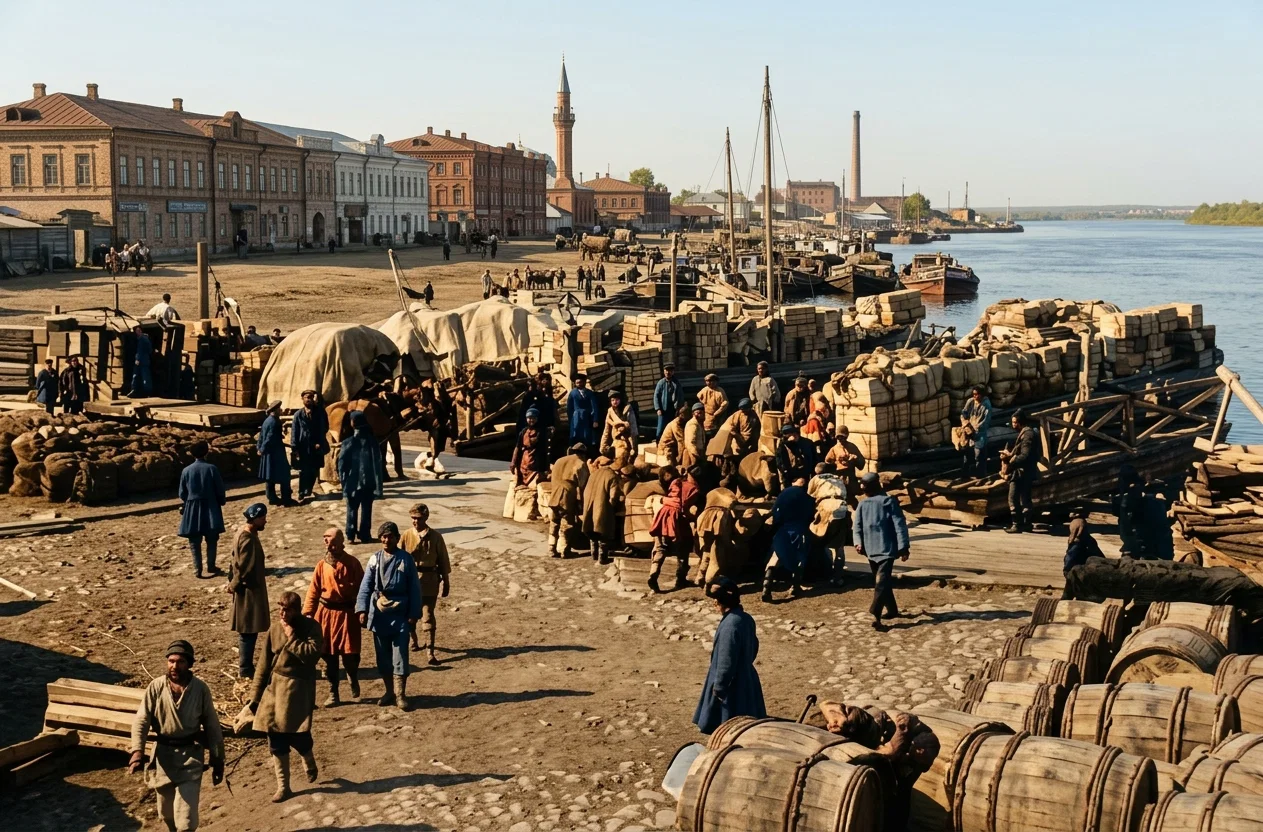
ON THE BANKS OF THE VOLGA
But this providence of God is not confined alone to eastern Europe. We see the same in Germany to-day. Although the truth sprang up spontaneously in that country, through the simple study of the Word, yet the field was thought so difficult that twenty-five years passed before it was permanently entered, in 1889. As we began with our canvassing work, we met all kinds of difficulties. For weeks and months we tried to secure permission to sell our publications. At best, we were but a handful of workers for the whole empire. Seven years passed ere we had the first thousand Sabbath-keepers. Our first conference was organized in 1898. At first our young men felt that they could not endure the trial they would have to pass through in the military service, on account of the Sabbath, so they left the country. But it seemed that the Lord did not intend for all the youth to leave a country that was so much in need of workers, and finally one brother took his stand quietly and firmly. He was imprisoned three days each week, week after week, for not serving on the Sabbath. As he would come out of the dark cell, the brightness of the sun fairly dazzled his eyes. The chaplain in the army became interested in the matter, and undertook to bring about his release. The military courts stated, in writing to us, that they never could consent to giving our young brethren the Sabbath free, in the German army. Yet the firm faith of this young man clothed him with the power of the Lord of hosts, and within a year the military authorities had to grant what they had positively refused. The young man is now proclaiming the precious truths of the Bible. Another young soldier was asked how long he had been of this faith; and when he replied, “From childhood,” they inquired whether his father had refused to do military service on the Sabbath. “Yes,” was the reply, “and he had to spend three years in prison for his refusal.” When the captain heard this, he called the young man to the front of his company, and informed his comrades that he should have the Sabbath free. This young man is also in the work to-day. Two of our nurses were likewise imprisoned, for the same offense; but they persevered, and one is a missionary in East Africa, and the other in Palestine.
There are parts of Germany, even now, where we are not allowed to pray or sing upon opening a lecture; and when churches and companies are established in spite of these restrictions, they are not allowed to hold any services on the Sabbath, nor to celebrate the Lord's supper. In different places we have to baptize at night, that it may not be known by the authorities.
And yet the truth advances rapidly. In 1902 we had two conferences and one mission field in Germany, with about two thousand one hundred members; and before the end of 1905 there will be about four thousand members, with five organized conferences, and a union district in this field. There are about two13hundred faithful canvassers at work here, and they could carry the truth into every home in the empire within two years. There are about seventy-five gospel workers. All these fields give not only their offerings to missions, but they give two tenths of their conference tithe to the regions beyond.
Within a few years we have been able to build up a well-established publishing house, printing the truth in sixteen languages, and employing about forty persons. The plant has a value of about sixty-five thousand dollars, and is nearly paid for. We have also established, and have in full operation, a mission school capable of accommodating one hundred and forty students, which is quite well filled, and have erected a well-equipped sanitarium and food factory.
We have had similar experiences in our work in Austria-Hungaria, Holland, and Flemish Belgium, and the Balkan States, where we have nearly five hundred members, gathered out during the last few years amid difficulties like those mentioned in reference to our work in the other parts of the field.
In the little republic of Switzerland, whither our first missionary was sent, we now have two conferences—the German and the Roman-Swiss—with nearly eight hundred and fifty members. The work in the Latin Union is extending into French Belgium, Italy, Spain, Portugal, and France, including Algeria, in north Africa.
As we turn our eyes northward to Scandinavia, we find that over twenty years passed there before the first thousand members had been called out. Now there are nearly two thousand five hundred in that union conference, their work having extended to Finland and Iceland, and they are now seriously contemplating sending means and men into the regions beyond.
If we turn to the British Isles, we find that after ten years' labor they had only two hundred members (1889). In 1901 they had eight hundred; they now report fifteen hundred. They are beginning to turn their eyes to the British colonies in Africa. There is not a country in the world where the truth is more widely sown through the printed page than in Great Britain, with the possible exception of the little island of Iceland, where our paper has a circulation of two thousand among eighty thousand people.
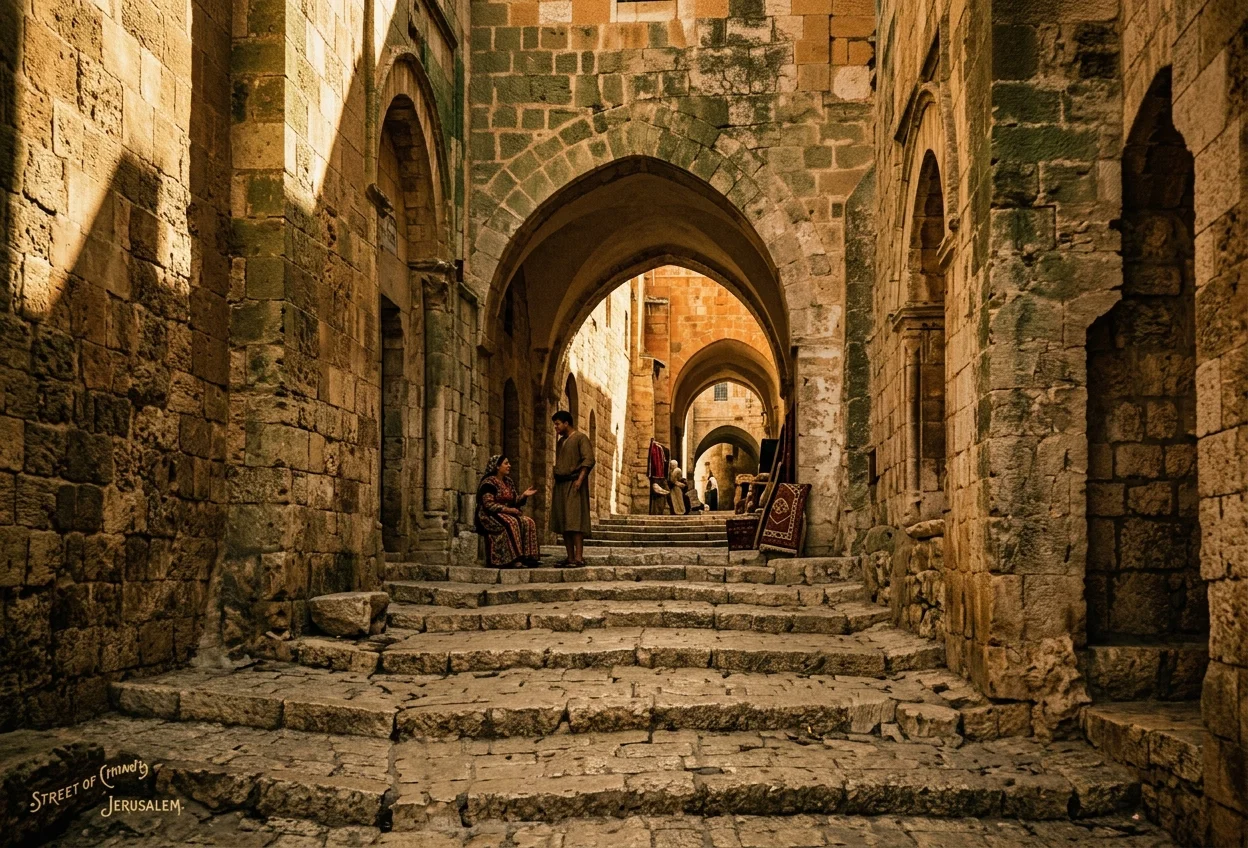
While the Lord works thus in Europe, he has by no means forsaken the very sections where Paul labored; as Macedonia, Palestine, and even Egypt, are receiving the word of God. It is now about fifteen years since we first visited the Orient, where a lay brother, laboring in a humble way as shoemaker, faithfully sowed the good seed. Through his efforts, our first minister laboring there embraced the message. Since then, the progress of the truth has been marked by every kind of opposition. The Turkish government has, by direct decree, forbidden our work, yet there is no other country in the Orient where we have more Sabbath-keepers. For a long time the leader in this field desired very much to gather his workers together, that they might have a workers' institute; but he himself was in exile, so to speak, being compelled to remain in one place. Some of our workers were cast into prison in the interior of Asia Minor, and he corresponded with them. This correspondence was intercepted by the authorities. It was interpreted in a manner contrary to its real meaning, so that the leader was in a short time sent to the same prison. Thus Providence arranged it that they could hold their institute, just as they desired. Even in the darkest hours, when it seemed that their lives were hanging in the balances, their confidence that the Lord would turn matters for the best never left them. They had been accused of being political revolutionists, and some sentences in their letters were twisted accordingly. But the Lord sent thither a higher official to inspect the prisons. He heard their case, and insisted that righteous judgment be given them. They are now again at liberty to preach the message throughout that field. Even in Tarsus of old, and the cities beyond, the truth is being proclaimed. We shall soon have three hundred believers in that section of the country. We have a small company of believers in Jaffa, and in Jerusalem, and a number in Palestine are awaiting baptism. Even ancient Egypt is hearing the truth in the language of the people (Arabic), and about thirty believers have been gathered out there.
Thus the truth is not only being spread throughout Europe, but from there it is going into Siberia, the Trans-Caucasus, Central Asia, Asia Minor, Syria, Algeria, Egypt, and down to German East Africa. This is the Lord's doing.
It required thirty years to gather out the first two thousand five hundred Sabbath-keepers in Europe. The next five years the number had nearly doubled, growing at the rate of about five hundred a year. The following five years it doubled again, growing at the rate of one thousand a year. At this writing, there are in the general European field twelve thousand believers, with an annual tithe of ninety thousand dollars, and with enough gifts and offerings to go away beyond the one-hundred-thousand-dollar mark. During the first half of the year 1905, over one thousand one hundred members were added, and the truth is being preached in almost every tongue in the various countries of Europe, and it is already reaching out into the regions beyond, in Asia and Africa. There are now not far from three hundred gospel workers proclaiming the message, and about three hundred and fifty canvassers, who, with the number laboring in our European institutions, bring up the number to about one thousand workers, backed up by eleven thousand believers. This last message is to encounter tribulation of all kinds, and obstacles of every nature; but, as in Paul's day, these things are to be overcome through the help of our God. Although the work began in weakness, yet it now is going forward in strength, and where there were at one time hundreds coming into the truth, there are now thousands. While once Europe itself seemed an undertaking altogether too great for the small handful of laborers, yet we are glad that the Lord has raised up workers here to go into the great fields beyond. The message is going by land and sea. It is to go to every kindred and tongue and people. It is now wonderfully extending its borders. Our brethren are more fully united than ever before. Their facilities are being constantly increased. But what we still greatly lack is the fulness of the outpouring of the Spirit, that the work may be finished quickly.
While we know that if God be for us, no one can be against us, yet may we, during this week of prayer, throughout the wide world become so closely knit together through his love, and so filled with his Spirit, that in a short time we may all be numbered among that company which John saw singing the song of Moses and the Lamb, and saying: “Great and marvelous are thy works, Lord God Almighty; just and true are thy ways, thou King of saints. Who shall not fear thee, O Lord, and glorify thy name? for thou only art holy; for all nations shall come and worship before thee; for thy judgments are made manifest.” Rev. 15:3, 4.