WOULD you know her name—the beloved—for whom the Son of God shed His blood, the one supreme object through all the ages upon whom He has bestowed His supreme regard? It is Ekklesia (do not mispronounce the musical name, Ek-klay-see'-a), the called-one of God; the one "regularly" called out, Ekklesia Militant, the church in conflict. Others may come forth; others may imitate her name and dress; but she comes forth in response to God's regular summons.
He came, "a Man of sorrows and acquainted with grief."
Called Out of What?
Out of the world of sin and misery and wo and darkness has God called her (1 Peter 2:9); chosen her out of the world (John 15:19); called her out from among the unbelieving, the unrighteous, the children of darkness, the idolators; separated her from the defiling, and set her apart to God (2 Cor. 6:14-17); out of Babylon, the great city of confusion and sin, has God called His beloved (Rev. 18:1-4). Not that she shall not mingle with those who know Him not has He called her; but that she shall hold to the high and holy principles of purity and truth incontaminated by the evil, and thus reveal the glory of Him who called her.
Called by What?
In no illegitimate way has God called Ekklesia to be His; it is a regular call, a summons of authority. He has called according to His own eternal "purpose and grace" (2 Tim. 1:9); He called her "by His grace," "by our Gospel," "the Gospel of the grace of God" (Gal. 1:15; 2 Thess. 2:14; Acts 20:24). He called Ekklesia to "repent . . . and believe the Gospel" (Mark 1:15), and that call of His Gospel has ever testified, "repentance toward God, and faith toward our Lord Jesus Christ" (Acts 20:21). And when the called-one responded to His summons, He "thoroughly washed" her from all her iniquity and uncleanness; He clothed her with "garments of salvation;" He covered her with the "robe of righteousness;" He decked her with the ornament of grace; He put bracelets upon her hands, a chain upon her neck, and a resplendent crown upon her head, and Ekklesia was surpassingly lovely, with the beauty of her God. Isa. 61:10; Eze. 16:8-14; Jer. 6:2.
Called from What?
And thus the beloved of God, Ekklesia, was called from uncleanness unto holiness (1 Thess. 4:7; Rom. 1:7); called from the fellowship of the world to the fellowship of His Son Jesus Christ (1 Cor. 1:9); called from the strife and unrest of passion and sin to peace (1 Cor. 7:15); called from the bondage of sin to the liberty which the Deliverer bestows (Gal. 5:13; John 8:32); called into the closest relationship to God and His Son Jesus (2 Cor. 6:18; 1 John 3:2); called to the holy citizenship of the heavenly commonwealth, and to the change which it involves (Phil. 3:20, 21, R. V.); called to the service of the keeping of the commandments of God and the faith of Jesus (Rev. 14:12); in short, called to a "holy calling," to "His kingdom and glory," to "His eternal glory" (2 Tim. 1:9; 1 Thess. 2:12; 1 Peter 5:10). To all this and much more has God called Ekklesia, His chosen bride.
Her Past History
Of wonderful interest has been the career of Ekklesia Militant, since God called her in that far-off beginning, and she called herself by "the name of Jehovah." Gen. 4:26, margin.
We may not take the time to trace her history from the time her first martyr fell in death, to her passage through the Deluge which drowned the world, to her sojourning in the tents of the pilgrim patriarchs, to her sore bondage in brick and mortar in Egypt, her wilderness wanderings while fed and nurtured of God, to her triumphant entrance into Canaan. We will not dwell on her backslidings and glory under her kings, or her captivity in Babylon, when began her travailing for the Desire of All Nations, her Son, her Deliverer. Micah 4:9, 10; 5:2, 3; Hosea 2:8. Here began her awful conflict with the Devil, the dragon of the nations (Rev. 12:1-4), who watched before the longing, expectant mother to destroy her Child as soon as He should be born.
The Deliverer
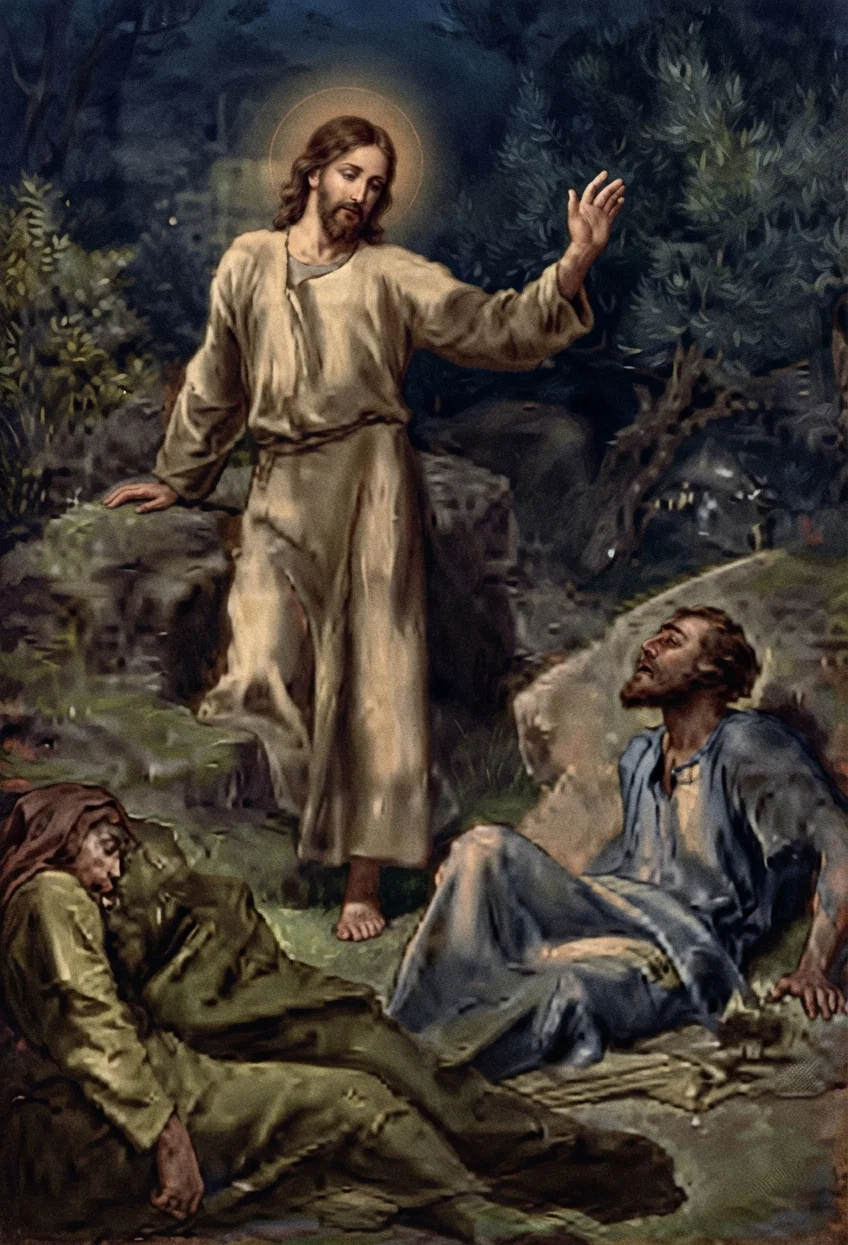
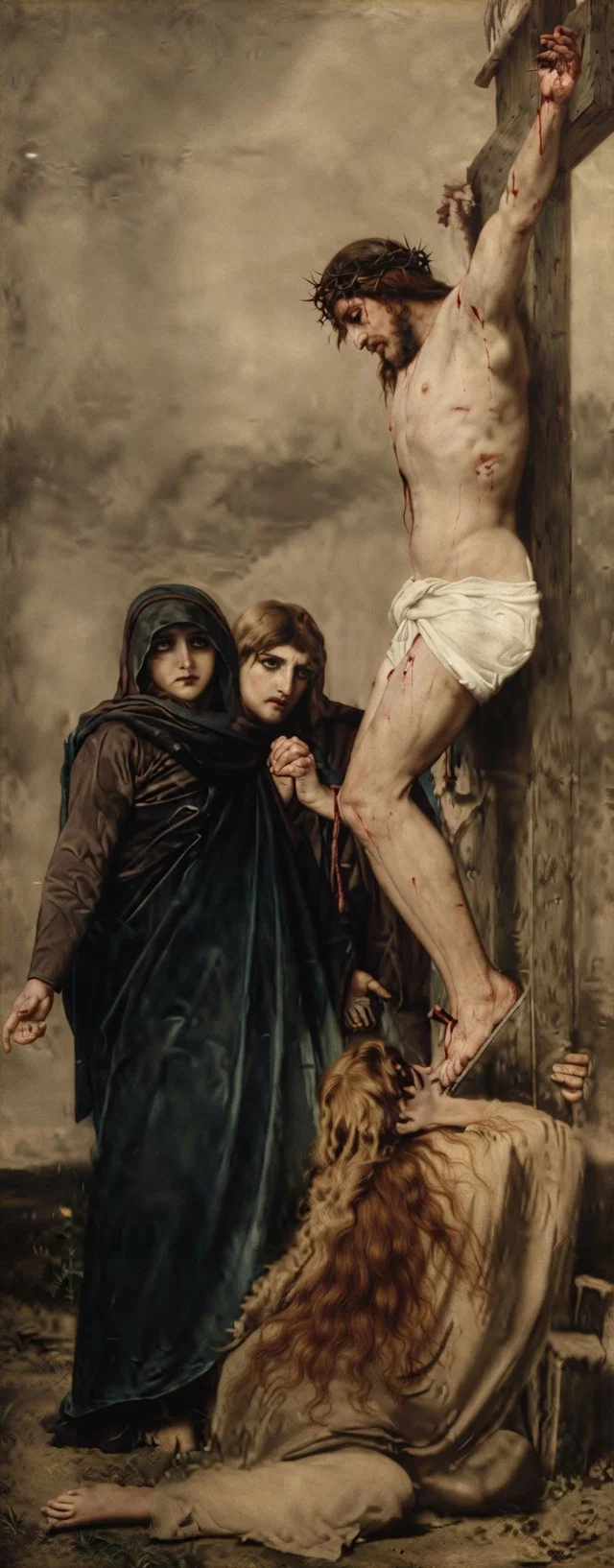
He came, "a Man of sorrows and acquainted with grief," bearing the sins and burdens of Ekklesia, that He might save her from her sins (Isaiah 53; Matt. 1:21). He labored, He prayed, He loved, He suffered, He died, to save those who caused His suffering. Even His own forsook Him when the crown of thorns was placed upon His brow. In that darkest hour of earth, Ekklesia was brought very low. She wept at the cross. She lamented by the closed grave. She felt herself bereft forever.
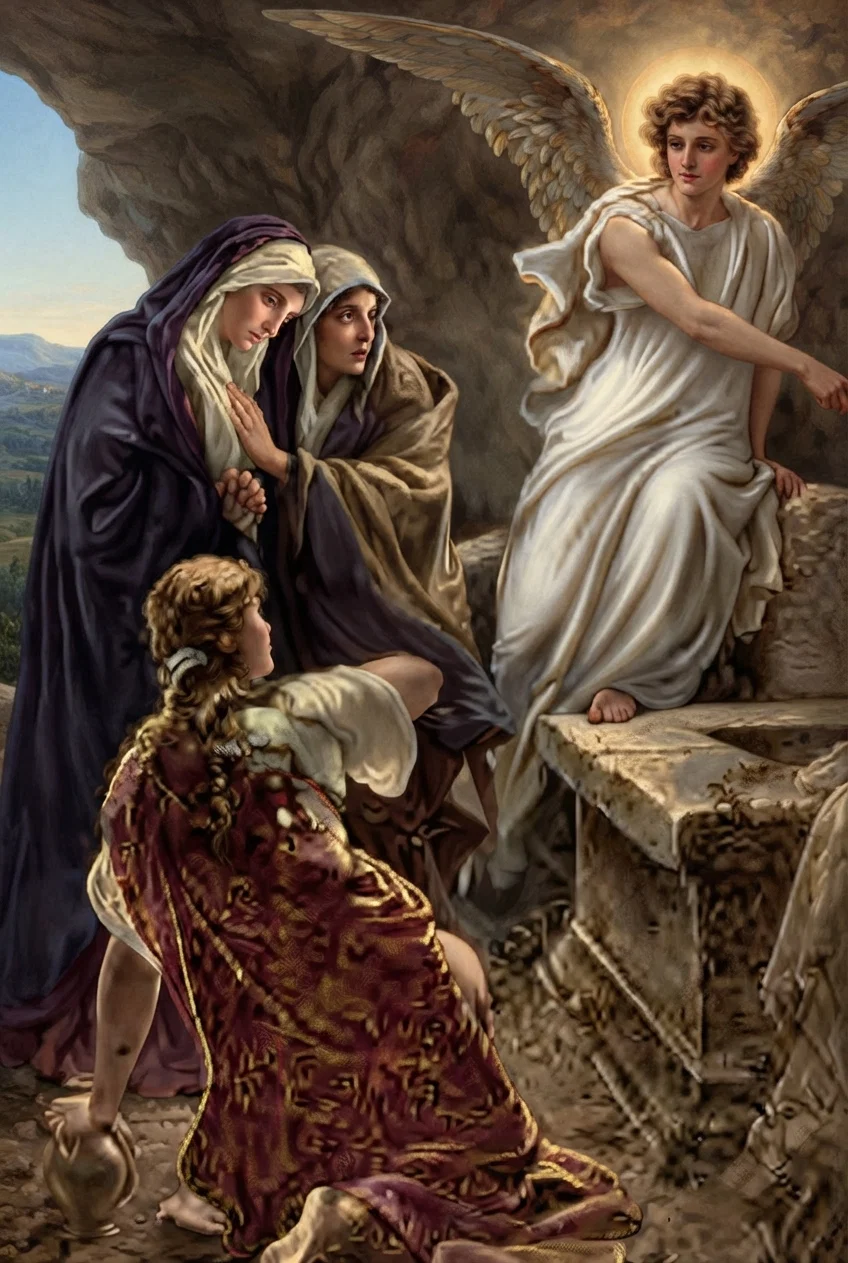
But the resurrection morn saw personified Righteousness arise triumphant from death to a seat on the right hand of God, and He counts her by His side. Eph. 2:6.
The Suffering Church
Satan, defeated by the Head of the Church, seeks to destroy those for whom Christ died. By error of every form, by artful flattery and blandishment, by prosperity, by idolatry which seemed the very messenger and worship of God, has the evil one led astray Ekklesia. The perversions of truth in the first centuries witness to his work.
The Dark Ages
The awful apostasy of apocalyptic Babylon followed. The corrupt powers of earth exalted the usurping harlot who calls herself by the name of God's chosen. Ekklesia, still the forlornly beautiful, marred as that beauty has been by Roman trappings, was driven into the wilderness, because she would not deny the all-sufficiency of her Lord. During the awful centuries of the Dark Ages her children perished in hecatombs of thousands on the smoking altars of apostasy till earth could bear the burden of guilt no longer.
The Reformation
The breath of God brought in the Reformation. Throughout all the Babylon of Rome went the summons of God to His people. He would have healed Babylon, but she would not be healed. But Ekklesia, weeping the loss of children, suffering from fierce persecution, rises in the strength of her Deliverer. The star of hope grows in her heart. The light of faith shines in her tear-dimmed eyes. She will go forward in His name. What mighty victories she wrought in all the world! How shackles were stricken from the slaves of superstition and sin! And her children grew mightily in number, and the world was almost evangelized.
But not wholly from the wilderness of error did the Church Militant come. She paused where the ragged edge of the forest of error verges on the meadow-land of truth. She tarried under the shade of venerable superstitions. She plucked the fruit of hoary sophistries. She carried baleful seeds of error to sow among the plants of God's husbandry. She patronized the philosophers of paganized worldly wisdom, till God's calls were glossed, and perverted, and made of none effect. Proud, popular, rich; flattered, fed, and fostered by princes of Babylon, she stands to-day, till from Babylon's sons and daughters the sons and daughters of Ekklesia are almost indistinguishable.
God's Last Threefold Call
Yet God is calling still. "Babylon is fallen, is fallen; come out of her My people, that ye be not partakers of her sins, and receive not of her plagues."
And the children of God are heeding that call. In all the world it is sounding; from all the world come responses from the faithful sons and daughters of God. They are breaking ties of life-standing, they are bearing reproach, contumely, isolation, persecution, that they may heed God's last threefold Gospel-summons of Revelation 14. They are imperfect, but learning. They are weak, but are12gathering strength. They are casting off error and opening hearts to the rays of light from the beaming, glowing Word of God's truth. Their own ranks are thinned at times by trials, by apostasy. Sadness fills her heart as her children leave her, but their places are filled. There are still many Seths to take the places of the Cains.
No longer is Ekklesia following the philosophy of the human, but the Word of the living God. No longer is she seeking in the musty tomes and vaults for the traditions and precepts of men, but in the pathway of her Deliverer she is walking in "the commandments of God, and the faith of Jesus." With God's justification for sin, Christ's self-denial for selfishness, the Spirit's power for service, the Word of God for guide—what more can she ask? The gifts of the Spirit are hers in this last conflict, as she waits for the coming of her Lord. And in her history we are beginning to see fulfilled the reply to the beautiful and suggestive questions of the Song of Songs:
"Who is this that cometh up from the wilderness,
Leaning upon her beloved?"
This was Ekklesia from the Reformation.
"Who is she that looketh forth as the morning,
Fair as the moon,
Clear as the sun,
Terrible as an army with banners?"
And this is God's remnant church, the beautiful Ekklesia in her latest triumph. Persecuted tho she and her children are, all "the nations shall see and be confounded at all their might. . . . They shall be afraid of the Lord our God, and shall fear because of Thee." Micah 7:16-19. The sons of Zion—taught of God, not men—shall have their piety, and power, and knowledge in Him, set against the sons of Grecia (worldly wisdom), and their culture, philosophy, wealth, education, and numbers. And God shall go with the sons of Zion, and make them "as the sword of a mighty man. And Jehovah shall be seen over them; and His arrow shall go forth as the lightning. . . . Jehovah of hosts will defend them. . . . And Jehovah their God shall save them in that day as the flock of His people; for they shall be as the stones of a crown, lifted up as an ensign upon His land. For how great is His goodness, and how great is His beauty? Zech. 9:13-17.
"The resurrection morn saw personified Righteousness arise triumphant."
Then the slavery and bondage of earth will give way to the liberty and freedom of the land of God. The crown of thorns will be removed, and the coronet of triumph and righteousness and life shall crown the Beloved of Christ forever. The persecution, the sickness, the weariness, the death, the wo, the misery, the lamentation and weeping, shall forever depart, and in their place shall be seen and heard in all their effulgent beauty the blessing and life and health of God—"thanksgiving and the voice of melody." Christ has redeemed His own.
The purchase of His blood will go out no more forever. In that triumph-land, the earth made new, shall be "no more curse." Their song henceforth is "Alleluia, the Lord God Omnipotent reigneth." "The King's daughter within the palace [the purified Ekklesia] is all glorious; her clothing is inwrought with gold. She shall be led unto the King in broidered work." And the beautiful robes are the righteousness bestowed by her divine Lord. It is triumph, holy triumph forevermore.
“He suffered, He died, to save those who caused His suffering.”
It costs something, humanly considered, to be the children of Ekklesia Militant here; it will be the loss of everything not to be the children of Ekklesia Triumphant there. But to be in the church triumphant in heaven, we must be in the church militant on earth.