While drawing crowded houses of intelligent and attentive hearers, Miller’s name was seldom mentioned by the religious press except by way of ridicule or denunciation. The careless and ungodly, emboldened by the position of religious teachers, resorted to opprobrious epithets, to base and blasphemous witticisms, in their efforts to heap contumely upon him and his work. The gray-headed man who had left a comfortable home to travel at his own expense from city to city, from town to town, toiling unceasingly to bear to the world the solemn warning of the Judgment near, was sneeringly denounced as a fanatic, a liar, a speculating knave.
The ridicule, falsehood, and abuse heaped upon him called forth indignant remonstrance, even from the secular press. To treat a subject of such overwhelming majesty and fearful consequences, with lightness and ribaldry, was declared by worldly men to be not merely to sport with the feelings of its advocates, but “to make a jest of the day of Judgment, to scoff at God himself, and to mock the terrors of his Judgment-bar.”
The instigator of all evil sought not only to counteract the effect of the Advent message, but to destroy the messenger himself. Miller made a practical application of Scripture truth to the hearts of his hearers, reproving their sins, and disturbing their self-satisfaction, and his plain and cutting words aroused their enmity. The opposition manifested by church-members toward his message, emboldened the baser classes to go to greater lengths; and enemies plotted to take his life as he should leave the place of337meeting. But holy angels were in the throng, and one of these, in the form of a man, took the arm of this servant of the Lord, and led him in safety from the angry mob. His work was not yet done, and Satan and his emissaries were disappointed in their purpose.
Despite all opposition, the interest in the Advent movement had continued to increase. From scores and hundreds, the congregations had grown to as many thousands. Large accessions had been made to the various churches, but after a time the spirit of opposition was manifested even against these converts, and the churches began to take disciplinary steps with those who had embraced Miller’s views. This action called forth a response from his pen, in an address to Christians of all denominations, urging that if his doctrines were false he should be shown his error from the Scriptures.
“What have we believed,” he said, “that we have not been commanded to believe by the Word of God, which you yourselves allow is the rule, and the only rule, of our faith and practice? What have we done that should call down such virulent denunciations against us from pulpit and press, and give you just cause to exclude us [Adventists] from your church and fellowship?” “If we are wrong, pray show us wherein consists our wrong. Show us from the Word of God that we are in error; we have had ridicule enough; that can never convince us that we are in the wrong; the Word of God alone can change our views. Our conclusions have been formed deliberately and prayerfully, as we have seen the evidence in the Scriptures.”
From age to age the warnings which God has sent to the world by his servants have been received with like incredulity and unbelief. When the iniquity of the antediluvians moved him to bring a flood of waters upon the earth, he first made known to them his purpose, that they might have opportunity to turn from their evil ways. For a hundred and twenty years was sounded in their ears the warning to repent, lest the wrath of God be manifested in their destruction.338But the message seemed to them an idle tale, and they believed it not. Emboldened in their wickedness, they mocked the messenger of God, made light of his entreaties, and even accused him of presumption. How dare one man stand up against all the great men of the earth? If Noah’s message were true, why did not all the world see it and believe it? One man’s assertion against the wisdom of thousands! They would not credit the warning, nor would they seek shelter in the ark.
Scoffers pointed to the things of nature,—to the unvarying succession of the seasons, to the blue skies that had never poured out rain, to the green fields refreshed by the soft dews of night,—and they cried out, “Doth he not speak parables?” In contempt they declared the preacher of righteousness to be a wild enthusiast; and they went on, more eager in their pursuit of pleasure, more intent upon their evil ways, than ever before. But their unbelief did not hinder the predicted event. God bore long with their wickedness, giving them ample opportunity for repentance; but at the appointed time his judgments were visited upon the rejecters of his mercy.
Christ declares that there will exist similar unbelief concerning his second coming. As the people of Noah’s day “knew not until the flood came, and took them all away; so,” in the words of our Saviour, “shall also the coming of the Son of man be.” When the professed people of God are uniting with the world, living as they live, and joining with them in forbidden pleasure; when the luxury of the world becomes the luxury of the church; when the marriage bells are chiming, and all are looking forward to many years of worldly prosperity,—then, suddenly as the lightning flashes from the heavens, will come the end of their bright visions and delusive hopes.
As God sent his servant to warn the world of the coming flood, so he sent chosen messengers to make known the nearness of the final Judgment. And as Noah’s contemporaries339laughed to scorn the predictions of the preacher of righteousness, so in Miller’s day many, even of the professed people of God, scoffed at the words of warning.
And why were the doctrine and preaching of Christ’s second coming so unwelcome to the churches? While to the wicked the advent of the Lord brings woe and desolation, to the righteous it is fraught with joy and hope. This great truth had been the consolation of God’s faithful ones through all the ages; why had it become, like its Author, “a stone of stumbling and a rock of offense” to his professed people? It was our Lord himself who promised his disciples, “If I go and prepare a place for you, I will come again, and receive you unto myself.” It was the compassionate Saviour, who, anticipating the loneliness and sorrow of his followers, commissioned angels to comfort them with the assurance that he would come again in person, even as he went into heaven. As the disciples stood gazing intently upward to catch the last glimpse of him whom they loved, their attention was arrested by the words, “Ye men of Galilee, why stand ye gazing up into heaven? this same Jesus, which is taken up from you into heaven, shall so come in like manner as ye have seen him go into heaven.” Hope was kindled afresh by the angels’ message. The disciples “returned to Jerusalem with great joy, and were continually in the temple, praising and blessing God.” They were not rejoicing because Jesus had been separated from them and they were left to struggle with the trials and temptations of the world, but because of the angels’ assurance that he would come again.
The proclamation of Christ’s coming should now be, as when made by the angels to the shepherds of Bethlehem, good tidings of great joy. Those who really love the Saviour cannot but hail with gladness the announcement founded upon the Word of God, that he in whom their hopes of eternal life are centered, is coming again, not to be insulted,340despised, and rejected, as at his first advent, but in power and glory, to redeem his people. It is those who do not love the Saviour, that desire him to remain away; and there can be no more conclusive evidence that the churches have departed from God than the irritation and animosity excited by this Heaven-sent message.
Those who accepted the Advent doctrine were roused to the necessity of repentance and humiliation before God. Many had long been halting between Christ and the world; “now they felt that it was time to take a stand. The things of eternity assumed to them an unwonted reality. Heaven was brought near, and they felt themselves guilty before God. Christians were quickened to new spiritual life. They were made to feel that time was short, that what they had to do for their fellow-men must be done quickly. Earth receded, eternity seemed to open before them, and the soul, with all that pertains to its immortal weal or woe, was felt to eclipse every temporal object.” The Spirit of God rested upon them, and gave power to their earnest appeals to their brethren, as well as to sinners, to prepare for the day of God. The silent testimony of their daily life was a constant rebuke to formal and unconsecrated church-members. These did not wish to be disturbed in their pursuit of pleasure, their devotion to money-making, and their ambition for worldly honor. Hence the enmity and opposition excited against the Advent faith and those who proclaimed it.
As the arguments from the prophetic periods were found to be impregnable, opposers endeavored to discourage investigation of the subject, by teaching that the prophecies were sealed. Thus Protestants followed in the steps of Romanists. While the papal church withholds the Bible from the people, Protestant churches claimed that an important part of the sacred Word—and that the part which brings to view truths specially applicable to our time—could not be understood.
Ministers and people declared that the prophecies of341Daniel and the Revelation were incomprehensible mysteries. But Christ directed his disciples to the words of the prophet Daniel concerning events to take place in their time, and said, “Whoso readeth, let him understand.” And the assertion that the Revelation is a mystery, not to be understood, is contradicted by the very title of the book: “The Revelation of Jesus Christ, which God gave unto him, to show unto his servants things which must shortly come to pass. . . . Blessed is he that readeth, and they that hear the words of this prophecy, and keep those things which are written therein; for the time is at hand.”
Says the prophet: “Blessed is he that readeth”—there are those who will not read; the blessing is not for them. “And they that hear”—there are some, also, who refuse to hear anything concerning the prophecies; the blessing is not for this class. “And keep those things which are written therein”—many refuse to heed the warnings and instructions contained in the Revelation. None of these can claim the blessing promised. All who ridicule the subjects of the prophecy, and mock at the symbols here solemnly given, all who refuse to reform their lives, and prepare for the coming of the Son of man, will be unblest.
In view of the testimony of Inspiration, how dare men teach that the Revelation is a mystery, beyond the reach of human understanding? It is a mystery revealed, a book opened. The study of the Revelation directs the mind to the prophecies of Daniel, and both present most important instruction, given of God to men, concerning events to take place at the close of this world’s history.
To John were opened scenes of deep and thrilling interest in the experience of the church. He saw the position, dangers, conflicts, and final deliverance of the people of God. He records the closing messages which are to ripen the harvest of the earth, either as sheaves for the heavenly garner or as fagots for the fires of destruction. Subjects of vast342importance were revealed to him, especially for the last church, that those who should turn from error to truth might be instructed concerning the perils and conflicts before them. None need be in darkness in regard to what is coming upon the earth.
Why, then, this widespread ignorance concerning an important part of Holy Writ? Why this general reluctance to investigate its teachings? It is the result of a studied effort of the prince of darkness to conceal from men that which reveals his deceptions. For this reason, Christ the Revelator, foreseeing the warfare that would be waged against the study of the Revelation, pronounced a blessing upon all who should read, hear, and observe the words of the prophecy.
CHAPTER XIX.
LIGHT THROUGH DARKNESS.
The work of God in the earth presents, from age to age, a striking similarity in every great reformation or religious movement. The principles of God’s dealing with men are ever the same. The important movements of the present have their parallel in those of the past, and the experience of the church in former ages has lessons of great value for our own time.
No truth is more clearly taught in the Bible than that God by his Holy Spirit especially directs his servants on earth in the great movements for the carrying forward of the work of salvation. Men are instruments in the hand of God, employed by him to accomplish his purposes of grace and mercy. Each has his part to act; to each is granted a measure of light, adapted to the necessities of his time, and sufficient to enable him to perform the work which God has given him to do. But no man, however honored of Heaven, has ever attained to a full understanding of the great plan of redemption, or even to a perfect appreciation of the divine purpose in the work for his own time. Men do not fully understand what God would accomplish by the work which he gives them to do; they do not comprehend, in all its bearings, the message which they utter in his name.
“Canst thou by searching find out God? canst thou find out the Almighty unto perfection?” “My thoughts are not your thoughts, neither are your ways my ways, saith the Lord. For as the heavens are higher than the earth, so are my ways higher than your ways, and my thoughts than your thoughts” “I am God, and there is none like me,344declaring the end from the beginning, and from ancient times the things that are not yet done.”
Even the prophets who were favored with the special illumination of the Spirit, did not fully comprehend the import of the revelations committed to them. The meaning was to be unfolded, from age to age, as the people of God should need the instruction therein contained.
Peter, writing of the salvation brought to light through the gospel, says: Of this salvation “the prophets have inquired and searched diligently, who prophesied of the grace that should come unto you; searching what, or what manner of time the Spirit of Christ which was in them did signify, when it testified beforehand the sufferings of Christ, and the glory that should follow. Unto whom it was revealed, that not unto themselves, but unto us they did minister.”
Yet while it was not given to the prophets to understand fully the things revealed to them, they earnestly sought to obtain all the light which God had been pleased to make manifest. They “inquired and searched diligently,” “searching what, or what manner of time the Spirit of Christ which was in them did signify.” What a lesson to the people of God in the Christian age, for whose benefit these prophecies were given to his servants! “Unto whom it was revealed that not unto themselves, but unto us they did minister.” Witness those holy men of God as they “inquired and searched diligently” concerning revelations given them for generations that were yet unborn. Contrast their holy zeal with the listless unconcern with which the favored ones of later ages treat this gift of Heaven. What a rebuke to the ease-loving, world-loving indifference which is content to declare that the prophecies cannot be understood.
Though the finite minds of men are inadequate to enter into the counsels of the Infinite One, or to fully understand the working out of his purposes, yet often it is because of345some error or neglect on their own part, that they so dimly comprehend the messages of Heaven. Not infrequently the minds of the people—and even of God’s servants—are blinded by human opinions, the traditions and false teaching of men, so that they are able only partially to grasp the great things which he has revealed in his Word. Thus it was with the disciples of Christ, even when the Saviour was with them in person. Their minds had become imbued with the popular conception of the Messiah as a temporal prince, who was to exalt Israel to the throne of universal empire, and they could not understand the meaning of his words foretelling his sufferings and death.
THE DISAPPOINTMENT OF THE DISCIPLES.
Christ himself had sent them forth with the message, “The time is fulfilled, and the kingdom of God is at hand; repent ye, and believe the gospel.” That message was based on the prophecy of Daniel 9. The sixty-nine weeks were declared by the angel to extend to “the Messiah the Prince,” and with high hopes and joyful anticipations the disciples looked forward to the establishment of Messiah’s kingdom at Jerusalem, to rule over the whole earth.
They preached the message which Christ had committed to them, though they themselves misapprehended its meaning. While their announcement was founded on Dan. 9:25, they did not see, in the next verse of the same chapter, that Messiah was to be cut off. From their very birth their hearts had been set upon the anticipated glory of an earthly empire, and this blinded their understanding alike to the specifications of the prophecy and to the words of Christ.
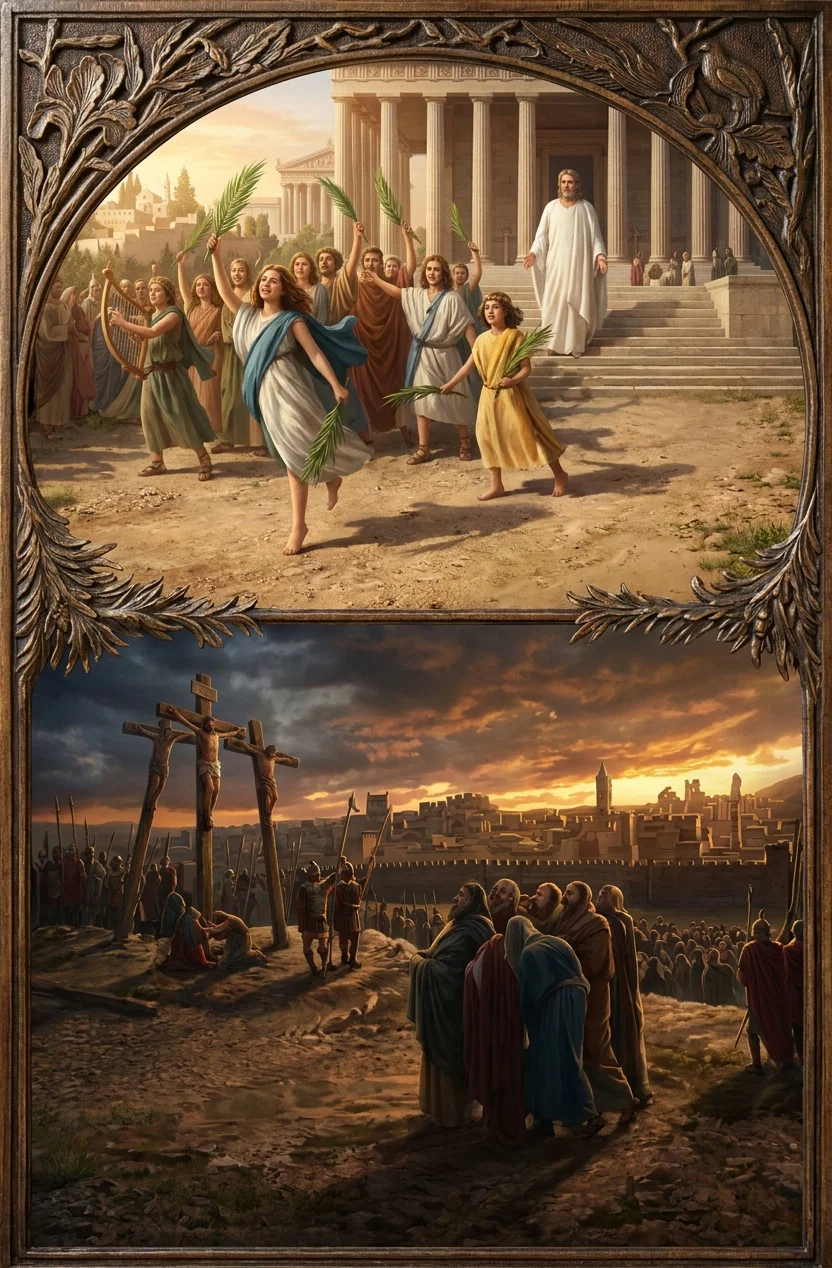
They performed their duty in presenting to the Jewish nation the invitation of mercy, and then, at the very time when they expected to see their Lord ascend the throne of David, they beheld him seized as a malefactor, scourged, derided, and condemned, and lifted up on the cross of Calvary. What despair and anguish wrung the hearts of those disciples during the days while their Lord was sleeping in the tomb!
Christ had come at the exact time and in the manner foretold by prophecy. The testimony of Scripture had been fulfilled in every detail of his ministry. He had preached the message of salvation, and “his word was with power.” The hearts of his hearers had witnessed that it was of Heaven. The Word and the Spirit of God attested the divine commission of his Son.
The disciples still clung with undying affection to their beloved Master. And yet their minds were shrouded in uncertainty and doubt. In their anguish they did not then recall the words of Christ pointing forward to his suffering and death. If Jesus of Nazareth had been the true Messiah, would they have been thus plunged in grief and disappointment? This was the question that tortured their souls, while the Saviour lay in his sepulcher during the hopeless hours of that Sabbath which intervened between his death and his resurrection.
Though the night of sorrow gathered dark about these followers of Jesus, yet were they not forsaken. Saith the prophet: “When I sit in darkness, the Lord shall be a light unto me. . . . He will bring me forth to the light, and I shall behold his righteousness.” “Yea, the darkness hideth not from thee; but the night shineth as the day; the darkness and the light are both alike to thee.” God hath spoken: “Unto the upright there ariseth light in the darkness.” “I will bring the blind by a way that they knew not; I will lead them in paths that they have not known. I will make darkness light before them, and crooked things straight. These things will I do unto them, and not forsake them.”
The announcement which had been made by the disciples in the name of the Lord was in every particular correct, and the events to which it pointed were even then taking place. “The time is fulfilled, the kingdom of God is at hand,” had been their message. At the expiration of “the time”—the sixty-nine weeks of Daniel 9, which were to extend347to the Messiah, “the Anointed One”—Christ had received the anointing of the Spirit, after his baptism by John in Jordan. And the “kingdom of God” which they had declared to be at hand, was established by the death of Christ. This kingdom was not, as they had been taught to believe, an earthly empire. Nor was it that future, immortal kingdom which shall be set up when “the kingdom and dominion, and the greatness of the kingdom under the whole heaven, shall be given to the people of the saints of the Most High;” that everlasting kingdom, in which “all dominions shall serve and obey him.” As used in the Bible, the expression “kingdom of God” is employed to designate both the kingdom of grace and the kingdom of glory. The kingdom of grace is brought to view by Paul in the Epistle to the Hebrews. After pointing to Christ, the compassionate intercessor who is “touched with the feeling of our infirmities,” the apostle says, “Let us therefore come boldly unto the throne of grace, that we may obtain mercy, and find grace.” The throne of grace represents the kingdom of grace; for the existence of a throne implies the existence of a kingdom. In many of his parables, Christ uses the expression, “the kingdom of Heaven,” to designate the work of divine grace upon the hearts of men.
So the throne of glory represents the kingdom of glory, and this kingdom is referred to in the Saviour’s words, “When the Son of man shall come in his glory, and all the holy angels with him, then shall he sit upon the throne of his glory; and before him shall be gathered all nations.” This kingdom is yet future. It is not to be set up until the second advent of Christ.
The kingdom of grace was instituted immediately after the fall of man, when a plan was devised for the redemption of the guilty race. It then existed in the purpose and by the promise of God; and through faith, men could become its subjects. Yet it was not actually established until the348death of Christ. Even after entering upon his earthly mission, the Saviour, wearied with the stubbornness and ingratitude of men, might have drawn back from the sacrifice of Calvary. In Gethsemane the cup of woe trembled in his hand. He might even then have wiped the blood-sweat from his brow, and have left the guilty race to perish in their iniquity. Had he done this, there could have been no redemption for fallen men. But when the Saviour yielded up his life, and with his expiring breath cried out, “It is finished,” then the fulfillment of the plan of redemption was assured. The promise of salvation made to the sinful pair in Eden was ratified. The kingdom of grace, which had before existed by the promise of God, was then established.
Thus the death of Christ—the very event which the disciples had looked upon as the final destruction of their hope—was that which made it forever sure. While it had brought them a cruel disappointment, it was the climax of proof that their belief had been correct. The event that had filled them with mourning and despair, was that which opened the door of hope to every child of Adam, and in which centered the future life and eternal happiness of all God’s faithful ones in all the ages.
Purposes of infinite mercy were reaching their fulfillment, even through the disappointment of the disciples. While their hearts had been won by the divine grace and power of His teaching, who “spake as never man spake,” yet intermingled with the pure gold of their love for Jesus, was the base alloy of worldly pride and selfish ambitions. Even in the passover chamber, at that solemn hour when their Master was already entering the shadow of Gethsemane, there was “a strife among them, which of them should be accounted the greatest.” Their vision was filled with the throne, the crown, and the glory, while just before them lay the shame and agony of the garden, the judgment-hall, the cross of Calvary. It was their pride of heart, their thirst for worldly glory, that had led them to cling so tenaciously to349the false teaching of their time, and to pass unheeded the Saviour’s words showing the true nature of his kingdom, and pointing forward to his agony and death. And these errors resulted in the trial—sharp but needful—which was permitted for their correction. Though the disciples had mistaken the meaning of their message, and had failed to realize their expectations, yet they had preached the warning given them of God, and the Lord would reward their faith, and honor their obedience. To them was to be intrusted the work of heralding to all nations the glorious gospel of their risen Lord. It was to prepare them for this work, that the experience which seemed to them so bitter had been permitted.
After his resurrection, Jesus appeared to his disciples on the way to Emmaus, and “beginning at Moses and all the prophets, he expounded unto them in all the Scriptures the things concerning himself.” The hearts of the disciples were stirred. Faith was kindled. They were “begotten again unto a lively hope,” even before Jesus revealed himself to them. It was his purpose to enlighten their understanding, and to fasten their faith upon the “sure word of prophecy.” He wished the truth to take firm root in their minds, not merely because it was supported by his personal testimony, but because of the unquestionable evidence presented by the symbols and shadows of the typical law, and by the prophecies of the Old Testament. It was needful for the followers of Christ to have an intelligent faith, not only in their own behalf, but that they might carry the knowledge of Christ to the world. And as the very first step in imparting this knowledge, Jesus directed the disciples to “Moses and the prophets.” Such was the testimony given by the risen Saviour to the value and importance of the Old-Testament Scriptures.
What a change was wrought in the hearts of the disciples, as they looked once more on the loved countenance of their Master! In a more complete and perfect sense than350ever before, they had “found him, of whom Moses in the law, and the prophets, did write.” The uncertainty, the anguish, the despair, gave place to perfect assurance, to unclouded faith. What marvel that after his ascension they “were continually in the temple, praising and blessing God.” The people, knowing only of the Saviour’s ignominious death, looked to see in their faces the expression of sorrow, confusion, and defeat; but they saw there gladness and triumph. What a preparation these disciples had received for the work before them! They had passed through the deepest trial which it was possible for them to experience, and had seen how, when to human vision all was lost, the word of God had been triumphantly accomplished. Henceforward what could daunt their faith, or chill the ardor of their love? In the keenest sorrow they had “strong consolation,” a hope which was as “an anchor of the soul, both sure and steadfast.” They had been witness to the wisdom and power of God, and they were “persuaded, that neither death, nor life, nor angels, nor principalities, nor powers, nor things present, nor things to come, nor height, nor depth, nor any other creature” would be able to separate them from “the love of God, which is in Christ Jesus our Lord.” “In all these things,” they said, “we are more than conquerors through Him that loved us.” “The Word of the Lord endureth forever.” And “who is he that condemneth? It is Christ that died, yea rather, that is risen again, who is even at the right hand of God, who also maketh intercession for us.”
Saith the Lord: “My people shall never be ashamed.” “Weeping may endure for a night, but joy cometh in the morning.” When on his resurrection day these disciples met the Saviour, and their hearts burned within them as they listened to his words; when they looked upon the head and hands and feet that had been bruised for them; when, before his ascension, Jesus led them out as far as Bethany,351and, lifting up his hands in blessing, bade them, “Go ye into all the world, and preach the gospel,” adding, “Lo, I am with you alway;” when on the day of Pentecost the promised Comforter descended, and the power from on high was given, and the souls of the believers thrilled with the conscious presence of their ascended Lord, —then, even though, like his, their pathway led through sacrifice and martyrdom, would they have exchanged the ministry of the gospel of his grace, with the “crown of righteousness” to be received at his coming, for the glory of an earthly throne, which had been the hope of their earlier discipleship? He who is “able to do exceeding abundantly above all that we ask or think,” had granted them, with the fellowship of His sufferings, the communion of his joy,—the joy of “bringing many sons unto glory,” joy unspeakable, “an eternal weight of glory,” to which, says Paul, “our light affliction, which is but for a moment,” is “not worthy to be compared.”
The experience of the disciples who preached the “gospel of the kingdom” at the first advent of Christ, has its counterpart in the experience of those who proclaimed the message of his second advent. As the disciples went out preaching, “The time is fulfilled, the kingdom of God is at hand,” so Miller and his associates proclaimed that the longest and last prophetic period brought to view in the Bible was about to expire, that the Judgment was at hand, and the everlasting kingdom was to be ushered in. The preaching of the disciples in regard to time was based on the seventy weeks of Daniel 9. The message given by Miller and his associates announced the termination of the 2300 days of Dan. 8: 14, of which the seventy weeks form a part. The preaching of each was based upon the fulfillment of a different portion of the same great prophetic period.
Like the first disciples, William Miller and his associates did not, themselves, fully comprehend the import of the message which they bore. Errors that had been long established in the church prevented them from arriving at a correct352interpretation of an important point in the prophecy. Therefore, though they proclaimed the message which God had committed to them to be given to the world, yet through a misapprehension of its meaning, they suffered disappointment.
In explaining Dan. 8:14, “Unto two thousand and three hundred days, then shall the sanctuary be cleansed,” Miller, as has been stated, adopted the generally received view that the earth is the sanctuary, and he believed that the cleansing of the sanctuary represented the purification of the earth by fire at the coming of the Lord. When, therefore, he found that the close of the 2300 days was definitely foretold, he concluded that this revealed the time of the second advent. His error resulted from accepting the popular view as to what constitutes the sanctuary.
In the typical system,—which was a shadow of the sacrifice and priesthood of Christ,—the cleansing of the sanctuary was the last service performed by the high priest in the yearly round of ministration. It was the closing work of the atonement,—a removal or putting away of sin from Israel. It prefigured the closing work in the ministration of our High Priest in Heaven, in the removal or blotting out of the sins of his people, which are registered in the heavenly records. This service involves a work of investigation, a work of judgment; and it immediately precedes the coming of Christ in the clouds of heaven with power and great glory; for when he comes, every case has been decided. Says Jesus, “My reward is with me, to give every man according as his work shall be.” It is this work of judgment, immediately preceding the second advent, that is announced in the first angel’s message of Rev. 14:7: “Fear God, and give glory to him; for the hour of his Judgment is come.”
Those who proclaimed this warning gave the right message at the right time. But as the early disciples declared, “The time is fulfilled, and the kingdom of God is at hand,”353based on the prophecy of Daniel 9, while they failed to perceive that the death of the Messiah was foretold in the same scripture, so Miller and his associates preached the message based on Dan. 8:14 and Rev. 14:7, and failed to see that there were still other messages brought to view in Revelation 14, which were also to be given before the advent of the Lord. As the disciples were mistaken in regard to the kingdom to be set up at the end of the seventy weeks, so Adventists were mistaken in regard to the event to take place at the expiration of the 2300 days. In both cases there was an acceptance of, or rather an adherence to, popular errors that blinded the mind to the truth. Both classes fulfilled the will of God in delivering the message which he desired to be given, and both, through their own misapprehension of their message, suffered disappointment.
Yet God accomplished his own beneficent purpose in permitting the warning of the Judgment to be given just as it was. The great day was at hand, and in his providence the people were brought to the test of a definite time, in order to reveal to them what was in their hearts. The message was designed for the testing and purification of the church. They were to be led to see whether their affections were set upon this world or upon Christ and Heaven. They professed to love the Saviour; now they were to prove their love. Were they ready to renounce their worldly hopes and ambitions, and welcome with joy the advent of their Lord? The message was designed to enable them to discern their true spiritual state; it was sent in mercy to arouse them to seek the Lord with repentance and humiliation.
The disappointment also, though the result of their own misapprehension of the message which they gave, was to be overruled for good. It would test the hearts of those who had professed to receive the warning. In the face of their disappointment, would they rashly give up their experience, and cast away their confidence in God’s Word? or would they, in prayer and humility, seek to discern where they had354failed to comprehend the significance of the prophecy? How many had moved from fear, or from impulse and excitement? How many were half-hearted and unbelieving? Multitudes professed to love the appearing of the Lord. When called to endure the scoffs and reproach of the world, and the test of delay and disappointment, would they renounce the faith? Because they did not immediately understand the dealings of God with them, would they cast aside truths sustained by the clearest testimony of his Word?
This test would reveal the strength of those who with real faith had obeyed what they believed to be the teaching of the Word and the Spirit of God. It would teach them, as only such an experience could, the danger of accepting the theories and interpretations of men, instead of making the Bible its own interpreter. To the children of faith the perplexity and sorrow resulting from their error, would work the needed correction. They would be led to a closer study of the prophetic word. They would be taught to examine more carefully the foundation of their faith, and to reject everything, however widely accepted by the Christian world, that was not founded upon the Scriptures of truth.
With these believers, as with the first disciples, that which in the hour of trial seemed dark to their understanding, would afterward be made plain. When they should see the “end of the Lord,” they would know that notwithstanding the trial resulting from their errors, his purposes of love toward them had been steadily fulfilling. They would learn by a blessed experience that he is “very pitiful, and of tender mercy;” that all his paths “are mercy and truth unto such as keep his covenant and his testimonies.”