Your ShelfYour Projects

Signs of the Times, Vol. 24, No. 50.

THE BANE OF UNSANCTIFIED AMBITION

Signs of the Times

Dec 15, 1898

Pacific Press Publishing Company · Oakland, California · Dec 15, 1898

THE BANE OF UNSANCTIFIED AMBITION.
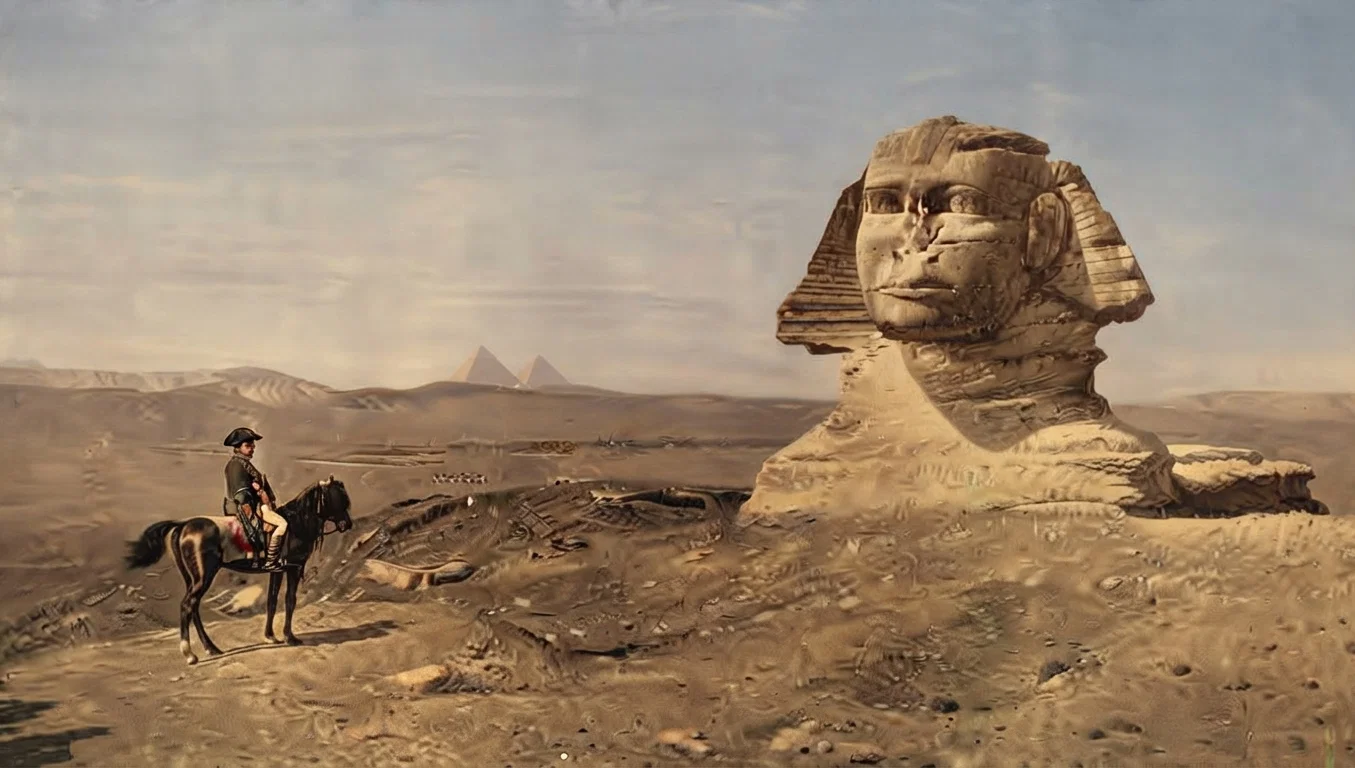
NAPOLEON AND THE SPHINX.
THE natural tendency of the human mind is constantly in the direction of supposed betterment of some sort. The origin of such leaning is doubtless divine, and was implanted in humanity for the purpose of drawing the subject continually upward toward the image of the heavenly Master. Properly directed and controlled, this ambition is, therefore, laudable, but under the management of a perverse monitor, that which was intended for good to all, has been made evil to the greater number.
Strangely enough, the singular part of man's offending is that the major part of it consists in prostituting the gifts of God,—those things designed for his uplifting,—to his own degradation. In fact, the origin of all evil is easily traced to this very source. In the actual courts of heaven itself, one was found who first manifested this wrong tendency. Speaking of this work, and the cause of its appearance, the Lord said of Satan, "Thine heart was lifted up because of thy beauty, thou hast corrupted thy wisdom by reason of thy brightness." Eze. 28 : 17.
In other words, instead of giving God the supreme place in his affections, this being centered upon his own personal advantages, and thus assuming himself to be fitted for a higher station than that in which the gift of God had placed him, he said in his heart, "I will exalt my throne above the stars of God; . . . I will be like the Most High." Isa. 14 : 13, 14. Following the lead of this ambition, others were involved, and "by that sin fell the angels."
From that time to this the God-given desires of man for a higher and better condition have been more or less adulterated by the selfishness and self-efforts of Satan's inspiration. Men have viewed, from some lowly station, a commanding height, when the glow of imagination has gilded its summit with anticipations of greatness and honor, and they have been led to say, "I will climb the heights and gain the coveted position." Once seized with such an idea, they are pushed forward in their ambition, without heeding the just claim of others, or even regarding their safety. Nothing appears to be seen or cared for but the goal of their own ambition.
But when that is attained, tho it may be by great sacrifice of treasure and blood, how unsatisfying is it all! The real element of greatness is still lacking, because the victory was but a worldly gain, which is altogether a hollow mockery. Take, for example, one who rose to the loftiest pinnacle of worldly glory ever reached by man, and who also could say that he had accomplished it all by the force of his own individualism. He waged war more successfully than any other man in history; he influenced the fate of nations, disposing of them according to his will, while kings bowed before him in abject servility. More than this, his immediate power grew from an obscure beginning, until it extended from the Adriatic to the mouth of the Weser, and his opinion ruled throughout Europe.
To such eminence rose Napoleon Bonaparte, who, when in Egypt, is said to have ridden before one of the great stone memorials of that country, and, after comparing his fame and greatness with the "dull-eyed sphinx," is made by the poet to console himself with the words:—
"And nations yet to be, Surging from time's deep sea, Shall teach their babes the name of great Napoleon." Yet afterward, when in conversation with General Bertrand, he said: "Alexander, Cæsar, Charlemagne, and I have founded empires; but on what have we rested the creations of our genius?—Upon force. No one but Jesus has founded an empire upon love, and at this moment millions of men would die for Him. It is not a day nor a battle that won the victory over the world for the Christian religion. No,it was a long war, a fight for three centuries, begun by the apostles, and continued by their successors and the Christian generations that followed. In that war all the kings and powers of the earth were on one side, and on the other side I see no army, but a mysterious force, and who had no rallying point but their faith in the mysteries of the Cross. I die before my time, and my body will be put into the ground, to become the food of worms. Such is the fate of the great Napoleon. What an abyss between my wretchedness and Christ's eternal kingdom, proclaimed, loved, adored, spreading through the world! Was that dying? Was it not rather to live?"
This was far from a satisfying elevation, according to Napoleon's own testimony. It could not possibly compensate, because it was filled with the elements of perplexity and doubt. So every attainment of ambition gained by force, must be of this nature, because the violent efforts by which it is won, must set those from whom it is taken, against the winner. If retained, it must be by the constant application of personal influence and force.
But there is an elevation which, when attained, is eternally secure, because it is not won through sordid ambition. The promise is, "Humble yourselves in the sight of the Lord, and He shall lift you up." James 4:10. Following this, none have to elevate themselves to precarious positions by force of personal influence; but all that is asked of them is to be unpretending and lowly, to claim little for self, and accept the gifts of God as blessings received by the unworthy; and God Himself says that He will lift up all such. How much better to have ambition take this turn than that of the conquerors of the world's power!
JOHN ORR.

TRUST YOUR FATHER'S PROTECTING HAND.

A LITTLE girl was walking by the side of her father, who held her hand as they passed along the crowded street of the city. Presently the enticing beauties in the store windows invited her to stop a moment, and she sought to pull away from her father, feeling that she could go alone. He cautioned her, but so confident was she that he let go his hold of her hand.
In a few minutes she had so far forgotten him that she stopped by a window and was viewing its contents with childish delight. Her father was soon lost in the crowd, and when she turned to go on, she could not find him. She then began to realize that she was alone, and, not knowing which way to go, her eyes began to well up with tears, and her quivering lip betrayed her perplexity. She was lost, alone,—away from father. But he did not forget his little one. He was watching her with intense interest and affection. As soon as he thought she had learned the lesson "that father knows best," he came along so she could see him, and as he spoke her name, she quickly turned and in a moment was by his side, clinging firmly to his hand.
Have you, O child of God, been attracted by the glitter of earth? Have you let go your Father's hand, and are you charmed by the tinsel along the way? In your self-confidence have you forgotten that you need a guiding hand to keep you on your journey through the land of destruction, that you may reach your home in safety? As you turn to go forward, do you feel confused, not knowing which way to go? And as you begin to realize that you are alone, does despair take possession of your soul as the tempter whispers to your confused and frightened senses, "You are lost"? Let this thought quiet your beating heart: Your heavenly Father has not forgotten you. And if you turn with all your soul to seek Him, He will again reveal to you His smiling face.
He has not forgotten you, but longs once more, according to His blessed promise, to hold your hand. Delay no longer, but turn, O, turn, before the night falls, and you find Him not!
H. G. THURSTON.

THE PEARL OF GREAT PRICE.

In the parable of the pearl of great price, the pearl is not represented as a gift. The merchantman bought it at the price of all he had. Many question what this means, when Christ is presented in the Scriptures as a gift. He is a gift to all who give themselves, soul, body, and spirit, to Him, without reserve. We are to give ourselves to Jesus, to live a life of full obedience to all His requirements. All that we are, all the talents and capabilities that we possess, are the Lord's, to be consecrated to His service. Only thus can we obtain the priceless gem of salvation.
Salvation is a free gift, and yet it is to be bought and sold. In the market of which Divine Mercy has the management, the precious pearl is represented as being bought without money and without price. In this market all may obtain the goods of heaven, which are lent on trust. The treasury of the jewels of truth is opened to all. "Behold, I have set before thee an open door," the Lord declares, "and no man can shut it." No sword guards the way through this door. Voices from within and at the door say, Come. The Saviour's voice earnestly and lovingly invites us: "I counsel thee to buy of Me gold tried in the fire, that thou mayest be rich; and white raiment, that thou mayest be clothed; and that the shame of thy nakedness do not appear; and anoint thine eyes with eye-salve, that thou mayest see."
The Gospel of Christ is a blessing which all may possess. It takes men as they are, poor, wretched, miserable, blind, and naked. The only condition Christ presents to those who come to Him to be clothed with His righteousness is obedience to His commandments. And by the obedient soul the law is found to be a law of perfect liberty, liberty to lay hold by faith on the hope that is sure and steadfast. When we render back to God His own, when we wash our robes of character, and make them white in the blood of the Lamb, then we shall be entitled to a celestial crown.
The poorest are as well able as the richest to purchase salvation; for no amount of worldly wealth can secure this treasure. It is obtained by willing obedience, by giving ourselves to Christ as His own purchased possession. Education, even though it be of the highest class, can not, of itself, bring a man nearer to God. The Pharisees were favored with every temporal and spiritual advantage, and they said with boastful pride, We are rich, and have need of nothing. Yet they were wretched, and miserable, and poor, and blind, and naked. Christ offered them the true riches, but they disdained to accept it; and He said to them, "Verily I say unto you, that the publicans and the harlots go into the kingdom of God before you."
We can not buy salvation, but we are to seek for it as interestedly and perseveringly as if we would abandon everything in the world for it, selling all that we have to obtain this treasure which is above price. By accepting Christ, by making Him all and in all, we shall obtain an invaluable experience; for good works will surely follow all who receive Him. The true, strong, joyous life of the soul begins when Christ is formed within, the hope of glory. "As many as received Him, to them gave He power to become the sons of God, even to them that believe on His name."
We are to seek for the pearl of great price, but not in wordly marts or in worldly ways. The price we are required to pay is not gold or silver; for this belongs to God. Abandon the idea that temporal or spiritual advantages will win for you salvation. "As many as I love, I rebuke and chasten," God declares; "be zealous therefore, and repent. Behold, I stand at the door, and knock; if any man hear My voice, and open the door, I will come in to him, and will sup with him, and he with Me." God calls for your willing obedience. Open the door, and let Christ in. He asks you to give up your sins. "To him that overcometh," He promises, "will I grant to sit with Me in My throne, even as I also overcame, and am set down with My Father in His throne."
Christians are to be careful to maintain good works. They are to seek to save the souls that are perishing out of Christ. The Gospel is to be preached as a witness to all nations. Christ does not say that all will receive the Gospel. Many will not appreciate it, because things of minor importance claim their attention. Yet the Gospel is to be preached as a witness to all. The light is to shine amid moral darkness. The truth is to be placed in contrast with error. Christ says to His followers: "Ye are the light of the world. A city that is set on a hill can not be hid. Neither do men light a candle, and put it under a bushel, but on a candlestick, and it giveth light unto all that are in the house. Let your light so shine before men,that they may see your good works, and glorify your Father which is in heaven." The work of grace is a progressive work. "And beside this," Peter writes, "giving all diligence, add to your faith virtue; and to virtue knowledge; and to knowledge temperance; and to temperance patience; and to patience godliness; and to godliness brotherly kindness; and to brotherly kindness charity. For if these things be in you, and abound, they make you that ye shall neither be barren nor unfruitful in the knowledge of our Lord Jesus Christ."
We are to guard against deception. "I say unto you," Christ declared, "that except your righteousness shall exceed the righteousness of the scribes and Pharisees, ye shall in no case enter into the kingdom of heaven." Every one who professes godliness is tested, as a merchant tests a piece of silver to see whether it is genuine. God has given His people the lesson essential for them to practise. "Seek ye first the kingdom of God, and His righteousness," He says, "and all these things [the things needful for this life] shall be added unto you." Would that all who claim to be Christians were doers of these words.
Christ has given the invitation: "Come unto Me, all ye that labor and are heavy-laden, and I will give you rest. Take My yoke upon you, and learn of Me; for I am meek and lowly in heart; and ye shall find rest unto your souls. For My yoke is easy, and My burden is light." Great indeed are the promises given in God's Word. Christ gave His life for us, and He offers us salvation freely and without price. Those who are seeking for rest will find it by coming to Christ. All their wants will then be satisfied; for Christ cleanses the heart and renews the mind. But many turn with disdain from the salvation offered, giving the things of eternal interest only a passing thought. This is why they do not rightly estimate the value of the heavenly treasure.
Service to God is comprehensive. It means the consecration of all that we are, of all the talents that He has lent us. It means that we must devote everything to His glory. But there is a wonderful deceitfulness in sin. To the heart unchanged by righteousness, Satan presents a counterfeit righteousness. Those who trust in this righteousness build on shifting sand, and the storm of test and trial will overcome them. Many who think that they are walking in the way to heaven are walking in strange paths, because they have not given up all to obtain eternal life.
MRS. E. G. WHITE.

GETHSEMANE.

GETHSEMANE! Gethsemane! Thine olive boughs are fair! And high thy palm tree branches rise To catch the scented air, And radiant are the suns that shine Upon thy wall and vine, But dark and lone, Gethsemane, This night, the wo that's thine.
For, ah! who kneels at this dim hour Upon the dew-cold earth, In burning lips that burst in prayer, Pouring His spirit forth? Ah! who is He whose clasped hands Are raised in prayer divine, And whose cry that in anguish deep? Redeemer, it is Thine.
Yes, there Thou art, and e'er shalt be, The Holy, the Adored The worshiped One of heaven and earth, Our Saviour and our Lord, The Pure, the Sinless, the Unstained, Who now against Him hurled Finds all the sins of ages past, The miseries of a world,
As, kneeling there upon the earth, He lifts His fervent brow, While all that was or e'er shall be Comes to His spirit now. Deep, deep the pangs that wring His heart With anguish and with fears, Weeping in His sore bitterness, His blood, instead of tears.
Gethsemane, Gethsemane, Forever thou'lt be claimed, Not for thy groves of olives fair That erstwhile made thee famed, Nor for the scented air that fans Thy bowers of shaded green, But for that prayer, Gethsemane, And agonizing scene. —Kathleen G. Cleary.

A DANGEROUS PRINCIPLE.

THE principle that allows any part of the religious community, however large, to place their interpretation upon God's law, or upon any part of it, and then get power from the State to compel all dissenters to conform to it, regardless of their own convictions or interests, is a most dangerous one. The carrying out of this principle has caused all of the persecution for conscience' sake that has ever cursed this world, and it has been one of the mightiest instruments in the hands of Satan in his warfare against the people of God.
God gave mankind freedom to act as they chose in the matter of obeying or disobeying Him; He never used force, altho He had infinite power. Christ said, "If any man hear My words, and believe not, I judge him not." John 12:47. Therefore those who do enforce religious conformity by law assume the blasphemous position of placing themselves above God, and say to the world practically that they are wiser than God. The apostle Paul, in 2 Thess. 2:4, speaking of the great representative of this principle, says, "Who opposeth and exalteth himself above all that is called God." Any manifestation of this principle is the manifestation of the man of sin, and is therefore antichristian. Neither does it alter the case to apply some other reason, like the "civil reason," for enforcing conformity in religious observance, in order to conceal the real purpose.
This idea of enforcing conformity in religious observance has survived in this country in the principle embodied in our Sunday laws, which recognizes the right of that part of the religious community who believe Sunday to be a sacred day to get power from the State to enforce their views of its sacred character upon all others, regardless of their convictions or interests. And the great number of reform societies and the proposed federation of the young people's societies for the purpose of enforcing Sunday observance upon all, is calling into life a principle that will only end with the subversion of the liberties of the country.
GEORGE B. WHEELER.

Chapter 2 : 1-10.

The Truth of the Gospel.

BEFORE beginning the study of the second chapter of Galatians, read the first chapter again carefully. One must necessarily understand and have in mind the contents of chapter 1 in order to understand chapter 2, since the second is but a continuation of the first. There is no break in the narrative in passing from the first to the second chapter. We may summarize the first chapter thus:—
The salutation, in which the whole Gospel is included.
The reason for writing the epistle, which is found in the statement of the condition of the Galatians, namely, that they were departing from God to a perverted gospel, being led astray by some accursed teachers.
There is but one Gospel, namely, that which Paul preached.
That Gospel was given him, not by any man, but by the revelation of Jesus Christ in him.
Lastly, a brief summary of Paul's former life, his conversion, and his experience during the first seventeen years of his Christian life, chiefly with reference to the fact that he was not in connection with any of the brethren, by whom he could have been biased. He was near to Damascus when the Lord met him; he conferred not with flesh and blood, but went into Arabia and returned to Damascus, and after three years went up to Jerusalem, where he stayed fifteen days, afterwards going into Syria and Cilicia, without getting acquaintedwith the churches in Judea. And so he continues the narrative:—
"'Then fourteen years after I went up again to Jerusalem with Barnabas, and took Titus with me also. And I went up by revelation, and communicated unto them that Gospel which I preach among the Gentiles, but privately to them which were of reputation, lest by any means I should run, or had run, in vain. But neither Titus, who was with me, being a Greek, was compelled to be circumcised; and that because of false brethren unawares brought in, who came in privily to spy out our liberty which we have in Christ Jesus, that they might bring us into bondage; to whom we gave place by subjection, no, not for an hour; that the truth of the Gospel might continue with you. But of these who seemed to be somewhat (whatsoever they were, it maketh no matter to me; God accepteth no man's person); for they who seemed to be somewhat in conference added nothing to me; but contrariwise, when they saw that the Gospel of the uncircumcision was committed unto me, as the Gospel of the circumcision was unto Peter (for he that wrought effectually in Peter to the apostleship of the circumcision, the same was mighty in me toward the Gentiles); and when James, Cephas, and John, who seemed to be pillars, perceived the grace that was given unto me, they gave to me and Barnabas the right hands of fellowship; that we should go unto the heathen, and they unto the circumcision. Only they would that we should remember the poor; the same which I also was forward to do.' Gal. 2: 1-10."
Visit to Jerusalem.—'Fourteen years after,' following the natural course of the narrative, means fourteen years after the visit recorded in Gal. 1:18, which was three years after the apostle Paul's conversion. The second visit, therefore, was seventeen years after his conversion, or about the year 51 A.D., which coincides with the time of the conference in Jerusalem, which is recorded in Acts 15. It is with that conference, and the things that led to it, and grew out of it, that the second chapter of Galatians deals. In reading this chapter, therefore, the fifteenth of Acts must be understood and borne in mind. Our study this week will thus necessarily be largely in Acts 15, of which Galatians 2 is merely an adjunct.
That New Gospel.—In the first chapter of Galatians (verses 6, 7) we are told that some were troubling the brethren by perverting the Gospel of Christ, presenting a false gospel and pretending that it was the true Gospel. In Acts 15:1 we read that 'certain men which came down from Judea taught the brethren, and said, Except ye be circumcised after the manner of Moses, ye can not be saved.' This, we see, was the other gospel, which was not another, since there is only one, but which was being palmed off upon the brethren as the true Gospel. That these men who brought this teaching professed to be preaching the Gospel, is evident from the fact that they professed to tell the people what they must do to be saved. Paul and Barnabas would not give any place to the new preaching, but withstood it, in order, as Paul tells the Galatians, 'that the truth of the Gospel might continue with you.' Gal. 2:5. Paul and Barnabas had 'no small dissension and disputation with them.' Acts 15:2. So we see that the controversy was no insignificant one, but was between the real Gospel and a counterfeit. The question was a vital one for the new believers, and has no less interest for us.
A Denial of Christ.—A glance at the experience of the church at Antioch, to whom this new gospel was brought, will show that it did in the most direct manner deny the power of Christ to save. The Gospel was first brought to them by brethren who had been scattered by the persecution that arose on the death of Stephen. These brethren came to Antioch 'preaching the Lord Jesus. And the hand of the Lord was with them; and a great number believed, and turned unto the Lord.' Acts 11:19-21. Then the apostles sent Barnabas to assist in the work; and he, 'when he came, and had seen the grace of God, was glad, and exhorted them all, that with purpose of heart they would cleave unto the Lord. For he was a good man, and full of the Holy Ghost and of faith; and much people was added unto the Lord.' Verses 22-24. Then Barnabas found Saul, and together they labored with the church in Antioch for more than a year. Verses 25, 26. There were in the church prophets and teachers, and as they ministered unto the Lord, and fasted, the Holy Ghost spoke to them, telling them to separate Barnabas and Saul to the work to which He had called them. Acts 13:1-3. So we see that the church there had had much experience in the things of God. They were acquainted with the Lord and with the voice of the Holy Spirit, who witnessed that they were children of God. And now, after all this, these men said, 'Except ye be circumcised after the manner of Moses ye can not be saved.' That was as much as to say, 'All your faith in Christ, and all the witness of the Spirit, are nothing without the sign of circumcision.' The sign of circumcision, without faith, was exalted above faith in Christ, without any outward sign. The new gospel was a most direct assault upon the Gospel, and a flat denial of Christ.
"False Brethren."—It is no wonder that Paul styles those who presented this teaching, "false brethren," who had, as the Danish strongly expresses it, "sneaked in." Gal. 2:4. To the Galatians he said of them, "There be some that trouble you, and would pervert the Gospel of Christ." Gal. 1:7. The apostles and elders, in their letter to the churches, said of those men, "Certain which went out from us have troubled you with words, subverting your souls." Acts 15:24. And they further add, they "gave no commandment" to them. Verse 24, R.V. That is to say, these teachers were "false brethren," who were not recognized by the apostles as teachers, who were speaking perverse things to draw away disciples after themselves. There have been many such since that time. So vicious was their work that the apostle said, "Let them be accursed." They were deliberately seeking to undermine the Gospel of Christ, and thus to destroy the souls of the believers.
"The Sign of Circumcision."—These false brethren had said, "Except ye be circumcised after the manner of Moses, ye can not be saved." Literally, "You have not power to be saved." This put all the power of salvation in the outward sign of circumcision. Paul declares, "In Jesus Christ neither circumcision availeth anything, nor uncircumcision; but faith which worketh by love." Gal. 5:6. Circumcision has no power, and uncircumcision has no power, but faith alone, working by love, is mighty to save. That which the false brethren wished to enforce was not real circumcision, for that is not outward, but in the heart, and consists solely in obedience to God’s law through faith. See Rom. 2:25-29; 4:7-11. Abraham was righteous by faith alone, was, in fact, really circumcised in heart "with the circumcision made without hands," by the Spirit, before he received the outward mark, which was not real circumcision, but only served as a sign, a reminder to him that circumcision consists in worshiping God in the spirit, and having no confidence in the flesh. Rom. 4:2-11; Col. 2:10, 11; Phil. 3:3. So these Christians of Antioch, who had been converted from heathenism, just as Abraham was, and had received the Lord Jesus, were circumcised with the true circumcision. The "false brethren" wished them to give up the reality for the empty sign.
"The Flesh Profiteeth Nothing."—Jesus said, "It is the Spirit that quickeneth; the flesh profiteeth nothing; the words that I speak unto you, they are spirit, and they are life." John 6:63. The people of Antioch and Galatia had trusted in Christ for salvation; now there were some who sought to induce them to trust in the flesh. They did not tell them that they were at liberty to sin. O, no; they told them that they must keep the law! Yes; they must do it themselves; they must make themselves righteous without Jesus Christ. For circumcision stood for the keeping of the law. Now the real circumcision was the law written in the heart by the Spirit, but the outward form, in which alone these "false brethren" wished the believers to trust, stood only for self-righteousness. The false brethren would have them circumcised for righteousness and salvation; but Peter said, "Through the grace of our Lord Jesus Christ we believe to be saved." Just as Paul wrote, "With the heart man believeth unto righteousness; and with the mouth confession is made unto salvation." Rom. 10:10. "Whatsoever is not of faith is sin." Rom. 14:23. Therefore all the efforts of men to keep the law of God by their own power, no matter how earnest and sincere they are, result in nothing but imperfection—sin. "All our righteousnesses are as filthy rags." Isa. 64:6.
"A Yoke of Bondage."—When the question came up in Jerusalem, Peter said to those who would have men seek to be justified by their own works, instead of by faith in Christ, "Now therefore why tempt ye God, to put a yoke upon the neck of the disciples, which neither our fathers nor we were able to bear?" Acts 15:10. This yoke was a yoke of bondage, as is shown by Paul’s words, that the "false brethren" sneaked in "to spy out our liberty which we have in Christ Jesus, that they might bring us into bondage." Gal. 2:4. Christ gives freedom from sin. His life is "the perfect law of liberty." "By the law is the knowledge of sin" (Rom. 3:20), but not freedom from it. "The law is holy, and the commandment holy, and just, and good" (Rom. 7:12), just because it gives the knowledge of sin by condemning it. It is a guideboard, which points out the way, but does not carry us. It can tell us that we are out of the way; but Jesus Christ alone can make us walk in it; for He is the way. Sin is bondage. Prov. 5:22. Only those who keep the commandments of God are at liberty (Ps. 119:45), and they can be kept only by faith in Christ (Rom. 8:3, 4). Therefore whoever induces people to trust in the law for righteousness, without Christ, simply puts a yoke upon them, and fastens them in bondage. When a man has been convicted by the law as a transgressor, and cast into prison, he can not be delivered from his chains by the law which holds him there. But that is no fault of the law; just because it is a good law, it can not say that a guilty man is innocent. So these Galatian brethren were being brought into bondage by men who were seeking to exalt the law of God by denying Him who gave it, and in whom alone its righteousness is found.
Why Paul Went up to Jerusalem.—The record in Acts says that it was determined at Antioch that Paul and Barnabas and some others should go up to Jerusalem about this matter. But Paul declares that he went up "by revelation." Gal. 2:2. He did not go up to learn the truth of the Gospel, but to maintain it. He went, not to find out what was the Gospel, but to communicate the Gospel which he had preached among the heathen. Those who were chief in the conference "added nothing" to him. He had not been preaching for seventeen years that of which he stood in doubt. He knew whom he believed. He had not received the Gospel from any man, and he did not need to have any man’s testimony that it was genuine. When God has spoken, an endorsement by man is an impertinence.
The Gospel Not Magic.—The great lesson taught by this experience, to which Paul referred the Galatians, is that there is no thing in this world that can confer grace and righteousness upon men, and that there is nothing in the world that any man can do that will bring salvation. The Gospel is the power of God unto salvation, and not the power of man. Any teaching that leads men to trust in any object, whether it be an image, a picture, or anything else, or to trust for salvation in any work or effort of their own, even tho that effort be directed toward the most praiseworthy object, is a perversion of the truth of the Gospel, a false gospel. There are in the church of Christ no "sacraments" that by some sort of magical working confer special grace on the receiver, but there are things that a man who believes in the Lord Jesus Christ, and who is thereby justified and saved, may do as an expression of his faith. The only thing in the world that has any efficacy in the way of salvation, is the life of God in Christ. "By grace are ye saved through faith; and that not of yourselves; it is the gift of God; not of works, lest any man should boast. For we are His workmanship, created in Christ Jesus unto good works, which God hath before prepared, that we should walk in them." Eph. 2:8-10.
E. J. WAGGONER.

Crowned with Everlasting Glory

"There is a King of glory, Erelong on earth to rise, Sung in prophetic story, Descending from the skies; The Babe of Bethlehem, 'tis He; It is the Man of Calvary,— Not crowned with thorns, and gory, But crowned with glory now. Not crowned with thorns to-day, Not mocked and led away, But crowned with everlasting glory now."
Continue reading: THE DECALOGUE