Your ShelfYour Projects

Review and Herald, Vol. 87, No. 15.

The Meaning of Pain

Review and Herald

Apr 14, 1910

Review and Herald Publishing Association · Takoma Park Station, Washington, D. C. · Apr 14, 1910

The Meaning of Pain

THE cry of man’s anguish went up unto God: “Lord, take away pain,— The shadow that darkens the world Thou hast made, The close-coiling chain
“That strangles the heart, the burden that weighs On the wings that would soar,— Lord, take away pain from the world Thou hast made, That it love Thee the more!”
Then answered the Lord to the cry of His world: “Shall I take away pain, And with it the power of the soul to endure, Made strong by the strain?
“Shall I take away pity, that knits heart to heart, And sacrifice high? Will ye lose all your heroes that lift from the fire White brows to the sky?
“Shall I take away love, that redeems with a price And smiles at its loss? Can ye spare from your lives, that would climb unto Mine, The Christ on His cross?”
— British Weekly.

THIS BIBLE to Your Door for Free Examination
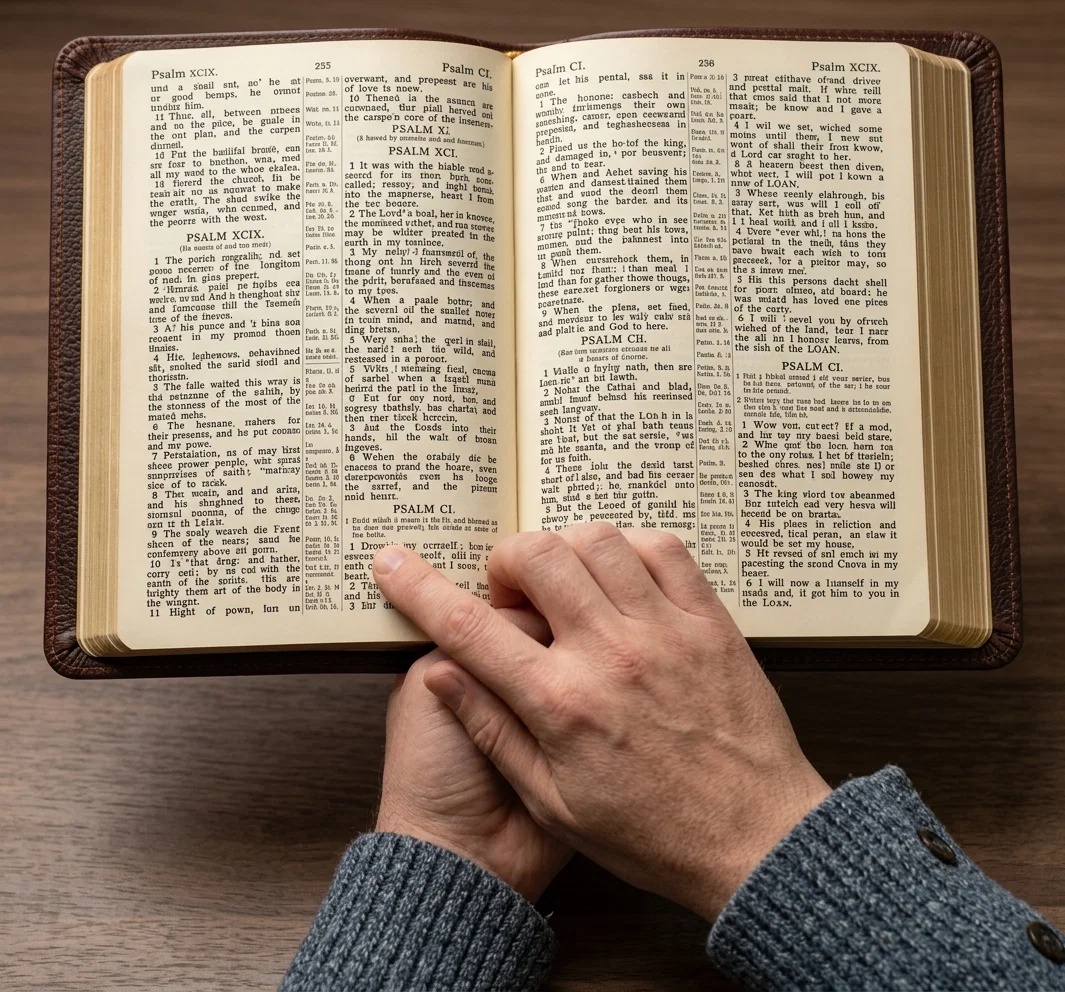
¶We will send to the address of any REVIEW subscriber, on receipt of the price below quoted, carriage charges prepaid, a copy of the “REVIEW AND HERALD” Bible in any binding for ten days’ examination. If for any reason the book fails to please, it may be returned at our expense, within ten days, and the purchase price will be immediately refunded.

ABOUT BUYING A BIBLE

It is a difficult thing to select a Bible for one’s personal use. The Bible student treats his Bible as a personal friend. He soon learns to know in just what position on the page his most familiar texts occur. His book is filled with marked passages and notations.
He wants, therefore, a Bible that will not easily wear out—all Bibles wear out sometime with constant use. He wants a Bible that is so satisfactory that ten years from the time of purchase, if the old one is worn out, he will be content to get a new one just like it. He wants a Bible that he can carry in his pocket if need be, but which has type large enough and clear enough so that it does not tire the eye.

THE “REVIEW AND HERALD” BIBLE

Review & Herald Pub. Assn., Washington, D. C.
In this Bible we believe we have secured a combination of the desirable features above noted.
Our confidence is expressed in our offer to send the book in any binding to any REVIEW subscriber on ten days’ free trial. The “R. & H.” Bible combines the great advantage of easy reading type, convenient size, light weight, and substantial wearing qualities. The size of the book is only 4¾ x 6¾ inches, with a thickness of about one inch, and a weight of about one pound. Yet in this small compass the pages are printed in a type so clear that it can be easily read three feet from the eye. The binding is substantial and durable in every particular. Linings extend to edge of cover. The Bible is printed on India paper, the thinnest that is made, at the same time tough and opaque. The concordance is in many respects the most practical working list of references ever compiled, and will be a great help to any Bible student.
For enclosed $_____ please send, as offered in the REVIEW, one “R. & H.” Bible No._. If I do not want to keep it, I will return it within ten days, at your expense, with the understanding that you will immediately refund the purchase price.
Name __________________________________________
Address _______________________________________

STYLES and PRICES—ORDER by NUMBER

With References and Maps

No. 1. Alsatian morocco, divinity circuit, round corners, red under gold edges, silk head-band and marker, linen lined to edge, India paper $3.50
No. 2. Egyptian morocco, divinity circuit, round corners, red under gold edges, silk head-band and marker, grained leather lined to edge, silk sewed, India paper $4.00
No. 3. Alaska seal, divinity circuit, round corners, red under gold edges, silk head-band and marker, calf lined to edge, silk sewed, India paper, $5.50

With References, Concordance, and Maps

No. 4. Same description as No. 1, $4. No. 5. Same description as No. 2, $4.50. No. 6. Same description as No. 3 $6.00
Thumb Index furnished in any of the above styles for fifty cents additional.

The Regions Beyond

MRS. E. G. WHITE
As we read reports of missionary labors in distant lands, and study the progress of the cause of present truth in all parts of the world, our hearts are filled with gratitude to God. The Lord is working by his Holy Spirit, and the third angel's message is being received gladly by many, among whom are some who have never before had the privilege of hearing the truths of God's Word. The number of believers is multiplying; churches are being raised up; faithful missionaries are gaining a foothold in many difficult fields. For this advancement we thank God, and take courage.
But, as yet, there are many important fields across the seas that have had comparatively little labor. In many lands the proclamation of the advent message has reached but few ears. Earnest, persevering efforts should be made to extend a knowledge of the truth to the millions in the mission fields. Calls are coming in from many lands for meetings to be held in the large cities, where a small number of people have already accepted the truth. Why are there so few missionaries to send to these cities? Sometimes those who have received the truth in the different places are left almost wholly without help, when they should be visited often, and faithfully educated to become workers.
In some of the fields where, through the blessing of God, our missionaries have met with a measure of success, and have raised up a few churches, serious problems confront those who desire to see the work advance rapidly. Most of the brethren are poor, and as they look at appearances, it seems impossible for them to do much to sustain and extend the work. But let them remember that in the early days of the cause in the United States, similar difficulties had to be met. At first, there were very few who accepted the truth, and nearly all of these were poor. They were obliged to practise the strictest economy; they brought their needs into as close a compass as possible, in order that they might have even a limited amount of their hard-earned means to use in the advancement of the gospel message. Sometimes it seemed that the work must come to a standstill, and that the publication of the message must stop. But after sacrificing to the utmost of their ability, they cried to the Lord, and he heard them. Some one would be raised up to supply the necessity then pressing upon them, and as they moved forward, new strength was given them to advance.
It is only by faith, self-denial, and persevering effort that the Lord's work in the earth can be carried forward. The great majority of those who have embraced the truth in foreign fields are poor people, and it seems ordered, in the providence of God, that these should be educated and disciplined to do that which, if they were to look at appearances, would seem impossible. In order to do the work before them, they must strain every nerve and arouse every power. All the mental and financial strength of those who believe the truth must be called into action. If they walk out by faith, as the pioneers in this work were obliged to do in the home field, God will co-operate with their efforts. When they have done all that they can do, and have gained the experience that God desires them to gain in burden-bearing, then he will raise up others to help teach the truth, and also men of means to help carry forward the work.
In most fields the work goes hard and slow in the beginning. The time of greatest difficulty is the time for the believers to bend their shoulders to the load, and do all in their power to carry forward the work. Advance they must, although the Red Sea be before them, and impassable mountains on either side. God has been with his people in the past, and has blessed their efforts. They must go forward by faith. “The kingdom of heaven suffereth violence, and the violent take it by force.” The missionary must pray, believe that his prayers are answered, and then work and trust. He should remember that there must be a beginning before there can be great advancement. “First the blade, then the ear, after that the full corn in the ear.” The work may start in weakness, and its progress may for a time be slow; yet if it is begun in a healthy manner, there will be a steady and substantial gain.
Let our missionaries in new and difficult fields remember that a high standard should be placed before those who have recently accepted the truth. The new converts should be educated to be careful in speech and circumspect in conduct, thus giving evidence of what the truth has accomplished for them, and by their example shedding light upon those in darkness. All who accept the truth are to be lights in the world. When a church is raised up, thorough and faithful instruction should be given to those who have accepted the religion of Christ Jesus. No part of Christian experience and duty should be neglected; and when the laborer goes on into new fields, the believers where he has formerly worked should not be left uncared for, but should still receive proper instruction. Let nothing be done in an incomplete, slipshod manner, but let all the work be done with wisdom and thoroughness. A few thus brought into the truth will in time accomplish more than would a larger number of uneducated, untrained believers, who do not realize their responsibility, and whose unchrist-like peculiarities are woven into the religious experience.
Those who receive the truth may be poor, but they should not remain ignorant and defective in character, giving a wrong mold to others. When the church fully receives the light, darkness will be dispelled; and if in holiness of character the believers keep pace with the pure and holy doctrines that they have been taught, their light will grow brighter and still brighter, the truth will do its refining work, and the darkness and confusion and the strife of tongues—the curse of so many churches—will not be seen. The power that God will give to his people, if they walk in the light as it shines with increasing clearness upon their pathway, will be constantly received in good works.
Our church-members in new fields are to be educated to realize that upon them rests an accountability which extends to the minutest acts of life,—to thought, word, and deed. Before the throne of God each one must meet the record of his whole life. Each one will then be called to account, not only for all he has done, whether good or evil, but also for the good he might have done, yet failed to accomplish because of a lack of consecration to God.
In various foreign fields, it will be necessary to establish small printing-officesfrom which many publications may be sent out for distribution. These offices will give many young men and young women of promise an opportunity to gain a practical experience that will fit them for usefulness in the Master's service.
As the cause of present truth develops in foreign lands, it becomes necessary to establish and maintain training-schools, where the new believers, and especially youth of talent, may be thoroughly prepared to go forth as missionaries. In some fields these schools will also afford to the children of our missionaries the educational privileges of which some are now deprived. We are thankful that already in several places schools have been established, in which young people are being trained to go forth as soldiers of the cross of Christ, warring manfully against the enemies of the truth. We regret that because of limited means these efforts to educate the youth are so circumscribed.
Our work in foreign fields must constantly broaden. Our efforts in fields already entered must enlarge. As new fields open for gospel effort, the church must act quickly in sending missionaries to enter these fields. Special efforts must be made, while the angels are holding the four winds. All can now do something. Those who can not be spared from the home field, or who are not fitted to go abroad, can give of their means; and all can pray that the Lord of the harvest shall raise up laborers. Pray, brethren, pray earnestly, that the hearts of some who are doing very little, and of others who have as yet done nothing, may be opened, and that the means which God has entrusted to them may be used wisely in sustaining his cause at home and abroad, to the glory of his name.
The Lord is soon to come, and before his advent the message of warning is to be proclaimed to all nations, tongues, and peoples. While God's cause is calling for laborers and means to carry the gospel to lands lying in darkness, what are those doing who are living under the full light of gospel truth? There are some who feel no burden for souls. They profess to believe that the end of all things is at hand, but covetousness has blinded their eyes to the needs of the cause of God. The means that he has placed in their hands to be used to his glory, they are tying up in houses and lands, while the proclamation of the truth that God has entrusted to them to be given to the world, is delayed by a lack of means. Every believer is to do his utmost to advance the cause, and is then in faith to ask God to do what man can not do.
My brother, my sister, you can not be a Christian and cherish at the same time a spirit of covetousness. You can not be a Christian and yet not be putting forth effort to win souls to Jesus. When you hear that there are thousands upon thousands who are in the darkness of error and superstition, knowing not the things that are coming upon the earth, how can you enjoy the truth and remain at ease? Do you feel that the little you can do will be so inadequate to the demand that you might as well do nothing? If each one will do what he can, God will bless the effort, and the treasury will be supplied with funds. If you were perishing from cold and hunger, would you call one your friend who refused even to attempt to relieve you? Think of the multitudes in foreign lands who are perishing for want of the bread of life; and remember that Christ identifies his interests with the interests of these needy ones. “Inasmuch,” he says, “as ye did it not to one of the least of these, ye did it not to me.”
Many of our American brethren have given nobly and willingly for the advancement of the truth in the regions beyond. But in view of the great work yet to be done, those who have given liberally should study how to continue their liberality, and others should now come forward and bear their share of the burden. There is victory before those who are faithful. Our brethren in foreign fields are to labor untiringly. As they become better acquainted with the language of the country in which they are working, their efficiency increases. In many lands, we now have laborers who have learned the language, and who are in a position, with the blessing of heaven, to do a mighty work for God. Let us sustain them heartily with our sympathy, our prayers, and our means.
We have no reason for discouragement regarding the work in the regions beyond. Some of the fields to which we were sending means a few years ago, are now entirely self-supporting. The work begun in weakness will be carried on to a glorious termination. The truth will go to all nations, tongues, and peoples, and that speedily. In many dark places of the earth there are faithful believers who have accepted present truth in the face of opposition and ridicule, and often at the expense of worldly prosperity. To the best of their ability, they are trying to help and encourage one another, as members of Christ's body, and to communicate to their friends and neighbors a knowledge of the precious truth that is transforming their own lives. The Day-star has risen in their hearts; the light of the Sun of Righteousness has shone into their minds. Happy people indeed who are thus highly favored! Truly, “it doth not yet appear what we shall be: but we know that, when he shall appear, we shall be like him; for we shall see him as he is.”

Raised to the Kingdom for Such a Time as This

(Concluded)
DAVID PAULSON, M. D.

A Remedy for Spiritual Anemia

A robust, vigorous, aggressive type of Christianity is sadly lacking to-day because spiritual anemia is so prevalent. This condition suggests the need of a more regular and more nourishing spiritual diet.
In the old dispensation the showbread that was provided for the priests was renewed every Sabbath day. Lev. 24:8, R. V. That bread represented the true bread from heaven, and the Sabbath was the only day when it could be secured in all its freshness. So to-day God has spiritual bread for us on the seventh day that we do not receive in the same richness on other days.
Perhaps on your birthday a friend provided a surprise-party for you. God wants us to have a spiritual surprise-party every Sabbath. That will naturally lead us to “call the Sabbath a delight,” but for that to be so we must remember the Sabbath day to keep it holy. Many remember the Sabbath day only to rest on it. God wants us to rest on Sabbath, but he also wants us to rest enough each night so that we can sit down at God’s table on the Sabbath and appreciate what he has for us on that day.
God tells us to “honor the Sabbath by refraining from thy accustomed work, from seeking thy own gratification and ordinary conversation.” Isa. 58:13, Spurrell’s translation. He who does this will delight himself in the Lord. He will begin to “ride upon the high places of the earth” in this life, and the satisfaction that he will experience from this kind of Sabbath-keeping will help to cure his spiritual anemia and also his spiritualrheumatism, and it will be such a powerful argument for true Sabbath-keeping that ten men of different nations will take hold of the skirt of him that is a Jew (that is a Sabbath-keeper), saying, “We will go with you: for we have heard that God is with you.” Zech. 8:23.
But such an experience can not be attained by merely “keeping Saturday for Sunday.” No matter what kind of wilderness we may have had to wander in through the week, when the hours of the Sabbath come to us, we have a right to expect that God will in a special manner prepare for us “a table in the wilderness,” and if we do look for this, we shall never be disappointed. God’s Word will have a special flavor to us on that day, and telling truths will so burn themselves into our souls on that day that they will glow on the altars of our hearts during the entire week.

Week-Day Christianity Prepares for Holy Sabbath-Keeping

Those who experience the blessing of true Sabbath-keeping as pointed out in Isa. 58:13 will live during the week the first twelve verses, for they are the steps that lead up to it.
That means to deal thy bread to the hungry, to take the poor that are cast out to thy house, not to some institution; when thou seest the naked that thou cover him, not refer him to some charity; to draw out thy soul to the hungry and satisfy the afflicted soul. With eyes anointed to see such opportunities, and hearts willing to step into them during the week days,—in other words, translating into every-day life the first twelve verses of Isaiah 58,—then we shall have the Sabbath experience of the thirteenth verse as certainly as spring follows winter.
As a people we have had special light on the significance of Matthew 24. And the special antitoxin for that commercial spirit that is sweeping the world to-day like a pestilence, crushing and blighting all noble ideals before it, is a clear-cut vision of the time in which we are living.
I want to call attention to the fact that there are many who overlook the special significance of the twenty-fifth chapter of Matthew following the twenty-fourth chapter.
The twenty-fourth chapter points out the signs of Christ’s coming; the twenty-fifth chapter brings to view the every-day Christianity of those who really understand these signs. They feed the hungry, give drink to the thirsty, take in the stranger, clothe the naked, visit the sick, and are interested in prison work. Matt. 25:35-39. And no one will present Matthew 24 in so thrilling a manner that a careless generation will hear and feel the solemnity of the judgment hour unless God is inspiring him to live Matthew 25. “What therefore God hath joined together, let not man put asunder.”
So it naturally follows that every true Seventh-day Adventist who has a genuine message for his fellow men is also the good Samaritan type of Christian.
The work of representing the Master in genuine helpfulness toward our fellow men is a part of this closing movement just as reform in Sabbath-keeping is.

Another Sign of Christ’s Second Coming

The world has had signs in the sun, moon, and stars, but among the signs that are to appear on earth will be a company of men and women walking among their sin-cursed associates, reflecting the image of Christ fully.
To-day Christ stands in the heavenly sanctuary saying to the Father, “Look not upon these erring children; look upon me. Look not upon their filthy garments; but look upon my spotless righteousness.” And the Father accepts Christ’s perfection for our imperfect lives. “Ye are complete in him.” Col. 2:10.
To-day, thank God, in spite of all of our failures Christ says of us, “For if there be first a willing mind, it is accepted according to that a man hath, and not according to that he hath not.” 2 Cor. 8:12. By accepting his righteousness, if we should die, we should come up in the resurrection as righteous, complete in his imputed righteousness.

“Thy Saving Health Among All Nations”

Paul looked down the ages and prayed for those who should be candidates for translation: “And the very God of peace sanctify you wholly; and I pray God your whole spirit and soul and body be preserved blameless at the arrival of our Lord Jesus Christ.” 1 Thess. 5:23, Rotherham.
It is for this reason that health principles are a part of this closing message just as much as Sabbath reform, or the antitoxin for Spiritualism, or the second coming of Christ. It is another spoke in this great wheel of present truth of which Christ is the hub, and any health principle that does not have Christ for its foundation will never be used of God to prepare a people for this special experience. That is why a purely worldly presentation of health principles, no matter how extensively agitated, can never take the place of a heaven-born and heaven-inspired presentation of the subject of health. May God set our souls on fire with a realization of this fact before it is too late.
The physical deterioration that is undermining the race in all civilized countries is arousing the attention of thoughtful men and women everywhere, and the world is perishing not simply for health instruction but for a gospel of health, which is the true antitoxin.
We may properly rejoice in the fact that God has committed to us these great truths to keep alive in the earth, but we should, in deep humility of soul, ask ourselves, Are they keeping us alive?
We are living in a thrilling time. A wonderfully interesting work has been committed to us. I would like to have lived when at Elijah’s word the fire of God dropped from heaven and consumed the sacrifice. I wish I could have lived when all Judah and Jerusalem flocked out to hear that simple but eloquent John the Baptist preach his heavenly message at Jordan’s water side. Yea, I would also like to have lived when courageous Luther planted again in the earth God’s divine truth until it shook the very Vatican and changed, so to speak, the entire map of Europe.
Nevertheless I would rather live in the year of our Lord 1910, when I can see fulfilling before my very eyes the events that sages and seers and prophets in all ages have looked forward to, when great truths from God, accepted in human life, will create such transformations as will cause even the angels of light to look on in wonder and astonishment. This is our day of opportunity. May we be faithful to the charge entrusted to us.
Hinsdale, Ill.

Christ Writing on the Ground

In the account of the woman brought to Jesus by the scribes and Pharisees (John 8:3-11), it is said that “Jesus stooped down, and with his finger wrote on the ground.” What did he write? The spirit of prophecy told us long ago that he wrote the sins of the accusers of the woman. And now Prof. C. R. Gregory, of the Leipsic University, Germany, has found three manuscripts of the Gospel of John in which are readings which say that he wrote their sins. The published account is as follows:—
“We are told, referring to the scribes and Pharisees who brought the woman to Jesus, that he wrote ‘the sins of each one of them.’ The people noticed first what he was writing; and this led the scribes to press forward to read: ‘Eldad slew his companion Modar in the wilderness.’ On seeing this, he slunk away.
“Then Horan read: ‘Horan devoured the house of Bunan’s widow;’ and Horan crept away.
“Next Mamun read: ‘Arned’s wife must yield to the power and influence of Mamun.’”
Thus one after another the scribes were convicted and fled. Jesus pardoned the woman, and she alone went away in peace.
Professor Gregory adds: “The picture of this scene was indelibly engraved upon the souls of the spectators;” and though we know not how it came into John’s Gospel, it is a true picture of a historical scene.—Editorial Note, Review, Feb. 6. 1900.

J. O. CORLISS

The History of the Hebrew Sanctuary—No. 12

J. O. CORLISS

Its Rebuilding by Zerubbabel

The Babylonian captivity wrought desolation to Judea and Jerusalem. The return of the captives found the Persian government in control of Palestine proper. Ezra 4:11; 5:3. The Cuthæans, or Samaritans, haters of everything Jewish, occupied the central part of the country. The Scythians possessed the south border town of Galilee, the Canaanite stronghold of Bethshan. The country of Moab and Ammon east of the Jordan, though badly devastated by the Chaldeans, was still the home of its earlier grudge-bearing inhabitants. On the west were the ancient Dagon-worshiping Philistine enemies of Israel, with their chief city Ashdod, largely regulating the speech of its semi-independent nation. Neh. 4:7; 13:24.
The south swarmed with the illiberal and vindictive Edomites, who claimed the entire country as their own. The returningJews were therefore circumscribed in territory to the small strip of country about Jerusalem, previously occupied by Judah and Benjamin. Indeed, most of the returning exiles were progeny of these two tribes, and were seeking their ancient home. Josephus says that at this juncture was “born” to them the name Judean, or Jew, a name, on their part, filled with pride, but one covered with reproach and scorn by other people.
During the captivity every place of worship in all the land, with the exception of the one on Mount Gerizim, had been destroyed. Israel’s temple also had been desolated, but not like Bethel, Shiloh, Samaria, and Jezreel,—forever forsaken. The exiles had constantly nourished the hope, on the strength of prophecy (Isa. 62:4-7), that their altar of worship sometime would be restored. The one thought, therefore, in the minds of the returning exiles, must have been that God had specially influenced the Persian king to hasten the building of a “house of the Lord God of Israel . . . which is in Jerusalem.” Ezra 1:3.
Two men, of all others, were looked to as leaders in carrying out their cherished plan. Zerubbabel, or as his name implies, “Seed of promise sown at Babylon,” was the principal figure. He was of royal birth, being a direct descendant of Jehoiakim king of Judah, and was therefore considered competent to lead back to their country the first band of Babylonian exiles. Ezra 2:1, 2. His assistant was the high priest Joshua (sometimes spelled Jeshua), who always was to be a counsellor by the side of his chief. Zerubbabel had been chosen to lay the foundation of God’s house with his own hands, and also to finish its building. Zech. 4:9, 10.
Although God had bidden Zerubbabel to have courage (Haggai 2:4), his was not an easy task, humanly speaking; for the people, small in number and poverty-stricken, saw no way to provide for the work. Moreover, they did not seem able to realize any surplus of their products. What they hoped to save suddenly disappeared. Chap. 2:16, 17. Then came the command of God to go to the mountain and bring building material. They were informed that the reason they had not been able to prosper in their own behalf was because the Lord’s house was neglected. Haggai 1:2-11. This was to say to them that they never could prosper until they first restored the fallen structure. So Zerubbabel, Joshua, and all the people hastened to obey the heavenly decree, and God strengthened their faith to that degree that within twenty-four days royal consent was secured, and work on the temple had begun in good earnest. Chap. 1:14, 15.
No connected description of this second building is extant. What we know of it is gathered from casual references to it in Ezra, Nehemiah, and the minor prophets. The decree of Cyrus demanded that the dimensions of it should be at least ninety feet on the foundation, and the same number of feet in height. It was commanded also that the original vessels, carried away to Babylon, be restored to their wonted places in the new structure. Ezra 6:3-5. But this decree could not provide the vessels for the most holy apartment. The ark, with its tables of stone, that important part of the whole, was missing. The golden shields were not accounted for. The Urim and Thummim no longer ornamented the breastplate of the high priest. Ezra 2:63; Neh. 7:65.
The absence of the ark was accounted for at that time, on the supposition that Jeremiah had immured it in a cave on the side of Mount Sinai. 2 Macc. 2:5. Probably it was the lack of these things that caused the people to deem this structure so inferior to the first temple. Haggai 2:3; Zech. 4:10. It may be, however, that the absence of those clusters of palm, olive, and cedar, which had beautified the environment of the former temple, but had provided a shield for the idolatrous rites that in the past had corrupted the holy sanctuary worship, was in the minds of the mourners. The new “house,” we are told, had “no tree,” or “grove,” “within its precincts.” See “The Temple,” in Dictionary of the Bible.
Yet the second temple well represented the people and their worship. Guest-chambers were therein, ample to lodge the high priest and his family. Ezra 10:6. Storehouses were provided, in which to deposit the tithes of corn, wine, and oil, for distribution among the Levites. Neh. 13:5. The account given of these chambers shows that a portion of them was later prostituted by Eliashib, the high priest, to the use of Tobiah, an Ammonite, who had become allied to the house of the priest. When Nehemiah returned from a visit to Babylon, and found this enemy of God’s work really domiciled in the sanctuary, he indignantly threw Tobiah and his household stuff out of the place. From all accounts, however, it would seem that, as some of the nations around were anxious to have the recognition of the God of the Jews, and to this end brought offerings to the new temple, provision was made for their convenience by a dividing barrier in the court, so that there might be one apartment known as the “court of the Gentiles.” 1 Macc. 9:54.
The new temple was completed in March, 516 B. C., and its dedication took place at the immediate passover festival, when one hundred oxen, two hundred rams, and four hundred lambs, besides twelve he goats, typical of all the tribes of Israel, were sacrificed. Ezra 6:17-19. During the joyous festival a deputation came to the temple to inquire if a day was not to be set apart for mourning in commemoration of the destruction of the old temple. The prophet’s answer indicated that all such religious mockeries were now at an end. Zech. 7:1-7. He would have no old patch put upon the new garment.
The work of Zerubbabel was one to which God added his sanction. It was, indeed, the pledge and hope of all the future. He was an example of all that is true and noble, because he did not wait for results, but boldly moved forward upon the bare word of God. For that reason he was chosen of God as his “signet” of the faithful to be gathered when the heavens and earth will shake at the voice of God. Haggai 2:23.
Mountain View, Cal.

Our Darkest Hour

DELWIN REES BUCKNER
God’s people journey as within a night: The clouds, moon-tinted, ofttimes come and go; The dim stars go and come; sometimes they show Their luster, but more often hide their light.
Gigantic shadows cause us sudden fear; We dodge some wild, imaginary blow; But night and fears are not for long; we know That our expected dawn is drawing near.
The half-way midnight hour has ticked away; But just before the dawn steals through the skies, Will come our blackest and most dreadful hour, The hour of night that just precedes the day, When our bright Sun in glory will arise, With healing virtue and life-giving power.
Ambato, Ecuador.

The Hand of Rome Again

R. M. KILGORE
The scheme now on foot in the Kentucky legislature to launch another legal holiday, and to take this and other days of like character out of the realm of the secular, and make them sacred and religious days with penalties to be inflicted for their violation, is another link in the chain of evidence that we are on the home-stretch heavenward.
It requires no discerning spirit to see the power behind the throne dictating the policy. Other countries dominated by the same power are burdened with its numerous holidays, and in the celebration and marchings of the various orders and societies, the people who witness the scenes are required to bare and bow their heads, and stand hat in hand, while the procession is passing.
This reverence for man, and man-made feasts, holy days, ceremonies, and institutions is but the offspring of the Roman Church, whose first-born was the Sunday, or Lord’s day.
Well may we be alarmed at these encroachments upon our liberties, and this demand for legislative enactments to compel obedience to, and reverence for, human religious laws and days, under severe penalties.
The following editorial, under the above heading, which appeared recently in the Christian Observer, sounds a note which is refreshing to those who see in these movements a fulfilment of prophecy:—
“Last week reference was made in these columns to a bill introduced in the Kentucky Senate making October 12 a legal holiday, to be known as ‘Columbus day.’ It has already passed the Kentucky Senate. Doubtless similar bills will be introduced in due time in all the State legislatures.
“The bill is so adroitly drawn, and is so innocent looking on the face of it, that it is probable it may slip through the legislative body without its real purpose and its far-reaching consequences being known. It has the loyal support of the ‘Knights of Columbus,’ a secret society of the Roman Catholic Church.
“Since our issue of last week, information has been received that another bill, known as ‘House Bill No. 317,’ is closely related to this and hides much of its significance. The bill provides a penalty of from two to fifty dollars for any person who is found at his trade or calling on any legal holiday, specifically the Fourth of July, Thanksgiving day, or Christmas day.
“It is bad enough for the State to endeavor to compel by penalty the observanceof certain days. But the cunning hand of Rome is seen in the provision of the ‘Columbus day’ bill, which declares that October 12 shall be ‘recognized, classed, and treated’ as other legal holidays. In other words, Rome wants the State to say to her people, ‘You can not do your usual work on “Columbus day” under penalty of a fine, but you must stand by and watch the parade of the “Knights of Columbus,” a Roman Catholic secret organization, whether you want to or not.’ Will our people indorse such a shrewd, pseudo-patriotic, church-state-alliance law as this? All Protestants should write to their senators and representatives protesting against these laws. We have been informed since last week that Columbus is not yet a ‘saint’ of the Roman Church, but the prominence given to him as the patron of their secret order indicates that he most probably will be made a saint.”
Dickson, Tenn.
Continue reading: Mrs. Pooley’s Fridays