Your ShelfYour Projects

Review and Herald, Vol. 85, No. 48.

The Gospel to All Nations

Earlier text: Missionary Operations in China

The Advent Message in Japan

JAPAN, the land of the Rising Sun, was first entered by representatives of the Seventh-day Adventist denomination about seven years ago, when a work was begun at Tokyo, the capital of the empire, but progress was quite slow for several years. Later a much larger force of missionaries was sent out, and the work was extended to other places. A sanitarium for the benefit of foreigners was established at Kobe, which has continued in successful operation until the present time.
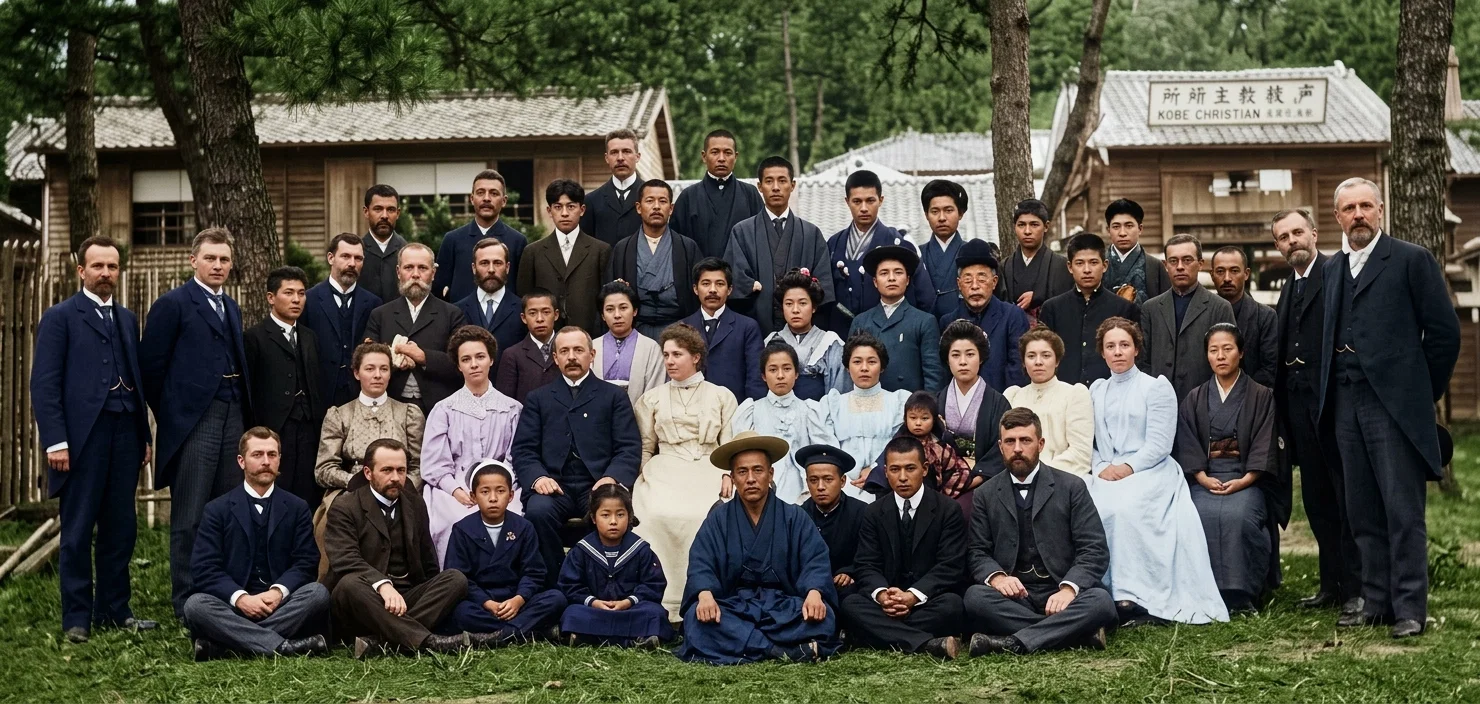
A COMPANY OF MISSIONARIES AND JAPANESE CHRISTIANS AT THE KOBE CONFERENCE
Somewhat later a sanitarium for the benefit of the Japanese was opened in the same city. The work of this latter institution has been greatly blessed as a means of winning for Christ a goodly number who were formerly in the darkness of heathenism.
Evangelical work has been carried forward in various other places, with a good degree of success, and there are now companies or organized churches of believers in this truth in different parts of the main island, Hondo, and on the island of Kiusiu. A goodly number of native evangelists have united with the foreigners in proclaiming the second advent message in Japan, and their efforts have been blessed with encouraging results.
In connection with the evangelical and educational work at Tokyo, there is a small printing establishment, where a monthly paper and other literature are issued in the Japanese language.
The marked change which has come over this very interesting country during the last few years has attracted the attention of the whole civilized world; and not the least among these changes is the decay of heathenism. Inasmuch, however, as Christianity has not fully taken the place of the old combination of Hinduism, Confucianism, and Shintoism, Japan has been described as a nation without a religion. It is evident to all intelligent observers that this is a most opportune time for presenting the gospel of Christ to those who are just emerging from heathenism. Japan is certainly among the “all nations” to whom the gospel of the kingdom must be preached before the end will come; and the good news that, “The time is fulfilled; the kingdom of heaven is at hand,” must be made known to the forty million dwellers in this island empire.

A Leper Who Was Healed

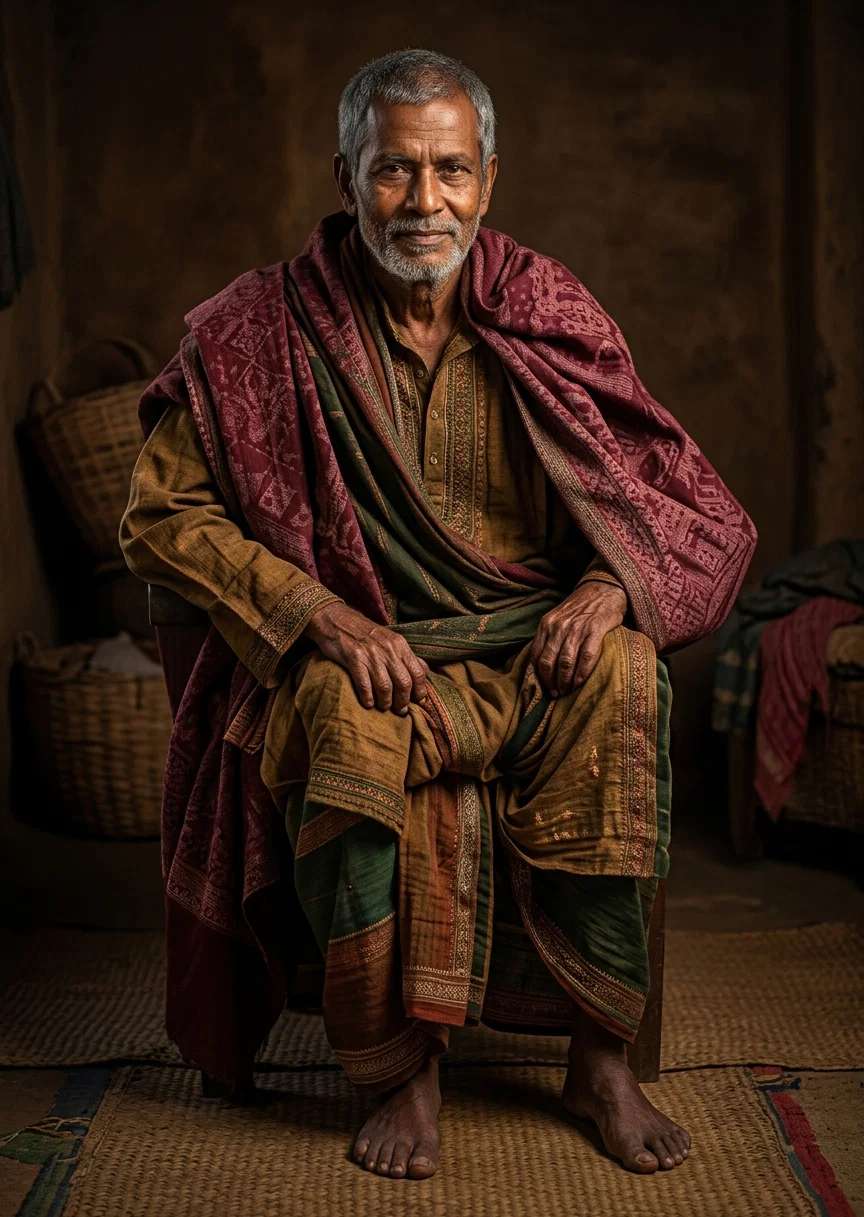
THE HEALED LEPER
THE HEALED LEPER
NEAR Gopalgunj, in East Bengal, lives Sadhan Chandra Sircar, an aged brother who, in answer to prayer, was healed of the leprosy over thirty years ago. From a child he had been a victim of that awful disease. For many years—nearly half a century—he had prayed to all the Hindu gods for deliverance from it, but no relief came. One day a godly missionary came to his home in a boat, told him about the true God, and left him a copy of the Gospel of Matthew. He read it, and learned that Jesus of Nazareth healed the leprosy. He began to pray to him, and for three days he and this faithful missionary sought the Lord in his behalf. God heard their cries, and he was healed. For thirty years he has stood before the world a living testimony of the power of Jesus to cleanse the leper.
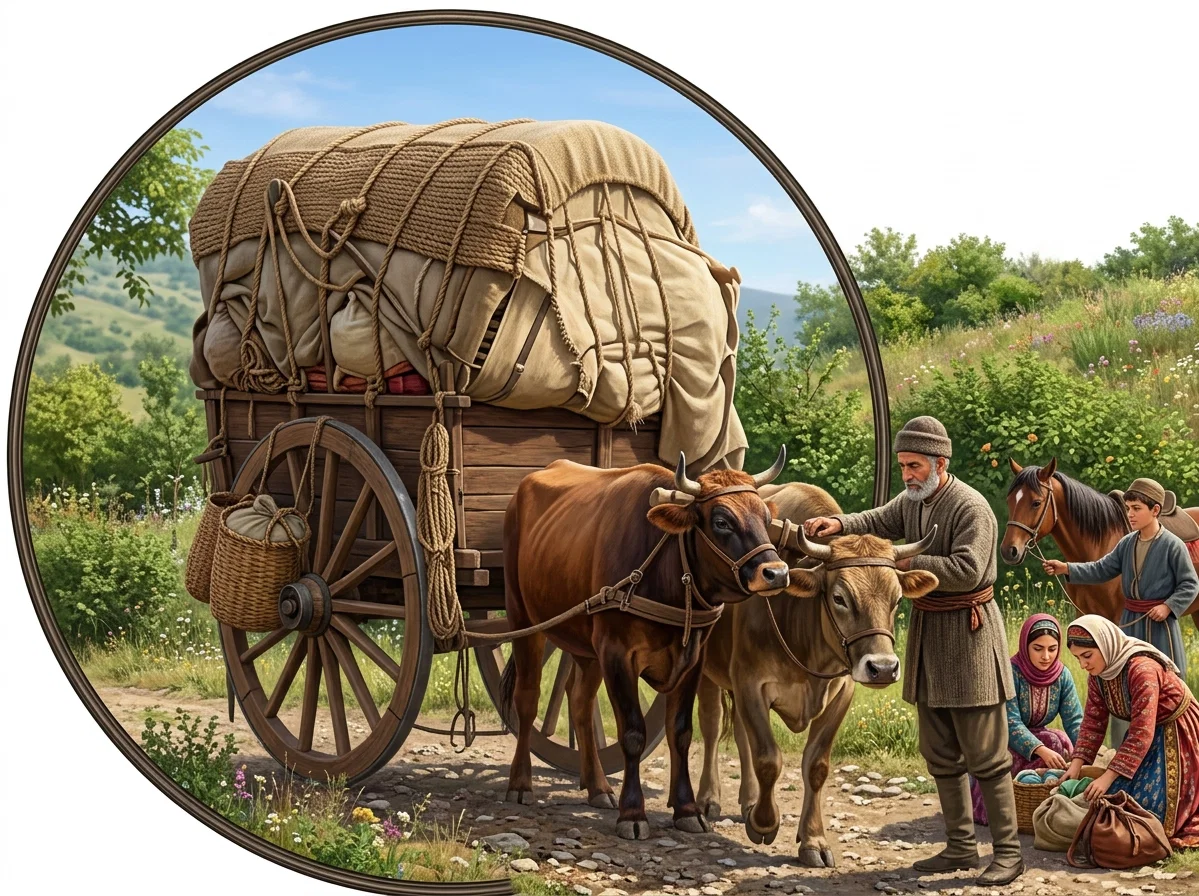
A TOWN CARRIAGE
A TOWN CARRIAGE
About a year ago this brother, now eighty years of age, received our Bengali tract, entitled “Christ and the Sabbath.” He learned that the same Jesus who healed him of the leprosy kept the seventh-day Sabbath, and he began keeping it also. In many villages among the jungles of India there are other faithful souls who are seeking for light.
GEO. B. THOMPSON.

A Great Empire

The Indian empire, including Burma, is a vast aggregation of nations and tribes and tongues. It is like a human beehive of over three hundred million people. The United States has about twenty-two inhabitants to each square mile, while India has nearly one hundred seventy to each square mile.
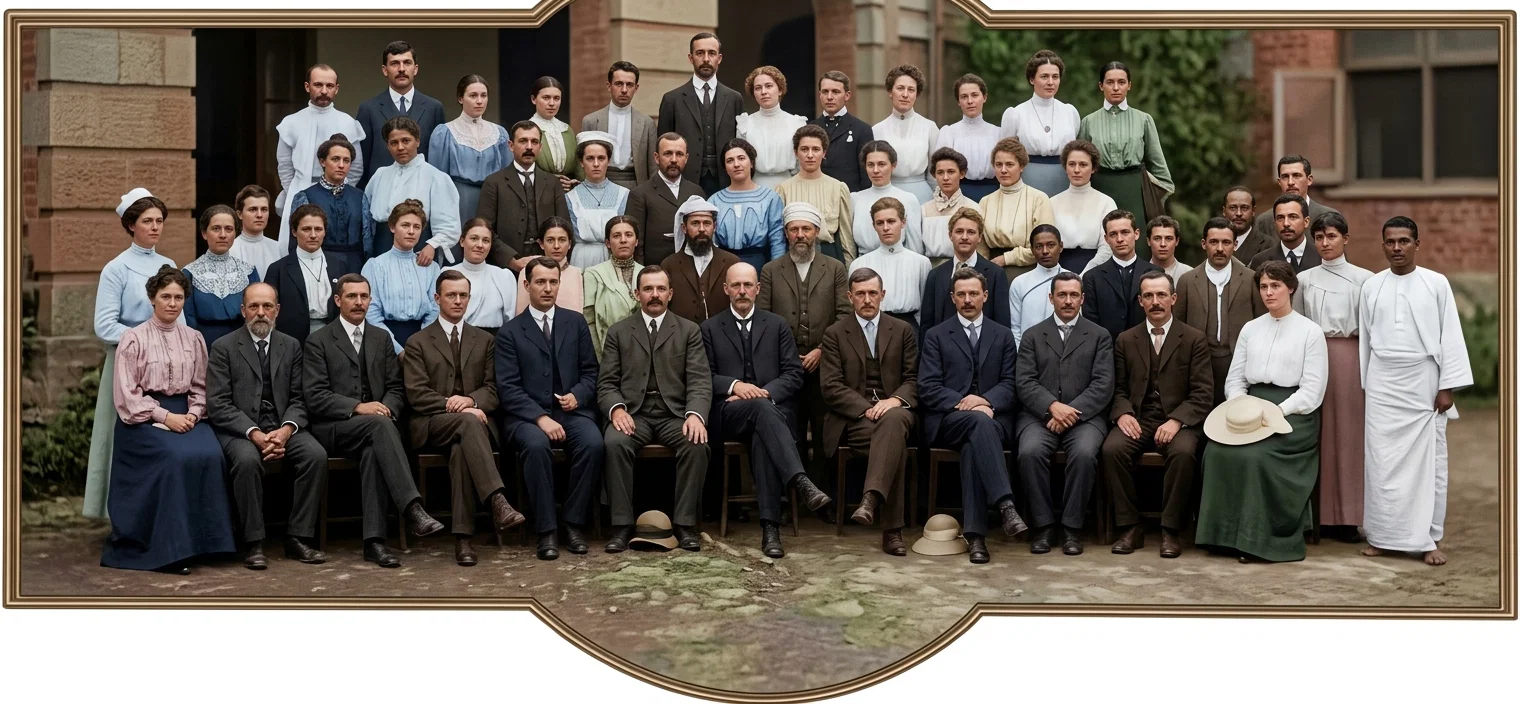
A GROUP OF OUR WORKERS IN INDIA
Religiously it is the “Gibraltar of heathenism.” The two hundred seven million Hindus are divided into innumerable sects, and the Mohammedans number over sixty-two million. The Parsees, the Jains, the Sikhs, the Buddhists, and others, enrol still other millions of votaries. Their gods are innumerable, in earth and sea and sky.
In among these people, judgment-bound, the message of the coming of the Lord is being carried. “From the Himalayas to Cape Comorin” is the phrase that sums up the expanse of India. Though our work in India is but fairly beginning, our line stretches from the Himalayas to the cape.
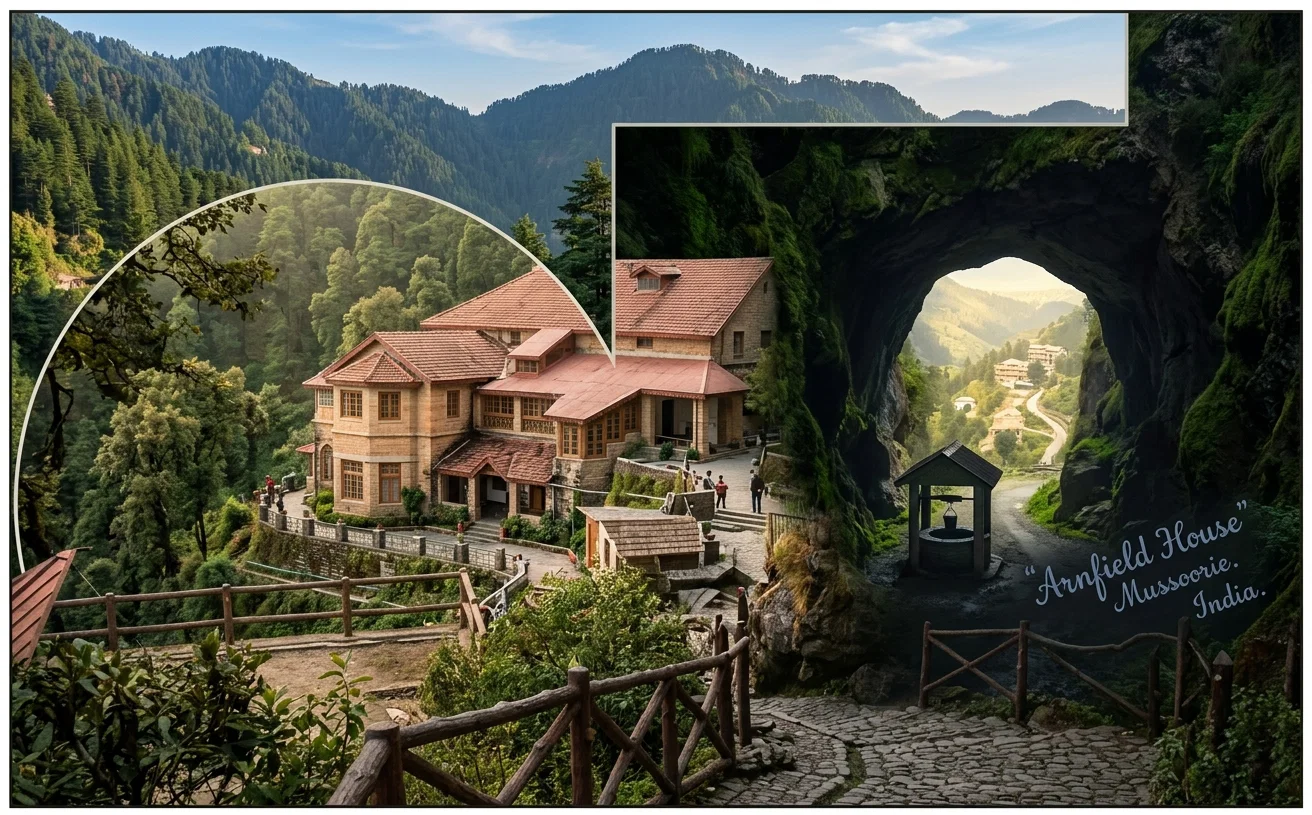
Our Indian mission headquarters is in Calcutta, where there are also sanitarium treatment-rooms. The publishing office is in Karmatar, West Bengal, in connection with the orphanage school. At Mussoorie, in the Himalayas, is the mountain headquarters, with a hill sanitarium and medical mission in successful operation. On the Bombay side, and in South India and Ceylon, in Dehra Dun and Lucknow, on the plains of the North, in the Santal country, in Bengal, and in Rangoon, Moulmein, and other points of Burma, work is going forward from various mission centers. The very heathen are expecting the end of the age. The message of the coming King is due to India’s millions.

On the Edge of Famine

Our dispensary work in Karmatar calls us out to many villages, and brings us into close contact with the people. Last week while on the way to visit a patient, our cart was stopped at a little mud hut, where we found a man ill. He looked to us as if he were starving. We found that once a day he ate a little rice. His only relative was a nephew, who herded cows for a small allowance of food for himself, and this he divided with his uncle.
As we were coming home that night, we inquired of the man who drove our cart about the sick man and others of his village.
“Families live on one pow (half a pound) of rice a day, Mem-sahib,” he told us. “This they boil into mar (soup), the only meal of the day.”
“But do not the children cry from hunger?” we asked.
“Yes; but what can they do?”
They will not be able to get work until the rice season. Think of a family of six or eight living on half a pound of rice a day, not even salt with it.
THE MISSION HOME AT MUSSOORIE, IN THE HILLS
As we were about to come away from a village one night, a hard storm came up, and I offered a man two annas (four cents), if he would drive us home. He fairly shouted, “Yes, Mem-sahib.” When we started, we found two men going. They said, “We want to divide the two annas to buy rice.”
We have started a fund to help those in need, and hope some of our brethren will add to it. DELLA BURROWAY.

India Astir

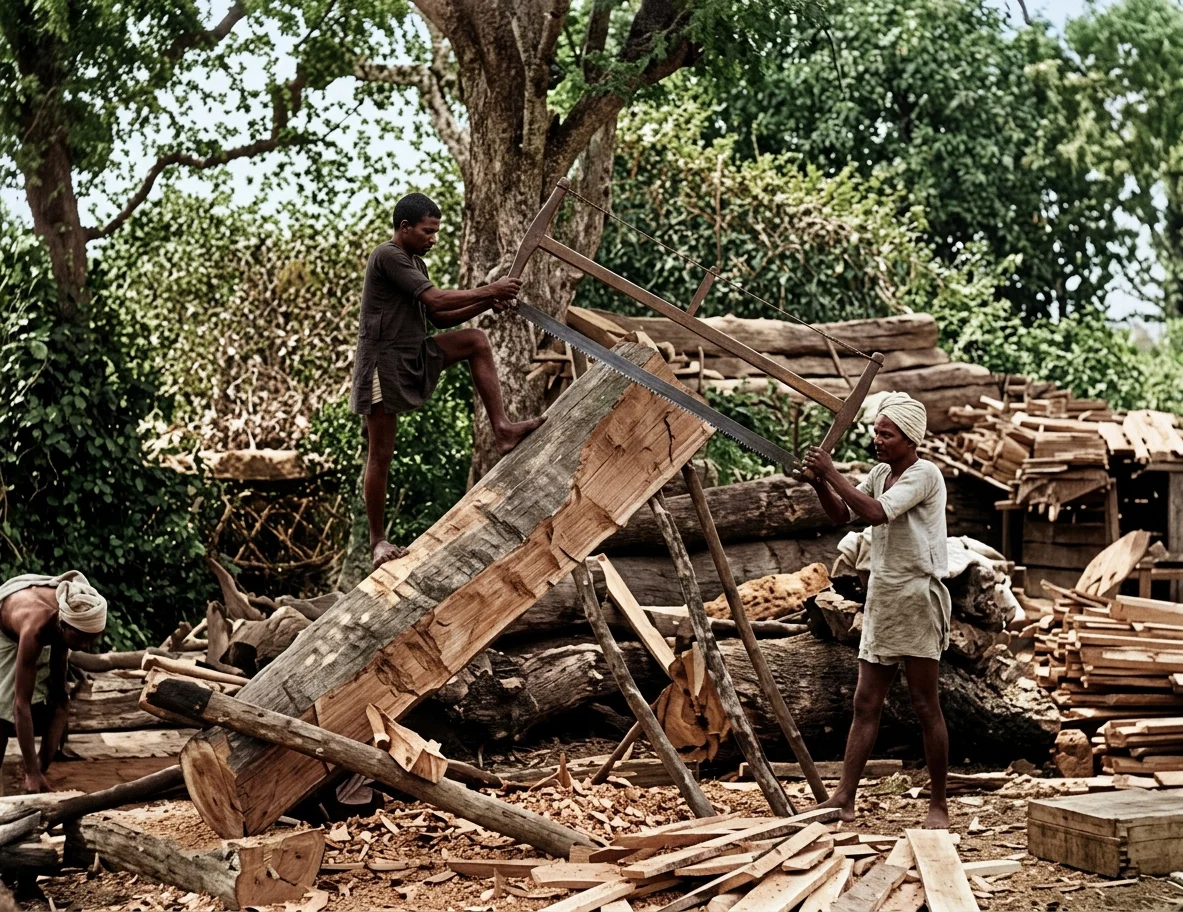
A PRIMITIVE SAWMILL
A PRIMITIVE SAWMILL
AMID the mutterings of unrest that cause the gravest anxiety among statesmen and observers, our little band of missionaries in India are doing what they can to advance the message of truth. While the angels of peace hold in check the elements of strife and destruction, our workers in different places are following the providences of God.
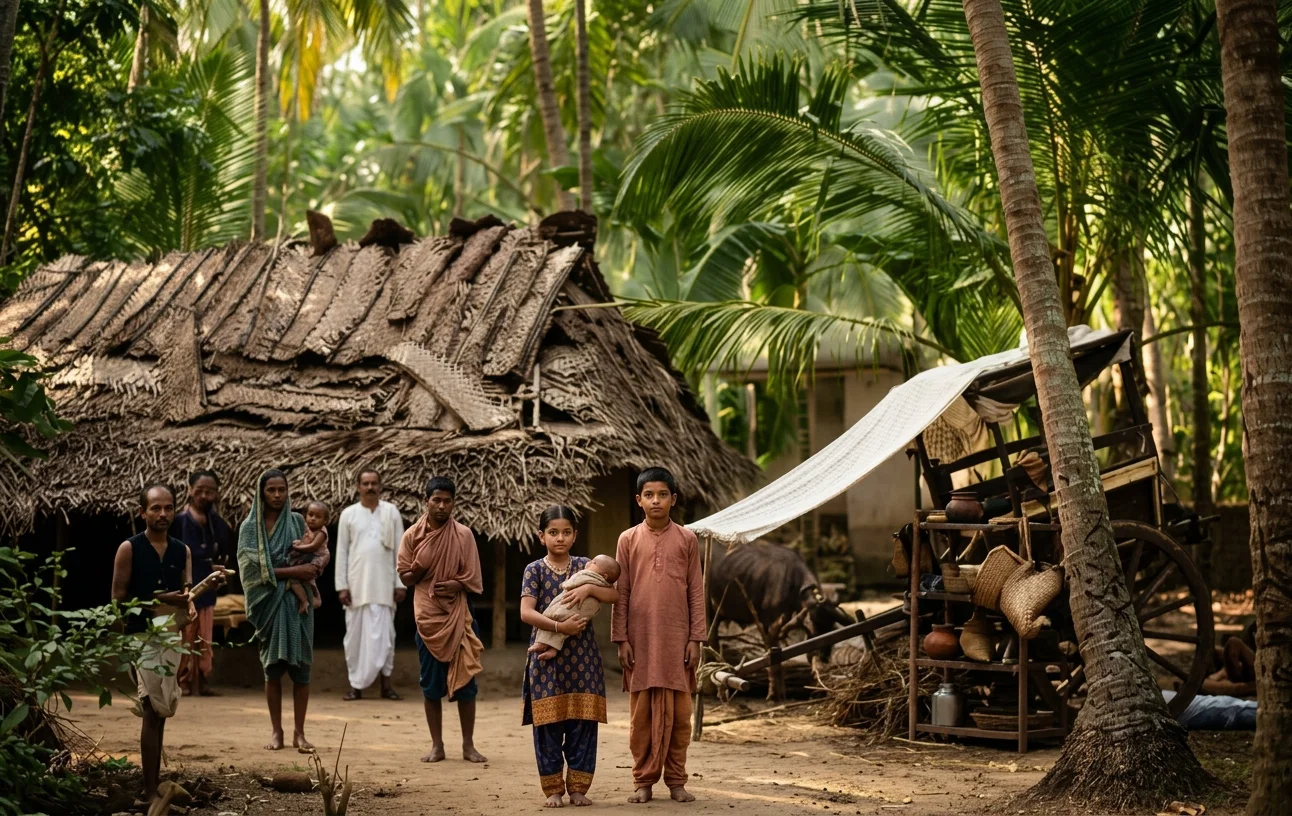
AN INDIAN HOME
AN INDIAN HOME
Already a beginning has been made in the translation of our literature into eight different tongues, as follows: the Bengali, spoken by 44,000,000; Hindi and Urdu, by 87,000,000; Tamil, by 16,000,000; Santali, by 2,000,000; Marathi, by 18,000,000; Burmese, by 8,000,000.
Our literature is being widely scattered. We are finding that small pamphlets can be readily sold. A young native convert sold seven hundred copies of a little Hindustani booklet on present truth in one month. So the advent message is going. Our printing-office at Karmatar is inadequate to the work. Another press and more help are needed.
Aside from our efforts in these tongues some are devoting themselves to work in the English language. It is estimated that there are five million natives of India who can speak the English language, and year by year the number is increasing. In large cities the rising generation is fast getting hold of it.
Is not this an evidence that God is opening the door for the entrance of his Word in this land? And can we not see him going out before us, and hear, in the wide diffusion of English education in India, the voice of God saying, Now, just now, is the time to take hold in earnest in the East?
J. L. SHAW.

Heard Among India's Women

“Surely God Must Have Sent You”
THESE words were spoken by one of India's millions—a young woman with a sad, sweet face.
In going to my work one day, I noticed a path among the trees that I had not seen before. I was impressed to follow it. It led to a house in which I found a young woman crying bitterly. I learned that she had lost her only son, and was heart-broken in her hopelessness.
Sitting down by her side, I told her in a few words the story of the Saviour, and of his love and pity for her. On learning that I spent my time in this way, she exclaimed, “Surely God must have sent you to me. Do come again, and tell me more about this Jesus.”
Indian Girlhood
“I shall die, I shall die, I shall die!”
It was a child's cry. I was walking along the Balliaghata district of Calcutta, when the piercing wail rang in my ears. Turning down a street, I came upon a little group standing by a carriage. A bright-faced little girl of ten or eleven, sobbing and crying, clung to her mother's garments.
“O mama! mama!” she cried. “Don't send me away; don't send me away; I shall die, I shall die!”
I saw what it was. The little one had been married.
“How can you send such a little one away from home?” I asked.
“Ah, Mem-sahib,” the mother replied, “it is our fate. We women of India are under a curse. It is our custom, and there is no help for us.”
It is to these Indian sisters of ours, in their sorrows and darkness of soul, that we are called to bring the light and joy of the gospel.
MRS. GEORGIA A. BURGESS.

In a Typical Armenian Village

We have only one brother and one sister in the faith in this village of Laleders. These were very anxious that I should visit them, and speak to some of the village people. Last evening between sixty and seventy persons gathered to talk, ask questions, and hear a lesson from the American who had come to their village. Through my faithful interpreter the Lord blessed as I opened to them the simple, practical truths of the gospel. Buried in the dark superstitions of the old Gregorian Catholic Church, many being unable to read, only the simplest lessons can be grasped by them.
My interpreter and myself were seated each on a minder (the cushion placed on the floor of a Turkish house, which serves in the place of a chair) at one end of a room, with a low table about eighteen inches high before us. Upon this were placed a lamp and a large ancient Armenian Bible. At each side of the room, and across the center, minders were laid, which were occupied by the Armenian villagers.
Though this village is but about forty-five miles from Constantinople, the people, in common with many other villagers within a short radius from Constantinople, seem nearly as far removed from the world of affairs as they would be if the desert of Sahara intervened. Villages of two and three thousand inhabitants have no postal service.
GOING TO THE FAIR IN SPAIN
To all who could read the Armenian we gave some of our Armeniantracts. There are hundreds of these places, which have never been entered by Protestants, to which we long to send workers. Of course progressive work in any place is liable to be interfered with by the government, but with care one can go ahead even under difficulties.
C. D. AcMoody.
Constantinople.

The Levant Union Mission

WHAT a wealth of historic associations cluster round the Mediterranean shores!
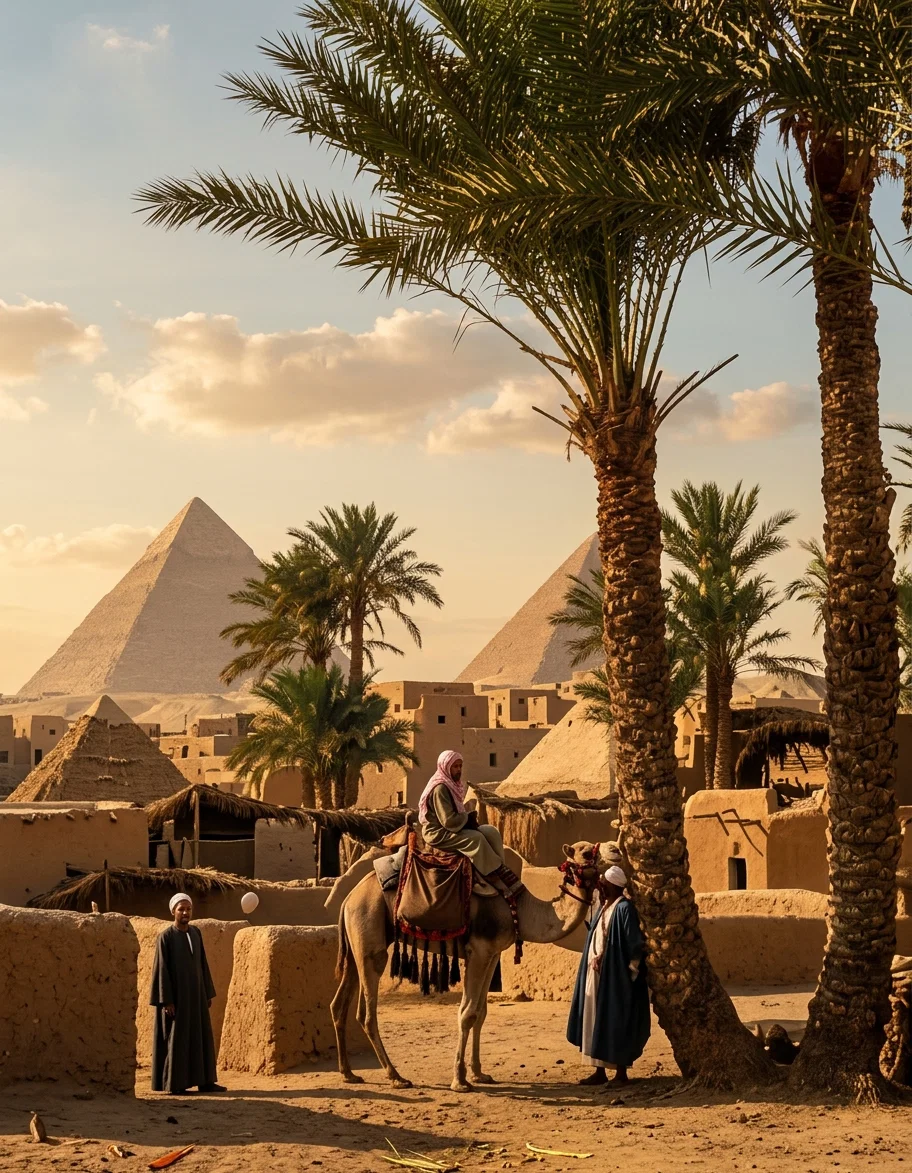
IN SIGHT OF THE PYRAMIDS
Old Dr. Samuel Johnson said:— “The grand object of all travel is to see the shores of the Mediterranean. On these shores were the four great empires of the world,—the Assyrian, the Persian, the Grecian, and the Roman. All our religion, almost all our law, almost all our arts, almost all that sets us above savages, have come to us from the shores of the Mediterranean.”
The word Levant suggests the region of the sunrise, which, to old-time Europe, was the eastern Mediterranean. In the Levant union organization are grouped our missions in Greece, Turkey, Syria, and Egypt. Fifty millions of people live in these lands of the Bible story—Greeks, Turks, Armenians, Arabs, Syrians, Egyptians, Copts, and many others, among all of whom our work is beginning.
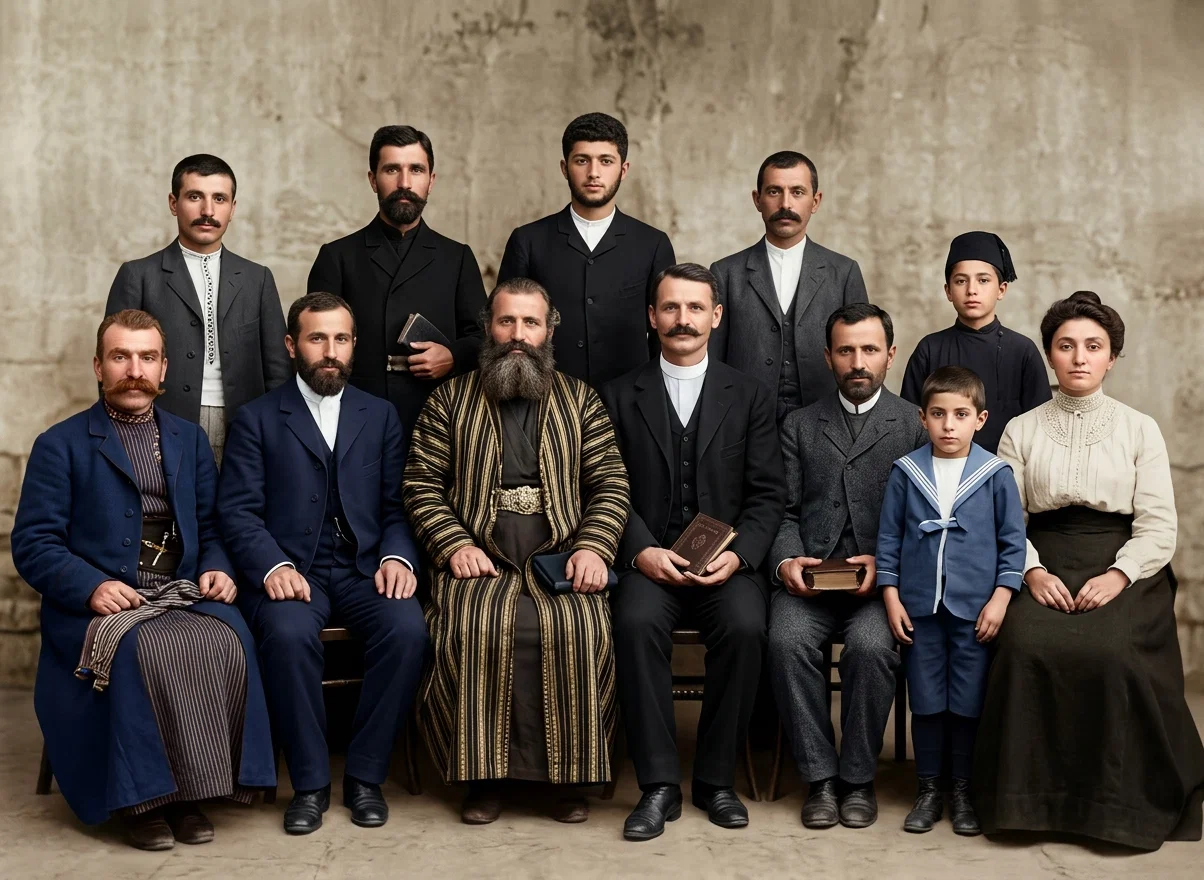
In 1889 a Greek shoemaker, who became a Seventh-day Adventist in California, returned to his former home in Constantinople to work at his trade and to sow seeds of gospel truth. Through this simple ministry, others received the light, among them a young Armenian theological student, Z. G. Baharian, who began to preach and to publish the message that had come to him.
Adventist believers are now located in Constantinople, Nicomedia, and in the provinces of Bithynia, Galatia, Pontus, Iconium, and Cilicia, where Paul and other New Testament missionaries once labored. Again and again our Armenian workers have been driven about or imprisoned, even as apostolic missionaries were; but God has delivered them, and the work has increased.
Our Armenian, English, and German missionaries are located in Constantinople, Smyrna, Athens, Beirut, Jaffa, Jerusalem, and Cairo.
A MISSIONARY AND HIS ARMENIAN HELPERS
Eastward in this field our work has reached the region of Damascus and the Euphrates Valley, and representatives of the remnant of the ancient Assyrian nation have received the faith. Southward our outpost is Luxor, on the Nile, by the ruins of the ancient temple of Karnak, though it is said that our publications are known among many villages, from Alexandria to Assouan. The languages thus far represented are the Turkish, Armenian, Greek, Syrian, Arabic, and Coptic.
Continue reading: In Catholic Europe