HUNDREDS of Catholics in Europe are every year obeying the call of this message to forsake papal tradition, and keep “the commandments of God, and the faith of Jesus.” While naturally our work has spread more rapidly in Protestant Europe (as in Great Britain, Germany, and the Scandinavian countries), the Lord is blessing our missionaries in the darkest Catholic regions. Here is a brief survey of Catholic Europe:—
In Portugal, where it seemed most difficult to get a foothold, are now two mission stations,—at Lisbon and Oporto,—and baptisms of believers are reported even amid the political upheavals.
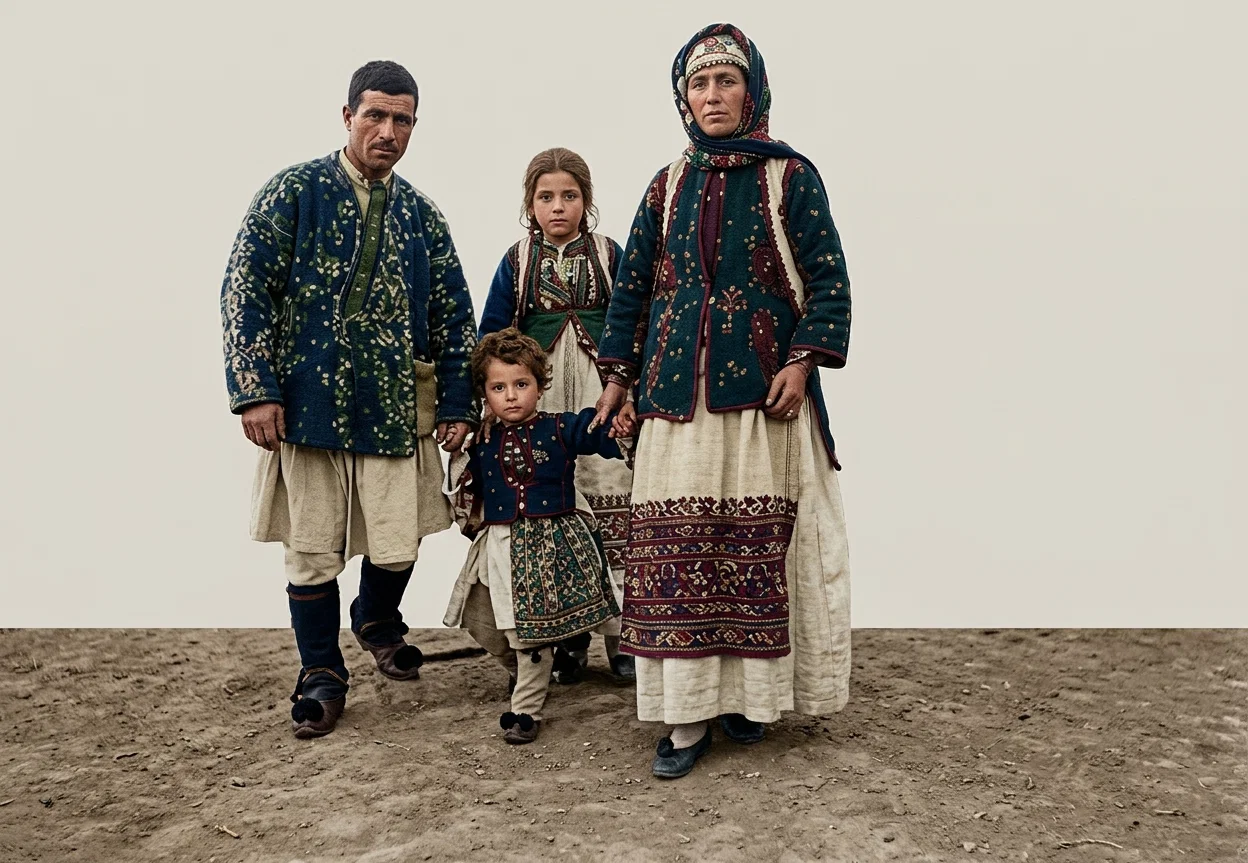
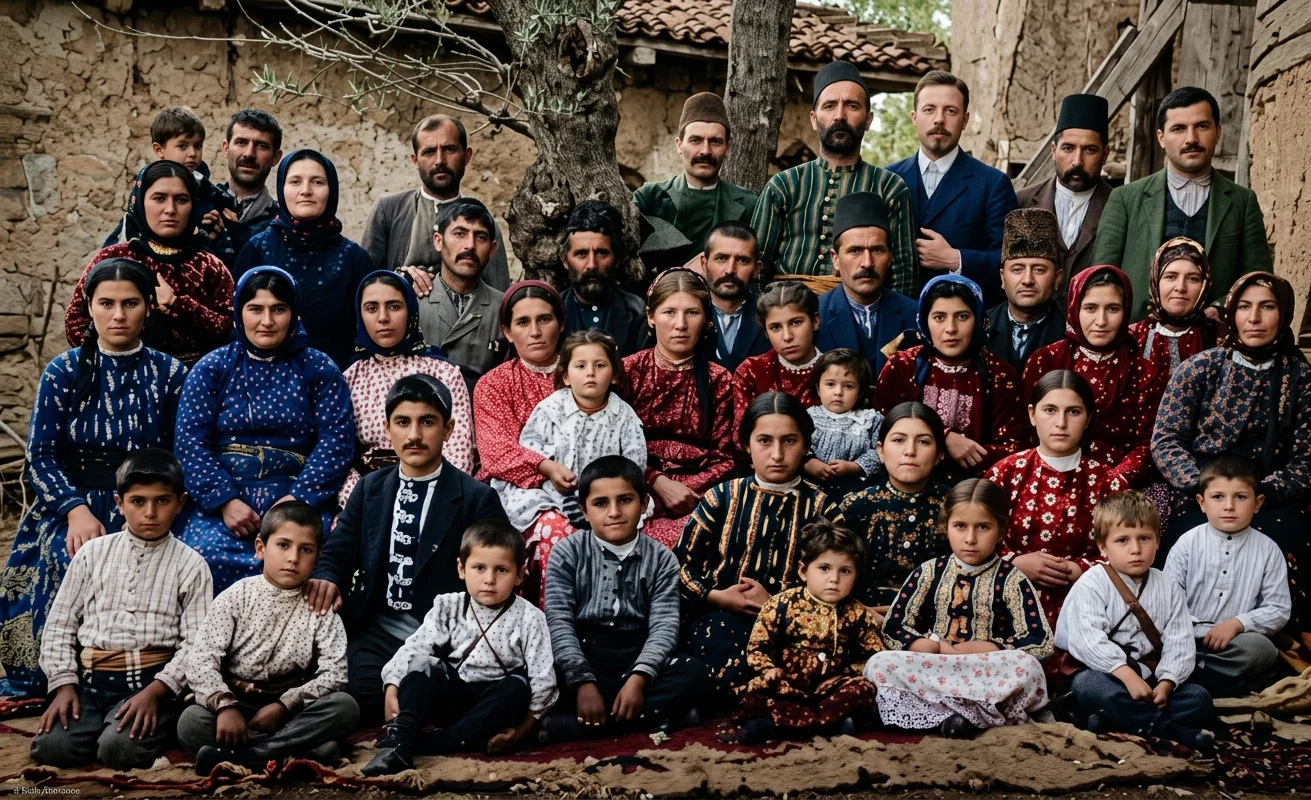
A GREEK PEASANT FAMILY
In Spain, baptisms are reported in the cities of Barcelona and Valencia, where public services are well attended in spite of priestly opposition. “Do you preach Jesus in this house?” earnestly inquired one Catholic lady, seeking for light. A colporteur, arrested while distributing tracts, gave one to the chief of police. After reading it, the chief said: “For my part, I am ready to give this man his liberty, and let him go on selling these tracts.” Our workers, who have entered but four or five of the forty-nine provinces, call earnestly for more preachers, teachers, and colporteurs,
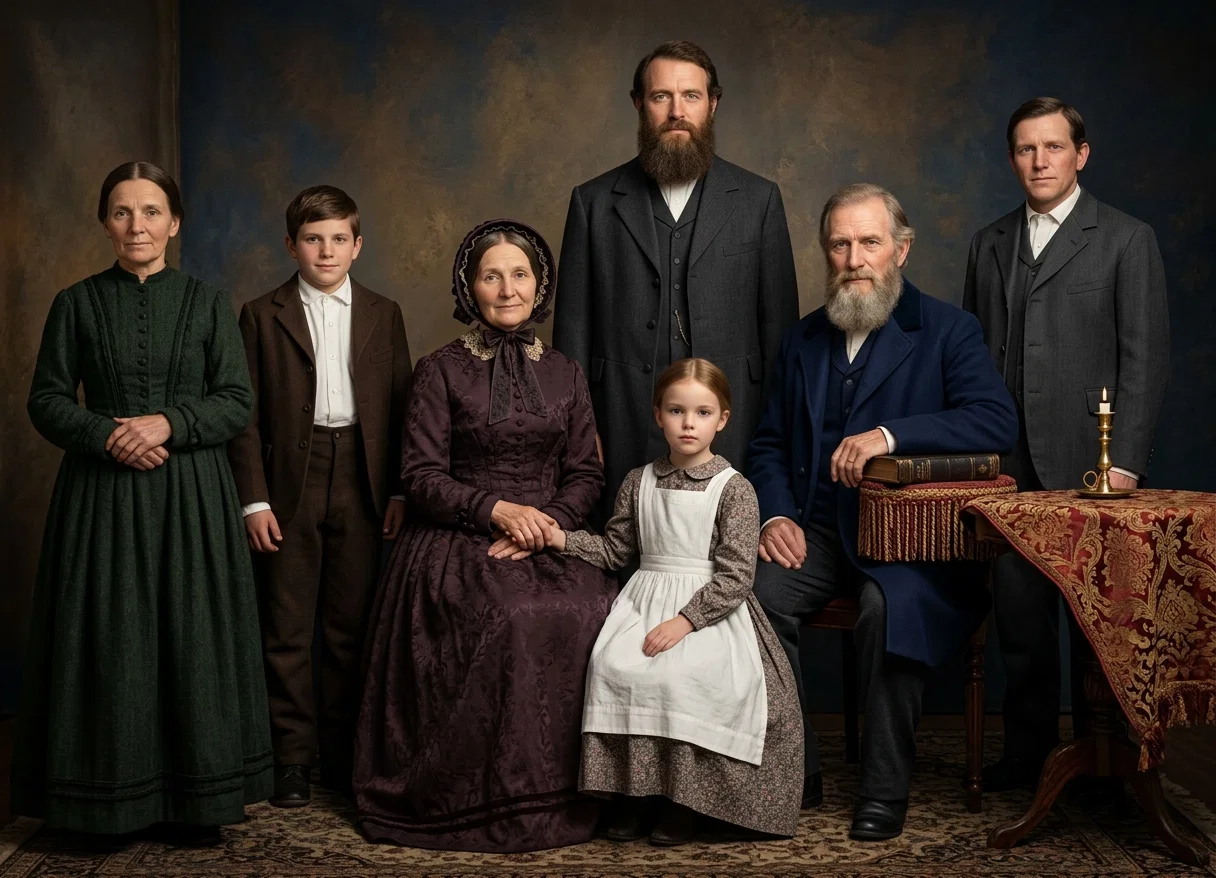
A WALDENSIAN FAMILY
In Italy this clear-cut Protestant message is being preached in Rome itself, almost within the shadow of the Vatican; also in Naples and the south, and in Turin, Genoa, and the Waldensian valleys of the north. In one village, near Turin, where our workers opened meetings, the priest had the alarm bell rung to warn all the people against the Adventist preachers. Believers have been baptized in that village since then.
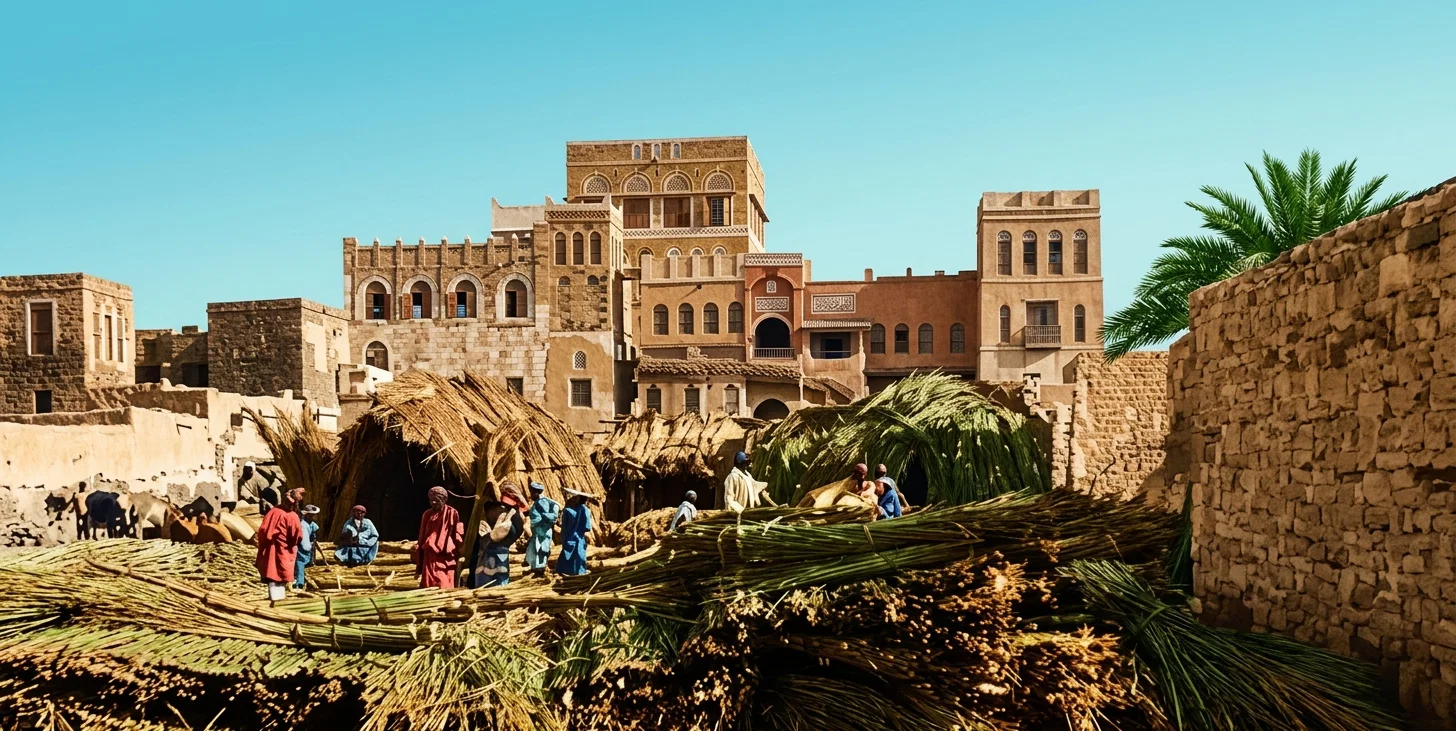
THE SULTAN'S PALACES, ADEN
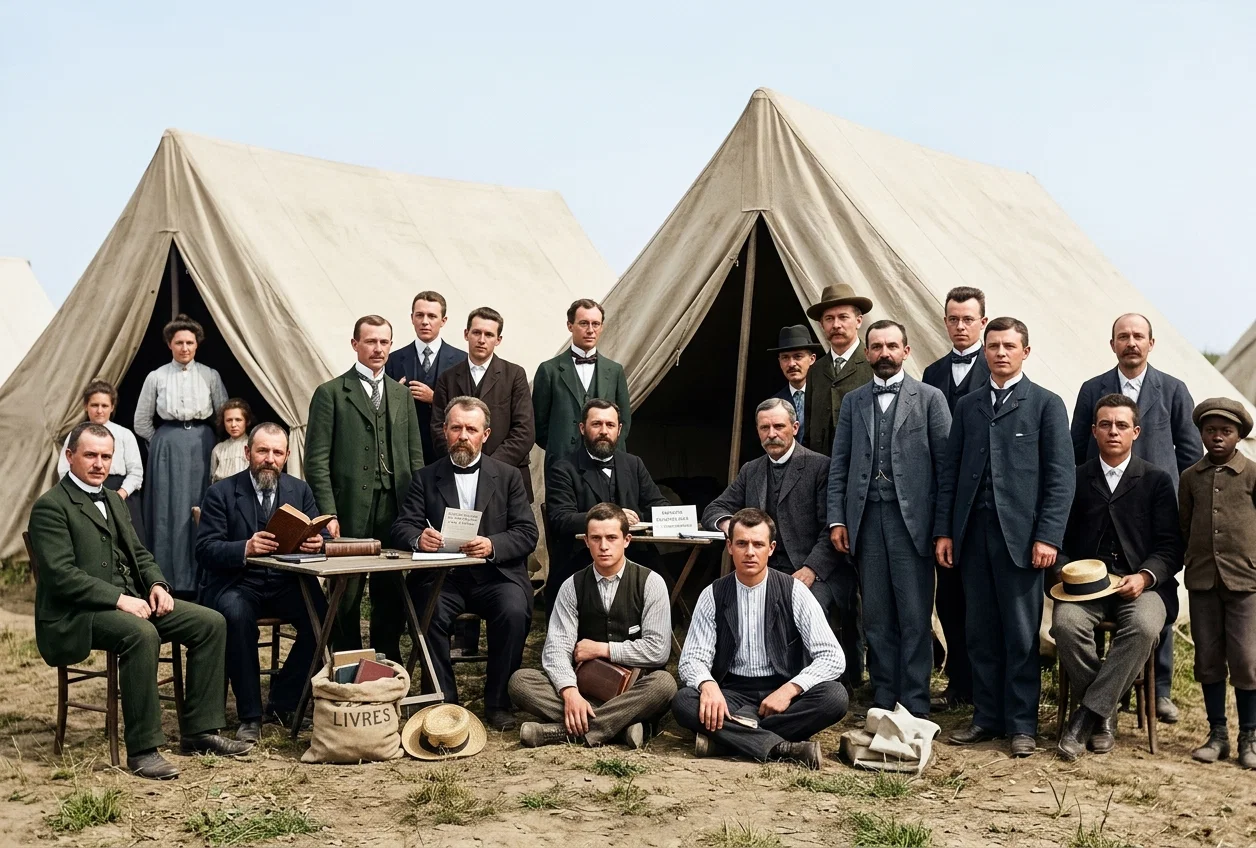
MINISTERS OF THE GOSPEL IN FRANCE
A COMPANY OF CHRISTIAN BELIEVERS IN ASIA MINOR
Until little more than a year ago, religious liberty was denied in Bavaria, South Germany, and our people had sometimes to meet in secret, and were often arrested and fined for attending religious gatherings. Still they persevered, and the work grew. Then, on April 19, 1907, the hearts of our brethren were made glad by the publication of the following decree:—
“His Royal Highness, Prince Luitpold, regent of the kingdom of Bavaria, has graciously granted that the Seventh-day Adventists be permitted to freely perform their religious services in Bavaria.”
Recently the annual meeting of the South German Conference was held in the ancient city of Nürnberg, in Bavaria, with delegates from thirty-three companies of believers. The president of the conference wrote: “As the persecution of the early Christians could not hinder the spread of Christianity through the Roman empire, so in our experience in Nürnberg and the churches of Bavaria, persecution was not able to stay the progress of truth. Last year we had two hundred seventy additions in the conference.”
A FAMILIAR SIGHT IN LISBON
In little Switzerland nearly a thousand believers are living and preaching the message; and we have churches in Brussels, Antwerp, Paris, Nîmes, and other centers of the French and Flemish Catholic countries.
Amid police restriction and ecclesiastical censorship our workers are finding ways of carrying the blazing light of truth into Austria. The latest move in that country is to send a missionary into the province of Croatia, where millions have never heard the pure gospel.
The Lord is visiting the Catholics with the gospel message of his soon coming.
The Jerusalem Sanitarium
By Ludwig Krug
THE natural-cure method of treating disease is not as popular here as in Europe. However, when people fail to secure relief by the method of drug medication, they turn to the moye hakim, or water-doctor, who is known far and wide in the city. Our patronage comes from Russians, Arabs, Mohammedans, Greeks, Italians, French, Africans, Austrians, Hungarians, Jews, Spaniards, Germans, and English,—in short, from most of the nationalities represented here.
LUDWIG KRUG.
The Russian Empire
HUTCHINSON’S “History of the World” says:—
“One of the most remarkable developments in the history of the nineteenth century is the sudden advance of Russia in European and Asiatic influence.”
Its area stretches out over more than one seventh of the total land surface of the globe. About fifty distinct nationalities are gathered within its borders, and work for all of its one hundred thirty millions requires the use of about forty leading languages, besides many dialects.
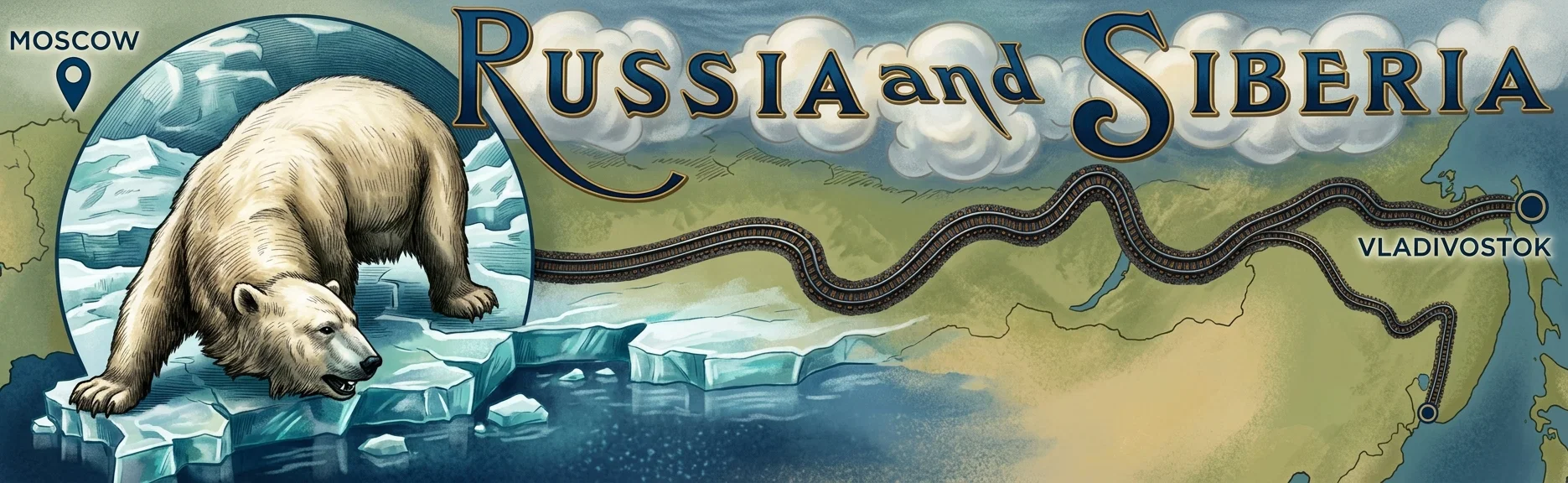
In educational and industrial development, Russia has made marvelous strides, while the progress toward constitutional forms of government has awakened new hopes in the hearts of the people. Many thousands from European Russia are emigrating to Siberia. The railways projected into Siberia have opened up some of the finest agricultural country in the world.
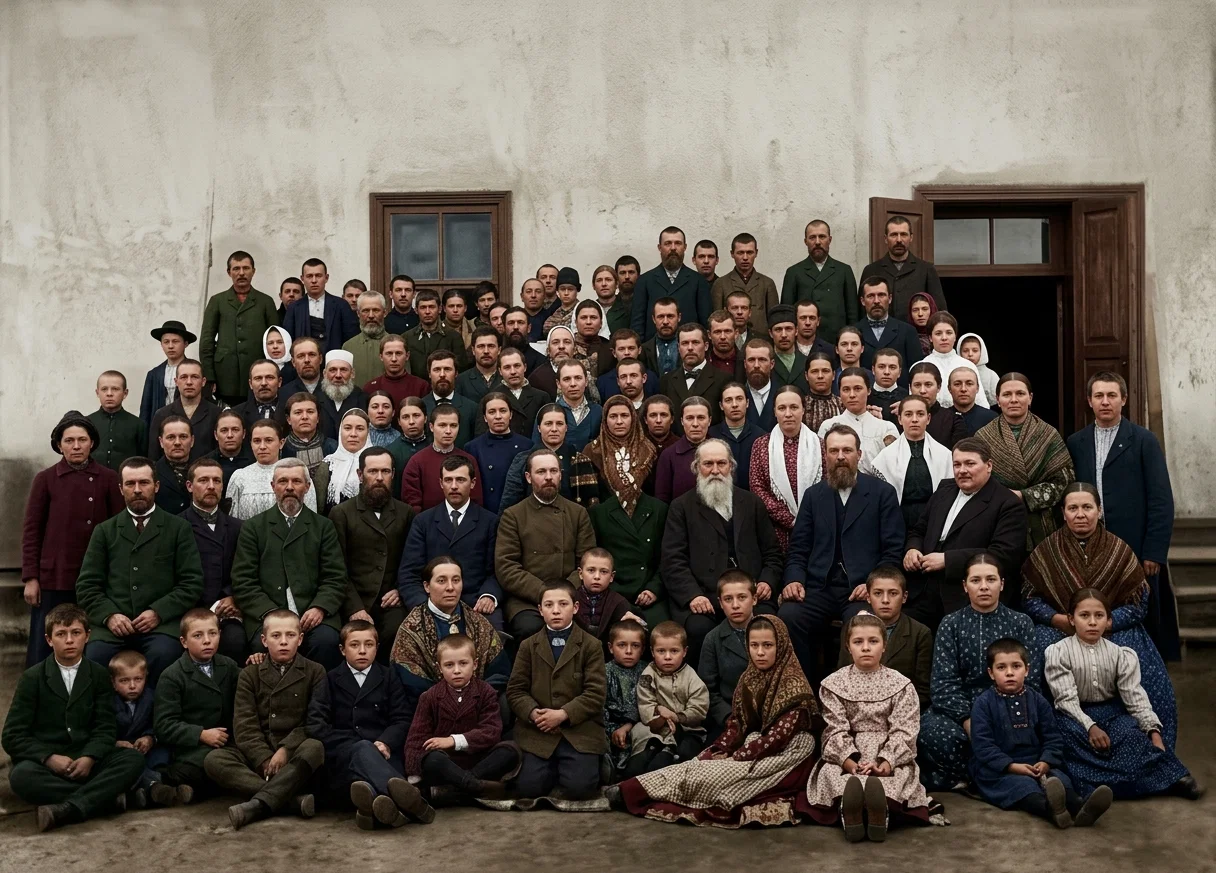
GROUP OF RUSSIAN BELIEVERS
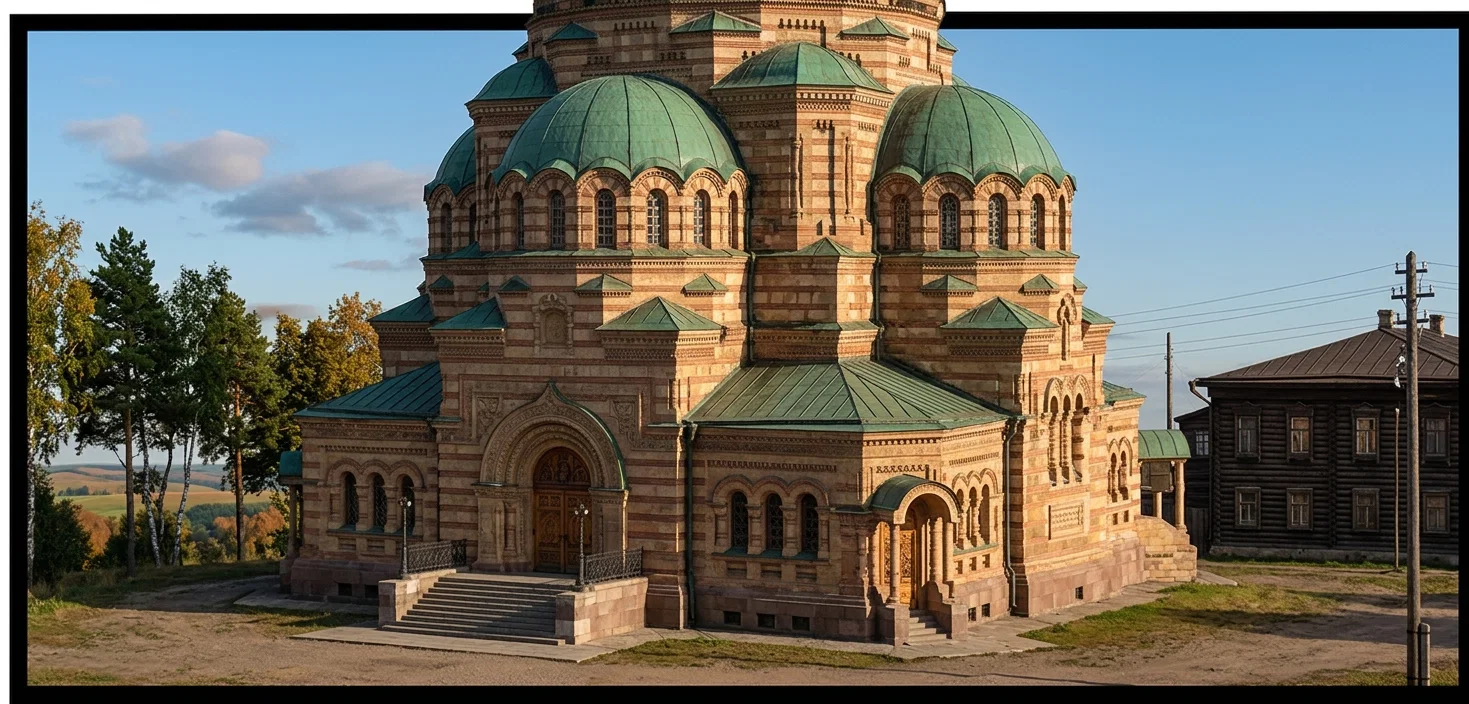
A RUSSIAN CHURCH
Our mission work reaches from Finland in the north, to the borders of Persia, and from the Baltic provinces in the west into Siberia on the east. Riga, on the Baltic, is the headquarters of our Russian Union Conference.
Progress Amid Trial
“You need not pray; your God will not hear you.” These were the scoffing words oft repeated by the keeper of a Crimean jail to our first missionaries sent to Russia in 1886. Almost immediately they had landed in jail, accused of preaching heresy. In the old Russia this was a charge equivalent to a sentence to Siberia, and the jailer assured them that this was the road they would soon be marching over. But when, after forty days, by intervention of the United States minister, orders for the release of our two brethren were wired from St. Petersburg, the jailer, who himself delivered the message, said, “Your God has heard you.”
In the years that followed, the message spread far and wide in Russia. Often the workers were imprisoned; the believers were exiled. Others took joyfully the spoiling of their goods to pay fines levied for attending sectarian meetings. “Brother John Perk and others,” says Elder H. J. Loebsack, writing of the former days, “often escaped death only through the use of the rustic costume of the Russians. Under such circumstances,” he says, “the Lord has blessed the work, and spread the truth through the whole of European Russia, and now the message has advanced even into Siberia, and on to the Chinese frontier.”
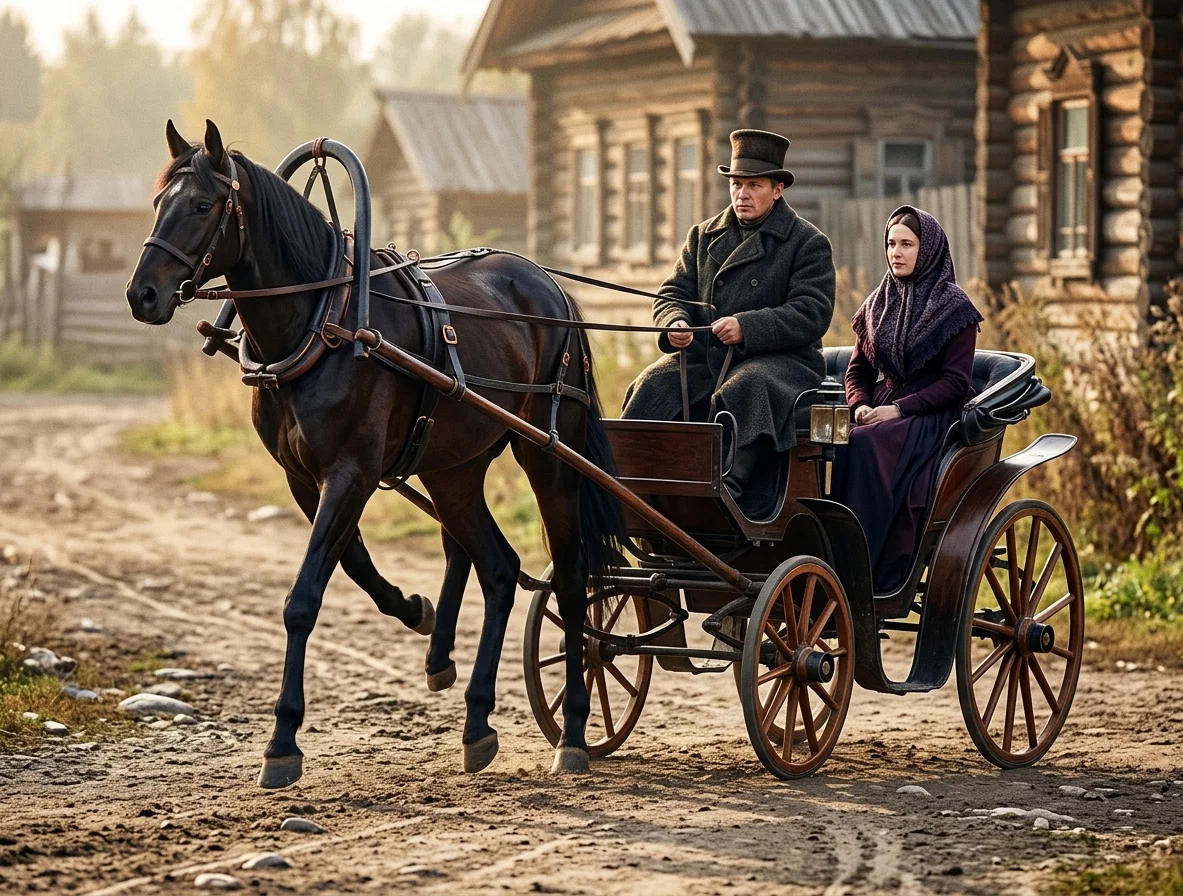
A DROSKY
Then in 1905 came the new policy in Russia; and a modified degree of religious liberty, amounting to a wholesale deliverance, was proclaimed throughout the empire. In the next year, soon after an address signed by the officers of our conferences and mission fields in Russia had been presented to the czar, the Russian minister of the interior, M. Stolypin, issued a decree specifically granting religious liberty to the Seventh-day Adventists.
Last year, just twenty-one years from the time when our work began in Russia, delegates assembled in union conference at Riga sent the following greeting to America:—
“Psalm 133, Greeting. We rejoice that during the last twenty-one years, Almighty God has so blessed the humble efforts of his children in this vast empire, with its one hundred forty millions of people, speaking one hundred languages, that it is now possible to organize a union conference, the union composed of three conferences and three mission fields, with a membership of twenty-five hundred.
“We heartily thank the brethren in America and throughout the world for their generous aid and sympathy in former years, when we suffered persecution and imprisonment and banishment.”
Tribes of the Caucasus
By G. DAIL.
It is probable that nowhere else in all the world are there so many different races, speaking such a variety of languages, as we find within the territory of our Caucasian Conference. Indeed, the Persians have dubbed this “the Mountain of Tongues.” Such peoples they are, too—these hardy mountaineers, who resisted the Russian arms for nearly a century. Some say that there are no fewer than one hundred fifty peoples scattered among the 11,759,600 inhabitants of these regions, and that as many as seventy languages are represented by them.
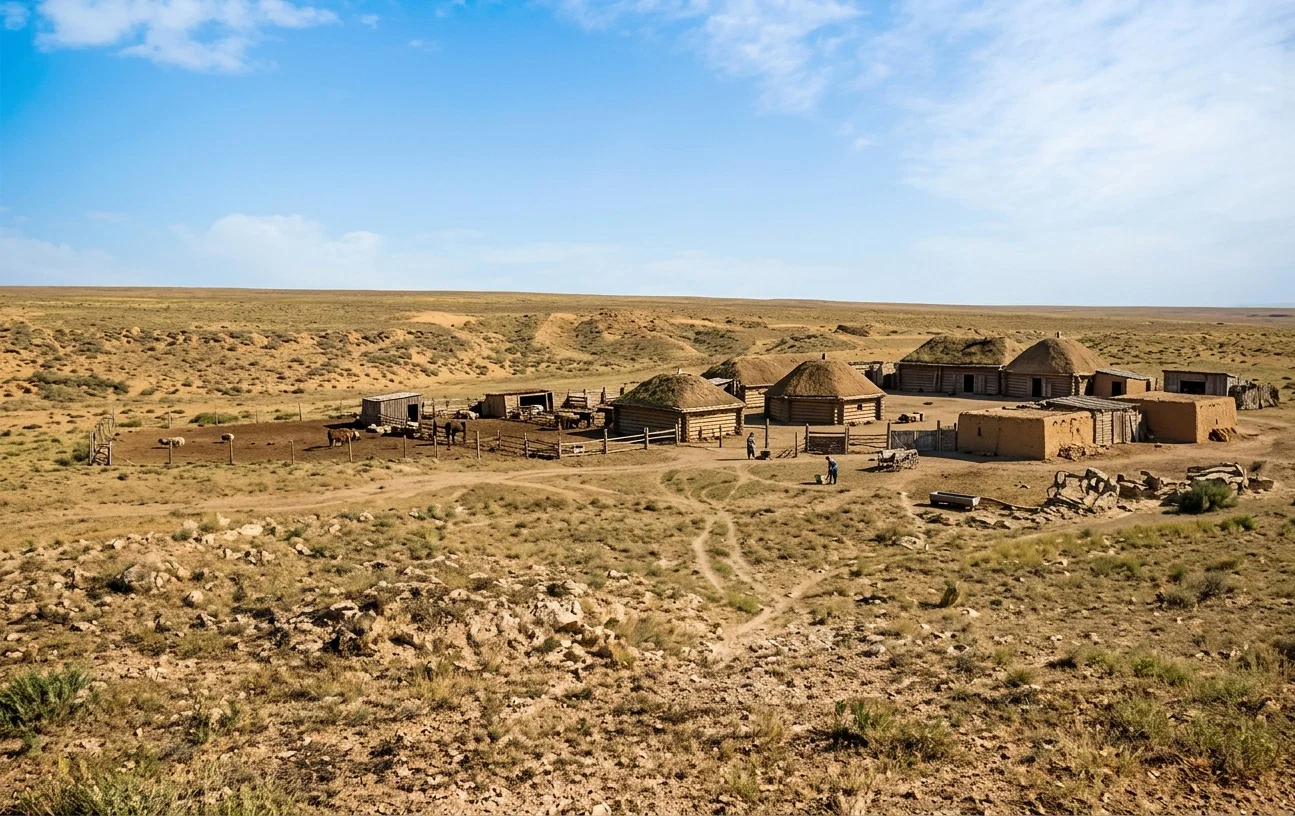
RUSSIAN VILLAGE
These are the Georgians and the Circassians, famed for their personal beauty; the isolated, half-savage Svans, or Svanithians, who, although they number only fourteen thousand, yet, aided by the almost inaccessible glacier-crowned ridges that surround the Upper Inghur Valley, have successfully withstood every attempt Russia has made to collect taxes from them; the hardy Lesghians, “one of the finest races in Caucasia;” the Armenians; the Kurds; the Mingrelians. These and many other nationalities are to be found here.
Then, too, we are not to forget the Russians and the Germans, whose influence will help us to gain access to these various peoples; nor should we omit the Kalmucks, through whose steppes we passed on our way down from Saratof. The Kalmucks have strong Mongolian features. Many of them are large landowners, and wealthy stock-raisers. One of our brethren has been holding Bible readings with an educated Kalmuck, who hears the message gladly, and spreads it among his fellow countrymen wherever he has opportunity.
G. DAIL.
Alexandrodar, Transcaucasus.
How Liberty Was Proclaimed
ELDER H. J. LOEBSACK, of South Russia, tells how the glad news of the granting of religious liberty was carried through that empire:—
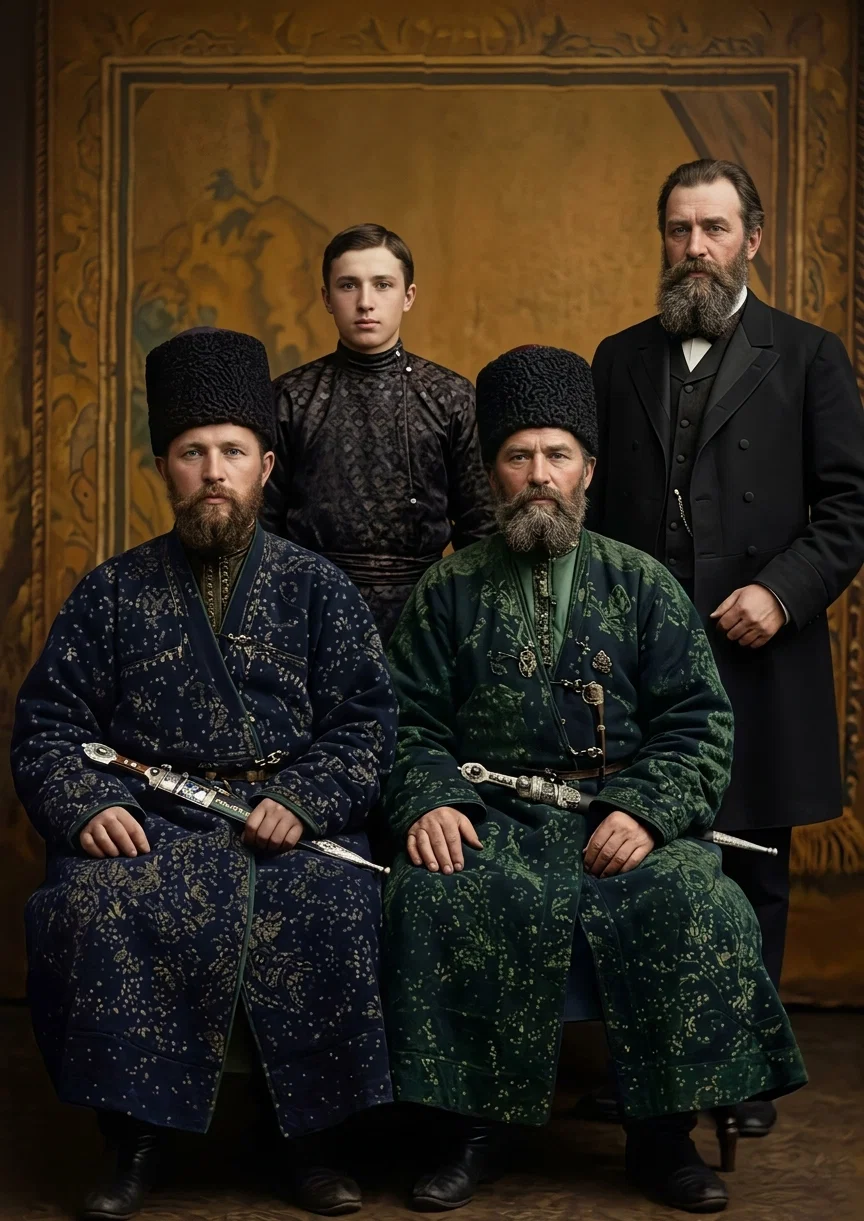
MISSIONARIES AND COSSACKS
“It caused universal rejoicing. For three days the telegraphic message assuring religious liberty to one hundred twenty-five million people in Russia was duplicated and communicated to the people. Pastors of all churches, without reference to their nationality or their creed, read the message to their congregations, and civil officers proclaimed the glad news from the rostrum and from the stump. This act was hailed as a greater boon than the granting of freedom to the serfs by Alexander II, in the year 1861.
“The news went before us into the colonies on the Volga, so that, where we formerly had to baptize by night, and hold our meetings behind barred doors and closed windows, we now assemble freely in the open air, as many as five hundred witnessing our baptismal scenes—and that without any disturbance.
“We have had similar experiences among the Cossacks. The proclamation of freedom of conscience was read in the various Cossack villages. Where, in former times, our workers had to enter the Cossack villages in the national costume, that they might not be detected and put in prison; and where they had to sleep by day, and work by night, with the room so protected that no glare of light might escape to the outside,—where all this was necessary a few years ago, we were able to hold our meetings in broad daylight, with open doors and windows; and no one disturbed us. There were various beliefs represented in the gathering,—while Orthodox Greek Catholics, Old Believers, Baptists, and six or seven Gipsies, who had never heard a sermon in their lives,—and neither priest nor policeman attempted to disturb us. This has been so among the Cossacks since the promulgation of the czar’s manifesto granting to all his subjects full liberty of conscience. We thank God for the freedom he has given us. Let all remember Russia in their prayers.”
At the Foot of Mt. Ararat
One of our missionaries, Dr. V. Pampaian, recently had a stirring experience in a village near Erivan, at the foot of Ararat, the mountain on which Noah’s ark rested after the flood. While calling at a house, a mob gathered outside. He writes:—
“After committing ourselves to the Lord’s care by prayer, I left. The young man who had accompanied me said he would not go out on the street with me. He thought they would not dare to touch me, as I am an American citizen.
“Alone, I stepped out in the street into the midst of the mob. But I had no fear, knowing that they that were with me were more than these. I walked along through their abuses and blasphemies. Soon their angry words began to be accompanied with stones and mud. Hundreds of stones came down like hail, while the bystanders were encouraging them, crying, ‘Kill him! Kill the dog!’ Though many stones hit me, yet they felt as rubber balls. In this manner they continued till I reached the house. When I went in, they stoned the door, calling me out. We wanted to send for the gandar, but there was no man in the house who dared to go out. Although the uproar had spread all over the town, yet no one came to our help. Finally, seeing no other way to get rid of the mob, my landlord, an old man, went out with a revolver in his hand, to frighten them. Thus he succeeded in getting them away.”
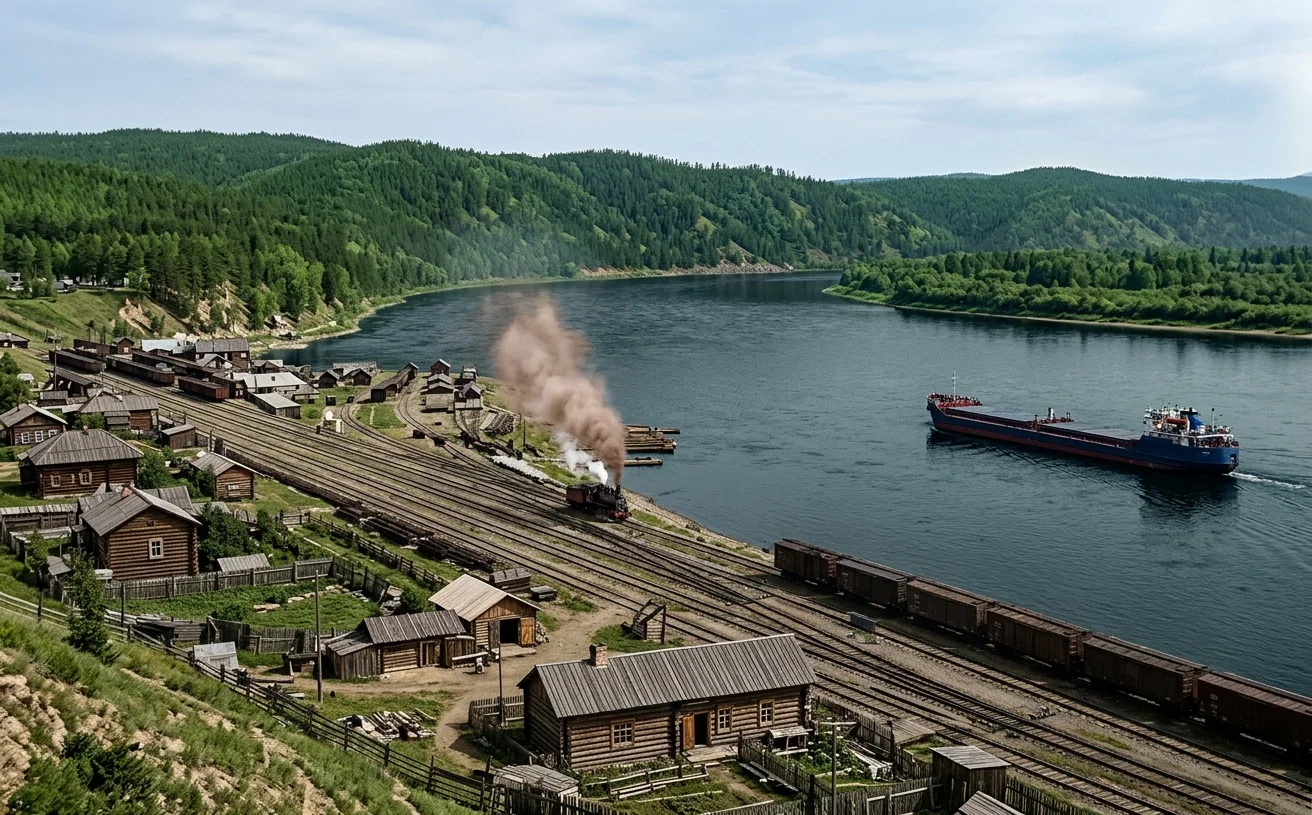
A TOWN IN SIBERIA
After a renewal of the fierce opposition next day, Dr. Pampaian was constrained to leave the place, the chief magistrate saying he could not repress the prejudices of his “wild people.” Some believers were left behind, however, to let their light shine until further evangelistic work can be done there.
The Value of Repetition
“SYDNEY SMITH said that for purposes of impression, repetition is the only figure of speech worth a farthing.”