BEGINNING in a region where the people were rude pagans, with not even a written language, our German brethren are rejoicing in the first-fruits of their mission. Brother E. Kotz says, in his report:—
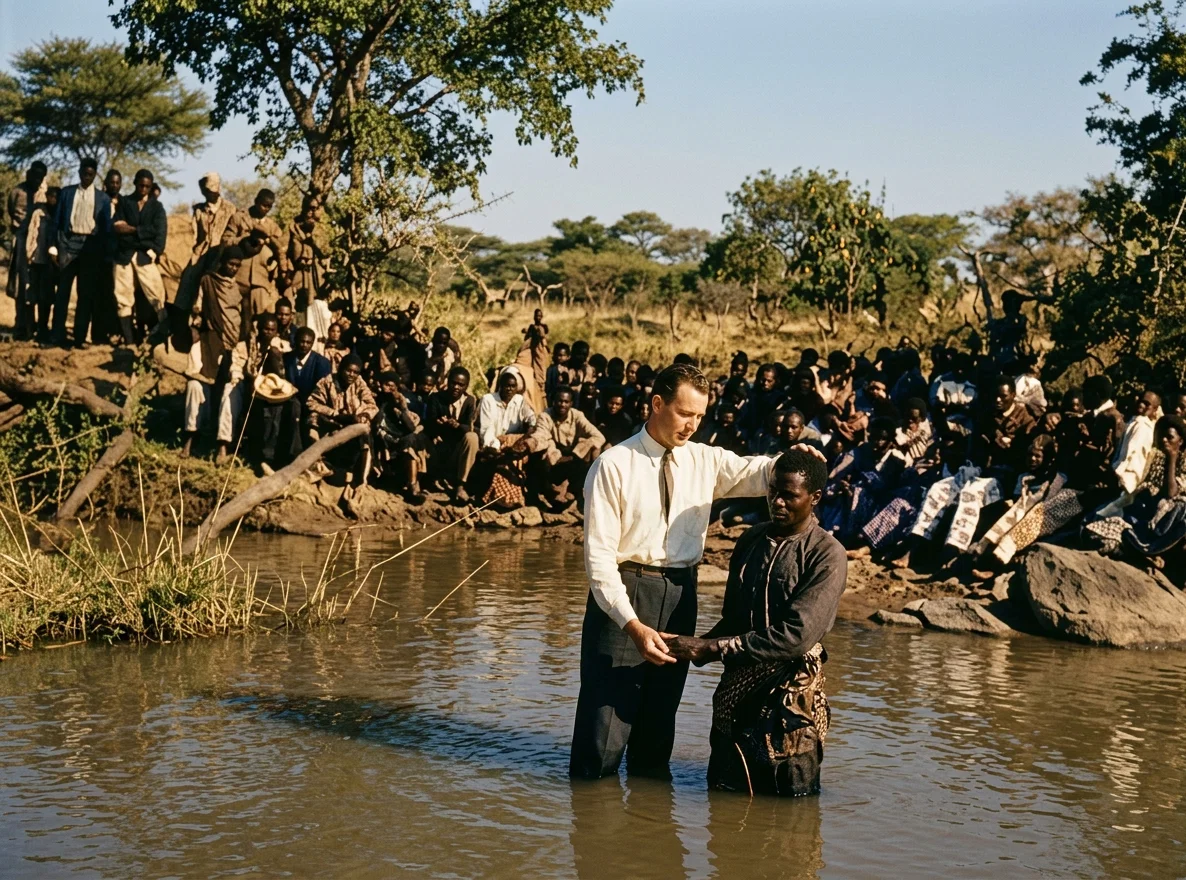
“Eight candidates presented themselves for baptism, but two were advised to wait. Six young men were baptized. We had pitched a tent on the bank of the Sasseni River, and the pupils sang, ‘Come, Holy Spirit,’ in the native tongue. Several hundred persons had assembled to witness the awful things that they heard would take place at the baptism.
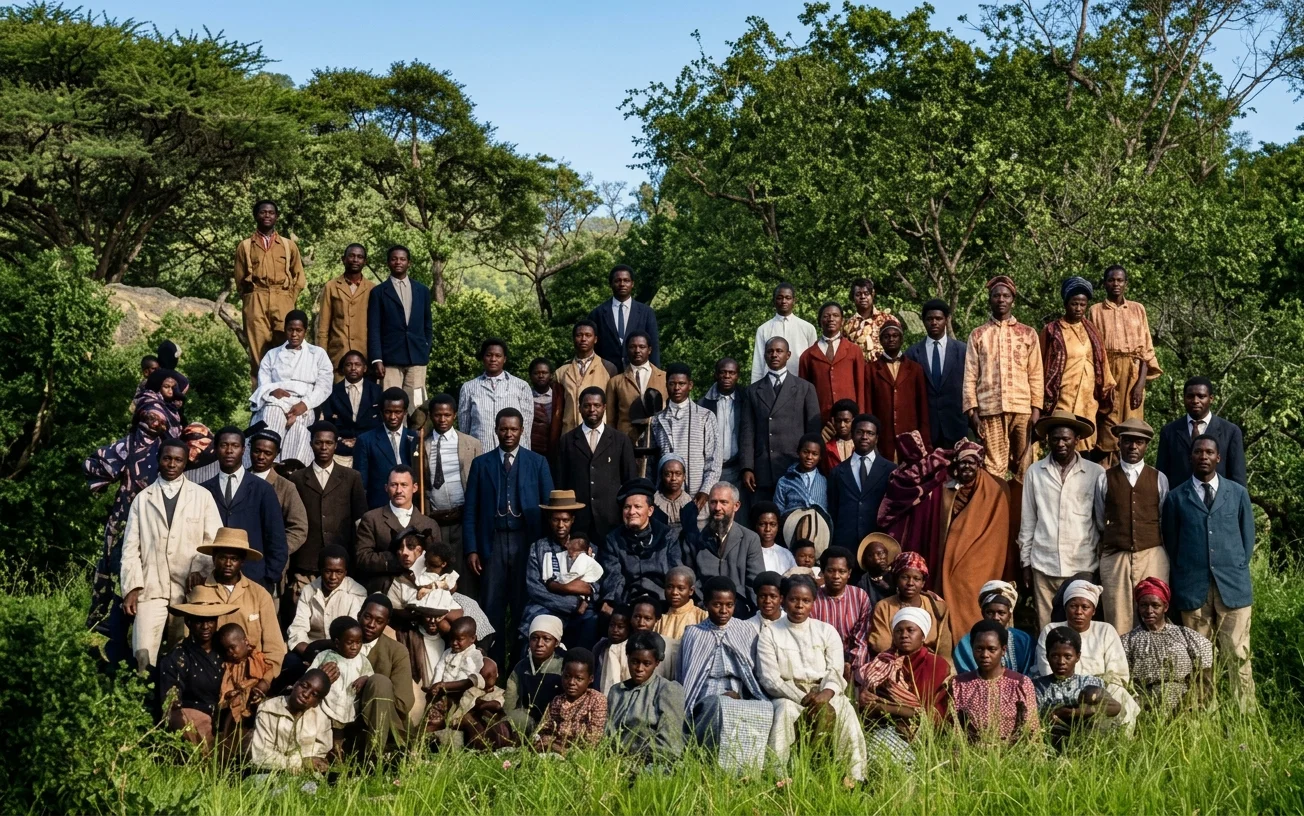
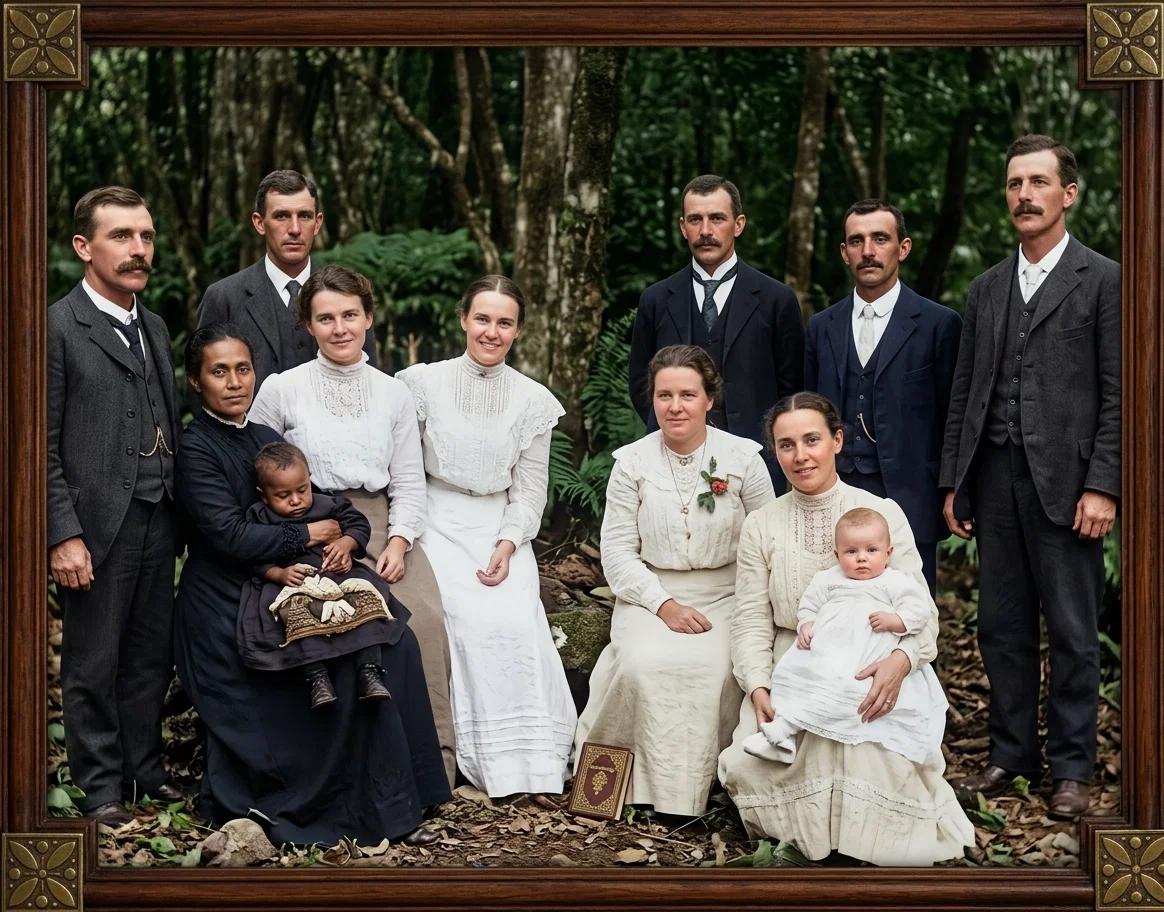
MISSIONARIES AND NATIVES AT OUR SOLUSI MISSION STATION
“The ceremony made a deep impression upon those who were present, upon the heathen as well as upon the Mohammedans. Many evil reports had been circulated, as, for instance: ‘Whoever is baptized, and then sins, must die;’ ‘You will be bewitched;’ ‘They will take you off with them to Germany;’ and other foolish things.”
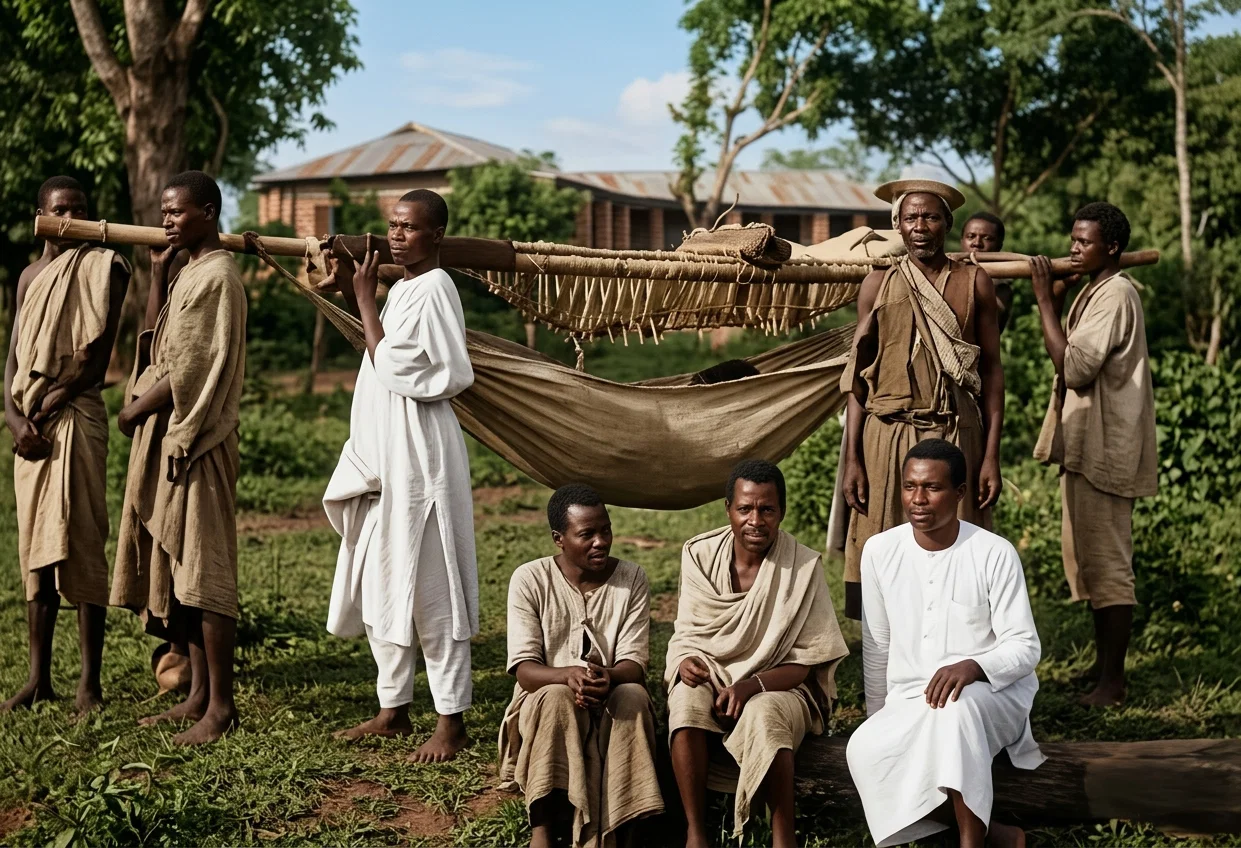
TRAVELING
In Matabeleland
FROM the Solusi station, near Bulawayo, M. C. Sturdevant writes:—
“We are reaping between seven and eight hundred bags of corn, fifty-eight bags of peanuts, and nineteen bags of Kafir peas. We praise God for his blessings upon our field. Our school work is truly onward, mostly in charge of Victor Willson, with our native help. This has given me more time to look after our four out-stations, taught by seven native teachers. Recently we baptized eighteen more precious souls.”
From the Somabula mission, the second Matabele station, W. C. Walston writes of fever in the mission family, and of the death of a little daughter of one of the workers. He adds:—
“We are harvesting our corn now, and have a good crop. The training-school is in a prosperous condition, there being fifty in attendance. Last Sabbath ten persons were baptized. Our courage is good. Do not forget to pray for those in this land of disease and darkness.”
BAPTIZING CONVERTS IN MATABELELAND
In the Pacific
TRULY it was a missionary providence that Australia and New Zealand should have been set down close to the populous East Indies and the islands of the South Pacific, to become in these last days great English-speaking commonwealths, and the base of missionary operations for the island fields. Our brethren in Australasia have taken the burden of supervising and directing the evangelization of the East Indies and Poly nesia with the advent message. Over four thousand Seventh-day Adventist believers in Australasia are sharing in this burden.
IN BATTAKLAND
Our Australian publishing house, near Melbourne, sold last year about eighty thousand dollars' worth of publications proclaiming this message of the coming of the Lord. The mission press for the island fields is in connection with the missionary training-school at Cooranbong, near Sydney. This press issues books and tracts in various vernaculars spoken throughout the islands. Students do the work.
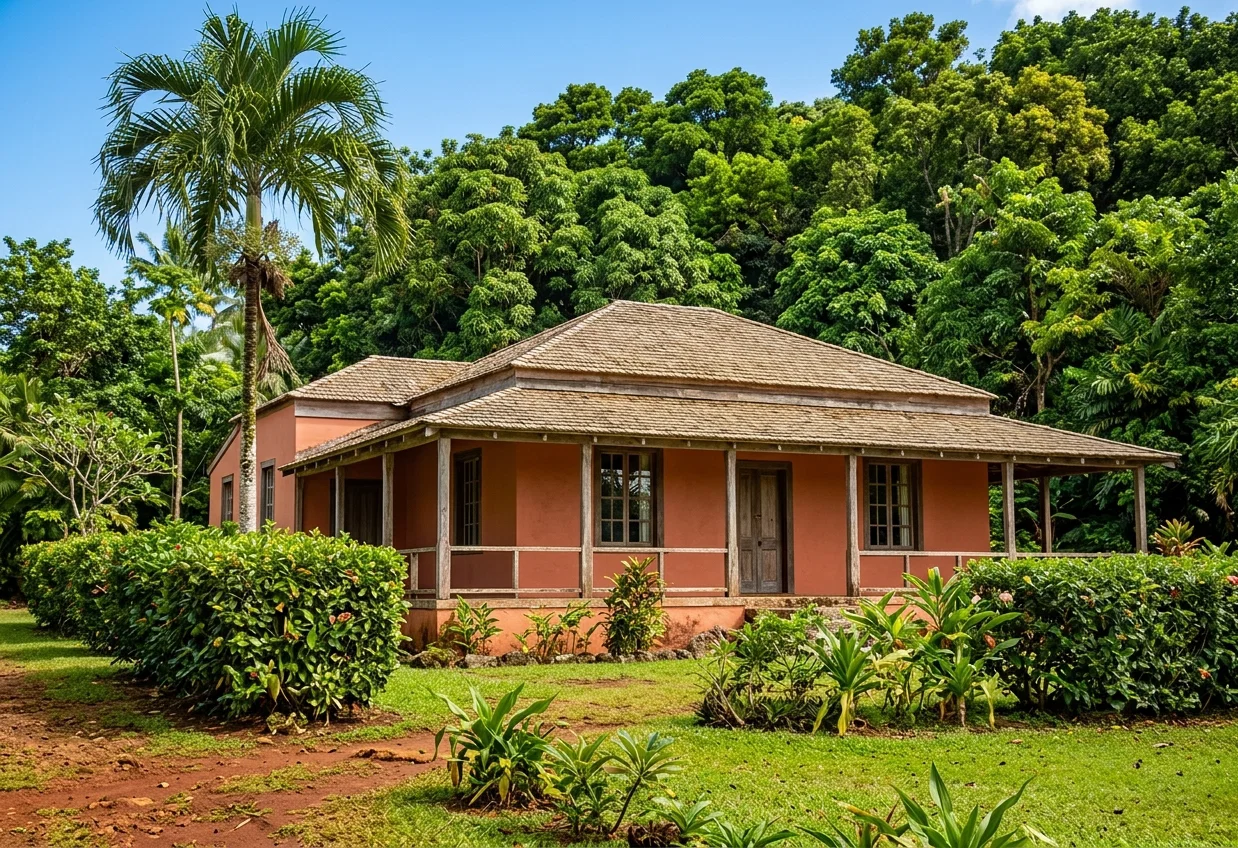
MISSION HOUSE ON RAROTONGA
The Avondale Training-school at Cooranbong had last year two hundred students enrolled, and is supplying helpers for the home and mission fields. It has had a remarkable history as an industrial school. The school farm a year ago contributed from its profits fifteen hundred dollars to the island mission funds. There is another training-school in West Australia, near Heidelberg, and a third in New Zealand.
The Island Fields
By O. A. OLSEN
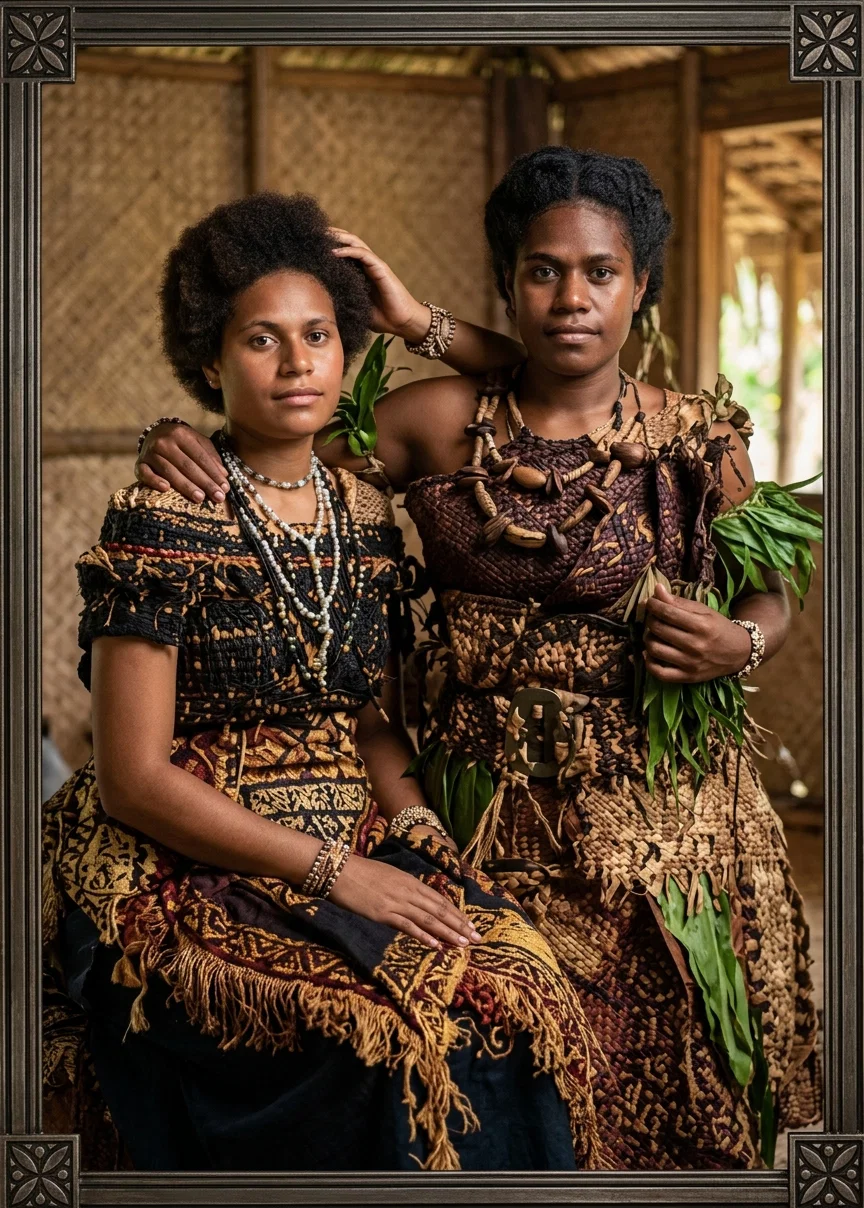
GIRLS IN FIJI
1. The Eastern Polynesian mission, including the Society, Cook, Marquesas, Tuamotu, Gambier, and Austral Island groups, with Easter Island, Pitcairn Island, and others. It was in Pitcairn Island that our island work began, in 1886, when practically the entire island, famed as the home of the descendants of the mutineers of the ship “Bounty,” accepted the doctrines taught by Adventists.
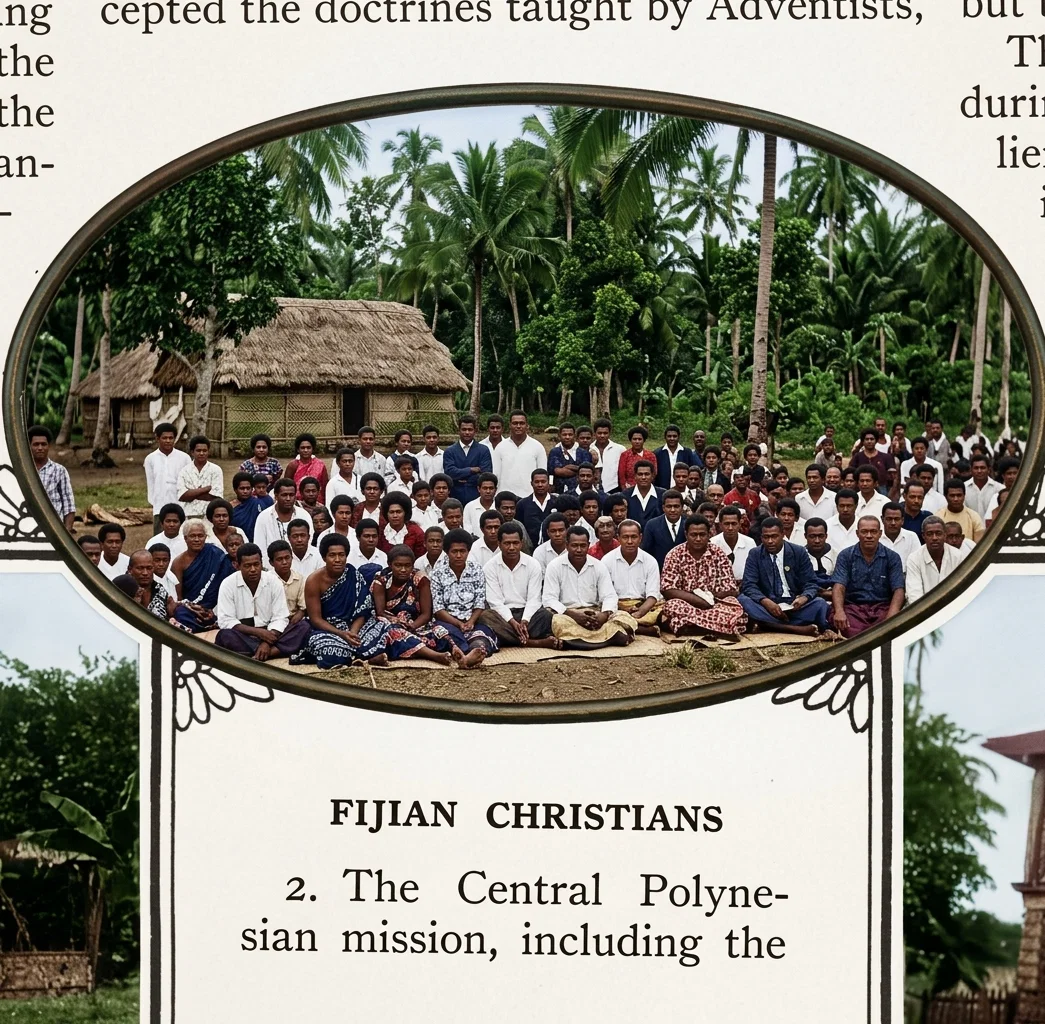
FIJIAN CHRISTIANS
2. The Central Polynesian mission, including the
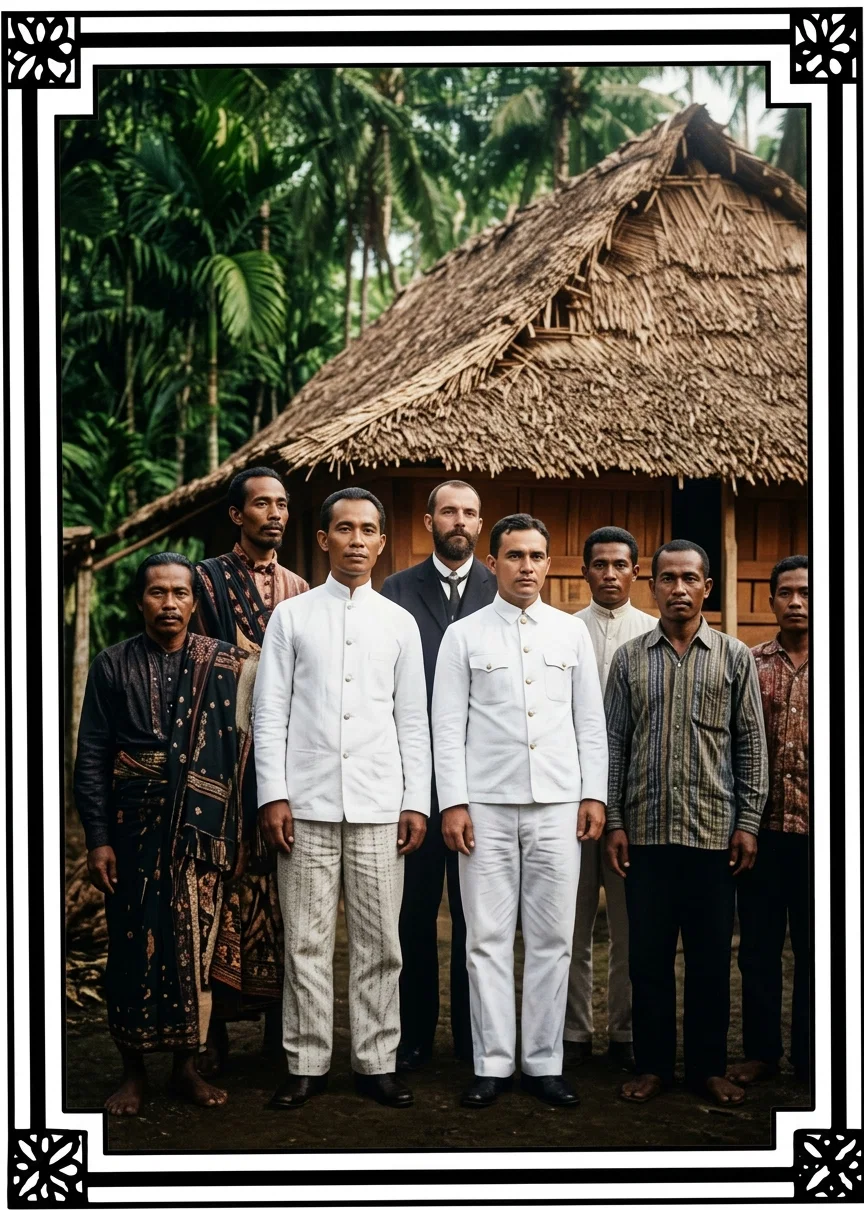
MISSIONARIES IN FIJI
island groups of Fiji, Samoa, and Tonga.
3. The Malaysian mission, taking in the East Indies, Straits Settlements, and the Philippines.
While our Australasian home field embraces five million souls, our mission fields contain more than fifty millions.
Thus the Australasian Union Conference is decidedly a mission field.
There are five mission schools, located as follows: Singapore, Fiji, Tonga, Rarotonga, and Raiatea (Society Islands). A church-school is also taught on Pitcairn Island. All these are doing good work. In Fiji a number of the natives have already entered the work, and still others are in training.
The work has opened up favorably in Java. In Singapore, in the Straits Settlements, we meet with much encouragement. A favorable location has been secured for our training-school and press.
Our colporteurs have had remarkable success in selling publications through the East Indies, not only in the English, but in the Baba Malay and Dutch Malay.
The work in Fiji has made progress during the year, and the number of believers has been largely increased.
Promising young people are attending our Buresala School, which has already furnished strong laborers for the island work. Plans are now laid to open work in New Guinea. Brother and Sister S. W. Carr, of the Fiji School, with two or three native workers, will soon enter this island field.
MISSION HOME, SINGAPORE
The work in Samoa has been taken up anew, and on Norfolk Island the union conference has lately purchased a property for a mission station.
Last year we began the publication of monthly papers in the Tahitian tongue, of the Society Island group, the Rarotongan tongue of the Tongan group, and in the Maori language of New Zealand.
While the message is speeding on, we feel everywhere the great need of more workers. There is a deplorable shortage in every department. O. A. OLSEN.
The New Printing-Office
By C. H. Parker
SABBATH evening the workers and students gathered in the new press building at Buresala, Fiji.
The large new printing-press, paper-cutter, and type-stand, the cases well filled with new type, and the paper and book cupboard had all been placed in position. By the side of the large press was placed our small hand-press, which was the beginning of our publishing work in Fiji. This small press was used on this occasion for the writer’s pulpit, and also for his text, “Despise not the day of small things.”
As we looked at the large press, new type, paper-cutter, and other conveniences, we were all convinced that God has a wider field for our publishing work in Fiji; and that from this time on, more will be expected of this branch of the work than ever before.
We are often accosted by Europeans with the words, “When will you have some meetings for the Europeans?” When we explain that our present number of workers will not allow us to leave the native work, they ask, “Are the natives better than the Europeans?” We long for the time to come when work can be done for the Europeans.
C. H. PARKER.
The Island of Java
By GEO. TEASDALE.
ALTHOUGH the area of Java is less than that of Alabama, it contains a population of thirty-two million, which is much more than one third the number of the whole population of the United States. Not only does it contain this population, but it also maintains it; for that its only resources are agricultural. It is so fertile, however, that each year the value of its exports exceeds sixty million dollars, and this after providing food for its teeming inhabitants.
The Dutch government holds the natives in strict subjection, and is very careful about the admission of strangers. Life and property are more secure than in many of the civilized countries of Europe, and there is practically no poverty, as we understand it in other countries.
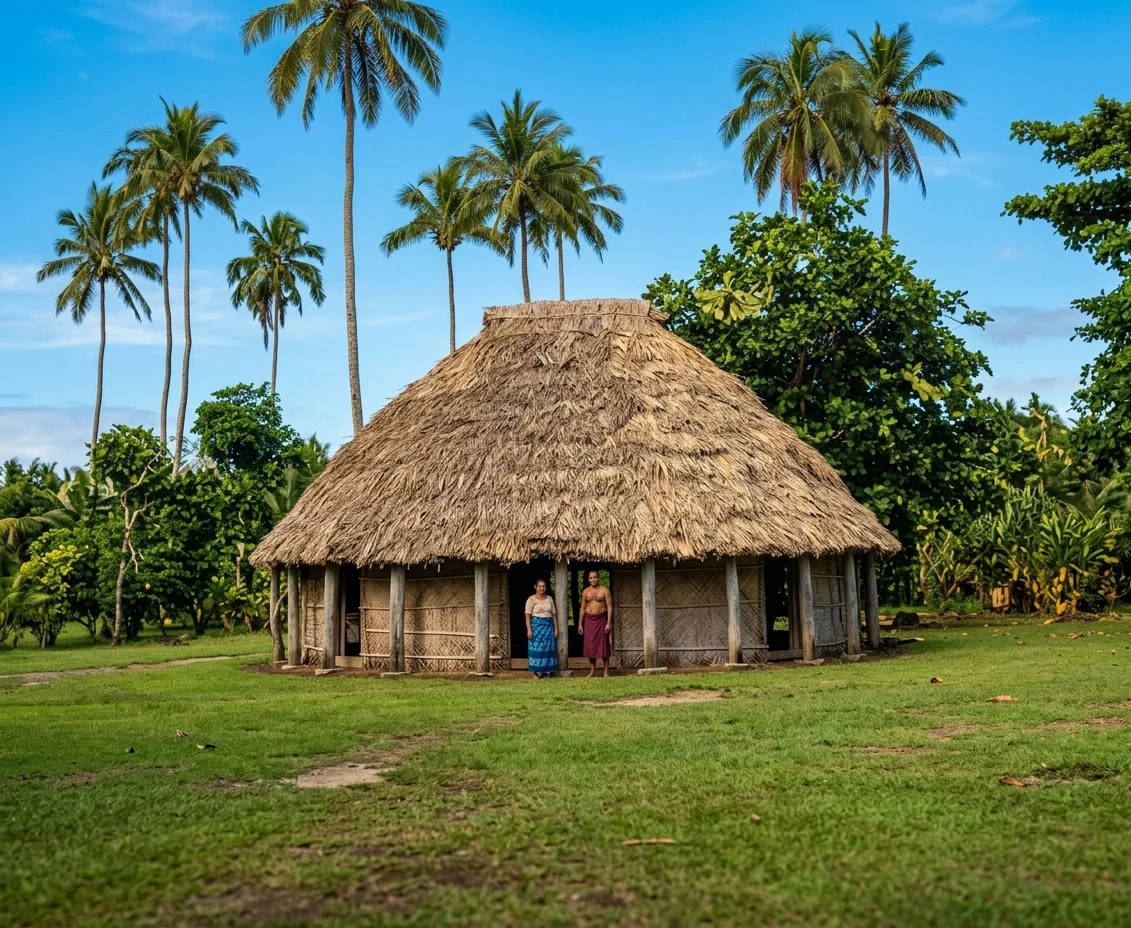
SAMOAN HOUSE
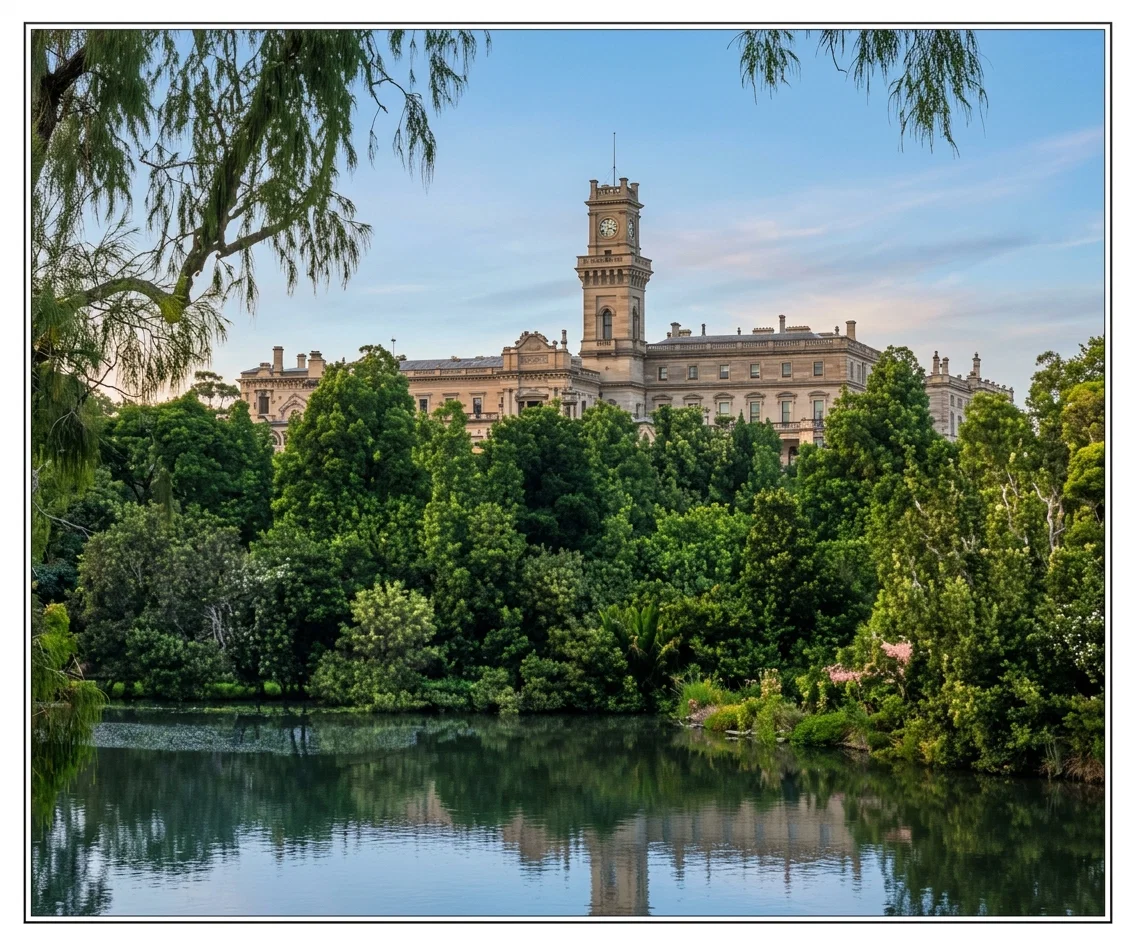
MELBOURNE
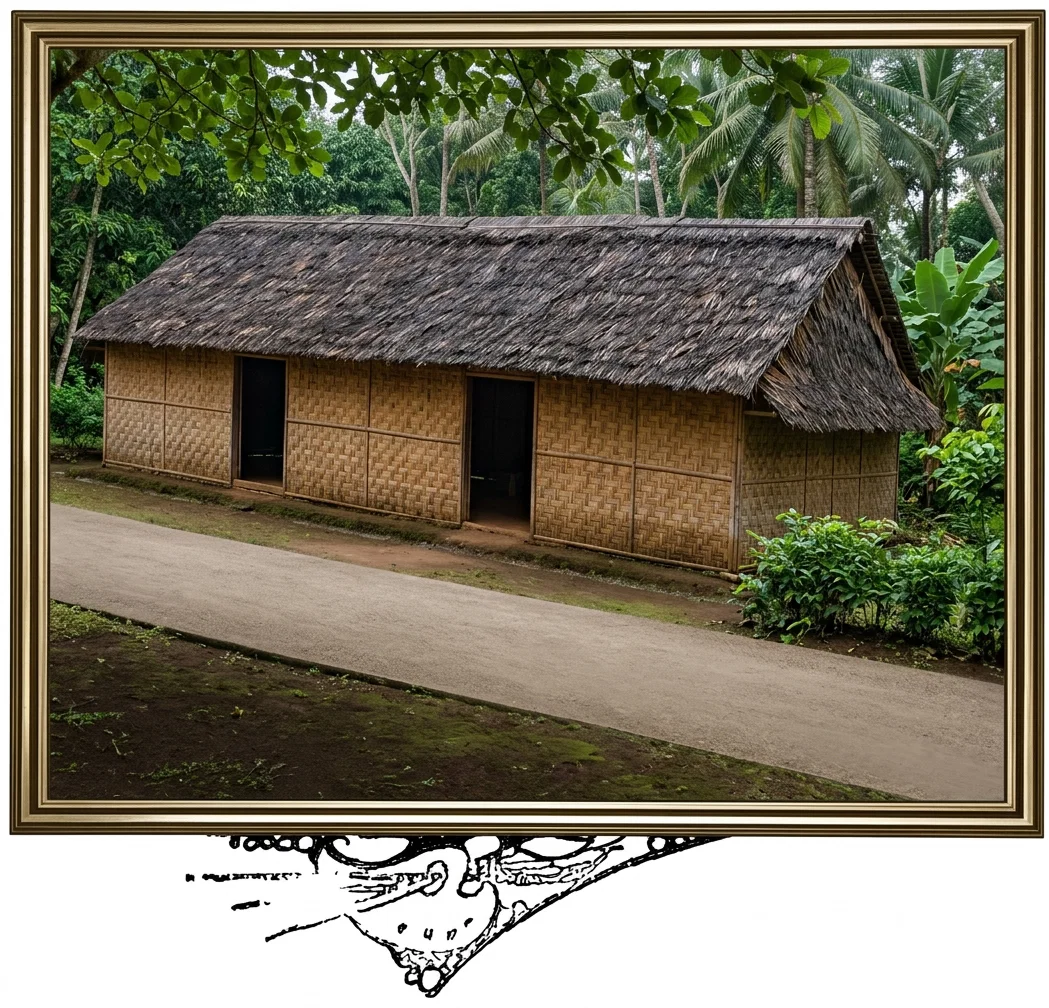
A NATIVE CHURCH
The first company of workers for Java bearing the third angel’s message came late in the year 1906. We landed in Sourabaya, a city of two hundred and fifty thousand population, situated in the eastern part of the island. A few persons have been attracted to the standard of the truth. The greatest difficulty in the way of proclaiming the truth is the diversity of languages. Malay must be acquired in order to do business with the Chinese and the coolies. Dutch, being the official language, is also necessary, and the thirty million natives are divided into three tribes, each of which speaks a distinct language, and all are quite difficult to master. We have seen God’s leading in this field in many instances, although as yet but few results of our labor are apparent. There is no doubt that the proclamation of the closing message to the Mohammedans of Java is the most difficult work for which the Australasian Union Conference is responsible.
GEO. TEASDALE.
Sourabaya, Java.
Battakland
By E. H. Gates
Three years ago a young Battak, named Immanuel, heard the truths of the advent message from Elder R. W. Munson, in Padang, Sumatra. He returned to his country in the northern part of the island. Last year he wrote that he had studied these truths and become obedient to them, and that twenty-three others had joined him in the new-found light. He wrote:—
“I greatly desire, and often pray to the Almighty, that this message may become established among our Battak race. I long for the Battaks also to know the truth. The most high God has opened a wide gateway in the wall that surrounds the Battak country and people, in order that they also may find rest in heaven by this way of truth, which is plain.
“My mind is fully made up and it is this: This message ought to go to my people. In order that this may be done, men from among them should be trained in the message, and then they in turn can preach this glorious truth to their own people in their own tongue.”
Now Immanuel and two other Battak youth are in our school at Singapore. According to the Dutch laws, we are not at present permitted to send missionaries to Battakland, so we shall, as soon as possible, have Immanuel translate the truth into the Battak language, and send it to his country.
Little being known about the Battak people and country, I will give a few facts concerning them. The district occupied by this people is just south of Acheen, the most northern district of Sumatra. The principal products of the country are gold, benzoin, camphor, and cassia. Until the introduction of Christianity, the people were noted for their savage practices. Cannibalism was practised as much to gratify revenge as to satisfy hunger. Tribal wars were the almost constant occupation of the men. Polygamy was quite common.
The stature of the natives, so far as I have seen, is somewhat less than that of the Malays and Polynesians, and their complexion is slightly fairer. The Battak language is said to be the most ancient in Sumatra, and is the root of the various dialects that overspread the island.
Since the preaching of the gospel by the Rhenish missionaries in this dark land, many thousands have become Christians, at least nominally.
E. H. GATES.
Singapore.
The Buresala Training-School
By J. E. FULTON
OUR school farm, recently purchased, had nearly three hundred acres, with two small fresh-water streams and a good harbor. Several acres were already planted to cocoanut-trees. We have two European dwellings, our printing-office, a native-made school building, a church, and ten cottages for students. Our native brethren have received with enthusiasm the thought that they are to be used to carry the message to the other island fields. Our paper, the Rarama (Light Bearer), is printed at the school, the students assisting in the printing. Thus the young man now going to New Guinea has considerable knowledge of printing, which will be a help there. We have a great field to cover, and we believe this school will be the means in God’s hands of bringing the truth before many isles of the South Seas.
J. E. FULTON.
The Visible and the Eternal
By Pierson
WE are limited by sight; sight makes a great deal of the visible and temporal, and unbelieving disciples prefer that which is tangible to that which is unseen and eternal.—Pierson.