Your ShelfYour Projects

Signs of the Times, Vol. 36, No. 9.

THE EARTHQUAKE IN SOUTHERN ITALY

Signs of the Times

Mar 3, 1909

Pacific Press Publishing Association · Mountain View, California · Mar 3, 1909

THE EARTHQUAKE IN SOUTHERN ITALY
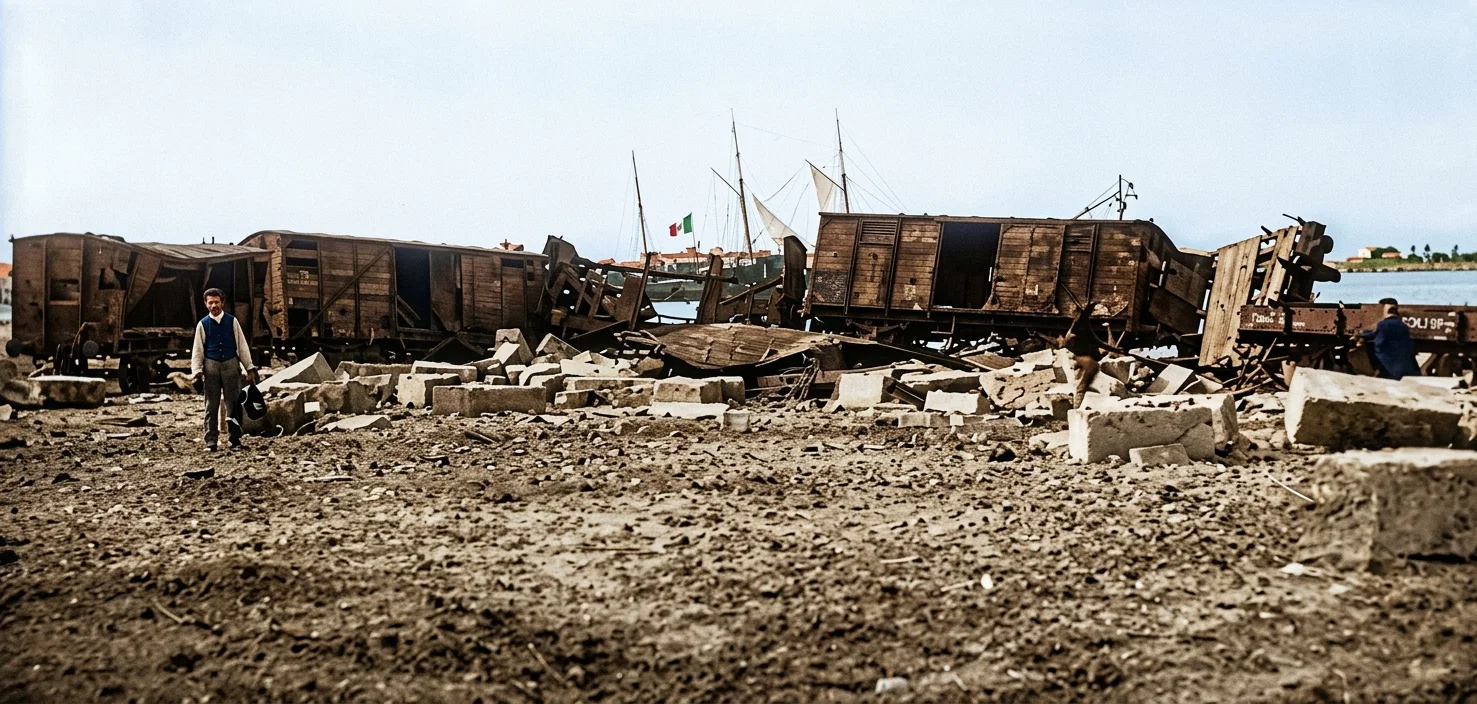
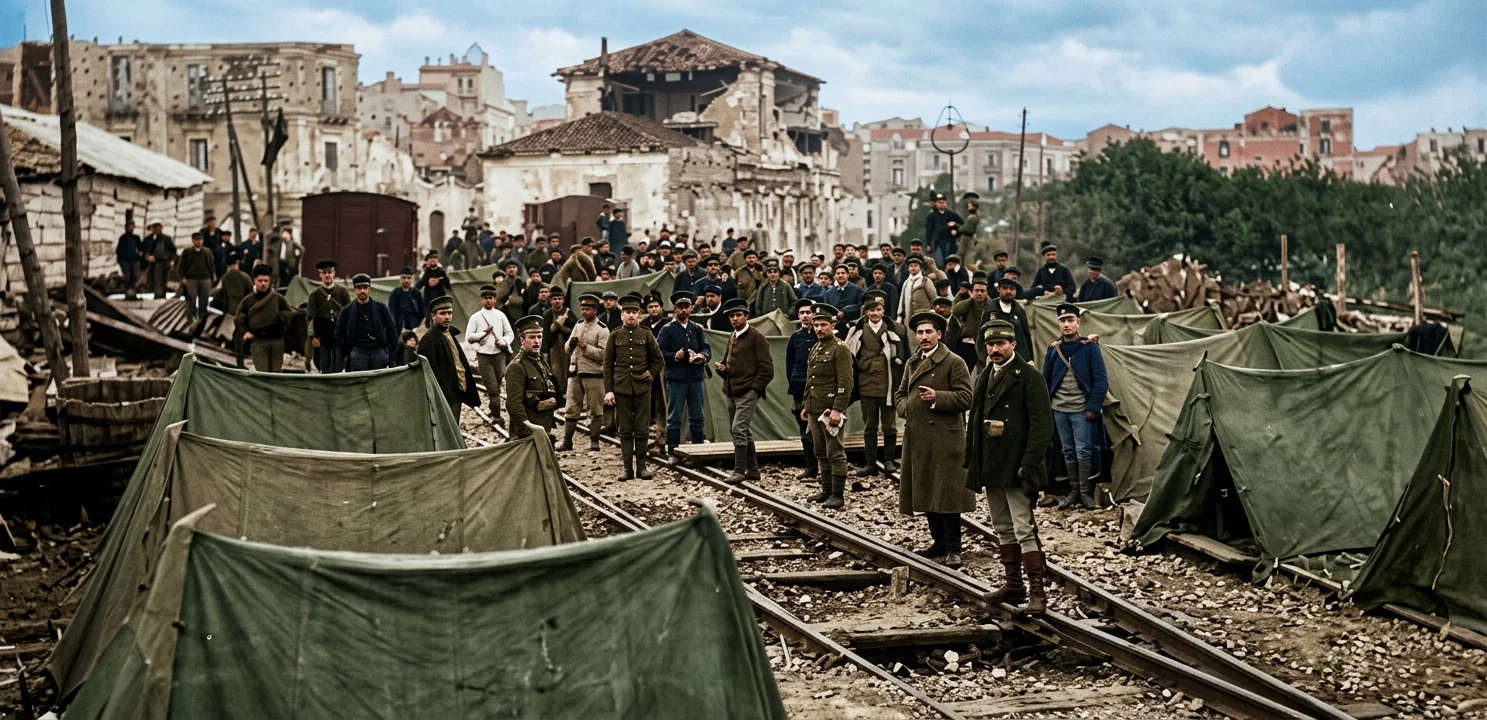
EFFECT OF TIDAL WAVE ON RAILWAY TRAIN.
CAMP OF BRITISH AND RUSSIAN MARINES AT REGGIO.
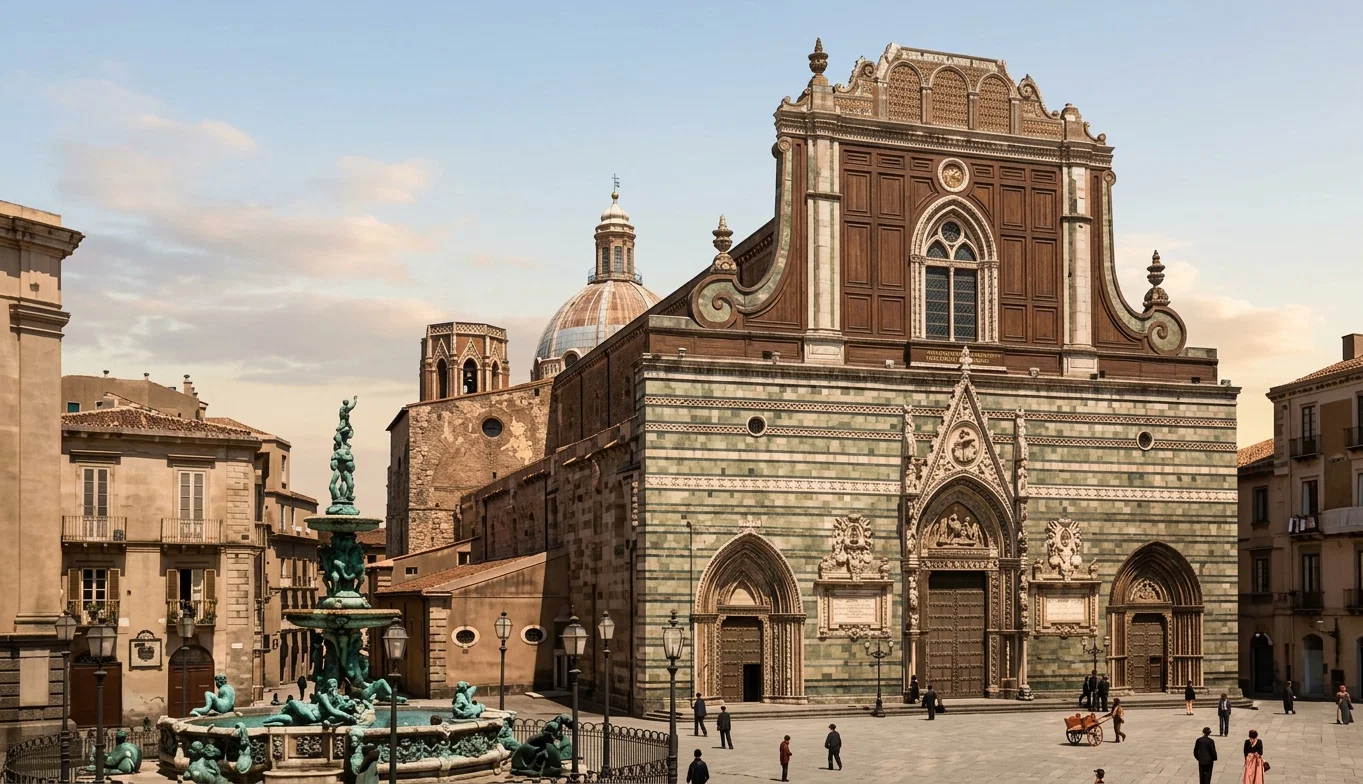
THE CATHEDRAL OF MESSINA BEFORE THE EARTHQUAKE: A FAMOUS FOUNTAIN AT THE LEFT.
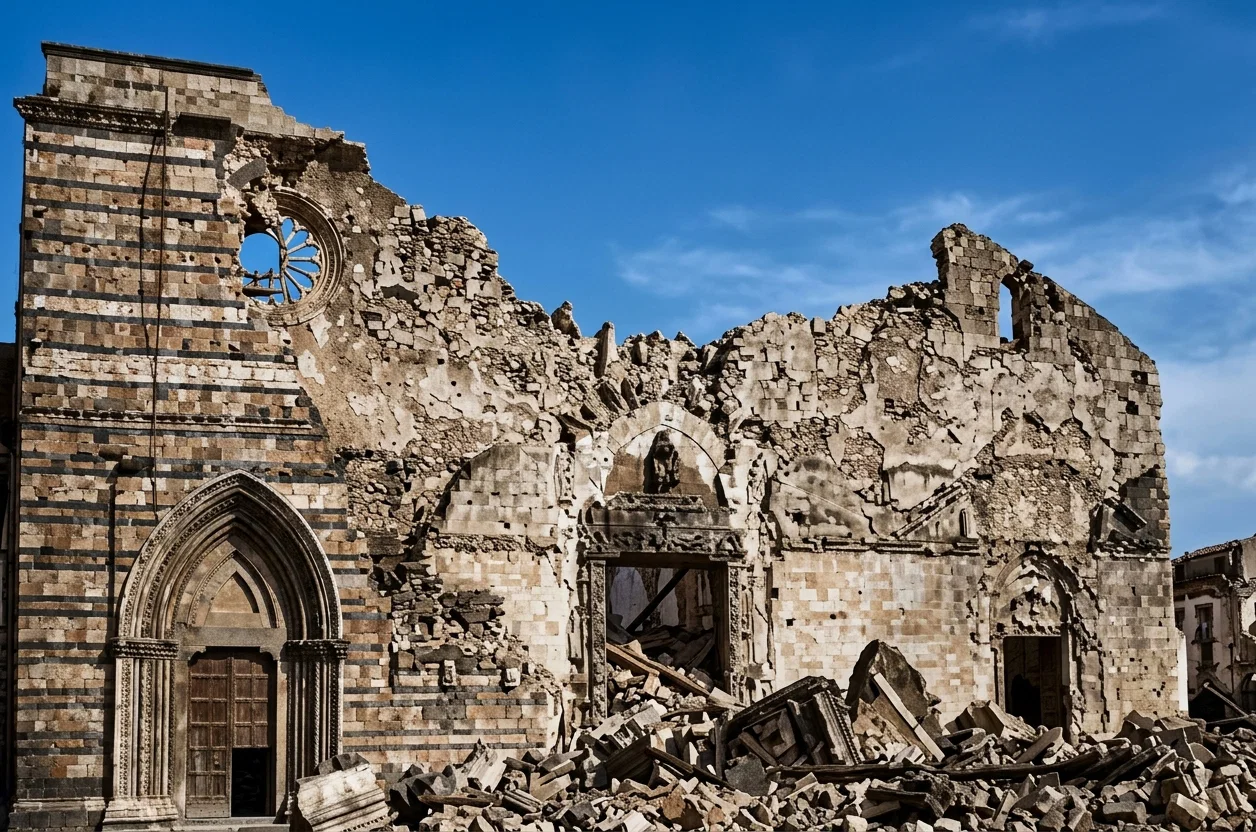
THE CATHEDRAL OF MESSINA AFTER THE EARTHQUAKE.
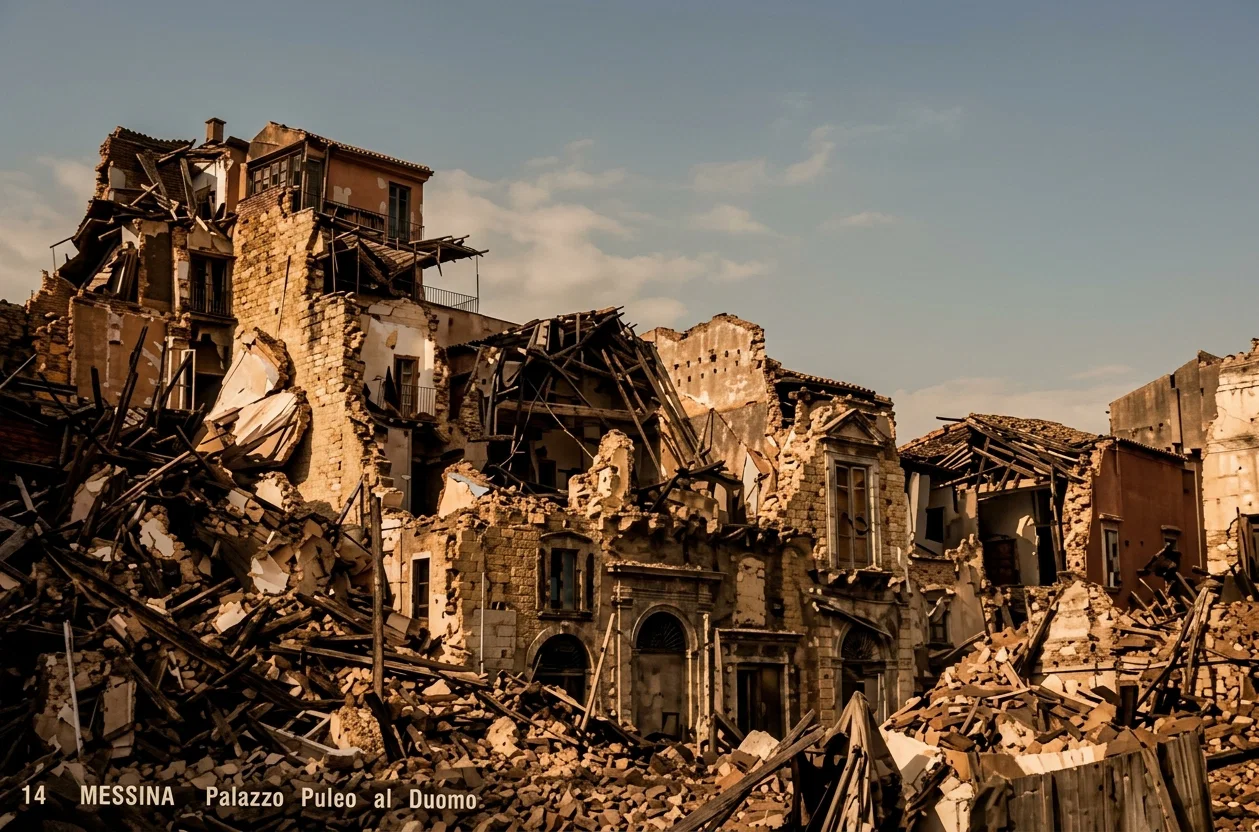
PILE OF RUINS NEAR THE PIAZZA OF THE CATHEDRAL.

Question Corner

[All proper questions on Bible and history will be answered on this page as soon as possible after receiving them. This will sometimes mean a month or more. We can not promise to reply to the same question often. Let those who ask read other answers; they may find reply to their own. Always enclose stamp if answer is required. Those outside our Bible Band, please enclose ten cents. This does not begin to meet expenses oftentimes. “Foolish . . . questions avoid.”]
Is this scripture before the seven last plagues, or is it in the past? A. J. H.
To our mind, the last chapters of Ezekiel, from chapters 36 to 48, are prophecies and promises of what God would have done for Israel when they came up out of Babylon. He was prepared to do all that; He would have restored them to their own land; the temple would have been rebuilt more glorious than ever before; all the nations that menaced them in any way, Gog and Magog, would have been slain; the land would have been cleansed; it would have been redivided among the twelve tribes, and from that glorious city the children of Israel would have gone out to convert the nations. All that the Lord asked of them was that they be “ashamed” of their iniquities, chapter 43:10, 11; but they were not, consequently that sanctuary was never rebuilt, nor did the glory of God rest upon His children, nor did that resurrection of chapter 37 take place; and yet all these chapters are faintly typical of what God will do for His children, not in detail, but in the great general promises when He shall come the second time. The type is never the perfect antitype. So we could say that Ezekiel 39 is not fulfilled, nor will it ever be in detail, but only in general, when God shall punish forever those who would destroy His people. The antitype is found in Revelation 20 and 21.

2752.— What Jesus Thought.

Was Jesus not under the impression that He would come back in the clouds of heaven with power and great glory during the lifetime of His disciples? Compare Matt. 24:34; 16:28; 23:36; Mark 13:30; Luke 21:32. Matt. 16:27, 28 can not refer to His transfiguration because He says in verse 27 that He shall come back with His angels and that then He shall reward every man according to his works. E. W.
There are certain great general truths that it is always well to consider. When God in His goodness delivered Israel out of Egypt, He would then have set up His everlasting kingdom and made the days of the children of Israel like the days of heaven upon earth; but Israel would not believe, consequently they did not enter into His rest. When He brought the children of Israel from Babylon under the decree of Cyrus and the prophesying of Jeremiah and Ezekiel, He would again have completely restored the kingdom, completely regenerated that nation, and the sanctuary predicted by Ezekiel in the last eight chapters of his prophecy would have been built and Israel would have been a praise and glory in the earth; but they were not “ashamed of their iniquities,” and consequently the Lord had to pass them by again. When the Lord Jesus Christ Himself came it was again Israel’s privilege to receive Him, and the glory which would have followed that reception would have been greater than anything which the earth had ever witnessed, but that they refused. The last part of Matthew 23 gives us the sad record. He would have saved Jerusalem, but they “would not.” No doubt He did everything in His power to prepare His disciples for the sad disappointment which was to come, and to show also the future glorious triumph of the Son of God. We can therefore see no intimation in the Gospels ourselves that He expected that the coming would be in His day; in fact Matthew 24 and Luke 21, Mark 13, and other scriptures, also the parables of Matthew 13, clearly point out that the coming was future. While, therefore, He predicted that second glorious coming, He knew that it would be in the times indeterminate, and yet which would be seemingly long deferred; but that His disciples might not be discouraged, they were given a vision of His glory and of the two classes which would be represented at His coming, the translated immortalized of which Elijah was a type, and the resurrected immortalized of which Moses was a type. So Peter uses this very vision to prove the second coming of Christ. “For we have not followed cunningly devised fables when we made known unto you the power and coming of our Lord Jesus Christ, but we were eyewitnesses of His majesty.” 2 Peter 1:16. And then he tells us that he saw His glory and heard His voice when on the holy mount.

2753.— Time in Egypt.

In November 18, I notice that it is said that the length of time the Israelites were in Egypt was 215 years, but the Bible plainly says they were there 430 years. Ex. 12:40. C. B.
We were perfectly aware that Ex. 12:40 speaks of 430 years, but read also Gal. 3:17, which puts the giving of the law 430 years after the Lord made the covenant with Abraham. Presumably the apostle Paul had the best of authority besides Inspiration in the statement which he made. The most ancient of Old Testament versions, the Samaritan and the Septuagint, of Ex. 12:40, read as follows: “Now the time of the sojourning of the children of Israel and of their fathers which they had dwelt in the land of Canaan and in Egypt, was 430 years.” This seems to have been omitted from the present Hebrew text. The Samaritan and the Septuagint are supported by Josephus and the best Jewish expositors, according to Boothroyd, and also of Gal. 3:17.

2754.— Man or Angel. Rev. 22: 9.

Please explain Rev. 22:9. Was that man always an angel? L. L.
The narrative is that John fell at the feet of the angel which showed him those things, to worship him. The angel said: “See thou do it not, for I am thy fellow servant, and of thy brethren the prophets, and of them which keep the sayings of this book. Worship God.” This being was always an angel and never a man. This verse does not mean that he was a man. It can not properly be read to mean that he was one of the prophets, it simply means this: “I am thy fellow servant, and a fellow servant of thy brethren the prophets, and the fellow servant of them which keep the sayings of this book.” It was through that angel that God revealed Himself to His prophets of old; doubtless the angel Gabriel. See Daniel 8: 9, 10. The Lord sent that same angel to John. He is the same angel that abides with God’s people down in the last days as well. The Revised Version reads: “I am a fellow servant with thee and with thy brethren the prophets, and with them that keep the words of this book. Worship God.” God’s angels are His servants just as truly as His children among men are, and they all work together to the one great end of God’s glory and triumph.

2755.— “These,” in John 21: 15.

To what does the word “these” refer? To the temporal things of life represented by the fishes, or to the disciples? B. F. R.
“Simon, son of Jonas, lovest thou Me more than these?” Our correspondent says that some refer “these” to the disciples, and some to the fishes. The SIGNS OF THE TIMES would like to suggest another meaning. “Simon, son of Jonas, lovest thou Me more than these do?” That is, “more than these disciples love Me!” Our querist will recall just a little while before this Simon had said: “Altho all shall be offended, yet will not I.” Jesus then told him that he would deny Him, but Peter averred again vehemently: “If I shall die with Thee, I will not deny Thee in any wise.” His stout boasting was in the past; he had denied his Lord. He was ready to say at one time, Tho all the others might fall, his love transcended theirs. Now Jesus simply asks him the question: “Simon, son of Jonas, do you love Me more than the other disciples do?” Peter’s boasting is gone. He can only say: “Yea, Lord, Thou knowest that I love Thee.” Not that “I love Thee more than the others;” the “yea” does not imply that; that was simply that he loved Him, and nothing more. The Syriac reads: “Simon, son of Jonas, lovest thou Me more than these do?”

2756.— Three Unclean Spirits. Rev. 16: 14.

What three phases of false doctrine or evil, do the three unclean spirits of Rev. 16:14 represent? OLD READER.
These spirits come out of the mouth of the dragon, Satan, and of the beast, the great apostasies of the Old World; and of the false prophet, the apostasies of the New. The originator of the theory of the immortality of the soul was Satan, Gen. 3:4, 5. This has been carried on through Paganism and Papacy and from that over into Protestantism. Satan is at the head of all these things, and is sending out his demons into all the world to stir up all the world to battle. That seems to be the special feature emphasized in this prophecy. They are the spirits of demons working miracles, false signs, counterfeiting the work of the true; and they go forth to the nations or governments of the earth to stir up within them all the evil and malice which culminate in the great war of Armageddon.

2757.— Sin unto Death.

J. S.— Regarding 1 John 5:16, the carrying out of this text, of course, must be left with the individual and God. Sometimes our brother sins ignorantly; sometimes he sins through weakness, not wilfully; pray for him. Sometimes he flatly rebels against God; truly a sin unto death. The apostle says: “I do not say that ye shall pray for it,” neither does he say that we shall not pray for it. These are things that the soul must decide for himself. We do know this that sinning against God is wrong, but that if we repent of our wrong and come to the Lord Jesus Christ, there is pardon.

2758.— Trouble in Italy.

J. W. M.— No, we do not understand that the trouble in Italy is that spoken of in Rev. 8:7-9. That prophecy refers to historical events in connection with the breaking up of the Roman kingdom which we have not time to explain here. The barbarians in the north and the Vandals in the south, and the consequent wars which followed, are symbolized by these figures of hail and fire, and burning mountain, and so on, which resulted in the complete demoralization of the Roman Empire. Nor does the prophecy, nor do the difficulties in Italy, refer to the falling of the city Babylon. That is a future event of much different and of much vaster extent than anything which has occurred in Italy recently.

2759.— Baptized for the Dead.

C. B. C.— Regarding 1 Cor. 15:29, we have answered this question so many times in the past year or so that we can not give space to anything like a detailed explanation. See upon this text Dr. Adam Clarke. To our mind there is no reference to the living being baptized for the dead, but the meaning of the text is that we are baptized in view of the resurrection of the dead. Man is doomed to death; he must die; his only hope of a resurrection is through our Lord Jesus Christ; he is baptized in that faith.

2760.— Rich Man and Lazarus.

J. H. W.— Regarding Luke 16:19-31, we would say that without question the passage is a parable, and does not necessarily prove that any such thing as that ever did occur or might occur. It does not in any wise prove the immortality of the soul. See tract on the “Rich Man and Lazarus,” Bible Students’ Library, No. 146; price, one cent. This office.

Home Religion

By Mrs. E. G. White
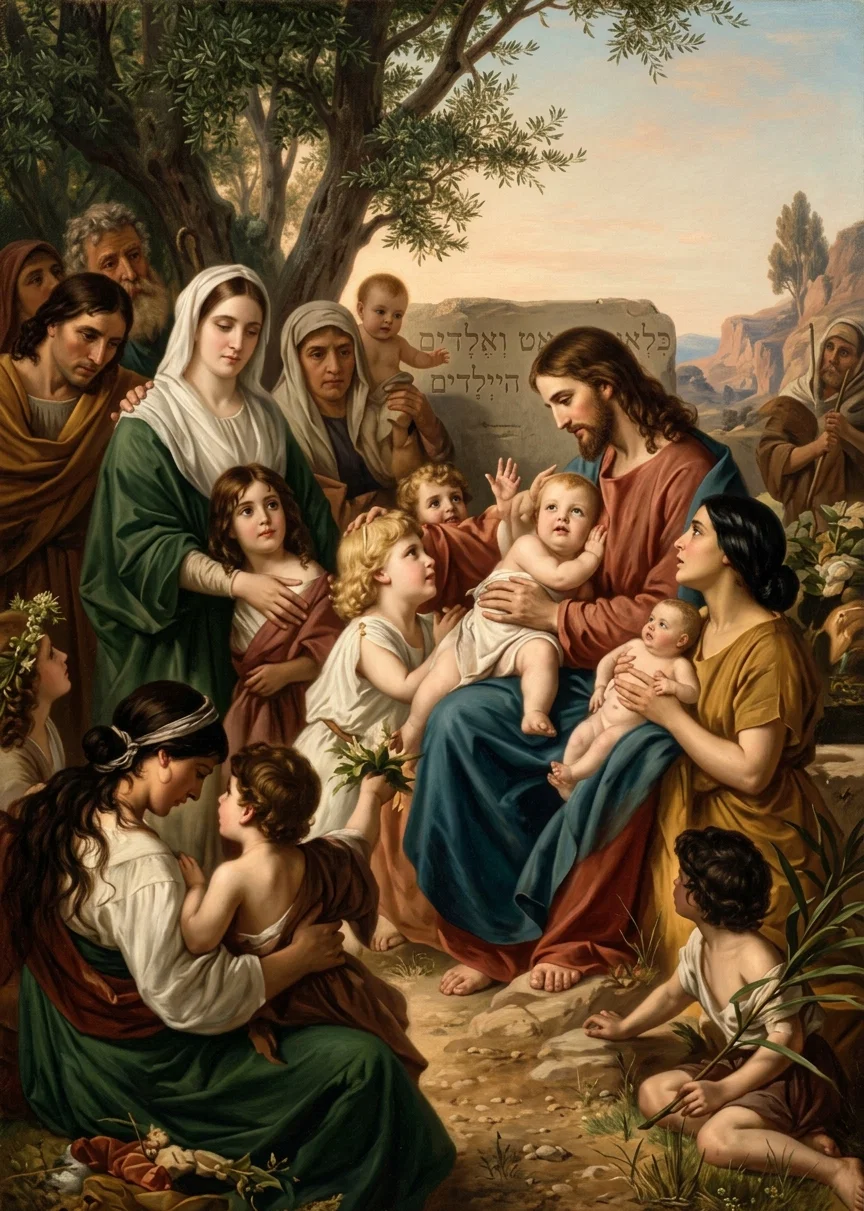
CHRIST BLESSING THE CHILDREN. Plockhorst
ONE great need of the world today is home religion. Parents stand in the place of God to their children during the tender years of childhood. They are to mold and fashion their characters after the divine pattern. In the highest sense of the term, Christian parents are to be educators.
The home can be made a place where God’s Spirit loves to dwell; and every Christian who labors to this end is striving to place the religion of Christ on the highest basis.
The parents who are channels of light in the home are acknowledged by all heaven as faithful stewards of the manifold grace of God. They are teachers, educating their children in lines that make them considerate and compassionate. They know that as Christ’s representatives they are dealing with human minds to teach the beauty of holiness, and to communicate the knowledge and wisdom of God. Such parents take their children with them in the heavenward way.
Jesus loves little children. He gave His life for their salvation. While He was ministering on earth, one mother desired to bring her child to Him for His blessing. But the Saviour was not near her, and it seemed too great an undertaking to go to Him. But Jesus came nearer and still nearer, until He was near enough for her to reach Him. Then she started on her journey, and on the way another mother joined her with her children, and afterwards still others, until several mothers with their little ones were in the company that came to the disciples and made known their request.
Thinking to do Christ a favor, His disciples sent the mothers away. But when Jesus saw them going away disappointed, He rebuked His disciples, saying, “Suffer the little children to come unto Me, and forbid them not; for of such is the kingdom of heaven.”
Christ saw those children leaving their homes. He saw the little company coming along the dusty road, increasing in number as they journeyed. And when the children came to Him, He took them in His arms and blessed them. Some of the weary little ones fell asleep in His arms, resting their heads upon His bosom.
The burdened mothers were comforted. They returned with light hearts, strengthened and blessed, carrying with them the Saviour’s blessing, which ever afterward they cherished in their humble homes.
Let us pray for the blessing of Christ’s abiding presence in our homes. Let us take time to teach our children lessons of faith and trust in Him. We may think that by so doing we are neglecting our business, but are we? We never lose by taking time to seek God for His blessing. Those who receive His blessing receive the vivifying power of His Spirit, which revives their health and strengthens them for their work.
Christ has committed to parents the sacred work of teaching His commandments to their children. In order to be fitted for this work, they themselves must live in obedience to all His precepts. They must watch their actions, and guard carefully their words. Every wrong habit must be overcome, and a complete surrender to God be made. For wisdom for this work, let parents go to Christ. He will willingly supply them with His divine sympathy, His free grace. He who for thirty years was a faithful son, working at the carpenter’s bench in order to do His part in bearing the burdens of the family firm, will give His followers strength to do their part in sharing the burdens of the home life.
Parents, you know the way; your children, young and inexperienced, do not. They are helpless and ignorant. They need wise, careful, loving guidance, that their feet may not stray into forbidden paths. Remember that you are molding their characters for eternity. Patiently train them to habits of neatness, usefulness, and purity. By your example show them the charm of becoming behavior. Do not become weary in your labor of love. The angel of mercy pauses not in his efforts till the last sinner has heard the message of mercy. Patiently, untiringly, work for your little ones. Think of how young they are, how much they have to learn! Deal with them gently and lovingly. By the cords of unselfish love bind them to yourself and to Christ.
Too often parents give to the world the time and attention that belong to their children. If they would realize the responsibilities resting upon them, if they would do all in their power for their children, God would work with them. The Lord will not do the work that He has given parents to do; but He will be their helper, cooperating with every sincere, unselfish effort they make.
God is high and lifted up, but the voice of prayer will reach His throne. The prayers of Christian mothers are regarded by the Father of all. He will not turn away your petitions, and leave you and yours tothe buffetings of Satan in the day of conflict. It is for you to work with simplicity and faithfulness, and God will establish the work of your hands.
May the Lord impress fathers and mothers with the sacredness of their responsibilities. As you unite with the Lord in bringing up your children in His fear, you are preparing for—I was about to say higher responsibilities, but I can not. There is no higher responsibility than the training of children. Study how to train your children so that they will develop into well-balanced, symmetrical men and women, useful to their fellow men, and prepared to shine in the courts of the Lord.

The Great Day of the Lord

By Marvin Herrick Brown

II. The Close of Probation.

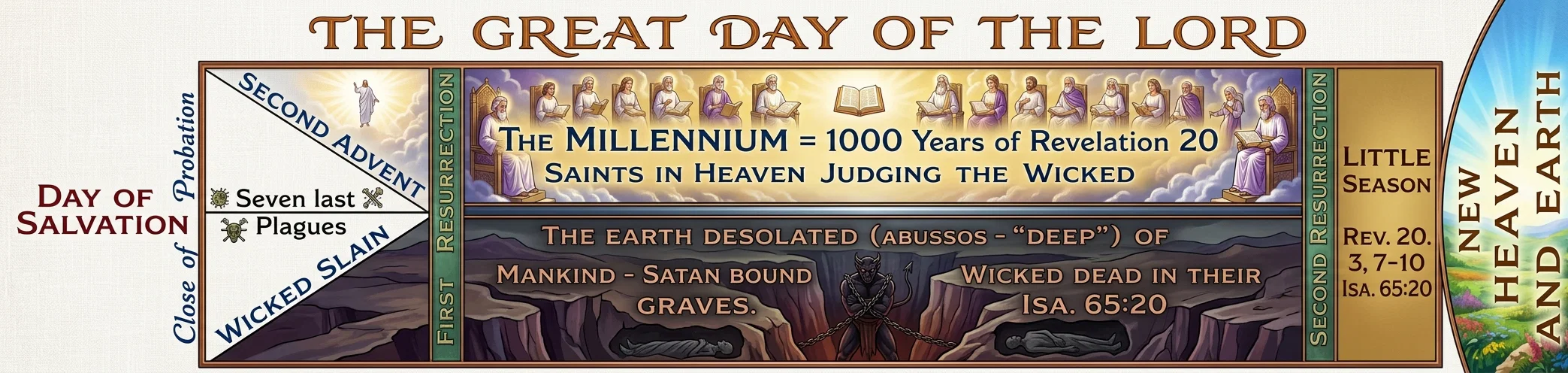
In our previous article, it was shown by clear and conclusive Scripture teaching that “the day of salvation,” the Gospel day, is followed by “the great day of the Lord,” a day of wrath, of retribution, of judgment. In other words, the close of the Gospel day is the close of probation, when the last generation of men make their final choice, and their character is fixed by that choice.
It is the time spoken of in Joel 2:14, when multitudes are in “the valley of decision.” They are brought into this valley of decision by the clear, stirring message of warning which goes to the world in the last generation, a message which proclaims the hour of God’s judgment, the second coming of Christ, and a warning against all false worship. This message develops a people who keep the commandments of God and the faith of Jesus, and it is followed by the seven last plagues, the second coming of Christ, and the harvest. See Rev. 14:6-20.
As the message of Noah brought the antediluvian world into the valley of decision, and thus ripened it for destruction, so the message of Revelation 14 brings the last generation into the valley of decision, and ripens off the harvest of the earth. See Joel 2:11-16. In verses 11 and 12 the heathen are warned of the judgment that is coming. Verse 13 declares that “the harvest is ripe;” verse 14 shows how the message of warning brings the people to a decision, and thus ripens the harvest.
This verse also proves that when the people are tested by the message, and decide for or against it, “the day of the Lord” follows it. Those who accept the Heaven-sent message are sealed as God’s servants and remain His to all eternity. Those who reject it, place themselves beyond the reach of God’s mercy, because they have trodden underfoot the Son of God, and counted the blood of the covenant an unholy thing, and done despite unto the spirit of grace. Heb. 10:29. Hence they remain filthy and unjust still. Rev. 22:11.

Christ Our Advocate.

“If any man sin, we have an Advocate with the Father, Jesus Christ, the righteous.” 1 John 2:1.
By divine appointment a complete round of service was performed each year in the earthly sanctuary in order that the work of each high priest might typify or represent the ministration of our High Priest in the heavenly sanctuary. His work is once for all. His sacrifice on Calvary was once for all. As our Advocate He ministers for us, once for all, in the true holy places, of which the holy places in the earthly sanctuary were patterns or figures. Heb. 9:24-28.
As the service of the high priest in the earthly sanctuary came to an end each year at the close of the Day of Atonement, so the service of our High Priest, or Advocate, closes in the heavenly sanctuary before He comes to reap the harvest of the earth, because the former service was a type of the latter. Heb. 8:1-5.
As the close of the year’s service in the type was marked by the Day of Atonement, a work of judgment, the removal of sin from the camp of Israel, and the cutting off of those who did not confess and forsake their sins (Lev. 23:27-30), so when our great High Priest comes to the close of His priestly service on the great antitypical Day of Atonement, there will be a work of judgment, the sins of God’s people will be finally removed, and those who have not confessed and forsaken their sins will be cut off, or destroyed. The following scriptures clearly show that Christ’s work as priest in ministering grace and pardon to sinners closes before He comes the second time, because when He comes again, it is to execute judgment and reward every man according to his works. Matt. 16:27; 24:30, 31; 25:31-33; 2 Thess. 1:7-9; 2 Tim. 4:1; Jude 14, 15; Rev. 22:11, 12.

The Coronation of Christ.

Jesus now reigns as priest-king on His Father’s throne. Rev. 3:21; Zech. 6:12, 13. While Jesus so reigns, it is called also the throne of grace (Heb. 4:16), because, as our Advocate, He ministers grace and pardon to repentant sinners. But the time will come when that reign will cease, and that throne and kingdom of grace will end (1 Cor. 15:24), and Christ will then be given His own throne and kingdom, inherited from His father David. Luke 1:31-33; Rev. 3:21; Dan. 7:13, 14.
Christ will be crowned King and receive His kingdom in heaven, before He comes again. Luke 19:12, 15. Those who reject the Gospel message and the solemn warning that accompanies it to all the world, just before the Saviour’s coming, are threatened with the unmixed wrath of God. Rev. 14:6-14.
While Jesus pleads the cause of sinners as High Priest, God’s wrath is mingled with mercy, but when He lays off His priestly robes and is crowned King of Kings, and Lord of Lords, wrath without the mixture of mercy is visited upon the ungodly. By rejecting God’s love and mercy, and resisting His Holy Spirit, they place themselves beyond the reach of divine mercy. They close their own probation and seal their own destiny by deliberately choosing the path of disobedience. Hence the divine announcement made shortly before Christ’s coming, “He that is unjust, let him be unjust still,” etc. See Rev. 22:11, 12.
In the brief period intervening between the close of probation, when Christ is crowned King, and His second coming, the seven last plagues in which is filled up the wrath of God are visited upon the wicked who have rejected the counsel of God and great Gospel light. These plagues are brought to view in Rev. 15:1, and graphically described in Revelation 16.
The events in the beginning of the great day of the Lord may be named as follows: (1) The coronation of Christ. (2) The close of probation and its announcement. Rev. 22:11. (3) The pouring out of the seven last plagues, the unmixed wrath of God. Rev. 14:9, 10; 15:1; and Rev. 16:1-21. (4) The second advent. Rev. 22:11, 12. Then we will have a fulfilment of Ps. 2:9; Rev. 2:27; 2 Thess. 1:7-9; 2:8; Rev. 19:11-16.
Continue reading: The Great Threefold Message