In what sense are we to understand the words of our Saviour, "And I, if I be lifted up from the earth, will draw all men unto Me"? P. B. G.
The lifting up referred to His death on the cross. That cross stood for the utter self-sacrifice, self-abnegation, of His life for the sake of others. That was His character, which has made Him a center of attraction in all the earth. Men have misunderstood His work; He has been reviled and exalted; His work has been viewed in parts only; nevertheless in one way or another He has drawn the attention of all to Himself; and in the judgment His words and life will condemn or save.
What is the meaning of "these are they that were not defiled with women; for they are virgins"? P. B. G.
The word "woman" is used as symbolical of a church. "I have likened the daughter of Zion to a comely and delicate woman." Jer. 6:2. A good, pure woman represents a true church. See Revelation 12; 2 Cor. 11:2. A corrupt, licentious woman represents a corrupt, fallen, apostate church. See Rev. 17:1-6; 18; Ezekiel 16; Jeremiah 3, and other scriptures. The word "virgin" means an unmarried daughter; but it is also used in a spiritual sense of the true church of God. Isa. 37:22; Lam. 2:13. The passage in Revelation 14 would therefore mean that the special class spoken of were not identified with corrupt and apostate churches; they were free in God, members of His church alone.
1710.—Change in Reckoning.
Has any change in the reckoning of time been made which would change the days of the week? If so, when, and by what authority? L. E. D.
There has been no such change. The matter of months and days, through change in calendar and nation, have confused and are confusing. The week, the oldest period of time above the day, has not been affected by the changes in calendar in any way. Of course, we know that men have been made to believe that the sacred day of the week has been changed from the seventh to the first or the sixth, and some nations have had no week at all, even as they have had no true God at all, but the order of the days of the week may be easily traced from the Bible.
Look in any dictionary for the definition of "eunuch," and read our Lord’s words in the light of what the word means. What men have done is not commanded or even advised. In the latter text the apostle simply says that if one can give up all legitimate marital relations and devote himself or herself wholly to God, it is well; but if not, either commits no sin in marriage. It is no duty to urge upon another, nor to boast of oneself. Remain unmarried if all of life and strength are devoted to God; but do not place yourself in temptation.
OUR EUROPEAN LETTER.
By Jean Vuilleumier
Religio-political Debates in France.
THE reading of M. Briand's report on the government bill for the separation of church and state, on March 4, was the opening of a brilliant debate on the subject which has lasted four entire months. The first month was taken up by the general discussion, in which the principles and merits of the bill were discussed.
M. Briand himself, M. Jaurès, the Socialist leader, and M. Ribot, all three in favor of the separation, tho' not believers in Christianity, spoke eloquently on the poetic beauties and the practical usefulness of religion. These speeches were made during Lent, and a Catholic speaker said that during that week the French tribune rivalled with the pulpit of Notre Dame Cathedral in exalting the benefits of religion. Possibly these orations were intended to sweeten a debate which had in it many elements of discord and bitterness.
Every standpoint was represented—agnostic, deist, atheist, Protestant, moderate Catholic and rank Papist. The assembly looked more like a theological council than like a political arena.
A Catholic Prediction.
M. Benoist, a Catholic, depicted the conflicts which he thought would be kindled by the measure proposed; he repeated the words of an Italian politician: "You will have an armed church in a disarmed state," and he predicted that in ten years the French Government would go to Canossa, as did Bismark, who, M. Benoist affirmed, regretted afterward that he had not had, like France, a concordat with Rome. "You have one," M. Benoist added, "and because you know not how to use it, you tear it to pieces."
Count Bonf de Castellane, a fervent Catholic, followed with a passionate speech, saying that what was intended was not the separation of the church from the state, but the destruction of the church by the state.
M. Grousseau, another Catholic, considered the withdrawal of state money from the priesthood as a robbery, and he compared the proposed separation with a divorce, with this difference, that here the abhorred wife would stay in the house and raise up no end of troubles which could all be avoided, he said, by keeping up the marriage relation.
A Socialist View.
Lewaes, a socialist, answered him by stating that the régime of the concordat had been one of ceaseless quarrel between the state and the church. He spoke of papal persecutions; he referred to a great religious revival in 1797, when the Catholic Church was severed from all connection with the French Convention; and he also recalled an interesting movement in 1830 on the part of some distinguished prelates toward the separation of church and state.
Protestant Opinion.
Eugene Réveilland, a Protestant deputy, spoke at length. He began by showing that Paganism at Rome or Athens knew no other doctrine than the union of the state with religion. Christ introduced a new teaching when He said, "My kingdom is not of this world," and the apostolic church was founded on that principle. Constantine brought back the pagan system, and papal supremacy was the outgrowth of this apostasy. But true church democracy survived among the small associations known as the Waldenses, the Albigenses, and the Paulicians. It existed in germ in the great Reformation. Unrecognized by Calvin, it was formulated by John Milton, and fully brought out, two hundred years later, by the United States of America.
Edmond de Pressensé, late French senator, was quoted as saying: "What is there on the United States' statute book about this whole question of church and state? - A blank page. Nothing but that, but all of that."
Then the speaker referred to Vinet, the eloquent Swiss writer on religious liberty, who wrote: "If you ask us, What will become of the church if abandoned by the state? we shall answer simply, Let her become what she can; let her follow her destiny; let her live if she may; let her die if she must. . . . If she can not exist by herself, she is not the truth. . . . If she is of God, it hath been given unto her, as unto Christ, 'to have life in herself,' let her show that; that is her first duty; that is the undeniable proof of her divine origin."
Liberty for All.
M. Bienenu-Martin, minister of cults, followed, stating that this measure was not intended or likely—as clericals declare—to open up an era of violence against the Catholic Church, but simply the necessary conclusion of the principles of liberty of conscience and worship, a liberty which, by the way, the Church of Rome has never accepted except for herself alone.
Maurice Allard, an atheist, had hoped, on the contrary, that the forthcoming law would break the Romish "block" into a thousand scattered fragments unable to unite, and thus effectively fetter the church which, as also Christianity and even the belief in the Creator, is inimical to all progress and civilization.
A few speakers answered him and still took sides, and the general discussion was concluded April 11.
In our next letter we hope to bring out some interesting gems of thought from the discussions proper.
Jean Vuilleumier.
Gland, Switzerland.
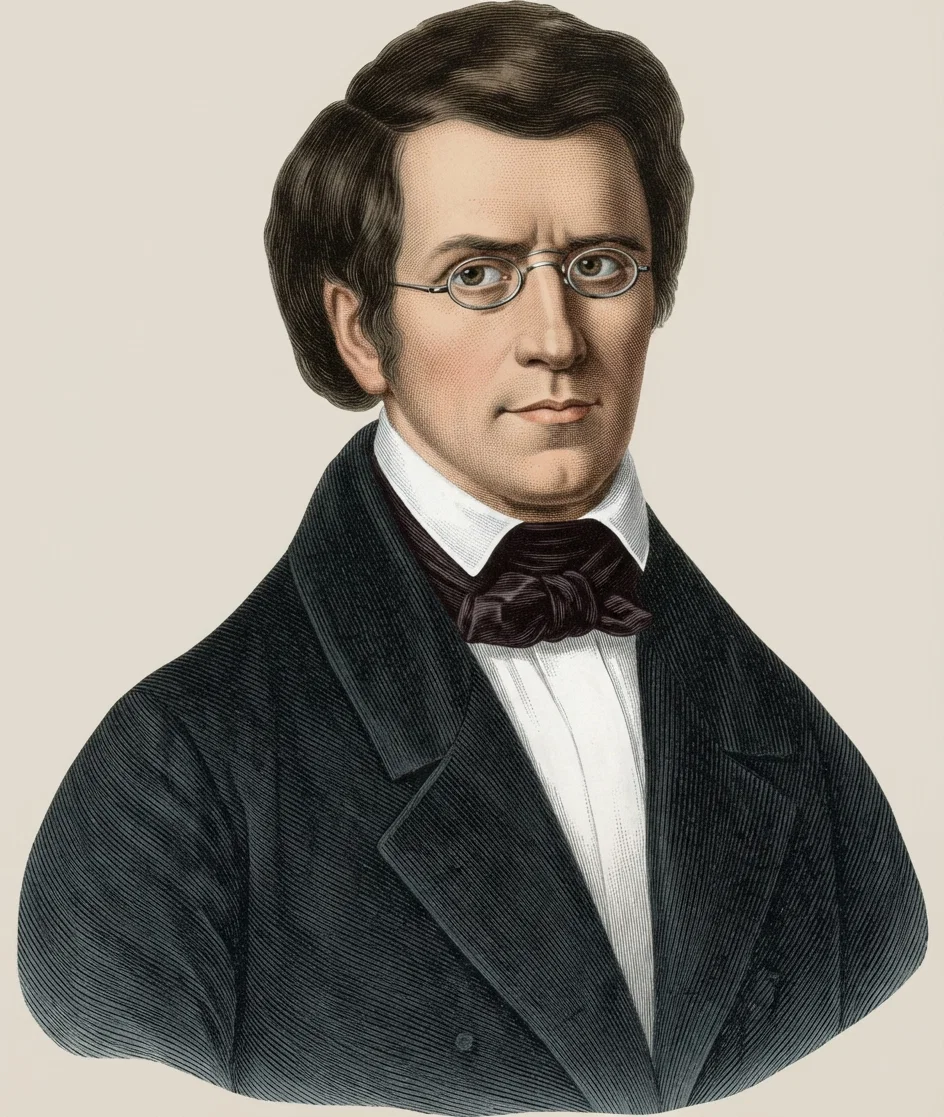
M. Vinet, of Switzerland, an Advocate of Religious Liberty.
FRANCE'S GREAT NEED.
By G.
IN no country is there a greater need for Protestant missionary work than in France. Of the 38,000,000 inhabitants, less than 1,000,000 are even nominally Protestant. The government is swayed alternately by Catholic and infidel influences. The great revolution of 1798 was a reaction from corrupt church rule in the government, and "the church" was regarded as representing Christianity. Therefore the revolution took the form of infidelity rather than of a much-needed political reform without reference to religion.
Such also has been the tendency in the late controversies between the state and the church. The people, while overwhelmingly Catholic in name and form, are largely infidel in heart and practise. Certain influential persons are calling for the "de-christianization" of the whole country, and the call meets favor in various circles. A press correspondent recently took note of the church attendance in different localities, and found the audiences to be nearly all women. In one village church forty women composed the congregation, the priest and the sexton being the only men present. In such a country, when dissatisfaction with the government arises it is easy to work upon the superstition of the people, and make them believe that more church influence in the councils of state are essential to the popular welfare.
This was what occurred when the infidel reaction had spent its bloody fury, and there came the counter-recoil into church intolerance and extortion. Such is likely to recur as the church powers again arouse the superstitions of the populace against the present movement for a separation of church and state. Rome's growing influence in Germany will greatly accelerate such a condition. France's greatest need, as indeed of all European countries, is the influence of the Gospel. G.
PERPLEXITY OF NATIONS.
THE prophecy of our Lord that there should be, at a certain time, "upon the earth distress of nations, with perplexity," is surely finding literal fulfilment at the present time. Every unusual movement of a prominent ruler; every actual or prospective or imaginary agreement between prominent nations; every movement of naval vessels or body of troops by any government of recognized influence in the world; every casual rumor of prospective alliance—even the supposedly friendly relations between any two of the so-called world powers, are causes of perplexity, of uneasiness, of anxiety, in the world's great capitals and centers of trade.
The emperor of Germany went in person to Tangier, in a war-vessel, to weaken the influence of France in Moroccan affairs. Instantly there was a war scare, and the move is interpreted as an attempt to create ill-feeling between France and England. Then Emperor William arranged a naval meeting in the Baltic with Czar Nicholas, and another furor was created. It was supposed to mean an alliance either to include France, or perhaps, to exclude her, because her capitalists were not furnishing Russia any more money. Other national combinations were at once suggested or imagined. The German emperor was next found interviewing the king of Denmark, and was at once supposed to be planning a Scandinavian confederacy—composed of Denmark, Sweden, and Norway—which he would be able to influence in Germany's interest.
In connection with the negotiations for peace between Japan and Russia, an alliance between the two nations is suspected, and forthwith there arises perplexity among other nations who have usurped "interests" in the Far East. M. Witte, the Russian representative, was shrewd in suggesting an alliance early in the negotiations for peace, as the idea of future communion of interest would be used to forestall or minimize the much-dreaded money indemnity that Japan is likely to demand.
But an alliance between Russia and Japan would be the most difficult for other European nations to deal with. It would mean more perplexity than any other combination. If their interests in the Orient should be antagonized by the proposed combination, none of them could well stand alone so far from home. Defense would mean alliance, and a most perplexing problem would be alliance involving England, France, and Germany, or any two of them. And then the United States has "interests" over there that might be involved, to say nothing of China's very existence as a nation. Verily we are in the days when "distress of nations, with perplexity," is everywhere in evidence, and "the coming of the Lord draweth nigh." G.
INDIVIDUAL DISCRETION.
"If any discretion at all is to be allowed the individual, it is hard to see who should limit the amount of his discretion except himself," says the Charleston, S. C., News and Courier, concerning Sabbath-breaking. In a recent editorial it notes that "a correspondent of a New York newspaper has stirred up some controversy in that city by roundly condemning Sunday excursions," and quotes from him a statement, and "a logical but radical inquiry" as follows:
It certainly must be conceded that the teaching of the Fourth Commandment is increasingly disregarded, and unless the tendency is checked the Sabbath will be practically dispensed with. If the Fourth Commandment is not binding, why are the other nine of the Decalogue that are the basis of the civil law in the Christian world?
To this the News and Courier adds:
After all is said, we will venture to say there can not be found in the city of New York a single Christian minister who practises or preaches the observance of Sunday according to a literal interpretation of the language of the divine mandate. There is not one of them who does not "break the Sabbath" persistently and in a variety of ways year in and year out. Some follow the instructions of the Fourth Commandment more closely than others, but they are all transgressors, the difference between them being merely a matter of degree. If any discretion at all is to be allowed to the individual it is hard to see who should limit the amount of his discretion except himself. What may be Sabbath observance in one man would be Sabbath-breaking in another. It is universally conceded that the world and humanity are better for the existence of a day of rest, but the strict constructionists of what this phrase does and should mean have no ground upon which to stand so long as they presume to depart one hair's breadth from the letter of the instructions which they profess to have received. The question is, of course, an old and a very much vexed one, and we have no desire to enter into an extended consideration of it, but we have small patience with those who, while professing to enforce observance of a sacred command, do no more than seek to regulate the manner and degree of violations of it.
And the News and Courier's point is still more forcible when we take into consideration that the clergymen who are continually demanding the observance of the Fourth Commandment are not only standing for various degrees of violation of it as regards the manner of Sabbath observance, but are standing for an entire disregard and violation of it as regards the Sabbath day. "A literal interpretation of the language of the divine mandate" affords no ground whatever for Sunday observance, and shows that it commands the observance of another day than that which these advocates of the observance of the Fourth Commandment so persistently press upon the people upon its authority. If these people who so stoutly demand the observance of the Fourth Commandment fail to conform to it either as regards the manner of Sabbath observance or the day to be observed, little attention should be paid to their demand. Let them observe the commandment to the letter, or else let them cease from the presumption of arraigning other people for alleged violation of it.
SUNDAY ENFORCEMENT NOTES AND COMMENT.
By Editor
BASEBALL playing on Sunday has been prohibited by the village council of Frost, Minn.
AN ordinance "to close up saloons, stores, and all kinds of business, including even livery stables, on Sundays" has just been enacted by the city council of Standish, Mich.
THE Omaha (Neb.), Bee reports that an agitation to open barber shops Sunday mornings is stirring the state capital from center to rim."
THE enforcement of the Sunday law against theaters and baseball playing is a feature of a movement of retaliation by automobilists at Grand Rapids, Mich., who claim that they are being persecuted under the speed regulation law.
AT Cynthiana, Ky., on July 18, H. Reisterer, a baker and confectioner, was tried and convicted on a charge of violating the Sunday law, but the jury disagreed on the amount of the fine, and none was assessed by the court. This was a test case, and the conviction was a victory for the Law and Order League.
ON the charge of aiding and abetting Sunday baseball, Henry Ramsey, manager of the Newburg, N. Y., baseball club of the Hudson River League, was arrested at that place on July 16 and the next day arraigned before Justice Revell, who released him. The complainant was the Y. W. C. T. U. of Newburg.
IT is a matter of dispute among theologians whether there is any such thing as a Christian Sabbath, and whether, if there is one, it falls on Saturday or Sunday, says the Chicago Chronicle. This is a fact that should give pause to those religionists who with headlong zeal are constantly demanding the enforcement of Sunday observance in the interests of the "Christian Sabbath."
FOR having violated the city ordinances closing barber shops after noon on Sundays, James Massena, a barber who conducts a shop at 109 Eighth Street, Hoboken, N. J., was fined $5.00 by Recorder Stanton in that city, July 18. Massena claimed, and was supported in it by the testimony of the man himself, that when he was arrested he was shaving a man who had called at his shop before the closing hour, and he said it was customary among the barbers to serve such persons even if it required them to work after the closing time; but the excuse did not satisfy the recorder.
IT was recently reported from Willimantic, Conn., that an agitation has again been started relative to having places of business and public amusement closed on Sunday. It seems that Sunday evening band concerts have been given at an amusement park that is within hearing distance of the Willimantic camp-ground, and it is on this account that the matter has been brought up. The manager of the park discontinued the Sunday evening concerts out of deference to the offended religionists, and it is needless to say that in doing so he displayed a very different spirit from that manifested by the camp-ground people.
NOT "TAINTED MONEY," BUT "TAINTED MEN."
JUDGE DILL, of the Court of Errors and Appeals of New Jersey, entertains the correct idea of the responsibility for corrupt business methods so prevalent in the world to-day. He gave up a lucrative corporation practise for the position he now holds at a comparatively small salary. Of his former practise he says:
"I never took an annual retainer from a corporation in my life. I never wanted to put myself in a position where I would have to do something I didn't want to do. There is a mistaken idea about corporations. A corporation isn't bad. It's the men in it. In cases where the criminal negligence of corporations results in the loss of human life, the individuals that compose the corporation should be held accountable.
"If you want to stop head-on collisions, put a director on the cowcatcher. You won't have any more of them, will you? No. Don't indict the corporation; indict the men. One object some men have in incorporating is to be able to do things as corporations that they wouldn't do as individuals. There is ground for the assertion that because the men who do these things are too high up, because they have vast capital and great influence behind them, their acts are designated as 'operation,' rather than 'crimes.'
"I've been asked forty times why I took a place on the bench of the New Jersey Court of Errors and Appeals. A large part of the corporation business of the nation is done in that state, because the corporations are organized there. The questions of internal government of the corporations are sent back to the State which created them. The other courts haven't jurisdiction. In other words, New Jersey must spank her own children. I thought I'd like to take hold of the spanker.
"Tainted money? Tainted money is not. Do you have to figure out the history of every dollar to find out whether it is tainted or not? Money has no character. Money isn't tainted. It's tainted men. It wasn't the thirty pieces of silver that betrayed the Lord Jesus Christ; it was Judas Iscariot. This country is suffering, not from tainted money, but from tainted men."
Russia Grants Consultative Assembly
One of the most important events of the week was the proclamation by the Czar of Russia, giving to his subjects a voice in the government of that country. In a manifesto issued by him on August 18, he granted to the people of Russia the right to send to a consultative assembly such representatives as they may see fit to elect. This marks an important step in the progress of Russian affairs, even tho this assembly is not a legislative body and its organization will be under the control of the czar, who will convoke and dismiss the sessions, and will have the right to suspend members. The members of this body will be allowed to advise and urge legislation and criticize any new laws that may be made, and will be permitted other participation in the government. The publication of this manifesto at this time will have a quieting influence upon the Russian people, as it is what they have long been asking. This in turn will give the government excuse for refusing to accede to the demands of Japan. Prominent Russians believe that this will result in a true parliament, a reputable minister, a premier, and a constitutional monarchy for Russia. It certainly is to be hoped that it will result in an amelioration of the condition of the Russian people, including the Russian Jews.
Deadlock at Portsmouth Peace Talks
Little progress has been made by the international peace plenipotentiaries at Portsmouth, N. H., during the week. Some of the minor demands have been agreed to; but the two great questions of indemnity and the cession of Russian territory neither party will yield. Japan demands a large indemnity, approximately the cost of the war, and it is stated that the Russian agents are absolutely forbidden to concede the payment of indemnity. The Japanese demand the cession of Saghalien Island; and concerning this the Russians are said to be as firmly opposed as against the payment of war indemnity. These are the two points over which many are predicting the break-up of the negotiations.
Deserted Wives and Intoxication
A startling statement is that made by Magistrate Joseph Pool, of New York City, who states that the number of wives deserted by their husbands during the year in New York City reaches the enormous number of 7,700. In answering the question, "What is the chief cause of this abandonment?" the magistrate replied: "Intoxication, I should say, from my experience in different police courts. Drink is at the bottom of most of the trouble between husbands and wives, and drinking habits are usually accompanied by brutality toward the wife." What a terrible record the makers and sellers of liquor are piling up against themselves!
Peace Treaty with the Yaquis
The war between the Mexican Government and the Yaqui Indians has at last been brought to a termination, it is reported, by the signing of a treaty of peace between the chiefs of the Yaquis and Gen. Luis Torres. By the terms of this treaty, the Yaquis are guaranteed possession for all time of a large portion of the original Yaqui territory.
Promises Better Treatment for Russian Jews
The Russian peace envoy, M. de Witte, has had a conference with a number of the most influential Hebrews of this country, concerning the condition of the Jews in Russia. The Jews were greatly encouraged as a result of the conference, and received promises of better treatment for their co-religionists in Russia.
Political Trouble Brewing in Cuba
Trouble is brewing in Cuba over the presidential nominations. The candidate who will run for the presidency in opposition to Tomas Estrada Palma, the present president, has made numerous incendiary speeches, and openly threatens revolution.
Revolutionaries Active in Crete
Revolutionists are active in the Island of Crete, and the Russians and English are attempting to bring them under control. Troops of both these nations have had encounters with the insurgents; but the casualties have been light.
Armenian Property Restored in Caucasus
A Constantinople despatch states that a Russian imperial ukase has been issued restoring to the Armenians their school and church property in the Caucasus, which the government had deprived them of some months ago.
New York Iron Workers Strike
The beginning of a strike which it is declared will extend all over the country was inaugurated at New York on August 16. It is a strike of structural iron workers against the American Bridge Company.
Yellow Fever Deaths in New Orleans
Yellow fever still keeps up its death record in New Orleans. The total number of cases up to August 17 was 1,223, and the total number of deaths 180.
Chinese Boycott Raises Anti-Foreign Fears
Foreigners in China are fearful that the Chinese boycott against American goods may develop into an anti-foreign uprising of the masses.
Public Kitchens for Andalusian Famine Victims
The Spanish Government is erecting public kitchens in different parts of Andalusia for the purpose of feeding the famine-stricken inhabitants.
FORETOKENS OF OUR LORD'S RETURN
By Prof. George W. Rine
CRIME; OR, THE REIGN OF LAWLESSNESS.
WHAT does it all mean? Are our people losing not merely their respect for law, but their very sense of what law means?" This question, throbbing with the pain of despair, was recently asked by the editor of the Indianapolis News. In essence, the same question is instinctively leaping to the lips of thousands of thoughtful, patriotic men. Alderman Mavor of Chicago said recently that we are experiencing the results of a widespread contempt for law and authority. "No one respects law; no one respects the courts. The courts do not respect themselves." This generalization is probably too sweeping to be accurate. But does it not rest upon a basis of fact?
Testimony of Reputable Witnesses.
The New York Evening Post tells its readers that President Henry Hopkins of Williams College, in an address on "Suggestion and Crime" delivered before the members of the Patria Club, last autumn, declared that the prevalence of crime, especially in America, is greater at present than ever before, and that the very foundations of our national life are seriously threatened. Among other statements pertinent to his theme, Dr. Hopkins said: "There are some very ugly features in the present situation. There is abounding evidence of an alarming increase in crime, of crime of every sort, but especially of the kind that undermines honesty, chastity, and respect for law. We have been discussing and revising penal codes, improving our houses of correction, and correcting our prison discipline, and in the meantime crime has been multiplying."
Chief Justice Charles B. Lore, of the Supreme Court of Delaware, said before the members of the Universal Peace Union: "Lawlessness pervades the land. . . . Gigantic frauds are palmed upon the people as successful business enterprises. Our greatest financiers are racking their brains to circumvent the law and the people, and by lawlessness achieve wealth, being careful only to keep outside of actual violence and the common jail. When their cunning evasions of the law are crowned with success, all men are tempted to lawlessness. Captains of industry, how much of the unrest, the mob violence, and the labor troubles of the time, have been bred and fostered by your methods? We ask for an answer."
The following outspoken testimony is from an editorial in the Chicago Record-Herald, Sept. 21, 1904:
The sweep of crime over the whole city arouses citizens. Need of remedy for present reign of lawlessness is held by all to be urgent. With the city so held in the grasp of criminals that for neither life nor property is there security, the people are becoming aroused to one of the most serious problems that can confront a municipality.
Full appreciation of the gravity of the situation was expressed yesterday by many men, and in the main it was held that an appeal to public sentiment was the only way in which the wave of crime now sweeping over Chicago could be checked. These men declared conditions to be perilous, in that murders and robberies were startlingly on the increase, tho the real reason for the hold-up man and the burglar—early winter—had not yet arrived. . . . Acting Mayor McGann declared that matters had come to such a pass that to-day crime and criminals form the greatest question before the people of the nation.
Professor W. D. Sheldon, of Girard College, not long ago wrote:
There is a vast amount of lawlessness among us, in fact more than in any civilized country of Europe, with perhaps the single exception of Russia. This disregard of law shows itself in various ways. . . . Not a few laws placed upon the statute-books by the chosen representatives of the people, and many of them essential to the well-being of the community, are practically a dead letter, or only partially enforced. This dereliction of duty on the part of those elected to execute the laws is another common phase of lawlessness. . . . There is a general restiveness under legitimate restraint. Juvenile crime has long been on the increase. Of the one hundred thousand or more convicts in our prisons, . . . the majority are under thirty years of age.
The San Francisco Evening Post says editorially:
In the course of its duty to the community as an advocate of good government "The Evening Post" has been forced of late to call attention to certain reforms that must be put into effect if the security of individual rights, guaranteed by the Constitution of the United States, is to be preserved. Crimes have been committed in this city that threaten the very foundation of our liberties, wrong-doings that if unpunished, promise eventually to overthrow the very nation itself.
Mr. W. D. Morrison, an eminent British penologist, strongly maintains that crime is on the increase in England, and supports his contentions with an abundance of official statistics. Regarding Mr. Morrison's figures Dr. Josiah Strong says: "If statistics are to be allowed any weight at all these figures incontestably mean that the total volume of crime is on the increase in England as well as everywhere else."
The great statisticians of the other European countries tell the same dire story with respect to the increase of crime on the Continent. Dr. Mischler, of Vienna, and Dr. Von Liszt, of Marburg, draw a deplorable picture of the growth of crime in Germany and Austria. In a recent article, Professor Von Liszt maintains that 15,000,000 persons have been convicted by the German criminal courts within the last ten years; and he makes the outlook for the future appear forbidding in the last degree. In France, M. Henri Joly declares that the criminal problem is just as formidable and perplexing as it is in Germany. He estimates that crime has increased in France 133 per cent. within the last half century, and is still steadily rising.
An Epidemic of Homicides.
It may challenge one's credulity to be told that there are now four and a half times as many murders for each million of people in the United States as there were in 1881; but official statistics prove it to be true. The ratio of murders and homicides to the population in 1881 was one to 40,534 inhabitants, while in 1902 it was one murder or homicide to 8,955 inhabitants. In his charge to the grand jury at Montgomery, Alabama, recently, Judge Thomas quoted figures to show that the number of homicides in the United States for three years was one-third larger than either the total number of persons killed on American railways in the same period, or the total losses of the British army in the South African War. The figures given by Judge Thomas are: Killed on railways, 21,847; British loss in Boer War, 22,000; homicides in the United States, 31,395, or a yearly average of more than 10,000. Of the 7,000 persons guilty of murder, in 1903, only 126 were legally punished.
The News and Courier, Charleston, S. C., affirms that the safest crime in South Carolina is that of taking human life, and that murder and violence are distinguishing marks of our present-day civilization. "We do not enforce the law," declares the editor. He adds that the people have grown so accustomed to the miscarriage of justice in cases where human life is taken by violence that they excuse one failure and another, until it has become almost a habit; and society is beginning to regard the man who slays his brother as an incarnation of power.
The fact that 222 homicides were committed in South Carolina during the year 1903 was recently pointed out by the New York Sun. Captain Charles Petty, of that state, was asked not long since what in his opinion were the causes leading to so somber a record. His answer was: "Our citizens were less shocked by the bloody record than those of other states, for we had by degrees got accustomed to homicides. It did not appear to be a phenomenal record, even to our law-abiding, conservative citizens. . . . It would be well for people outside of the state to learn that this record is only the logical result of many years' infraction of law."
The Chicago Journal reports 118 homicides, besides a large number of deadly assaults, as the ghastly record for that city during the year 1904. The Chicago Daily News declares that not only are robberies increasing in number in the Lake City, but that highwaymen are more bold and desperate than formerly. During recent years there has been a marked change in the character of these crimes. "Formerly," says the News, "the footpad rarely resorted to violence save as a means of avoiding arrest. To-day the robber's weapon is used to injure, maim, and kill."
The Pittsburg Gazette, November 12, 1903, informs its readers that during the previous ten months twenty-six murders had been committed within the Pittsburg city limits, and that the assassins of twelve of the victims had escaped the police and detectives. The Gazette does not hesitate to allege that the officers know, in some instances, who the slayers are, but are indifferent as to the execution of justice.
Several months ago a Georgia judge declared from the bench that more homicides were committed in his state than in all of Great Britain. In Georgia one murderer in a hundred is convicted and punished, while in England one in three is brought to justice. He went on to say: "We do not enforce the law. We say by statute that murder must be punished by death, and murder is rarely punished by death, or rarely punished in any other way in this state,9or in any of the Southern states, except where the murderer is colored, or is poor and without influence. Now this state of affairs can not last forever."
A San Francisco despatch to the New York Sun states that on the same day one assault, two hold-ups and two burglaries, were committed in San Francisco. The record of violent crimes is declared to be "remarkable" in that city. For a fortnight there was one homicide for every day. From October, 1898, to October 1904, 114 murders, exclusive of Chinese killings, were committed in the city by the Golden Gate. Yet not one of the slayers has yet been sent to the gallows. There were forty-seven murders for which no one was even arrested.
Are not these harrowing facts sufficient to attest the awful prevalence of crimes of violence not only in this country, but throughout Christendom? Somewhat later in this discussion I shall try to make clear the meaning of this harvest of criminal violence, to the church of Christ and to the world.
[The remainder of this article deals with the prevalence of other forms of crime, the growth of disrespect for law, some of the causes for the increase of crime, and the meaning of that increase as foretold in the Scripture.]