Your ShelfYour Projects

Signs of the Times, Vol. 39, No. 20.

Christianity and Earthly Power

Signs of the Times

May 21, 1912

Pacific Press Publishing Association · Mountain View, California · May 21, 1912

Christianity and Earthly Power
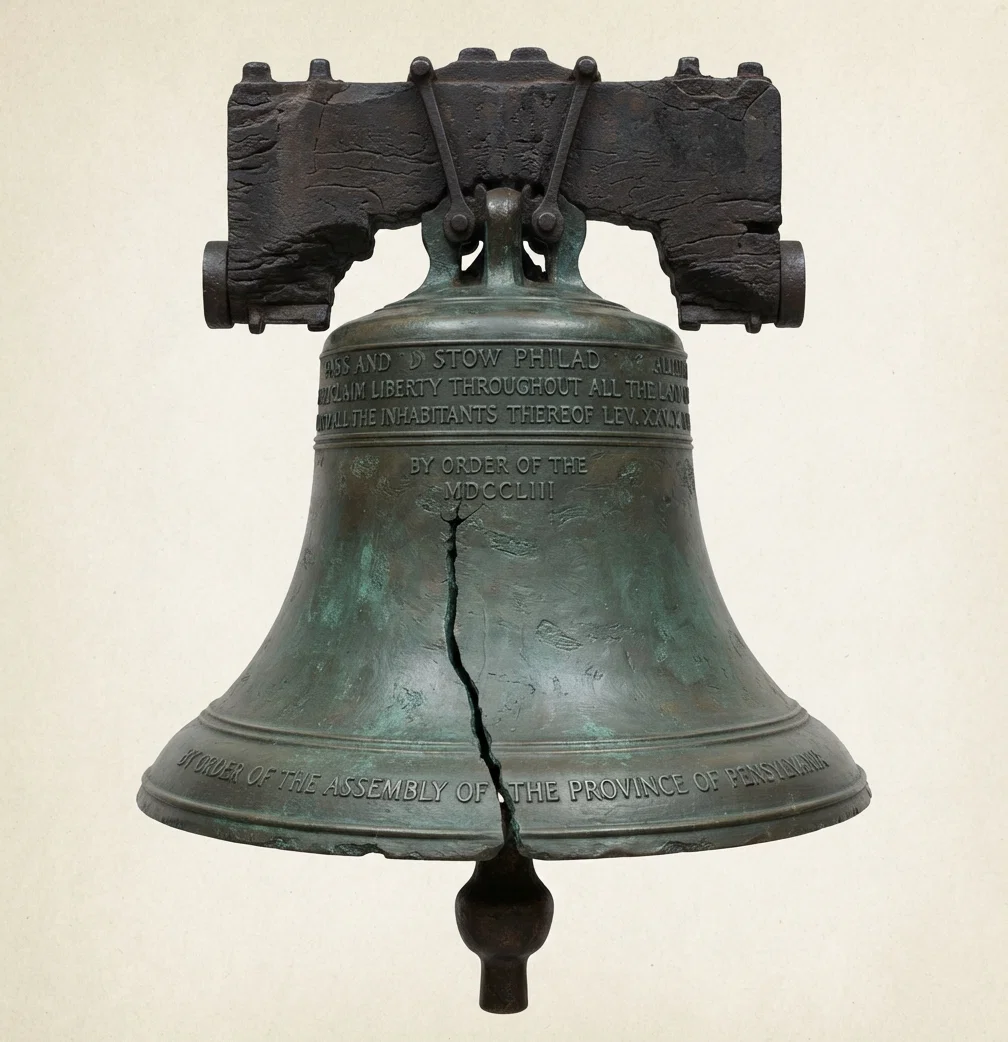
“If any man hear My words and believe not, I judge him not; for I came not to judge the world, but to save the world.” —Jesus the Christ.
“Leave the matter of religion to the family altar, the church, and the private school. . . . Keep the Church and State forever separate.” —U. S. Grant.

Christianity and Earthly Power

The ark of God was never taken till it was surrounded by the arms of earthly defenders. In captivity, its sanctity was sufficient to vindicate it from insult, and to lay the hostile fiend prostrate on the threshold of his own temple. The real security of Christianity is to be found in its benevolent morality, in its exquisite adaptation to the human heart, in the facility with which its scheme accommodates itself to the capacity of every human intellect, in the consolation which it bears to the house of mourning, in the light with which it brightens the great mystery of the grave. To such a system it can bring no addition of dignity or of strength that it is part and parcel of the common law. *
The whole history of Christianity shows that she is in far greater danger of being corrupted by the alliance of power, than of being crushed by its opposition. Those who thrust temporal sovereignty upon her, treat her as their prototypes treated her Author. They bow the knee, and spit upon her; they cry “Hail!” and smite her on the cheek; they put a scepter in her hand, but it is a fragile reed; they crown her, but it is with thorns; they cover with purple the wounds which their own hands have inflicted on her; and inscribe magnificent titles over the cross on which they have fixed her to perish in ignominy and pain. —From Macaulay’s Essay on “Southey’s Colloquies.”

To the Reader

TO THE READER.—This paper is published in the interests of LIBERTY—YOUR liberty as well as ours. We believe that our liberties, yours as well as ours, are in danger; that inalienable rights are jeopardized by movements and influences now operating. Some friend may send you this paper. You will not be asked to pay for it; but we do plead with you to read and weigh what it contains.

"IF YE WILL INQUIRE, INQUIRE YE."

This Inquirers' Department is conducted for the purpose of helping those who are studying the Bible. The answers are oftentimes only suggestive. They are never to be considered infallible, only as they agree with the infallible Word. The writer who may answer them does not consider that his opinion is infallible. He will simply give the best that he has, and plead with the inquirer to search the Word. Such questions only will be answered as, to the editors, seem to minister to the good of the readers and to the mission of the paper. We can not answer repeatedly in the same volume questions upon the same scripture. The name and address must accompany question, not for publication, but as an evidence of good faith, and that answer may be made by letter if deemed advisable. No letters are answered which do not contain the name of the writer. It is well always to enclose stamp for reply.

3755 — Marrying in the World to Come

Is there anything in the Scripture prophecies that favors the idea that some, at least, of the redeemed in the earth made new will marry?
Various Correspondents.
It seems as if our Lord's answer to the questioning Sadducees would be sufficient upon this point: "And Jesus said unto them, The sons of this world marry, and are given in marriage: but they that are accounted worthy to attain to that world, and the resurrection from the dead, neither marry, nor are given in marriage: for neither can they die any more: for they are equal unto the angels; and are sons of God, being sons of the resurrection." Now there are passages in Isaiah 11, for instance, that would seem to indicate that there will be little children in that age to come. This may be understood in one or two ways: first, that that time concerning the little ones may apply to the holy city, the New Jerusalem. The beginning of the eternal reign will be in the holy city above; but that holy city belongs to this earth, and will, after the cleansing at the end of the thousand years, become the capital of the new earth. But it is just as truly a part of this earth now, and is designed for the capital of the earth now; consequently the reign of God's children will begin there. Of course that will take them as they are when Christ comes, and there will be little children as well as older ones. And these, during the thousand years, will grow up, so that when the new earth state is entered upon they will be adults. Another view is that Isaiah is contrasting the things in this life with the condition of things in the world to come—that if there were asps there, and adders there, and lions there, and beasts of all kinds, yet there would be no cruelty, because there is no sin. The sucking child could play upon the hole of the asp, and the weaned child could put its hand in the cockatrice's den. There would be nothing to harm or destroy there. But as before remarked, there may be these very things in the holy city or on the holy mountain, for it will be seen that the passage refers to this: "They shall not hurt nor destroy in all My holy mountain." And as that is upon which the people of God first enter at the beginning of the thousand years, so will the whole earth be eventually, for "the earth shall be full of the knowledge of Jehovah, as the waters cover the sea."

3751 — For Weal or Wo

Is it not a fact that when the world shall have established the initiative and referendum system of government, the greatest opportunity of the ages for weal or wo will then be at the world's door for its action? Is not this point the pivot upon which the destiny of the governments of the earth will have been determined?
Presumably so. The initiative and referendum system might be used, doubtless will be used, in many cases for good. And yet there is within it all the potencies of evil; and that is especially true when it will be invoked, as it certainly will be, in religious questions. Many times, for a little while, for a few days, or a few weeks, or a few months, until the deed shall have been done, the passions of people may be kept by demagogs at white heat, and in those moments of passion they will do things that eternity may not be able to recall. In that case the demagog would use the initiative or the referendum to play on the passions of the people. When this Government was founded, the people thought it wise to place upon themselves some restraints, so that there would be time to look calmly over their actions. And yet merely political things may be reversed. As we before remarked, the great danger will lie in this,—that this appeal to the people will lead the people by these methods to endeavor to determine the religion of the State or the Government. Or legislators themselves, pestered as they are with demands for religious legislation, will say they will submit it to the people; and the people, not properly instructed regarding the rights of men, will yield to the religio-political demagogs, and will set themselves up as the criterion, or the judge, of religious matters. And so the world will be swung from bad to worse, until we have the universal union of Church and State, a government professing to be of God, yet against God. That is the very thing against which we are warned by the great threefold message of Rev. 14:6-14. Applied to civil rule, we have no argument to bring against it, except the danger of passing upon things too hastily; but applied to religious matters—and it is as true with the people as with the legislature—no man or mass of men has or have the right to come between the individual soul and his God. Religious matters, or matters of conscience, are not proper matters of legislation in any form. There is, however, this danger which we may mention, and that is the danger of legislating for the majority, when the proper object of all true governments is to protect the weak and the minority.

3752 — Bywords

Please explain the harm of using bywords. W.
First, what good are they? What help is it to any individual in the world to use words that mean nothing? That is what bywords do; they mean nothing. If one starts out on a journey which he is anxious to accomplish, why should he turn away into by-paths? By-paths lead him off from the main road. If one has something to say, there are sufficient words in the English language, if he uses them, to say all that is necessary. Why use bywords that have nothing to do with the language? How does he make it any better, or any more forcible, to throw in a lot of terms that have no bearing whatever upon what he is saying? Bywords are therefore utterly useless. Secondly, he or she who uses bywords forms the habit of multiplying terms of this kind until it becomes exceedingly unpleasant to listen to such a one talk. It is not, therefore, in good taste to use bywords. Third, many times bywords are used for emphasis, it is said; but if we deem it necessary to use some byword to emphasize what we say, those to whom we say it will soon get the idea that what we say without bywords is not to be depended upon. One must have a sort of oath in connection with his assertion, in order that we may know that he means it; but this is forbidden by the Word of the Lord. "Let your speech be always with grace," is the injunction of the apostle. "Let your communication be, Yea, yea; Nay, nay: for whatsoever is more than these cometh of evil." That is, to put it in other words, Let your speech be direct, simple, straightforward, intelligible, proper. This does not imply, however, that there may not be exclamations of astonishment or surprise. These would not be called bywords, if they were proper and reverent. A byword is always an indication of impoverishment of vocabulary. We use them to fill in at first, and then form the habit of using them.

3753 — Eating and Selling

In Deut. 14:21 we read that it is not right to eat certain things, but we can sell to any one else. Is that right? Is it wrong for us to eat pork that it is right for us to raise for others to eat? D. W. C.
Like other questions of conscience, the individual must settle these things for himself. There were certain things that the children of Israel were forbidden to eat, and this scripture speaks of the things that died of themselves. They could give it to the sojourner, that is, the stranger or foreigner, that he may eat it, or they could sell it to a foreigner. Now the foreigners ate that kind of food all the time. They did not buy it under any deception whatever. The children of Israel did not sell it as that which was killed for that purpose, if they were true or honest. The foreigner knew just what he was buying, or just what he was receiving if it was given to him. We would not understand by this, that, if there were plagues upon either cattle or herds, they would sell those that were sure to bring death upon the persons who ate them; but the flesh of beasts killed by accident or things of that character.
2. The trouble about pork is that it is essentially bad. No doctor prescribes it for a feeble patient. It is about the last thing that doctors will permit in most cases of sickness. The swine is corrupt, and always has been. It is filthy, and its flesh has always been filled with fetid humors. God's people anciently were to have naught to do with it. Those who use it in any quantity are generally troubled with boils, or pimples, or ulcers; wounds heal very slowly, and almost invariably suppurate; whereas after the use of such food has been laid aside, all these symptoms and indications pass. Thousands have been made better by the abjuring of pork and substituting clean food in its place. We do not know why any Seventh-day Adventist would want to raise it. We certainly should not—would prefer to make a little less money rather than to raise swine.

3754 — Getting Mail on the Sabbath

Is it wrong to get mail on Sabbath?
It might not be. Sometimes the Lord's work might demand it. Sometimes a case of life or death might demand it,—sickness in one's family. Let us remember how the Lord relieved the sick and helped those who were in trouble on the Sabbath day. That is one thing; but the mere getting of ordinary mail, as at ordinary days, and in ordinary times, it seems to us that the same commandment which governs ordinary work ought to govern here. "Remember the Sabbath day, to keep it holy," is still in force.

3756 — The Return of the Jews

How shall I understand what is often stated in your publications, that the Jews will never return to Palestine, and Jerusalem will never be built up again, compared with these passages from God's Word: Isa. 61:3; Micah 4; Micah 2:12, 13?
We ask our questioner to read the articles by Pastor E. W. Farnsworth of some weeks ago in the "Signs of the Times," on "The Promises to Abraham." We believe that the principles set forth in these articles will sufficiently answer his question. If not, let him tell us where he is troubled over the matter, and we will be glad to reply again.

3757 — Angels Who Fell

How many fell with Satan?

We do not know. The proportion is revealed to us, but not the number. We read in Rev. 12:4 that the dragon, Satan, drew after him the third part of the stars of heaven. One third of the angelic host of God fell with Satan. But how many that was we have no means of knowing. It is said of those that were left, that there were "ten thousand times ten thousand, and thousands of thousands." Rev. 5:11. And these are called in Heb. 12:22 "an innumerable company of angels."

3758 — After the Likeness of God

In what respect was man created after the likeness of God? E. H.
First, physically so, it would seem by comparing Gen. 1:27 with Gen. 5:1, 3. He was of god-like form. And secondly, in righteousness and true holiness he was created for a character like that of God. Eph. 2:10; 4:24.
Schedule for Week Ending June 1, 1912

Schedule for Week Ending June 1, 1912

Schedule for Week Ending June 1, 1912
Sunday May 26 Ezra 6, 7
Monday " 27 Ezra 8:1-36; 9; 10:1-17
Tuesday " 28 Nehemiah 1, 2
Wednesday " 29 " 3, 4
Thursday " 30 " 5, 6
Friday " 31 " 7:1-7; 8
Sabbath June 1 Haggai 1, 2

Ezra, Haggai, and the Decree

Our readings for the week cover all that is given in the schedule, to the 8th chapter of Nehemiah, inclusive, and the first two chapters of Haggai. The lessons in Ezra bring out the renewal of the decree of Cyrus by Darius Hystaspes, and the addition to that decree by Artaxerxes Longimanus, which took in not only the building of the temple, but the complete restoration of the government to the Jews. This decree went forth in the 7th year of Artaxerxes, or 457 years before Christ, and is the commandment to restore and build Jerusalem referred to in Dan. 9:25. This commandment involved the decree of Cyrus, Darius, and Artaxerxes (see Ezra 6:14). Inasmuch as Haggai was one of the prophets who encouraged Zerubbabel and Ezra in building, we have thrown his prophecy in in connection with these circumstances. Note how God's blessing was pronounced upon them if they would build, and how blessing was withheld from them when God's work was made secondary, and their own work first.
Portions are omitted from Ezra, because of the genealogies. They may be read with profit for those who desire, but are not particularly essential.

The Individual—His God-Given Rights

God and Man Alone
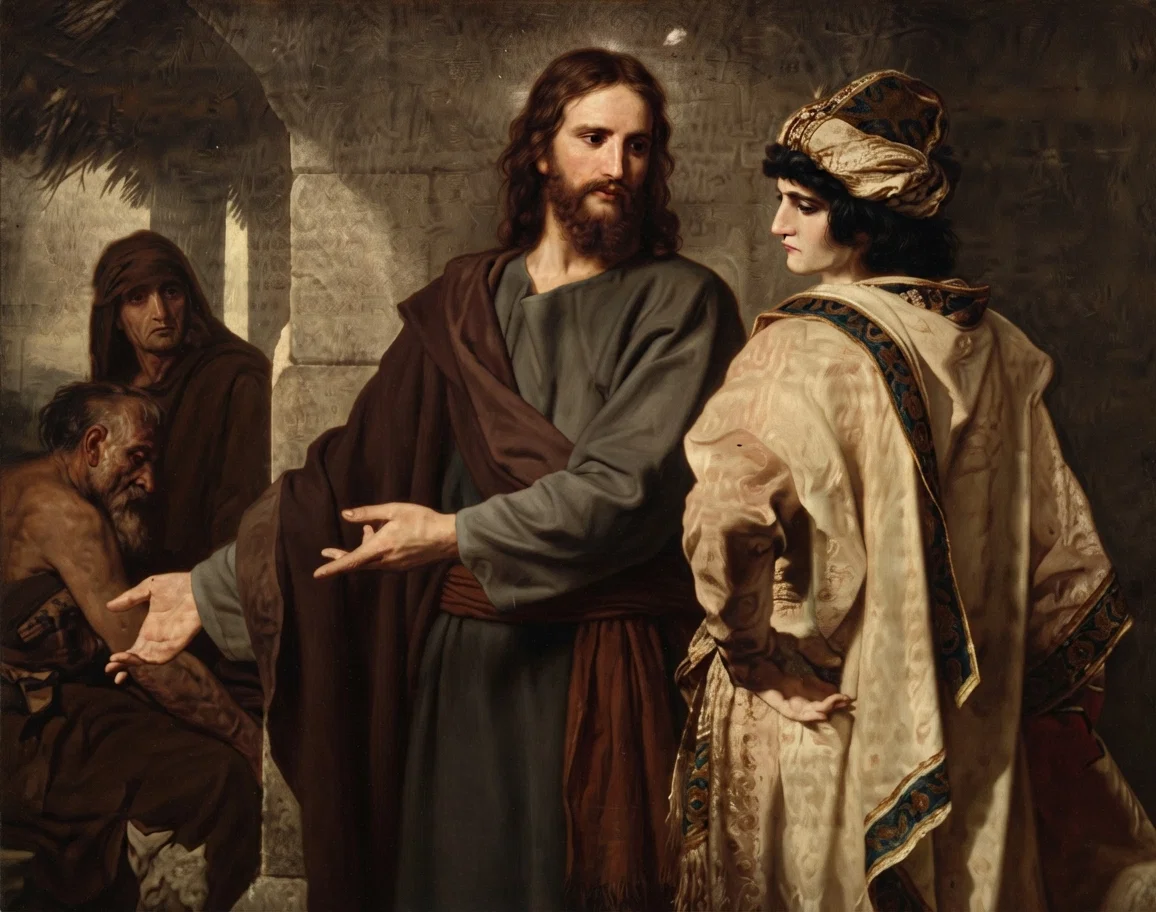
"Who loved me, and gave Himself for me." Gal. 2: 20.
IN these few words, Inspiration has announced the mighty truth that men are loved individually and saved individually.
God loved the world, and gave His Son to die for the world; but in its last and true analysis, the love of God is directed to individual men.
Viewed from whatever angle, the blessed plan of salvation shows that it was devised and must be executed with reference to men as units.
Calvary speaks only to "whosoever," and "whosoever" is always the individual.
"Whosoever" may believe, "whosoever" may choose, "whosoever" may be saved.
It must be true, therefore, that God's great gifts of life and righteousness are sacred to "whosoever" alone. "Whosoever" has right to all that God proffers him. He has right—an inherent and unalienable right—to believe, to choose, to accept. John 3:16 shows that the great life contract can know but two parties,—an individual God and an individual man.
It were well also to notice that in carrying out the life contract, there are no go-betweens provided for. Nothing is done by proxy. On the part of God there is no delegated authority, on the part of man no transferring of right. God Himself comes down to man, and man himself is drawn up to God.
From Hofmann's great painting, "Christ and the Young Man." Even so the Personal Christ appeals to each Individual soul. To Him alone our allegiance is due. He only is our Saviour. To Him alone must we give account. There can of right be no law, no dogma, nothing human, which interferes between the Saviour of men and the Individual man.

Individual Righteousness

Some one has truly said that religion is man's individual relationship of faith and obedience toward God.
Dear reader, if you will give the matter careful thought, you will readily see that there can be no such thing as national, State, or municipal righteousness, for the simple reason there is no such thing as national, State, or municipal conscience. Conscience is the "inner man" of the individual, that wonderful something upon which the Holy Spirit works to convict man of his personal wrongs. The Holy Spirit, as a part of the Calvary plan, works only in the heart of the "whosoever."
Never in the history of man has there been such a thing as the salvation of a nation, or even of a church, considered as a whole.
People have not been saved in masses, because they have not believed in masses. It has seldom been true that even a majority of any one nation has believed; and even had this been true, the salvation of the majority could not have brought salvation to the minority. As faith is individual, God-given, and non-transferable, so salvation, which comes by faith, is individual, God-given, and non-transferable. "Tho these three men, Noah, Daniel, and Job, were in it, they should deliver but their own souls by their righteousness, saith the Lord God." Eze. 14:14.

Power to Accept or Reject

The great law of individuality which operates in the matter of man's acceptance of life, operates also in his rejection of life. The right to accept implies his right to reject. As no one may rightly interfere to hinder the acceptance of God's gifts, so no one may rightly interfere to hinder the rejection of those same gifts. In each case man deals alone with Him who offers salvation. God reserves to Himself, to His own court of judgment, the decision of all questions concerning man's direct relationship to the divine government. He has not asked nor will He accept the services of any nation, any church, or any society, which would attempt to dictate to His earthly subjects the course they shall take in accepting or rejecting any of His divine propositions.
For some reason, however, men have been wont to forget that God alone can deal with the great question of salvation; and all through the ages there have been repeated efforts to coerce in matters of religious belief and religious practise. But without a single exception, the God of heaven has upheld those who have stood for the principle of individual right, and in His dealing with men and nations He has marked out in most wonderful way the course He would have us take to-day.

Biblical Examples in Point

In the struggle of the three Hebrew children against the decree of Nebuchadnezzar, the right of individual faith and choice was the main point at issue. Daniel 3. They maintained their right to worship according to the persuasion of their own hearts, even tho in so doing they made themselves liable to the supreme law of the land. The king's decree commanded them to worship contrary to their accepted and established belief. And God miraculously upheld them in what appeared as open disobedience.
With Daniel, at a later date, the circumstances were somewhat different, tho the principle was much the same. Daniel stood for individual right in following the truth. Unlike Nebuchadnezzar's decree, which commanded the worship of a false god, the law of Darius forbade the worship of the true God. See Daniel 6. At least, Daniel was forbidden to offer prayer to the true God for a specified period of time. However, the prophet rejected the law, and followed his daily practise irrespective of the intolerant law which brought him to the lions' den. But God stood by His servant, and individuality triumphed over the then greatest monarchy of earth.

God's Recognition of Individuality

And why should it not? Are not God's commands addressed to the individual? Do they not call for individual obedience? Neither Daniel nor any other child of God could plead as an excuse for disobedience toward God the fact that some earthly precept or some earthly ruler had interposed to hinder. God is supreme, His laws ever have first place, and His direct connection with each soul enables that one by grace to meet every requirement.
This manifest truth of individual relationship to God in matter of faith and moral obedience, for which Daniel and his fellows so earnestly contended, and in which God made them victorious, was made a living issue in the days of the apostles. Daniel and his three brethren opposed government interference, whereas the apostles opposed church interference. But whether from church or government, the interference was justly resented and the believer divinely upheld.

A New Testament Example

Peter and John had been sent forth to preach the blessed Gospel of forgiveness of sin and healing of disease. Their work was the fulfilling of their Lord's direct command. The commission to evangelize the world belonged to them individually and came to them directly. To them the work of Christ was a personal responsibility, a moral obligation, an unalienable right. Their answer, therefore, to the church authorities who sought to restrain them was: "Whether it be right in the sight of God to harken unto you more than unto God, judge ye. For we can not but speak the things which we have seen and heard." Acts 4:19, 20.
Did God sustain them in their decision against the organized church of their day? — He surely did. To Him by prayer they carried their case. "And when they had prayed, the place was shaken where they were assembled together; and they were all filled with the Holy Ghost, and they spake the word of God with boldness." Acts 4:31. The Holy Spirit strengthened them to do directly contrary to the decree of the church. And when arrested again, they boldly said, "We ought to obey God rather than men." Acts 5:29.
Why has not the church always remembered this? Why did not religious leaders, and especially the professed followers of Christ, understand that man is to answer to God alone for his faith or lack of faith? Did not the great apostle disclaim dominion over his brethren's faith? 2 Cor. 1:24. Did he not teach the wrong of judging and condemning another because that other did not meet one's standard? And in splendid recognition of individuality, did he not say, "To his own master he standeth or falleth"? Rom. 14:4.
Yes, the apostle taught man's direct relationship. He made it very plain, when he added, "Let every man be fully persuaded in his own mind." Rom. 14:5. All the great questions pertaining to the relationship of man to God's great spiritual and invisible kingdom, are such that poor finite men, however organized, can not successfully, because not rightfully, interfere. Only God sees the heart, understands the motives, and does the inner work of grace. He alone is responsible for results, and to Him alone men shall give account. Rom. 14:10, 12.

The Individual Pre-eminent

The voices of martyred millions are still declaring that faith is the gift of God to the individual heart, and that the preservation of a faithful, individual relationship is more sacred than life itself.
It can not be too fully nor too strongly emphasized that every feature of the great relationship between God and man is sacredly individual. The call of the Gospel is to the individual. Rev. 3:20. The choosing is individual. Rev. 22:17. The gift of faith is to the individual. Rom. 12:3. The work assigned is individual. Mark 13:34. The salvation is individual. John 3:16. And if loss comes to any, it too is individual. Jer. 31:29, 30.
Such is the teaching of God's blessed Book. From Genesis to Revelation it makes known the inherent right of individuality. And well were it, to-day, when so many and so mighty movements are inaugurated, Christian workers would always remember the individual,—remember his rights before God, and in all that is done seek so to embellish and emphasize those rights, that God shall not be hindered in His work of calling individual hearts to an individual faith and a blessed and everlasting individual salvation. C. L. TAYLOR.

Do Thy Duty

"To thy duty now and ever! Dream no more of rest or stay; Give to Freedom's great endeavor All thou art and hast to-day:— Thus, above the city's murmur, Saith a voice, or seems to say.
Ye with heart and vision gifted To discern and love the right, Whose worn faces have been lifted To the slowly growing light, Where from Freedom's sunrise drifted Slowly back the murk of night!
Well it may be that our natures Have grown sterner and more hard, And the freshness of their features Somewhat harsh and battle-scarred, And their harmonies of feeling Overtasked and rudely jarred.
Be it so. It should not swerve us From a purpose true and brave; Dearer Freedom's rugged service Than the pastime of the slave; Better is the storm above it Than the quiet of the grave. — Whittier.

Christ Vindicates the Law

The sum and substance of the arguments of Satan is that sin may be immortalized, that Christ abolished the law, and that evildoers may be in favor with God. But the death of Christ tells a different story; for He died to vindicate the claims of the law, to give to the world and to angels an unanswerable argument of the immutability of the law of Jehovah.—Mrs. E. G. White.

May Such a Life Be Mine!

O, turn me, mold me, mellow me for use. Pervade my being with Thy vital force, That this else inexpressive life of mine May become eloquent and full of power, Impregnated with life and strength divine. Put the bright torch of heaven into my hand, That I may carry it aloft, And win the eye of weary wanderers here below, To guide their feet into the paths of peace. I can not raise the dead, Nor from this soil pluck precious dust, Nor bid the sleeper wake, Nor still the storm, nor bend the lightning back, Nor muffle up the thunder, Nor bid the chains fall from off creation's long enfettered limbs. But I can live a life that tells on other lives, And makes this world less full of anguish and of pain; A life that, like the pebble dropped upon the sea, Sends its wide circles to a hundred shores. May such a life be mine! Creator of true life, Thyself the life Thou givest, Give Thyself, that Thou mayest dwell in me, and I in Thee. — Horatius Bonar.
Continue reading: Religious Liberty in California History