Review and Herald, Vol. 93, No. 61

The Approaching Climax in the World's Drama

Review and Herald

Dec 11, 1916

Review and Herald Publishing Association · Takoma Park, Washington, D. C. · Dec 11, 1916

The Approaching Climax in the World's Drama

Some day, according to Holy Scripture, it will come—the grand climax in the drama of human history.
Is it approaching now? No one can have failed, in these times to note how constantly keen observers are giving utterance to the thought that the world is approaching a great crisis.
It is a time of swift changes. World-shaping events take place with startling suddenness. Addressing the graduating class in one of the Washington law schools, Dean Hamilton recently characterized the spirit of our time in these words:—
“We have entered upon a period of upheaval and change, the spirit of unrest has entered into the minds of men.”
There is a feeling of uncertainty as to the stability of institutions and things which men have heretofore expected to continue jogging along indefinitely in the accustomed way.
“Nothing is certain,” said the conservative Washington Post editorially the other day; “no throne or dynasty or nation is so entrenched and immured that it is invincible. That which has stood for a thousand years is not now guaranteed against a fall.”
Throughout the world, too, there is a growing spirit of expectancy—as of a coming climax of the age. Not only in Christendom is this noted, but in non-Christian lands as well. Travelers have again and again in recent years reported this expectancy among the millions of the interior of Asia. The Hindus and the Buddhists, we are told, look for the end of the age and the coming of a divine teacher. One leader of thought in India puts it,—
“In the West as well as in the East, the heart of man is throbbing with the glad expectation of the new avatar.”
The Moslem world, we are told, is expectant of the end of the age and the coming of a greater than Mahomet.
The “sure word of prophecy” gives God's answer to the world's spirit of inquiry and expectancy. The voice of divine prophecy cries to this generation,—
“The night is far spent, the day is at hand.”
We may know that above all the affairs of men and of nations, in these times of change and overturning, is the living God, waiting the time when his everlasting kingdom shall at last be ushered in. As Canon Ainger has put it,—
“God is working his purposes out, as year succeeds to year; God is working his purposes out, and the time is drawing near; Nearer and nearer draws the time, the time that shall surely be, When the earth shall be filled with the glory of God, as the waters cover the sea.”
But between us and that everlasting kingdom of peace lies a brief and thrilling course of events, constituting indeed the climax of this world's history.

Armageddon

The Last Conflict of the Nations
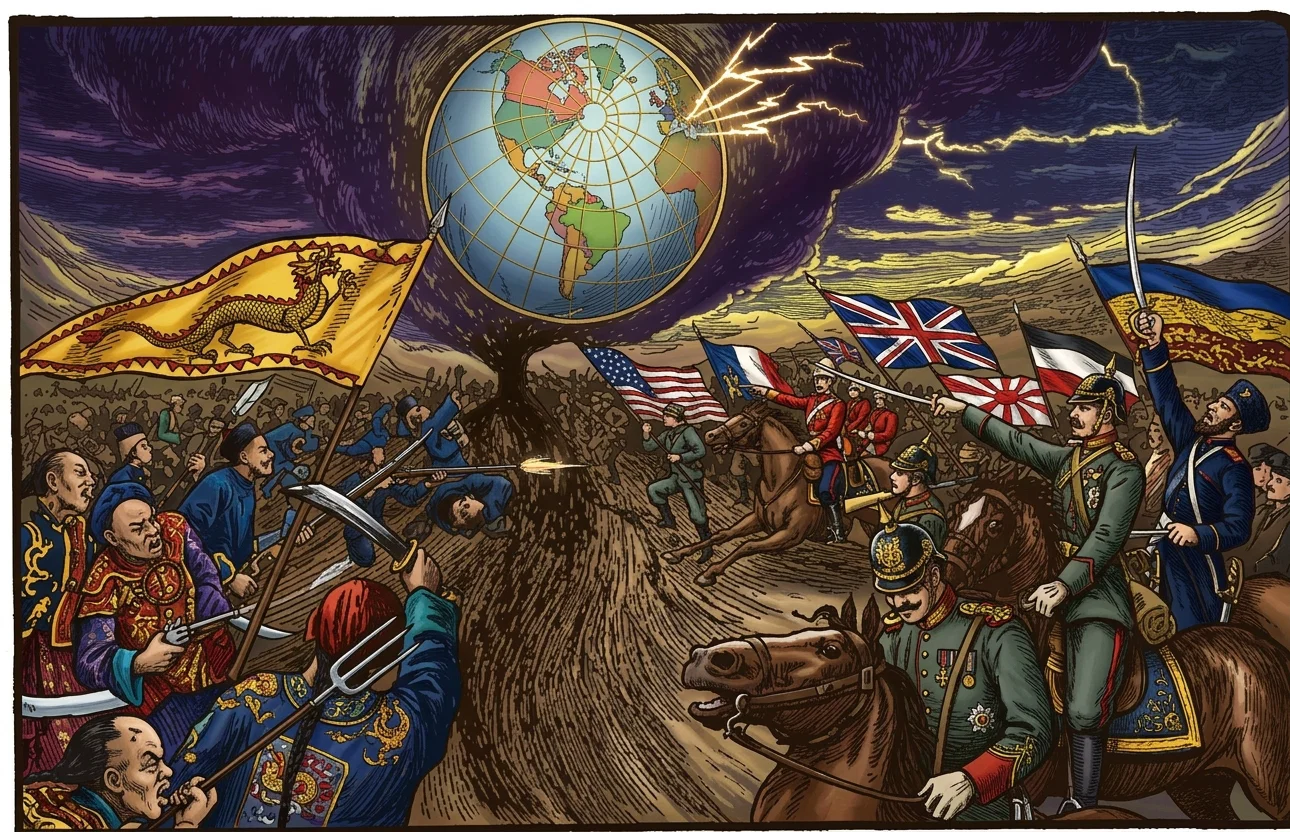
For years the growing armaments of the nations have caused deepest concern to statesmen and all thoughtful observers. Queen Alexandra of England, once said of all this war preparation: “I was educated in the school of a king who was, before all things, just, and I have tried, like him, always to preach love and charity. I have always mistrusted warlike preparations, of which nations seem never to tire. Some day this accumulated material of soldiers and guns will burst into flames in a frightful war that will throw humanity into mourning on earth, and grieve our universal Father in heaven.”
It has been seen that the rivalries of the nations, and the distrust, on which these preparations were based, were bound, sooner or later, to bring conflict on a vast scale. Some years ago the London Contemporary Review said:— “Odd things are happening everywhere. . . . Russia, Germany, England—these are great names; they palpitate with great ideas; they have vast destinies before them, and millions of armed men in their pay, all awaiting Armageddon.”
In a speech in 1909, Lord Rosebery, of England, deplored the race of armaments, declaring the unprecedented preparations for war in Europe to be “as if for some great Armageddon—and that in a time of the profoundest peace.”
Thus, in the years of general peace, but of almost universal preparations for war, statesmen and writers used the Scriptural phrase to describe the clash of nations which they saw impending. While there was outward peace, there was ever-increasing rivalry and antagonism of interests. In 1911, an article in the London Nineteenth Century and After, declared:— “Never was national and racial feeling stronger upon earth than it is now. Never was preparation for war so tremendous and so sustained. Never was striking power so swift and so terribly formidable. . . . The shadow of conflict and of displacement greater than any which mankind has known since Attila and his Huns were stayed at Châlons, is visibly impending over the world. Almost can the ear of imagination hear the gathering of the legions for the fiery trial of peoples, a sound as vast as the trumpets of the Lord of hosts.”—Quoted in the Literary Digest, May 6, 1911. All through these recent years, observers have seen the sure signs of a coming storm.

The Scriptures Forewarned Us

Many have thought that surely the modern world had learned a better way than the old-time method of force in the settlement of disputes and rivalries. Happy would we all be if
such were the case. But the Scriptures have warned us plainly that the latter days were to be days of unusual display of the war spirit. True, many people were to be talking of peace and safety, the prophecy tells us. They were to be saying of the nations:— “They shall beat their swords into plowshares, and their spears into pruning hooks; nation shall not lift up sword against nation, neither shall they learn war any more.” Isa. 2: 4. Just such talk of peace and safety we have heard. But while “many people” were to be saying this in the last days, the prophecy declared that the actual conditions would be the very reverse:— “Proclaim ye this among the Gentiles [the nations]; Prepare war, wake up the mighty men, let all the men of war draw near; let them come up; beat your plowshares into swords, and your pruning hooks into spears; let the weak say, I am strong. Assemble yourselves, and come, all ye heathen.” Joel 3: 9-11. This was to be the spirit of the world in the last days; for the context shows that the prophecy applies just before the coming of “the day of the Lord.” And no argument is needed now to convince any that this prophecy pictures the world as it is. The product of the plowshare is being turned into swords—or weapons of war—as never before in human history.

Ancient Prophets and Modern Statesmen

The writings of the ancient prophets describe conditions in our times in terms strikingly parallel to those used by modern statesmen. “I have declared the former things from the beginning,” the Lord says; “before it came to pass I showed it thee.” Isa. 48: 3, 5. This is in order that as soon as men see the events of the prophecy coming to pass, they may know that the Most High is speaking to their souls, and may turn to him and find refuge and salvation. One of the last speeches that the late Lord Salisbury made in the House of Lords, as British premier, was in defense of increased army and navy appropriations. He said:— “For years public opinion was in favor of a pacific policy, but now that some of that opinion has passed away. The tide has turned, and who am I, and who are we, that we should attempt to stem the tide? If the tide has turned, we shall have to go with it. We are in the presence of forces far larger than we can wield.” What are these forces before which the aged statesmen said cabinets were powerless,—forces stirring the peoples out of their former pacific attitude, and sweeping the nations on toward war? The ancient prophet answers.
“THE NATIONS WERE ANGRY,” REV. 11: 18
The Lord opened before the prophet John, in vision, the scenes of the last days. As he looked, he saw the supernatural agencies of Satan, “the spirits of devils,” going forth “unto the kings of the earth and of the whole world, to gather them to the battle of that great day of God Almighty.” Rev. 16: 14. These are the agencies that have been sowing hatreds and stirring up strifes. Sir Edward Grey, British foreign secretary, speaking in the House of Commons, Nov. 27, 1911, described the workings of these forces most accurately. He said:— “It is really as if in the atmosphere of the world there were some mischievous influence at work, which troubles and excites every part of it.” What the ancient prophet saw in vision, and described on the sacred page nearly two thousand years ago, the modern statesman describes as a condition actually to be faced.
The prophet saw these evil spirits stirring up “the whole world” for the last great conflict. In his speech at Cleveland, Jan. 29, 1916, President Wilson told how the spirit of war was abroad in all the world:— “What are the elements of the case? In the first place, and most obviously, two thirds of the world are at war. It is not merely a European struggle; nations in the Orient have become involved, as well as nations in the West, and everywhere there seems to be creeping even upon the nations disengaged the spirit and the threat of war.”—Washington Post, Jan. 30, 1916. Who cannot see that what the prophet saw in vision so long ago, is in process of fulfillment before our eyes?

The Prelude to Armageddon

The final clash of the nations, however, does not come until Turkey falls. The great Moslem power occupies the pivotal point between East and West. In the prophet’s vision of the gathering of “the whole world” to the last great conflict, he first saw this Moslem power by the Euphrates come to its end:— “The sixth angel poured out his vial upon the great river Euphrates; and the water thereof was dried up, that the way of the kings of the east might be prepared.” Rev. 16: 12. The spirit of war, as we have seen, is already stirring up the East, against the time when all the world, literally, will gather for battle. The London Nineteenth Century and After, said several years ago:— “A new spirit is abroad in the East. It arose on the shores of the Pacific when Japan proved that the great powers of Europe are not invulnerable. North and south and west it has spread, rousing China out of centuries of slumber, stirring India into ominous questioning, reviving memories of past glory in Persia, breeding discontent in Egypt, and luring Turkey on to the rocks.”—May, 1913. In some manner which we need not presume to forecast, the fall of the Turkish power by the river Euphrates will prepare the way for these forces of the East to come up to join in the last great struggle.

Armageddon

In the prophet’s vision he next saw the powers of evil actually gathering the nations for the battle of that great day of God Almighty:— “He gathered them together into a place called in the Hebrew tongue Armageddon.” Rev. 16: 16.
Here is where speakers and writers get the word Armageddon. It means the hill or mount of Megiddo, which marks the historic battle plain of the Near East. Cormack says:— “Megiddo was the military key of Syria; it commanded at once the highway northward to Phoenicia and Coele-Syria and the road across Galilee to Damascus and the valley of the Euphrates. . . . The vale of Kishon and the region of Megiddo were inevitable battle fields. Through all history they retained that qualification; there many of the great contests of Southeastern Asia have been decided.”—“Pre-Biblical Syria and Palestine,” p. 82. It is not that all the forces in the final battle of the nations must find space immediately about Megiddo itself, when already we hear of battle fronts in Europe of hundreds of miles; but Megiddo, as the “military key of Syria,” marks
the Near East as the field of the last great struggle of the nations. The prophet, in vision, saw the gathering of the forces in the last day around this ancient meeting place of nations; and in modern times this same region is indeed counted the great international storm center, the pivotal point around which contests involving Asia and Europe must naturally revolve.
Speaking of the political importance of this region, the London Fortnightly Review said some years ago:— “Palestine is the great center, the meeting of the roads. Whoever holds Palestine, commands the great lines of communication, not only by land, but also by sea.” The ancient prophet described this region as the great storm center; the modern observer sees it even so. What Armageddon is, is plainly stated. It is the final clash of earth’s warring nations, the “battle of that great day of God Almighty.” East and West and all the world are to be represented in it.

When Armageddon Comes

Already human probation has closed when Armageddon comes, and the ministry of Christ for sin has been finished in the heavenly temple. Rev. 15: 8. As the nations gather for the conflict, the voice from heaven cries, “It is done.” There comes the mightiest quaking this earth
has ever felt, the “cities of the nations” fall, and great Babylon comes in remembrance before God. Every island flees away, and the mountains are not found. Rev. 16: 16-21. Armageddon is the signal of the end of the world. It is plain that the world is hastening on toward Armageddon. And surely this prophecy concerning it is given in order that as the
world fills with strife and the great day is seen to be hastening, men may be warned of the coming end, and prepare to meet the Lord. In the midst of this very prophecy of Armageddon, the Lord interjects the solemn call:— “Behold, I come as a thief. Blessed is he that watcheth, and keepeth his garments, lest he walk naked, and they see his shame.” Rev. 16: 15. Above the din of angry armies strong, We hear a song, a song of hope and trust, The Battle Hymn of the redeemed. They sing Of crumbling kingdoms and a melting earth; They sing of desolations far and near; But through the song, a note of triumph peals; “We will not fear—not fear, though earth shall quake, And mountains fall into the sea. The God Of Jacob is our refuge and our strength, A present help in God, the Lord of hosts.” ELIZA H. MORTON.

The Origin of War

“O War! begot in pride and luxury, The child of malice and revengeful hate.” — Daniel.
As intimated by the poet, war originated in selfishness. The apostle goes to the root of the matter:— “Whence come wars and fightings among you? come they not hence, even of your lusts that war in your members? Ye lust, and have not: ye kill, and desire to have, and cannot obtain.” James 4: 1, 2.

Satan Waged War in Heaven

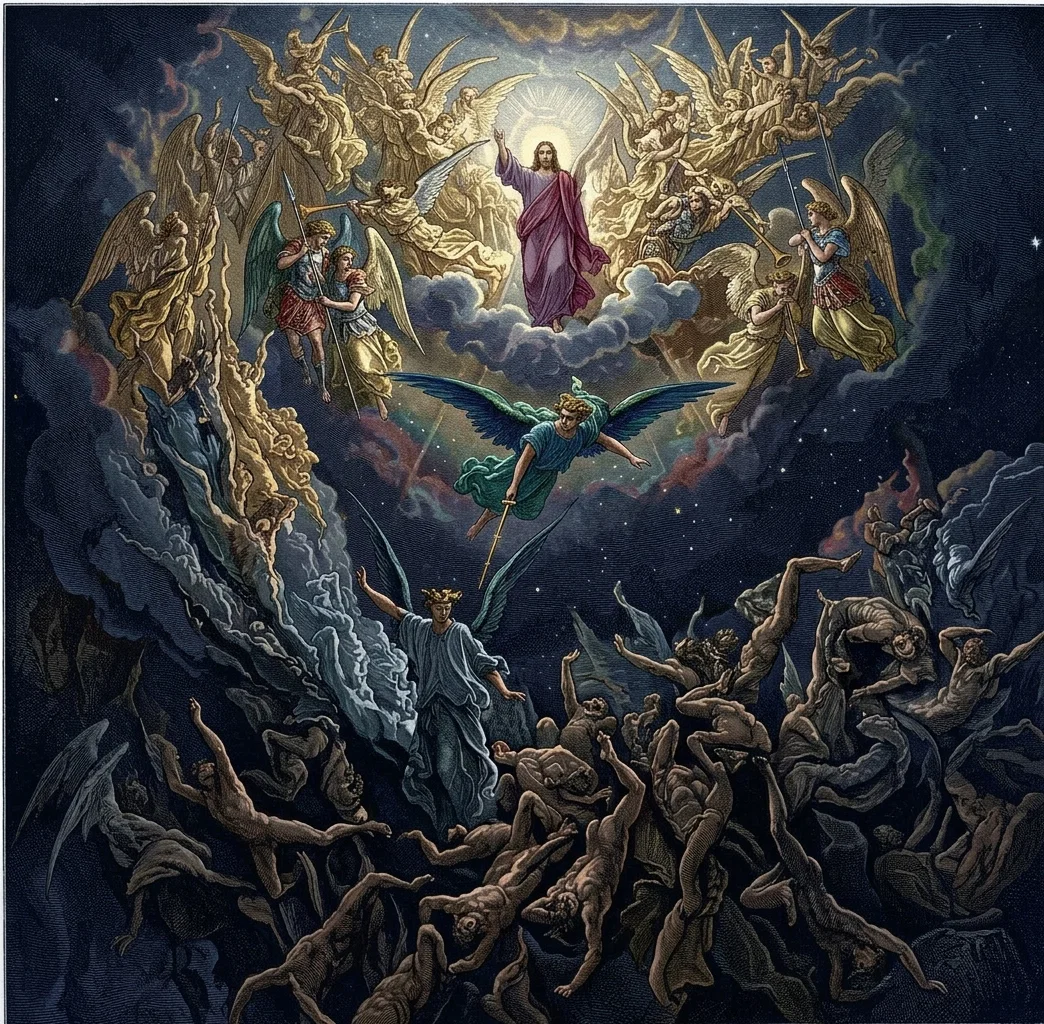
Before human beings ever knew war, war began in heaven itself:— “There was war in heaven: Michael and his angels fought against the dragon; and the dragon fought and his angels, and prevailed not; neither was their place found any more in heaven. And the great dragon was cast out, that old serpent, called the Devil, and Satan, which deceiveth the whole world: he was cast out into the earth, and his angels were cast out with him.” Rev. 12: 7-9.
Selfishness, pride, greed of power, of position, started this first war in heaven. The prophet declares this in the words:— “How art thou fallen from heaven, O Lucifer, son of the morning! how art thou cut down to the ground, which didst weaken the nations! For thou hast said in thine heart, I will ascend into heaven, I will exalt my throne above the stars of God; I will sit also upon the mount of the congregation, in the sides of the north: I will ascend above the heights of the clouds; I will be like the Most High.” Isa. 14: 12-14.
Milton’s lines repeat the story gleaned from the Scripture narrative:— “Th’ infernal serpent, he it was, whose guile Stirr’d up with envy and revenge, deceived The mother of mankind, what time his pride Had cast him out from heaven, with all his host Of rebel angels, by whose aid aspiring To set himself in glory above his peers, He trusted to have equal’d the Most High, If he opposed; and with ambitious aim Against the throne and monarchy of God Raised impious war in heav’n, and battle proud, With vain attempt. Him the almighty Power Hurl’d headlong flaming from th’ ethereal sky;” —“Paradise Lost.”

War Transferred from Heaven to Earth

Happy the lot of man had Satan never been able to infuse his spirit into the hearts of the human family! But we know the sad story. The deceiver, “that old serpent,” who was at war with heaven, beguiled our first parents into sin, and human nature became sinful and fallen.
In the fall of man, the same spirit of pride and ambition and greed that had actuated Satan in his original warfare against God, was communicated to the human family, and has ever since dominated the race, save as divine grace has been allowed to transform the natural heart.
With Satan war originated, and all the way along it has been his spirit stirring up ambitions and hatreds and rivalries and love of conquest among the nations.
His evil influence it was that inspired Cain to disregard the divine requirements, and to reject the gospel of salvation as represented in the slain lamb of the offering. And when abandonment to his own selfish way placed Cain fully under the control of the evil one, quickly the hand of violence was raised for the first time by a man against a fellow man. Cain made war upon Abel his brother, and slew him.
By the time of Noah, “the earth was filled with violence,” and the flood swept away the old world for its wickedness. Soon after the flood, however, as the descendants of Noah grew into tribes and nations, the lust of conquest and dominion again appeared.
We read of Nimrod:— “He began to be a mighty one in the earth. He was a mighty hunter before the Lord; wherefore it is said, Even as Nimrod the mighty hunter before the Lord. And the beginning of his kingdom was Babel, and Erech, and Accad, and Calneh, in the land of Shinar.” Gen. 10: 8-10.
Of Nimrod, Robinson’s “Calmet’s Dictionary of the Holy Bible,” says:— “He was the first to monopolize power on the earth, and gave occasion to the proverb, ‘Like Nimrod the great hunter before the Lord.’ His hunting was not only of wild beasts, but also to subdue men, to reduce them under his dominion.”
Beginning with his following secured at Babel, it would seem that Nimrod entered upon a career of conquest, and by war subdued to his own rule the other districts mentioned in Gen. 10: 10, building a city at Calneh, and making that for a time the seat of his government. From that day onward, the history tells the story of war from generation to generation.
It appears, therefore, in brief, that war originated in Satan’s rebellion in heaven; that with the casting of the enemy out of heaven the controversy was transferred to the earth; and that from that day to this, our poor world has been scourged and torn by wars. Back of all the pride of power and greed of possession, or mere wantonness, from which wars are sprung upon the world, is the spirit of the god of this world, who was the great originator of war in heaven.

The Great Controversy Between Christ and Satan

“When the dragon saw that he was cast unto the earth, he persecuted the woman which brought forth the man child.” “And the dragon was wroth with the woman, and went to make war with the remnant of her seed, which keep the commandments of God, and have the testimony of Jesus Christ.” Rev. 12: 13, 17.
With the expulsion of Satan and his sympathizers from heaven, the great controversy between Christ and the archangel was transferred to the earth. The nature of the contest was also changed in a measure: instead of continuing a struggle to regain possession of a place and a position in heaven, Satan resolved to destroy man,—especially men who were loyal to the Creator,—and to wrest from the Son of God himself the possession and sovereignty of the earth.
While the controversy was still between Christ and Satan, human wills and human hearts were now to be the battle ground. Christ endeavoring to win fallen man back to his allegiance to Heaven, and Satan striving to hold the ensnared race fast in the meshes of the net of sin that he had artfully cast over them.
The original war in heaven was between the Son of God in his own proper person as a divine being, and Satan, the most exalted of created intelligences. But when transferred to earth, the controversy must be fought out between Christ become “the seed of the woman,” “the Son of man,” and this same powerful angel, Lucifer, fallen it is true, but still mighty in the wisdom and strength with which the Creator had endowed him.

To Vindicate God's Justice

Satan had sought to justify his rebellion by the charge that God's government was unjust in that the divine law could not be kept even by angels, and still less by men. To disprove this charge, and to afford in the presence both of fallen angels and of unfallen worlds, ample and complete vindication of the justice of the divine government, the Son of God would himself become flesh, would be born into the world just as all men are born, would subject himself to all the untoward circumstances by which men are surrounded, and under these conditions would meet and overcome the enemy of all righteousness on his own ground.
Adam had failed, but through the promised seed defeat would give place to victory. From Adam's race would spring One pledged to destroy not only the work of Satan, but even the great enemy himself, as is plainly implied in the words, “I will put enmity between thee and the woman, and between thy seed and her seed; it shall bruise thy head, and thou shalt bruise his heel.” Gen. 3: 15.
“THERE WAS WAR IN HEAVEN.” REV. 12: 7
The true history of God's people and of his dealing with them, whether we find it in the Scriptures or in other writings, is a history of the great controversy between Christ and Satan. For even though the envenomed shaft of Satan's malice be directed against the humblest saint of God, it must first pierce Christ's great heart of love and tenderness before it can find living sheath in the soul of one who is “in him;” for it is still true today, as it has ever been, that “in all their affliction he was afflicted.”
Though beguiled into sin, our first parents repented; and though weakened in moral power, they resumed their attitude of loyalty to the Creator. The seeds of sin were, however, transmitted to their offspring. Cain, their first-born, by unbelief gave himself into the control of Satan. He lived in sin, and finally slew his brother Abel. But Seth, Adam's third son, followed the example of his parents, and served the Lord.
The good and the bad were mingled together in the world. Through all the ages, Satan has pitted the evil against the good in an effort to destroy both. Not only by direct outward attack, but also through human passions and human frailties, the enemy has constantly endeavored to degrade and alienate the fallen race. But though at times the conflict has waxed fierce, a true seed has ever been preserved in the earth, imperfect it is true, weak and sinful it must be confessed, but nevertheless having a heart set to obey the Lord.

The Promise to Abraham

By and by the time came that God would make choice of one man through whom the promise of Gen. 3: 15, the promise of a Saviour, should be fulfilled. And he chose Abraham, calling him out from his heathen environment of idol-worshiping friends and kindred, that he might make him the father of many nations, and the progenitor of the promised seed.
The story of this noble patriarch is familiar. The promise to Abraham was, “In thy seed shall all the nations of the earth be blessed.” Gen. 22: 18. In Gal. 3: 16 the apostle tells us that these words were a promise of Christ: “Now to Abraham and his seed were the promises made. He saith not, And to seeds, as of many; but as of one, And to thy seed, which is Christ.”
All the promises of the Old Testament looked to the coming of the “Desire of all nations;” toward this event were the eyes of all people directed, for in him centered the hope of the world. And as he was the center of hope, even though often vague and shadowy, so, too, was he the center of warfare; against him were directed all the fiery darts of the enemy. At every turn Satan sought to cut off hope of the realization of the promises by breaking the continuity of the line of fleshly descent from Abraham to the promised Seed; and by seeking to destroy even the Seed himself soon after his birth in Bethlehem.

Satan's Effort to Defeat God's Plan

When Jesus was born into the world, the event was announced by angels, not to the learned and the great in Jerusalem, but to the humble shepherds watching their flocks upon the plains of Bethlehem, under the open canopy of heaven, and their story and song was: “Unto you is born this day in the city of David a Saviour, which is Christ the Lord.” “Glory to God in the highest, and on earth peace, good will toward men.” Luke 2: 11, 14.
The jealousy of Herod was the agency by which Satan endeavored to defeat the plan of God, by destroying all the male children in Bethlehem and the region round about, from two years old and under, according to the time of the visit of the wise men from the East, But God's plan was not to be defeated. Joseph, warned of God in a dream, had taken the young child and his mother, and fled by night, going down into Egypt, where he abode until the death of Herod. The climax of the great controversy was reached in the garden of Gethsemane, upon Calvary, and in Joseph's new tomb. And at each of these crucial points, Christ conquered. In the garden and at the cross were fulfilled the words: “I have trodden the wine press alone; and of the people there was none with me.” Isa. 63: 3.

Victory by Submission to the Divine Will
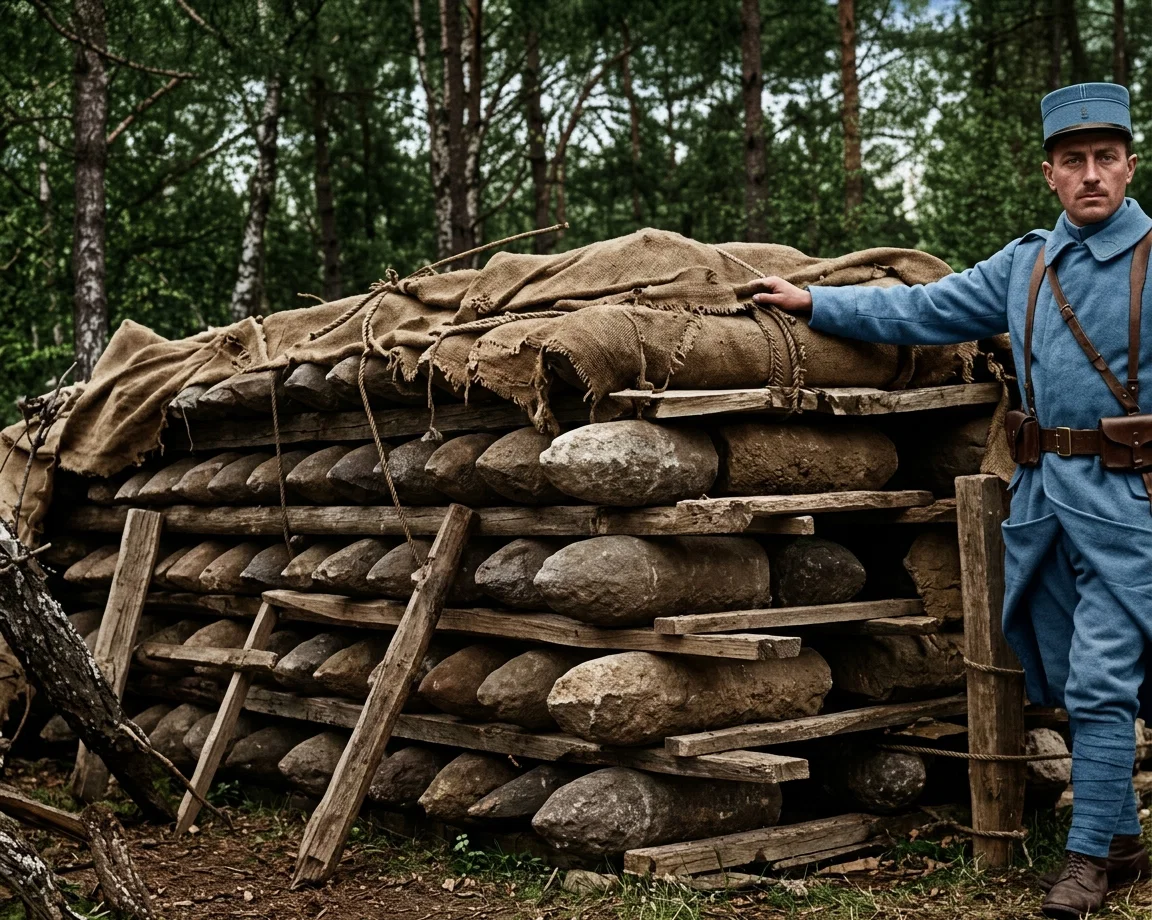
Underwood & Underwood, N. Y. MESSENGERS OF DEATH
In each of these supreme tests, victory was by surrender. We can never know how dark in the garden of Gethsemane seemed “the malignity of sin,” nor “how terrible was the temptation to let the human race bear the consequence of its own guilt, while He stood innocent before God.” But to have drawn back would have been to accept defeat, and his word of surrender to the divine will, “O my Father, if this cup may not pass away from me, except I drink it, thy will be done,” was a veritable token of victory. Then again on the cross we see manifested the same spirit of perfect submission when he made the final surrender: “Father, into thy hands I commend my spirit.”
Following Christ's life of spotless righteousness, there could be but one issue at the tomb, namely, his resurrection, as it is written: “Whom God hath raised up, having loosed the pains of death: because it was not possible that he should be holden of it.” Acts 2: 24.
“Who, being in the form of God, . . . took upon him the form of a servant, and was made in the likeness of men; and being found in fashion as a man, he humbled himself, and became obedient unto death, even the death of the cross. Wherefore God also hath highly exalted him, and given him a name which is above every name: that at the name of Jesus every knee should bow, of things in heaven, and things in earth, and things under the earth; and that every tongue should confess that Jesus Christ is Lord, to the glory of God the Father.” Phil. 2: 6-11.
Satan was vanquished when Christ rose triumphant over death. Christ took man's place, and died, “that through death he might destroy him that had the power of death, that is, the devil.” Heb. 2: 14. The fulness of time is near at hand, when the number of the children of the kingdom will be made up, redeemed from the power of the evil one, and then Christ will come in glory as King of kings and Lord of lords. Then sin and the author of sin will be destroyed, and it will have come to pass as written,—
“The kingdoms of this world are become the kingdoms of our Lord, and of his Christ; and he shall reign forever and ever.” Rev. 11: 15.

The Last Hour

“Little children, it is the last hour.” 1 John 2: 18, R. V. Now is the gathering time. Throughout all Scripture the last days are described as a time of world-wide evangelization. The last hour is the harvest hour in the closing gospel work. And that hour has come.
“The sunset burns across the sky; Upon the air its warning cry The curfew tolls from tower to tower, O children, ’tis the last, last hour!” “The work that centuries might have done Must crowd the hour of setting sun; And through all lands the saving Name Ye must, in fervent haste, proclaim.”

A World-wide Movement

Isaiah saw this time in vision—the gospel of Christ’s peace being proclaimed to all the world, the Lord making bare the arm of his might to save:—
“How beautiful upon the mountains are the feet of him that bringeth good tidings, that publisheth peace; that bringeth good tidings of good, that publisheth salvation. . . . The Lord hath made bare his holy arm in the eyes of all the nations; and all the ends of the earth shall see the salvation of our God.” Isa. 52: 7-10.
As Jesus, from the mount of Olives, looked down through the centuries to the last things in the gospel history, he saw the world-wide missionary movement closing the harvest hour:—
“The gospel of the kingdom shall be preached in all the world for a witness unto all nations; and then shall the end come.” Matt. 24: 14.
In the last views of historic prophecy—given to the prophet John on the isle of Patmos—he saw the nations gathering for the day of wrath. He heard the voices cry:—
“The nations were angry, and thy wrath is come, and the time of the dead, that they should be judged, and that thou shouldst give reward unto thy servants the prophets, and to the saints, and them that fear thy name, small and great; and shouldst destroy them which destroy the earth. And the temple of God was opened in heaven, and there was seen in his temple the ark of his testament.” Rev. 11: 18, 19.

A Time of Judgment

The picture is clear. While on earth the nations war and prepare for war, in heaven above the time of the judgment is come, that is to decide the eternal destiny of every son and daughter of Adam’s race. When Christ comes, the righteous are given immortality, the wicked are consumed by the glory of his presence. It is to be all “in a moment, in the twinkling of an eye, at the last trump.” No time then for an investigation and decision. This investigative judgment is the closing work of Christ, our High Priest, in the heavenly temple, just before he comes in power and glory. The work begins with the dead of ages past, and when at last the record of the living is passed upon, the Lord will come. This is what the prophet saw: The opening of the judgment hour in the heavenly temple, the law of God the standard of the judgment, enshrined in “the ark of his testament”—the same perfect law of righteousness which was spoken from Sinai and written “with the finger of God” himself.

The Closing Gospel Message

While the prophet saw this judgment hour passing in heaven, he saw on earth the last message of the “everlasting gospel” speeding on to all mankind,—
“To every nation, and kindred, and tongue, and people, saying with a loud voice, Fear God, and give glory to him; for the hour of his judgment is come.” Rev. 14: 6, 7.
And as the law of God, the ten commandments, is the standard of the judgment, so the prophecy shows that the special message of the everlasting gospel in this generation is an appeal to prepare to meet Christ at his coming, and a call to the keeping of the commandments of God, by faith in Jesus Christ, the divine author of the holy law. Of those who give heed to the gospel call in this time the prophecy says:—
“Here is the patience of the saints: here are they that keep the commandments of God, and the faith of Jesus.” Verse 12.
It is among this company, when Christ comes, and we shall long to stand. This generation has been the hour of world-wide missions. The great missionary movement has carried the light of God’s Holy Word to the uttermost parts of the earth. And along with the general work of foreign missions, there has sprung up in this generation of the judgment hour, the very movement described by this prophecy of Revelation 14—a movement that is spreading rapidly through every continent, crying the warning message of the prophecy, “The hour of his judgment is come,” and bringing forth, wherever it goes, a people standing for the New Testament standard and the platform of the Reformation, “The Bible as the rule of faith and practice”—“the commandments of God, and the faith of Jesus.”
When the gospel message shall have reached every nation and people “then shall the end come.” Then our Saviour will come in power and glory to reap the harvest of the earth.
Truly “it is the last hour.” The Lord Jesus, our coming Saviour, pleads with every soul to watch and be ready. He is coming for you, reader. “I will come again,” he promises, “and receive you.” His loving heart pleads with you to be ready to receive him. Again, he speaks: “Therefore be ye also ready; for in such an hour as ye think not the Son of man cometh.” Matt. 24: 44.

Looking for the Saviour

“Unto them that look for him shall he appear the second time without sin unto salvation.” Heb. 9: 28.
Who that knows him as the Saviour of sinners, does not feel the heart warmed with new devotion at the call now to “look for him.” The apostle Paul—who never tired of declaring that Jesus came to save sinners, of whom he was chief—never tired also of declaring the joy of “that day” of the coming of Christ, when he would meet his Saviour face to face, and receive the crown of righteousness. In this joyful hope he laid down his life's work, and bent his neck to martyrdom, declaring,—
“Henceforth there is laid up for me a crown of righteousness, which the Lord, the righteous judge, shall give me at that day; and not to me only, but unto all them also that love his appearing.” 2 Tim. 4: 8.
This is the “blessed hope” of all the ages. It is the “same Jesus” who is coming. This was the message of the angels in shining white who stood by the disciples as their Friend and Saviour was ascending from their sight into heaven:—
“Ye men of Galilee, why stand ye gazing up into heaven? this same Jesus, which is taken up from you into heaven, shall so come in like manner as ye have seen him go into heaven.” Acts 1: 11.
He will come back the same Jesus, though in the glory that he had with the Father before the world began—glory transcendent and indescribable. But he is the “same Jesus” whose loving hand has led us over earth's hard paths, whose tender comfort has stolen into dark hours of grief or temptation, and whose voice of invitation and cheer called us out of the kingdom of darkness into the way of light and life.
Yes; we will “look for him.” We will wait, and watch, and, by his grace, be ready to meet him when he comes.
Continue reading: The Goodly Land