Your ShelfYour Projects

Signs of the Times, Vol. 26, No. 51.

LESSONS IN STONES AND NAMES

Signs of the Times

Dec 19, 1900

Pacific Press Publishing Company · Oakland, California · Dec 19, 1900

LESSONS IN STONES AND NAMES.

Shutting God from Us.
EVERY object has its lesson for the thoughtful. In some objects the lesson is direct and forcible; in others, the lesson is only suggestive, but it may be not the less effective.
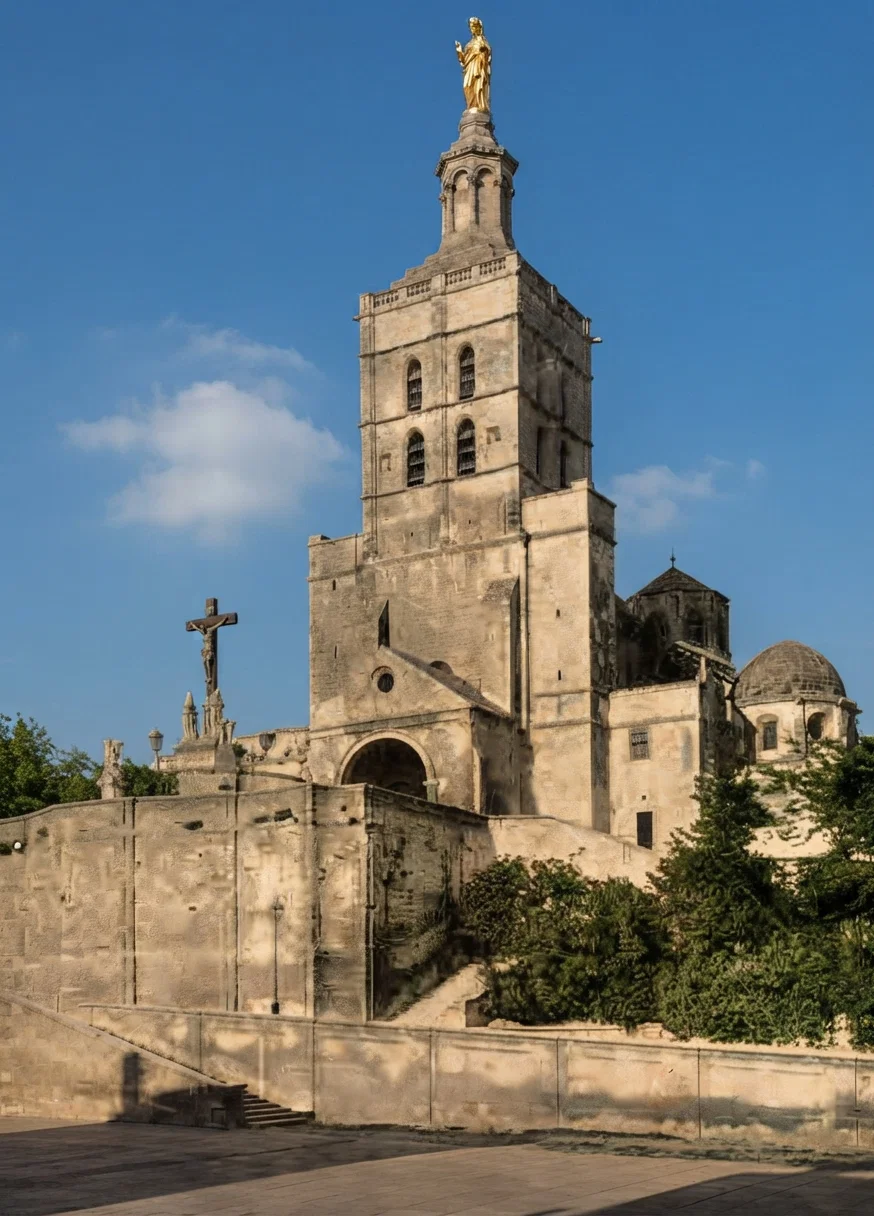
THE old cathedral illustrated on our first page is suggestive of many things. The great, massive structures, with “their dim vaulted aisles,” and almost oppressive sense-solemnity, which chills and cramps the free soul, carry us back to the Medieval Ages, when so many of these mighty fanes began their building, the time “When God seemed far and men were near.”
THE name of the cathedral of our illustration is also suggestive of forgetfulness of God,—“Notre Dame,” “Our Lady,” dedicated to the Virgin Mary under this term. God demands the whole heart. “Thou shalt love the Lord thy God with all thy heart, and with all thy soul, and with all thy strength, and with all thy mind,” are the words of the Master, which set forth man’s duty to his Creator. It takes all of man to render this service. His affections, his life, his physical and mental abilities, all belong to God. Surely then if man, who recognizes this, should build a house of worship, he could do no less than dedicate it to God. To dedicate that which pre-eminently stands for man’s higher self, his spiritual nature, to any being less than God is to put that being in God’s place.
Cathedral of Notre Dame, Avignon, France.
MEN do this because they do not know God. We do not know whether Mary, the mother of our Lord, lives or not. If she does, she has been raised from the dead by Him who is “the Resurrection and the Life.” But if He has done this, the Word does not inform us. How much better it would be for those who court the influence of that truly blessed woman, to heed the words she said when we know she lived, and which God has been pleased to leave on record for our benefit: “Whatsoever He [Christ] saith unto you, do it.” John 2:5. What He says we have before shown; it is that we should love the Lord our God with all the heart, soul, strength, and mind. He demands of us nothing less, and this excludes all creature-worship, even tho that creature be the holiest of humanity or the mightiest of angels around the throne of the Infinite.
AS BEFORE intimated, men worship and adore dead saints and heroes because they do not know God. They count Him far away, or so offended at poor mortals because they have sinned that some one of influence, some saint or martyr, must be used to intercede for the guilty, and mollify the wrath of God. How little they know Him who loves us with an everlasting love; who has been pouring out His life and goodness and mercy ever since man sinned, to win them back to Him; who gave Himself in giving Christ Jesus, His only-begotten Son, to win all who were in rebellion and save all who desired to be saved! If there is a soul in heaven or earth that truly loves us, that love is born of God. “We love, because He first loved us.” God in Christ Jesus entreats, “Come unto Me, allye that labor and are heavy laden, and I will give you rest.” “Who is a God like unto Thee, that pardoneth iniquity, and passeth by the transgression of the remnant of His heritage? He retaineth not His anger forever, because He delighteth in mercy.” “The Lord taketh pleasure in them that fear Him, in those that hope in His mercy.” Then come to God. All the love ever possessed by the mother of Jesus, by Peter, by Paul, or by John, or that each or all ever will possess, came from the great fount of love, the heart of the Infinite God. “Worship God.” “Thou shalt worship the Lord thy God, and Him only shalt thou serve.”
OUR illustration suggests another thought. It is a cathedral at Avignon, France. But for years—from 1305 to 1377—it was the seat of the Papacy. The last twenty-three of these years rival popes were seated here and in Rome and elsewhere. Eventually the papal see was returned to Rome, but through intrigue, crime, and bloody warfare. Politics in the church of Christ, bringing in the human, trusting to the human instead of the divine, is what led to Avignon, only one of the many disgraceful chapters of the Middle Ages. Seven popes reigned in Avignon; and Schaff tells us that “during this period, the so-called ‘Babylonian captivity’ of the popes, Avignon was one of the gayest and most corrupt cities in the world. Petrarch, who stayed there for some time, called it the third Babylon.”
AND all this came because God was forgotten or unknown, and the creature was exalted to His place. Natural man can not believe in the foundation principles of God’s working. He can not see that in the valley of humility only can man walk with God. The exaltation of the human shuts from us the divine. All the darkness and misery of the Dark Ages, all persecutions and bloodshed which took root in that darkness, all the unbelief and disunion and trouble in religious circles to-day, came because man has thrust God away and interposed his own plans, methods, ideas—himself, the creature—in the place of God, the Creator and Redeemer. O “it is time to seek the Lord, till He come and rain righteousness upon you!”

BETTER LET THE COMPASS ALONE.

MANY years ago up in the northern part of the State of New York, where there is a wide range of forest, a man set out to cross a narrow strip of woods about three miles through. It was three miles directly across this neck of forest; but another way led out into a vast wilderness. The man had a perfect compass when he left for home. A day or so passed, and he did not reach home. His friends became alarmed as to his safety; and on learning that he had set out for home a day or so previous, instituted a search for him. At last he was found under the snow, cold and stiff in death. On examining his person, it was found that he had not lost his compass, but close inspection revealed the fact that he had been tinkering with it in the vain hope of correcting the needle so as to make it point in what to him seemed the right direction for north. But, alas! the man was lost, and therefore was not prepared to correct what seemed to him to be the wayward needle. Had he believed it, and let it alone, he would have been safely guided to his home.
This man was no more under a delusion than are many other bewildered and lost ones, who, altho they possess the sure compass of God’s Revelation—the Bible—fail to believe it, even seeking to change it to read as they think it should, and in consequence lose their lives in the great wilderness of sin and unbelief.
Better let the compass alone. It points toward the celestial city, the home of God; and by carefully following its directions, whether it seems right or not, the lost ones may safely reach the Father’s house, where there are in waiting for them “many mansions.”
T. E. BOWEN

WORDS OF WARNING.

The Law of God in Force.

O JERUSALEM, Jerusalem, thou that killest the prophets, and stonest them which are sent unto thee, how often would I have gathered thy children together, even as a hen gathereth her chickens under her wings, and ye would not! Behold, your house is left unto you desolate. For I say unto you, Ye shall not see Me henceforth, till ye shall say, Blessed is He that cometh in the name of the Lord."
This was the most solemn denunciation that had ever been uttered against Jerusalem. After denouncing the hypocrisy of the Jewish leaders, who worshiped the temple, but were working with Satanic hatred to destroy the One who made the temple in any way sacred, Christ bade adieu to the hallowed courts. He quitted the temple forever, declaring, "Your house is left unto you desolate."
From henceforth Christ saw a cloud blacker than sackcloth hanging over the once favored nation. Looking into the future, He saw the gates of Jerusalem burst open by the assaults of the Roman legions. He saw the walls, white like walls of snow, broken, and the beautiful stones, which had been laid with artistic skill, torn down, so that not one was left standing. The arm strong to save had become strong to smite.
The disciples were unable to comprehend Christ's words in reference to the temple. They called His attention to its massive walls, saying, "Master, see what manner of stones and what buildings are here!" The stones of the temple were of purest marble, of perfect whiteness, and the pillars supporting the porches were of massive dimensions. They could not understand Christ's words dooming to destruction these mighty walls, a portion of which had withstood the devastation of armies.
As His attention was called to the magnificence of the temple, what must have been the unuttered thoughts of that rejected One! The view before Him was indeed beautiful; but He said with sadness: I see it all. The buildings are wonderful. You point to them as apparently indestructible; but listen to My words. I tell you solemnly the day will come when there shall not be left one stone upon another that shall not be thrown down.
Solemn judgments had been predicted against Jerusalem by the prophets. Its iniquity and crime had once caused it to be destroyed, and its people carried captive to Babylon. In their humiliation, many sought the Lord with repentance and compassion; and when they returned from captivity, there seemed for a time to be a reformation. "I will not contend forever," God declared, "neither will I be always wroth; for the spirit should fail before Me, and the souls which I have made. For the iniquity of his covetousness was I wroth, and smote him. . . . I have seen his ways, and will heal him; I will lead him also, and restore comforts unto him."
But the leaders of the people did not remain converted. They did not "keep the way of the Lord, to do justice and judgment." The word of the Lord through His prophets was refused. Then God sent His Son with a message of mercy, calling on them to repent; but they refused to receive Him, and said, "This is the heir; come, let us kill Him, and the inheritance shall be ours." Thus Christ "came unto His own, and His own received Him not."
The time of greatest responsibility for the Jewish nation was when Jesus was among them. This was the time, too, of their greatest privilege and blessing. And by rejecting the Son of God, and refusing every overture of mercy, they made themselves guilty of the greatest of all sins.
"Ye shall not see Me henceforth," Christ said, "till ye shall say, Blessed is He that cometh in the name of the Lord." You have refused to see in Me a merciful Saviour, offering you redemption. When God's heavy judgments fall upon you, you will still refuse to see in Me a sin-pardoning Saviour. But you will one day long for a Deliverer who was once among you, but whom you would not receive. Then you will be ready to bless Him whom once you cursed, but it will be too late. Thus with power and authority our Lord reproved the Jewish people.
Jerusalem was lost because of its obstinate refusal to acknowledge the truth. This is the condition of the world to-day. Men refuse to see the truth so plainly given in the Word of God. "Thus saith the Lord," is counted of little value, while the words of men are given great authority.
Christ did not abolish God's holy law. "Think not that I am come to destroy the law, or the prophets," He said; "I am not come to destroy, but to fulfil." As the head of the human family, He lived every precept,every jot, and every tittle of the law. He lived in humanity the life that He required His followers to live. He emphasized His words: "Verily I say unto you, Till heaven and earth pass, one jot or one tittle shall in nowise pass from the law, till all be fulfilled." His death on the cross, instead of making void the law, is an unanswerable argument in favor of the changeless character of every precept.
The Sabbath commandment is a part of this unchangeable law. The Sabbath was given to the world as the memorial of creation. It begins with the "remember." "Remember the Sabbath day, to keep it holy. Six days shalt thou labor, and do all thy work; but the seventh day is the Sabbath of the Lord thy God; in it thou shalt not do any work." Then the reason is given: "For in six days the Lord made heaven and earth, the sea, and all that in them is, and rested the seventh day; wherefore the Lord blessed the Sabbath day, and hallowed it." The explanation is full, so that none need be left in darkness unless they choose darkness, just as the Jews did in regard to the message Christ came to bring to the world.
The professed people of God may ignore the Sabbath; but they can not make it less binding upon them. No one has any excuse for accepting a Sabbath by him whom God's Word designates as "the man of sin," who shall "think to change times and laws." He thinks thus to show his supremacy above God; but he does not do it. He can not change God's law; the law-making power is God's prerogative only. God is over all kings and rulers on the face of the earth. He is God, and beside Him there is none else.
The Sabbath, sanctified and blessed by God, was designed as His great memorial of creation. It is ever to stand unmoved, a rock of offense, as Christ was to the Jewish nation. The Sabbath is the test to-day, as Christ was a test to the Jews.
Forty years after Christ uttered His prediction respecting Jerusalem and the temple, His words were fulfilled to the letter. Jerusalem was destroyed, and in the siege it is stated that more than a million people perished. The rejection of the Son of God decided the destiny of that nation. Let Christians take heed, lest by rejecting God's holy memorial their fate also be decided.

“IT IS MORE BLESSED.”

GIVE, as the morning that flows out of heaven; Give, as the waves when their channel is riven; Give, as the free air and sunshine are given; Lavishly, utterly, cheerfully give. Not the waste drops of thy cup overflowing, Not the faint sparks of thy hearth ever glowing, Not a pale bud from the June roses blowing; Give as He gave thee, who gave thee to live.
Pour out thy love like the rush of a river Washing its waters forever and ever, Through the burnt sands that reward not the giver; Silent or songful, thou nearest the sea. Scatter thy life as the summer showers pouring; What if no bird through the pearl rain is soaring? What if no bloom looks upward adoring? Look to the life that was lavished for thee.
Give, tho thy heart may be wasted and weary, Laid on an altar all ashen and dreary; Tho from its pulses a faint miserere Beats to thy soul the sad presage of fate; Bind it with cords of unshrinking devotion; Smile at the song of its restless emotion; 'Tis the stern hymn of eternity's ocean; Hear, and in silence thy future await.
So the wild wind strews its perfumed caresses, Evil and thankless the desert it blesses, Bitter the wave that its soft pinion presses, Never it ceaseth to whisper and sing. What if the hard heart gives thorns for thy roses? What if on rocks thy tired bosom reposes? Sweetest is music with minor-keyed closes, Fairest the vine that on ruin will cling.
Almost the day of thy giving is over; Ere from the grass dies the bee-haunted clover, Thou wilt have vanished from friend and from lover. What shall thy longing avail in the grave? Give, as the heart gives, whose fetters are breaking, Life, love, and hope, all thy dreams and thy waking; Soon heaven's river thy soul fever slaking, Thou shalt know God and the Gift that He gave. —Anon.

TRUTH AND WISDOM.

1. How do you know the Bible is true?
Because it is the Word of God, and it is "impossible for God to lie." Heb. 6:18. He is "the only true God." John 17:3. His Word is "true from the beginning." Ps. 119:160. All His commandments are truth. Verse 151. His Word is truth itself. John 17:17.
2. How do you know that the Bible is God's Word?
Because "all Scripture is given by inspiration of God." 2 Tim. 3:16. "The prophecy came not in old time by the will of man; but holy men of God spake as they were moved by the Holy Ghost." 2 Peter 1:21. Jesus Christ is the Word of God; was "the Word made flesh," "full of grace and truth;" He "was with God," and "was God" (John 1:1-14); and His Spirit indicted the words of the prophet (1 Peter 1:10, 11).
3. But all this is the evidence of the Bible itself; what other evidence have we?
We do not need any other evidence. When God, who knoweth all things and can not lie, gives testimony, there is an end of controversy. There is no use of bringing forward any other testimony; for "if they hear not Moses and the prophets, neither will they be persuaded, tho one rose from the dead." Luke 16:31.
4. Can we not believe the learned men who have "demonstrated" that the Bible is not true?
No; "the wisdom of this world is foolishness with God." 1 Cor. 3:19. "The Lord knoweth the thoughts of man, that they are vanity." Ps. 94:11. "The wisdom of their wise men shall perish." Isa. 29:14. "Surely men of low degree are vanity, and men of high degree are a lie; to be laid in the balance, they are altogether lighter than vanity." Ps. 62:9. Then "let God be true, but every man a liar." Rom. 3:4. "The fear of the Lord is the beginning of wisdom; a good understanding have all they that do His commandments." Ps. 111:10. G.

THE ESSENCE OF CHRISTIAN CHARACTER.

(Concluded.)
We trust that political-minded Christians will ponder the teachings of this fable:—
In the days when the kingdom of birds was at war with the mice, certain mice hoped to remain neutral, and even to be on good terms with both sides. In order to save themselves from falling a prey to their enemies, they intermarried with the birds. The result was a race of bats, a hybrid brood, disowned by both birds and mice, and disgusting alike to both. May the policy-loving, popularity-seeking professors of religion find food for reflection in this fable.
As is well known in the profane history of pre-mythical times, found in the Apocrypha to "The Arabian Nights," there was irreconcilable enmity between the proud military race of Dragonides and the peaceful, agricultural Aposteleans, which sometimes broke out into open war. After long years of ostensible peace, during which the Dragonides had encroached largely on the territory of the Aposteleans, hostilities were renewed with much bitterness. The latter nation, once very hardy, had acquired great wealth, but had lost much of their old-time vigor; and, altho they had the friendship and alliance of a most powerful monarch, who indeed held suzerainty even over the Dragonides, nevertheless, so cowardly and craven had become the Aposteleans that their only thought was how to make peace, with any pretense of honor.
The watchmen on their walls cried in tones loud enough to reach the ears of the enemy, "Peace! peace!" But there was no peace. At length, after many vain attempts, persons arose (Dragonides in disguise) who suggested a plan which was applauded by all the wise men of the nation; only a remnant dissented, and one lone sage. The terms were submitted to the enemy and agreed to. Dressed in a white cravat and Prince Albert coat, each individual of the Aposteleans desiring peace was to go to the ruler of the Dragonides, and in a fawning, whining voice repeat the following confession and request: "I am come, O subjects of the Great Red Dragon, to entreat your assistance to keep us from going over to your side! I know I am nothing but a cringing coward, but I wish, nay, I demand (for by our influence and wealth we hold your legislature in our hands) that you turn over to us your guns and gunboats, engines of war, Maxims, Nordenfeldts, and Gatlings—army and navy. These things, combined with our renowned and immortal valor, will be irresistible. We shall sweep the earth, and the millennial peace will be ushered in. We love your souls, and don't want to hurt you. So, if you will deign to help our pitiable impotence, we hope by the use of your forts and fortresses to muster up sufficient bravery to stand before our foes without being frightened into surrender." This was agreed to be regarded as saving them from dishonor; and they were forgiven and adopted into the nation of the Dragonides by peaceful assimilation. "Alas," cried the lone prophet, as he expired with grief and shame, "the contemptibleness of such a compact is equaled only by its downright iniquity!"
Thus the wisdom of the ancients teaches how the church may obtain the power of the civil arm.
But, my friend, if you want an easy, popular life, you might better work at some other trade than Christianity, and you will be saved the disgrace of showing your cowardly spirit, and the cause of true religion will be the gainer.
"But," cries a sin-burdened publican, who has been overlooked in the crowd, "I want to be a true Christian. I must have peace with God. I must get out from under condemnation. I must get free from the bondage of sin and habit,—become free and master of myself; feel assured of eternal life; have the peace of God that passeth all understanding. I must do this at any cost. Can I do it?"
Lo! this is the principle that needs no civil support. Principle means loyalty to truth, and your principle is strong or weak in proportion to your loyalty.
Can you do it in the face of hatred, tribulation, persecution, suffering?—Most assuredly you can. "Neither death, nor life, nor angels, nor principalities, nor powers, nor things present, nor things to come, nor height, nor depth, nor any other creature, shall be able to separate us from the love of God, which is in Christ Jesus our Lord." Look! here is more power than is possessed by all the governments of earth combined. "Not by might, nor by power, but by My Spirit, saith the Lord of hosts." Zech. 4:6. "Strengthened with might by His Spirit in the inner man." Eph. 3:16. Now we have found the solution to our inquiry, What is the essence of Christian character? The answer is: A principle within; a principle which needs no civil support; a life implanted by the Spirit of God.

SUNDAY-KEEPING NOT COMMANDED.

IN the Gospel commission, what were the disciples required to teach?—"Teaching them to observe all things whatsoever I have commanded you." Matt. 28 : 20.
Had Christ commanded them to keep Sunday as the sabbath instead of the seventh-day Sabbath?—We have no record that He did.
If He has given no command to keep the first day as the sabbath, by what authority can any one teach it?—By the authority, or command, of man.
Will such authority be accepted?—"In vain they do worship Me, teaching for doctrines the commandments of men." Matt. 15 : 9.
Were the apostles faithful in carrying out Christ's instruction in the Gospel commission? —Paul says: "I kept back nothing that wasprofitable unto you, but have showed you, and have taught you publicly, and from house to house." "I have not shunned to declare unto you all the counsel of God." Acts 20 : 20, 27.
Sunday-keeping, therefore, was not profitable, and was not in the counsel of God, or Paul would not have failed to declare it; for he did declare all the counsel of God.
It was the custom of the Jewish people to keep the seventh-day Sabbath, and had the apostles disregarded that custom, a great excitement would have been created against them on that ground; but the New Testament is silent on the subject, except that Paul says to the Jews, "Tho I have committed nothing against the people, or customs of our fathers, yet was I delivered prisoner from Jerusalem into the hands of the Romans." Acts 28 : 17.
A. SMITH.

THANKSGIVING SONNET.

For what can I be thankful? Let me see: My life is lengthened through another year; And health and blessings, too, of love and cheer, With song and joyousness, have come to me. Affection's kiss, with arms so warm and free, And country, home, and bread, with hearts sincere, Are mine. Then, too, perchance a scalding tear Has come from Love, whose plans we can not see Through clouds and tempest; but the flowers of hope Are freshened by the storm. For faith in God, For love, for peace, for Christ, for heaven above, For stronger faith, with fuller, freer scope O'er vistas by no mortal pilgrim trod,— For these we worship at the feet of Love.
Mechanicsburg, Pa. B. F. M. SOURS.

GOD'S REST.

THERE remaineth therefore a rest ["a keeping of a Sabbath," margin] to the people of God." Heb. 4:9. God's rest is to be enjoyed some day, by some one, in some place. It still remains. Who will have it? Who will come short of it?
What is God's rest? What or when is the day? Where is the place? Who are the people that will enjoy it?
The rest is God's rest; for He says, "If they shall enter into My rest." Heb. 4:5. His "works were finished from the foundation of the world," and His rest prepared at the end of creation week; for "God did rest the seventh day from all His works." Heb. 4:3, 4. It is something that was given to man in the beginning, was lost in the fall through unbelief, and is secured again by faith. "Hast thou not known? hast thou not heard, that the everlasting God, the Lord, the Creator of the ends of the earth, fainteth not, neither is weary?" Isa. 40:28. He was not exhausted from labor; therefore—

God's Rest

must have been the delight, the pleasure, the joy, He had in viewing and admiring all that He had made, when it was finished, and He had pronounced it "very good." "In six days the Lord made heaven and earth, and on the seventh day He rested, and was refreshed [delighted]." Ex. 31:17. In this rest God set an example for His creatures to follow in enjoying that which "was made for man." Mark 2:27.
The rest day was the seventh day of creation week; "for He spake in a certain place of the seventh day on this wise, And God did rest the seventh day from all His works." Heb. 4:4.

The Place

of His rest was the earth, beautiful and glorious and new, just from His almighty hand. His work was not completed till the close of the seventh day, for the Sabbath was made by His resting.
And here let me suggest a thought concerning the Sabbath at the resurrection of Christ: He could not make a Sabbath by such works as rising from the dead and other things He did on that day, but by resting. When His work on earth was ended, and He said, "It is finished," He rested on the same seventh day that He did in the beginning; and in what some people delight to call "the new creation," He rose and began work on the first day, as in the first creation.
After man had lost this rest,—this joy and innocence in the presence of God, delighting himself in all the beautiful things that God had made,—it was promised to him again; and this promise was called the Gospel. Compare Gen. 3:15; Gal. 3:16, 8; Eph. 3:9. Adam, Abel, Abraham, and all the faithful accepted; but the unbelieving did not. Hebrews 11.
This rest, in its three phases, was promised to the children of Israel as they came out of Egypt; but "they could not enter in because of unbelief." Heb. 3:19. This promise of entering into God's rest was made to them, as well as to us, by the Gospel: "For unto us was the Gospel preached, as well as unto them; but the Word preached did not profit them, not being mixed with faith in them that heard it." Heb. 4:2.
Then this rest now is the joy and peace and innocence we get through the Gospel of the Son of God,—the forgiveness of sins, and all its attendant blessings,—as Jesus said, "Come unto Me, all ye that labor and are heavy laden, and I will give you rest." Matt. 11:28.
To see that this is so, we have but to read the third verse of Hebrews 4, "For we which have believed do enter into rest," and the second verse, quoted above. All who have believed have enjoyed the rest, tho many have not enjoyed the rest day; and none have yet enjoyed the place of the rest,—the new earth. I say this because some who have enjoyed the blessings and benefits of the Gospel in the forgiveness of sins, have not kept the day on which God rested, but Sunday instead. These did it ignorantly, and so enjoyed the rest, while losing the blessings and benefits of the rest day.
The earth now "waxeth old;" but soon it will be renewed, restored to its Edenic beauty, when man will again be in the place where there will be neither strife nor turmoil to mar the rest nor to desecrate the day of rest: "For as the new heavens and the new earth, which I will make, shall remain before Me, saith the Lord, so shall your seed and your name remain. And it shall come to pass, that from one new moon to another, and from one Sabbath to another, shall all flesh come to worship before Me, saith the Lord." Isa. 66:22, 23. Then shall the glory of the Lord cover the earth, as the waters cover the sea. Hab. 2:14. In sin is not our rest. That will destroy us. Micah 2:7-10. When sin, with all its evils, is removed, and the earth restored, new once more, then "His rest shall be glorious." Isa. 11:9, 10.
Because Israel entered not into this rest, by believing the Gospel, they soon turned from the rest day, and finally lost the place God had temporarily given them in which to enjoy it. Jer. 17:20-27.
"They to whom it was first preached entered not in because of unbelief;" "therefore it remaineth that some must enter therein." Heb. 4:6. God's promises can not fail, nor the object of creation be thwarted. "For thus saith the Lord that created the heavens; God Himself that formed the earth and made it: He hath established it, He created it not in vain, He formed it to be inhabited." Isa. 45:18. And when His purpose is carried out, which for the time being has been marred by man, it will be inhabited by a righteous people, who will enjoy the fulness of His rest.
Joshua did not give the children of Israel rest; so God spoke of giving them rest another day. Acts 7:5; Heb. 4:8. It is not said that God spoke of giving another day of rest, but of giving rest some other day. "There remaineth therefore a rest to the people of God."
The wicked "can not rest. . . . There is no peace, saith my God, to the wicked." Isa. 57:20, 21. No one but "the people of God," really true Christians, can enjoy this rest. In them dwells that spirit that will heed the injunction of the Word which says, "The seventh day is the Sabbath of the Lord thy God," and, knowing the peace and rest of the Gospel, they will gladly keep God's rest day as soon as they come to a knowledge of it; and they will rejoice in the "blessed hope" of the soon coming of the Saviour to renew the earth, and to usher in the fulness of rest in the place of His glorious rest, of which the rest in the holy Sabbath we now have is but a foretaste. Who can imagine what that will be? Who can afford to "come short" and lose that? Read Heb. 11:8-16, 39, 40; 2 Peter 3:11-14; Isa. 66:22, 23.
Jesus came preaching the Gospel, and giving rest to all who would believe; and they kept the rest day, the seventh day, too, as many New Testament scriptures show. But they, with all the faithful, looked forward to the resurrection as the time when all would receive the place of rest together. Acts 24:15; 26:6-8; 2 Tim. 4:7, 8; Heb. 11:39, 40; 2 Peter 3:5-14; Revelation 21.
But unbelief and sin came into the church again, as the Lord foretold in Acts 20:28-30 and 2 Thess. 2:1-7. They lost the rest in Jesus, and soon, very soon, lost the rest day, putting another day in its stead, for altogether another reason, to be kept for another purpose entirely. And because of all this, the true people of God are still deprived of the place of His glorious rest, because it has thus been delayed so long in coming.
And now, according to Isaiah 56 and 58 and Revelation 14, and in fulfilment of these prophecies, the rest is returning to God's people again, the rest day is being restored to the church, and soon, O, so soon! will the earth be made new, and the place of His rest "shall be given to the people of the saints of the Most High, whose kingdom is an everlasting kingdom, and all dominions shall serve and obey Him." Isa. 11:9, 10; 66:22, 23; Dan. 7:27. Reader, do you not want a part and a place in this "rest that remains"? "Let us therefore fear, lest, a promise being left us of entering into His rest, any of you should seem to come short of it." Heb. 4:1. Let us, by faith, make our calling and election sure.
E. W. WEBSTER.
Flagstaff, Arizona.

THE UNCHANGEABLE SABBATH.

WHEN was the Sabbath made? — On the seventh day of the first week of time. "On the seventh day God ended His work which He had made; and He rested on the seventh day from all His work which He had made. And God blessed the seventh day, and sanctified it." Gen. 2:2, 3. On the first day of that week, God had worked in the creation of our world, resting on the seventh day only. A good example for man.
By whom was the Sabbath made? — "All things were made by Him [Christ]; and without Him was not anything made that was made." John 1:3.
For whom was the seventh-day Sabbath made? — "The Sabbath was made for man." Mark 2:27. Then, reader, the seventh-day Sabbath was made by the Saviour for you. Will you accept it as the gift of God?
Had sin never entered our world, man never would have thought to change the Sabbath. Sunday-keeping, therefore, is a blot upon creation, caused by sin. If redemption from sin and its consequences is to be complete, Sunday-keeping must, as an offense, bepurged from the earth. And thus it will be; for in the new earth the only Sabbath recognized in the Bible will forever be observed by all mankind. "For as the new heavens and the new earth, which I will make, shall remain before Me, saith the Lord, so shall your seed and your name remain. And it shall come to pass, that from one new moon to another, and from one Sabbath to another, shall all flesh come to worship before Me, saith the Lord." Isa. 66:22, 23. A. SMITH.

THE CLEAN UNIVERSE.

The Destiny of Satan, Evil Angels, Sin, and Death.

IT may be asked, What has the subject of a clean universe to do with the destiny of the wicked and the destruction of Satan? We say, Much every way, as a clean universe is the result of the destruction not only of the wicked and the evil angels, but also of Satan, sin, and death.
We read, "Forasmuch then as the children are partakers of flesh and blood, He also Himself likewise took part of the same; that through death He might destroy him that had the power of death, that is, the devil." Heb. 2:14. Therefore Christ's death was to destroy him that has the power of death. So long as Satan exists, there will be sin and misery in the world. When he is destroyed, there will be "no more death;" and doubtless he will be the last one who will cease to exist, as he is no doubt the greatest sinner, and will suffer the longest. Who can not see that so long as the devil and his angels exist, there will be suffering in the universe? Therefore it is just as necessary for God to destroy them as it is to destroy wicked men. Satan is not destroyed if he exists forever. When God undertakes a work, He finishes it. When He says, "The wicked shall not be" (exist), He means what He says; and the language applies to Satan and his angels as well as to the wicked of the human race. As another has said:—
"Since Satan is the originator of sin, the direct instigator of all the sins that caused the death of the Son of God, justice demands that Satan shall suffer the final punishment. Christ's work for the restoration of man and the purification of the universe from sin, will be closed by the removal of sin from the heavenly sanctuary, and the placing of these sins upon Satan, who will bear the final penalty." —Great Controversy.
The preceding quotation forcibly and reasonably represents the just punishment of Satan. For further proof on this subject, read Mark 1:24; Luke 4:34; 2 Peter 2:4; Jude 6.
It can be demonstrated by a good number of plain texts that the universe is to be cleansed from sin and woe. Let those who wish to study this subject read Rom. 14:11; 1 Cor. 15:25, 26; Eph. 1:10; Phil. 2:10, 11; Rev. 5:13; 21:4, 5.
We read that "the end of the wicked shall be cut off." Ps. 37:38. We know that the end of the wicked is death, and that death is "the last enemy that shall be destroyed." 1 Cor. 15:26.
"And God shall wipe away all tears from their eyes; and there shall be no more death, neither sorrow, nor crying; . . . for the former things are passed away." Rev. 21:4. If the wicked were burning in an endless hell, could it be truthfully said, even according to the theory of those who claim that this is what is meant by "eternal death," "There shall be no more death"? The truth of the matter is, There is no more death, because the second death is the death of death, or destruction of death.
It can be seen by an examination of Revelation 20 that the punishment and destruction of all the wicked is on the earth: "And they [the devil's army] went up on the breadth of the earth, and compassed the camp of the saints about, and the beloved city; and fire came down from God out of heaven, and devoured them." Verse 9.
The Greek word from which "devoured" is translated, Greenfield defines, "to eat up; devour; to consume, as fire or zeal."
Professor Stuart says, "It signifies to eat up; devour; it is intensive in its meaning, and denotes utter excision" (destruction).
In verse 14 we have the conclusion of the whole matter: "And death and hell were cast into the lake of fire. This is the second death." —William Penniman, Woodburn, Ill.
Continue reading: THE LORD'S COMING