“Finally, . . . whatsoever things are true, etc., think on these things.” Phil. 4:8.
WHATsoever things are true—
Calleth the apostle—
Keep them evermore in view,
Sing them like a throstle!
They who would endowments see
Nurtured into newness,
Each must love the truth and be
Tempered by its trueness.
Whatsoever things are just,
Earthward or supernal,
Are beneath Jehovah’s must—
Justice is eternal;
Equity hath them as woof
And the deeds out-throven
She proclaims as valid proof
Of the right in-woven.
Whatsoever things are pure
(Endeth the essentials)
Shall forevermore endure
As the soul’s potentials;
Cleansed and purified by blood,
Peace all passions guiding,
Every attribute of God
Over life presiding.
Things that honorable are—
Glorifying duty;
Lovely things that never mar—
Fraught with bliss and beauty;
Things of good report; these all—
As divine assignments
Placed within our reach and call—
Are the heart’s refinements.
There is virtue in each one
Moulded by the other,—
Character can leave out none,
All must reign together;
Justice needeth perfect love,
Trueness, honor’s blindness;
Good report doth pureness prove
To be loving-kindness.
Toronto, Canada.
LLEWELLYN A. MORRISON.
A HOME-LOVE LESSON FROM RUTH.
By Alexander McLaren
[From Alexander McLaren, D.D. in S. S. Times.]
The love that knit these two together reaches its noblest expression in Ruth’s vow, which is included in the lesson. It was a love that hungered to be together: “Whither thou goest, I will go.” It was a love that craved identification with the beloved, and was prepared to win that at the cost of forsaking country and kindred: “Thy people shall be my people, and thy God my God.” It was a love that drew her to accept Naomi’s God, and it was a love made tenderer and greater by the thought of death, as sunset brings the color into the sky: “Where thou diest, will I die.” It was a love that yearningly felt after a kind of union even in the darkness of the grave: “There will I be buried.” It was a love sure of its own constancy: “The Lord do so to me, and more also, if aught but death part thee and me.” No wonder that when Naomi “saw that she was steadfastly minded,” “she left speaking unto her.” That torrent of love swept away all opposition. I dare say that they said little more as they toiled along, two, weary women, on the hot road to Bethlehem. Ruth would be silent because she had poured her heart out, and Naomi because she was drinking in Ruth’s spoken love, and both because they were at rest, and had no need to talk.
There is no need of love for so heroic a type, nor of protestations so vehement, in the ordinary family life of most of us. But how the prose of it would be lifted up, and the essential sweetness of it increased, if our family love was a little less tongue-tied! It is far more often too reticent than too voluble. Feeling may be talked away, but it may also be killed by never being allowed to come to words, and there are more households in America and England robbed of their greatest blessing, recognized family love, by reserve than by gush.
How Birds Dress Wounds.
Many birds, particularly those that are prey for sportsmen, possess the faculty of skilfully dressing wounds. Some will even set bones, taking their own feathers to form the proper bandages. A French naturalist writes that on a number of occasions he has killed woodcocks that were, when shot, convalescing from wounds previously received.
In every instance he found the old injury neatly dressed with down plucked from the stem feathers and skilfully arranged over the wound, evidently by the long beak of the bird. In some instances a solid plaster was thus formed, and in others bandages had been applied to wounds or broken limbs.
One day he killed a bird that evidently had been severely wounded at some recent period. The wound was covered and protected by a sort of network of feathers, which had been plucked by the bird from its own body and so arranged as to form a plaster, completely covering and protecting the wounded surface. The feathers were fairly-netted together, passing alternately under and above each other and forming a textile fabric of great protective power.—Youth's Chronicle.
Take a Tourist Car
—A Santa Fe tourist car—if you would enjoy your trip across the continent.
The cars are so comfortable, the route so interesting, the people so pleasant, the excursion manager so accommodating, the porters so obliging, and the meals so good, that you simply can't help being satisfied.
Personally conducted east and west three times a week—Mondays, Thursdays and Saturdays—to Chicago, Kansas City, Los Angeles and San Francisco.
Folder giving full information furnished on request by any Santa Fe Agent.
THOUGHTS FOR THE DAYS.
Suggested as Helpful Inspiration to the Needy Ones.
Wednesday, January 28.
“The meek will He guide in justice; And the meek will He teach His way.”
Ps. 25:9.
“Clothe me with Thy holiness,
Thy meek humility;
Put on me Thy glorious dress,
Endue my soul with Thee;
Let Thine image be restored,
Thy name and nature let me prove;
Fill me with Thy fulness, Lord,
And perfect me in love.”
—Wesley.
Thursday, January 29.
“Blessed is he whose transgression is forgiven, whose sin is covered.
Blessed is the man unto whom Jehovah imputeth not iniquity,
And in whose spirit there is no guile.”
Ps. 32:1, 2.
“Return, O wanderer, return;
Thy Saviour bids thee live;
Come to His cross, and, grateful, learn
How freely He’ll forgive.”
—Collyer.
Friday, January 30.
“I acknowledged my sin unto Thee,
And mine iniquity did I not hide:
I said, I will confess my transgressions unto Jehovah;
And Thou forgavest the iniquity of my sin.”
Ps. 32:5.
“Just as I am, Thou wilt receive,
Wilt welcome, pardon, cleanse, relieve;
Because Thy promise I believe,
O Lamb of God, I come, I come.”
—Charlotte Elliott.
Sabbath, January 31.
“O how love I Thy law!
It is my meditation all the day.
Thy commandments make me wiser than mine enemies;
For they are ever with me.”
Ps. 119:97, 98.
“O day of rest and gladness,
O day of joy and light,
O balm of care and sadness,
Most beautiful, most bright;
On thee, the high and lowly,
Who bend before the throne,
Sing, Holy, holy, holy,
To the Eternal One.”
—Christopher Wordsworth.
Sunday, February 1.
“Thou shalt worship the Lord thy God,
And Him only shalt thou serve.”
Matt. 4:10.
“I love to steal awhile away
From every cumbering care,
And spend the hours of setting day
In humble, grateful prayer.”
—Phoebe Hinsdale Brown.
Monday, February 2.
“Rejoice in Jehovah, O ye righteous;
Praise is comely for the upright.”
Ps. 33:1.
“O could I speak the matchless worth,
O could I sound the glories forth,
Which in my Saviour shine!
I’d soar and touch the heavenly strings
And vie with Gabriel while he sings
In notes almost divine.”
—Samuel Medley.
Tuesday, February 3.
“And it shall be said in that day,
Lo, this is our God;
We have waited for Him, and He will save us;
This is Jehovah;
We have waited for Him,
We will be glad and rejoice in His salvation.”
Isa. 25:9.
“He is coming once again,
To set His people free;
That where He is in glory bright
His saints may also be.
Then lift the drooping head,
Look up, rejoice, and sing;
He comes, in majesty sublime,
Salvation’s glorious King!”
—F. E. Belden.
THEY NEVER HAD A CHANCE.
By Orison Swett Marden
[Orison Swett Marden, in March Success.]
PROBABLY nine out of ten men past middle life, if asked how it happens that they are to-day only barely earning their living, would tell you that they “never had a chance;” that they were kept back, that circumstances were against them, that they had no opportunities, such as other boys around them had, or that they did not have the proper schooling, or else plead some similar excuse.
The probabilities are that opportunity did visit every one of these men more than once in their youth or early manhood, but that they did not see that all good chances consisted in doing everything they undertook cheerfully, promptly, and just as well as it could be done.
As boys, they did not look upon every errand as a chance to be polite, prompt, energetic; on every lesson in school as a foundation-stone in their success-structure. They did not think that the demoralizing hours of indolence and shiftlessness which they were weaving into the web of their lives would mar the fabric forever, and reproach them through all time. They did not realize that the impudent reply to their employer, the carelessness and indifference which they slipped into their tasks, would come out as ghosts, in the future, to mar their happiness and success. They looked upon every duty shirked, the minutes they cut off from each end of a day, as so much gain. They did not realize that these things, which seemed so innocent, would grow into giant defects which would mar their future success.
They did not think that their slipshod methods, their careless attire, and their aggressive manners would lie as great bars across the path of their future success, and keep them back from the goal of their ambitions.
They did not think that all these things were the real cause of their being fixtures at salaries of ten or fifteen dollars a week.
They did not think that these seeming trifles in youth would doom them to be perpetual janitors, clerks, or farm hands, and that it would be almost impossible in maturity to outgrow the defects of their youth.
A Flexible Metal Hose
A FLEXIBLE metal hose is made at Pforzheim, Germany, by rolling up a metal band like a screw thread, the joints being made tight by a cord of rubber on asbestos. The material is galvanized steel or phosphor-bronze. The hose is very flexible. Its tendency to untwist when roughly handled is overcome by making it double, with opposite windings. It is intended for mining purposes, is eight inches in diameter and will stand a pressure of 200 atmospheres.
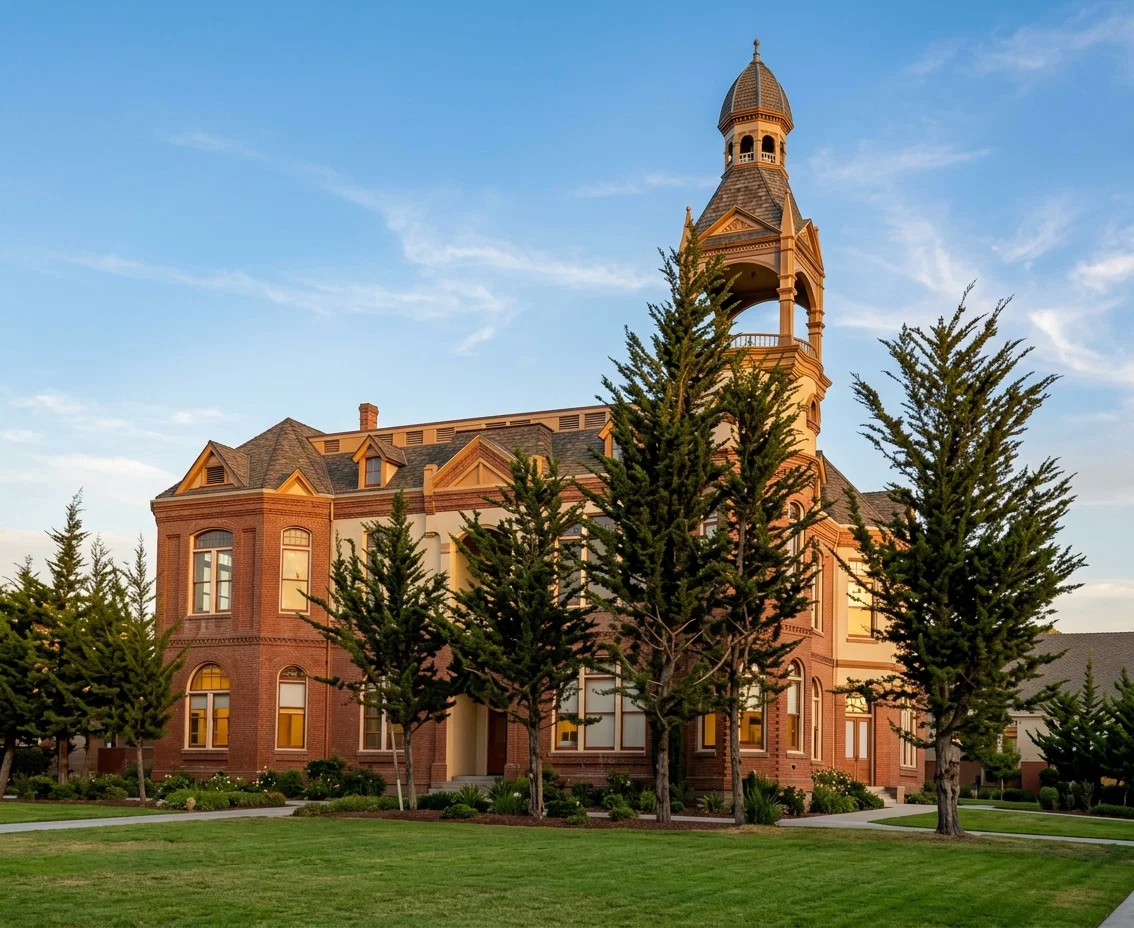
Faculty and School of First Year, Fernando College.
FERNANDO COLLEGE.
By Clarence Santee
SEVENTH-DAY ADVENTISTS have ever exalted temperance and education. They believe that a true education is a better heritage for their children than thousands of silver and gold. The one, if really true education, wrought into, and having an influence on, the character and being, will last through all time, passing with the possessor into the city of God. The other, even when used well (and how seldom this is the case), will be helpful but a short time and then perish.
Fernando College, Fernando, Cal.
For years there was but one Seventh-Day Adventist college in California, altho this is, in reality, a State of “immense distances.” Because of this fact, many of our young people have been debarred from the privilege of attending a school in which the higher branches were taught, and especially was this true of Southern California.
Upon organizing this part of the State into a separate conference, the question of a Southern California Conference school became one of vital interest. This was deferred for one year, when it was voted to open such an institution in Southern California, teaching the higher branches and useful trades, and preparing young people, by a course of Bible instruction, to become workers in the Master’s vineyard. While mentioned last, this feature has been first in the minds of those planting the school.
The selection of a location was a matter of great importance, as the Lord teaches that our schools should be placed where, separated from the tumult and temptations of the city, the student will have a better opportunity to become acquainted with nature, and with nature’s God.
After visiting different places, Fernando, a small town, twenty miles north of Los Angeles, was called to our attention. At this place the Methodists had built a college near the foot of the mountains, and one mile from the railroad station, at a cost of $35,000; but for several years this large brick structure, ninety by seventy feet (in the shape of an L) and three stories high, had been abandoned and vacant. The building, with the ten acres upon which it stands, was purchased for $7,250. Another building of sufficient capacity to be used as a general dining room and a girl’s dormitory, standing just off the college grounds, was purchased for $1,100. An additional five acres of land was purchased later, making fifteen acres owned by the college. This, with ten acres of rich land that has been leased for five years by the college, at the nominal sum of one dollar a year, gives twenty-five acres of land for the raising of berries, fruits, vegetables, and grain.
At an elevation of eleven hundred feet, mountains for the background, olive and orange orchards surrounding, pure mountain water, a place where rust or scale have never appeared to blight the fruit, situated in the practically frostless belt, and where the servant of the Lord could say, “This is the place the Lord has chosen,” the Fernando College was opened October first.
The cost to each student was placed at $10.00 cash when paid monthly, or $9.00 per month, if paid in advance for the whole term, and fourteen hours’ work per week in addition to the regular domestic work. This basis will be changed somewhat, with the opening of the second term February 2. From that date the teachers will be paid from the second tithe, the same as other church school-teachers, and students will be charged only for room and board, the tuition being omitted. The room and board will cost $7.50 per month in cash, besides the fourteen hours’ work per week. This brings all church school-teachers of the Southern California Conference under pay from the second tithe, which is sent to the Conference treasurer.
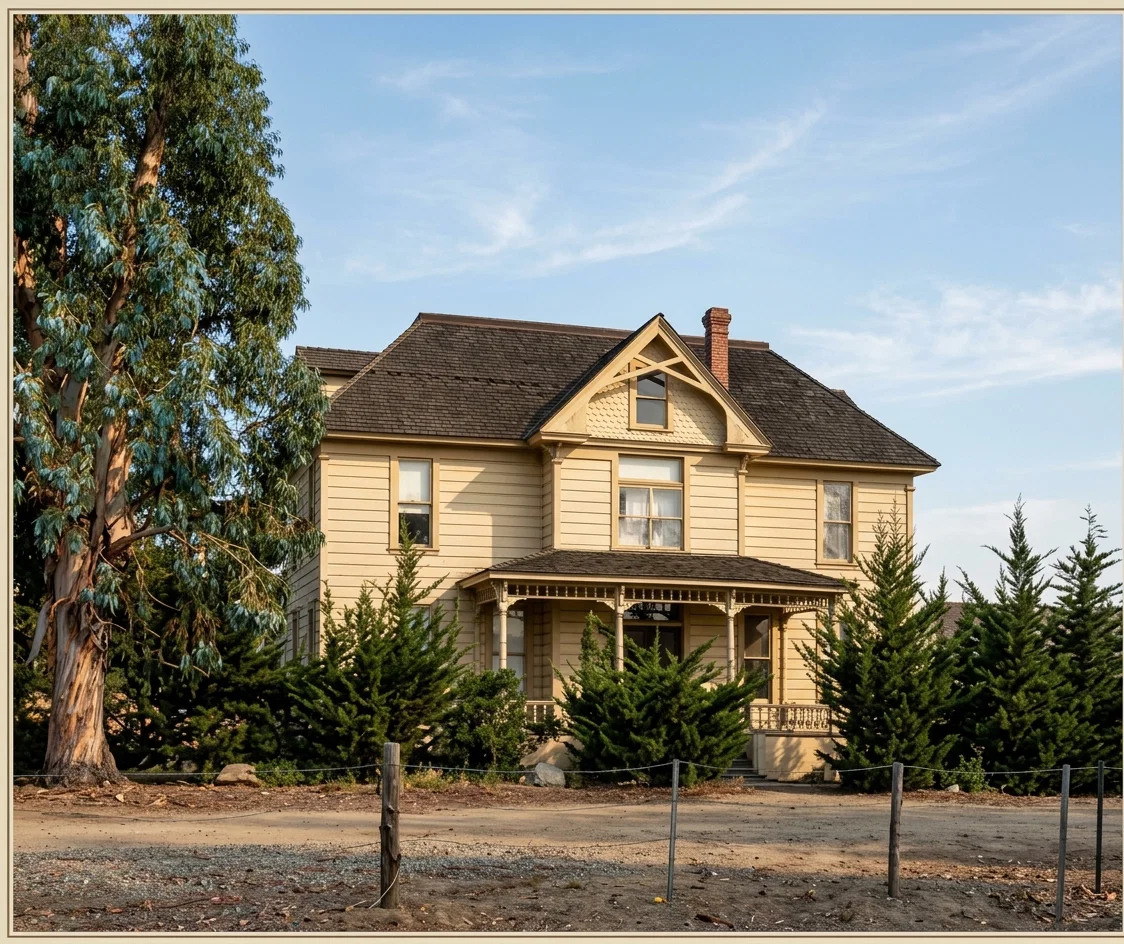
The accompanying illustrations give some idea of the college, dormitory, and the school family at the present time.
Prof. H. E. Giddings, who has been for years connected with the school at Keene, Texas, is in charge of the school. Eld. R. S. Owen, who was for ten years the Bible instructor in Healdsburg College, has charge of the classes in Bible study. Those acquainted with him will understand the privilege granted students who get the benefit of his class instructions.
The largest room on the ground floor of the college, fifty-three by thirty-four feet, is used for religious services. The Tract Society and Conference offices occupy another large room just off from the main entrance, where also the books of the institution are kept. Opposite this, is a storeroom for our health foods and the needed line of groceries we carry. This makes it possible to purchase at dealer’s prices, thus saving a good per cent to the College Home. Another pleasant room has been used for the church school, which is entirely separate from the college work.
The second floor consists of the main study hall, a large room just off from this (to be used for natural history collections and a library), a parlor, and recitation rooms. The third floor is divided into suites of rooms, and is the young men’s dormitory.
So now, we can say to the brethren and sisters of Southern California, Send your young men and13young women to the school, and all will be done that a united faculty can do to return them to you better prepared to face the battles of life, and better prepared to assist in the work of saving their fellow men. CLARENCE SANTEE.
In the morning sow thy seed,—
Kindly act and friendly deed;
Cheer the heart and dry the tear,
Bid thy brother not to fear.
Eternity will tell,
If all thy work is well.
In the morning sow thy seed,
Clothe the naked, hungry feed,
Point the sinner to the cross,
Look on gold as earthly dross.
Eternity will tell,
If all thy work is well.
In the morning sow thy seed,
Souls that are to teach and lead,
Time is fleeting; life soon o’er,
Man can labor then no more.
Eternity will tell,
If all thy work is well.
In the morning sow thy seed;
Help will come to you in need,
Joy abide with you below,
Harvest spring from what you sow.
Eternity will tell,
If all thy work is well.
—Eliza H. Morton.
Our Work and Workers
The Nebraska institute for canvassers will be held February 12-26, at College View.
A new church-school building is being erected at Butterfield, Ark.
An institute for canvassers will be held at New London, Wis., March 1-10.
At Rose Lawn, Wis., fifteen children of parents not of our faith are attending the church-school.
The addition of two converts to the truth at Hewetville, N. Y., is noted by Brother H. H. Wilcox.
The brethren at Poplar Bluff, Mo., are moving in the matter of building a house of worship and a church-school building.
The conversion of two persons is reported by Brother E. G. Olsen, who has been laboring among the Scandinavians at Forest City, Iowa.
At North Creek, N. Y., the brethren have erected a substantial church-school building—the first building erected specially for that purpose in the conference.
Six weeks of labor in St. Joseph, Mo., by Brother H. K. Willis has resulted in the addition of eighteen members to the church. Still others are deeply interested in the truth.
The attendance at the Industrial Academy at Bethel, Wis., is greater than in any previous year. The home is crowded to its full-capacity, even the reception room being occupied.
Reporting to the Workers’ Record, Brother E. A. Merrell says that he has recently closed a successful series of meetings at Ottawa, Kansas, during which twenty members were added to the church.
Of the church-school at West Cooper, O. T., Brother William Voth writes to the Southwestern Union Record that it began in November with twenty-nine pupils and now has forty-seven. “They come from all directions, far and near.” “We try,” he says, “to make our daily routine of such a nature and so practical, that all may develop their God-given talents, and thus prepare themselves for the great, white, harvest field. We are studying in both English and German.”
While touring the southeastern part of Missouri in the interest of “Christ’s Object Lessons,” Brother A. P. Heacock preached in the M. E. Church at Ironton and in the Christian church at De Soto.
From Buffalo, N. Y., Brother A. O. Burrill reports to the Indicator the accession of six new adherents to the faith, the result of Bible work in the city. These are supplemented by three children who will henceforth be instructed in the way of truth.
Reporting to the Advance from Fruita, Col., Brother H. M. J. Richards says: “As the result of the camp-meeting at this place, and the effort following, eleven have signed the covenant to ‘keep the commandments of God and the faith of Jesus.’”
Concerning the work at Exira, Iowa, Brother L. F. Starr writes to the Advance that ten have already made a start for the kingdom, and we hope for others. Of the school at Stuart, he says: “It is doing nicely; twenty-five started to serve the Lord during the week of prayer.”
Our sympathies are extended to the family of Brother B. R. Nordyke, manager of our branch office at Kansas City, Mo., in their bereavement caused by the death of one of the family, Miss Pearl Nordyke, aged twenty-two years. She had been sick several months, suffering from acute peritonitis; but she bore her affliction with patience and faith.
Accompanying a request for papers to be used in missionary work at Greenville, Miss., Brother H. S. Peeke sends this appeal: “It is impossible for me to buy enough periodicals to meet the needs here. The people are so eager for the truth that they read and reread and loan and exchange till papers are entirely worn out. The South is not closed to the resident simple lover of blood-bought souls.”
Of the meetings of the church at Smithland, Iowa, held during the week of prayer, Sister Helen J. Adams writes to the Bulletin: “Two elderly sisters have decided to keep God’s holy day, and it has brought happiness to their lonely homes. Their faces glow as they talk the truth, and they are anxious that their friends and neighbors may know of it. Some of the youth and children also made a start for the kingdom.”
The Colorado Conference held its annual session December 25-31. Elder G. F. Watson was chosen president, and Elder G. A. Anglebarger, vice-president; Miss Elva Green, secretary of conference and Sabbath-school work; Bertie L. Herrell, secretary and treasurer of tract society and treasurer of conference; executive committee—G. F. Watson, G. A. Anglebarger, Watson Zeigler, W. W. Hills, and H. M. J. Richards.
At the session of South Dakota Conference, held at the Elk Point Industrial School last month, Brethren Elmer G. Hayes and N. M. Jorgensen were ordained to the Gospel ministry. It was voted to pay the salary of a laborer in Norway for one year. One brother pledged to support one laborer in the field at his own cost. The following officers were elected: President, N. W. Allee; vice-president, Elmer G. Hayes; secretary, N. M. Jorgensen; treasurer, Lyman D. Randall; executive committee—N. W. Allee, J. W. Beach, M. K. Thrall, E. G. Hayes, C. F. Betts, N. C. Kier, C. A. Burman.
PRINCIPLES AND PLANS IN FERNANDO, COLLEGE.
By H. E. Giddings
This school stands at the head of a graded system of schools for the Southern California Conference, embracing the home and church schools. We value excellence above show.
With a firm faith in the principle that true education consists, not in the amount of matter studied, not in the mass of facts memorized, but in the cultivated ability to think logically, and discriminate between truth and error, we endeavor, in everything, to stimulate thought.
Every person is responsible to God for the use of the mental faculties. They were given for use, and he who uses the mind only as a receptacle, into which are poured the fancies, conclusions and vagaries of others, forfeits the right to the divine gift.
While it is respectful, proper, and wise, to give due consideration to the opinion and labor of others, it is either indolence or cowardice to accept their theories until, with an energetic and faithful consideration in the light of truth, they are proven to be true.
If we fulfil our mission as responsible beings, we must be thinkers.
Better the man who matures but one thought in a day that is his by virtue of honest sincere effort, than he who with voluminous display, presents but a gallery where other men's works hang upon the walls of the memory.
A cyclopedia is a good thing for reference, so is a bookcase, but the human mind was not made for such a purpose alone.
Ladies' Dormitory, Fernando College.
The curse of the age in education is the tendency to study and repeat the words and thoughts of others, to follow the trend of the mass with the sole object of gaining popularity or favor.
Dare to be a thinker,
Dare to stand alone,
Dare to have a thought,
Tho it be your own.
While God requires us to think, he has given us a safe basis for all thought. “The fear of the Lord is the beginning of wisdom.” “For God hath not given us the spirit of fear, but of power, and of love, and of a sound mind.” “Study to show thyself approved unto God.” “From a child thou hast known the holy Scriptures which are able to make thee wise unto salvation.” “A good understanding have all they that do His commandments.”
This “Word” is the monitor in our school. It is not only venerable with age, but sacred with truth. While the Bible is old and has weathered many a storm, it sails into the harbor of the present, bringing hope and comfort to the lost.
With the Bible as the basis, this school offers ten lines of work, or departments of study, Bible, History, Language, Pedagogics, Mathematics, Science, Bookkeeping, Music,—Instrumental and Vocal,—Industrial, and Mechanical.
Four groups of work have been prepared to meet the needs of ministers, teachers, secretaries, and musicians.
Believing that lax discipline has been very detrimental to the best interests of schools of this kind, we have determined to deal promptly with the insubordinate, yet with that kindness and sympathy which will appeal to the heart, and lead to improvement. Good behavior, firmly insisted upon, is a great help to the young in the formation of character. Discipline, promptly yet kindly administered, will have a wholesome effect upon those who are corrected, appealing to the better judgment, and often leading to a reformation of life.
While furnishing the student every opportunity for mental advancement, we require each student and teacher, to engage in some line of manual labor for two hours each day. This labor serves a threefold purpose in the preservation of health, the production of necessary supplies, and the formation of character.
Our home life is guarded with jealous care. Morning and evening worship is maintained in both the ladies' and gentlemen's parlors.
At the opening of the daily session, chapel worship is held with the whole company together. Sabbath-school, preaching or a general service, special Bible study Sabbath afternoon, and frequent social and prayer meetings are conducted, furnishing spiritual privileges to the students.
With a firm trust in God we face difficulties, and toil toward the heights, knowing that if faithful to the end, a crown of joy gemmed with stars will add to the happy future with the Lord.
Pres. Fernando College. H. E. GIDDINGS.
PUBLICATIONS WANTED.
SIGNS, Little Friend, Health Journal, and tracts, for missionary work. Address, post-paid, H. S. Peeke, 510 Lake Street, Greenville, Miss.
SIGNS, Review, Life Boat, and tracts, for missionary work. Address, post-paid, Wm. Kennedy, Durango, Col.
SIGNS, Instructor, Sentinel, Good Health, Life Boat, Training School Advocate, and tracts, for missionary work. Address Miss Emma L. Runck, Hemingford, Neb.
FOR SALE.
NINETY-FIVE acres of land, timbered, two miles from town. Some clear. Fine land for vegetables and fruit. Mild climate. Terms to suit purchaser.
Address, Mrs. C. S. Lindley, Emporia, Va.
NOTICE
MANY of our brethren and sisters within the parish of the SIGNS have often wished that they might find employment with some firm whereby they could observe the Sabbath. To such we will say that we shall be glad to employ both men and women to introduce our products in their locality. Liberal terms will be made. Correspondence Solicited.
Royal Blend Beverage Company, Ltd., 8 Pearl St., Grand Rapids, Mich.
BAPTISM: Its Significance, Its Nature, and the Necessity for It.
By Ellet Joseph Waggoner
By E. J. Waggoner. Bible Students’ Library, No. 79. Pacific Press Pub. Co., Oakland, Cal. 16 pp.; 2 cents.
(1) “AFTER these things he departed from Athens, and came to Corinth. (2) And he found a certain Jew named Aquila, a man of Pontus by race, lately come from Italy, with his wife Priscilla, because Claudius had commanded all the Jews to depart from Rome: and he came unto them; (3) and because he was of the same trade, he abode with them, and they wrought; for by their trade they were tentmakers. (4) And he reasoned in the synagogue every Sabbath, and persuaded Jews and Greeks. (5) “But when Silas and Timothy came down from Macedonia, Paul was constrained by the Word, testifying to the Jews that Jesus was the Christ. (6) And when they opposed themselves and blasphemed, he shook out his raiment and said unto them, Your blood be upon your own heads; I am clean; from henceforth I will go unto the Gentiles. (7) And he departed thence, and went into the house of a certain man named Titus Justus, one that worshiped God, whose house joined hard to the synagogue. (8) And Crispus, the ruler of the synagogue, believed in the Lord with all his house; and many of the Corinthians hearing believed, and were baptized. (9) And the Lord said unto Paul in the night by a vision, Be not afraid, but speak and hold not thy peace; (10) for I am with thee, and no man shall set on thee to harm thee: for I have much people in this city. (11) And he dwelt there a year and six months, teaching the Word of God among them.”
Golden Text.—“Other foundation can no man lay than that is laid, which is Jesus Christ.” I Cor. 3:11.
SUGGESTIVE QUESTIONS.
(1) After the occurrences related in our last lesson, where did Paul go? Verse 1. Note 1. (2) Whom did Paul find there? From what place had they come? Why had they left Rome? Verse 2. (3) What induced Paul to take up his abode with them? What was their occupation? Did Paul work at it? Verse 3. Note 2. (4) How did Paul improve his time on the Sabbath day? What day of the week was this? Verse 4. Note 3. (5) What recruits reached Paul at this place? How did their presence affect Paul’s work? Verse 5. (6) How did some of his hearers receive his teachings? What did Paul say concerning the work he had done for them? What important declaration did he then make? Verse 6. Note 4. (7) What did he then do? What is said of this man and his house? Verse 7. (8) What important person accepted the teachings of Paul? What other accessions were there to the faith at this time? Verse 8. (9) What encouragement and command did Paul receive at this time? Verse 9. (10) What help did the Lord promise Paul? Why would the Lord allow no harm to come to him? Verse 10. Note 5. (11) How long did Paul continue in this work? Verse 11.
NOTES.
1. “Came to Corinth.”—The political capital of Greece, the metropolis of commerce, situated on the isthmus which connects the two portions of Greece, and containing a population of about 400,000. It was a strategic center for the spread of the Gospel because of the variety of its population as well as its size. It was an exceedingly wicked city, and so stood in great need of the Gospel.
2. “And they wrought.”—The Authorized Version has it, “he abode with them and wrought.” The idea is that Paul labored with them in the work of tent-making. His purpose in this, as he tells them in his second epistle to the Corinthians, was that he might not be chargeable to them. See 2 Cor. 11:9. That it was Paul’s purpose not to burden any for his support is shown in 1 Thess. 2:9 and 2 Thess. 3:8. He had no mission board to look to for his support, and yet he did receive, from time to time, contributions from the believers to assist him in his work.
3. “In the synagogue every Sabbath.”—Paul was a keeper of the true Sabbath. After laboring at his occupation all the week, on the seventh day, God’s own Sabbath day, he rested from his physical labors, and resorted to the house of worship. That it was the Sabbath of the commandment, the seventh day, on which Paul was preaching to these Corinthians is shown by the facts that he associated himself with a Sabbath-keeper, and that the preaching was done in the synagogue, which was open for regular worship only on that day. There is a similar but more specific record upon this point in Acts 13:15, 16, 42, 44. It is there explicitly stated that the day on which Paul preached in the Jewish synagogue was the Sabbath day, the day which the Jews regarded as the Sabbath. Thus the charge that the Sabbath was changed in the days of the disciples is proved untrue. Paul even goes so far as to state that he had done nothing contrary to the customs of the Jewish fathers. Acts 28:17. He could not have said that had he been keeping Sunday.
4. “I will go unto the Gentiles.”—Paul had labored for his people through great privations, persecutions, and dangers, and still they openly rejected God’s last urgent appeal to them. He could do no more. That he considered he had done his duty by them is shown in his refusing to hold himself responsible for their eternal loss. He did consider himself responsible until he had done his duty in warning and urgent invitation. God will strive with men as long as there is any hope, and when there is hope no longer, He will cut them off. It is exceedingly dangerous to refuse to follow the light of God.
5. God would not allow His work to be frustrated by having harm come to Paul while yet there were many honest souls in Corinth unwarned. It is this that saves many of God’s missionaries to-day from destruction at the hand of Satan and his human agents. He has “much people” yet in this world. He will not allow Satan to prevent their being warned by destroying those who carry the warning. His declaration to Paul, “I am with thee,” was the fulfillment of our Lord’s promise to His followers; “and lo, I am with you always, even to the end of the world.”