Your ShelfYour Projects

Review and Herald, Vol. 80, No. 50.

A Twelve-Ounce Bible
Earlier text: Justice Above Human Enactments

Simple Remedies for Distressing Disorders

Whooping-Cough, Headache, Neuralgia, and Toothache

Sometimes a very simple measure, one which many would pass by as unworthy of trial, proves to be exceedingly efficient in the treatment of disease. Whooping-cough is a dangerous disease with a high mortality in some places; and, as a rule, when the little patients recover, they show the effects of the disease for a longer or shorter period, sometimes permanently. It appears that in this disease the violent coughing and gasping increase the irritation, and tend to prolong and intensify the trouble. One authority (Niemeyer) says: “If we could arrest the spasm of the glottis, the backbone of the disease would be broken.” Another says: “Spasm of the glottis is the sole cause of the acute suffering in uncomplicated whooping-cough, and could this element be removed, the disease would be reduced to the level of an ordinary catarrh. Spasm of the glottis being not only the sole cause of the terrible suffering in whooping-cough, but of most of the danger as well, the main object of medication is the relief of this symptom.”
The Experiment has shown that when the jaw is forcibly drawn forward and downward, the tendency to spasm is much diminished, if not altogether broken. Any intelligent nurse or mother can administer the treatment. The little sufferer should be in the horizontal position, and when a paroxysm comes on, the nurse should step behind the child and grasp the lower jaw with thumbs and fingers, the thumbs at the chin, and the index fingers at the angle of the jaw, and draw forcibly forward (that is, vertically upward, when the child is lying on its back).
Those who have tried this treatment have found it a great aid in shortening and mitigating the attacks of whooping-cough. The treatment is not so successful in the very young.
It is well to remember in this connection a very successful mechanical treatment for headache, facial neuralgia, and toothache. Elevating the larynx sometimes causes almost instant cessation of these disturbances. The cartilages forming the “Adam’s apple” under the chin should be grasped with the fingers, forced well upward toward the base of the tongue, and held there for about a minute. It is sometimes necessary to repeat the treatment two or three times in order to cause relief.
Another suggestion is made for the relief of pain at night. It has been observed that pain is more severe at night, and, as a rule, does not diminish until the next morning; also that pain is apt to be more severe after the lights are turned out than before. For this reason Goldscheider, of the Vienna University, advises, in case of pain or uneasiness, that the patient be allowed a light at night.
These measures may seem too simple to be worth a trial. Like Naaman, the Syrian, we are sometimes tempted to treat with scorn a procedure which, if put to the test, might prove a great boon. The reader is asked to make a note of these suggestions, and put them into practise at a favorable opportunity. They can certainly do no harm.—Pacific Health Journal.

Daily Counsel

“Be not false, unkind, or cruel; Banish evil words and strife; Keep thy heart a temple holy; Love the lovely, aid the lowly; Thus shall each day be a jewel Strung upon thy thread of life.”

A Prayer for Strength and Victory

FILL us with Thy love that forgives and summons and empowers, and send us out into the world under this thy summoning and challenging call. Help us to meet the next temptation in the expectation of victory, to expect to be able to bring to the next trouble fortitude and patience. This can be done. By the God-given power of will that is within us, may we create a new future out of the inspiration of this hour.—Dr. Maltbie Davenport Babcock.

Second Trip Through Constantinople and Bithynia
J. H. KRUM
ACCOMPANIED by our medical missionary, Sister Snedjian, as interpreter, the writer has visited the different groups of Sabbath-keepers in the provinces of Brusa and Bithynia. During our visit last year we had some difficulty in getting permission to travel, and in two places found positive and firm resistance. This year we are glad to report, however, that the Lord opened the way for us to go forward with unusual freedom.
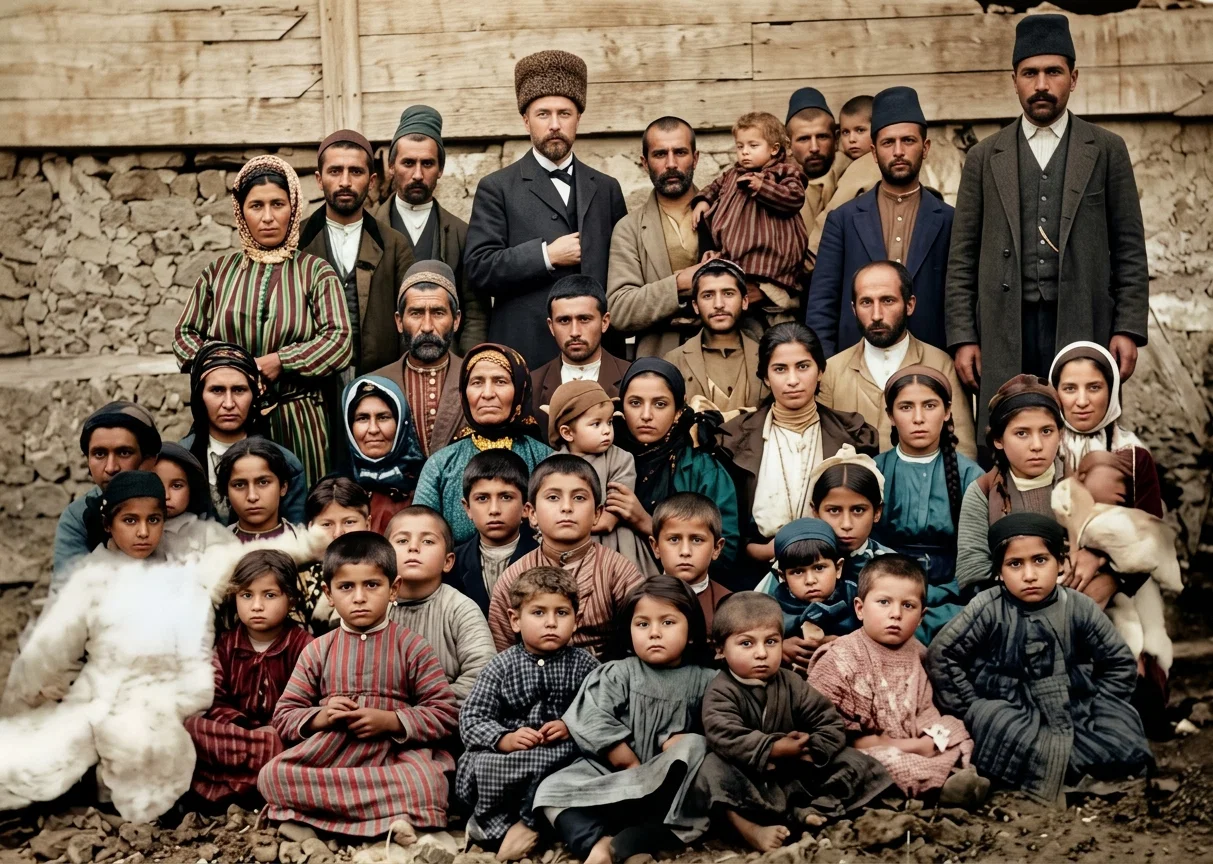
A GROUP OF ARMENIAN ADVENTISTS
In Constantinople we had a profitable meeting, with Brother Conradi in attendance. We then went to Bardizag, an Armenian town of ten thousand inhabitants remaining there one month. We presented the message of righteousness by faith every night to attentive audiences, sometimes numbering one hundred. The last week of our stay we connected with this the testing points of the faith, which some of the hearers could not bear, and showed their displeasure by breaking some of the windows in the lower story of our house. The brethren feared government interference if the disturbances should be repeated, and we decided to move on to another place, rather than to be sent out of the province altogether. After baptizing a sister, we went to Ovajik, where we have a company of about thirty.
In Ovajik the two local district elders had become somewhat discouraged, through false accusations, which caused them to resign. We remained ten days, holding also a general meeting for the district, with the happy result that the wounds were healed, and the two discouraged brethren were unanimously re-elected to their respective positions.
From this place we proceeded to Nicomedia and Ada Bazar. In the latter city we heard that enemies were waiting for an opportunity to accuse us to the government, so we decided to go first to a Greek village in the vicinity. Here some of the brethren had made preparations to plant tobacco, pleading that other crops had been a failure. We held a study touching this unclean and destructive plant and its withering physical and moral effects on mankind, based on science and the Bible, quoting among other scriptures 2 Cor. 6:16, 17, and Rev. 18:4. “Ye are the temple of the living God; . . . wherefore come out from among them, and be ye separate, saith the Lord, and touch not the unclean thing.” I am glad to report that all but one, who was farming on shares with an unbeliever, accepted the call not only not to touch, but also not to multiply, the unclean thing.
They also acknowledged that there are sometimes spiritual reasons for the failure of crops, and that, as Prov. 26:2 says, “the curse causeless shall not come.” After studying Mal. 3:8-12, one of the brethren testified that three years ago he quit bringing all the tithe into the storehouse, and from that time his crops failed. In the first two years he reaped less than he sowed, although the adjoining land of his neighbors yielded a bountiful harvest, thus fulfilling verse 9 and Haggai 1:1-11. Last year he determined to give the Lord his own, and the result was a good harvest. Even his wife, an unconverted woman, was moved upon by this experience to pay the tithe of her own income.
In this village the children surrounded the house on one of the holy days, and began shouting, which attracted a large crowd. They forced themselves into the house which we occupied, talking and gesticulating wildly. It seemed to us that these people were re-enacting the scenes of their forefathers in Ephesus, for the greater part knew not the reason why they were come together. Acts 19:32. The greatest confusion prevailed for a time; but the Lord heard the prayers of his people, and after about two hours they dispersed.
We then went to Ada Bazar. A member of the Protestant church offered his house, as ours was small, and did not have seating capacity sufficient for the people who desired to hear. We held three well-attended meetings in this house; but during the third, some young men raised a disturbance, which caused us to transfer the meetings to Tomluch, five hours’ distant. We remained three days with our brethren there, and returned to Ada Bazar, holding several meetings in another part of the city. We left for Nicomedia, holding one meeting there. Going to Bardizag, we accepted one sister by vote. The next day we started overland, in the saddle, for Shagshag. We could have gone by steamer in a much shorter time, but we would have been compelled to pass the police at the port, who prevented us from visiting the place, after repeated attempts, last year. Although the port was in sight of us all the time, we remained ten days in Shagshag without any opposition from the authorities, owing to the fact that the people of the village were friendly to us, and did not report our work.
From Shagshag we went to Kolutsh Kay (Sword Village), where we baptized one sister, the wife of an officer. Although we have only four members, about forty persons attended our meetings. One morning an impromptu meeting was announced. A woman who had manifested a good interest the evening before heard of it while kneading her bread. In her haste not to lose a word of the lesson, she neglected to wash her hands, and appeared in the meeting apparently unconscious of the dough upon her hands, until her attention was called to it by her friends. This woman has given satisfactory evidence that she esteems the bread of life more than the bread that perishes.
We had a new experience in holding the ordinances. In order to baptize the sister, we were compelled to go quite a distance from the village. And as we wished to reach another town before night, we held the ordinance of humility by a flowing brook. At night we arrived in an Armenian village named Karze (Stone Village), at the entrance to a rough, mountainous region. Among those who attended our meeting was a young man who had withstood our brethren for some time. He was especially displeased with a young brother who had recently connected with the company. After the service this opponent joined our brother on the way, and tried to persuade him to give up his obedience to the Sabbath. When his words proved powerless to persuade, he drew a dagger,trying compulsion. The brother deftly grasped the weapon, and in the struggle that ensued managed to get it into his possession. Not wishing to hurt his assailant, he threw it into a field, where he found it early the next morning. We then took it to the ruler of the place, who remarked in a cold-blooded manner, “It is a shame for the young man that he allowed his weapon to be taken from him.” Apparently he did not see the necessity of condemning the horrible assault, but rather the awkwardness of the young aggressor. In this region, and, in fact, in all Turkey, it is customary to go armed while traveling. Among the majority, he who knows how to handle his weapons best is considered a truly great man, in the fullest sense.
From this place a ride of nine hours over the mountains brought us to Sel-louz, where we have some faithful and well-proved brethren. They have repeatedly suffered persecution, and to-day stand as faithful sentinels and witnesses in the district where the great Council of Nicæa was held in A. D. 325. After remaining with them five days, we left for the nearest government town, in order to have our papers arranged by the authorities. The kai-makam (ruler of the district) had a long talk with my interpreter, relative to our faith; and from the intelligent questions which he asked, we could discern that the Lord was working upon his mind to acquaint him with the great events which are to take place soon.
We took a carriage to Broussa, a city of about one hundred thousand people, eight hours’ distant. Broussa is noted for its natural hot baths, its beautiful silks and celebrated Turkish towels, and for being the first capital of the Osmanlis. We visited the different American missionaries, who have had good success in educational work. Here we have a small company of witnesses for the third angel’s message. As we found a good interest to hear, it was decided that the interpreter should remain for some time, while the writer proceeded to Constantinople. In the latter city we had the pleasure of seeing several meetings well attended, although at the time all gatherings were strictly forbidden.
In all these places we have seen grand opportunities for consecrated medical missionary workers. At present it is very difficult for ministerial workers to labor in this field, as meetings are forbidden everywhere. But we are glad to report that many obstacles placed in the way of ministering the word disappear before the intelligent and energetic nurse.
After a tour of four months, the writer reached his home in Palestine, where he met with a Syrian brother who had just arrived from America with the intention of presenting the third angel’s message to the Arabic-speaking peoples of Syria.

In San Juancito, Spanish Honduras

A. N. ALLEN
For the past three months it has been my privilege to work for a people who have borne scarcely any fruit from all the seed sown among them. Various societies have sent workers to this country, but after years of labor without any results they have either become discouraged and left or have been recalled by their societies. In all Honduras I do not know of a convert among the Spanish-speaking class. Nearly all the Bibles that have ever been brought into the country have been burned. One colporteur, while in Tegucigalpa, was driven from the market place by a shower of vegetables, while trying to hold a street meeting. Another missionary mysteriously disappeared. We had been here only a month when we were compelled to seek another house because we were Protestants.
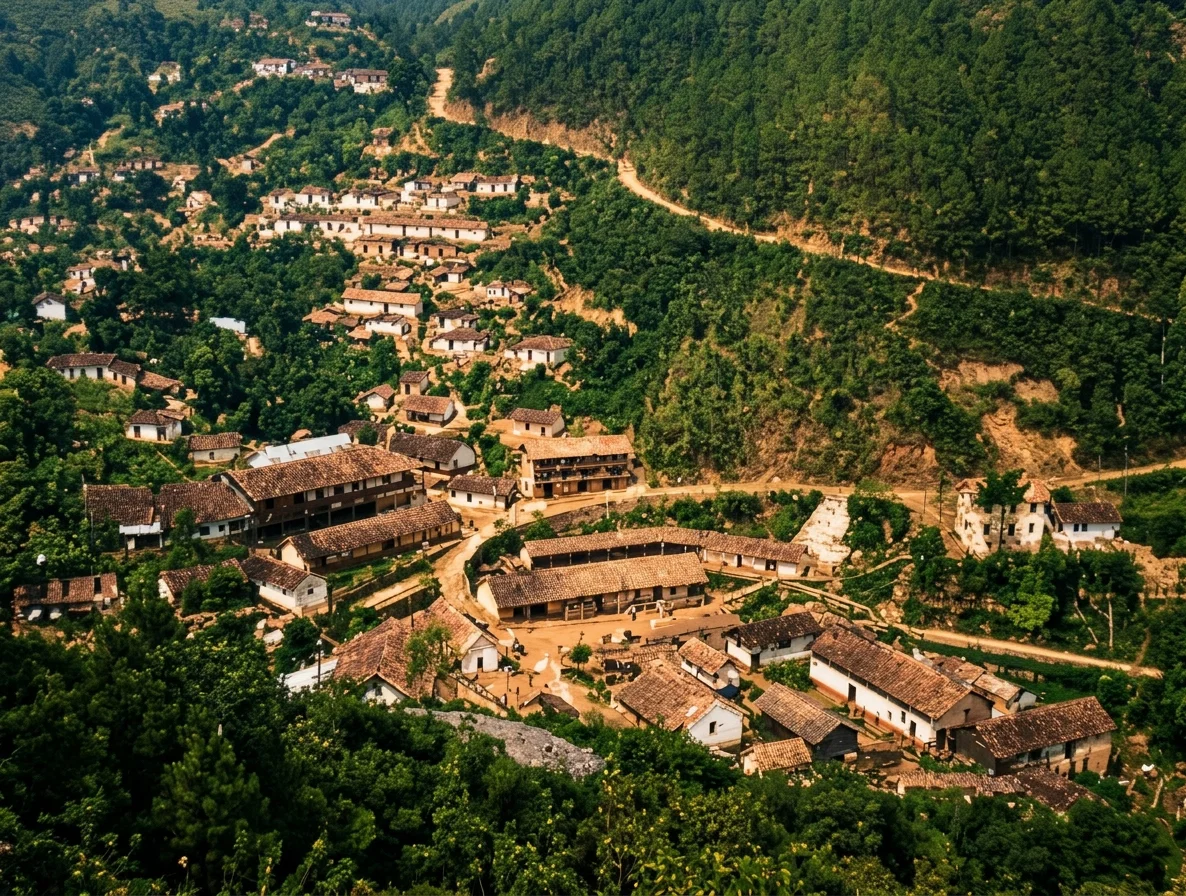
A VIEW OF SAN JUANCITO
Surely this is a moral desert, and a wilderness of superstition, ignorance, and false doctrine. "Gross darkness" is covering this people, but, praise God, the entrance of his word gives life; it gives understanding unto the simple. Ps. 119: 130. It is on the strength of the promise, "So shall my word be that goeth forth out of my mouth: it shall not return unto me void, but it shall accomplish that which I please, and it shall prosper in the thing whereunto I sent it" (Isa. 55: 11), and, "The wilderness and the solitary place shall be glad for them; and the desert shall rejoice, and blossom as the rose" (Isa. 35: 1), that we are working. Although we have been without the written Word much of the time, we have not been idle. We have been breaking and preparing the soil; and as the rays of the Sun of righteousness pierces the darkness of formalism, kind and tender hearts are revealed, and hard hearts softened.
Some of the most reserved have given their order for our Spanish paper El Mensajero, and are now reading with interest. Last week I sent in fourteen more yearly subscriptions for this paper, making sixty-one in all. Besides this we are using a club of fifty each month. To-day I received a small case of New Testaments in Spanish, and a cargo of Bibles will soon reach us. Some of our own books are also on the road. Many have already spoken for Bibles and books.
The gospel must be published among all nations. Mark 13: 10. "The sower soweth the word." Chapter 4: 14. This is what we are doing. And God says, "It shall not return unto me void." We have here in San Juancito, Americans, Germans, Scandinavians, Jews, Chinese, and negroes, besides the Spanish and Indian population. The mine furnishes employment for about eight hundred men. These come and work a few months or years, and return to their homes. The population continually changes; and in this respect it is an important station from which the light of truth can shine with advantage. We hope soon to see those accept the truth who shall feel a burden for their own people.
San Juancito, where the ore is worked, has an altitude of thirty-six hundred feet. The ore is brought down from the mine twenty-two hundred feet, in iron buckets fastened to a cable wire which revolves like a belt, carrying the ore down, and the empty buckets up. This mountain, over which we have to climb in going to Tegucigalpa, is 7,240 feet high. The mine was once worked by Spaniards, probably two hundred years ago. Many dark holes may still be seen from which they removed the ore containing gold and silver. They used slave labor. The present population of San Juancito is forty-five hundred. The accompanying picture will give some idea of how the town is built on the mountainside, overlooking the mills and other buildings.
We have just received word asking us to return to the Bay Islands, and take the Utilla school, which has been without a teacher for some time, in order to make ourselves self-supporting, on account of the present financial condition of our Mission Board. However, we hope to return at a more favorable time. Meanwhile the El Mensajero will be making its monthly visits, and we leave the work with God.

God’s Truth Cannot Be Stopped

No barrier can stop God's truth.

A Neglected Field

A. R. OGDEN
To the south of us, and beginning right at our own door, lies the great Spanish-speaking field, embracing Mexico, the Central American States, and nearly all the South American republic.
In missionary circles, South America has been truthfully called the “Neglected Continent.” But the subject of these few lines embraces more,—yes, the great, neglected Spanish-speaking field which begins with Mexico, our next-door neighbor, and yet how sadly neglected by those who have the greatest, most solemn message ever committed to man.
But in these few lines we call take but a general view of the great field, and of what yet remains to be done by us before our Lord can come and say, “Well done.”
In an imaginary trip let us leave the Central States and go to the Pacific coast. About three days will suffice to bring us from Kansas City or Omaha to San Francisco, where we embark, sailing out through the “Golden Gate.” Leaving this portal, through which all vessels must pass in sailing to and from San Francisco, we steer directly toward the setting sun. Once fairly at sea, far enough from shore to be safe from the many treacherous rocks of the coast, we suddenly change our direction from west to southeast. Two days of continuous sailing will bring us to the end of the waters washing the shores of the United States.
We now find ourselves viewing the mountains of Mexico. Eight days more will bring us to the Central American republics. Thus, ten days of continuous passage from San Francisco will bring us fairly in sight of the volcanic regions of Central America. As the steamers carrying passengers on the west coast are more properly freight steamers, we must content ourselves with stopping in probably half a dozen Central American ports. In each port we may be detained from a few hours to one or two full days, according to the celerity of those who have to do with receiving and dispatching the boat. From our boat in the bay we shall have a beautiful view of tropical vegetation. An abundance of sunlight and rainfall unite to make nature manifest itself in full glory.
Leaving Central America, we bid adieu to North America, and hastily pass on, stopping possibly at a port or two in Columbia, Ecuador, and Peru, occupying about two or three weeks more, when we find ourselves passing by the long, narrow strip of land on the west coast—Chile. In the three last-named republics, with Bolivia, a little to the interior, we have a population of ten million. And yet as little has been done to carry the precious message of the third angel to these millions in darkness. While a good beginning has been made, yet much remains to be accomplished.
A few decades ago these different countries were altogether opposed to the entrance of Protestant missionaries, but to-day the doors are open. Many opportunities present themselves for carrying the truth into these countries. What shall we do to fill the openings? Many will say, “I can not go, the way is too far. I know not the language.” True, all can not go personally, neither will it be necessary for all to learn the Spanish tongue. But all may and should have a part in carrying this last message to these waiting lands. There are some who already know the language, and are ready to go, but because of the lack of means can not be sent. Every one who will contribute of his means to aid in sending those who are prepared and anxious to go, is as truly doing his duty as is the one who goes. Now the year 1903 is closing. Its record is about made.
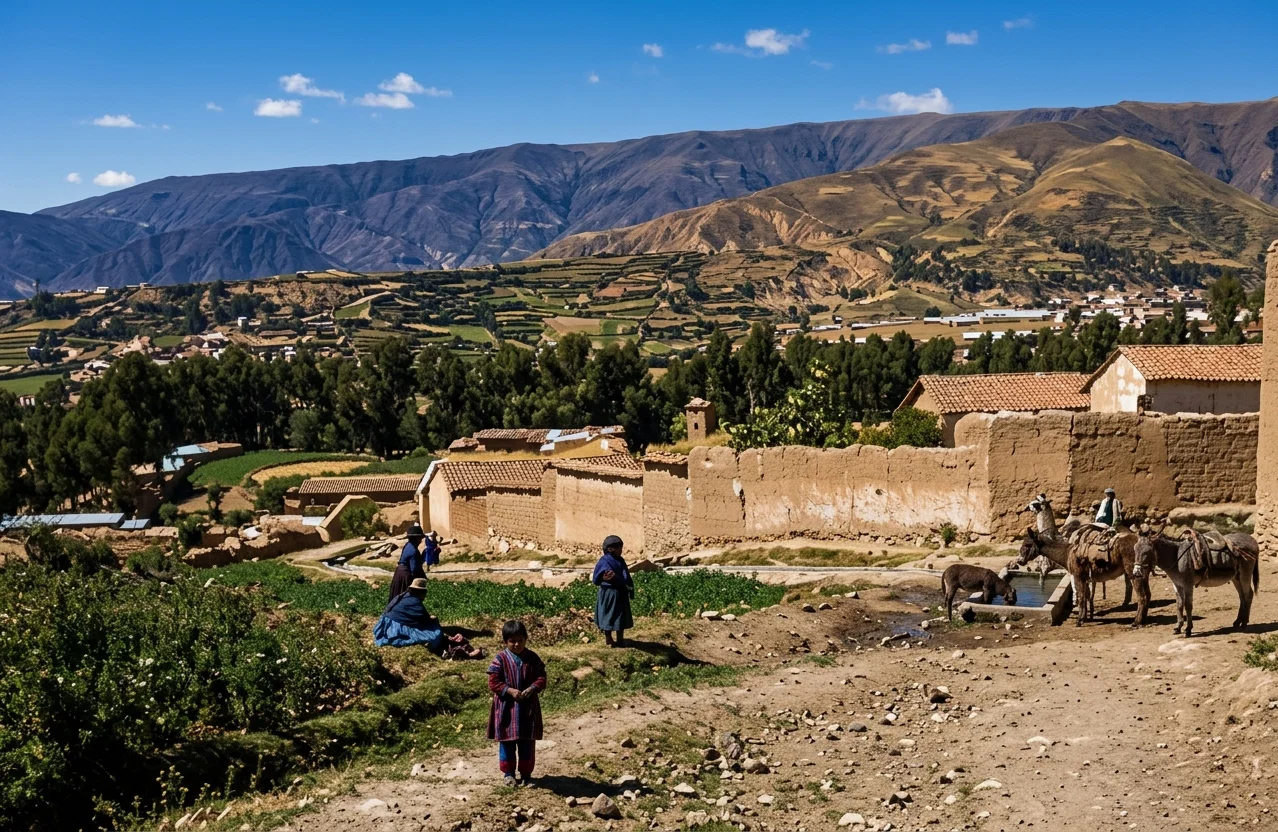
LA PAZ, BOLIVIA
LA PAZ, BOLIVIA
Have we been faithful to our profession? Have we done all that we could? If not, let us rally to our duty. Let us make much larger gifts than we have ever made before, so that the messengers may be hastened on to every part of the earth. Surely this year ought to witness a larger annual offering than any year of the past. Where we have in the past given cents, can we not make the offering dollars? where before tens, now hundreds? Think of it. Pray over it. Act upon it.
“And this gospel of the kingdom shall be preached in all the world for a witness unto all nations; and then shall the end come.” Matt. 24:14.

God's Word Gives Light

H. C. GOODRICH
UNCLE BEN is a colored man, seventy-six years of age, living at Corozal, ninety miles north of Belize, British Honduras. He was baptized in the sea at that place last week. His name is Benjamin Messiah. His education is very limited. Of his family only one married daughter remains, and all his income is from the cultivation of a little garden. For three years he has been alone in keeping the Sabbath, as he understood it, refusing even to light a fire or bring a pail of water.
During the last year we have had some correspondence, and last week I visited him, that his desire for baptism might be gratified. After some conversation, I said, “Well, Uncle Ben, how did you find out about the Sabbath?”—“Four years ago,” he said, “I was reading Matt. 28:1, ‘In the end of the Sabbath, as it began to dawn toward the first day of the week,’—and I noticed for the first time that the first day was not the Sabbath, but was the day after the Sabbath.” “And what did you do then, Uncle Ben?”—“Then I read the commandment, and found that it did not say the seventh day was the Sabbath, but the seventh day is the Sabbath. Then I knew that it is the Sabbath now.” “And what next?”—“I began to read the Bible regularly. Isaiah pronounced a blessing on the man who takes his foot off the Sabbath; and Jesus said, ‘Till heaven and earth pass, one jot or one tittle shall in no wise pass from the law till all be fulfilled.’” “What books or papers did you have to read?” I inquired. “Not a book or a paper, but the blessed old Bible,” said this dear old disciple.
Three years ago, Brother Branster, our colored canvasser and colporteur, found Brother Messiah, and asked him if he would like a book which teaches that the coming of Christ is near. “Why,” said Uncle Ben, “the Bible shows that we are living between the sixth and seventh seals.” John 7:17 came to my mind, and I knew that the Spirit of God had found a willing mind.
Thousands to-day are finding the Bible so hard to understand, so dark, so mysterious; and the law, like a great cloud of darkness, hangs before them, as did the pillar of cloud before the Egyptians by the Red Sea, because, like them, they are on the wrong side of it.
Solomon says, “The commandment is a lamp; and the law is light.” Prov. 6:23. And David, speaking of God’s law, says, “The entrance of thy words giveth light; it giveth understanding unto the simple.” Ps. 119:130. Paul said the word of inspiration was intended to make the Christian perfect in word and doctrine, but that the time would come when they would not endure sound doctrine. 2 Tim. 3:16, 17; 4:1-4. To-day even the word of the church is accepted in the place of the Word of God; and men who are seeking light are made to accept fables instead of Bible truth. Let us reject every man-made commandment, that the light of God’s Word may be to us as it was to Uncle Ben, a lamp unto our feet, and a light unto our path.
Belize, British Honduras, Central America.

Moravian Missionaries and Their Work

THE Moravian Church has at the present time 2,268 missionaries and assistants in the field, who have under their care 98,599 persons.

D. H. OBERHOLTZER

Kansas

MOLINE AND THAYER.—I have done but little ministerial labor during the last year or two, because the nervous strain seemed more than I could bear, and my health is much better when constantly employed in physical labor. One year ago I decided that it would be better for me to give up the work of the ministry almost entirely. But while contemplating the evidences of the truthfulness of those things that are so surely believed among us, and the startling events that are taking place all around us, and the more than startling indifference of so many who profess to believe the truth, my soul was stirred within me, and I determined to do what I could.
I visited Moline, November 21-23, to attend the missionary convention. Some came in from the neighboring churches, and we had an excellent time. I held seven meetings, and they decided to almost treble their number of the special number of the Signs.
Sabbath, November 29, we had a most solemn meeting at Thayer, and at the close when the call was made for those who had not given themselves to the Lord to come forward, fifteen responded,—the children and youth who had been attending the church and intermediate schools held at this place. Next day four more joined them. Fifteen were buried with their Lord in baptism, four were received into the church by vote, and ten were received by letter, making twenty-nine in all. We feel very grateful to our Heavenly Father; for he has looked upon our labor of love and the spirit of sacrifice that has been manifested in providing buildings and maintaining the school. Truly this was a move in the right direction, and the Lord has shown himself gracious.
I expect to visit the German churches in the West in the near future. Pray for me and for the work, that I may have strength to perform my task.

D. H. OBERHOLTZER

Prince Edward Island

CHARLOTTETOWN.—Since my last report we have been having varied experiences. In the way in which the forces of evil are manifest, we see evidence that the Lord is working on the hearts of many. Two more honest souls have taken their stand to obey the Lord and keep his commandments; one of them is the city missionary of the Presbyterian church, to whom I referred in my last report. The other is passing through the fire of trial; but she is being refined, and her confidence in God is increasing. Her husband has forbidden her to attend any of our services; but she visits us at our home, when she can find opportunity, and we improve the time by encouraging her in the Lord. She has a good supply of reading-matter, and is a diligent student of the Bible.
There is much opposition in various ways to the work, as the people are slow to investigate for themselves, and are perfectly satisfied with their present condition. Yet we have a goodly number at our services, and many who have been following the teaching right along are becoming more and more convinced. We hope to see them take their stand to obey the Lord.
Our health lectures every Monday night have been well attended, and many who have reformed their habits of living and taken the treatments are enjoying the blessing of renewed health and vigor.
We have been conducting a hygienic cooking class in our home, with good results. The members of the class subscribe for the Good Health for one year, and we give them a series of lessons in cooking. There is a good interest, and we intend to continue this work, as we believe from what we have seen that such instruction will open the way for the whole message. We distribute the Signs, and have a goodly number of interested readers.
We expect to use the tabernacle all winter, as we find we can keep it quite comfortable with good fires, and it will be less expensive than to rent a hall.
We are of good courage in the work, and mean, with God's help, to lift up the standard of truth, that souls may be led to follow our beloved Master. Pray for us and the work in this part of the vineyard. J. GREER HANNA.

Minnesota

TWENTY-TWO accessions to the faith was the result of our twelve weeks' tent effort at Fergus Falls, Minn. As it was decided that I should attend the fall camp-meetings in the State, with the view of later conducting another aggressive effort, we organized this new company into a church, leaving Brethren S. E. Jackson and E. M. Chapman to carry on the work. Brother Jackson was ordained elder of the church. Brother J. O. Peet and Brother J. F. Ballenger and his wife who had assisted in the summer's effort, took up work at Long Prairie. Ten weeks have now passedsince I left Fergus Falls. Brother Jackson reports an encouraging outlook,—members faithful, spiritual life deepening, new interest, and additional conversions. A more active and wide-awake church it has never been my privilege to know.
A cold contracted at the Long Prairie camp-meeting developed into la grippe, that and I was confined to my bed for two weeks. Later, in harmony with the decision of the conference committee, we moved from Minneapolis to St. Paul, to take charge of the work here, Brother A. C. Gilbert assisting me. At present we are selling the special number of the Signs, and helping the St. Paul church. After the holidays we expect to begin a series of meetings in a hall at some central point in the city. Remember us in your devotions. O. O. BERNSTEIN.

E. P. AND RACHEL AUGER

Mississippi

CORINTH.— Since returning from Canada last August, my wife and I have been doing medical missionary work in Corinth. A young woman of nineteen, who was given up by the doctors, is now the picture of health, as the result of adopting the simple diet taught in the Testimonies. We do not know how precious is the gift of God to us through Sister White. This young woman has gone to her widowed mother, and is carrying out the principles of healthful cooking which she learned of us while being treated and boarded free of charge at our home. She was only one among hundreds whom we could cure of stomach troubles if we had the means. We go to the extent of our earnings in helping the poor.
Many widows come to this place because of the four large clothing factories here; some of these have children to support, and some are unable to work on account of age or sickness; so there is much destitution. Others have invalid husbands and relatives. We use these opportunities to present to them the truths for this time. We ask our brethren to remember us in prayer, also to send us clean literature, and second-hand clothing, especially for children and women. We support ourselves and our work by manual labor, receiving no pay from any conference.

E. P. AND RACHEL AUGER

British Guiana

Our work among the East Indians is becoming interesting, both in visiting and in meetings. In our visiting we have met some who are quite careless and indifferent about God’s plan of salvation; while, on the other hand, there are those who pay good attention to the story of Jesus and his love, and invite us to come to their homes, so that they may hear the sweet story again. Two women, after hearing of the beauties of the coming world, gave two cents each, as a gift to God, they said.
We have a torch, which we use in open-air meetings, as this is the only way at present whereby we can reach the people. They sit on the ground, and sometimes the voices of one or two join in the sweet songs we sing. As an interest is being awakened through the Word and power of God, and some are inquiring for truth, we are praying earnestly to God that he may open their spiritual vision, that they may come to a knowledge of the truth as it is in Jesus, and also that means may be granted whereby we may be able to do a more effectual work among these dear people.
R. HYDER, C. BELGRAVE.

Porto Rico

MAYAGUEZ.—I am now spending most of the time among the people, and I like it. This month I have traveled about four hundred miles, going as far away as Ponce, about sixty miles from Mayaguez. I have a good horse, and have enjoyed the work. I can not sell much, but I am learning the country, and the customs and language of the people. Sometimes I do not hear a word of English for two or three days at a time. I like the Spanish, and am truly glad that I am now able to make myself understood. During the last month I have talked to many about the coming of the Lord and the Sabbath. Some are interested, but usually these subjects are treated with indifference.
To-morrow I shall start to Hatillo, fifty miles north, to see a man with whom we have been corresponding for some time. He is almost convinced of the truth, and we have hopes that he will become a worker in this message. Our hope of success in the work lies in our being able to secure good native help, and I believe that our hopes will be realized; for we are receiving encouraging letters from all parts of the island, from young men whose hearts God has touched. Our paper is doing good work in helping us to find the interested ones. Then I call on them, and present the truth more fully. Often I find persons who have found their first gleam of hope from reading our little paper. You know that it is the only one of the kind here.
B. E. CONNERLY.
Continue reading: In Sunny Arizona