Your ShelfYour Projects

Signs of the Times, Vol. 31, No. 47.

THE CHURCH TRIUMPHANT
Earlier text: God's Stamp of a Righteous Character

The Church Militant, and Triumphant

A Story of Surpassing Interest
By Milton C. Wilcox
WOULD you know her name—the beloved—for whom the Son of God shed His blood, the one supreme object through all the ages upon whom He has bestowed His supreme regard? It is Ekklesia (do not mispronounce the musical name, Ek-klay-see'-a), the called-one of God; the one "regularly" called out, Ekklesia Militant, the church in conflict. Others may come forth; others may imitate her name and dress; but she comes forth in response to God's regular summons.
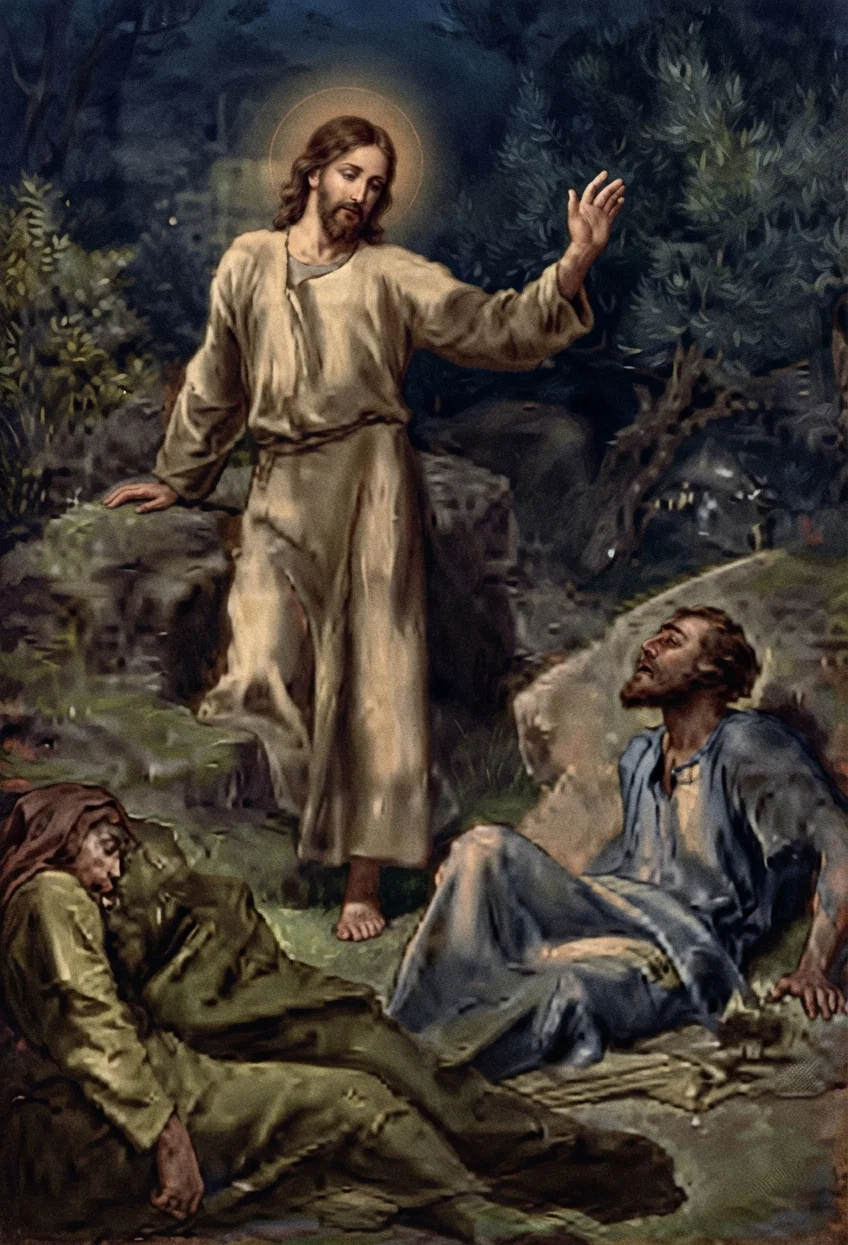
He came, "a Man of sorrows and acquainted with grief."

Called Out of What?

Out of the world of sin and misery and wo and darkness has God called her (1 Peter 2:9); chosen her out of the world (John 15:19); called her out from among the unbelieving, the unrighteous, the children of darkness, the idolators; separated her from the defiling, and set her apart to God (2 Cor. 6:14-17); out of Babylon, the great city of confusion and sin, has God called His beloved (Rev. 18:1-4). Not that she shall not mingle with those who know Him not has He called her; but that she shall hold to the high and holy principles of purity and truth incontaminated by the evil, and thus reveal the glory of Him who called her.

Called by What?

In no illegitimate way has God called Ekklesia to be His; it is a regular call, a summons of authority. He has called according to His own eternal "purpose and grace" (2 Tim. 1:9); He called her "by His grace," "by our Gospel," "the Gospel of the grace of God" (Gal. 1:15; 2 Thess. 2:14; Acts 20:24). He called Ekklesia to "repent . . . and believe the Gospel" (Mark 1:15), and that call of His Gospel has ever testified, "repentance toward God, and faith toward our Lord Jesus Christ" (Acts 20:21). And when the called-one responded to His summons, He "thoroughly washed" her from all her iniquity and uncleanness; He clothed her with "garments of salvation;" He covered her with the "robe of righteousness;" He decked her with the ornament of grace; He put bracelets upon her hands, a chain upon her neck, and a resplendent crown upon her head, and Ekklesia was surpassingly lovely, with the beauty of her God. Isa. 61:10; Eze. 16:8-14; Jer. 6:2.

Called from What?

And thus the beloved of God, Ekklesia, was called from uncleanness unto holiness (1 Thess. 4:7; Rom. 1:7); called from the fellowship of the world to the fellowship of His Son Jesus Christ (1 Cor. 1:9); called from the strife and unrest of passion and sin to peace (1 Cor. 7:15); called from the bondage of sin to the liberty which the Deliverer bestows (Gal. 5:13; John 8:32); called into the closest relationship to God and His Son Jesus (2 Cor. 6:18; 1 John 3:2); called to the holy citizenship of the heavenly commonwealth, and to the change which it involves (Phil. 3:20, 21, R. V.); called to the service of the keeping of the commandments of God and the faith of Jesus (Rev. 14:12); in short, called to a "holy calling," to "His kingdom and glory," to "His eternal glory" (2 Tim. 1:9; 1 Thess. 2:12; 1 Peter 5:10). To all this and much more has God called Ekklesia, His chosen bride.

Her Past History

Of wonderful interest has been the career of Ekklesia Militant, since God called her in that far-off beginning, and she called herself by "the name of Jehovah." Gen. 4:26, margin.
We may not take the time to trace her history from the time her first martyr fell in death, to her passage through the Deluge which drowned the world, to her sojourning in the tents of the pilgrim patriarchs, to her sore bondage in brick and mortar in Egypt, her wilderness wanderings while fed and nurtured of God, to her triumphant entrance into Canaan. We will not dwell on her backslidings and glory under her kings, or her captivity in Babylon, when began her travailing for the Desire of All Nations, her Son, her Deliverer. Micah 4:9, 10; 5:2, 3; Hosea 2:8. Here began her awful conflict with the Devil, the dragon of the nations (Rev. 12:1-4), who watched before the longing, expectant mother to destroy her Child as soon as He should be born.

The Deliverer

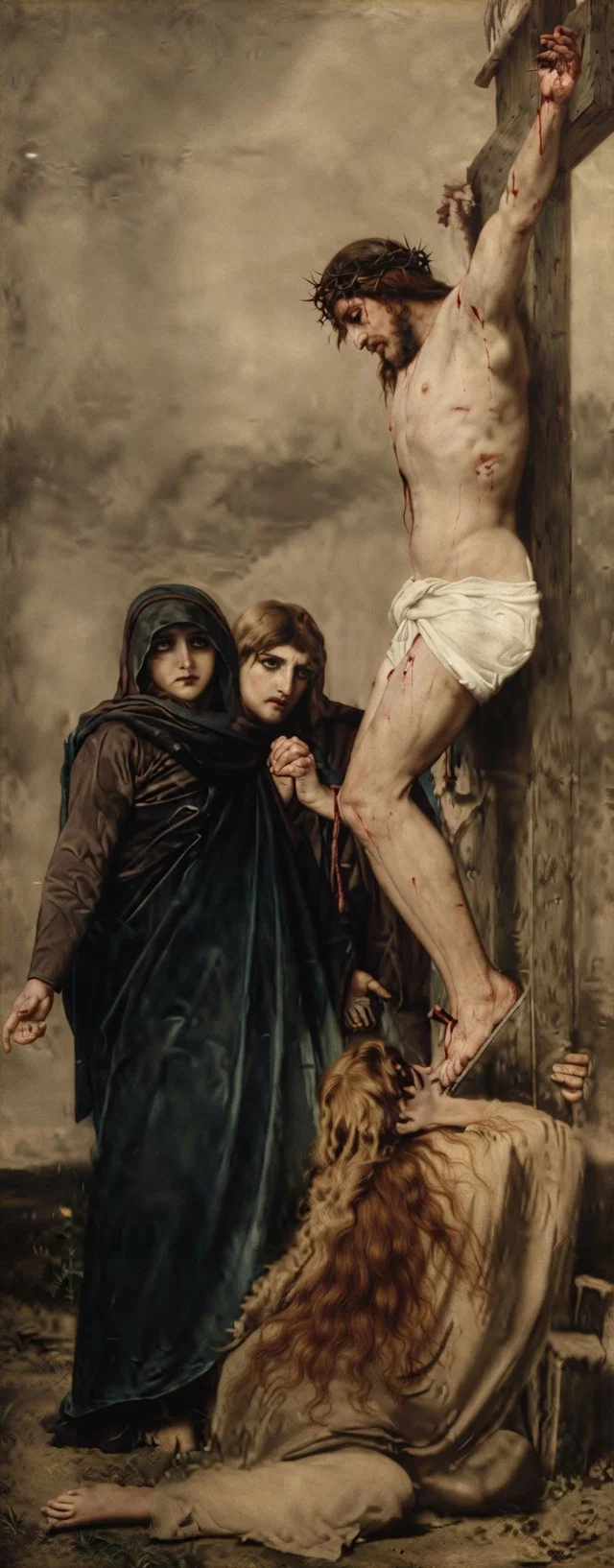
He came, "a Man of sorrows and acquainted with grief," bearing the sins and burdens of Ekklesia, that He might save her from her sins (Isaiah 53; Matt. 1:21). He labored, He prayed, He loved, He suffered, He died, to save those who caused His suffering. Even His own forsook Him when the crown of thorns was placed upon His brow. In that darkest hour of earth, Ekklesia was brought very low. She wept at the cross. She lamented by the closed grave. She felt herself bereft forever.
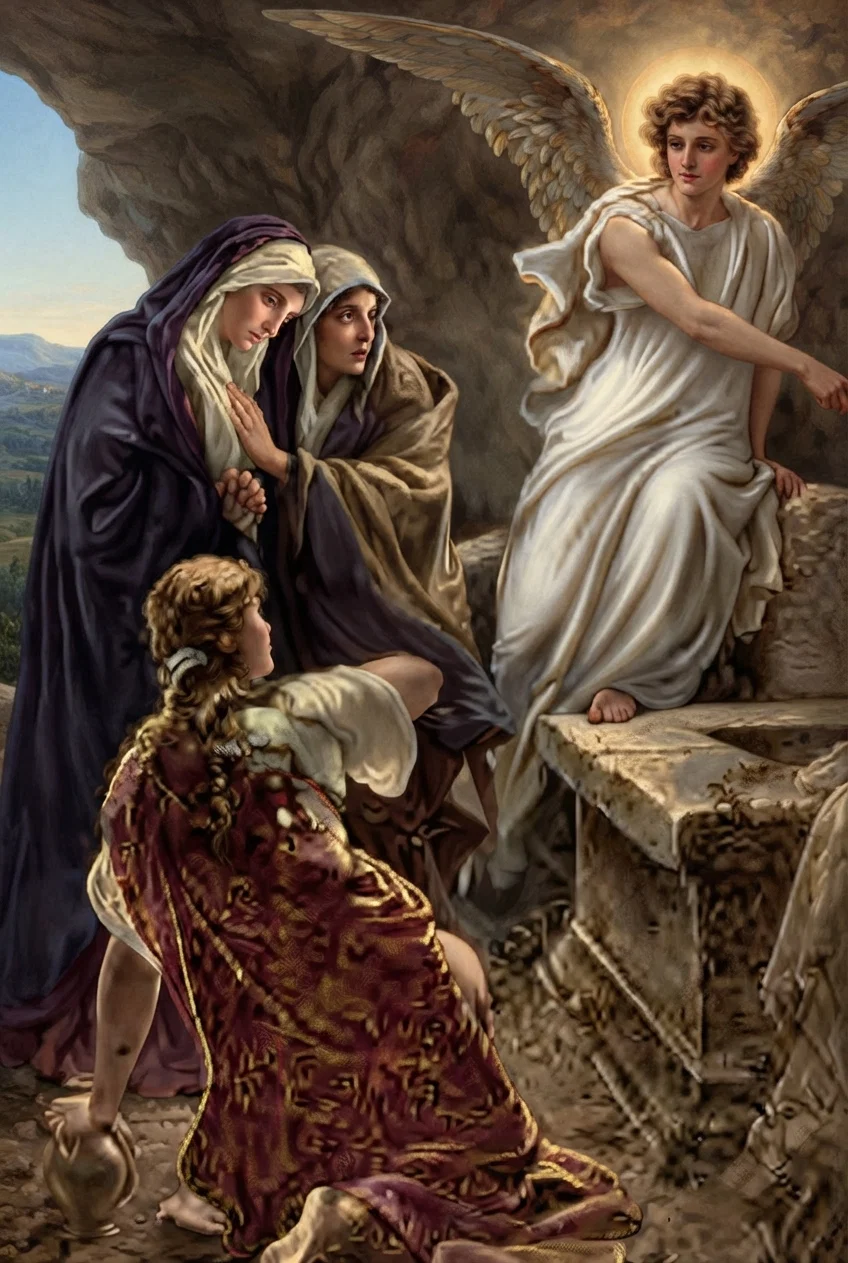
But the resurrection morn saw personified Righteousness arise triumphant from death to a seat on the right hand of God, and He counts her by His side. Eph. 2:6.

The Suffering Church

Satan, defeated by the Head of the Church, seeks to destroy those for whom Christ died. By error of every form, by artful flattery and blandishment, by prosperity, by idolatry which seemed the very messenger and worship of God, has the evil one led astray Ekklesia. The perversions of truth in the first centuries witness to his work.

The Dark Ages

The awful apostasy of apocalyptic Babylon followed. The corrupt powers of earth exalted the usurping harlot who calls herself by the name of God's chosen. Ekklesia, still the forlornly beautiful, marred as that beauty has been by Roman trappings, was driven into the wilderness, because she would not deny the all-sufficiency of her Lord. During the awful centuries of the Dark Ages her children perished in hecatombs of thousands on the smoking altars of apostasy till earth could bear the burden of guilt no longer.

The Reformation

The breath of God brought in the Reformation. Throughout all the Babylon of Rome went the summons of God to His people. He would have healed Babylon, but she would not be healed. But Ekklesia, weeping the loss of children, suffering from fierce persecution, rises in the strength of her Deliverer. The star of hope grows in her heart. The light of faith shines in her tear-dimmed eyes. She will go forward in His name. What mighty victories she wrought in all the world! How shackles were stricken from the slaves of superstition and sin! And her children grew mightily in number, and the world was almost evangelized.
But not wholly from the wilderness of error did the Church Militant come. She paused where the ragged edge of the forest of error verges on the meadow-land of truth. She tarried under the shade of venerable superstitions. She plucked the fruit of hoary sophistries. She carried baleful seeds of error to sow among the plants of God's husbandry. She patronized the philosophers of paganized worldly wisdom, till God's calls were glossed, and perverted, and made of none effect. Proud, popular, rich; flattered, fed, and fostered by princes of Babylon, she stands to-day, till from Babylon's sons and daughters the sons and daughters of Ekklesia are almost indistinguishable.

God's Last Threefold Call

Yet God is calling still. "Babylon is fallen, is fallen; come out of her My people, that ye be not partakers of her sins, and receive not of her plagues."
And the children of God are heeding that call. In all the world it is sounding; from all the world come responses from the faithful sons and daughters of God. They are breaking ties of life-standing, they are bearing reproach, contumely, isolation, persecution, that they may heed God's last threefold Gospel-summons of Revelation 14. They are imperfect, but learning. They are weak, but aregathering strength. They are casting off error and opening hearts to the rays of light from the beaming, glowing Word of God's truth. Their own ranks are thinned at times by trials, by apostasy. Sadness fills her heart as her children leave her, but their places are filled. There are still many Seths to take the places of the Cains.
No longer is Ekklesia following the philosophy of the human, but the Word of the living God. No longer is she seeking in the musty tomes and vaults for the traditions and precepts of men, but in the pathway of her Deliverer she is walking in "the commandments of God, and the faith of Jesus." With God's justification for sin, Christ's self-denial for selfishness, the Spirit's power for service, the Word of God for guide—what more can she ask? The gifts of the Spirit are hers in this last conflict, as she waits for the coming of her Lord. And in her history we are beginning to see fulfilled the reply to the beautiful and suggestive questions of the Song of Songs:
"Who is this that cometh up from the wilderness, Leaning upon her beloved?" This was Ekklesia from the Reformation. "Who is she that looketh forth as the morning, Fair as the moon, Clear as the sun, Terrible as an army with banners?"
And this is God's remnant church, the beautiful Ekklesia in her latest triumph. Persecuted tho she and her children are, all "the nations shall see and be confounded at all their might. . . . They shall be afraid of the Lord our God, and shall fear because of Thee." Micah 7:16-19. The sons of Zion—taught of God, not men—shall have their piety, and power, and knowledge in Him, set against the sons of Grecia (worldly wisdom), and their culture, philosophy, wealth, education, and numbers. And God shall go with the sons of Zion, and make them "as the sword of a mighty man. And Jehovah shall be seen over them; and His arrow shall go forth as the lightning. . . . Jehovah of hosts will defend them. . . . And Jehovah their God shall save them in that day as the flock of His people; for they shall be as the stones of a crown, lifted up as an ensign upon His land. For how great is His goodness, and how great is His beauty? Zech. 9:13-17.
"The resurrection morn saw personified Righteousness arise triumphant."
Then the slavery and bondage of earth will give way to the liberty and freedom of the land of God. The crown of thorns will be removed, and the coronet of triumph and righteousness and life shall crown the Beloved of Christ forever. The persecution, the sickness, the weariness, the death, the wo, the misery, the lamentation and weeping, shall forever depart, and in their place shall be seen and heard in all their effulgent beauty the blessing and life and health of God—"thanksgiving and the voice of melody." Christ has redeemed His own.
The purchase of His blood will go out no more forever. In that triumph-land, the earth made new, shall be "no more curse." Their song henceforth is "Alleluia, the Lord God Omnipotent reigneth." "The King's daughter within the palace [the purified Ekklesia] is all glorious; her clothing is inwrought with gold. She shall be led unto the King in broidered work." And the beautiful robes are the righteousness bestowed by her divine Lord. It is triumph, holy triumph forevermore.
“He suffered, He died, to save those who caused His suffering.”
It costs something, humanly considered, to be the children of Ekklesia Militant here; it will be the loss of everything not to be the children of Ekklesia Triumphant there. But to be in the church triumphant in heaven, we must be in the church militant on earth.

THE SOUL

1. THE word "soul" in the Old Testament is translated from the Hebrew neh-phesh. This word is translated "life" in Gen. 1:20, 30. In both of these texts it is applied to all kinds of living creatures, and in the margin it reads "soul." It is translated "life" and "lives" more than a hundred times.
2. The same word, neh-phesh, is translated "person" in Gen. 14:21, and in twenty-eight other texts, meaning the whole being. It is also rendered "mind" in Gen. 23:8, and in fourteen other texts. It is translated "heart" in Ex. 29:9, and in fourteen other places. It is also translated "body" and "dead body" eleven times, one instance being Num. 6:6. Also, "will," as in Ps. 27:12; "appetite," as in Prov. 23:2; "thing," in Lev. 11:10; and "lust," in Ps. 78:18. In all, this original word for "soul" is translated by forty-seven words, each conveying a different thought.
3. In the New Testament the original word for "soul" is psuche, which is also rendered "life," "mind," and "heart."
4. In no instance in the Bible is the soul spoken of as immortal. All the human souls in the world excepting eight, and nearly all the lower order of souls, were drowned in the Deluge. 1 Peter 3:20. The Israelites slew many souls with the sword. Joshua 10:28-39. Souls go into the grave. Ps. 49:14, 15. "The soul that sinneth, it shall die." Eze. 18:4, 20; also Rev. 16:3. Both soul and body are subject to destruction. Matt. 10:28.
5. The human soul is saved from death only by faith in Jesus Christ (1 Peter 1:9), and he that is the means of converting a sinner "shall save a soul from death." James 5:20.
6. The salvation of a soul is identical with the gaining of eternal life. John 3:16, 36; 17:3; 1 John 5:11, 12.

"LORD'S DAY"

WHAT is the meaning of this term? It is applied by Christians generally to the first day of the week, or Sunday; but have they the right, we mean scriptural right, to do this? What says the Bible? We find the term used but once in the whole Word of God. This is in the following text: "I was in the Spirit on the Lord's day." Rev. 1:10. But the context does not tell us what day this was. Neither does the apostle give us any light in his Gospel narrative, which was written one or two years subsequent to the Revelation, tho he does mention the first day of the week. See John 20:1, 19. No other Bible writer uses the term Lord's day.
In the absence of all Bible evidence, is it not the height of assumption to apply the term to the first day of the week? "But," says one, "has not the Lord one day that He calls His?" We reply, Certainly; Ex. 20:10 states, "The seventh day is the Sabbath of the Lord thy God;" Isa. 58:13 calls the Sabbath, or seventh day of the week, His (or God's) "holy day;" our Saviour says, "The Son of Man is Lord also of the Sabbath." Mark 2:28. Now, candidly, dear reader, are we not forced to the conclusion that the seventh-day Sabbath is at once both "the Sabbath of the Lord thy God," and "the Lord's day?"
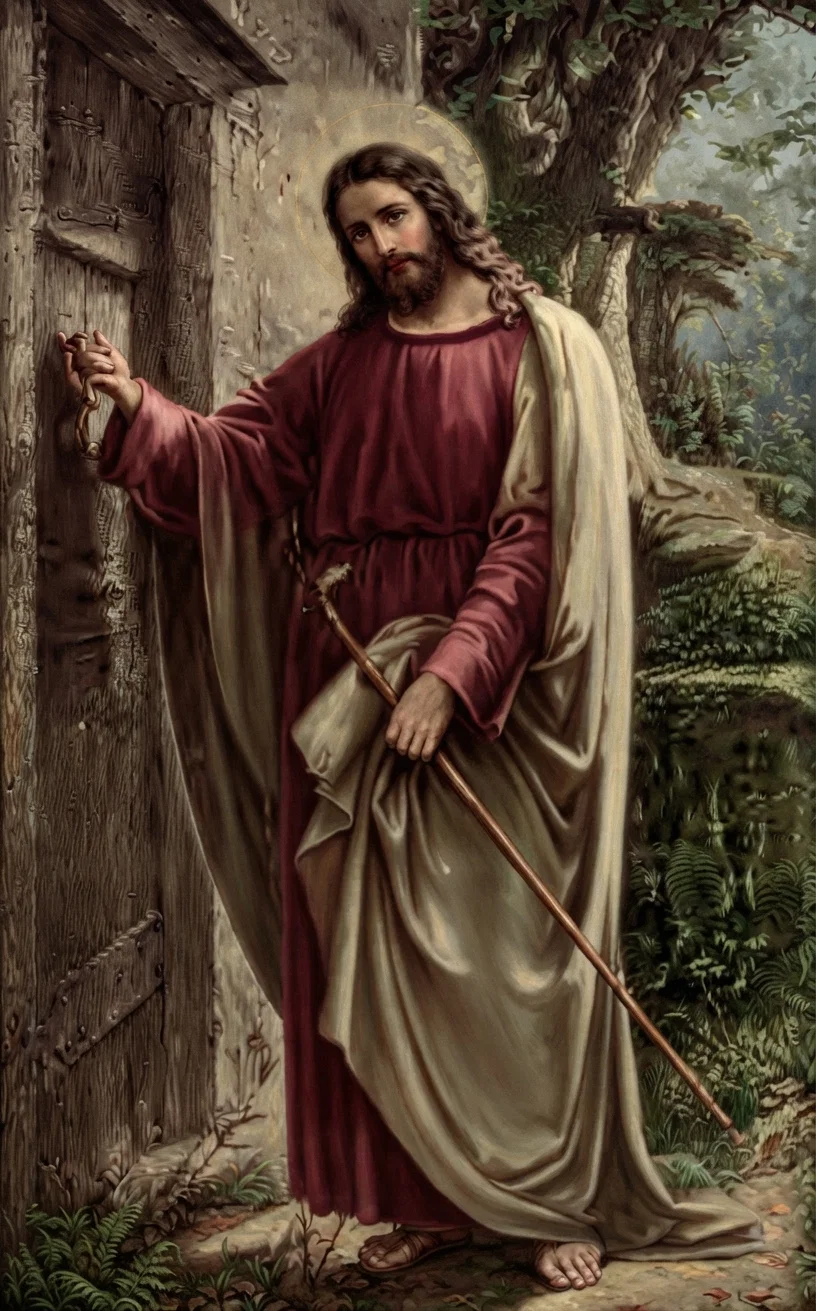
"Behold, I stand at the door, and knock."

THOMAS J. BARNARDO

(From Our London Correspondent)
THE death, September 13th, of Dr. Thomas J. Barnardo brought to its close a life of high Christian endeavor and singular fruitfulness.
On a certain evening about forty years ago there entered one of London's ragged schools a bare-headed, shoeless, shivering lad who begged the privilege of spending the night before the fireplace. "O, no! run away home," replied the teacher, a young medical student. "Got no home," retorted the lad. Further questioning revealed that he was one of a number of friendless waifs who "lived nowhere."
The young teacher was still somewhat skeptical. Would the lad show him his comrades?—Certainly. So, fortified with a warm supper, Jim led the way to where eleven boys lay in the gutters of an iron roof, exposed to the cold winter wind. He offered to show more "lays" but the teacher, who was none other than Barnardo, had seen enough. He had found his life-work. Some months later he was called upon unexpectedly to speak at a missionary gathering, and told the story of "Jim."
The press took it up. Lord Shaftesbury learned of it, and asked Barnardo to dine with him. Naturally the conversation turned on "Jim." The guests were skeptical, and the host suggested that an investigation be undertaken. Cabs were accordingly ordered, and a large party set forth, guided by Barnardo, to a place near Billingsgate market. After a few minutes fruitless search, advised by a policeman, they offered a half-penny (one cent) each to as many boys as would show themselves, when forth from a pile of boxes, barrels, and crates crawled seventy-three homeless boys!

Homes for the Children

All great institutions begin small, and the Barnardo Homes for waifs were no exception. But the founder was an earnest, praying Christian, full of hope and energy, and, tho confronted with almost superhuman difficulties, his strong heart never wavered, while under his fostering care the work grew and prospered, till it assumed truly mammoth proportions. For something like a generation now Dr. Barnardo's name has been a household word in Great Britain, while the destitute children he has snatched from the slums and given a Christian home and a fair start in life number no less than 60,000.
Unique in extent (nothing on a similar scale has been attempted to the writer's knowledge), the homes are remarkable in other respects. They refuse no one—in general the more hopeless the condition of the child, the more heartily he is welcomed. But they do more than accept needy children—they hunt for them. Through some forty branch agencies search is continually made throughout the kingdom for homeless and neglected children. The sickly and deformed, even those with incurable diseases, are all sought after and placed under ideal conditions, either in the beautiful children's hospital connected with the institution, or in one of the numerous family groups. Then, again, the individual peculiarities of each child are studied, and the best opportunity afforded for his all-round development. Uniforms are eschewed, each child being tastefully dressed, and in general institutional methods are discarded, the children being surrounded, as far as possible, with the influences of a Christian home. Great care is also taken in getting situations for them, and an excellent system of supervision is maintained.

Fell in the Harness

Dr. Barnardo had been struggling for years with serious heart difficulty; but, tho urged by his friends to take a much-needed rest, he could not leave the work so dear to him. He died literally in harness, carrying to the very last a tremendous load of responsibility, but ever maintaining through it all the sweetness and beauty of a whole-hearted Christian life. He will be mourned by thousands of his boys and girls scattered all over the world, and by every lover of humanity; for he was indeed "The Father of Nobody's Children."
THE HOME
THE HOME

EDUCATION IN THE HOME. NO. 25

(Continued from "Signs" of November 8.)
WELL, Beth, little girl, we will begin the evening's study with your Bible story. Can you tell us about some one who has had that most wonderful experience—a resurrection from the dead?"
"Yes, papa; I have chosen the story of the little girl whose father was a rich Jewish ruler. Grandma said it would be nice for me to tell that story, because this was the only little girl who ever died and was raised to life again, that the Bible tells us about."
"That is true, my child; and now we shall watch you very closely as you proceed with the story, so that we may notice any reference made to the conscious condition of the little maiden while in the embrace of death."
"The story is found in all of the first three books of the New Testament," began Beth. "I wish I knew the little girl's name, but I have to be contented with knowing that her father was called Jairus, and that the girl was twelve years old. One day she was taken sick. Her father loved his little child very much, and I presume he got a great many doctors to see if they could not cure her; but they could not. At last, when she was dying, he hurried to Jesus, and asked Him to come quickly to see his poor child. I always wondered why he didn't go sooner. But the Saviour went right along with him, and did not even ask him why he had put off his visit until his child was dying. When they came to the house, she was dead, and every one was crying. Then the Saviour took Peter and James and John and the parents of the child, and went into the room where she was lying dead, and took her by the hand and said, in the musical tongue He spoke, 'Tabitha Cumi' (Maiden, arise)! Then she arose and walked, and the people were astonished, and the father and mother were glad."
"Do you suppose she told them what she was thinking about?" queried grandma, "and what she had been doing, while dead?"
"I don't much believe she had anything to tell; and maybe they knew better than to ask her," ventured Billy Black.
"It does seem a bit strange, now that I think of it," mused Mr. Gray, "that nothing is said about the child's condition in death."
"It plainly states that she was asleep," declared Elsie. "Of course, when people are sound asleep they are unconscious."

Story of Lazarus

"There are not very many instances of this kind recorded in the Bible," continued Brother Hartman. "But we will hear from Walter, next. Possibly he has something which will throw light on the condition of man in death."
"I have simply to tell of the death and resurrection of a young man named Lazarus," began Walter. "This man lived in Bethany, with his sisters. They were close friends of Jesus. Finally, while Jesus was away from Bethany, Lazarus was taken very sick. His sisters sent to the Master with the sad news of the sickness of their beloved brother, but He did not come until Lazarus had been dead four days. Martha went to meet her Lord, almost reproaching Him because He had not come at once. But Christ assured her that her brother should rise again."
"See here, Walter," interrupted John, "did Christ not declare that Lazarus had risen already, and was then in heaven, happy and glorified?"
"O, no," smiled Walter, "indeed, Martha seemed to be looking forward to the resurrection at the last day. Finally, Jesus went to the sepulcher and all the people followed Him. Then, when He had prayed, He cried aloud, 'Lazarus, come forth!' and the dead man came out of the tomb, wrapped in his grave clothes."
"Do you not think it would have been more in conformity with the general belief nowadays, to have said, Lazarus, come down?" asked grandma.
"Well, I must confess," declared Mr. Gray, "I did think there was something in the Bible to favor the idea that the spirit of man was conscious after death, but I begin to believe that we are entirely dependent upon the resurrection for a life beyond the grave."
"It surely does seem strange," said Mrs. Wilber, "that nothing is said about the thoughts or experiences of Lazarus during those four days. It is the very first thing I should have asked him."
"Evidently there was nothing to record, or surely this most interesting subject would have been touched by some one of the sacred writers. But it is all plain when we believe God's Word, that 'the dead know not anything.' Josie, have you some little story to relate?"
"I only learned that in the days of Elisha, there was a woman whose little son was out in the field with the reapers. The day was very hot, and when the child complained of his head, they carried him to his mother. Finally he died; and the mother felt so badly that she rode a long distance to find the prophet Elisha; but at last she found him, and he, by praying very earnestly to God, raised the boy once more to life and health."
"Did you find that the mother asked her child anything about his condition or thoughts while dead?" asked Elsie.
"Not a single word—strange, isn't it?" said Josie, glancing archly at her mother.
"Maybe the mother had been too well taught by the prophet while he lived in her house, to need to ask any question of this kind," replied Mattie.
"Well, Billy, my lad, what Bible story have you learned on this important subject?" asked grandma.
"I'm not used to telling stories in a company like this, but I'll try to tell the one I read in Luke, seventh chapter. The name of the city where these things happened was Nain. There was a widow who lived there, and she had one son—that was all—and he died. Of course, she felt pretty bad. I presume my grandmother would feel bad if I should die," said Billy, while his cheeks flushed. "But just as the people went through the city gates, they met Jesus and His disciples. Christ then commanded the men who carried the dead man, to stand still. I presume they must have been surprised. Then the Lord said, 'Young man, arise!' and he sat up and began to talk. That's all the story, I believe."
"You have done first rate, my boy," said Sister Hartman. "Yes, the narrative says that the young man began to talk at once. But if he dropped a single word concerning his thoughts while dead, it is unrecorded; all of which goes to show very conclusively, I think, that these people who were raised to life did not sense anything at all while dead."
"Now," continued Brother Hartman, "there are but two more instances of the resurrection of dead men given in the Bible, and in neither of these is there so much as a hint given that they were conscious after death. Now, perhaps it would be well to see what the Word of God has to say about Spiritualism."
(To be continued.)

Interest in Individuals and Christ

If we have no interest in individuals, says an exchange, we have no interest in Christ, and he who waits till he can save many souls, will never save one soul.—Ram's Horn.

Leisure and Unhappiness

It takes leisure to be unhappy. In every divorce there is at least one idle man or woman.—Lorimer.

THE LAW OF GOD

By R. A. Underwood.
THE Primary Law of God, as a whole, may be divided into three grand divisions. First in order is Physical Law. The Lord has a plan for the material universe; hence the laws of physics, chemistry, astronomy, and meteorology.
Secondly: Organic Law. The Almighty created matter upon a plan, hence the laws of physiology, botany, etc. From decaying, offensive soil, with the presence of moisture, heat, and sunlight, God forms the clearest fiber, the most beautiful flowers, and the luscious fruits, pleasing to the eye, fragrant to the smell, delicious to the taste, and wholesome to man. This same plant and fruit, by as wonderful law, is transformed into the being of man and animal life. Ps. 139: 13-16.
Man did not enact these laws. He can not fathom their mysteries; he can not abrogate them; they are higher than man.
Thirdly: God has a plan for the soul of amenable created intelligences; hence the Moral Law.
The Bible reveals the moral law; it does not create it. The moral law existed prior to the creation of man. By it must all created intelligences be judged. James 2:12; Eccl. 12:13, 14. It is higher in order than either the physical or organic law.
The moral law is the Constitution of the government of the Almighty. It embraces all fundamental rules that lie at the foundation of God's moral government, and enters into the solution of all moral questions. This law is spiritual. Rom. 7:14. It is perfect. Ps. 19:7. It was spoken and written by God Himself. Deut. 5:22-24; Ex. 24:12. This law is unalterable, and will stand forever. Ps. 89: 34; 111:7, 8. This law was designed to secure happiness to man and all amenable creatures, so long as it was strictly obeyed. Of this law Blackstone says: "The moral law is summarily contained in the Decalogue, written by the finger of God on two tables of stone, and delivered to Moses on Mount Sinai." Exodus 20. "Chambers' Encyclopedia" says: "The moral law is that perceptive revelation of the divine will, which is of perpetual and universal obligation. It is summed up in the Ten Commandments."
John Wesley, in volume 1, pages 221, 222 of his "Sermons," says: "The moral law contained in the Ten Commandments, and enforced by the prophets, He [Christ] did not take away. This is a law which stands fast as the faithful witness in heaven."
The Scriptures sum up the moral law in two great principles, namely, love to God, and love to man.
The remnant church on earth will keep this law of love. Rev. 12:17. Happy and blessed eternally are they who are found in harmony with its divine principles. Rev. 22:14.

CONSECRATION

BY L. D. SANTEE
Life I will give to the sweet call of duty, Hoping in heaven the conqueror's crown, Jesus, one glimpse of Thy cross and Thy beauty, Tears from love's altar all other gods down.
Not mine the race for the gold-bearing mountains, The marts where the demons of avarice feed, The head's cruel schemes, and the heart's dried-up fountains, Crushing the poor to the earth in their need.
Mine be the peace that abides as a river, Floating along on love's beautiful stream, Worshiping Him who of life is the Giver Till in the sunset the "jasper walls" gleam.
Kneeling alone in a loving devotion, Bowing before Him who ruleth on high, Tender my heart with a holy emotion, While the crimson and gold die out of the sky.
All the great world with its wonderful splendor With my sweet hopes it is nought to compare, Nothing to give like the ecstasy tender, Born in the soul by the spirit of prayer.
On the rapt soul are no traces of sorrow, Glory is guilding the isles of the blest, No gloomy fears of disaster to-morrow, Safe, and at home, we can evermore rest.
Feet that are way-worn will soon rest in glory, Long they have journeyed in time's weary way. Soon in life's meadows we'll tell the glad story, Jesus has died, and redeemed us for aye.
Chicago, Ill.

BECOMING LIKE CHRIST

A BEAUTIFUL statue stands in the market-place. It is that of a Greek slave-girl, but she is well-dressed, tidy, and handsome. A dirty, forlorn, ragged slave-girl passes by. She sees the statue, stops and gazes at it in rapt admiration. She goes home, washes her face, and combs her hair. Another day she stops in passing, to look at the statue. Next day her tattered clothes are washed and mended. Each day she stops to look at the statue, and each next day she has imitated some of its beauties, until the dirty, ragged slave becomes completely transformed; she becomes another girl. This is the way Christ teaches. He does not hurl His own individuality upon others; He simply lives and works and loves before men, not to be seen of them, but to inspire to a holy emulation.—Selected.

SUNSET MAGAZINE

DESCRIBES

California

Not only California, but all the great West, is truthfully described in the beautifully illustrated pages of this virile Western monthly. Its fine half-tones make you SEE the country, while its descriptive and industrial articles TELL YOU EXACTLY what is to be found there. It is

"Opportunity"

in visible form, for it shows the wonderful chances for success now open in the new West for wide-awake people.
If your news dealer doesn't carry SUNSET, send us his name and address and write for sample copy.
HOME OFFICE: 431 California St. San Francisco, California.

Northfield Hymnal

See IT It's WORTH Seeing Use Using # Northfield Hymnal BY GEO. C. STEBBINS
ITS SALE DOES GOOD USE DOES
5 Cents ROYALTY Paid "The Northfield School" on every copy sold
Cloth Bound, $25 per 100; 80c. post-paid Returnable Samples mailed to "Earnest Inquirers"
Published by the publishers of the famous "Gospel Hymns," THE BIGLOW & MAIN CO., New York or Chicago.

TEN DOLLARS A WEEK.

SOME agents are making as high as $10 a week selling E-Z Washing Tablets. Why not you? Sample bar sufficient for a month's washing for 10 cents post-paid. TERMS FREE.
Address, Alfred Mallett, Elkridge Sta., Baltimore, Md.
MILLENNIAL TEXT-BOOK.—Every known reference, over 500 arranged according to events, adapted for instant reference or profound Bible study; result of 12 years search. Mailed for 10 one-cent stamps or a dime. Eugene A. Brown, Phoenix, Ariz.
Continue reading: A Foreword for 1906