Pacific Press Publishing Company · Oakland, California · Apr 7, 1898
‘LOVE DIVINE, ALL LOVE EXCELLING.’
Love! What is love? What is its nature? What is its source? How is it manifested? How is it sustained? These and many other questions press upon the thoughtful student of life's purposes and problems.
“For God so loved the world, that He gave His only-begotten Son, that whosoever believeth in Him should not perish, but have everlasting life.” John 3:16.
Love.—This little word of four letters is the largest word in the language; its capacity is unmeasurable. Its nature is boundless and eternally expansive. It is the only word which can express God's character, and that expression is the greatest thing which can be said of Him—God is love.”
What Love Is Not.—It is not a sickly, sentimental emotionalism, selfishly desirous of obtaining and enjoying some coveted blessing. It is not such a love as we often see between a man or woman, which is satisfied only when in such other's presence, when separation would doubtless be better for one or both. It is not such affection as is often manifest by parents and others toward children, reaching its highest enjoyment in fondling, caressing, and kissing the children, when such a course may be bad for the children in various ways. Selfishness is a large ingredient of such love. Love—divine love—is not mere sentiment, nor transient emotion, nor bursts of passion, nor flights of feeling.
What Love Is.—Love is a divine principle which embraces all good things. Its chief delight is in doing good, not to self, but to others. Divine love always seeks the good of the one loved. It is satisfied when the object of its love is satisfied. It is ever diffusive and expansive ; ever giving of its life that others may live and love, seeking recognition and emolument only as they serve the purpose of the greatest good to the greatest number. Love is more than charity, more than kindness, more than benevolence. It includes all these and more. “Love suffereth long, and is kind; love envieth not; love vaunteth not itself, is not puffed up, doth not behave itself unseemly, seeketh not its own, is not provoked, taketh not account of evil; rejoiceth not in unrighteousness, but rejoiceth with the truth; beareth all things, believeth all things, hopeth all things, endureth all things. Love never faileth” (1 Cor. 13 : 4-8, R. V.); for
“God Is Love.”—That is His character. All that He thinks or does is molded by perfect love. And love in God is manifest in doing. In love He created man, and gave him a sinless world for a home. In love He made man an intelligent, worshiping being, to bind him to Himself. In love He made death the end of sin, that misery might not mar the universe forever. In love, when man had sinned, God gave His only-begotten Son,—gave Himself in that Son,—that He might buy back from sin and destruction a race of rebels, and win them by His unfathomable love.
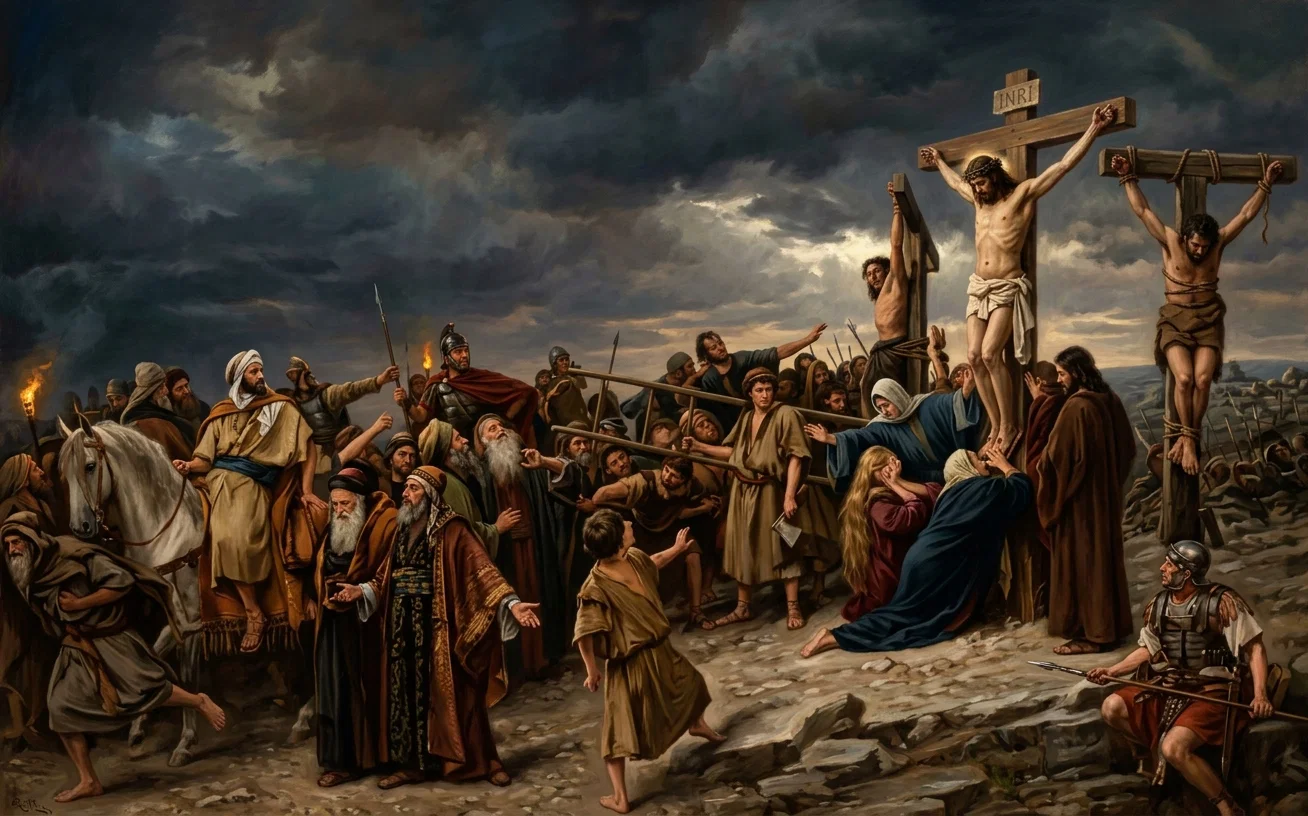
“God Is Love.” He has told us that wonderful truth over and over again in His Word. “Yea, I have loved thee with an everlasting love; therefore with loving-kindness have I drawn thee.” Jer. 31 : 3. His love exceeds that of the mother for the babe upon her breast. Isa. 49 : 14–16. But God's love is manifest not alone in words, but in deeds and in truth. All the good which ever came to the children of2men, all the blessings we have seen, unrealized though they are, are from the great Fount of all blessing and goodness. When the Son of God came to earth, it was but an evidence of what God gave in the beginning. He was “the Lamb slain from the foundation of the world.” Rev. 13 : 8. He gave Himself then. Then—in the beginning—“God so loved the world, that He gave His only-begotten Son, that whosoever believeth in Him should not perish, but have everlasting life.” John 3 : 16. The events in the ministry of the Son of God during the whole of earth's travail are but steps in the carrying out of the great original Gift. He was giving Himself when He became Jehovah's Angel to the church of the living God previous to the first advent. He was giving Himself when He became the Babe of Bethlehem, when He met the temptations in the wilderness, when He gave His life to ministry amid weariness and painfulness, in healing the sick, comforting the mourner, instructing the single-hearted, pleading upon the mountain all night for a fallen world, in yielding to the powers of earth for sacrifice, in dying on Calvary.
Love Manifest
Love Manifest.—Our love will be manifest in doing. “Let us not love in word, neither with the tongue; but in deed and truth.” 1 John 3:18, R.V. Doing is the proof of faith and the proof of love. “Love is the fulfilling of the law;” “for this is the love of God, that we keep His commandments; and His commandments are not grievous.” 1 John 5:3. There will be no quibbling, no questioning, no substituting of expediency for duty, of policy for principle, of our own way for God’s way. One sight of the Sufferer on the Cross of Calvary will make us see how the hardest task for Him is a gladsome duty, and that a love that quibbles and questions over one commandment of God is unworthy the sacred name. Says Jesus, God’s Representative, “If ye love Me, keep My commandments.” John 14:15. “Ye are My friends, if ye do whatsoever I command you.” John 15:14. If we recognize God’s love, we will do His will, we will love those for whom Christ died. If we have this world’s goods, we will not shut our compassion against a brother in need. Love, divine love, will mold the whole life.
THE SABBATH OF THE LORD. No. 2.
By Ellen G. White
“And these words which I command thee this day, shall be in thine heart; and thou shalt teach them diligently unto thy children, and shalt talk of them when thou sittest in thine house, and when thou walkest by the way, and when thou liest down, and when thou risest up. And thou shalt bind them for a sign upon thine hand, and they shall be as frontlets between thine eyes. And thou shalt write them upon the posts of thine house, and on thy gates. . . . Ye shall diligently keep the commandments of the Lord your God, and His testimonies, and His statutes, which He hath commanded thee. And thou shalt do all these statutes, to fear the Lord our God, for our good always, that He might preserve us alive, as it is at this day. And it shall be our righteousness, if we observe to do all these commandments before the Lord our God, as He hath commanded us.”
How positive are these words! How full of assurance! Here it is plainly stated that obedience to the Lord’s specified statutes will bring the richest blessings.
“Thou art an holy people unto the Lord thy God; the Lord thy God hath chosen thee to be a special people unto Himself, above all people that are upon the face of the earth. . . . Thou shalt therefore keep the commandments, and the statutes, and the judgments, which I command thee this day, to do them.”
“Beware that thou forget not the Lord thy God, in not keeping His commandments, and His judgments, and His statutes, which I command thee this day; lest when thou hast eaten and art full, and hast built goodly houses, and dwelt therein; and when thy herds and thy flocks multiply, and thy silver and thy gold is multiplied, and all that thou hast is multiplied; then thine heart be lifted up, and thou forget the Lord thy God. . . . And it shall be, if thou do at all forget the Lord thy God, and walk after other gods, and serve them, and worship them, I testify against you this day that ye shall surely perish. As the nations which the Lord destroyeth before your face, so shall ye perish; because ye would not be obedient unto the voice of the Lord your God.”
The Lord often tested His people, to see if they would have faith in Him. He allowed the supply of water to fail, that they might be reminded of their past deliverance, and be led to put their trust in God. But their continual blessings, for which they should ever have been grateful, led them to forget their dependence. No sooner did their supply of water fail, than they lost sight of God, and blamed Moses as the cause of their calamity. In the place of trusting God, who had so long and so liberally supplied their wants, they gathered themselves together against Moses and Aaron, and bitterly reviled them for bringing them out of Egypt. O, how easily this unbelief springs into life! This is the danger to-day. The people of God must keep a constant watch over their hearts, lest they allow Satan to interpose between them and God.
God has a controversy with the inhabitants of this world. Satan has come to them disguised as an angel of light, and under his direction the majority of Christians bow at idolatrous shrines, and worship an unknown god. If man had always obeyed the fourth commandment, there would not now be an infidel or an atheist in our world. All would recognize and honor the power of the Creator. How vain will be the resistance of humanity against God! By His infinite power He called the earth into existence. With a word He could depopulate it, and return it to its original state, and with a word raise up a new race of beings.
Man broke the law of God, and defied His will. This law reveals to the world the attributes of God’s character, and not a jot or tittle of it could be changed to meet man in his fallen condition. God could not abolish His law to save men; for this would have immortalized transgression. But He gave men unmistakable evidence that He loved them, and that justice is the foundation of His throne and the evidence of His love. He carried out the penalty of transgression, but He allowed it to fall upon a substitute, even His only-begotten Son. “God so loved the world, that He gave His only-begotten Son, that whosoever believeth in Him should not perish, but have everlasting life.” In this wonderful gift is shown3the depth of God’s goodness. He so loved men that, in order to save them, He gave His Son to the world, and in that gift He gave all heaven. He gave Himself in His Son, that sinners might have another trial, another opportunity to show their obedience. This was the only provision God could make. Thus a way was provided whereby sinners might return to their loyalty.
God is calling upon all to behold the Lamb of God, which takes away the sin of the world. Christ lifts the guilt of sin from the sinner, standing Himself under the condemnation of the Lawgiver. He came to this world to live the law in humanity, that Satan’s charge that man can not keep the law might be demonstrated as false. He kept the law in humanity, and when He was accused falsely by the Pharisees, He turned to them, asking with a voice of authority and power, “Which of you convinceth Me of sin?” He came to reveal to the heavenly universe, to the worlds unfallen, and to sinful men, that every provision has been made by God in behalf of humanity, and that through the imputed righteousness of Christ, all who receive Him by faith can show their loyalty by keeping the law. As the repenting sinner lays hold of Christ as His personal Saviour, he is made a partaker of the divine nature.
We may all rest in the assurance that whatever the love of God has devised in man’s behalf will be executed. Justice and judgment are the habitation of His throne; mercy and truth go before His face. In the cross of Christ mercy and truth met together; righteousness and peace kissed each other.
But it is not by abolishing one jot or tittle of the law of God that salvation is brought to the fallen race. If God were a changeable being, no confidence could be placed in His government. If He retracted what He said, we could not then take His Word as the foundation of our faith. Had He changed His law to meet fallen men, Satan’s claim that man could not keep the law would have been proved true. But God did not alter His law. The death of Christ testifies to the heavenly universe, to the worlds unfallen, and to all the sons and daughters of Adam, that the law of God is immutable, and that in the judgment it will condemn every one who has persisted in transgression. The God who rules the world in love and wisdom testifies in the death of His Son to His changeless character. He could not change His character as expressed in His law, but He could give His Son, one with Himself, possessing His attributes, to a fallen world. By so doing, He magnified His name and glory as a God above all gods.
Christ has declared, “Till heaven and earth pass, one jot or one tittle shall in nowise pass from the law, till all be fulfilled.” The truth of God’s Word alone is permanent and abiding. The loyal subjects of God’s kingdom will not be found trampling upon His law, pronounced by Inspiration to be “holy, and just, and good.” Every false religion is of Satan’s originating, and the warning must be given to the world. Why do men continue so blindly in unbelief when the Word of God is so plain and unmistakable? When the judgment shall sit, and the books are opened, what excuse will they give for taking sides with the first great rebel, thus making the Word of God of none effect in their lives? God’s wisdom and truthfulness are changeless, and in that great day when sentence is executed against the despisers of His law, the cross of Christ will show that He is a God of love in thus executing judgment. Those who refuse to obey His law during probationary time could not with safety be received into His kingdom; for they would labor as earnestly and zealously against the law of His government as did the first apostate. There would be a second rebellion in heaven.
God is true. He reigns, and will reign, notwithstanding that the church and the world have entered into a confederacy to abolish His law. Age after age Satan has been blinding men by his wiles. He has co-operated with human agencies in an effort to make falsehood truth. He has worked with intensity to defy the God of heaven by making His law of none effect. But he has not done this; for in the ark of God in heaven are the tables of stone upon which are written the precepts that are the foundation of His government. And the Sabbath, which God declares to be the sign of the loyalty of His people, is placed in the bosom of the Decalogue. Its sanctity reaches into eternity; for God declares that from one new moon to another, and from one Sabbath to another, His subjects shall come up to worship before Him in the earth made new.
MRS. E. G. WHITE.
The Cross of Calvary.
—The last step was the climax. The love was there before. Every word and act of Jesus’ life had said, “God loves you,” but when He died upon the cross, that said, “See how much God loves you.” The King of Glory becomes nothing, that men may become members of the family of God. “Behold what manner of love the Father hath bestowed upon us, that we should be called children of God.” 1 John 3:1, R.V. “Herein is love, not that we loved God, but that He loved us, and sent His Son to be the propitiation for our sins.” 1 John 4:10, R.V. “God commendeth His own love toward us, in that, while we were yet sinners, Christ died for us.” Rom. 5:8, R.V.
“We Love, because He First Loved Us.”—
Love can come to us only as we yield all to God, and receive His Spirit, by which “the love of God is shed abroad in our hearts.” Rom. 5:5. Our love must come from Him; for “God is love; and he that abideth in love abideth in God, and God abideth in him.” 1 John 4:16, R.V. And God dwells in us by Jesus Christ, and Jesus Christ dwells in our hearts by His Spirit through faith in His Word. Eph. 3:17; Gal. 3:14.
How Is Love Maintained?
By X
—Love grows as muscles do,—by feeding and exercise. The true diet of the Christian is not the morning paper, nor the latest novel, but the Word of God. That Word is Spirit and Life; and life is love, and love is life. Food and exercise keep doing for Christ, for the purchase of Christ’s blood. Keep Him in view. He is the Living Sacrifice, as much to-day as when He hung on Calvary. Be thou a living sacrifice. Let His death be your death to the world. Let His life of loving sacrifice flow into your life. So shall you know that God is love, that God loves you, and that you love God and all for whom Christ died; and there is no torment in love. Is the love of God strange to you?—O, then look upon Calvary! That reveals how much God loves you. X.
GOD’S PLOW OF SORROW.
By Robert Clarkson Tongue
God’s plow of sorrow! Sterile is
The field that is not turned thereby;
And but a scanty harvest his
Whom the great Plowman passeth by.
God’s plow of sorrow! All in vain
His richest seed bestrews the sod;
And spent for naught the sun and rain
On glebes that are not plowed of God.
He ploweth well, He ploweth deep,
And where He ploweth angels reap.
God’s plow of sorrow! Gentle child,
I do not ask that He may spare
Thy tender soul, tho undefiled,
Nor turn it with His iron share.
Be thine His after-rain of love;
And where His heavy plow hath passed,
May mellow furrows bear above
A holier harvest at the last!
He ploweth well, He ploweth deep,
And where He ploweth angels reap.
—Robert Clarkson Tongue, in Independent.
THE KINGDOM OF GOD AND “CHRISTIAN CITIZENSHIP.”
By W. N. G.
“Christian citizenship” is becoming the watchword of Christian effort all over the land. The logic of events is impelling thoughtful minds in this direction. The Christian mind especially seems to be ripe for conviction.
So says the Christian Statesman, a paper devoted to the illogical work of religious reform by means of political methods. The chief object of this so-called “national reform” is “the enthroning of Christ over our nation.” The Statesman, and the “reform” of which it is the organ, maintain that “the fundamental cause of our national troubles is the persistent refusal of the nation to acknowledge Jesus Christ as its Lord and King.” But, unless He has changed His mind since His former residence on the earth, there is but one way to accomplish the aim of the “reformers,” and that is to “take Him by force, to make Him a king.” John 6:15.
The Lord never does anything by halves or by piecemeal. He already “ruleth in the kingdom of men, and giveth it to whomsoever He will” (Dan. 4:17, 25, 32), not only in the United States, but in all the world. And when He is ready to set up His glorious kingdom in the earth, He will do so, regardless of man’s political acknowledgment or political rejection. But when He does do so, there will be an end of the United States, and every other political government on the earth. When the world’s future history was shown to Nebuchadnezzar in the vision of a great metallic image, there also appeared a stone, cut out without hands, that smote the image on its feet—the very end of earthly history—and the whole structure was “broken to pieces together, and became like the chaff of the summer threshing-floors; and the wind carried them away, that no place was found for them; and the stone that smote the image became a great mountain, and filled the whole earth.” Dan. 2:34, 35. In the interpretation, this stone represents the kingdom of God; so that when He sets up His kingdom in the earth, there will be no place for the United States Government, and the work of the National Reformers, like all other political accomplishments, will come to naught.
The Lord has a kingdom among men, and a throne in the hearts of His true subjects, where, under the new covenant, His law is written. The work of advancing the interests of this kingdom is a spiritual, not a political, work. It is done by the Lord’s people, whose “citizenship is in heaven,” under the leadership of the Holy Spirit. Christ did not die for the redemption or the upbuilding of governments; there is but one enduring government, and that one never was lost—it is an everlasting kingdom. Christ gave His life for the salvation of human individuals, “whosoever believeth on Him.” The work that He left to His people is the same work in which He himself engaged while on earth. For the purposes of that work He established the church, and told His disciples to “preach the Gospel to every creature.” Christians are to “be subject unto the higher powers,” and not to control them.
For the work of the church He did not ordain legislators, or judges, or soldiers, or policemen; but “He gave some, apostles; and some, prophets; and some, evangelists; and some, pastors and teachers.” Eph. 4:11. And for what were these especially given? for the perfecting of human governments? for the conducting of political campaigns? for the enforcement of human law? or concocting political schemes?—Not at all; it was “for the perfecting of the saints, for the work of the ministry [preaching the Gospel to every creature], for the edifying of the body of Christ.” Verse 12. And through what means are the saints to be perfected? through the civil law?—No, through the Word of God. “Sanctify them through Thy truth; Thy Word is truth.” John 17:17.
Inasmuch as the civil government is for the protection of the rights of all classes, all being equal before the law, whether Christian or infidel; and inasmuch as Christianity is an individual matter and not a national concern, it is quite clear that this so-called Christian citizenship movement has no legitimate place either in the Church or in the State. It is an intruder in either place, a delusion and a snare. The State is a temporary arrangement for preserving order in the world, among people who will not heed the law of God (1 Tim. 1:9); it will therefore come to an end when the kingdom of God is set up and fills the whole earth. But the true church is made up of people who “are not of the world.” John 17:16. The true church and the State have nothing in common; the church can not unite with the State without committing fornication. In doing so she becomes a “harlot,” and the State is made “drunk” by her influence, thereby becoming liable to enact all manner of unreasonable and even tyrannical measures. To such a goal the “Christian citizenship” effort must inevitably carry the State. Christians especially should take warning from the past history of church interference in the affairs of the State, and also from the prophetic Word, which points to the future repetition of that history in all parts of the world. W. N. G.
SINNER, TURN.
By Clara E. Richeson
Sinner, turn those anxious eyes
From the pathway strewn with thorn.
Let them rest upon the skies,
Where in splendor breaks the morn.
Lift them high the earth above,
Sick with madness and with strife.
Dwell upon the wondrous love
Of the glorious Prince of life.
So the tear-wet orbs behold,
Through the mist-like veil of time,
Gleams of heaven’s shining gold;
And the vision grand, sublime,
Shall dispel the aching pain
From the wildly-throbbing heart;
And the wound shall heal again,
And the haunting doubt depart.
“God so loved the world, that He gave His only-begotten Son, that whosoever believeth in Him should not perish, but have everlasting life.” Jesus, who knew no sin, “gave Himself for us,” who are all sin (Titus 2:14), and in buying us, He bought our sins. Now He wants us to bring to Him our sins, which He has bought, and in exchange get His righteousness. What a blessed exchange! and when are we to make it?—Now.
“While Jesus whispers to you,
Come, sinner, come!”
“before the decree bring forth,” for “the end is near and hasteth greatly.” Who, then, can neglect so great salvation?
Yet there are people who never expect to meet Christ. They not only do not want to meet Him, but they think they do not have to meet Him. But what a sad mistake this is! For all must, of necessity, come in contact with the “Rock of Ages.” For “whosoever shall fall upon that stone shall be broken; but on whomsoever it shall fall, it will grind him to powder.” Luke 20:18. And, again, “some men’s sins are opened beforehand, going before to judgment; and some men they follow after.” 1 Tim. 5:24.
O, how much better it will be for each of us to fall upon that stone now, be broken of our human, sinful nature, forsake sin for righteousness, deny ourselves, and be partakers of the divine nature, rather than to shun that Rock now, and finally, at the “great judgment-seat,” meet Him for the first time and be ground to dust, from whence we were taken. ’Tis better to meet that Rock as a “Saviour” and “Prince of Peace,” than as a sin-destroyer.
O reader, have you met Him?—will you meet Him now?—or will you shun Him and thus say that you deem yourself unworthy of having been created?
STEMPLE WHITE.
Brighton, Iowa.
SWORDS OR PENS, WHICH?
By W. H. Granger
I QUOTE the following from a late sermon by Dr. Talmage, in which he speaks of the great number of sermons that he has been permitted to preach through the columns of the newspapers. After paying a glowing tribute to the newspapers and the great work which he believes they are destined to accomplish, he divides them in two classes, namely, the good and the bad. The one he calls the angel of intelligence and mercy, the other a fiend of darkness; after this he says:—
Between the Archangel and this fury is to be fought the great battle which is to decide the fate of the world. If you have any doubt as to which is to be victor, ask the prophecies, ask God; the chief batteries with which he would vindicate the right and thunder down the wrong, are now unlimbered. The great Armageddon of the nation is not to be fought with swords, but with steel pens; not with bullets, but with type; not with cannon, but with lightning perfecting-presses; and the Sumters, and Moultries, and Pulaskies, and the Gibraltars of that conflict will be the editorial and reportorial rooms of our great newspaper establishments.
When we take into account the fact that the great majority of people will accept as gospel what such men say, and never stop to compare it with the Word of truth, we can better realize the dire effect of such teaching. Indeed, many become very indignant when the words of such great men are criticised. But Dr. Talmage tells us that “if you have any doubt as to which is to be victorious, ask the prophecies, ask God.” This we will do, we will ask the prophecies and God if what is said about the great Armageddon of the nations being fought with steel pens, and type, and with lightning perfecting-presses, and the editorial and reportorial forces of our great newspaper establishments, is true?
The word “Armageddon” is used in Rev. 16:16 to designate the place where the great battle of God Almighty is to be fought. And now we ask the Lord the questions: (1) Between what two opposing powers will this battle be fought? (2) What will be used as instruments of destruction? (3) Who will be victorious? And God’s answer is: “And I saw three unclean spirits like frogs come out of the mouth of the dragon, and out of the mouth of the beast, and out of the mouth of the false prophet. For they are the spirits of devils, working miracles, which go forth unto the kings of the earth and of the whole world, to gather them to the battle of that great day of God Almighty.” “And he gathered them together into a place, called in the Hebrew tongue Armageddon.” Rev. 16:13, 14, 16.
Verses 13 and 14 of the above tell us what agencies are to do the work of gathering the nations to the battle-ground, and verse 16 tells us where they will be gathered. And then by turning to Rev. 19:11 and onward, we find a description of the two opposing powers in battle array. One is the Lord, with the army of heaven following Him on white horses; the other is the beast and the kings of the earth and their armies gathered together to make war against Christ as He comes in the clouds of heaven.
And now the question, “What are the kings of the earth armed with?” Answer—“Proclaim ye this among the Gentiles: Prepare war, wake up the mighty men, let all the men of war draw near; let them come up; beat your plowshares into swords, and your pruning-hooks into spears; let the weak say, I am strong.”
“Multitudes, multitudes in the valley of concision [margin]; for the day of the Lord is near in the valley of concision.” Joel 3:9, 10, 14. It is evident from this text of Scripture that the kings of the earth will be armed with implements of war; and we may expect, as this battle does not take place until Christ’s second coming, that they will be armed with the most powerful weapons of modern warfare.
If any should object to such a literal interpretation as this, on the ground that man would not be so foolish as to try to overthrow God in a battle, we would say that the kings of the earth and their armies evidently did not understand the true import of their being gathered together at Armageddon; for we read in Rev. 19:20 that they were deceived. We are told in Rev. 16:13, 14 that the power that was controlling the movement was the spirits of devils; and we can rest assured, while the evil spirits knew the purpose for which they were gathering them, that they inspired the warriors of earth with altogether a different purpose; for we read in Rev. 6:15-17 of their terrible consternation when they realized their true situation. As to the outcome of this great battle, we find in Rev. 19:11-21 that Christ will be victorious.
We have now inquired of the prophecies and God about the Armageddon of the nations. They tell us there will be such a battle at Christ’s second coming, and that it will be between the powers of earth and the “King of kings and Lord of lords,” and that the battle will be fought, not with steel pens and type and printing presses and editorials, but with instruments of terrible destruction; for the Lord will rain upon men great hail, “every stone about the weight of a talent,” and will consume them with the spirit of His mouth. Rev. 19:15; 2 Thess. 2:8; Jer. 25:30-33.
Dear reader, it is always safe to believe God, no matter what man may say.
W. H. GRANGER.
Westerville, O.
THE INCREASE OF KNOWLEDGE.
By G. B. Thompson
The prophet, looking in heavenly vision down through the long centuries to our time, says, “But thou, O Daniel, shut up the words, and seal the book, even to the time of the end; many shall run to and fro, and knowledge shall be increased.” Dan. 12:4. As a sign of the approaching consummation of all things, knowledge, religious and scientific, was to be marvelously increased. That we have reached such a time there can be no question. Men have chained the lightning, and brought under the most perfect control the elements in nature around us. Nothing now in the way of material advancement seems too incredible to be believed. The editor of the Pittsburg Times of January 18, 1898, writing under the heading of “Portable Suns,” says:—
A man named Nickum, of Logansport, Ind., claims to have discovered a new light. It requires neither oil, gas, electricity, nor other power, fuel, or force. He simply places some substances, the secrets of which are known as yet only to himself, in a glass globe, exhausts the air, and the globe gives forth a light. This, he says, will continue to give light as long as the globe is intact, and as long as the vacuum in its interior is maintained. It is not phosphorescent, he maintains, but a truly incandescent light. It will give out its light without loss of power or brilliancy, all the time, day and night. It will cost nothing. It can be carried in the pocket or placed wherever it is desired to use it. It is a light, too, without heat; nothing is consumed in its production, and there is no destruction of the materials which cause the glow.
Such a story would have been derided a hundred years ago, and a man claiming such things would have been executed as a wizard. But so used are we now to hearing of marvelous achievements that the editor sees fit only to speak a little skeptically touching this particular matter of having a sun with you without cost, yet he calls forcible attention in the latter part of his article to the present achievements of knowledge. It is certainly true, as he says, that “there is no knowing what our eyes may see and our ears hear if we live a few years.” But one thing is sure; these things tell us that the coming of Jesus is at the door. Are we reading the handwriting and preparing for what is impending? G. B. THOMPSON.
Newburg, W. Va.
The Moment to Decide
Once to every nation comes the moment to decide,
In the strife of truth with falsehood, for the good or evil side;
Some great cause, God’s new Messiah, offering each the bloom or blight,
Parts the goats upon the left hand, and the sheep upon the right:—
And the choice goes by forever, ’twixt that darkness and that light.—James Russell Lowell.
Health and Character in Doing Good
“HE who recklessly injures his health does not thus prove his unselfishness—he simply curtails his powers of doing good; and he who injures his character by welcoming evil influences is thereby inflicting a still greater evil upon the community.”