Your ShelfYour Projects

Signs of the Times, Vol. 25, No. 14.

OF SUCH IS THE KINGDOM OF HEAVEN

Signs of the Times

Apr 5, 1899

Pacific Press Publishing Company · Oakland, California · Apr 5, 1899

"OF SUCH IS THE KINGDOM OF HEAVEN."
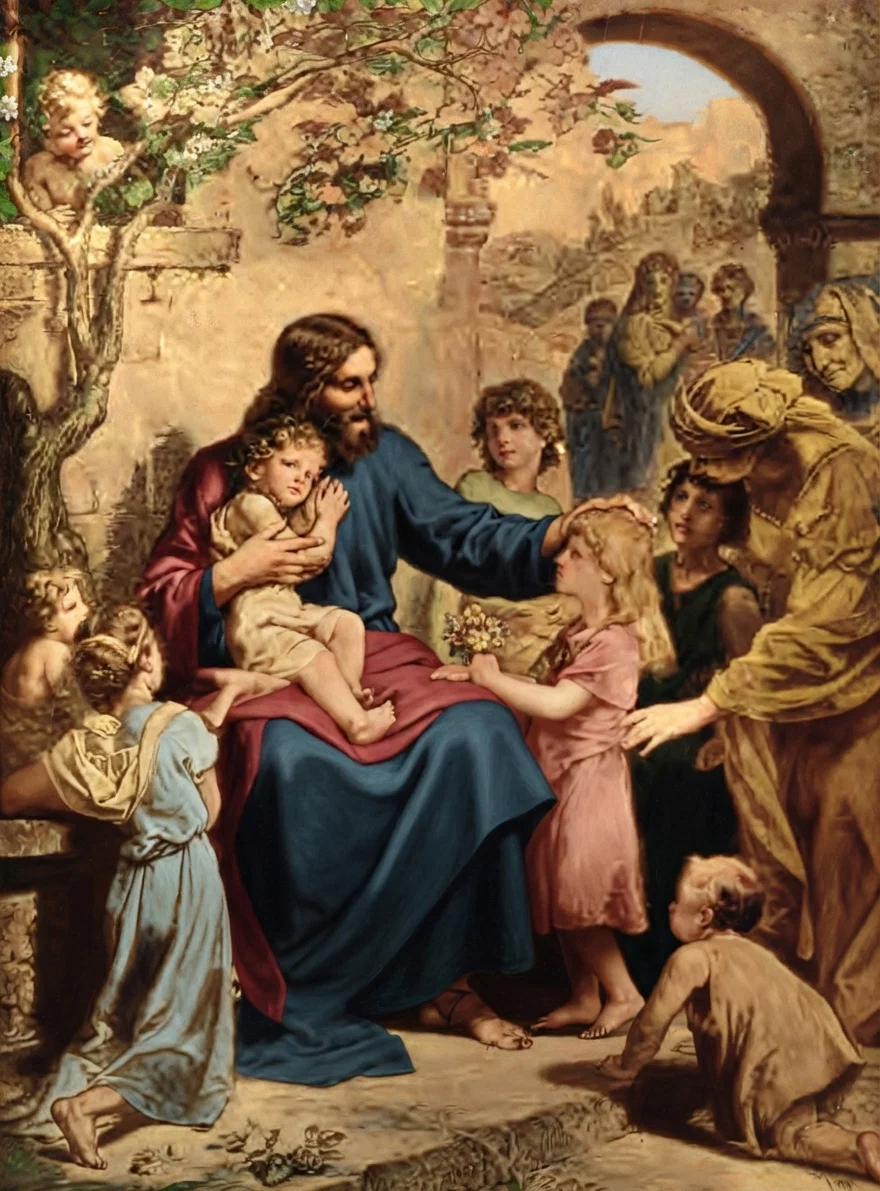
WHAT! the kingdom of God made up of such as these! Yes, that is just what the Master says—"of such." But little children are unlearned; they do not know anything about theology, or the sciences, or the traditions of the elders. Ah! that is just the point; and they know that they do not know anything; therefore they feel their dependence upon their parents for knowledge, and are continually asking for information. They believe what is taught them. Little children do not assume to know more than their parents or teachers.
Millions of people will be lost because they know too much, have too much of the world's wisdom. They would be teachers rather than to be taught the simple things that God would have them learn. But "where is the wise? where is the scribe? where is the disputer of this world? hath not God made foolish the wisdom of this world? For after that in the wisdom of God the world by wisdom knew not God, it pleased God by the foolishness of preaching to save them that believe." 1 Cor. 1:20, 21. There it is; we are saved by our faith in the Word of God, and not by our wisdom; and the little child is the personification of confidence in the words of its parents.
The worldly-wise men are so full of their own wisdom that they are above the Word. They think they know more about the universe than He who created it. They know more about science than the Author of science. Having learned from the wisdom of men, they think they know more than they who have learned from the wisdom of God, as given in His Word. The chief priests and Pharisees sought to quiet the convictions of certain officers with the query, "Have any of the rulers or of the Pharisees believed on Him?" and with a sneer at the ignorant masses—"this people who knoweth not the law are cursed." John 7:48, 49.
Moses was brought up in the royal household of Egypt, and was "learned in all the wisdom of the Egyptians." He was "mighty in word and in deed." His Israelite mother had been allowed to care for him in the earlier years of his life, and the seeds of truth then were watered by the Spirit of God to the extent that Moses knew that he was to lead the people of God out of Egyptian bondage. So at the age of forty years he "refused to be called the son of Pharaoh's daughter," he declined the heirship to the throne, "choosing rather to suffer affliction with the people of God, than to enjoy the pleasures of sin for a season." Heb. 11:24, 25. But his first attempt to carry out his mission as a deliverer was essayed in his own wisdom and strength. Of course it was a failure, and the great statesman and general was soon fleeing from the country to save his life. Yet the Lord had a care for him, for he was a chosen vessel, and brought him to a place where he secured a situation as a shepherd. He was providentially kept in this industrial school forty years, until he had learned meekness, had learned that of himself he could do nothing (Ex. 4:10), had come to the point where he could be led as a little child. When he had learned to be "very meek, above all the men which were upon the face of the earth" (Num. 12:3), he was qualified as a typical deliverer, a leader of the people of God through the wilderness—himself being led by the counsel of God.
Jesus said, Suffer little children, and forbid them not, to come unto Me; for of such is the kingdom of heaven.
The apostle Paul was a learned man; he had attained high rank among the Jewish people. He says, "I advanced in the Jews' religion beyond many of mine own age among my countrymen, being more exceedingly zealous for the traditions of my fathers." Gal. 1:14, R.V. But after his conversion to Christ he "determined not to know anything, . . . save Jesus Christ, and Him crucified." 1 Cor. 2:2. Nicodemus was one of the high councillors among the Jews, and must necessarily have been a learned and influential man. He, like other Jews, deemed his people the natural kingdom of God. But when he came to Jesus, the "Teacher sent from God," he was at once informed that he "must be born again;" that is, he must begin life over again, become as a little child. When one is born he knows nothing to begin with.
Everything has to be learned. So when he is born of the Spirit (John 3:5), he begins a new life; "old things are passed away; behold, all things are become new" (2 Cor. 5:17). When we are "born of water" we are "buried with Him [Christ] by baptism into death; that like as Christ was raised up from the dead by the glory of the Father, even so we also should walk in newness of life." Rom. 6:4. The expression quoted as the caption of this article was called out on this wise: "Theybrought young children to Him, that He should touch them; and His disciples rebuked those that brought them. But when Jesus saw it, He was much displeased, and said unto them, Suffer the little children to come unto Me, and forbid them not; for of such is the kingdom of God. Verily I say unto you, Whosoever shall not receive the kingdom of God as a little child, he shall not enter therein. And He took them up in His arms, put His hands upon them, and blessed them." Mark 10:13-16.
This language is very emphatic. Note particularly the positive statement, "Whosoever shall not receive the kingdom of God as a little child, he shall not enter therein." How does a little child "receive" any good thing?—He takes his food with absolute confidence, nothing doubting. As he comes to notice what is going on around him, and learns from whom he gets his food, he begins to look to the mother or nurse for the needed supply. He expects them to feed him. In a little while he learns to ask in his childish way for what he wants. And he asks expecting to get what he asks for. Father or mother doesn't turn him away because he is not educated and can not speak fluently or correctly. If he be properly trained, he will "receive" his food, clothing, and other necessaries with gratitude; he will promptly say, "Thank you," every time any good gift comes his way. He will not think his father, mother, or other benefactor is under obligation to him for receiving the good things proffered. Again, if properly trained, the child will be obedient, especially "little children." They believe implicitly what father, mother, nurse, or teacher tells them. Thus they "receive" instruction, as well as other good gifts, with confidence, appreciation, and love.
But the natural man does not receive the good things which God gives him in that way. "The natural man receiveth not the things of the Spirit of God; for they are foolishness unto him; neither can he know them, because they are spiritually discerned." 1 Cor. 2:14. This is why he "must be born again," why he must become a "new creature," why he must be born of the Spirit, and become a spiritual little child, so that he may live a spiritual life and receive a spiritual education. Thus he can receive the kingdom of God here and now, and enter into His glory at the coming of the King in glory. See Matt. 25:31-34.
And the little child is obedient to his parents. Not so the natural man to his heavenly Father. "The carnal mind is enmity against God; for it is not subject to the law of God, neither indeed can be. So then they that are in the flesh can not please God." Rom. 8:7, 8. Here, then, is emphasis on the fact that the natural man "must be born again," and "become as a little child," in order to enter the kingdom of God; for he can not enter that kingdom without pleasing God. "By faith Enoch was translated that he should not see death," because "before his translation he had this testimony, that he pleased God." Heb. 11:5.
There are many lessons for us to learn from the little children, insomuch as God has sent us to them to be taught, and has given them to be our exemplars in the manner of receiving without question that which God has provided for us at so great a sacrifice. "Have ye never read, Out of the mouth of babes and sucklings Thou hast perfected praise?" Matt. 21:16.

Living in Today

No FLOWER can bloom in Paradise which is not transplanted from Gethsemane.—Dean Stanley.
WHAT is to-morrow, and where is it anyway? Did you ever see to-morrow? To try to have to do with to-morrow or yesterday is like stepping on a stair that is not there. There is no yesterday, there is no to-morrow; it is simply to-day. While it is to-day, to-morrow is nothing; and when to-day is gone, there is none of it. So that all we ever have is to-day, TO-DAY, TO-DAY. Never get out of to-day. Work to-day, now; for God works only now. He speaks only now. And "to-day if ye will hear His voice, harden not your hearts." God lives just now. With Him there is no to-morrow. He does not take care of to-morrow, and yesterday is passed. God lives to-day, and just as certainly as you live only in to-day, you will live with God.—Sel.

“LET HIM THAT HEARETH SAY, COME.”

THERE is great need of heeding the words of Christ: “I Jesus have sent Mine angel to testify unto you these things in the churches. I am the root and the offspring of David, and the bright and morning star. And the Spirit and the bride say, Come. And let him that heareth say, Come. And let him that is athirst come. And whosoever will, let him take the water of life freely.” Here are presented the free receiving and the free giving. We are to communicate the light that God has richly bestowed upon us. The blessing of the Lord, received, must be passed on to others. Some will say: “I am not fit to serve God. How can I do this work of communicating truth? The opposition to the commandments of God is so strong, what can I, a poor, weak creature, do?” It is well for you to realize your weakness, but you are to lean wholly upon God for strength. Is anything too hard for the Lord to do?
The arm of the Lord is not shortened that it can not save. His ear is not heavy that it can not hear. God can and will work through human agents. He can sanctify the heart, and make the human agent a vessel unto honor.
Take the Word; read it, consider, pray over it; let it enter into your understanding; let the light flood the soul temple, that you may testify of these things in the churches. The Word of God is infallible; accept it as it reads; look with confidence to God; trust Him to qualify you for His service. We are not authorized to trust in ourselves; Christ is our helper, our sufficiency. It is His to give us the victory. Christ has brought life and immortality to light, and we are to look unto Him, and take this great salvation which He has won for us through His own death. Only believe; walk by faith, not by sight.
There are many souls yearning unutterably for light, for assurance and strength beyond what they have been able to grasp. They need to be sought out and labored for patiently, perseveringly. Present Jesus because you know Him as your personal Saviour. Let His melting love, His rich grace, flow forth from human lips. You need not present doctrinal points unless questioned, but take the Word, and with tender, yearning love for souls, show them the precious righteousness of Christ, to whom you and they must come to be saved.
Satan is working with his masterly power to hold you back, to keep you in his army. Ever bear in mind that the powers of good and evil are striving for the mastery over every soul that is seeking Jesus. Satan works to drag the inquiring souls away from the cross; but Christ is drawing them, and all who are co-operating with Christ will exert a compelling influence in bringing others to Him.
As laborers for the salvation of souls, ask wisdom from God, believing that He will bestow the gift you ask. Receive the precious endowment by faith, nothing doubting. As we seek God in sincerity, believing His Word, acknowledging His goodness, His mercy, and His love toward ourselves, there flows forth from us the living water to refresh and revive the spirit of the humble and the contrite. The souls that are seeking for truth need to have words spoken to them in season, for Satan is speaking to them by his temptations. If you meet with repulse when trying to help souls, heed it not. Speak to those who will listen. Impart the knowledge of the truth you have obtained; but let it be the truth as it is in Jesus. Work while it is day, for “the night cometh, when no man can work.” Sow the seed in faith, and with an unsparing hand. Work as if you could behold the universe of heaven looking upon you. One soul saved is worth more than the whole world. All who are willing to examine and understand the truth, will find the precious, priceless, hidden treasure.
Never forget that we can not assimilate to the world, and be God’s people. There is divinity in the Word. In presenting the Word to others, never make it a “suppose so,” a “guess,” or a “maybe.” Speak as one who has authority from God through His Word. Declare with Peter: “We have not followed cunningly-devised fables, when we made known unto you the power and coming of our Lord Jesus Christ, but were eyewitnesses of His majesty. . . . We have also a more sure word of prophecy: whereunto ye do well that ye take heed, as unto a light that shineth in a dark place, until the day dawn, and the day star arise in your hearts.”
MRS. E. G. WHITE.

Varied Exercise and Health

VARIETY of exercise is healthful. Mr. Gladstone was noted for his outdoor life, and his enjoyment in felling trees in Hawarden Park. When asked the secret of his vigorous health at eighty-three, he replied: 'Therewas once a road leading out of London, on which more horses died than on any other; and inquiry revealed the fact that it was perfectly level. Consequently the animals, in traveling over it, used only one set of muscles. Continuous employment of the same physical powers on the same lines results in physical exhaustion. It is varied and symmetrical exercise of the mind and all the muscles that lies at the base of any sound system of physical training.'

The Gift of the Holy Spirit

To EVERY soul of mankind God has given the glorious gift of the Holy Spirit. The promise of the Father is fulfilled,—the promise that the Spirit is to be poured out upon all flesh; all flesh may see the glory of the Lord; all flesh may be saved if they will. "As many as received Him, to them gave He power"—not simply to them gives He the power, but the power is given. There is nothing hypothetical, nothing conjectural. Nothing is left in doubt in the Gospel of Jesus Christ. "As many as received Him, to them gave He power to become the sons of God, even to them that believe on His name."—A. T. Jones.

IN ERROR.

My thoughts went wandering idly on, One sunny summer's day, And I scarce could trace their arrant flight, So swift they sped away; But anon an inspiration came, A thought so deep and grand That I felt full sure my thoughts and God's Were traveling hand in hand.
I sat and gazed at the azure sky One sunny summer's day, And an eagle grand, on graceful wing, Was circling far away. I brushed the dust from my window, then, And my glorious bird was gone— I had brushed a mite, a winged sprite, From the glass it was crawling on. C. M. SNOW.

The Mystery of Love

MYSTERY SERIES. No. 5.

The Mystery of Love.

GOD, the life, the genesis of all substance, is love. 1 John 4:16. This attribute of the Eternal is not a foreign element which has been appropriated, but is an organic substance, the very nature of Jehovah. That wondrous name by which He made Himself known to Moses,—Merciful, Gracious, Long-suffering, etc. (Ex. 34:6),—is an index of the various avenues through which that love is being constantly exhibited to His creatures. And as there is with God no variableness, neither shadow of turning (James 1:17), it is certain that this love has been from everlasting, and will continue to be throughout eternal ages. It therefore follows that every act of Jehovah, from the remotest past, has sprung from this one eternal motive power.
To many such a possibility seems profoundly mysterious. Few seem to understand why the love of God does not deal with every one exactly alike, without regard to moral condition. Such evidently overlook the fact that love is more than simply sentiment. It is more than a reciprocal force, even. The measure of that which mortals name love is but the faintest shadow of the genuine, which dwells in God. Man loves because he sees something desirable in the object of his love, while God loves the undesirable, even those so degraded that they are abandoned by their own kind.
Genuine love is a principle, the character of which is understood only through its provident measures in behalf of weakness and suffering. It seeks to distribute impartially to each in proportion to his needs. For instance, the mother with a large family, while not able to decide which child she loves most or best, will invariably bestow more time and attention upon one of the number who is a cripple, or is suffering from disease, than upon all the others. And, altho some of the others may feel in a measure neglected, it does not follow that the mother has less love for them. This law of love is also illustrated by the parable of the one lost sheep, in search for which the ninety and nine were left alone in the wilderness. Luke 15:4-6.
God having never been visible to mortals (John 1:18), the only way of knowing His rank, power, and capacity, is through His dealing with those who are inferior to Him. The character of God being love, His love, to reveal His true nature, must constantly seek expression in deeds of goodness. Love is therefore a controlling energy, an active sympathy, a fellow-feeling, a living principle. Were it less than all this, it could not move one to acts of goodness; it could not generate its own likeness in others by appearing to them.
But because love is generative, it is therefore life. Bestowed upon fallen man, it leads him to love God. 1 John 4:19. That yearning desire begotten in the heart of sinful humanity to be like Him who has loved the unlovable, is no less than the divine life of love drawing the mind toward its perfect ideal. Had not that power been first revealed to man in this way, he could not have been aware of its existence, and so must ever have been deprived of its goodly promptings.
Native love being co-ordinate with life, it must of necessity co-extend with life. The life of Jehovah being eternal, His love is everlasting. Jer. 31:3. It can never fail those who receive and treasure it. Prophecies may meet their fulfilment, and fade from mind; the confusing variations of language may be lost in the harmony of a pure and universal tongue; worldly knowledge may give place to heavenly love; hope's fruition may be realized, and faith swallowed up in sight; but love, the greatest and most precious treasure of all, can never cease to operate. 1 Cor. 13:8-13. Its organic principles are such that it must needs continue eternally, as the cementing bond between God and His creatures, that they may do His will as perfectly as it is now done by the angels in heaven. Ps. 103:20; Matt. 6:10.
To understand clearly the will of Him who rules the universe, is the highest knowledge to be obtained, and no more exalted service can be sought or rendered than to perform that will. But this can not be done properly in a perfunctory manner, as a task to be turned off in order to avoid censure. Angels do not wait upon God simply because His commandments require their service. As sons of God (Job 38:4-7), they render service from full hearts of love, which makes their employment a continual joy.
Love being always the same, whether operating in heaven or upon earth, it follows that when men really love God, they must do His will the same as it is done in heaven. A service rendered through fear of being lost is labor performed for self. With no higher motive than this, one goes no further, and does no more, than just that which he persuades himself is actually necessary to prevent him from being lost. Salvation may seem desirable enough to such persons; but if they can convince themselves that certain things are not absolutely necessary to secure it, they utterly refuse to do them.
The one who has true love, however, be he in heaven or upon earth, moves in an altogether different direction: He who loves another will not only do him occasional service as it may seem agreeable, or speak well of him on convenient occasions, but will jealously guard the honor of his name at all times. He will also resolutely oppose everything which tends to degrade the character or impair the rights of the object of his love. The husband's tender regard for a faithful wife will lead him, at any cost, to defend her honor against the tongue of slander; the father's love for a son of tender years will lead him to prosecute, with relentless energy, the insidious foe lurking in the path, and threatening to drag his darling down to ruin. Indeed, the very constitution of love is such that, while bearing the most delicate sentiment toward the object of its attachment, it will unyieldingly antagonize everything that is against that object.
This being the true nature of love, whoever is moved by it to enter God's service will steadily resist evil because it is opposed to the goodness of God. While love ever seeks to elevate, the tendency of evil is persistently downward. Not being of divine origin, it has in itself no power or influence to restore itself, and so by its action only increases its momentum toward final ruin. Like the huge boulder loosened from its setting at the summit of some high hill, the first movement creates an impetus which increases until met by some opposing force. So with moral beings; the exercise of moral faculties increases the inclination of the will in the direction of that exercise, whether toward good or evil. But the longer one continues in evil, the weaker becomes his moral nature, and the less appreciation he has of moral things.
Thus sin begets sin, showing itself to be an active force, ever opposing God's offices of love, and tending to the degeneration and ultimate ruin of every intelligent creature. Rom. 7:17. This being true, God can not, as a benevolent Being, tolerate sin in any degree. As a God of love, as One whose interest in His subjects is to make them like Himself, He could not fail to oppose evil in every form, and in every place, because of its prejudicial influences upon His creatures.

BELIEVING GOD'S WORD.

WHEN God placed man in the garden of Eden He said to him, "Of every tree of the garden thou mayest freely eat; but of the tree of the knowledge of good and evil, thou shalt not eat of it; for in the day that thou eatest thereof thou shalt surely die." Gen. 2 : 16, 17.
Had man believed God's Word he would not have eaten of this fruit. So sin entered because man did not believe God. For it is plain that if he had really believed death would be the result of disobedience, he would not have disobeyed. But Satan told him he would not die. So he believed Satan instead of God.
We are "justified by faith." Rom. 5 : 1. The just "live by faith." Heb. 10 : 38. Faith is taking God at His Word. Faith comes by hearing "the Word of God." Rom. 10 : 17. So the terms of life are the same to-day as they were in the Garden of Eden. And if we are saved it will be because we believe God's Word and not the errors of Satan.
All that has been accomplished in the past by the faithful was the result of their believing God's Word. The salvation of every soul depends on his faith in God's Word. And if we do believe, we will obey that Word. Obedience is the best test of faith.
The Lord told Noah the flood was coming. He showed his faith by preparing the ark. Heb. 11 : 7. God told Abraham to leave his country, his kindred, and his father's house and He would give him a land. "By faith Abraham . . . obeyed." Heb. 11 : 8.
So if we really believe the Word of God we will obey everything that Word says to us as far as we learn it. It is this faith that purifies the soul from every defilement. Eve trusted appearances and failed. Satan will tempt us to do the same thing. But we will surely fail if our faith does not rest on God's Word alone. There are true joy and peace to every soul that believes God's Word. "When the Son of man cometh, shall He find faith on the earth?" Luke 18 : 8.
O, the blessing of having Jesus dwelling in the heart! But He abides there by faith.
F. L. MOODY.
Fairfield, Iowa.

Sunlight as a Disinfectant

“CONTRARY to the conditions obtaining in higher plants, sunlight is fatal to all disease germs; even the most resistant of them are killed after a few hours' exposure to the direct rays of the sun. The lesson from this should be obvious; but through fear of faded carpets we shut out the best of all disinfecting agents from our rooms, and make a condition favorable to the developmont of the germs of disease.”
STUDIES IN GALATIANS

CHRIST-GIVEN FREEDOM.

"STAND fast therefore in the liberty wherewith Christ hath made us free, and be not entangled again with the yoke of bondage." Gal. 5 : 1. Altho we included this verse in our study last week, it contains quite enough for our entire study this week, and even more. In order that we may see how Christ makes free, we will consider

A Practical Example

in His earthly ministry.
"And He was teaching in one of the synagogs on the Sabbath. And, behold, there was a woman which had a spirit of infirmity eighteen years, and was bowed together, and could in nowise lift up herself. And when Jesus saw her, He called her to Him, and said unto her, Woman, thou art loosed from thine infirmity. And He laid His hands on her; and immediately she was made straight, and glorified God." Luke 13 : 10-13.
Then when the hypocritical ruler of the synagog complained because Jesus did this miracle on the Sabbath, He referred to how each one would loose his ox or ass from the stall, and lead him to water, and then said:—
"And ought not this woman, being a daughter of Abraham, whom Satan hath bound, lo, these eighteen years, be loosed from this bond on the Sabbath day?"

A Parallel.

Note these two points about this woman: She was bound by Satan; and she had a spirit of infirmity, or lack of strength.
Now note how accurately this describes our condition before we meet Christ.
1. We are bound by Satan. "Every one that committeth sin is the bond-servant of sin," John 8 : 34, R.V. "He that committeth sin is of the devil," 1 John 3 : 8. "His own iniquities shall take the wicked himself, and he shall be holden with the cords of his sins." Prov. 5 : 22. Sin is the cord with which Satan binds us.
2. We have a spirit of infirmity, and can in nowise lift ourselves up, or free ourselves from the chains that bind us. It was when we were "without strength" that Christ died for us. Rom. 5 : 6. Now these two words, "without strength," are translated from the very same word that is rendered "infirmity" in the account of the woman whom Jesus healed. She was "without strength." To be without strength means to have no strength at all. That is our condition.

What Jesus Does for Us.

What now does Jesus do for us?—He takes the weakness, and gives us in return His strength. "We have not an High Priest which can not be touched with the feeling of our infirmities." Heb. 4 : 15. "Himself took our infirmities, and bare our sicknesses." Matt. 8 : 17. He becomes all that we are, in order that we may become all that He is. He was "born under the law, to redeem them that were under the law." He hath delivered us from the curse, being made a curse for us, that the blessing might come to us. Altho He knew no sin, He was made "to be sin for us, who knew no sin; that we might be made the righteousness of God in Him." 2 Cor. 5 : 21.

Why He Does It.

Why did Jesus make that woman free from her infirmity?—In order that she might walk at liberty. Certainly it was not in order that she might continue of her own free-will to do that which before she was obliged to do. And why does He make us free from sin?—In order that we may live free from sin.
What is sin?—"Sin is the transgression of the law." 1 John 3 : 4. To be a bond-servant of sin, therefore, and in nowise able to lift ourselves up, on account of infirmity, is to be unable to keep from transgressing the law. That is, it is to be unable to keep it. Why does Christ make us free?—Only in order that we may walk in the law blameless. "For what the law could not do, in that it was weak through the flesh, God sending His own Son in the likeness of sinful flesh, and for sin, condemned sin in the flesh; that the righteousness of the law might be fulfilled in us." Rom. 8 : 3, 4. He certainly does not deliver us in order that we may go on transgressing the law.

Free from the Law.

"But," some one will object, "it says somewhere that we are delivered from the law." Yes, it does; and that is just what we are talking about. It is what we have been studying in the third and fourth chapters of Galatians. Christ was made under the law, to redeem us from under the law. Before faith came, we were under the law, shut up in prison. The law was our jailer; for "the strength of sin is the law." 1 Cor. 15 : 56. "The law worketh wrath; for where no law is, there is no transgression." Rom. 4 : 15. The law is our accuser before God. It charges us with having transgressed its holy precepts, and shut us up in prison, criminals condemned to death. How only can we get free from its condemnation?—Only by being able to show that we have the righteousness which it demands. This we get in the life of Christ. He covers us with the robe of righteousness. He puts righteousness not only on us, but in us, so that the law can find no fault in us, because in Christ there is no fault. Then the law lets us go free from prison. Now we are on good terms with the law. That which before was our accuser, is now our friend; it witnesses to our righteousness in Christ.
But we shall have more of this at another time; what we wish now to consider a little further is how wondrously and how really Christ makes us free from the spirit of infirmity that keeps us from walking uprightly, according to the law of God. We can not tell how He does it; He alone knows how it is done, because He alone has the power; but we may know the reality of it.
We have already read that it is Satan that binds us with the cords of sin. Now read further: "He that committeth sin is of the devil; for the devil sinneth from the beginning. For this purpose the Son of God was manifested, that He might destroy the works of the devil." 1 John 3 : 8. "Forasmuch then as the children are partakers of flesh and blood, He also Himself likewise took part of the same; that through death He might destroy him that had the power of death, that is, the devil; and deliver them who through fear of death were all their lifetime subject to bondage." Heb. 2 : 14, 15.

The Means Used.

By what means is it done?—By His word and touch. He said, "Woman, thou art loosed from thine infirmity," and laid His hand on her; and immediately she was straight. Faith in His Word makes the glorious freedom a reality to us. We must know also that He touches us. It is true, whether we know it or not; for He is touched with the feeling of our infirmity. Mark, He is now, even while He is High Priest in heaven, touched with the feeling of our weakness. He feels what we feel. Therefore He must be in the closest touch with us.

The Freedom Already Ours.

Pay special attention to the words of Jesus to the woman, uttered while she was yet bound down, and unable to lift herself up. "Thou art loosed from thine infirmity." "Thou art loosed"—present tense. That is just what He says to us. To every captive He has proclaimed deliverance. "The Lord upholdeth all that fall, and raiseth up all those that be bowed down." Ps. 145 : 14. There is not a single soul that is bowed down with the weight of sin, which Satan hath bound on him, whom Christ does not lift up. Let the message be sounded far and wide. Let every soul hear it, that Christ has given deliverance to every captive. Thousands will rejoice at the news.

Faith Grasps Facts.

Does anybody doubt it? Let me prove it to you. You will agree that we are made free by faith. When faith comes, we are no longer in prison. That is what we have learned in the third chapter of Galatians. But we can not believe a thing that is not so. Faith lays hold of facts, things actually accomplished, and nothing else. Faith does not make facts, it only believes them. We do not make a thing so by believing it; we believe it, or at least ought to, because it is so. If it were not so before we are called upon to believe it, there would be nothing for us to believe. Therefore the fact that we get freedom in Christ by faith, and that anybody can have the same freedom by faith, proves that the freedom is already given to all. They have only to grasp it, and walk at liberty. Our part is to say with the psalmist, "O Lord, truly I am Thy servant; . . . Thou hast loosed my bonds." Ps. 116 : 16. Don't go to arguing with the Lord, and saying that you can not walk straight. He says that you are loosed, and that is enough. Hold fast to His words in the face of the devil, and you will find that they will never fail you. The word which says, "Thou art free," is the word that keeps you free. Don't let it go from your mind.

The Way, the Life.

Jesus says, "I am the way, the truth, and the life." John 14 : 6. There is no other way, except the way that leads to death, and that we do not care to have anything to do with. Now read the words of the Lord by the psalmist: "Blessed are the undefiled in the way, who walk in the law of the Lord. Blessed are they that keep His testimonies, and that seek Him with the whole heart. They also do no iniquity; they walk in His ways." Ps. 119 : 1-3. What, then, is the way of the Lord?—It is the law of God, for the law is His life. Broken, it is death to us; kept, as it can be only in Christ, it is life and peace. It is "the perfect law of liberty." In Christ, it is "the law of the spirit of life." Rom. 8 : 2. "Stand fast therefore in the liberty wherewith Christ hath made us free, and be not entangled again with the yoke of bondage." Sin, transgression of the law, is bondage; righteousness, which we find in Christ, who is the perfection of the law, is life, liberty, and peace.
E. J. WAGGONER.
Continue reading: SHALL WOMEN SPEAK IN THE CHURCHES?
