“Years ago a poor woman gave what was to her a little fortune—five dollars—to Bible work. One hundred Testaments were bought and distributed. One fell into the hands of an infidel in New Orleans; he read it, and gave his heart and life to God. Another fell into the hands of a young man out West; he was led by it to seek the Saviour. A third went into a destitute home, consisting of a mother and five children. The mother read the third chapter of John, and ere long the door of her heart was opened to Jesus Christ, and a devout and faithful woman witnessed for God to the world. Two of her boys followed her example. She who gave the money to buy the Bibles is dead; but her works abide, and the blessings she brought about can never die.”
CATHOLICISM IN PORTO RICO.
C. L. Thompson, Secretary of the Presbyterian Board of Home Missions, says: “The Roman Catholic Church for 400 years has oppressed these millions of people. These are the crimes for which the Spanish Catholic Church must be arraigned at the bar of history: (1) It has kept that large population there all those years in extreme poverty and squalor; (2) it has held them in such ignorance that not fifteen per cent. can either read or write; (3) it has held them on a plane of morals so low that the sacredness of family life is but little regarded; (4) it has given them no Sabbath; (5) it has kept from them the knowledge of true Christianity; (6) it has driven most of the men into practical infidelity.”
PERIODICALS WANTED.
CLEAN copies of any of our denominational literature are desired for ship missionary work in San Francisco. Address, post-paid, A. G. Marchus, 971 Howard Street.
Golden Text.—“The effectual fervent prayer of a righteous man availeth much.” James 5:16.
23 “And Abraham drew near, and said, Wilt Thou consume 24 the righteous with the wicked? Peradventure there be fifty righteous within the city: wilt Thou consume and not spare 25 the place for the fifty righteous that are therein? That be far from Thee to do after this manner, to slay the righteous with the wicked, that so the righteous should be as the wicked; that be far from Thee: shall not the Judge of all the earth do 26 right? And the Lord said, If I find in Sodom fifty righteous within the city, then I will spare all the place for their sake. 27 And Abraham answered and said, Behold, now, I have taken upon me to speak unto the Lord, which am but dust and 28 ashes: peradventure there shall lack five of the fifty righteous: wilt Thou destroy all the city for lack of five? And He said, I 29 will not destroy it, if I find there forty and five. And he spake unto Him yet again, and said, Peradventure there shall be forty found there. And He said, I will not do it for the forty’s sake. And he said, O let not the Lord be angry, and I will speak: peradventure there shall thirty be found there. And 31 He said, I will not do it if I find thirty there. And he said, Behold now, I have taken upon me to speak unto the Lord: peradventure there shall be twenty found there. And He said, 32 I will not destroy it for the twenty’s sake. And he said, O let not the Lord be angry, and I will speak yet but this once: peradventure ten shall be found there. And He said, I will not destroy it for the ten’s sake.”
SUGGESTIVE QUESTIONS.
(1) When the Lord revealed His purpose, to destroy Sodom, what did Abraham do? Verse 23. Note 1. (2) What modification of the decree did he humbly suggest? Verse 24. (3) To what principle of righteousness did Abraham appeal? What did he feel sure the righteous Judge would do? Verse 25. (4) What merciful promise did the Lord make? Verse 26. Note 2. (5) What characteristic of Abraham was now still more manifest? Verse 27. Note 3. (6) What further concession did he ask? What was his success? Verse 28. (7) Encouraged by the mercy thus shown, what further plea did he make? And what answer did he receive? Verse 29. (8) What appeal did he make before asking further leniency? What then was his petition? And what the answer? Verse 30. (9) What shows that the patriarch’s faith became stronger by its persistent exercise? And how was it honored? Verse 31. (10) What limit did Abraham himself place upon his petition? Did the Lord deny even this seemingly extreme request? Verse 32. Note 4.
NOTES.
1. Abraham had just entertained three strangers, and as they were en route to Sodom, he went with them some distance. The men proved to be angels, one of them the Lord Himself. As the other two went on to Sodom, the Lord revealed to Abraham the purpose of their visit. The patriarch was immediately concerned for Lot, and his family, and for any others who might be deemed righteous. It would seem that he naturally supposed that Lot had done some missionary work over there.
2. In all the calamities that God brings upon men, He spares the righteous. To “slay the righteous with the wicked” is the work of the adversary. His purpose is to slay the righteous, and he is regardless even of his own, if he can accomplish that end.
3. Abraham’s prayer was the prayer of faith, which “availeth much.” He had drawn near to the Lord to plead with Him. He plead the righteous character of the Lord as an assurance that He would do right. Therefore he gains his point. Instead, however, of becoming elated and presumptive, he becomes more humble, and assumes that he is but “dust and ashes.” Yet his faith grows stronger as he realizes that mercy is still mingled with justice, and recognizes an evident invitation to ask for more.
4. Ten.—In this petition that the great and desperately wicked city would be spared for ten’s sake, and in the gracious promise that it would be so, we can realize something of the force of the Saviour’s words, “Ye are the salt of the earth.” This wonderful concession also illustrates the power of prayer. Without so much as a condition of penitence on the part of the wicked, this terrible calamity would have been averted in answer to prayer if only ten righteous persons could have been found.
INTERNATIONAL SERIES
LESSON VIII.—AUGUST 24.—TIME OF THE INVESTIGATIVE JUDGMENT.
[Note to the Student.—These lessons are not designed to be exhaustive, but suggestive. In references to the “Desire of Ages,” in the lessons, the subscription edition is referred to. Those who have only the trade edition will find the matter in chapters 1, 4, 11, 27, 71, 77, 78; also read “Patriarchs and Prophets,” chapters 5 and 30. “Christ Our Advocate,” Bible Students’ Library No. 129 (price, 10 cents), and “Looking unto Jesus” (price, $1.00) will be found a great help. The SIGNS OF THE TIMES will have an article on the subject of each lesson this quarter by J. O. Corliss. Read these articles in connection with the study of the lesson. We have not space to print all the scriptures. Let the student study them carefully from the Bible. Those printed are from the Revised Version.]
NOTE.—The subject of the time of judgment is so important that we trust the student will bear with us if in this lesson we go again over some of the familiar texts which have been used in previous lessons; for we seek to place them in a new connection, in order that they may the more readily be seen in all their bearings.
SUGGESTIVE QUESTIONS.
1. What has the Lord said definitely about the time of the judgment?
“The times of ignorance therefore God overlooked; but now He commandeth men that they should all everywhere repent: inasmuch as He hath appointed a day, in the which He will judge the world in righteousness by the Man whom He hath ordained; whereof He hath given assurance unto all men, in that He hath raised Him from the dead.” Acts 17:30, 31.
2. To whom will this appointed day be revealed? Who will have no need for fear in that day?
“Whoso keepeth the commandment shall know no evil thing; and a wise man’s heart discerneth time and judgment.” Eccl. 8:5.
“Verily, verily, I say unto you, He that heareth My word, and believeth Him that sent Me, hath eternal life, and cometh not into judgment, but hath passed out of death into life.” John 5:24.
3. What does the wicked man know about the judgment? How does this little knowledge make him feel? What does he not know?
“For to every purpose there is a time and judgment; because the misery of man is great upon him; for he knoweth not that which shall be: for who can tell him how it shall be?” Eccl. 8:6, 7.
“Many shall purify themselves, and make themselves white, and be refined; but the wicked shall do wickedly; and none of the wicked shall understand; but they that be wise shall understand.” Dan. 12:10.
4. What two phases of the judgment are spoken of? Ans.—Investigative, executive.
“And I saw the dead, the great and the small, standing before the throne; and books were opened; and another book was opened, which is the book of life; and the dead were judged out of the things which were written in the books, according to their works.” Rev. 20:12.
“And He gave Him authority to execute judgment, because He is the Son of man.” John 5:27.
5. When was the appointed day of the investigative judgment reached? At what date did this period of time end?
“And he said unto me, Unto two thousand and three hundred evenings and mornings; then shall the sanctuary be cleansed.” Dan. 8:14.
6. What announcement was made to the world when this appointed day was close at hand?
“And I saw another angel flying in mid-heaven, having an eternal Gospel to proclaim unto them that dwell on the earth, and unto every nation and tribe and tongue and people; and he saith with a great voice, Fear God, and give Him glory; for the hour of His judgment is come: and worship Him that made the heaven and the earth and sea and fountains of waters.” Rev. 14:6, 7.
7. What promise would lead us to expect that an announcement would be given?
“Surely the Lord God will do nothing, but He revealeth His secret unto His servants the prophets.” Amos 3:7.
8. With what class will the judgment begin?
“For the time is come for judgment to begin at the house of God: and if it begin first at us, what shall be the end of them that obey not the Gospel of God?” 1 Peter 4:17.
9. In this type, whose cases only were considered on the day of atonement?
“And this shall be an everlasting statute unto you, to make atonement for the children of Israel because of all their sins once in the year. And he did as the Lord commanded Moses.” Lev. 16:34. Note .
10. In this judgment, for what will there be time allowed?
“I said in mine heart, God shall judge the righteous and the wicked: for there is a time there for every purpose and for every work.” Eccl. 3:17.
11. What proof have we that the judgment of the righteous dead is finished before Christ comes?
“But they that are accounted worthy to attain to that world, and the resurrection from the dead, neither marry, nor are given in marriage.” Luke 20:35. See also 1 Cor. 15:52. Note .
12. What has taken place with regard to the living righteous which enables them to stand when Christ comes?
“But watch ye at every season, making supplication, that ye may prevail to escape all these things that shall come to pass, and to stand before the Son of man.” Luke 21:36.
13. How much time is there for the judgment after the last trumpet sounds before the living are made immortal?
“Behold, I tell you a mystery: We shall not all sleep, but we shall all be changed, in a moment, in the twinkling of an eye, at the last trump: for the trumpet shall sound, and the dead shall be raised incorruptible, and we shall be changed.” 1 Cor. 15:51, 52.
14. Prior to what event is the blotting out of sins?
“Repent ye therefore, and turn again, that your sins may be blotted out, that so there may come seasons of refreshing from the presence of the Lord; and that He may send the Christ who hath been appointed for you, even Jesus.” Acts 3:19, 20.
15. What event immediately follows, when every case has been decided?
“He that is unrighteous, let him do unrighteousness still; and he that is filthy, let him be made filthy still; and he that is righteous, let him do righteousness still; and he that is holy, let him be made holy still. Behold, I come quickly; and My reward is with Me, to render to each man according as his work is.” Rev. 22:11, 12.
16. Between what two events must the investigative judgment take place, as shown by the texts given in this lesson?
“Reigned with Christ a thousand years.” Rev. 20: 4, 6. Where will this reign be, in heaven or on earth? If on earth, will probation continue? A READER.
When Christ comes, the Lord’s people will be taken to heaven (1 Thess. 4: 15-17; John 14: 1-3); the wicked not destroyed by the plagues, will die in the presence of Christ’s glory (Rev. 19: 21; 2 Thess. 2: 8); leaving the earth utterly desolated (Zeph. 1: 14-18; Isa. 24: 1-3; Jer. 4: 23-27). The period of time it is desolate Isaiah calls many days (24: 22), but John calls it 1,000 years (Rev. 20: 4, 6). During this the Seventh Millennium since man was given the earth as his home, the earth will lie desolate till the land enjoys its Sabbaths, even as in the archetype, when Palestine lay desolate for seventy years. 2 Chron. 36: 21; Jer. 25: 9-12. “The Great Day of the Lord” (Bible Student’s Library, No. 65, price 3 cents), will give a complete exposition of the whole subject.
1164. Right Thigh or Right Shoulder.
Why does the Revised Version say the “right thigh” instead of the “right shoulder” in Lev. 7: 32, 33, 34, for instance?
The word rendered “shoulder” in our Common Version comes from a root word meaning, according to Strong, to “run after.” The Hebrew word is defined as the lower leg, as a runner. It is translated shoulder, hip, thigh, leg. See Isa. 47: 2. The Jewish version, Boothroyd, and Spurrell render “shoulder;” Young renders “leg;” the Polychrome Bible “thigh.”
1165. Horses.—Winter and Summer.
Where in the Bible does it say horses shall be done away with? And where does it say we can not tell winter from summer only by the leaves on the trees? B. W.
Did the offerer of the peace-offering eat of the priests’ portion, namely, the wave-breast and heave-offering, or of the other parts of the animal? Mrs. B. D.
He ate of what was left after making his offering to the priest. Lev. 7: 14, 15.
1167. The Command to Restore and Build Jerusalem.
When did the commandment to restore and build Jerusalem (Dan. 9: 25) go forth? Was it not given by Cyrus? W.
The command or decree was of the Lord. Isa. 44: 28; Ezra 6: 14. Cyrus took the initial step in the matter, decreeing that the temple should be built. Ezra 1: 1-4. This decree was renewed by Darius. Ezra 6: 1-12. It was completed and greatly amplified by Artaxerxes Longimanus, under whose decree the whole civil policy and administration of the government of Jerusalem was restored, even to the imposition of tax, toll, tribute or custom, and the appointment of judges, and the punishment of evil-doers, even unto death. Ezra 7: 11-26. This decree was issued in the seventh year of Artaxerxes (verse 7), which was B.C. 457. The three decrees made up the commandment of the God of heaven, which could not be said to have gone forth till the city was included.
Farmers’ Names Wanted
Farmers’ Names Wanted: Send us the names and post-office addresses of Eleven Farmers who have land to clear or who have use for a Stump Puller, and we will mail Free to your address a copy of our Stories of the Great Northwest, now going to press. Write plainly, and address the W. Smith Grubber Co., La Crosse, Wis.
SAMPLE FREE
Every Woman Wanted to Try
ROSZEL LAUNDRY TABLETS
Guaranteed to wash clothes clean without rubbing and without injury to the finest fabrics or colors. Strictly free from acids of any kind, therefore is not injurious to the skin. Saves time, money, and labor, saves your hands, saves your clothes, as clothes are worn out more on the washboard than by wearing. Try it and you will always use it. Sample sent free on receipt of 2-cent stamp to pay postage. Good agents wanted everywhere. Address
ALFRED MALLETT, 710 E. 171 St., N. Y. City
When you go East, take
“The Overland Limited”
Via UNION PACIFIC RAILROAD
Less Than Three Days to Chicago
Four Days to New York
Leaves Oakland Daily at 10:36 A. M.
“The Fast Mail”
Three and One-half Days to Chicago
Both Pullman and Tourist Sleepers through to Denver, Kansas City, Omaha and Chicago Daily without Change. Leaves Oakland at 6:44 P. M.
EVERY DAY IN THE YEAR
PERSONALLY-CONDUCTED TOURIST EXCURSIONS TO THE EAST EVERY WEDNESDAY AND FRIDAY EVENINGS
Steamship Tickets to and from all points in Europe by all trans-Atlantic steamship lines
H. V. BLASDEL, Passenger Agent
1160 Broadway, Oakland, Cal.
Living by Faith
“Living by Faith.” (Spanish.) A translation of Bible Students’ Library No. 75; 16 pp.; price, 2 cents. Address, PACIFIC PRESS PUBLISHING CO., Oakland, Cal.
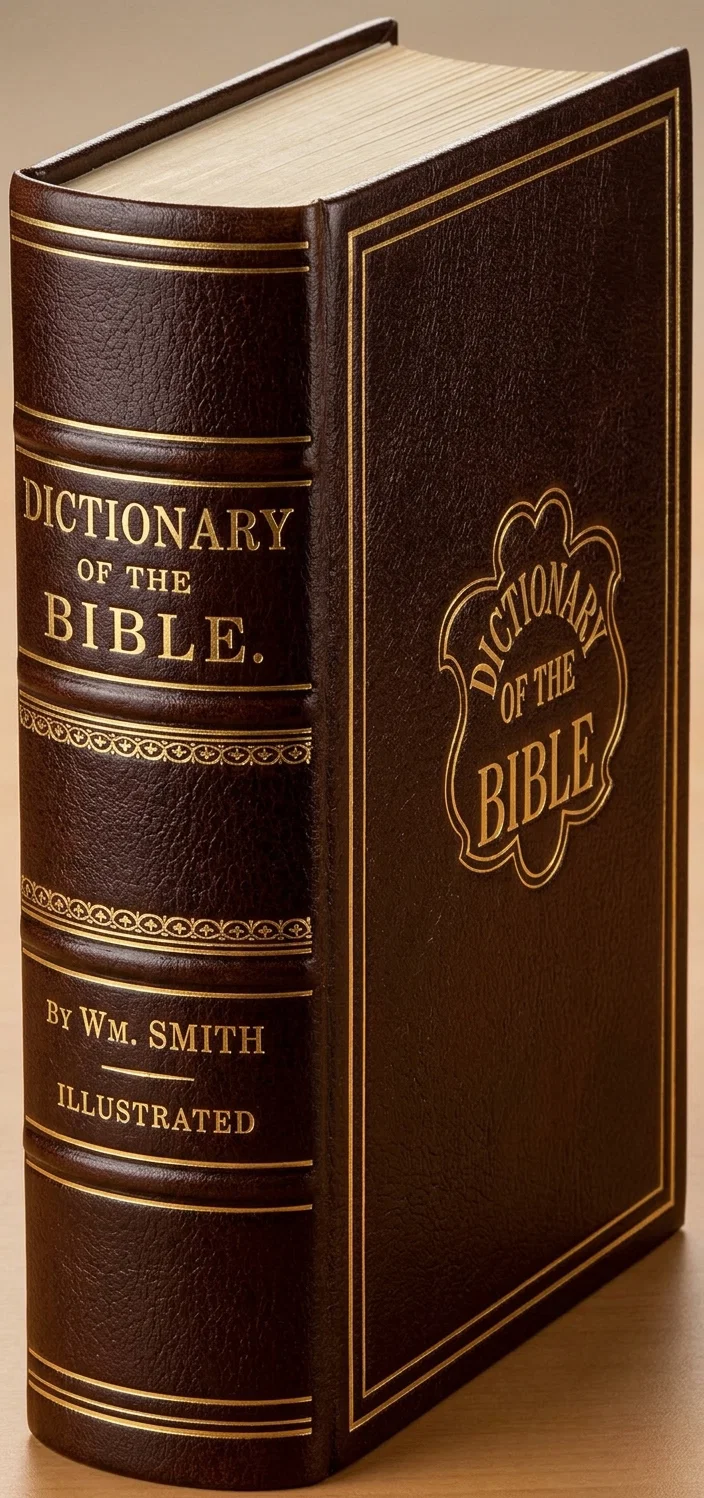
SMITH'S BIBLE DICTIONARY
Size 9¾x7½ in.
A standard book of reference
A necessity to every Bible student
An invaluable help to every Sabbath-school teacher and scholar
1017 pages
Illustrated
Cloth bound
Size 9¼ x 7½ x 2½ in.
PUBLISHER'S PRICE $4.50
SENT POST-PAID WITH SIGNS ONE YEAR $2.75
Sent free for four new yearly subscriptions at $1.50 each
Elihu on the Sabbath
Bible Students' Library, No. 42
A forcible statement of Bible Testimony on the Sabbath question, clearly showing the duty of Christians regarding its observation. First published in 1853, since when nearly a million copies have been circulated. 16 pages.
One cent72 cents per 100
From Sabbath to Sunday
Bible Students' Library, No. 95
The Christian, looking to the Bible alone for the foundations of his faith, finds there no authority, for the neglect of the Sabbath or the observance of Sunday. Historical and Catholic testimony show this change to be the work of Rome. Three letters from Cardinal Gibbons, also letters from other Catholic authorities are quoted. 8 pages.
One-half cent
36 cents per 100
The Way to Christ
Bible Students' Library, No. 105
“Have you a sense of want in your soul? Do you hunger and thirst after righteousness?” Christ can satisfy every desire of the human soul. 16 pages.