Your ShelfYour Projects

Review and Herald, Vol. 92, No. 56.

The Inca Work in Peru
Earlier text: Need of Personal Sacrifice in Finishing the Work

The Macedonian Call

(Reading for Friday, December 17)

The Macedonian Call

J. E. FULTON
THE book of Acts is a great missionary record. The first chapters tell of the outpouring of the Holy Spirit in the “early rain,” and the preaching of God’s Word and the establishment of his work in the regions of Palestine, Syria, the islands of the Mediterranean, and in Asia Minor. In chapter sixteen we find the first Macedonian call, which led to the first great foreign missionary movement.
OUR LAPLAND WORKER EN ROUTE WITH THE MESSAGE
Concerning the work started in Palestine and preached in the surrounding countries, we have the record that when the churches had become fully established, the Holy Spirit forbade the apostles to neglect the “regions beyond.” We read that “when they had gone throughout Phrygia and the region of Galatia, and were forbidden of the Holy Ghost to preach the word in Asia, after they were come to Mysia, they assayed to go into Bithynia: but the Spirit suffered them not.” Acts 16:6, 7.
Duty pointed only one way: they must leave for the foreign fields across the sea; they must enter a new continent to the west. And God set in motion impelling forces to dislodge the apostles from continuing too long with an engrossing work while a new continent was to be annexed for missionary enterprise. The Spirit challenged their restricted evangelistic policy. And not only did the Holy Spirit direct that some of the early missionaries should leave Asia, but, further, from eastern Europe, then in darkness, destined later to be the land of light and progress, came the earnest and unresisting plea, “Come over, . . . and help us.” When this appeal came to Paul in vision he received his first inspiration, shall we say, for labor in far-off fields. “A vision appeared to Paul in the night; There stood a man of Macedonia, and prayed him,saying, Come over into Macedonia, and help us.” The effect of this vision upon the apostle’s mind is shown by the statement that when he heard the call from Macedonia, “immediately” he and others “endeavored to go,” believing that this was a call from God.
What was recorded in the book of Acts concerning these early days of the church is being repeated in these closing days of God’s work. As in the beginning the Holy Spirit came with power, imparting efficiency to the labors of the early missionaries, so now we wait with expectancy for the “latter rain” to ripen the world’s great harvest. In apostolic days the church was led forth to new fields of missionary endeavor, so now also the Macedonian calls come to us with multiplied urgency to preach the message to “every nation, and kindred, and tongue, and people.”
Distinctly these appeals from many lands sound in upon us. Never before were there so many doors swung wide open in lands formerly forbidden. God is turning the hearts of the heathen longingly toward us. Sister Bothilde Miller, working among the heathen of eastern China, said at the recent Shanghai council: “There is a wonderful desire on the part of the heathen in my district for truth. They want something better than ancestral worship.” Continuing, she added, “Educated and uneducated, rich and poor, sick and blind, are turning to the Lord.”
During the past decade waves of spiritual awakening and expectancy have spread over the nations of the Far East, and as a result many of the heathen have turned to the Lord. This has been especially noticeable in Korea, and is now also very manifest in China and the Philippines. In no part of the world does our work present a more hopeful aspect. Our missionaries have been successful. Young men and women have gone out to these heathen lands; they have acquired the difficult languages, and have had quickly thrust upon them heavy responsibilities under which they stagger. God is helping them greatly, and is giving fruitful harvests from their seed sowing. But in many places the burdens are too heavy and our missionaries are crying out for associate workers. Think of Pastor R. C. Wangerin, in southern Korea, with his few native helpers, ministering amid a population of six millions! Is not this a call for more help? Yet Korea is blessed, so far as laborers are concerned, above many other parts of the East.
In Manchuria and northern China one travels over thousands of miles of territory, with many large cities and villages, where not a Seventh-day Adventist missionary is yet stationed. The countless cone-shaped grave mounds, so characteristic of this part of the East, tell their sad tale of the millions who have died, most of them having never heard of Christ; and on every side men and women are dying without a messenger to point them heavenward. Northern China, which contains the chief city of China, calls loudly for workers. Only at Mukden has the work been started. God has greatly blessed the young workers who have been pioneering the work in this northern district; but they are so few in a large and populous region. How it pulls upon the heartstrings to pass through such vast stretches of country inhabited by millions of intelligent people, and be constantly reminded of their pathetic need. Has not the time come to send help?
In central China a strong work in connection with the message has been established. Many churches have been organized, numerous companies formed, schools established, and a strong propaganda by use of our literature is being carried forward. Yet in the province of Honan, with its thirty-five million people, there is but one English-speaking minister to look after the many interests of the cause. Directing the various branches of the church work and visiting outstations require time and much wearing labor. Then come the training of evangelists and colporteurs and a thousand other cares that fall to the lot of a director of a large district. When so much is expected of one man, is it not imperative that more go to the front?
When we say there are thirty-five million people in Honan we have not selected an extreme case. The province south has as many people. Each province in China in size and population is a nation in itself. Szechuan, where Pastor Allum and his few collaborators are stationed, has an area as great as that of France, and a population equal to nearly three fourths that of the United States, and more than that of the entire German Empire. All the provinces are populous, especially those in central China. It is said that along the great Yang-tze-kiang River and its tributaries live two hundred million people.
But China, with its more than four hundred million souls, is but one country in this great Eastern field. Think also of India, with its three hundred and twenty-six million; of the East Indies, with fifty-five million, Java alone numbering thirty-five million; and then of Japan and Korea, with their eighty-odd million. If numbers constitute calls to the church of God, how many and loud the calls! Was the ancient plea from Macedonia urgent? Countless doors of opportunity are now open to us in these great countries where thousands of longing souls in most urgent and pathetic entreaty bid us come over and help them. Can we delay? Think of the years of missionary toil during the past century, the prayers and tears, and the lives that have been sacrificed to prepare the way for us. Toward this moment of opportunity God has been leading us.
Consider what a staggering load is placed upon our workers in these fields, who labor so short-handed, with facilities so inadequate, constantly facing problems that weigh so heavily upon the heart. Surrounding them are thousands of souls groping for the light, needing instruction and guidance—and the missionaries are many times compelled to neglect them.
Look at this sad picture. Not long ago, in central China, eighty persons heard a little about the message, and commenced to observe the Bible Sabbath the best they knew how. But no one went to their assistance,—there was no one to send,—and the poor souls became discouraged and fell away.
There has been no time since we commenced missionary operations as a people when the calls from the foreign field have been so many, so great, and so insistent. There are calls for men from all parts of the East, and how can we hold them back? Then there are urgent calls for money for homes; training schools are needed for native evangelists and other workers; printing offices must be started for vernacular literature; money must be had for preaching tents and for other much-needed equipment. All this calls for extra appropriations of over one hundred thousand dollars. The times, the opportunities, and the great needs of the field, call for a mighty forward movement. Can we deny our missionaries at the front these requests they make? Having enjoyed so many blessings ourselves, and having received from the God of missions the commission to take this gospel to every nation, now is our time and opportunity to come up to the help of the Lord against the mighty.
But there is a positive danger threatening us as a people, and that is that the marvels of God’s opening providences in foreign lands shall not be realized because of our torpid senses,—that the many signs and signals shall be read with dimmed eyes, and that the call to “go forward” may fall on dull ears.
In his work for souls as the world’s first foreign missionary, Jesus was “clad with zeal as a cloak.” But how sluggish many of us sometimes are, how lukewarm and inactive! And so to his remnant people he sends the Laodicean warning against this lethargy which is so likely to eat at the vitals of our spiritual life. The True Witness says, “I know thy works, that thou art neither cold nor hot.”
Of the urgency of the situation in the East, Dr. J. R. Mott truly says:—
“The vast continent of Asia, with its multitudinous population, is in the midst of stupendous changes—changes political, educational, economic, social, and religious. From the Near East to the Far East one feels the thrill of a new life. The situation thus presented to the Christian church is unprecedented in opportunity, in danger, and in urgency. This is the greatest single fact to be pressed upon the mind and conscience and will of Christendom.”
The demand upon us for more men and more money is imperative. The church must settle down to the greatest task it has ever confronted. It will cost heavily. The Macedonian call will claim our best and brightest young people. It will ask for our wisest and best leaders. In apostolic days, when the needs of the home work were pressing, the Holy Spirit said, “Separate me Barnabas and Saul for the work whereunto I have called them;” and that was the foreign work. The best gifts of the early churches were claimed. Today, also, there is need of educated missionaries—men mentallyagile, and possessed with gifts of leadership.
And then, besides the work of warning the teeming millions of Asia, Africa, South America, and other populous countries, there still remains the humiliating fact that over a million natives of the islands of the Pacific are still savages. Many are terribly sunken in vice and dwarfed with ignorance. And our workers in heathen New Guinea, in cannibal Atchin in the New Hebrides, and among the fierce tribes of the Solomons, plead earnestly for additional recruits. In New Guinea, Atchin, and the Solomon Islands we are the first missionaries to occupy the districts where our workers are stationed; and although the situation has seemed so forbidding, the light is breaking and we are encouraged to expect good results. But we must send forward more workers.
Years ago in Fiji, a chief, Ratu Ambrose, won to the message from a terrible life of sin, and then solicitous for his people, asked the writer, “Are there not many in other lands who have become believers in this great message?”
“Yes,” was my answer.
“And,” he continued, “are there not many young people trained to be missionaries to send to these needy islands?”
“There is no reason,” I told him, “why there should not be a number fitted for such work.”
“O why, then,” he asked, “are they so long in coming?”
So from the perishing souls of many an isle and of the great continents, especially from among the eight hundred millions of the great East, sounds to these lands of plenty, of light, and of blessing the ardent and insistent plea: “We perish in darkness. O, when will you bring us your message of salvation? Why are you so long in coming?”
Of the call to the Christian church, Mr. Sherwood Eddy says:—
“The church is facing today the need of more than half the human race. No pen can describe it, no heart can grasp or fathom that great ocean of need; no imagination can picture it, no tongue can tell it. There is a continent of need embracing nations newly awakened. . . . And here are we, young, strong, and free to give our lives, our gifts, our prayers, all that we have and are, to the greatest cause in the world. The call comes to the West, to the Christian church. It comes to you personally and individually. The call is before you. What will your answer be? It combines the challenge of a great need, and the call of an overwhelming opportunity.”
“Through midnight gloom from Macedon. The cry of myriads as of one: The voiceless silence of despair Is eloquent in awful prayer. The souls’ exceeding bitter cry, ‘Come o’er and help us ere we die.’ “How mournfully it echoes on! For half the world is Macedon. These brethren to their brethren call. And by the love that loved us all, And by the whole world’s life they cry, ‘O ye that live, behold we die!’”

Christ Knocks at the Door

“BEHOLD, I stand at the door, and knock: if any man hear my voice, and open the door, I will come in to him.”

The Unworked Places

Lesson for the Children — No. 7

The Unworked Places
MEMORY TEXT: “Jesus saith unto them, My meat is to do the will of him that sent me, and to finish his work.” John 4:34.
In this lesson the leader may help the children to see what a great work is yet to be done in warning the world before Jesus comes. A map may be used showing where most has been done. Facts concerning the needs of other countries may be gleaned from our periodicals and the reading for the older people for this day.
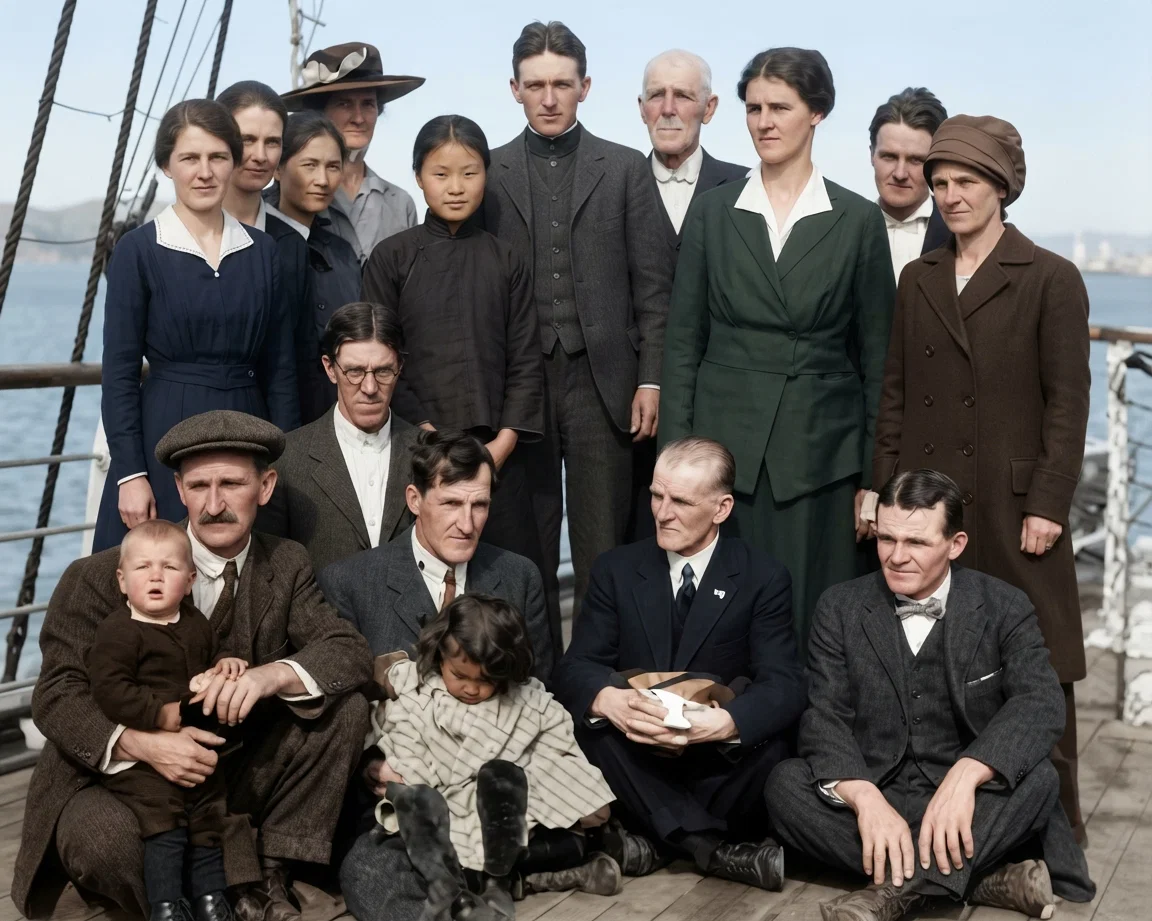
GROUP OF MISSIONARIES LEAVING SAN FRANCISCO FOR THE ORIENT, SEPTEMBER 15
Illustrate by the care we give a garden. We do not plow and sow and tend only one part of the ground, but all is fully cultivated. We do not spend all our time hoeing and weeding one little place, and leave all the rest for weeds to destroy the crop. So one country must not claim all the workers, all the labor, and all the money. Show how few laborers we have in Africa, Asia, and South America as compared with other countries.
God wants the children to become helpers with him. They can begin at home. Isaac carried wood for his father. Joseph went on errands. The little girl worked in Naaman’s home helping his wife. Jesus worked with Joseph as a carpenter, and as he worked he sang, and so comforted any who were sorrowful and troubled. By learning to be useful at home, little Christian children are preparing themselves to work in other places.
The special objects for prayer in this meeting should be that God will help us to be workers for him; that he will bless the missionaries in India, China, Korea, Japan, and other lands; that he will make many others willing to go where work is greatly needed, and help us to give our money to support them. We should also pray that we may be so unselfish that we shall be willing to give ourselves, our friends, and all we have, that God’s work may soon be finished.

Facing Solemn Issues

(Reading for Sabbath, December 18)

Facing Solemn Issues

A. G. DANIELLS
“THIS day is this scripture fulfilled in your ears.” Luke 4:21.
It was our Lord and Saviour who made this statement. To understand its full meaning we must know the conditions under which it was spoken.
Jesus had made his appearance among men. He had been baptized, and was just entering upon his public ministry. He had come to “Nazareth, where he had been brought up: and, as his custom was, he went into the synagogue on the Sabbath day, and stood up for to read. And there was delivered unto him the book of the prophet Esaias. And when he had opened the book, he found the place where it was written, The Spirit of the Lord is upon me, because he hath anointed me to preach the gospel to the poor; he hath sent me to heal the broken-hearted, to preach deliverance to the captives, and recovering of sight to the blind, to set at liberty them that are bruised, to preach the acceptable year of the Lord.” Verses 16-19.
These statements were written by the prophet Isaiah seven hundred years before they were read by our Saviour in the synagogue on that Sabbath day.They were written of Christ, foretelling his first advent. All those years this prophecy had been before the people awaiting fulfillment. Now the hour had come; Jesus was here among men, and had received the anointing by the Holy Spirit. He was beginning to preach the gospel to the poor, to heal the sick, and to deliver the people from the bondage of sin. Therefore he could say with absolute truth, “This day is this scripture fulfilled in your ears.” Never before had that declaration been made, for never before had that prophetic scripture been fulfilled.
From this it is plain that there are fixed, definite times for prophetic utterances to be fulfilled, and that the announcements of their fulfillment cannot be made until the time comes for the events to take place. And, further, we learn that when the hour comes for the fulfillment of a prophecy, and the events of the prophecy begin to appear, that fulfillment must be proclaimed to men by the messengers of the Lord. Pentecost was foretold in prophecy, and when it came the apostle Peter said, “This is that which was spoken by the prophet Joel.” Acts 2:16.
When Jesus had been preaching for some time, he said to those about him: “Blessed are your eyes, for they see: and your ears, for they hear. For verily I say unto you, That many prophets and righteous men have desired to see those things which ye see, and have not seen them; and to hear those things which ye hear, and have not heard them.”
What was it those people were seeing and hearing? — The fulfillment of prophecy. “This day is this scripture fulfilled in your ears.” “Blessed are your eyes, for they see: and your ears, for they hear” its fulfillment.
From this we learn that it is a great blessing to any one to see the prophecies of the Bible being fulfilled, and to recognize their fulfillment as the unfolding and working out of God's eternal purpose. It is a greater blessing to understand this than to gain wealth, or power, or any other worldly advantage. “Blessed are your eyes, for they see: and your ears, for they hear” those things taking place which were foretold by the prophets of God.
But we learn another important lesson from what our Lord said to the people whom he taught. One day while walking by the Sea of Galilee, he said to some of the men who were hard at work in the fishing industry: “Follow me, and I will make you fishers of men. And they straightway left their nets, and followed him.” Matt. 4:19, 20.
These men were among those to whom Jesus said, “Blessed are your eyes, for they see: and your ears, for they hear.” But that seeing and hearing brought to them not only blessing in the pleasure and joy they experienced in the Saviour's presence and teaching and marvelous works, but brought to them great responsibilities as well. Come, follow me, and work for men. To live when prophecy is being fulfilled, and to see its fulfillment, and understand the meaning thereof, is an unspeakable privilege accompanied by solemn responsibilities.
To some of those who companied with Christ it meant an altogether new and different life from what they had known before. It gave them a new vision, a new purpose, a new calling. Straightway they left their nets, their ship, and their father, and followed him. Henceforth they devoted their whole lives to a work they had never thought of doing before. They were swallowed up in the work set on foot by the prophecy that was being fulfilled.
Here is the divine order: “This day is this scripture fulfilled in your ears.” “Blessed are your ears, for they hear.” “Follow me, and I will make you fishers of men.”
This is still God's program. Prophecy is still being fulfilled. To see and understand its fulfillment today is just as great a blessing as at any time in the past. And its fulfillment now brings responsibilities to those who see it, the same as it did in our Saviour's day.
Today that great prophecy of Revelation 14 is being fulfilled. The threefold message of that prophecy is being proclaimed throughout the world. Many thousands have received that message, and have experienced the blessing which the Saviour said accompanies the fulfillment of the word of God. And, further, those who have received the message and the blessings which accompany it have felt a new responsibility pressing upon them. A new meaning has been given to life. Different values have been placed upon the things of this world. A voice has been heard saying, “Follow me, and I will make you fishers of men.” A burden for the salvation of lost men and women never felt before has come into the hearts of those who have become identified with the movement which fulfills this prophecy. This burden has led thousands to abandon their former avocations and devote their lives to gospel work. It has led thousands of others to consecrate the toil and the income of their daily vocations to the proclamation of the message now due the world.
The fulfillment of that prophecy of Isaiah relating to Christ's first advent meant a movement in the world. It meant Christ's presence among men, and the preaching of the gospel in a new setting. Christ understood and emphasized this. Those who heard him understood it. They accepted the responsibility. Some left all for, and others dedicated all to, the new movement. Their interests were transferred from the things in which they had been engaged to the all-important work the new message had set on foot. From this work nothing could turn them. Not even opposition and persecution could stop them. When commanded “not to speak at all nor teach in the name of Jesus,” they answered, “We cannot but speak the things which we have seen and heard.”
And so it must be in this day. The message, and the work required to make it known to all the people of the world, must have first place in the hearts of the believers. It is the greatest and most important thing in the world. It rightly calls for the best in the world—the cleanest hearts, the truest lives, the most genuine sincerity, and the whole-hearted devotion of its followers. Its issues are greater and graver than are the issues and problems of any movement among men. No nation, no government on earth, has such serious matters to deal with as are the interests of this message. Yet how seriously the rulers and people of the world take the problems they are facing. What great interest is manifested in these world issues! What tremendous sacrifices are made for them!
About the time this awful war broke out, President Wilson accepted an invitation to speak at the dedication of a tablet in Manassas, Va. Later the committee having the affair in charge waited upon the President to make the final arrangements. The President felt obliged to tell the committee that he could not attend the dedication. When they reminded him of his promise, the President said:—
“When I made that promise, things were just beginning, and a great many things have happened since which have altered not only the aspect of our own affairs, but the aspect of affairs of the world. My experience here day by day is that questions turn up so suddenly and have to be handled so promptly and sometimes with so much thoughtful discretion, that I really dare not let my thoughts go out to other matters.
“I could not come to Manassas without having something to say. It would not be worthy of the occasion if I did not make preparations that would be worth while, and that is out of the question. My thoughts are mortgaged beyond recall for the present.
“I simply feel that I have forfeited my liberty for the present, and that my nearest duty is the most obvious and imperative duty. I have been obliged to say this to all invitations, however tempting in character, and I would not be worthy of your trust if I did not come to such a conclusion, because I know that you want these international matters taken care of as best we know how, and I ought not to send my thoughts afield.”
This is surely a grave attitude to take toward the problems with which he is dealing: “I really dare not let my thoughts go out to other matters. . . . My thoughts are mortgaged beyond recall for the present. I simply feel that I have forfeited my liberty for the present, and that my nearest duty is the most obvious and imperative duty. . . . I know that you want these international matters taken care of as best we know how, and I ought not to send my thoughts afield.”
That sounds like serious, whole-souled devotion to a cause. It is just the devotion every believer in the third angel's message should have for the cause of that message.
Brethren, our thoughts are “mortgaged beyond recall.” We must center and hold them upon this work of God. We must not let them turn to the world.It is not safe; it is not right. President Wilson's problems are international; ours are not only world-wide, but eternal. If he dared not let his “thoughts go out to other matters” for fear of failing to do his whole duty toward his cause, how much less may we dare to let our thoughts turn from this cause of God to the world and our own pleasures and advantages.
Again, the President felt that in accepting the responsible position he held, he had forfeited his liberty. O, that God's people would take this serious view of their responsibilities? This was the view held by the apostles in their day. Paul described himself as the bond servant of Jesus Christ. He declared that, although he had been free from all men, yet he had become the servant of all. The light of God's message that came to him made him a debtor to the world.
And so it is with all who have the light of the third angel's message today. Our bodies, our minds, our time, our means—all belong to God for the advancement and the finishing of his work in the earth. All is required and all can be used now. The providence of God has opened avenues for most effective and rapid work throughout the whole world. “All things are now ready.” The way is prepared for us safely and wisely to throw all our resources in laborers and means into the field. There is a demand for all, and all can be used to advantage. This is surely the day of opportunity for the people of God.
If ever the message to “sell that ye have” applied to the church of God, it does now. If ever the people of God should bind about their personal wants and refuse to indulge in needless luxuries, it is this very hour.
This work is to be confined to a single generation. It has been in progress seventy-one years. Only a few years can possibly be left in which to finish it. Thank God, he will keep his word and finish his work at the appointed time. But he will do it through his people. Those who refuse to cooperate will be excused, passed by, and others will be found.
Brethren and sisters, let us make the surrender and consecration of all to this work now, while it is needed, and can and will be used. When the work is finished, there will be no use for anything that is left over. The money that was held from the work during its finishing will then be thrown to the moles and the bats. The houses and lands that were withheld will be destroyed. On the other hand, everything devoted to the cause now will bring great returns in this present world, and eternal rewards in the world to come.
This great demand upon the thoughts, the activities, the children, and the property of God's people, is the greatest blessing that could come to us in this period of the world's history. It is our safeguard. We need this great burden to keep us from the luxuries and selfish indulgences of the world. Yes, brethren, this great world problem is for our highest good. If we will meet our responsibilities as we should, we shall share nothing with the world. God's cause will have our thoughts, our affections, our children, our means, our all. Then we shall be wholly the Lord's portion, and he will be our God, our guide, our protector, and our Redeemer.
“Who then is willing to consecrate his service this day unto the Lord?”

Sent to All the World

Lesson for the Children — No. 8

Sent to All the World

MEMORY TEXT: “Go ye into all the world, and preach the gospel to every creature.” Mark 16:15.
Sing one or two verses of a missionary hymn, then ask how many ever heard father or mother say, “Go,” do this or that. It is not always pleasant to go, is it? We would rather sit by the fire and read or play.
What is the first word of our text? Who says “Go”? What are we commanded to do? — “Go work.” Matt. 21: 28-30. One boy said he would work, but did not; the other refused, but soon became sorry and did what his father commanded. Which shall we be like?
“Go preach,” Jesus says. Where? — Everywhere, even among all nations of earth. Some can teach, and to some he says, “Run, speak,” which shows that we are to be in a hurry when going to do work for God.
But some countries are so hot; some are very cold. It is hard to leave comfortable homes and dear friends. Jonah did not wish to go when God sent him to Nineveh. Tell what Jesus left when he became a missionary. None can ever leave as much as he.
Jesus will go with us anywhere. He will give us help and power, and will say, “Well done,” when the work is finished.
Little Maggie wanted to do something for Jesus. Her mamma was ill and they were very poor. She had four brothers and sisters who were noisy and quarrelsome. One day she came into the room where they were making mamma’s head ache with their noise, and asked them if they would not like to go into the other room and learn to sing a new song. Then she taught them, line by line, these words:—
“Little ones, little ones, stop and think! What have you done for Jesus? Always, you see, for you and me, There’s something to do for Jesus. Brave little hearts, you must not delay. There is so much to do today; Even a word! — it may be heard Up at the throne of Jesus.”
Maggie explained how they could work for Jesus by helping mamma get well, and letting their words be such as they would like Jesus to hear.
Children may do many things at home that Jesus will count as work done for him. Even a little song sung for him brings joy on earth and in heaven. Remember—
“Even a word! — it may be heard Up at the throne of Jesus.”

NOTICES AND APPOINTMENTS

Massachusetts Conference

NOTICE is hereby given that the forty-fifth session of the Massachusetts Conference of Seventh-day Adventists will be held at Tremont Temple, Boston, Mass., Dec. 6–10, 1915. The first meeting will be held Monday evening, December 6.
ALLEN MOON, President; H. B. TUCKER, Secretary.

Pacific Union Conference Biennial Session

The eighth biennial session of the Pacific Union Conference of Seventh-day Adventists will be held at Loma Linda, Cal., Nov. 28 to Dec. 2, 1915. At that time reports of the various departments will be received, and business pertaining to the conference transacted. The first meeting of the session will convene at 12 M., November 28.
E. E. ANDROSS, President; CLAUDE CONARD, Secretary.

Obituaries

BOYLE.—Anna A. Boyle died in San Pasqual Valley, San Diego Co., Cal., Oct. 9, 1915, aged 63 years, 9 months, and 14 days. She was a native of Scotland. She was married to Owen Boyle in the State of Illinois in 1870. The family resided in Dennis, Kans., for twenty years, and for twenty-one years in California. Sister Boyle was the mother of eight children, four of whom are left to mourn. For thirty-five years she was a member of the Seventh-day Adventist Church.
W. M. HEALEY.

C. E. FORD

BLACKWOOD.—Richard Hogarth Blackwood was born Sept. 11, 1829, in Cayuga County, New York, and died at his home, in Oakland, Cal., Oct. 10, 1915. He became a Seventh-day Adventist in 1883, and was a consistent Christian. At the time of his death he was an elder in the Oakland church, and all who knew him highly respected him for his integrity and faithfulness in the Christian life. He is survived by his wife, one son, and three daughters. Services were conducted by the writer, assisted by Elder A. Brorsen.

C. E. FORD

E. F. PETERSON

STURDEVANT.—Frances Aurelia Taylor was born in Bono, Ind., May 17, 1832, and died in Onarga, Ill., Oct. 17, 1915. She was married to Jonathan W. Sturdevant, April 9, 1857. To this union were born four children, all of whom are living. One son, Elder M. C. Sturdevant, is superintendent of Tsungwesi Mission, South Africa. About three years ago Sister Sturdevant accepted present truth. Hers was a faithful and consistent Christian life, and she died triumphant in the faith of the Lord Jesus Christ. Funeral services were conducted by the writer, assisted by the pastor of the Methodist Church.

E. F. PETERSON

E. K. SLADE

SPONSLER. — William Henry Harrison Sponsler was born April 18, 1841, in Beaver Township, Mahoning Co., Ohio, and his death occurred Oct. 11, 1915. On April 30, 1868, he was married to Margaret Richards, of Ashland, Ohio. Brother Sponsler enlisted in the Civil War, Aug. 16, 1862, and had an honorable discharge at Camp Chase, Ohio, July 19, 1865. He was a private in Company A of the One hundred and Twentieth Regiment. In later years he gave heed to the call of his Master, and for forty years was a member of the Nova Seventh-day Adventist Church. His belief remained firm to the end. He was held in high esteem by all who knew him. His wife, one son, and one daughter survive.

E. K. SLADE

Brother Conradi Reaches New York

Brother Conradi reached New York on Sunday, October 31. Accompanied by Brother Fitzgerald, he left that night for Chicago, expecting to reach Loma Linda on Friday, November 5, in time for the opening of the fall council. Being delayed en route, his contemplated visits at various points in the United States are postponed until after the council.

European Division Baptism Report

BROTHER GUY DAIL, the secretary for the European Division, reports that 4,967 believers were baptized during 1914, and 554 taken into church membership by vote; 5,521 in all, as compared with 5,625 additions in 1913. Also the first six months of this year 2,571 were added to the church as compared with 2,877 the corresponding months last year. The first six months last year, it will be remembered, were entirely free from war experiences. These figures plainly show that God's hand is not shortened that it cannot save, even during very troublous times.

A Prisoner Finds Christ in China

This is how a young man now engaged in interpreting for an evangelist in Hunan, China, found his Lord: “When Hunan seceded last year, the young man went to the front with a Red Cross corps. Taken as a spy, he was arrested and thrown into prison at Wuchang. Four of his fellow prisoners were beheaded. Here, face to face with death without trial, he turned to God, and for the first time prayed to his Heavenly Father. Instantly a sweet peace filled his heart, and he knew that there was a God, and that he had heard his prayer. After his release from prison he was baptized. He is a powerful ally, . . . holding large audiences by his burning words, as he boldly testifies to Jesus Christ as his own Saviour and the only hope of China.”

Senator Secures Orders for Daniel and the Revelation

In Colorado a senator has accepted the present truth, and is active in forwarding the message. At a camp meeting he became deeply interested in the circulation of our literature, so he procured a prospectus for “Daniel and the Revelation,” inwardly resolving to procure at least one hundred orders for the book. His hundredth order, recently taken, was from John D. Rockefeller, Jr., who was spending a few days at Denver, looking after his mining interests.

Gospel Work Advances in Peru

BROTHER R. B. STAUFFER, the bookman for Peru, recently settled on a plateau in the interior of that country, and in connection with his general work, he is laboring for the people in that section. Already an interest is aroused, and some who know nothing of the Bible are attending the meetings to hear concerning the wonderful things found in the Book. Brother Stauffer reports that one young man is already keeping the Sabbath, and is selling the South American Spanish paper El Atalaya. In one village he quickly disposed of twenty-five copies. Thus light is penetrating the dark regions.
Continue reading: Rogers Mission Delayed in Tanganyika