Your ShelfYour Projects

Signs of the Times, Vol. 26, No. 32.

A LESSON FOR THE AGES
Earlier text: Where and How Educated.—The Public Schools

Choose Ye This Day

Presents in an impressive manner the fact that it is ours to choose whom we will serve, and represents what will be the result of our choice. A. G. L. No. 14. 50 cents per 100.

PACIFIC PRESS PUBLISHING CO.

New York City Oakland, Cal. Kansas City, Mo.

WONDERS OF THE 19TH CENTURY

Is a 32-page tract. Its object is to recount and describe some of the principal inventions of this closing century, and to show their significance.
It contains fifteen illustrations. Is an easy seller. Price, 5c each or $2.00 per 100.
PACIFIC PRESS PUBLISHING CO., Oakland, Cal. New York City Kansas City, Mo.

LESSON VII.—SABBATH, AUGUST 18, 1900

THE MEETING IN JERUSALEM.

A Question of Salvation.

Lesson Scripture, Acts 15:1-11, R.V.
1 "AND certain men came down from Judea and taught the brethren, saying, Except ye be circumcised after the custom of Moses, ye can not be saved. And when Paul and Barnabas had no small dissension and questioning with them, the brethren appointed that Paul and Barnabas, and certain other of them, should go up to Jerusalem unto the apostles and elders about this question. They therefore, being brought on their way by the church, passed through both Phoenicia and Samaria, declaring the conversion of the Gentiles; and 4 they caused great joy unto all the brethren. And when they were come to Jerusalem, they were received of the church and the apostles and the elders, and they rehearsed all things that 5 God had done with them. But there rose up certain of the sect of the Pharisees who believed, saying, It is needful to circumcise them, and to charge them to keep the law of Moses. 6 "And the apostles and the elders were gathered together 7 to consider of this matter. And when there had been much questioning, Peter rose up, and said unto them, "Brethren, ye know how that a good while ago God made choice among you, that by my mouth the Gentiles should hear 8 the word of the Gospel, and believe. And God, which knoweth the heart, bare them witness, giving them the Holy Ghost, 9 even as He did unto us; and He made no distinction between 10 us and them, cleansing their hearts by faith. Now therefore why tempt ye God, that ye should put a yoke upon the neck of the disciples, which neither our fathers nor we were able to 11 bear? But we believe that we shall be saved through the grace of the Lord Jesus, in like manner as they."

SUGGESTIVE QUESTIONS.

  1. What did certain ones from Judea say to the brethren in Antioch?
  2. What did they say would be the result of not being circumcised?
  3. How important, therefore, was the question under consideration?
  4. What is that called which proclaims salvation?
  5. What, then, were these men professing to teach?
  6. Did they tell the truth of the Gospel? See Gal. 5:6.
  7. What, then, were they presenting?
  8. What would be the result of such teaching if heeded? Acts 15:24; Gal. 1:7.
  9. Did these men represent the apostles and elders?--"To whom we gave no commandment." Acts 15:24.
  10. When the apostles and elders came together to consider the matter, who first spoke directly to the heart of the matter?
  11. Of what did Peter remind the brethren?
  12. When the Gentiles heard the word of the Gospel at the mouth of Peter, what did they do?
  13. What did God do?--"Bore them witness." See Rom. 8:16.
  14. How did He bare them witness?--"Giving them the Holy Ghost."
  15. How did He give the believing Gentiles the Holy Ghost?--"Even as He did unto us."
  16. What did He not do?--"Put no difference between us and them."
  17. In what respect did He show no difference?--"Cleansing their hearts by faith."
  18. Why did He not make any difference in cleansing the heart of Jews and Gentiles?--"For there is no difference, for all have sinned, and come short of the glory of God; being justified [made righteous] freely by His grace through the redemption that is in Christ Jesus." Rom. 3:22-24.
  19. What is it to teach believers that faith in Christ is not sufficient for salvation?--"To put a yoke upon the neck of the disciples."
  20. How severe a yoke?--"Which neither our fathers nor we were able to bear."
  21. What is the difference between this yoke and the yoke of Christ? Matt. 11:30.
  22. Is that grievous yoke the keeping of God's commandments? 1 John 5:3.
  23. What belief did Peter express concerning the Jews and the believers from among the Gentiles?--"We shall be saved . . . in like manner as they."
  24. How will all be saved?--"Through the grace of the Lord Jesus."

NOTES.

1. THE fifteenth chapter of Acts belongs in the study of Galatians, since it is the subject of a good portion of the second chapter of the Epistle. The force of the apostle's words can not be appreciated if we are not familiar with the things that he refers to. Let this lesson be studied as thoroughly as any other, and at the same time do not forget to review the Epistle itself from the beginning. The only way to become thoroughly acquainted with a man is to associate with him frequently; even so with the Bible.
2. THE question that agitated the church in Antioch was nothing less than that of salvation. Faith in the name of Christ is the only way of salvation. Acts 4:10-12; Rom. 10:9. The "false brethren" who went to Antioch taught the brethren that something else was necessary; thus they were denying Christ. They were preaching "another gospel" than the Gospel of the power of God to salvation, even a gospel of damnation; and that was not "another gospel," since there is no good news in it.
3. SIN is bondage. 2 Peter 2:19; Prov. 5:22. It is a bondage that can not be borne. Rom. 7:20-24. Only Christ can free men from this bondage. Verse 25. Therefore whoever teaches men anything that leads their minds away from Christ, only fastens the yoke upon them, or, if they have once escaped, puts it upon them again.
4. WHEN the Gentiles heard the word of the Gospel, they believed, and God gave them the witness of the Spirit that they were His sons. Compare John 1:12; Rom. 8:16. This He did as soon as they believed (Acts 10:44), showing that faith in Christ alone makes men sons of God; and there is no higher place in the universe than the position of a son of God.
5. GOD, who knows the hearts, put no difference between Jews and Gentiles in the matter of cleansing them from sin, because there is no difference in the hearts of men. Rom. 10:12. God has fashioned the hearts of all men alike (Ps. 33:15), and all have sinned, and all have the same need of salvation.
6. ABRAHAM was the man to whom circumcision was first given; and we must remember that it was not necessary to his salvation. Faith was reckoned to Abraham for righteousness. "How was it then reckoned? when he was in circumcision, or in uncircumcision? Not in circumcision, but in uncircumcision. And he received the sign of circumcision, a seal of the righteousness of the faith which he had yet being uncircumcised; that he might be the father of all them that believe, tho they be not circumcised; that righteousness might be imputed unto them also." Rom. 4:10, 11. To say that a man could not be saved unless he was circumcised was equivalent to saying that Abel, Enoch, Noah, Lot, and other just men, were lost. More about the meaning of circumcision will be learned as we proceed with our study.

LESSON VIII.—SUNDAY, AUGUST 19, 1900.

THE MAN BORN BLIND.

Lesson Scripture, John 9:1-17, R.V.
1 "And as He passed by, He saw a man blind from his birth. 2 And His disciples asked Him, saying, Rabbi, who did sin, 3 this man, or his parents, that he should be born blind? Jesus answered, Neither did this man sin, nor his parents; but that 4 the works of God should be made manifest in him. We must work the works of Him that sent Me, while it is day; the night 5 cometh, when no man can work. When I am in the world, 6 am the light of the world. When He had thus spoken, He spat on the ground, and made clay of the spittle, and anointed 7 his eyes with the clay, and said unto him, Go, wash in the pool of Siloam (which is by interpretation, Sent). He went away 8 therefore, and washed, and came seeing. The neighbors therefore, and they which saw him aforetime, that he was a 9 beggar, said, Is not this he that sat and begged? Others said, It is he; others said, No, but he is like him. He said, I am he. 10 They said therefore unto him, How then were thine eyes 11 opened? He answered, The man that is called Jesus made clay, and anointed mine eyes, and said unto me, Go to Siloam, and wash; so I went away and washed, and I received sight. 12 And they said unto him, Where is He? He saith, I know not. 13 "They bring to the Pharisees him that aforetime was blind. 14 Now it was the Sabbath on the day when Jesus made the clay, 15 and opened his eyes. Again therefore the Pharisees also asked him how he received his sight. And he said unto them, He put clay upon mine eyes, and I washed, and do see. 16 Some therefore of the Pharisees said, This Man is not from God, because He keepeth not the Sabbath. But others said, How can a man that is a sinner do such signs? And there 17 was a division among them. They say therefore unto the blind man again, What sayest thou of Him, in that He opened thine eyes? And he said, He is a prophet."
NOTE.—The place of the lesson is Jerusalem, and the time the Feast of Tabernacles. Read the whole ninth chapter of John for the full record. Also read John 1:9; 8:12; 3:19; 12:35, 36; Luke 4:18; Isa. 42:6, 7; 2 Cor. 4:6.
Golden Text: "One thing I know, that, whereas I was blind, now I see." John 9:25.

SUGGESTIVE QUESTIONS.

(1) As Jesus passed by, whom did He see? V. 1. (2) What question did His disciples ask? V. 2. Note 1. (3) What answer did Jesus make concerning the man and his parents? Why was the man born blind? V. 3. (4) What did Jesus say concerning working? V. 4. (5) What did He declare Himself to be? For how long a time? V. 5. Note 2. (6) When He had thus spoken, what did Jesus do? V. 6. (7) What did He tell the man to do? What was the result? V. 7. Note 3. (8) What question did the man's neighbors raise? V. 8. (9) What did others say? What did the man say? V. 9. (10) Then what did the people want to know? V. 10. (11) What answer was given? V. 11. (12) What question naturally followed? What reply did the man give as to Jesus' whereabouts? V. 12. (13) To whom was the man then taken? V. 13. (14) On what day was the miracle performed? V. 14. (15) What question was asked by the Pharisees? What answer did they receive? V. 15. (16) What did some other Pharisees declare? What did others say? What did this cause? V. 16. Note 4. (17) What query did they put again to the man who had been blind? What answer did he give? V. 17. Note 5.

NOTES.

1. Who did sin?—The Jews held that sickness, affliction, and poverty were direct punishments for sins committed. On the other hand, they taught that riches and freedom from affliction were marks of God's special favor, and indicated that the possessor had an upright character. They were right and wrong. It is true that all ills are results of sin, and that God's favor is sometimes accompanied with riches, and often with freedom from diseases. But there is no fixed and unalterable rule whereby man can judge the character of the individual by these outward signs. Here is where the Jews were wrong; and their attitude made the rich and those in authority self-righteous and critical, while the poor and the sick lived under a depressing, double burden. They failed to see in affliction one of God's means of teaching lessons that could not otherwise be taught—a means to lead the soul to Him for rest and relief. For a commentary on this point read the thirty-seventh psalm, especially verses 9-20, 34-40.
2. I am the light of the world.—This is the central, spiritual truth of the lesson. As the sun is the light of the day, and the ordained physical source of life to the world, so Christ is the light of men in the spiritual realm, their life, their all. And behind everything else, He is the great Source of all things. The day of sunlight is given in which men may work. Christ's day was His period of life on earth, more especially His public ministry. In a wider sense the day is the whole time of salvation, from Adam to the time of Christ's second coming; in the special phase of the wider sense it is the Gospel dispensation, our own age. In an individual sense it is our opportunity to work when we are lightened by the Daylight. The ever-present now is the day of salvation.
3. The miracle.—It is not averred that there was any virtue in the clay, tho some say there is healing property in both saliva and clay. And for the healing of the eyes, in this instance, there could have been no virtue in the water of the pool. The means used were simply to help the man's faith, for he had heard little of Jesus, and seen nothing. How gracious the Lord was! But He has always been so, helping men to learn to believe His word. There were two steps taken: First, the Lord did something to give the man confidence; then, second, He told the man to do something, thus giving him the opportunity to exercise the faith already awakened. Now these things were written for our admonition. They are to us what the clay and the saliva were to the man—means to inspire hope and confidence. And they are promises of physical healing, as well as spiritual. And the fountain,—by interpretation it is "Sent." O, it must be the Sent One, the Fountain of Life! With Him is healing full and free from every ill, whether of flesh or spirit. Go, wash in this Fountain, sinner. It will make you clean. It will wash away the blindness, and you will come seeing.
4. He keepeth not the Sabbath.—Jesus did not break the Sabbath, but their burdensome regulations concerning it. It was farthest from His purpose to do away with the Sabbath, or the divine law commanding its observance. He Himself had given this law, basing the observance of the seventh day upon the immutable fact of creation. It was and is the sign of God's creative power—power to create a world or create a new man in Christ Jesus, to redeem from sin. It was God's rest; it is now and ever the sign of the soul's rest from its own works—sin. But the Pharisees had their self-made standards, and judged the Creator of the world by them.
5. He is a prophet.—Afterward Jesus met the man, revealed Himself fully, and a greater light came to him. Read the rest of the chapter. The Light was shining for the Pharisees, but they were full of darkness—chaos was there—and so there was nothing to reflect the light, there was no light in them. But their sin remained. Why? Verses 39-41.

The Object of the Law

INTERNATIONAL SERIES THE SABBATH SCHOOL
den of the world and of the gospel, and the work of salvation. The plan of God was to reveal to the world a new and living way.
3. The object of the law. It is to show the exceeding sinfulness of sin.

Pacific Press Publishing Co.

OAKLAND, CAL. Branches at :: SAN FRANCISCO KANSAS CITY NEW YORK
Publishers SIGNS OF THE TIMES OUR LITTLE FRIEND, Etc.
First-class facilities for the execution of every description of modern printing and publishing Orders for general printing will receive most careful attention
Printers Publishers Binders Etc.

Jesus and the Resurrection

Important thoughts upon immortality and the resurrection are clearly presented in this tract, showing our dependence on the Saviour for both. A. G. L. No. 42. 50 cents per 100.
PACIFIC PRESS PUBLISHING CO. New York City Oakland, Cal. Kansas City, Mo.

VIRGINIA HOMES.

You learn all about Virginia lands, soil, water, climate, resources, products, fruits, berries, mode of cultivation, prices, etc., by reading the Virginia Farmer. Send 10 cents, for three months' subscription, to FARMER CO., Emporia, Va.

OMENS

Omens of the end of all things are on every side. The fact that these omens are usually styled "current events" does not lessen their significance. They are signs of our times just the same.
One of these "omens" which is now engaging the attention of the civilized world is the Chinese question.
That its portent might be more generally understood, we have just issued a pamphlet entitled

Marshaling of the Nations

This pamphlet treats upon the prophecies relating to this event and contains a series of original maps, one of which shows the partitioning of the whole world among the five great powers of to-day. This map is quite an expensive one, and yet the whole pamphlet sells for only TEN CENTS.
Send in your orders early. 10,000 have already been sold.
Another omen is the rapid increase of the military spirit which is so noticeable everywhere. This is admirably treated by A. O. TAIT in his illustrated tract

Alarm of War

of which more than 150,000 copies have been sold. Its price is 2 cents each.
In this connection we might mention

Arming of the Nations

This is also a paper-covered booklet, finely printed on enameled paper and fully illustrated. Its price is 10 cents each or $5.00 per 100.
There is still another omen which is no less remarkable, and that is the intense activity in the field of invention. To realize this we only have to look back a few years and compare its machinery with that of to-day. These comparisons, together with illustrations, are found in

Wonders of the 19th Century

a 32-page tract by the Assistant Editor of the SIGNS OF THE TIMES. This treatise will be eagerly read even by those who are not interested in the scriptural argument, which, however, is clear and convincing. Price, 2 cents each.
For any of the above, or Catalog of publications, address your Tract Society or
PACIFIC PRESS PUBLISHING CO. OAKLAND, CAL. 39 Bond St., New York City 18 W. 5th St., Kansas City, Mo.

Instructions for Ordering.

  1. REMIT by P. O. Money Order, Express Order, or Bank Draft on New York, Chicago, or San Francisco.
  2. If paper money or silver is sent, register the letter.
  3. Orders and Drafts should be made payable to the PACIFIC PRESS PUBLISHING CO., or to SIGNS OF THE TIMES.
Postage-stamps.—Please do not send postage-stamps, as they are liable to stick together, and are useless in this condition.
Foreign Money.—Do not send any.
Receipt.—No formal receipt is sent unless by special request. The address label on your paper will indicate the time to which your subscription is paid. In case of non-receipt of papers, or any other irregularity, please notify us immediately.
Expiration of Subscription.—All papers are discontinued at the expiration of the time paid for. Notification will be sent several weeks before date of expiration, thus enabling you to renew in ample time to secure unbroken files. Please be prompt, as we can not always furnish back numbers.
Change of Address.—When ordering change of address, please give both the old and the new address.
Important.—Use a separate sheet for SIGNS orders, separate for other papers, separate for books, for tracts, etc., and if you address the editor, use a separate sheet. All can be sent in one envelope, and the money all sent in one order, but write each kind of business on a separate sheet. In this way each order can be handed to the proper clerk and filled at once.

TO CONTRIBUTORS.

THE SIGNS OF THE TIMES is a purely missionary enterprise. For this reason it has felt free to ask for contributions from its friends. It pays nothing for contributions, either prose or poetry, unless solicited by the editor, and then the fact is stated when the articles are asked for. This is a plan rarely followed, but sometimes deemed expedient.
Articles Desired.—Those which set forth in the Spirit of Christ the great saving truths of God, short and to the point. It is better to treat one important truth clearly, in a short article, than many points vaguely in a long one. We desire no caustic, critical productions, which might minister to personal pride or pleasure, but can not save souls.
How Prepared.—Write plainly, with typewriter or ink, with wide space between the lines, to freely admit of editing, writing of subheads, etc. Write on one side of the sheet only. Sign the name to the manuscript, as it becomes oftentimes separated from accompanying letter. Anonymous contributions are not used, whatever their merit. If the writer does not wish his name to appear, let him furnish a pseudonym for the public. But we wish the name.
Manuscript Returned.—We will return all unused manuscript desired if stamp and directions are inclosed. We are forced sometimes to return good manuscript mainly for three reasons: (a) Sometimes the articles are too long; (b) sometimes we have a number on the same subject; (c) sometimes our plans are such that an article can not be used till it is out of date. We therefore hope that no offense will be taken by those who have freely contributed their best thought if their productions are returned. When we receive so much matter, we can not use all.

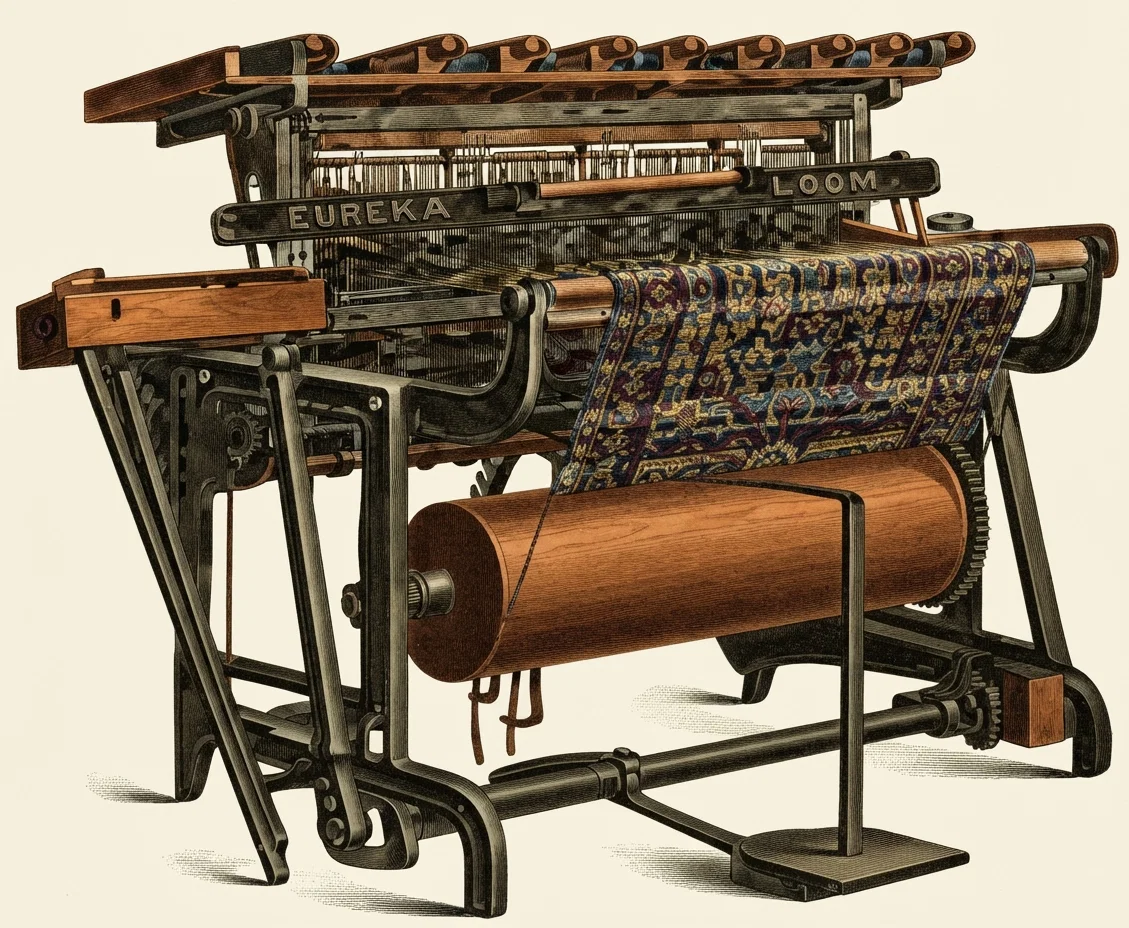
Fly Shuttle Carpet Loom

The best, handiest, easiest running, cheapest, and most durable # FLY SHUTTLE # GARPET LOOM In the world,—100 yards a day. Catalogue free. EUREKA LOOM CO. 5018 Main St., Battle Creek, Mich. When you write, please mention the Signs of the Times.

You Have Been Wanting a College Education

Do You Want One Still?

Then Read Our Offer

We will give you a free scholarship of one year, including board, room, and tuition, in any one of the following colleges or academies:—
Battle Creek College, Battle Creek, Mich. Union College, Lincoln, Neb. Walla Walla College, College Place, Wash. Healdsburg College, Healdsburg, Cal. South Lancaster Academy, S. Lancaster, Mass. Mt. Vernon Academy, Mt. Vernon, Ohio Keene Industrial Academy, Keene, Texas Southern Industrial School, Graysville, Tenn.
Upon the condition that you secure for us a certain number of yearly subscriptions for THE SIGNS OF THE TIMES, at one dollar ($1.00) each.
The number of subscriptions required to entitle you to a scholarship in Battle Creek College, Union College, Healdsburg College, Walla Walla College, South Lancaster Academy, Mt. Vernon Academy, and Keene Industrial Academy, is 140. One hundred subscriptions will entitle you to a scholarship in the Southern Industrial School, at Graysville, Tennessee. These subscriptions must be accompanied by the cash, $1.00 for each subscription, and must be sent to us direct.
If you are interested in securing an education without financial expense to yourself, write us for particulars and instructions. We are making you an offer of great intrinsic value,—an offer whose acceptance will mean much in your future usefulness, whatever your field of labor. Send to the schools named above for catalogs, and write us at once, in order that you may begin work without delay.
ADDRESS SIGNS OF THE TIMES Subscription Department Oakland, Cal.

Editorial Absence and Religious Liberty Library

The editor of this paper left Oakland for the East the last of July. His object is to visit the camp-meetings in Virginia, Maine, Vermont, and New York, returning to the coast about October 1. Incidentally he expects to meet many old acquaintances, make calls at our various institutions on the way, and attend to other business connected with the publication of the paper. In his absence Mr. W. N. Glenn will have the immediate charge, assisted by Messrs. A. O. Tait and C. M. Snow, and others. We are sure that it will not suffer in any way, yet, as always, the conductors of the SIGNS OF THE TIMES crave the prayers of its readers, and especially in these days of stress and storm and trial.
The "Rights of the Minority" is the title of No. 8 (July 16) of the Religious Liberty Library. The subject is suggested by the title, and any one who understands the times knows the need. Price, one cent. Address, International Religious Liberty Association, 324 Dearborn Street, Chicago.

He Will Have to So Construe.

A reader of the SIGNS OF THE TIMES writes from a central city of the United States as follows:—
"I think it only fair for you to give me a chance to reply to your articles. The papers published by the world do this. Give me a page or more and you or some one reply in the same compass. It will increase the circulation of your papers—you must agree to print mine fairly as I write and whole."
And he closes by holding out this awful threat, which, perhaps, we do not fully appreciate, "Any refusal will be construed as cowardice."
Now the question is not what this man may have to discuss; it might be of interest or profit, and it might not. There is a deeper principle involved than this, which this writer does not see.
If he has read the SIGNS OF THE TIMES at all candidly he would know that the paper was published for a purpose (whether wise or unwise, matters not). It has a message to give to the world concerning which its publishers have no doubt. It is not published as a financial enterprise; nor can it give away important space to unknown writers to increase its circulation. It owes nothing to this writer; there is no reason why it should give him space for the publication of his views. A paper of the kind of the SIGNS OF THE TIMES can not be classed with "papers published by the world." They are designed to reflect the world and to please the world; the SIGNS is published to save from the world. Could a man, who, under such circumstances, demands a page or more of valuable space, as a right, write "fairly"? We do not believe he could; for fairness, if he had it inherently, would never have allowed him to make such demand. He could ask for space; many do. But he would have conceded the right of the paper; to refuse without his placing upon it the brand of "cowardice." Now, in the first place, we have no space to spare for unknown productions, or flat oppositions to the truth; (1) we promise to publish no articles which we have not seen; (2) we design to publish no articles without previous examination and approval, at least as to the intent of the writer, except for purpose of comment; and (3) we make no promise whatever as to limits of space for ourselves. If this correspondent wishes his articles published, he will submit them in due course, as do all others. Or he may "construe."

A Catholic Faculty

A Catholic Faculty, the Catholic Mirror tells us, has been installed in the University of Strassburg, with the consent and advice of the Emperor William.

PRICE OF THE "SIGNS OF THE TIMES."

The PRESENT price of the SIGNS OF THE TIMES is $1.00 a year. It will be that price UNTIL October 1, 1900. After that date it will be $1.50 per year. All have the privilege NOW, and will have till October 1, of subscribing for one, two, three, or more years at $1.00 a year. We believe that it is a splendid opportunity, and we hope that many will use it to their own profit.

Advertising

Advertising.—We wish to say, for the benefit of all parties, that the editor of this paper has nothing to do with the advertising department, nor is he responsible for the acceptance or rejection of any advertisement. This is in charge of an advertising committee, and all matter of this kind will be referred to that committee.

CONTAINED IN THIS NUMBER.

Poetry.

Spirit Guiding, LLEWELLYN A. MORRISON . . . . . . . . . 2 A Happy Life, ISAAC DEELEY . . . . . . . . . . . . . . . 10 War . . . . . . . . . . . . . . . . . . . . . . . . . . . . . . . . 11 March of the Missionaries, FRED T. ELKIN . . . . . . 12

General.

A Lesson for the Ages . . . . . . . . . . . . . . . . . . . . . 1 "I Say unto Thee To-day," T. E. BOWEN . . . . . . . . . 2 Lying Wonders, A. F. BALLENGER . . . . . . . . . . . . . 2 The Reward of Obedience, MRS. E. G. WHITE . . . . . 3 The Sanctuary, G. E. FIFIELD . . . . . . . . . . . . . . . 4 God's Rest Day Unchanged, H. C. GILES . . . . . . . 5 Reasons for Sunday Observance, L. A. P. . . . . . . . . 5 Open Letter, S. D. HEADY . . . . . . . . . . . . . . . . . . 6 Prophecy of Joseph Hoag . . . . . . . . . . . . . . . . . . 6

Editorial.

"Distress of Nations, with Perplexity" . . . . . . . . . . 7 What Day Is the Sabbath? . . . . . . . . . . . . . . . . . . 7

Outlook.

—Ten Years Ago and To-day—Is It Armageddon? —The Creed Trouble . . . . . . . . . . . . . . . . . . . . 8, 9

The Home.

—Demoralization of the Young Man, W. S. SADLER—Evolution of the Cigaret Smoker—A Young Man and His "Wild Oats"—Kid Gloves . . . . . . . . . . . 10, 11

Question Corner.

—Nos. 1072-1078 . . . . . . . . . . . . . . . . . . . . . . 11

Missions.

—The Gospel and Woman, MRS. SUSAN BIRDSALL ROBERTS—Our India Famine Fund . . . . . . . . . . 12, 13

International Sabbath-school and Sunday-school

Lessons . . . . . . . . . . . . . . . . . . . . . . . . . . . . . 14 Publishers . . . . . . . . . . . . . . . . . . . . . . . . . . . . 15

Organ Advertisement Delayed

Our organ advertisement was prepared just too late for this issue. It will appear next week.

Sentinel of Liberty Maps

The "Sentinel of Liberty" furnishes, for only 15 cents, three maps printed on two sides of a sheet 21x28 inches. On one side is a colored map of Asia, including Japan and the Philippines, showing the area, population, chief cities, provinces, and districts, and the governing political power; on the other side are two colored maps, one of China and Malaysia, showing the relation of the great powers thereto, and the other an enlarged view of North-eastern China, the seat of present disturbances. Address "Sentinel of Liberty," 324 Dearborn Street, Chicago. The Sentinel will be sent to any address for $1.00 a year, the map free.

Epistles

Epistles.—Says a noted Jewish teacher: "It is the preacher to whom the people listen, not his discourses. They will read you, not your sermons. Men may admire cleverness; they are only moved by sincere piety. They praise eloquence; they are induced to act by sympathy. If, as a writer quaintly puts it, you preach cream and live skim milk, your ministry will prove a dead failure. Only if the priest be a messenger of the Lord of hosts will they seek the law at his mouth." But the minister will be wanting in all these essentials unless he feeds daily upon the living Word of God, and is daily filled with His Holy Spirit.

Ravages of the Plague

Ravages of the Plague.—The San Jose (Cal.) Herald says: "Some idea of the terrors of the plague where epidemic, is obtained from the statement that during a recent week the deaths from that pestilence in the city of Patna, India, were 2,044. Patna is a city of about half the population of San Francisco. The latest data give it 167,510 inhabitants. At the death-rate of last week the plague would sweep off the entire population in a trifle over a year and a half. During the great plague in London of 1665, the highest death-rate was 26,230 during September, but London had then about three times the present population of Patna, so the present rate in the latter city is about the same as that of the great historic scourge of London. Imagine four thousand deaths a week from any disease in San Francisco. It must also be taken into consideration that upon an outbreak of plague every one who can get away usually does so, consequently the death-rate is really higher than is shown by statistics of population. Patna rice should be an unmarketable product at present for all its approved quality."

An International Wheat Corner

“An International Wheat Corner,” by J. D. Whelpley, in August McClure’s, gives a somewhat startling revelation of a proposition made not long ago by the Russian Government to the United States, whereby the two nations should control the wheat supply of the entire world and fix its price at a uniform rate which should never fluctuate. These details have never before been made public.

Croup and Diphtheria in Children

In the August number of the Delineator, Dr. Murray handles very thoroughly a subject of great interest to mothers. The sudden attacks of croup, with their very distressing symptoms, and the alarming dangers of diphtheria, are treated with professional thoroughness, but in such a way that unprofessional people can understand and act upon the advice at the outset of an attack.

"WATCHMAN, WHAT OF THE NIGHT?"

THIS is the question which the inhabitant of earth is asking of the watchmen whom God has set to warn the world of coming danger.
This year closes a wonderful century. Its closing is ominous of the future. Just before us a new century is about to dawn. What is its prospect?
The SIGNS OF THE TIMES wishes to answer these questions in a way so striking, so true, so loudly, that more will hear the answer than ever before.
To do this, it will issue this coming autumn a World's Outlook number, which we hope will exceed in circulation all other special issues combined.
It is too early now to announce the leading articles of this number, but all have been outlined.
But as yet we have no good short story for that issue. We are writing this note to ask for contributions. We desire a story which will not overdraw the facts of life nor underdraw the importance of eternal issues; one that will help to uplift, purify, and intensify all that is good and noble in home life and character. It should not exceed 3,000 words.
We are asking for this gratuitously, solely as a missionary offering on the part of the writer. We are sure we shall receive from generous hearts responses. We shall select from these—not, perhaps, the best all around, but the best suited to the paper and its object. Others acceptable will be reserved for other issues of the SIGNS if there is no objection.
Whatever is thus contributed should be in the editor's hands not later than October 1, 1900.
We know that this is not the usual plan in this day of prize stories, but the SIGNS OF THE TIMES is a missionary paper, published not for profit, and we therefore feel free to ask, believing that hearts touched by His Spirit will respond.

Photographs of the Solar Eclipse

The best photographs that were taken of the total eclipse of the sun May 28, or that ever were taken, were by Prof. Chas. Burckhalter, of this city, director of Chabot Observatory. By a special device of his own invention, the professor controls the light of the corona. A revolving diaphragm, the curves of which are mathematically computed, regulates the length of exposure. We hope to present a reproduction of one of these marvelous photographs in a future issue of the SIGNS, tho it is impossible to reproduce the fine details of the original negatives. In connection with this, we will print a cut from a photo of the partial eclipse of the same date, taken from the top of the SIGNS publishing house by a common kodak.

You have reached the end of this edition.

Signs of the Times · Aug 8, 1900